• Home
  • About Us
  • Toolkit
  • Getting Finances Done
    • Hiring Advisors
    • Debt Management
    • Spending Plan
  • Insurance
    • Life Insurance
    • Health Insurance
    • Disability Insurance
    • Homeowners/Renters Insurance
  • Contact Us
  • Privacy Policy
  • Risk Tolerance Quiz

The Free Financial Advisor

You are here: Home / Archives for Budget

What Is “Cash Stuffing” And How Can It Help You Save Money?

May 31, 2024 by Teri Monroe Leave a Comment

cash stuffing

123rf

Cash stuffing is a budgeting method that involves physically allocating cash into various envelopes or containers and labeling them for specific expenses. This technique helps you manage your money more effectively by making you more aware of your spending habits. Unlike digital budgeting tools, cash stuffing requires you to handle tangible cash, which can lead to more mindful spending. Here’s how cash stuffing works and how it can help you save money.

1. Visualizing Your Spending

Visualize Your Spending

123rf

One of the primary benefits of cash stuffing is that it allows you to visualize your spending. When you see the physical cash dwindling in an envelope, it serves as a tangible reminder of your budget limits. This visual cue can help curb impulsive purchases, as you become more aware of how much money you have left for each category. By physically handling cash, you gain a better understanding of your spending patterns and can make adjustments as needed.

2. Creating a Concrete Budget

couple creating budget

123rf

Cash stuffing forces you to create a concrete budget by assigning specific amounts of cash to different categories. This process involves determining your monthly expenses and deciding how much cash to allocate to each one. Categories might include groceries, entertainment, transportation, and savings. By setting clear limits for each category, you can prevent overspending and ensure that your money is being used effectively.

3. Reducing Credit Card Dependence

reduce credit card dependence

123rf

Relying on cash for daily expenses can significantly reduce your dependence on credit cards. Credit card spending can often lead to debt accumulation and high interest charges if not managed properly. With cash stuffing, you spend only what you have, which helps you avoid the temptation of using credit for unnecessary purchases. This approach can lead to better financial health and reduced stress over credit card bills.

4. Enhancing Savings Discipline

savings

123rf

Cash stuffing can also improve your savings discipline by making it easier to set aside money for future goals. By allocating a specific envelope for savings, you create a clear, physical representation of your progress. Watching your savings grow over time can be highly motivating and encourage you to continue prioritizing saving. This method can help you build an emergency fund, save for a major purchase, or work towards long-term financial goals.

5. Encouraging Family Involvement

family involvement cash stuffing

123rf

Involving your family in the cash-stuffing process can foster better financial habits for everyone. By discussing budgeting and financial goals with your family, you can encourage open communication about money. Each family member can have their own envelopes for personal expenses, making them more responsible for their spending. This collective approach can lead to a more financially responsible household and teach valuable money management skills to children.

6. Simplifying Expense Tracking

simplify expenses

123rf

Tracking your expenses can be simplified with the cash stuffing method. By using separate envelopes for each spending category, you can easily see where your money is going. At the end of the month, you can review your envelopes to identify areas where you might have overspent or underspent. This straightforward tracking system can help you make more informed decisions about your budget and adjust your spending habits accordingly.

7. Promoting Mindful Spending

Mindful Spending

123rf


Cash stuffing promotes mindful spending by making you think twice before making a purchase. When you use cash, you are more likely to consider the necessity and value of an item. This mindfulness can help you avoid impulse buys and focus on spending money on things that truly matter. Over time, this habit can lead to more intentional and meaningful purchases, enhancing your overall financial well-being.

8. Reducing Financial Stress

Reduce Financial Stress

123rf

Finally, cash stuffing can reduce financial stress by giving you greater control over your money. By clearly allocating funds for each expense, you can avoid the uncertainty and anxiety that often comes with managing finances. Knowing exactly where your money is going and having a tangible plan can provide a sense of security and peace of mind. This method can help you feel more confident and empowered in your financial decisions.

Is “Cash Stuffing” Right for You?

cash stuffing writing on envelope

Cash stuffing is a practical and effective way to manage your finances and save money. By using physical cash to allocate funds for specific expenses, you can gain better control over your spending, reduce credit card dependence, and enhance your savings discipline. Involving your family, simplifying expense tracking, and promoting mindful spending are additional benefits that can lead to a more financially secure and stress-free life. Consider giving cash stuffing a try and see how it can transform your approach to budgeting and saving money.


Photograph of Teri Monroe
Teri Monroe
Teri Monroe started her career in communications working for local government and nonprofits. Today, she is a freelance finance and lifestyle writer and small business owner. Teri holds a B.A. From Elon University.  In her spare time, she loves golfing with her husband, taking her dog Milo on long walks, and playing pickleball with friends.

Filed Under: budget tips Tagged With: Budget, budget tips, cash stuffing, Personal Finance

The No-Spend Challenge: Myth or Magic? Unveiling 14 Reasons Why It’s Worth the Hype!

May 28, 2024 by Teri Monroe Leave a Comment

mindful spending

123rf

In a world where spending seems as natural as breathing, the concept of a “no-spend month” sounds like a Herculean task. But hold on to your wallets, because this financial phenomenon is taking the internet by storm. Are no-spend months the secret sauce to financial freedom, or just another passing trend? Let’s dive in and uncover the truth behind the hype.

1. Financial Fitness Frenzy

no-spend challenge

123rf

Embarking on a no-spend month ignites a financial fitness frenzy, akin to strapping on a money-saving Fitbit. It’s not just about pinching pennies; it’s a full-blown workout for your wallet. Tracking every expense becomes a game, motivating you to outdo your own savings record. With each dollar saved you feel a surge of accomplishment, propelling you closer to your financial goals with newfound vigor.

2. Breaking Bad Habits

expensive coffee

123rf

Ever found yourself mindlessly swiping your card for that third pumpkin spice latte of the day? In the realm of no-spend months, breaking bad spending habits is akin to smashing through a brick wall of temptation. It’s a transformative journey that forces you to confront your financial Achilles’ heel head-on. By abstaining from unnecessary purchases, you rewire your brain to resist impulse buying and prioritize mindful spending instead. However, sometimes these small habit fixes are not the true problem, and instead, you should look to make larger lifestyle changes to truly make an impact on your financial health.

3. Budgeting Bonanza

budgeting

123rf

Budgeting doesn’t have to be boring! A no-spend month injects some excitement into your financial planning game, helping you allocate your hard-earned cash more wisely. No-spend months unleash a budgeting bonanza, turning mundane money management into an exhilarating adventure. Armed with newfound determination, you scrutinize every cent, allocating funds with surgical precision. With each successful month, you not only bolster your savings but also cultivate a deeper understanding of your financial landscape.

4. Mindful Spending

no-spend month

123rf

By putting a temporary halt on non-essential purchases, you’ll become more mindful of where your money goes. Suddenly, that impulse buy doesn’t seem so irresistible.  Each transaction becomes a deliberate act, prompting reflection on the true value of every dollar spent. As you pause before each purchase, you consider its necessity and align it with your financial goals, fostering a deeper appreciation for the resources at your disposal. Through this mindful approach, you cultivate a heightened awareness of your financial habits, paving the way for greater financial stability and satisfaction.

5. Savings Supercharge

no-spend month

123rf

Cha-ching! Say hello to a beefier savings account. A no-spend challenge can turbocharge your savings goals faster than you can say “frugal living.” By cutting out non-essential expenses, you funnel every spare dollar into your savings account, watching it grow with each passing day. The satisfaction of seeing your savings soar becomes addictive, fueling your determination to continue the challenge month after month.

6. Creative Solutions

DIY

123rf

Who needs retail therapy when you’ve got DIY projects and pantry raid recipes? A no-spend challenge encourages you to get creative with what you have, sparking joy without breaking the bank. In the realm of no-spend months, creative solutions become your secret weapon, transforming constraints into opportunities.

Instead of hitting the mall, you channel your inner DIY guru, breathing new life into old possessions with a touch of creativity. Meal planning becomes an adventure as you whip up gourmet dishes from pantry staples, proving that culinary magic knows no bounds. Through resourcefulness and ingenuity, you discover that the best things in life aren’t bought, they’re crafted with imagination and a dash of inspiration.

7. Debt Demolition

debt free

123rf

Take a wrecking ball to your debt with the power of a no-spend month. By funneling extra cash towards those pesky balances, you’ll be one step closer to financial freedom. Each payment towards your balances becomes a victory, inching you closer to financial liberation with every passing day. As you witness your debt shrinking before your eyes, you realize that with determination and discipline, even the most formidable financial obstacles can be overcome.

8. Fleeting Effects

swiping credit card

123rf

While the benefits of a no-spend challenge are undeniably transformative, its effects can sometimes be fleeting. The initial rush of financial empowerment may fade as old habits creep back in, threatening to undo your progress. Without sustained effort and mindfulness, it’s easy to slip back into old spending patterns, diminishing the impact of your hard-earned savings. However, by viewing each no-spend challenge as a stepping stone rather than a panacea, you can build lasting habits that lead to sustained financial well-being.

9. Social Support

social support no-spend month

123rf

Joining forces with friends or family for a no-spend challenge can turn saving money into a team sport. Plus, who doesn’t love a little friendly competition? Embarking on a no-spend month with a supportive network can amplify your success as you cheer each other on. Sharing tips, victories, and challenges creates a sense of camaraderie.

Whether it’s swapping homemade meal ideas or organizing free group activities, your support system keeps morale high and temptation at bay. Together, you prove that financial wellness is not just an individual journey but a collective endeavor fueled by friendship and solidarity.

10. Financial Reset

reset button

123rf

A no-spend challenge serves as a powerful financial reset button, allowing you to reassess your priorities and realign your spending habits. It’s a chance to hit pause, step back, and take a fresh look at your financial landscape with clarity and purpose. By temporarily halting non-essential purchases, you create space to evaluate what truly matters and chart a course toward your long-term financial goals. With each deliberate choice, you lay the foundation for a healthier and more intentional relationship with money.

11. Learn to Appreciate

no-spend month appreciate everything that you have

123rf

During a no-spend challenge, you’re prompted to pause and truly appreciate the things you already possess. As you refrain from constant consumption, you find contentment in the simple joys of life, from a home-cooked meal to a leisurely walk in nature. Through this process, you cultivate gratitude for what you have rather than constantly longing for what you don’t. Ultimately, you learn that true wealth isn’t measured by material possessions but by the richness of experiences and connections that money can’t buy.

12. Empowerment Galore

no-spend month financial freedom is possible

123rf

In the realm of no-spend challenges, empowerment reigns supreme as you take control of your financial destiny. Every decision to forego unnecessary purchases fuels a sense of agency and self-reliance. With each successfully completed challenge, you gain confidence in your ability to manage your money wisely, paving the way for greater financial independence. This newfound empowerment extends beyond your finances, permeating other aspects of your life as you realize the potential for positive change lies within your grasp.

13. Sustainable Lifestyle

no-spend month sustainable lifestyle

123rf

No-spend challenges aren’t just a temporary fix, they’re a lifestyle choice. Embracing a more minimalist approach to spending can lead to long-term financial stability and happiness. By embracing minimalism and mindful consumption, you reduce your environmental footprint and contribute to a healthier planet. As you prioritize needs over wants, you cultivate a more conscious approach to living that extends far beyond the challenge itself. Ultimately, no-spend months become a cornerstone of your commitment to a more sustainable and fulfilling way of life.

14. Balance is Key

no-spend month balance is key

123rf

While no-spend challenges offer numerous benefits, maintaining balance is crucial for long-term success. Denying yourself all indulgences indefinitely isn’t sustainable and can lead to burnout or frustration. Instead, use these challenges as a tool to find harmony between saving and splurging, ensuring that you enjoy life without compromising your financial goals. By striking the right balance, you create a sustainable approach to money management that supports both your present enjoyment and future financial security.

Is a No-Spend Challenge Right for You?

no-spend month learn to say no

123rf

So, do no-spend challenges actually work? Absolutely! From boosting savings to fostering mindfulness, the benefits speak for themselves. However, like any financial strategy, success lies in moderation and mindful implementation. Ready to take the plunge and experience the magic of a no-spend month for yourself? Your wallet (and future self) will thank you later!

Read More

12 Things Baby Boomers Should Try from Gen Z’s Lifestyle

Here’s The 10 Real Reasons Why Millennials Are Saving So Little

Photograph of Teri Monroe
Teri Monroe
Teri Monroe started her career in communications working for local government and nonprofits. Today, she is a freelance finance and lifestyle writer and small business owner. Teri holds a B.A. From Elon University.  In her spare time, she loves golfing with her husband, taking her dog Milo on long walks, and playing pickleball with friends.

Filed Under: Personal Finance Tagged With: Budget, finance, financial freedom, Try a No-Spend Challenge

You Can’t Afford To Stay There: 12 Signs You Can’t Afford Your Rent

May 7, 2024 by Vanessa Bermudez Leave a Comment

expensive rent

123rf

Renting a place that suits your style while accommodating your budget can feel like a tightrope walk over a bustling city intersection. It’s crucial to recognize the red flags that signal your current rent may be straining your finances too much. 

Here’s a list of 12 tell-tale signs that it’s time to reassess your housing costs or risk jeopardizing your financial health.

1. Your Rent Eclipses 30% of Your Income

money and house key

123rf

Financial experts often cite spending no more than 30% of your pre-tax income on rent as a rule of thumb. 

If your rent swallows a bigger portion of your paycheck, you might be setting yourself up for a financial crunch. This figure doesn’t just come out of thin air; it’s designed to ensure you have enough left for other essentials like food, transportation, and savings.

2. You’re Regularly Late on Rent

late rent payment

DALL-E

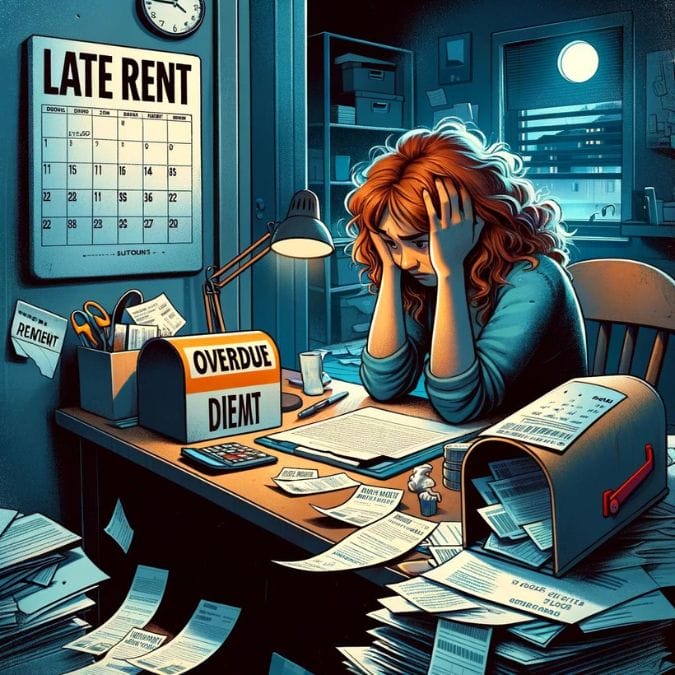
If you find yourself frequently racing against the due date for your rent or paying late fees, it’s a stark indicator that your rent might be more than you can handle. 

Consistently delayed payments indicate that your budget needs recalibration to better align with your income.

3. Savings? What Savings?

low savings

123rf

The ability to save money while covering expenses is a hallmark of good financial health. If your high rent keeps you from saving money, you may need to consider more affordable living arrangements. 

Remember, unforeseen expenses can arise, and without savings, you’re in a precarious financial position.

4. You Dread the Bill Each Month

a man dreading monthly bills

DALL-E

The psychological effect of unaffordable rent can be as significant as the financial strain. If the thought of your rent bill fills you with dread each month, it might be time to look for a place that feels financially comfortable rather than a monthly nightmare.

5. Your Credit Cards Are Maxing Out

credit card

123rf

Relying on credit cards to get through the month because your rent is too high is a slippery slope into debt. If you notice your credit card balances creeping up and you’re covering more of your daily expenses on credit, your housing costs might be to blame.

6. You Have No Room for Emergency Expenses

emergency money

123rf

An affordable rental allows you to handle unexpected expenses—a car repair, a medical bill, or an urgent trip. 

If paying your rent means you can’t afford to manage emergencies, your financial setup needs tweaking. A healthy budget includes a buffer for the unpredictable.

7. You’re Cutting Back on Essentials

cutting back on essentials

DALL-E

When you start slashing your grocery budget or skimping on health care to afford your rent, it’s a warning that your living situation isn’t sustainable. Sacrificing essentials means your rent is not only unaffordable—it’s threatening your well-being.

8. You Can Barely Cover Utility Bills

money for utility bills

123rf

Utility bills can vary, but if they’re causing stress each month on top of your rent, you might be living beyond your means. When the basics like electricity and water become a burden, it’s clear that something’s got to give.

9. No Cash for Socializing

socializing

123rf

Social interactions are vital for mental health. If you find yourself declining invitations because you’re strapped for cash after paying rent, you’re missing out on more than just fun. 

Over time, this isolation can take a toll on your overall happiness and social relationships.

10. Your Work-Life Balance is Suffering

work life balance

123rf

If you’re working extra hours or taking a second job just to make rent, your work-life balance may be off-kilter. Long-term, this isn’t sustainable. 

Your quality of life shouldn’t suffer for the sake of keeping an expensive roof over your head.

11. You’re Ignoring Debt Repayment

a woman worries about her debts

123rf

If your rent makes it difficult to chip away at your debt, it’s time to rethink your living situation. Ignoring debt to pay rent can lead to higher interest costs and a damaged credit score—issues that could haunt your financial future.

12. Your Financial Stress is Skyrocketing

financial stress

123rf

Lastly, if financial anxiety is your constant companion because of your rent, it’s more than a sign—it’s a red flag waving furiously. 

Financial stress can affect every aspect of your life, from your relationships to your physical health.

Is It Time to Move?

rent

123rf

Recognizing these signs early can save you from financial and emotional distress. Your living situation should be a source of comfort, not constant financial anxiety. 

If too many of these signs ring true, it might be time to start apartment hunting again. Remember, it’s about finding a balance that works for your wallet and well-being.

Read More

If You Can’t Pay Your Rent-Use These 6 Tips to Stop An Eviction

5 Ways to Save Up to Buy a House

Vanessa Bermudez
Vanessa Bermudez
Vanessa Bermudez is a content writer with over eight years of experience crafting compelling content across a diverse range of niches. Throughout her career, she has tackled an array of subjects, from technology and finance to entertainment and lifestyle. In her spare time, she enjoys spending time with her husband and two kids. She’s also a proud fur mom to four gentle giant dogs.

Filed Under: Personal Finance Tagged With: Budget, finance, housing expenses, Rent

How Much Should You Spend on Grocery Each Month?

March 28, 2022 by Tamila McDonald Leave a Comment

spend on grocery each month

For many households, groceries are a big line item in their budgets. Overall, the average amount households spend on food at home came in at $4,942 in 2020, which is a substantial sum. That breaks down to about $411 per month or around $95 per week. However, that doesn’t mean it’s the amount a household should spend on groceries every month. In some cases, less may make sense. In others, it could take more. If you’re wondering how much you should spend on groceries each month, here’s what you need to know.

How Much Should You Spend on Groceries?

It’s critical to understand that there isn’t one figure that’ll work for everyone. Instead, you need to look at the situation in the context of your household. That way, you can find a reasonable approach that lets you handle your needs without breaking the bank.

Averages Aren’t Perfect for Everyone

Above all else, you need to know that average spending levels aren’t right for everyone. For some households, spending $411 a month is completely reasonable. However, dedicating that much to food could break the budget of lower-income households, while it may be far less than a large family might need to spend to maintain proper nutrition.

Using percentage-based averages isn’t necessarily better. For example, in 2020, consumers spent an average of 8.6 percent of their disposable income on food purchases. With that, you may assume that spending 8.6 percent of your budget on groceries could be a reasonable figure from an affordability perspective.

However, every household is different. For example, if you’re working full-time and earning minimum wage, that leads to an annual income of just $15,080, or around $1,256 before taxes and other withholdings. In that case, $411 per month is clearly unreasonable. However, 8.6 percent is only $108 a month, or around $25 per week, which might be far less than you need to spend.

Since that’s the case, it’s important to realize that averages alone aren’t a good indicator of what you should spend. Instead, you may want to try another approach.

Using USDA Food Plans as Guidelines

The US Department of Agriculture (USDA) created eating plans designed to meet health standards while respecting that households have different budgets. That can make them solid reference points when you’re trying to decide how much to spend. Plus, it can help you figure out what to buy to maintain good nutrition.

The four categories available through the USDA food plans are thrifty, low-cost, moderate-cost, and liberal. When it comes to the costs of the thrifty plan and the other three plans, they’re broken down by age and sex, allowing families to estimate how much they’ll need to spend to support each household member’s nutritional needs.

By reviewing those figures, you can see how much it typically costs to create nutritious meals at home. Essentially, they can serve as baselines, allowing you to see how much you might need to spend based on household size.

The main problem is that the plans don’t factor in cost differences between locations, dietary restrictions, or similar issues that may harm the accuracy of the estimates. Since that’s the case, it’s best to consider them guidelines and not hard-and-fast rules.

However, if what the USDA lists is genuinely unaffordable, then it’s okay to make a budget that involves less spending. The trick is to ensure you can dedicate enough to address your nutritional needs reasonably well. Then, you can use other techniques to keep your costs down.

How to Stay on Budget

Apply for Benefits If You’re Eligible

First, if you qualify for any food-related assistance, such as SNAP or WIC, make sure you apply for those benefits. That’ll give you more money to direct toward your food budget, helping you spend less out-of-pocket.

Typically, the application process is reasonably simple. Additionally, using the benefits is straightforward. Just make sure you read the rules regarding qualifying products. That way, you can incorporate the right items into your food plan and grocery list.

Set a Spending Limit

Once you know how much you can get through food-related assistance, it’s time to set a target. Use the USDA guidelines and examine your other financial obligations. You need to determine how much is reasonable for you to potentially spend, effectively setting an upper limit that serves as a maximum. That way, you know that you need to aim below that number every month.

Use Sales, Coupons, and Rebate Apps

Once you set a budget for your groceries, you’ll want to use a range of strategies to remain on target. Use a combination of sale flyers, rebate apps, and coupons (either physical or through websites and shopping apps) to find exceptional deals. If you can couple a sale with a rebate or coupon, your total cost may go down dramatically.

Just make sure you calculate the per-unit cost to determine if it’s actually a deal, as not all discounts are created equal. Further, don’t let a coupon tempt you into getting anything you don’t actually need. It’s only a deal if it reduces what you’ll spend overall.

Once you dig into the sales and other discounts, use that information to create an official shopping list. Outline all of your meals based on the available discounts, recording the ingredients you’ll need to make those specific dishes. Then, when you shop, buy only those items.

If you have trouble with impulse shopping, you may want to try online grocery pickup instead of heading to stores. With that, you can focus on precisely what you need, potentially making it easier to resist impulse purchases.

For stores with loyalty programs, make sure you sign up. In many cases, you can earn points that can reduce your grocery bill directly by saving you a specific amount on your next purchase. In some cases, you can cash out points for free items, lowering your bills further.

Like sales, coupons, and rebates, you don’t want to buy anything you don’t need purely for the points. Instead, it should simply be part of a broader saving strategy.

Create a Meal Routine

Finally, it can be wise to create a routine when it comes to eating plans. If you rotate through the same breakfast, lunch, and dinner meals, you’ll have an easier time predicting your monthly grocery costs. While it may seem like this doesn’t work with a coupon, rebate, and sale strategy, it actually can if you’re brand flexible. You just choose the lowest cost version of the product you need.

Make Adjustments as You Learn

If you’re new to budgeting, it’s crucial to recognize that adjustments are often necessary. If you initially set a grocery spending target and determine it doesn’t reasonably meet your needs, change might be required.

Review your grocery spending patterns to determine if the budget isn’t working or if buying non-necessities is actually the issue. If it’s the former, look at your overall financial plan and see if you can adjust your budget to give you the room you need.

Initially, you might need to review your budget every month to make sure it’s working. That way, you can make changes until you find the proper target, allowing you to develop a spending plan that will work long-term.

How do you decide what to spend on groceries each month? Do you have a system that helps you stay on budget, or do you plan on the fly? Share your thoughts in the comments below.

Read More:

  • 5 Ways to Save Money While Grocery Shopping
  • How Do You Save Money When Shopping At Erewhon Market
  • Try These 5 Apps If You Need Help with Your Budget
  • Small Habits that Save You Big Bucks
  • Unlocking Grocery Store Savings: Where to Find Online Weekly Circulars and Coupons
  • Is A Costco Membership Worth It When Living Alone?


Tamila McDonald
Tamila McDonald

Tamila McDonald is a U.S. Army veteran with 20 years of service, including five years as a military financial advisor. After retiring from the Army, she spent eight years as an AFCPE-certified personal financial advisor for wounded warriors and their families. Now she writes about personal finance and benefits programs for numerous financial websites.

Filed Under: Personal Finance Tagged With: Budget, grocery shopping, monthly spending

How to Increase Your Net Worth

February 2, 2022 by Jacob Sensiba Leave a Comment

increase-your-net-worth

Your net worth is a benchmark for your financial success. Notice that I said financial success and not just success. That was intentional because money doesn’t define your success. Money can afford you freedom, but I believe real success doesn’t involve money. That was free of charge, now let’s talk about how to increase your net worth.

What is net worth?

Net worth is assets minus liabilities. How much wealth do you have after you subtract what you owe versus what you have? It’s typically used to gauge your progress in your financial life. If you have debt, then when you pay it down, your net worth goes up. The same happens when you increase your savings.

How to increase your assets

Honestly, the only way to increase your assets is to save money. At least, that’s where it all starts. The more you save, the more you have to work with.

How do you save money? Decrease your expenses and/or make more money. That’s what it comes down to. Figure out what’s important – in terms of your budget and spending. Everything else that doesn’t fit on that list needs to either be removed or reduced.

Once you have money saved, then you can put it to work. Invest it in securities or assets that have a chance to increase in value. What kinds of things have a chance to increase in value? Stocks, bonds, mutual funds, ETFs, precious metals, real estate, certificates of deposit (CDs), and cryptocurrency/NFTs (though I would tread carefully here).

Growing your assets will help you increase your net worth.

How to decrease your liabilities

Pay down your debts. That’s it. Obviously, it’s more challenging than that. Ideally, what you’d want to do is pay down your debts before you focus on the saving aspect of it. If you have debts with high-interest rates, like credit cards, those should be your first priority.

We’ve gone into detail about the repayment methods before so we’ll only touch on them briefly, but what’s important is decreasing your expenses so you can make larger, more regular payments towards your debts.

The next step is developing a repayment strategy. The two we’ve talked about before are the debt avalanche and the debt snowball. The debt avalanche – you pay the debt with the highest interest rate off first before moving to the next one. The debt snowball – you pay the debt with the smallest balance off before moving on to the next one.

Paying down your debts will really help you increase your net worth.

Is there a net worth number you should hit?

At the end of the day, your net worth number is really a reflection of what you’ve saved for retirement. Ideally, you will not have any debts, including your mortgage. So there’s no math that needs to be done. What are your assets? Primary home, any rental properties, and then your retirement savings, with primary home and retirement savings being the two most common for everyone.

So the question becomes, how much should you save for retirement? Thankfully, we’ve created a guide for you to help answer that question (see below).

Related reading:

How much do I need to save for retirement?

Diving Deep Into Debt

3 ways to responsibly save money

Gig economy financial security

Johnny Depp Net Worth

Disclaimer:

**Securities offered through Securities America, Inc., Member FINRA/SIPC. Advisory services offered through Securities America Advisors, Inc. Securities America and its representatives do not provide tax or legal advice; therefore, it is important to coordinate with your tax or legal advisor regarding your specific situation. Please see the website for full disclosures: www.crgfinancialservices.com

Jacob Sensiba
Jacob Sensiba

Jacob Sensible is a financial advisor with decades of experience in the financial planning industry.  His journey into finance began out of necessity, stepping up to support his grandfather during a health crisis. This period not only grounded him in the essentials of stock analysis, investment strategies, and the critical roles of insurance and trusts in asset preservation but also instilled a comprehensive understanding of financial markets and wealth management.  Jacob can be reached at: jake.sensiba@mygfpartner.com.

mygfpartner.com/jacob-sensiba-wisconsin-financial-advisor/

Filed Under: budget tips, Debt Management, Investing, investment types, money management, Personal Finance, Retirement Tagged With: assets, Budget, Debt, finance, invest, investing, liabilities, Net worth, Personal Finance, savings

Managing High Inflation in Retirement

December 29, 2021 by Jacob Sensiba Leave a Comment


Managing High Inflation in Retirement

Inflation is high. We all know that. I’ve been writing about it for months and it appears that it’s here to stay. With all of that said, I saw a question the other day about how to manage the high inflation when you’re in retirement, and I thought it was a good topic to talk about today. So we’re going to discuss high inflation in retirement, how it’s impacting retirees, budgeting strategies, investment strategy changes, and if inflation will be an ongoing concern for retirees.

Inflation right now

It’s high…no surprise to anyone. In January it was 1.4%, in April it was 4.2%, in July it was 5.4%, in October it was 6.8%, and in December it was 5.9%. That’s historically high. The highest it’s been in 40 years. Will that stay, only time will tell and we’ll get into that later.

How is it impacting retirees?

Things are getting expensive, so when you set a budget at the beginning of your retirement you account for the current price of the things you need. You should also account for increased costs of items as time goes on because there can be big or small increases…either way, prices costs will go up.

Groceries and energy are two prime examples of things that have gotten more expensive recently. So when those things went up in price, it probably pinched people’s budgets, and/or pushed forward costs that probably weren’t expected for several years. Odds are, they’re spending more money now on food and energy than they anticipated. Hopefully, people have been able to make adjustments already.

Budgeting Strategies

There really aren’t a lot of tips I can give you. The best thing I can really say is to cut costs where it makes sense to account for things that are now more expensive. The other tip, though this is more of a gamble, is to not make any changes now and make changes in the future when inflation comes down.

Investment Strategies

With your investment, you’ll need to reallocate some assets. I wouldn’t take any money out of stocks. What I would do is take some money out of your bond investments and put it into precious metals. The FED said that they plan on hiking rates three times in 2022. Bond prices will go down when interest rates go up. Increasing your stock allocation or putting some money in precious metals could be a good way to combat inflation.

High inflation here to stay?

No, I do think it will be here until the FED hikes rates, but my reasoning for that has to do with what happened in 2018. If the FED can raise rates without putting a cork in the recovery, then I think there’s a possibility that inflation and the federal funds rate will stay elevated until the bubble pops.

Related reading:

Why Asset Allocation Matters

The Factors Causing Inflation

How to Beat Inflation with Investment

Disclaimer:

**Securities offered through Securities America, Inc., Member FINRA/SIPC. Advisory services offered through Securities America Advisors, Inc. Securities America and its representatives do not provide tax or legal advice; therefore, it is important to coordinate with your tax or legal advisor regarding your specific situation. Please see the website for full disclosures: www.crgfinancialservices.com

Jacob Sensiba
Jacob Sensiba

Jacob Sensible is a financial advisor with decades of experience in the financial planning industry.  His journey into finance began out of necessity, stepping up to support his grandfather during a health crisis. This period not only grounded him in the essentials of stock analysis, investment strategies, and the critical roles of insurance and trusts in asset preservation but also instilled a comprehensive understanding of financial markets and wealth management.  Jacob can be reached at: jake.sensiba@mygfpartner.com.

mygfpartner.com/jacob-sensiba-wisconsin-financial-advisor/

Filed Under: budget tips, Investing, money management, Personal Finance, Retirement, risk management Tagged With: bonds, Budget, Inflation, interest rates, investing, investment planning, precious metals, Retirement, retirement savings, savings, stocks

Why Are Fixed Expenses Difficult to Reduce?

December 23, 2020 by Jacob Sensiba Leave a Comment

When you’re making a budget, there are two columns: income and expenses. A large majority of those expenses don’t change from month to month or change very little. These are fixed expenses. If you’re trying to cut costs, you may find that the fixed expenses are difficult to reduce. Why is that? How do you reduce fixed expenses?

We’ll explore the answer to those questions, among others, in today’s post.

Types of expenses

There are two types of expenses. Fixed and variable.

As the names suggest, fixed expenses don’t change or rarely change. Generally speaking, fixed expenses are the largest, recurring expense. Things like your rent or mortgage, utilities, internet, streaming/cable, debt payments, and insurance are all part of your fixed expenses.

Variable expenses, on the other hand, are constantly changing. There isn’t a bill or invoice you get every month. A variable cost is paid by your own directive. Things like groceries, “fun money”, and the like are variable expenses.

Fixed expenses rarely change or vary slightly, and someone or some entity is looking for a payment. Variable expenses constantly change and are voluntarily paid.

Why are they so difficult to reduce?

When you first “sign up” or “agree” to these expenses, more often than not, you’re already shopping for the lowest price for that item.

What else? Internet, streaming, and cable have a pretty standard rate when compared to competitors. Debt payments are structured by the length of the term, interest, and (when referring to credit cards) minimum payments.

Basically, the costs are what they are, and they don’t vary a whole lot.

Methods for reducing fixed expenses

Mortgage payments could decrease if you refinance at the right time. Utilities could go down if usage goes down. Insurance premiums could go down if you mess with coverages and deductibles, but I advise you to talk with an agent first.

Cable/dish generally increases after one year. Often, you get an introductory rate for the first 12 months. If it goes up too much, call and complain or threaten to leave. Normally, they’ll oblige and agree to lower your monthly bill.

If you have a debt to pay and money is tight, talk with your lender or credit card company. Let them know about your situation and they might be willing to work with you.

Related reading:

Financial Mistakes to Avoid

Your Go-To Budget Guide

Save Money on Your Household Expenses


**Securities offered through Securities America, Inc., Member FINRA/SIPC. Advisory services offered through Securities America Advisors, Inc. Securities America and its representatives do not provide tax or legal advice; therefore, it is important to coordinate with your tax or legal advisor regarding your specific situation. Please see website for full disclosures: www.crgfinancialservices.com

Jacob Sensiba
Jacob Sensiba

Jacob Sensible is a financial advisor with decades of experience in the financial planning industry.  His journey into finance began out of necessity, stepping up to support his grandfather during a health crisis. This period not only grounded him in the essentials of stock analysis, investment strategies, and the critical roles of insurance and trusts in asset preservation but also instilled a comprehensive understanding of financial markets and wealth management.  Jacob can be reached at: jake.sensiba@mygfpartner.com.

mygfpartner.com/jacob-sensiba-wisconsin-financial-advisor/

Filed Under: budget tips, money management, Personal Finance Tagged With: Budget, expenses, fixed expenses, variable expenses

How My Finances Have Changed with Covid

May 20, 2020 by Jacob Sensiba Leave a Comment

Aside from the death and illness, it has caused, Covid-19 has done a number on the financial system and the economy.

I’m writing this on May 19th, and up to this point, over 30 million people have filed for unemployment benefits.

In my previous post, which can be found here, I detailed how you can plan in the event of job loss.

Even if you haven’t lost your job, more than likely, your finances have changed. In this article, I want to pull back the curtain on how my finances have changed during this environment.

My Job

Thankfully, I’m still working. I work for my family’s business. Technically speaking, we have four family businesses and I work three out of the four in various capacities.

Two out of those three businesses are very resilient during recessions, so I’m not terribly worried about my income from those two sources.

The last, however, will be influenced by movements in the market. If I do my job well, it shouldn’t vary a ton, but if I don’t, my clients will feel the pain, as will I.

The reason being is I, typically, charge a percentage of the assets under management (AUM). If account values go down, so does the fee I receive. The two go hand in hand, as they should. If I do a poor job, I should make less. It just makes sense.

With that said, my income hasn’t moved too much from the financial advising gig. It dropped a little bit last month, but I imagine it’ll come back up by the end of May, as the market has recovered.

Opinion: The Economy

I don’t know if I’ve mentioned it yet here, but my opinion of the economy is darker than some. I think there will be a cascade of bankruptcies in the public and private sectors.

With regard to the public sector, the companies that are rated BBB are already at record highs. When revenues stop coming in or significantly reduce, it’s hard for companies to make interest payments to lenders (holders of debt).

Companies will start defaulting on their debts, and the ability to pay, as well as other factors, help determine the credit rating. This will cause a slew of BBB rated companies to get downgraded.

Funds

With regard to fixed income mutual funds and ETFs, the vast majority of them have rules they need to abide by. One of those rules could be only investing in investment-grade companies.

Investment grade is anything from AAA to BBB. My fear is that when companies get downgraded from BBB to BB, it’ll cause funds to dump those companies; exasperating the sell-off.

My Finances

With that said, here’s how I’ve adapted.

My finances really haven’t changed much. I’m spending more on groceries, especially right now as I am stocking up on certain goods. The added benefit of that is I’m spending less on food from restaurants, which saves me money and I’m eating healthier too.

So you’re spending more on groceries and less on take-out…what else? Well, given the nature of Covid and the uncertainty that surrounds it, my priorities have shifted a little.

More Cash

I’ve planned my clients’ portfolios with the above scenario in mind. The majority of clients aged 60 and up are positioned more conservatively than normal. With that in mind, all of the portfolios I manage will take a little hit, and my income will drop as a result.

I’ve suspended my retirement contributions, via payroll deduction, until I feel comfortable again. This may seem counterintuitive because of the stress I put on leaving things alone and dollar-cost-averaging as prices go lower.

Due to the fact that my income has some variability, not to mention my rental property and the uncertainty of my renters’ making rent payments (because of talks about forgiving rent payments for those affected by Covid), I have to keep more cash available than normal.

Retirement Contributions

As I mentioned, I stopped my automatic retirement contributions, but I am making voluntary contributions to my Roth IRA when I feel my cash available is adequate.

Other than that, nothing else has changed. Debt payments will continue as planned and saving for a down payment on a house will also continue.

Be advised: Any opinion expressed about the market/economy is strictly an opinion and should not be viewed as a certainty. Additionally, my preparations for said opinions are specific to me. Consult your financial professional about your particular situation.

Related Reading:

Why Asset Allocation Matters

What You Can Learn From Different Market Environments

Job Loss: What To Do

Dealing With Market Fluctuations

Jacob Sensiba
Jacob Sensiba

Jacob Sensible is a financial advisor with decades of experience in the financial planning industry.  His journey into finance began out of necessity, stepping up to support his grandfather during a health crisis. This period not only grounded him in the essentials of stock analysis, investment strategies, and the critical roles of insurance and trusts in asset preservation but also instilled a comprehensive understanding of financial markets and wealth management.  Jacob can be reached at: jake.sensiba@mygfpartner.com.

mygfpartner.com/jacob-sensiba-wisconsin-financial-advisor/

Filed Under: Debt Management, Featured, Investing, money management, Personal Finance, Retirement Tagged With: Budget, cash, coronavirus, covid-19, economy, emergency fund, fixed income, markets, Retirement

How To Find Money Management Success – Create a Dashboard

May 17, 2015 by Joe Saul-Sehy Leave a Comment

I just answered a question on Facebook about a recent podcast interview featuring some bill pay app creators. My interviewees had discussed just how difficult it can be to quickly and efficiently pay bills. “I don’t understand the problem these guys are presenting,” the poster said (I’m paraphrasing….). “I just go to my bank and use their bill pay app every other week. No problem.”

I wish it were that easy for everyone.

Let’s face it. Most of us have one big problem with our financial profile: we’re disorganized. After 16 years in the financial trenches, I’ve seen it far too often to think it’s anything other than a widespread problem. Most of us pay bills on sixteen different sites and have two old 401k plans with former employers, our current job’s plan AND different 529 plans for each child. It’s impossible to manage everything. I’d ask people with all of these different investments and bill paying problems how they juggle everything, and the answer I most often heard was, “I manage it very poorly.”

Yet moving investments to a single provider is a scary proposition. We’ve all heard of Bernie Madoff and don’t want to trust one person with our money. We also have all heard of diversification. Having different plans ensures that I won’t have all of my eggs in one basket.
So we have two problems: safety and diversification….and the fact that by having your assets spread out it’s impossible to track. How do we reconcile these two ideas?

It’s easier than you think.

dashboard

Could you drive a car with three different dashboards?

Think About Driving A Car

When you drive a car, do you have one set of gauges or several? Of course, you only have one set of gauges. It’d be impossible to drive if you had five different dashboards. Imagine! Yet, when you think about your car, it’s a diversified collection of inputs, all working independently. However, when you put it all together, these gauges make your car easier to drive. You get the right data at the appropriate time.

That’s what we’re looking for with money management success….we don’t want to get rid of diversification. Our goal is to create a single dashboard.

In Your Personal Life

There are three areas you should look at with your money:

– Budget and bill tracking. Budgets fail when you’re making decisions about spending without knowing where your money goes each month. Items like a mortgage or rent payment and grocery bills are easy to track, but how much do you spend each week on entertainment? If you don’t track your expenses, it’s difficult to project the future or find any money management success. The gauge you’re looking for to help with daily money management is an app like Mint or Yodlee, that will automatically track your expenses so when you’re planning next week’s expenses you know how you’ve spent money in the past.

For budgets, Mint will allow you to set up alerts so that you’re notified when going over budget categories. YNAB (paid subscription) will help you think differently about your budget and keeping every area in check. People who like the old-fashioned envelope system may be attracted to MVelopes, an automatic way of instituting envelope budgets so you don’t have cash sitting around your home.

– Investments. Many apps will help you track your investment life. In particular, Mint can create a pie chart of your overall diversification so you can easily make investment decisions. Companies like Jemstep allow investors to input their goals and then recommends investment shifts. FeeX will look at all of your investments across platforms and tell you how much you’re paying in fees….an important gauge to see when investing. Zillow has a cool app that will track any real estate properties you own. NVestly is a social media site that not only helps you see results across your whole portfolio, but also makes investing social (you can see others investment pies…but not the amounts of money they have in any investment). While each of these is different, using a couple of these apps can help you make better investment decisions without worrying about having too much money at a single brokerage account.

That said, brokerage houses all offer a diversified collection of investments through different companies. Just because your portfolio is housed as Fidelity, for example, doesn’t mean you have to have all Fidelity investments. They work with a wide range of providers….and you only have to visit one brokerage site to see everything. One dashboard but still diversification!

– Big Picture. You should be able to see how your net worth is growing at a glance. Mint and Yodlee, among others, will give you that quick at-a-glance overall picture.

With Your Business or Side Gig

If you’re self employed, you’re even more crunched for time. You have your personal books AND business metrics to track. As a fan of the excellent management book The E-Myth Revisited: Why Most Small Businesses Don’t Work and What to Do About It, I know that the keys to business success are in systems and data. How much data you have and how quickly you can use that data to your advantage are important. That means three things:

– Platform. If your business or side-gig project isn’t build on a solid footing, you’re hurting. A web presence built by experts like 1and1.com means that you won’t have to worry about the “bones” of your business being difficult for customers or employees to navigate.

– Reporting. Using your bank’s application to track inflows and outflows (as well as setting up a Mint or Yodlee account for your business) can help you stay on top of business expenditures and inflows. Ask your accountant about great business tracking apps and software that they recommend.

Overall

Staying diversified doesn’t mean having money scattered all over. By focusing on systems, building a dashboard, and reliable business help, you’ll find that you’re able to more quickly make financial decisions that move the needle. That’s how you build long-term wealth!

Photo: Steve Jurvetson

Photo of Joe Saul-Sehy
Joe Saul-Sehy

Joe is a former financial advisor and media representative for American Express and Ameriprise. He was the “Money Man” at Detroit television WXYZ-TV, appearing twice weekly. He’s also appeared in Bride, Best Life, and Child magazines, the Los Angeles Times, Chicago Sun-Times, Detroit News and Baltimore Sun newspapers and numerous other media outlets.  Joe holds B.A Degrees from The Citadel and Michigan State University.

joesaulsehy.com/

Filed Under: Featured, Investing, Planning, successful investing, Uncategorized Tagged With: apps, Budget, cash, finance, Money

Budget Nightmares: What Are You Doing At 2 A.M.?

December 17, 2012 by Joe Saul-Sehy 40 Comments

When I left The Citadel (go Bulldogs!) to attend Michigan State (go Spartans!), I said goodbye to a lucrative track and cross country scholarship. I felt bad, but the writing was on the proverbial wall. My coach had given me “one more year” to run better at the end of year one, and I promptly pulled a quadricep muscle early into the fall campaign. I’d been a guy they thought was a (quoting the coach), “Diamond in the rough” anyway. Turns out I was pretty much just rough.

Immediately, I had money problems. My parents couldn’t afford to pay for MSU. I had this general notion that financial aid would cover everything. Imagine my bitterness  when I found out that my dad made too much money to qualify for any need-based aid.  My loan package quickly swelled as my first course of action was to get through school quickly. When I realized what a mess these loans would be, I made the tough decision to become a part time student working three jobs.

Here’s how I made that decision:

During one of my money woes, I tuned in to my favorite late night money talk show hosts on the radio: a guy named Bruce Williams. He sounded like that knowledgeable grandfather who’d give you either an arm around your shoulder or a swift kick in the butt. Maybe listening to him was the idea behind our podcast….I don’t know.

One night, drowning in my own debt and hopeless money situation, I heard a woman call in to the show. She and her husband both worked hard, but they weren’t making ends meet. Bills continually piled up and their reserves dwindled.

“What are you doing at 2 a.m.?” Bruce asked.

The woman stuttered. “What do you mean? We’re sleeping!”

“Why are you sleeping at 2 a.m. when your bills are getting further and further behind?”

The woman quickly answered, “We need all the sleep we can get so we work well at our job in the morning.”

Bruce sighed. “So you’re saying you need your job worse than your house and car? Then why don’t you sell your house or car?”

“I can’t sell my house or my car. Then I wouldn’t have any place to live!”

“My point exactly,” he said. “So, if you like your house and your car, what are you doing at 2 a.m.?”

“What are you getting at? I can’t do more than I’m doing.”

The radio host laughed. He had this chuckle that always sounded a little sad. “What I’m getting at is that you have serious money problems, but you don’t want to change anything. If you’re serious about solving your money problems, you’ll get a night job too, or you’ll find ways to make more money at your day job.”

The woman quickly interjected, “We’re both at the top of our pay scale. That’s why we need to hold on to these jobs.”

“You aren’t listening,” Bruce said. It was one of the few times I’ve ever heard him turning angry on the show. “You can’t work like you do, eat like you do and sleep like you do AND expect something to change.”

Unbelievably, she ranted at him. “I can’t believe this. I call you for serious advice and all you do is blame my job, blame my house, and blame me. We’re doing everything we can do and it isn’t getting any better.”

…and she hung up on him!

Maybe she wasn’t listening, but I sure was. I became a substitute paper boy and redoubled my efforts to advertise my disc jockey service better. I went around to fraternity houses and spoke directly with the social chairmen. I made mixed tapes with some cassettes I had laying around and brought them with me (that dates me, huh? I’m glad I didn’t say reel-to-reel tapes….). Later, I found out that my tapes were a hit around the school. More than that, extra money started to trickle into my hands, and my view of my financial situation changed.


Here’s what I learned:

  1. I’m in charge of my financial destiny.
  2. Sleep is overrated when you’re in over your head.
  3. Financial planning is easy. It’s either an income problem or an expense problem. If you can’t fix one, you have to fix the other by default or the plan won’t work.

If you’re reading this because you’re in broke week (a term coined by my friend Michelle over at See Debt Run), you can either fix it once today and have to fix it again next month, or you can change your money earning skills or spending habits. For short term needs, you could borrow cash, but remember that this isn’t the final solution: it’s duct tape until you’re able to get on your feet.

While we’re talking about duct tape on your financial situation, how about a cool $100 cash or Amazon money? Would that help you avoid your long term plan for a few more days? Ha! Maybe you can use it to buy a radio that’ll change your life, too….

Enter our gigantic giveaway below:

a Rafflecopter giveaway

Enhanced by Zemanta
Photo of Joe Saul-Sehy
Joe Saul-Sehy

Joe is a former financial advisor and media representative for American Express and Ameriprise. He was the “Money Man” at Detroit television WXYZ-TV, appearing twice weekly. He’s also appeared in Bride, Best Life, and Child magazines, the Los Angeles Times, Chicago Sun-Times, Detroit News and Baltimore Sun newspapers and numerous other media outlets.  Joe holds B.A Degrees from The Citadel and Michigan State University.

joesaulsehy.com/

Filed Under: budget tips, Cash Reserve, Debt Management Tagged With: Bruce Williams, Budget, Home, Money, money management, Personal Finance, radio talk show

  • « Previous Page
  • 1
  • 2
  • 3
  • 4
  • 5
  • Next Page »

FOLLOW US

Search this site:

Recent Posts

  • Can My Savings Account Affect My Financial Aid? by Tamila McDonald
  • 12 Ways Gen X’s Views Clash with Millennials… by Tamila McDonald
  • What Advantages and Disadvantages Are There To… by Jacob Sensiba
  • 10 Tactics for Building an Emergency Fund from Scratch by Vanessa Bermudez
  • Call 911: Go To the Emergency Room Immediately If… by Stephen Kanaval
  • 7 Weird Things You Can Sell Online by Tamila McDonald
  • 10 Scary Facts About DriveTime by Tamila McDonald

Copyright © 2026 · News Pro Theme on Genesis Framework