• Home
  • About Us
  • Getting Finances Done
    • Hiring Advisors
    • Debt Management
    • Spending Plan
  • Insurance
    • Life Insurance
    • Health Insurance
    • Disability Insurance
    • Homeowners/Renters Insurance
  • Contact Us
  • Our Editorial Commitment

The Free Financial Advisor

You are here: Home / Archives for Retirement

Tax Tips for Tax Time

January 19, 2022 by Jacob Sensiba Leave a Comment

April is fast approaching and soon, everyone will have to visit their accountants and file their taxes. That said, we need to make sure we are filing taxes correctly. Keeping accurate and up-to-date records is important. Here are some tax tips and how to be well-prepared for tax time.

Contribute to retirement accounts

If you haven’t done so yet, or you’d like to contribute more, you have until tax filing day to do so. For a refresher, here are the contribution limits for some IRAs: IRA/Roth IRA – Max contribution is $6,000 ($7,000 if you’re over 50 or older).

If you have a SEP IRA and you get an extension, you have until October 17, 2022, to make your 2021 contribution.

This is more of a tip for the end of the year, but make sure you take your Required Minimum Distributions. For people that are either over 70 ½ or over 72, depending on when you turned those ages, you need to withdraw money from your IRA. If you don’t, you’ll pay a tax penalty of 50% of the amount you should have withdrawn. For example, if your required amount was $10,000. You’ll pay a $5,000 tax penalty if you didn’t take that distribution.

Make a last-minute estimated payment

If you didn’t pay enough or you didn’t make a payment to the IRS for 2021 taxes, you have until you file to make your payment.

According to the IRS rules, you must pay 100% of last year’s tax liability or 90% of this year’s or you will owe an underpayment penalty.

Get tax docs in order

Get all of your tax documents in order. For earnings for the year, you’ll need one to several forms, depending on what you do for a living and how your business is set up. W2s are pretty common. If you’re an independent contractor, you’ll need 1099. 

Itemize your deductions

Most people will take the standardized deduction, which is $12,550 for single filers and $25,100 for married couples filing jointly.

However, if you are self-employed or you have a lot of expenses that are tax-deductible, itemize your deductions. You could save a lot more money IF your total itemized deductions are larger than the standardized deduction.

Home office tax deduction

With the move to work from home still taking place, it might make sense to take advantage of the home office tax deduction. Here are some of the rules:

  • You must use the space exclusively for business
  • Expenses related to the space used for business are tax-deductible but need to be calculated according to the amount of square footage used for business
  • A lot of taxpayers stay away from this deduction, as they think it’s a red flag for an audit. If you’re legitimately using the space as you say and you aren’t fabricating numbers, then you have nothing to worry about

Last-minute tax tips for tax time

Triple-check your work if you prepared your own taxes and file on time. If you’re having someone prepare your taxes on your behalf, make your appointment ASAP because their calendars will fill up really fast.

Related reading:

Tax Tips for Small Business Owners

Are You Ready for Tax Time?

Jacob Sensiba
Jacob Sensiba

Jacob Sensible is a financial advisor with decades of experience in the financial planning industry.  His journey into finance began out of necessity, stepping up to support his grandfather during a health crisis. This period not only grounded him in the essentials of stock analysis, investment strategies, and the critical roles of insurance and trusts in asset preservation but also instilled a comprehensive understanding of financial markets and wealth management.  Jacob can be reached at: jake.sensiba@mygfpartner.com.

mygfpartner.com/jacob-sensiba-wisconsin-financial-advisor/

Filed Under: money management, Personal Finance, Small business, Tax Planning, tax tips Tagged With: business tax, Income tax, Retirement, Tax, tax deductible, tax filing, tax planning, tax tips, taxes

Retirement Costs to Consider

January 5, 2022 by Jacob Sensiba Leave a Comment


Retirement Costs to Consider

You save for years and years…decades and decades. When you’re saving for retirement, an important consideration to keep in mind when you set your nest egg goal is your retirement costs.

When determining and estimating retirement costs, you need to consider what the average expenses are in general and for the retired folks in your area/state. Once you figure out the generalities, you must adapt them to your situation.

Some items to consider:

  • Travel – Will you stay in your current home? Will you move to a warmer state or a state without an income tax? Do you have family spread around the country? Will you take vacations on an annual basis? If you’re planning on traveling every year, possibly multiple times a year, it’s important to factor those costs into your monthly/annual budget – so you can save for it.
  • Healthcare costs – When you get older, your body doesn’t typically work as it has in the past. You are also more susceptible to illness (as we’ve seen over the past two years). As a result, your healthcare costs go up.
  • Housing – There are a few things to consider when determining your housing costs. Will you stay put or will you move? If you move, will you downsize? If you move, will you move to a different state? Does that state have income taxes? What do you anticipate energy costs will be?

Typical retirement costs

People 65 and older have spent an average of $4,847. On average, utilities, public services, and fuel cost an additional $3,743.

On average, Americans spend $10,160 per year on transportation. Retirees spend a little less. Anywhere between $4,963 and $6,618.

The general American population spends $5,204 on healthcare. Retirees spend between $6,792 and $6,619.

American retirees spend $6,303 on food. They also spend, on average, $2,282 on entertainment.

Expect to spend between 55%-80% of current expenses in retirement.

There are 9 states without a state income tax – Alaska, Florida, South Dakota, Tennessee, Texas, Washington, and Wyoming.

These are the states with the cheapest monthly utilities – Idaho ($343.71), Utah ($350.17), Montana ($359.03), Washington ($369.18), and Nevada ($3376.93).

Conversely, here are the top 5 most expensive ones – Hawaii ($730.86), Alaska ($527.96), Rhode Island ($521.98), Connecticut ($496.07), and New York ($477.31).

Related reading:

Managing High Inflation in Retirement

5 Solutions for Managing Money After Retirement

Jacob Sensiba
Jacob Sensiba

Jacob Sensible is a financial advisor with decades of experience in the financial planning industry.  His journey into finance began out of necessity, stepping up to support his grandfather during a health crisis. This period not only grounded him in the essentials of stock analysis, investment strategies, and the critical roles of insurance and trusts in asset preservation but also instilled a comprehensive understanding of financial markets and wealth management.  Jacob can be reached at: jake.sensiba@mygfpartner.com.

mygfpartner.com/jacob-sensiba-wisconsin-financial-advisor/

Filed Under: budget tips, money management, Personal Finance, Retirement, risk management Tagged With: downsizing, expenses, food, housing, Income tax, Retirement, retirement plan, retirement planning, transportation, utilities

Managing High Inflation in Retirement

December 29, 2021 by Jacob Sensiba Leave a Comment


Managing High Inflation in Retirement

Inflation is high. We all know that. I’ve been writing about it for months and it appears that it’s here to stay. With all of that said, I saw a question the other day about how to manage the high inflation when you’re in retirement, and I thought it was a good topic to talk about today. So we’re going to discuss high inflation in retirement, how it’s impacting retirees, budgeting strategies, investment strategy changes, and if inflation will be an ongoing concern for retirees.

Inflation right now

It’s high…no surprise to anyone. In January it was 1.4%, in April it was 4.2%, in July it was 5.4%, in October it was 6.8%, and in December it was 5.9%. That’s historically high. The highest it’s been in 40 years. Will that stay, only time will tell and we’ll get into that later.

How is it impacting retirees?

Things are getting expensive, so when you set a budget at the beginning of your retirement you account for the current price of the things you need. You should also account for increased costs of items as time goes on because there can be big or small increases…either way, prices costs will go up.

Groceries and energy are two prime examples of things that have gotten more expensive recently. So when those things went up in price, it probably pinched people’s budgets, and/or pushed forward costs that probably weren’t expected for several years. Odds are, they’re spending more money now on food and energy than they anticipated. Hopefully, people have been able to make adjustments already.

Budgeting Strategies

There really aren’t a lot of tips I can give you. The best thing I can really say is to cut costs where it makes sense to account for things that are now more expensive. The other tip, though this is more of a gamble, is to not make any changes now and make changes in the future when inflation comes down.

Investment Strategies

With your investment, you’ll need to reallocate some assets. I wouldn’t take any money out of stocks. What I would do is take some money out of your bond investments and put it into precious metals. The FED said that they plan on hiking rates three times in 2022. Bond prices will go down when interest rates go up. Increasing your stock allocation or putting some money in precious metals could be a good way to combat inflation.

High inflation here to stay?

No, I do think it will be here until the FED hikes rates, but my reasoning for that has to do with what happened in 2018. If the FED can raise rates without putting a cork in the recovery, then I think there’s a possibility that inflation and the federal funds rate will stay elevated until the bubble pops.

Related reading:

The Factors Causing Inflation

How to Beat Inflation with Investment

Jacob Sensiba
Jacob Sensiba

Jacob Sensible is a financial advisor with decades of experience in the financial planning industry.  His journey into finance began out of necessity, stepping up to support his grandfather during a health crisis. This period not only grounded him in the essentials of stock analysis, investment strategies, and the critical roles of insurance and trusts in asset preservation but also instilled a comprehensive understanding of financial markets and wealth management.  Jacob can be reached at: jake.sensiba@mygfpartner.com.
mygfpartner.com/jacob-sensiba-wisconsin-financial-advisor/

Filed Under: budget tips, Investing, money management, Personal Finance, Retirement, risk management Tagged With: bonds, Budget, Inflation, interest rates, investing, investment planning, precious metals, Retirement, retirement savings, savings, stocks

How My Finances Have Changed with Covid

May 20, 2020 by Jacob Sensiba Leave a Comment

Aside from the death and illness, it has caused, Covid-19 has done a number on the financial system and the economy.

I’m writing this on May 19th, and up to this point, over 30 million people have filed for unemployment benefits.

In my previous post, which can be found here, I detailed how you can plan in the event of job loss.

Even if you haven’t lost your job, more than likely, your finances have changed. In this article, I want to pull back the curtain on how my finances have changed during this environment.

My Job

Thankfully, I’m still working. I work for my family’s business. Technically speaking, we have four family businesses and I work three out of the four in various capacities.

Two out of those three businesses are very resilient during recessions, so I’m not terribly worried about my income from those two sources.

The last, however, will be influenced by movements in the market. If I do my job well, it shouldn’t vary a ton, but if I don’t, my clients will feel the pain, as will I.

The reason being is I, typically, charge a percentage of the assets under management (AUM). If account values go down, so does the fee I receive. The two go hand in hand, as they should. If I do a poor job, I should make less. It just makes sense.

With that said, my income hasn’t moved too much from the financial advising gig. It dropped a little bit last month, but I imagine it’ll come back up by the end of May, as the market has recovered.

Opinion: The Economy

I don’t know if I’ve mentioned it yet here, but my opinion of the economy is darker than some. I think there will be a cascade of bankruptcies in the public and private sectors.

With regard to the public sector, the companies that are rated BBB are already at record highs. When revenues stop coming in or significantly reduce, it’s hard for companies to make interest payments to lenders (holders of debt).

Companies will start defaulting on their debts, and the ability to pay, as well as other factors, help determine the credit rating. This will cause a slew of BBB rated companies to get downgraded.

Funds

With regard to fixed income mutual funds and ETFs, the vast majority of them have rules they need to abide by. One of those rules could be only investing in investment-grade companies.

Investment grade is anything from AAA to BBB. My fear is that when companies get downgraded from BBB to BB, it’ll cause funds to dump those companies; exasperating the sell-off.

My Finances

With that said, here’s how I’ve adapted.

My finances really haven’t changed much. I’m spending more on groceries, especially right now as I am stocking up on certain goods. The added benefit of that is I’m spending less on food from restaurants, which saves me money and I’m eating healthier too.

So you’re spending more on groceries and less on take-out…what else? Well, given the nature of Covid and the uncertainty that surrounds it, my priorities have shifted a little.

More Cash

I’ve planned my clients’ portfolios with the above scenario in mind. The majority of clients aged 60 and up are positioned more conservatively than normal. With that in mind, all of the portfolios I manage will take a little hit, and my income will drop as a result.

I’ve suspended my retirement contributions, via payroll deduction, until I feel comfortable again. This may seem counterintuitive because of the stress I put on leaving things alone and dollar-cost-averaging as prices go lower.

Due to the fact that my income has some variability, not to mention my rental property and the uncertainty of my renters’ making rent payments (because of talks about forgiving rent payments for those affected by Covid), I have to keep more cash available than normal.

Retirement Contributions

As I mentioned, I stopped my automatic retirement contributions, but I am making voluntary contributions to my Roth IRA when I feel my cash available is adequate.

Other than that, nothing else has changed. Debt payments will continue as planned and saving for a down payment on a house will also continue.

Be advised: Any opinion expressed about the market/economy is strictly an opinion and should not be viewed as a certainty. Additionally, my preparations for said opinions are specific to me. Consult your financial professional about your particular situation.

Related Reading:

Job Loss: What To Do

Dealing With Market Fluctuations

Jacob Sensiba
Jacob Sensiba

Jacob Sensible is a financial advisor with decades of experience in the financial planning industry.  His journey into finance began out of necessity, stepping up to support his grandfather during a health crisis. This period not only grounded him in the essentials of stock analysis, investment strategies, and the critical roles of insurance and trusts in asset preservation but also instilled a comprehensive understanding of financial markets and wealth management.  Jacob can be reached at: jake.sensiba@mygfpartner.com.

mygfpartner.com/jacob-sensiba-wisconsin-financial-advisor/

Filed Under: Debt Management, Featured, Investing, money management, Personal Finance, Retirement Tagged With: Budget, cash, coronavirus, covid-19, economy, emergency fund, fixed income, markets, Retirement

How Will You Generate Income In Retirement?

May 30, 2018 by Leave a Comment

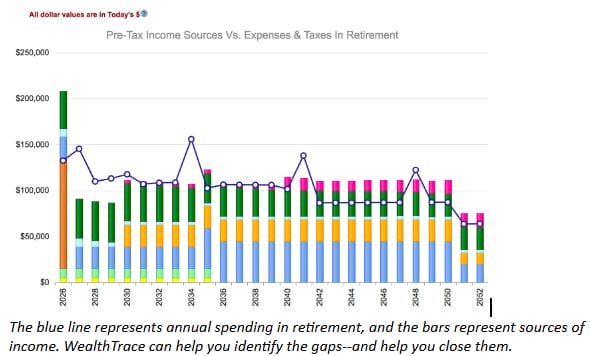
Retirement income sourcesHow are you planning to generate income in retirement?

The first thing that comes to mind for a lot of people will be Social Security. That’s OK, but most people will need to have more than that if they want to retire comfortably (and there are those who are concerned that at least some of those benefits may not be there for future retirees when the time comes). Other people might be looking forward to pension income, though that’s less common than it used to be.

It’s useful to step back and take stock of the various potential sources of retirement income. Certain sources have more to recommend them, and certain asset class combinations will work better for some folks than others due to the assets’ risk profile, tax characteristics, and other qualities.

Interest

A recent Bloomberg story quotes a chief investment officer at Credit Suisse saying that treasury yields at 3.5% would pull people out of stocks and into fixed income. As we’re writing this, the 10-year Treasury yield is on the rise and the highest it has been since 2011 at nearly 3.1%.

Nobody knows for sure which way treasury rates are going, but those rates are worth paying attention to, for a few reasons. First, higher interest rates almost surely would lead to poor performance for bellwether retirement equity investments, such as those in the utility and telecom sectors. (More on this in a bit.) Second, a risk-free interest rate would be tough to ignore at some level as a source of income in retirement. We would probably put that level at around 4% (after all, why get a bond paying less than 4% when you can buy stocks that pay more than that and have been boosting the payout annually for 20 or 30 years?), but that will vary by individual circumstance and risk tolerance.

Not that treasuries are the only way to get interest income, of course. The best proxy for junk bonds, the iShares iBoxx $ High Yield Corporate Bond ETF (HYG), yields 4.7%. The investment-grade version (the iShares iBoxx $ Investment Grade Corporate Bond ETF (LQD) is around 4%.

Dividends

We mentioned utilities and telecoms earlier. These kinds of firms are generally big dividend payers. As such, when interest rates rise, their stocks often sell off, as suddenly there are other, less volatile sources of income–bonds–that compete with those dividends.

Now, if you are able to make ends meet on dividends alone (or close to it), the volatility may not matter. Stocks can bounce up and down and all around, but the dividends will keep coming (and even growing) regardless. In fact, when stocks are down, it could be time to consider adding to those holdings, assuming the companies’ businesses are still sound.

You may not be able to get to a place where dividends are your main source of income. But counting on dividends for some portion of retirement income makes sense for a lot of retirees. The year-in-year-out nature of the payments (for a lot of companies), the potential for growth in those payments, the potential for capital gains on the shares, and, not least, the taxes (which are 0% on qualified dividends for a lot of people) all add up to a compelling income source.

Principal

By definition, at retirement, full-time employment income stops, and it’s probably time to start spending down on all that money you saved over the years. That’s hard for a lot of people to get their heads around. After all, it means making a complete 180-degree turn to what you have been doing for probably decades.

So that’s worth thinking about in advance and preparing for. If seeing that balance dwindle each year is a concern, you might want to start conservatively on how much you plan to take out each year. It used to be a 4% drawdown rate was considered safe for most traditional retirees, but that’s no longer conventional wisdom. You might run some scenarios that target something closer to 2% or 3% and see if that allows you to sleep at night.

As with so much in retirement planning, though, much will depend on individual circumstances and sources of income. Someone with a solid pension and low living costs will probably need to take less out of their principal than others.

Capital Gains from Rebalancing

Rebalancing your portfolio isn’t controversial, though reasonable people can disagree about how often it should be done. Rebalancing refers to the simple concept that, over time, a portfolio of investments will have winners and losers, and the initial (presumably target) asset allocation–this much in growth stocks, that much in short-term bonds, and so on–will get out of whack. So, periodically, a portfolio needs to be put back into whack.

What’s not mentioned as often is that it’s possible to think of rebalancing as a source of income as well. Retirees could keep the piece that is a long-term gain and use it for living expenses, and still rebalance to the optimal asset allocation.

The obvious problem here is that markets don’t just go up; they go down too, sometimes for quite a while. So there’s an unpredictability to this source of income that makes it too undependable to be a core source of income for a retiree. But it is a source, and one that’s sometimes overlooked.

Income in Retirement

In the end, which sources you depend on for retirement income will come down to risk tolerance, personal preference, luck (at least a little bit helps), and how diligent you have been about saving through your working years. Knowing what those potential sources are and planning on how you might use them will take some of the surprises out of the process, and help make retirement go more smoothly.


Filed Under: Personal Finance Tagged With: Dividends, Income, Interest, Retirement

How Long Are You Going To Live?

May 28, 2018 by Jackie Cohen Leave a Comment

How long are you going to live? Figuring out your life expectancy is arguably the first step in creating a successful retirement plan–and also arguably the toughest number to figure out. [Read more…]

Jackie Cohen
Jackie Cohen

Jackie Cohen is an award winning financial journalist turned turned financial advisor obsessed with climate change risk, data and business. Jackie holds a B.A. Degree from Macalester College and an M.A. in English from Claremont Graduate University.

Filed Under: Personal Finance Tagged With: Life expectancy, Retirement

Will Social Security Completely Disappear Before You Retire?

May 21, 2018 by Jackie Cohen Leave a Comment

Planning for retirement includes assuming that Social Security might not be able to cover all of your expenses. — but you should know that the benefit program probably won’t disappear either. [Read more…]

Jackie Cohen
Jackie Cohen

Jackie Cohen is an award winning financial journalist turned turned financial advisor obsessed with climate change risk, data and business. Jackie holds a B.A. Degree from Macalester College and an M.A. in English from Claremont Graduate University.

Filed Under: Personal Finance Tagged With: Retirement, Social Security

Will Your Retirement Plan Keep up with Inflation?

April 30, 2018 by Leave a Comment

When planning for retirement most people start with the basics: their budget, their retirement age, life expectancy and their expected retirement income. Usually the inflation rate assumption is more of an afterthought. We all know that our expenses generally go up each year when inflation is greater than 0%. What so many don’t understand is that higher inflation rates usually mean higher tax bills.
[Read more…]

Filed Under: Personal Finance Tagged With: Inflation, Retirement

Will My 401(k) Last for the Rest Of My Life?

April 23, 2018 by Leave a Comment

If you’re starting to think about retirement, and your career has largely been in the private sector, your 401(k) balance could be the most important factor in determining whether you’re on track to retire or not.

Whether your 401(k) will cover your spending needs until the end of your life will depend on a lot of factors. It’s important to not just pin your hopes on a certain target for an account balance–a million dollars, two million dollars, whatever–and instead look at the whole picture. So let’s start with a few other questions that are just as important.

Are You Saving as Much as You Can in Your 401(k)?

There’s almost no way around it: You have to save money to make money. There is often a bit of a free lunch–call it a free appetizer–when it comes to 401(k)s, though: The amount your employer matches your own contributions. It could be a dollar-for-dollar match up to point, or some percentage of what you contribute yourself that increases over time. Either way, you definitely want to contribute at least this amount, or you’re leaving that free appetizer on the plate.

But that should really only be the beginning of any 401(k) savings plan. Fidelity advises saving 15% of pretax income.  If you’re 30 or 40 years old and haven’t given the issue much thought until now, that number should serve as the minimum you should save.

Get into the habit of increasing your contribution percentage each year. Psychologically speaking, if you never see it hit your paycheck (because it’s going straight to your retirement account), you won’t miss it. Set an annual calendar reminder to increase that contribution, even by a half a percentage point. Between the contribution increases and salary increases, you should be able to put your contributions on a sharp upward trajectory.

What Else have You Got?

Once you have your plan for annually boosting 401(k) savings in place, consider what other sources of income you are counting on at retirement. Social Security is an obvious one. If you’re lucky you might have a pension of some sort. Brokerage accounts, rental property, or the planned sale of some asset like a business should all be taken into account as well–and will almost certainly affect how long you can expect your 401(k) will last.

Will you run out of 401(k) money in retirement?

Another reason not to simply come up with an arbitrary hit-your-number mark: Spending matters. At the risk of stating the obvious, your 401(k) and other investment assets will generally last longer if you plan to sip rather than gulp.

You’ll want to have a very solid grip on your plan’s MPG–that is, your projected spending in retirement–to get an accurate reading.

Will your 401(k) plan last long enough?

What Is It Costing You?

Even if you are diligent about saving to your 401(k), you probably haven’t considered what the plans might be costing you.

And why would you? The plan administrator’s fees–in addition to the fees paid to the fund companies themselves–are largely out of your control.

But it’s important–especially the further you are from retirement. Fees can really chip away at account balances over time. Consider a 401(k) returning about 7% annually. Here’s what happens if we modify the fees by half a percentage point and assume contributions of $18,000 per year.

Will Your 401(k) Plan Last Long Enough

Your main recourse here is to talk to your HR department and start asking questions. What are the fees of running the plan? How do they compare with fees offered by other plan administrators for companies of your size? Making sure the HR team has done their due diligence on this could mean tens of thousands of dollars to you.

You can also look at the fees charged by the funds themselves. Funds have expense ratios; actively managed funds generally have higher expense ratios than passively managed funds. To keep things really simple, consider a target-date retirement fund, which shifts its asset classes toward less risk the closer you get to retirement. (And if your plan does not offer a target date retirement fund, it should.)

Your 401(k) Is One Piece of a Larger Puzzle

A large 401(k) balance could have a big effect on when you can retire and your living standard when you do. But looking at it in the context of everything else we’ve talked about here is more important than an absolute dollar figure. Total savings, where you plan to invest your assets, the cost of those investments, and your spending habits are all complementary forces that will factor into a successful retirement plan.

Read More

  • How to Split an IRA or 401(k) in a Divorce
  • Five 401(k) Alternatives You Need to Know About
  • Saving to Boost Your 401(k)
  • IRS Announces 2018 Pension Plan Limitations
  • Avoid These Common Mistakes When Planning for Retirement
  • How to Save for Retirement
  • Investing Your Way to Retirement

Filed Under: Retirement, Uncategorized Tagged With: 401(k), Retirement, retirement plan

The Worst of the Free Financial Advisor: Episode #11–Julie Clow, Author of The Work Revolution, Freedom and Excellence for All

June 4, 2012 by Joe Saul-Sehy 4 Comments

What a great show! We’re fired up about this interview…if you’re passionate about workplace improvement and efficiency, this is the interview for you.

Not familiar with podcasts and how they work? Here’s a link to the Apple page on podcasts: Apple – iTunes – Podcasts

Hoping to subscribe to our show so this goodness is waiting on iTunes every week? Try this link to subscribe: Worst of the Free Financial Advisor iTunes page.

<Open> Quick show agenda & OG not here.

<> Author Julie Clow interview

The book: The Work Revolution: Freedom & Excellence for All

<23:25> Fractional Sense w/ PK from DQYDJ.net. Topic: Risk Modeling

<27:44> Roundtable: Ford employees are being offered retirement packages soon…what should people retiring think about that they may have overlooked?

Around the Blogosphere:

Dr. Dean @ the Millionaire Nurse blog: Retirement Investing: We’ve Got It All Wrong!

Dominique @ Your Finances Simplified: A Guide to Broke Fancy: How To Fake It Until You Make It

Len @ Len Penzo dot Com: 100 Words On: Why I Hate Slow Drivers Who Cruise in the Left Lane

Carrie @ Careful Cents: May Debt Goal Update (Auto Loan): I’m Debt Free!

<57:38> Our Giveaway! One easy step to enter….

Enhanced by Zemanta
Photo of Joe Saul-Sehy
Joe Saul-Sehy

Joe is a former financial advisor and media representative for American Express and Ameriprise. He was the “Money Man” at Detroit television WXYZ-TV, appearing twice weekly. He’s also appeared in Bride, Best Life, and Child magazines, the Los Angeles Times, Chicago Sun-Times, Detroit News and Baltimore Sun newspapers and numerous other media outlets.  Joe holds B.A Degrees from The Citadel and Michigan State University.

joesaulsehy.com/

Filed Under: Podcast Tagged With: Blogosphere, Business, Len Penzo, Personal Finance, Retirement

  • « Previous Page
  • 1
  • …
  • 25
  • 26
  • 27
  • 28
  • Next Page »

Follow Us

Search this site:

Recent Posts

  • Can My Savings Account Affect My Financial Aid? by Tamila McDonald
  • 12 Ways Gen X’s Views Clash with Millennials… by Tamila McDonald
  • What Advantages and Disadvantages Are There To… by Jacob Sensiba
  • Call 911: Go To the Emergency Room Immediately If… by Stephen Kanaval
  • 7 Weird Things You Can Sell Online by Tamila McDonald
  • 10 Scary Facts About DriveTime by Tamila McDonald
  • How to Avoid NJ Exit Tax by Jacob Sensiba

Copyright © 2026 · News Pro Theme on Genesis Framework