• Home
  • About Us
  • Toolkit
  • Getting Finances Done
    • Hiring Advisors
    • Debt Management
    • Spending Plan
  • Insurance
    • Life Insurance
    • Health Insurance
    • Disability Insurance
    • Homeowners/Renters Insurance
  • Contact Us
  • Privacy Policy
  • Risk Tolerance Quiz

The Free Financial Advisor

You are here: Home / Archives for stocks

Inflation Pulse: 5 Surprising Assets Performing Well While Everything Else Slows Down

December 11, 2025 by Brandon Marcus Leave a Comment

Here Are 5 Surprising Assets Performing Well While Everything Else Slows Down

Image Source: Shutterstock.com

Inflation is roaring back into headlines, and suddenly, your wallet feels lighter, your groceries cost more, and your bank account seems like it’s on a diet it didn’t sign up for. Investors and everyday savers alike are asking the same question: what actually holds its value when everything else seems to be slowing down?

Surprisingly, not all assets get dragged down by rising prices and economic jitters. Some perform better than expected, quietly defying the trends and proving that even in turbulent times, there are opportunities to grow—or at least protect—your wealth.

1. Precious Metals Shine Brightly

Gold and silver aren’t just shiny collectibles; they’ve historically been safe havens during inflationary periods. When paper money loses purchasing power, tangible metals maintain value, providing a hedge against rising costs. Silver, in particular, benefits from industrial demand alongside its traditional role as a store of wealth, giving it dual support. Even platinum and palladium have seen interesting movements recently due to supply constraints in automotive and tech sectors. For investors looking for a tried-and-true buffer, precious metals often outperform when broader markets stumble.

2. Real Estate Investment Trusts Hold Ground

While some corners of the real estate market may wobble, certain Real Estate Investment Trusts, or REITs, have shown resilience. Rental income often rises with inflation, and commercial properties in high-demand areas continue to generate consistent returns.

Unlike direct property ownership, REITs provide liquidity and diversification, making them an attractive option during uncertain times. Residential and industrial REITs are particularly notable, as they benefit from housing demand and logistics needs, respectively. For those who want exposure to real estate without the headaches of tenants and maintenance, REITs can outperform other slow-moving investments.

Here Are 5 Surprising Assets Performing Well While Everything Else Slows Down

Image Source: Shutterstock.com

3. Inflation-Protected Bonds Offer Steady Gains

Treasury Inflation-Protected Securities, or TIPS, may not sound glamorous, but they do exactly what their name promises. As inflation rises, these bonds adjust their principal, ensuring that investors’ purchasing power doesn’t erode over time. Interest payments also rise with inflation, offering a rare combination of stability and growth. While traditional bonds can lose value in a high-inflation environment, TIPS act as a safety net. For conservative investors, they provide peace of mind without sacrificing potential returns.

4. Commodities Beyond Gold Are Surprising Winners

While gold steals the spotlight, other commodities like oil, natural gas, and agricultural products have performed remarkably well in inflationary periods. Rising demand, supply chain constraints, and geopolitical factors can create strong price momentum, even when stocks or bonds are sluggish. Energy commodities are particularly notable as economies continue to rebound and consume more resources. Agricultural products like wheat, corn, and soybeans also benefit from scarcity and higher food prices. Investors looking to diversify their portfolios often find that these tangible goods provide protection while delivering potential gains.

5. Dividend-Paying Stocks Keep Pushing Forward

Stocks that consistently pay dividends have a unique advantage in an inflationary environment. While stock prices may fluctuate, reliable dividends provide a stream of income that can be reinvested or used to offset rising living costs. Companies in essential sectors, like utilities and consumer staples, tend to maintain steady earnings, allowing dividends to remain consistent or even grow. Dividend aristocrats—companies with a long history of increasing dividends—are especially attractive because they combine stability with inflation-adjusted returns. For investors seeking both growth and a cash flow buffer, dividend-paying stocks often outperform the broader market during slowdowns.

Protecting Value While the World Slows

Inflation doesn’t have to feel like a financial trap. By paying attention to assets that maintain or even grow their value when the economy slows, investors can protect their wealth and seize opportunities others might overlook. Precious metals, REITs, inflation-protected bonds, strategic commodities, and dividend-paying stocks all demonstrate surprising resilience in turbulent times.

Have you tried investing in any of these assets, or have you noticed other strategies that work when inflation hits hard?

You May Also Like…

8 Bold Strategies for Investing During Periods of High Inflation

8 Necessary Steps to Prepare for a Potential Hyperinflation Event

6 Financial Dangers of Ignoring Inflation

The Gig Economy Tax Nightmare: Why So Many Freelancers End Up Owing the IRS

5 Silent Money Traps in the Gig Economy


Brandon Marcus
Brandon Marcus

Brandon Marcus is a writer who has been sharing the written word since a very young age. His interests include sports, history, pop culture, and so much more. When he isn’t writing, he spends his time jogging, drinking coffee, or attempting to read a long book he may never complete.


Filed Under: Lifestyle Tagged With: commodities, Dividends, gold, Inflation, investing, investments, Life, Lifestyle, precious metals, Real estate, spending, stock market, stocks

7 Powerful Alternatives to Traditional Bonds That Offer Growth

December 8, 2025 by Brandon Marcus Leave a Comment

There Are Powerful Alternatives to Traditional Bonds That Offer Growth

Image Source: Shutterstock.com

Investing can feel like a balancing act—on one side, the steady, dependable returns of traditional bonds, and on the other, the thrilling but risky world of stocks. But what if you want the best of both worlds? Steady income plus the potential for growth? Thankfully, there’s a growing lineup of alternatives that don’t fit the old mold but can help you achieve your financial goals.

These options combine stability, flexibility, and sometimes a touch of excitement that plain old bonds just can’t deliver. Let’s explore seven powerful alternatives that are capturing the attention of savvy investors who want more than predictable yields.

1. Dividend-Paying Stocks That Generate Income

Dividend-paying stocks are a favorite among investors looking for both growth and steady cash flow. Unlike bonds, these stocks can increase in value over time, meaning you have the potential for capital appreciation while still collecting regular payouts. Companies that pay dividends are often established and financially healthy, which provides a layer of reliability. You can reinvest dividends to compound growth, effectively turbocharging your long-term returns. For those willing to research and diversify, dividend stocks can serve as a dynamic alternative to the fixed, slow-moving returns of traditional bonds.

2. Real Estate Investment Trusts That Offer Stability

Real Estate Investment Trusts, or REITs, let you invest in income-producing properties without buying a building yourself. They often distribute a significant portion of earnings as dividends, providing steady cash flow similar to bonds. However, they also offer potential appreciation if property values rise, giving you a growth component that bonds generally lack. REITs can cover various sectors, from commercial offices to apartments, spreading risk across different real estate markets. This makes them a compelling option for investors seeking income with a side of long-term growth potential.

3. Peer-To-Peer Lending Platforms For Direct Returns

Peer-to-peer lending platforms have transformed the way individuals can earn interest on their money. Instead of lending to banks or corporations, you lend directly to people or small businesses, often at higher interest rates than traditional bonds offer. While this does carry some risk, many platforms offer diversification options that spread your loans across multiple borrowers. Returns can be surprisingly strong, and many investors find the personal aspect of lending adds an engaging, hands-on element. With careful selection and risk management, P2P lending can be both lucrative and rewarding for those seeking alternatives to bonds.

4. Corporate Bonds With Higher Yield Potential

Not all bonds are created equal, and corporate bonds can provide opportunities that traditional government bonds don’t. High-yield corporate bonds, sometimes called “junk bonds,” carry more risk but often offer much higher returns. Even investment-grade corporate bonds can deliver better yields than Treasuries while still maintaining a relatively safe profile. By carefully selecting companies with strong financial health, investors can enjoy income plus potential appreciation if interest rates decline or the company grows. This makes certain corporate bonds a viable, growth-oriented alternative for those who want a little more excitement than the ultra-safe government options.

There Are Powerful Alternatives to Traditional Bonds That Offer Growth

Image Source: Shutterstock.com

5. Preferred Stocks That Blend Income And Growth

Preferred stocks occupy a unique space between stocks and bonds, offering characteristics of both. They typically pay fixed dividends, making them attractive for income-seeking investors, but their market value can also fluctuate, creating growth potential. Many preferred shares are issued by large, stable companies, which reduces some of the volatility you’d experience with common stocks. Investors often find that preferred stocks provide a balance of safety, income, and upside potential. This hybrid quality makes them a fascinating alternative for those looking to stretch beyond traditional bonds.

6. Bond Funds With Dynamic Investment Strategies

If you like the idea of bonds but want more growth potential, bond funds might be the perfect solution. These funds pool money from multiple investors and invest in a variety of fixed-income securities, spreading risk and creating a more dynamic portfolio. Many bond funds actively manage duration, credit quality, and sector exposure, which can help enhance returns in different market conditions. Investors benefit from professional management while still accessing regular income streams. This approach offers a sophisticated alternative to buying individual bonds, giving both income and growth potential in a single package.

7. Inflation-Protected Securities That Grow With Time

Inflation-protected securities, like TIPS in the United States, are designed to shield your investments from the eroding effects of inflation. Their principal adjusts with the inflation rate, ensuring your purchasing power grows alongside rising prices. While they provide safety like traditional bonds, they also offer a growth element tied to economic conditions, which can outperform standard fixed-interest bonds in certain periods. Investors who worry about losing value to inflation find these securities particularly attractive. By combining security and real growth potential, inflation-protected securities are a smart choice for a forward-thinking portfolio.

Diversify Beyond Traditional Bonds

Traditional bonds have their place, but they aren’t the only route to reliable income and growth. By exploring dividend stocks, REITs, P2P lending, corporate bonds, preferred stocks, bond funds, and inflation-protected securities, investors can build portfolios that are both resilient and rewarding. Each option has its own risk and reward profile, but all offer opportunities to earn more than the slow, steady pace of government bonds alone.

What about you? Have you tried any of these alternatives, or do you have other growth-oriented strategies you love? Share your thoughts, experiences, or tips in the comments section.

You May Also Like…

4 Essential Rules of Thumb for Buying Individual Stocks Safely

These 5 Stocks Only Perform Well When The Entire Stock Market Does

8 Clues You Shouldn’t Be Investing In The Stock Market Right Now

7 Bizarre Investment Scenarios That Clients Have Really Asked About

5 Expert Warnings About “Get Rich Quick” Investment Schemes


Brandon Marcus
Brandon Marcus

Brandon Marcus is a writer who has been sharing the written word since a very young age. His interests include sports, history, pop culture, and so much more. When he isn’t writing, he spends his time jogging, drinking coffee, or attempting to read a long book he may never complete.

Filed Under: Investing Tagged With: bonds, corporate bonds, divident, Financial Growth, invest, investing, lending, lending money, making money, Money, money issues, peer-to-peer, Real estate, Real Estate Investment, stock market, stocks, traditional bonds, yield

Could Retirement Savings Be Safer in Cash Than in Stocks

September 6, 2025 by Travis Campbell Leave a Comment

bank

Image source: pexels.com

When planning for retirement, it’s natural to worry about how safe your nest egg really is. Stock market volatility can make even seasoned investors nervous, especially when headlines warn of market drops or looming recessions. Some people wonder if parking their retirement savings in cash—like a savings account or money market fund—might be a safer bet than keeping it in stocks. This is a big question with real implications for your future lifestyle and peace of mind. Let’s take a closer look at whether retirement savings could be safer in cash than in stocks, and what you should weigh before making a move.

1. Understanding the Risks of Stocks

Stocks have a reputation for delivering strong long-term returns, but they’re not without risk. The value of your investments can swing wildly in response to economic news, company performance, or even global events. For retirees or those close to retirement, a big drop in the market can be especially scary if you need to withdraw money soon.

Still, over decades, stocks have generally outpaced inflation and helped retirement savings grow. But the risk is real: if you need to sell during a downturn, you might lock in losses that take years to recover. This makes it tempting to ask if putting your retirement savings in cash might be safer, at least in the short run.

2. The Appeal and Limits of Cash

Keeping retirement savings in cash feels safe. Your money doesn’t lose value overnight, and you don’t have to worry about stock market crashes. Cash in FDIC-insured accounts is protected up to certain limits, so you won’t lose your principal if the bank fails.

However, the safety of cash comes with a catch. Interest rates on savings accounts and money market funds are usually low, especially compared to the historical returns of stocks. If inflation rises faster than your cash earns interest, your retirement savings could lose purchasing power over time. This hidden risk means your money might not stretch as far as you hoped during a long retirement.

3. Inflation: The Silent Threat to Retirement Savings

Inflation erodes the value of money slowly but steadily. If your retirement savings are mostly in cash, you may not notice the impact right away. But over 10, 20, or 30 years, inflation can significantly reduce what your savings can buy.

Stocks tend to offer some protection against inflation because companies can raise prices and grow profits over time. Cash, on the other hand, rarely keeps up. For many retirees, the risk of inflation eating away at their nest egg is just as real as the risk of a market downturn. Balancing these risks is key when deciding if your retirement savings could be safer in cash than in stocks.

4. Liquidity and Access to Funds

One advantage of keeping some retirement savings in cash is liquidity. You can access your money quickly for emergencies or big expenses, without worrying about selling stocks when the market is down. This flexibility can be comforting, especially if you have unexpected health costs or want to help family members.

However, holding too much cash can mean missing out on the growth you need to fund a long retirement. Most financial advisors recommend keeping enough cash to cover a year or two of living expenses, with the rest invested for growth. This way, you get the best of both worlds: safety and flexibility from cash, and the long-term growth potential of stocks.

5. Balancing Your Retirement Portfolio

It’s rarely an all-or-nothing choice between cash and stocks. Most retirement plans use a mix of assets, including stocks, bonds, and cash, to balance risk and reward. As you get closer to retirement, it often makes sense to shift more money to safer investments, but not necessarily to cash alone.

You might consider using a “bucket strategy,” where you keep short-term spending money in cash, medium-term needs in bonds, and long-term growth in stocks. This approach can help you weather market ups and downs without sacrificing too much growth.

What to Consider Before Making a Move

The question “Could retirement savings be safer in cash than in stocks?” doesn’t have a one-size-fits-all answer. It depends on your age, risk tolerance, spending needs, and how long you expect your money to last. Some cash is important for short-term stability, but too much can hurt your long-term security.

Before shifting your retirement savings, think about your timeline and future needs. Are you worried about short-term losses, or are you more concerned about running out of money later? A thoughtful mix of cash and stocks is usually the safest approach for most retirees.

How are you balancing cash and stocks in your retirement savings? Share your approach and any questions in the comments below!

What to Read Next…

  • Is Your Retirement Plan Outdated By A Decade Without You Knowing?
  • 6 Retirement Accounts That Are No Longer Considered Safe
  • How Financial Planners Are Recommending Riskier Portfolios In 2025
  • What Happens To Retirement Payouts When The Market Drops Mid Inheritance
  • 6 Compounding Mistakes That Devastate Fixed Income Portfolios
Travis Campbell
Travis Campbell

Travis Campbell is a digital marketer/developer with over 10 years of experience and a writer for over 6 years. He holds a degree in E-commerce and likes to share life advice he’s learned over the years. Travis loves spending time on the golf course or at the gym when he’s not working.

Filed Under: Retirement Tagged With: Asset Allocation, cash, Inflation, retirement planning, safe investments, stocks

10 Gold vs Stocks Lessons You Shouldn’t Ignore

June 4, 2025 by Travis Campbell Leave a Comment

gold

Image Source: pexels.com

When it comes to building wealth, the gold vs stocks debate is as old as investing itself. Whether you’re a seasoned investor or just starting out, understanding the differences between these two popular assets can make a world of difference in your financial journey. Both gold and stocks have their unique strengths and weaknesses, and knowing when—and how—to use each can help you weather market storms, grow your nest egg, and sleep better at night. If you’ve ever wondered whether you should buy more gold, stick with stocks, or find the right balance, you’re in the right place. Let’s break down the 10 gold vs stocks lessons you shouldn’t ignore, so you can make smarter, more confident decisions with your money.

1. Gold Shines in Uncertain Times

One of the biggest lessons in the gold vs stocks conversation is that gold often acts as a safe haven during economic uncertainty. When markets get rocky, investors tend to flock to gold because it’s seen as a store of value. Unlike stocks, which can swing wildly with market sentiment, gold’s price often rises when fear takes over. This makes gold a valuable tool for protecting your portfolio during recessions, geopolitical tensions, or inflation scares. For example, during the 2008 financial crisis, gold prices surged while stocks plummeted, highlighting gold’s role as a financial safety net.

2. Stocks Offer Long-Term Growth

While gold is great for stability, stocks are the go-to for long-term growth. Over the decades, the stock market has consistently outperformed gold in terms of returns. Companies grow, pay dividends, and innovate, which can lead to significant wealth accumulation for patient investors. If your goal is to build wealth over the long haul, stocks should play a central role in your portfolio. Just remember, the ride can be bumpy, but history shows that time in the market beats trying to time the market.

3. Diversification Is Your Best Friend

The gold vs stocks debate isn’t about picking one over the other—it’s about balance. Diversifying your investments across different asset classes, including both gold and stocks, can help reduce risk and smooth out returns. When stocks are down, gold might be up, and vice versa. This balancing act can help you avoid big losses and keep your financial plan on track, no matter what the market throws your way.

4. Gold Doesn’t Pay Dividends

Here’s a practical lesson: gold doesn’t generate income. Unlike stocks, which can pay dividends and grow your wealth through compounding, gold just sits there. It may appreciate in value, but you won’t get any cash flow from holding it. If you’re looking for passive income, stocks have a clear advantage. This is an important consideration for retirees or anyone who wants their investments to provide regular payouts.

5. Stocks Are More Accessible

Investing in stocks has never been easier. With just a few clicks, you can buy your favorite companies’ shares or invest in index funds through online brokers. Gold, on the other hand, can be a bit trickier. You can buy physical gold, but then you have to worry about storage and security. Alternatively, you can invest in gold ETFs, which adds another complexity layer. For most people, stocks are simply more accessible and convenient.

6. Inflation Impacts Both—But Differently

Inflation is a key factor in the gold vs stocks discussion. Gold is often touted as a hedge against inflation because its value tends to rise when the purchasing power of money falls. Stocks, however, can also outpace inflation over time, especially if you’re invested in companies that can raise prices and grow profits. The trick is understanding how each asset responds to inflation and using that knowledge to protect your wealth.

7. Volatility Isn’t Always Bad

Stocks are known for their volatility, but that’s not necessarily a bad thing. Volatility creates opportunities for savvy investors to buy low and sell high. Gold, while generally less volatile, can still experience sharp price swings, especially during times of crisis. The key is to embrace volatility as part of the investing process and not let short-term swings derail your long-term plan.

8. Gold’s Value Is Largely Psychological

Much of gold’s value comes from perception. People have trusted gold for thousands of years, and that trust gives it staying power. But gold doesn’t produce anything, unlike stocks, which represent ownership in real businesses. Its price is driven by supply, demand, and investor sentiment. Understanding this psychological aspect can help you avoid getting caught up in gold hype and make more rational decisions.

9. Stocks Benefit from Economic Growth

When the economy is booming, stocks usually do well. Companies make more money, hire more workers, and expand their operations. This growth translates into higher stock prices and better returns for investors. Gold, on the other hand, doesn’t benefit directly from economic growth. In fact, it sometimes lags when the economy is strong. If you’re optimistic about the future, stocks are likely to reward you more than gold.

10. Both Have a Place in a Smart Portfolio

The final gold vs stocks lesson is that you don’t have to choose one or the other. Both assets have unique roles to play in a well-rounded portfolio. Gold can provide stability and protection, while stocks offer growth and income. By combining the two, you can create a resilient investment strategy that stands the test of time.

Building Your Financial Future with Confidence

The gold vs stocks debate isn’t about picking a winner—it’s about understanding how each asset fits into your unique financial plan. By learning these lessons and applying them to your situation, you can build a ready portfolio for anything. Whether you lean more toward gold, stocks, or a mix of both, the key is staying informed, balanced, and keeping your long-term goals in sight.

What’s your experience with gold vs stocks? Do you have a preference, or do you use both? Share your thoughts in the comments below!

Read More

Federal Reserve Report: Hang On For Rough Ride…

Stop Reading About Last Year’s Top Ten Mutual Funds

Travis Campbell
Travis Campbell

Travis Campbell is a digital marketer/developer with over 10 years of experience and a writer for over 6 years. He holds a degree in E-commerce and likes to share life advice he’s learned over the years. Travis loves spending time on the golf course or at the gym when he’s not working.

Filed Under: Investing Tagged With: diversification, gold, investing, Personal Finance, Planning, portfolio, Risk management, stocks

Managing High Inflation in Retirement

December 29, 2021 by Jacob Sensiba Leave a Comment


Managing High Inflation in Retirement

Inflation is high. We all know that. I’ve been writing about it for months and it appears that it’s here to stay. With all of that said, I saw a question the other day about how to manage the high inflation when you’re in retirement, and I thought it was a good topic to talk about today. So we’re going to discuss high inflation in retirement, how it’s impacting retirees, budgeting strategies, investment strategy changes, and if inflation will be an ongoing concern for retirees.

Inflation right now

It’s high…no surprise to anyone. In January it was 1.4%, in April it was 4.2%, in July it was 5.4%, in October it was 6.8%, and in December it was 5.9%. That’s historically high. The highest it’s been in 40 years. Will that stay, only time will tell and we’ll get into that later.

How is it impacting retirees?

Things are getting expensive, so when you set a budget at the beginning of your retirement you account for the current price of the things you need. You should also account for increased costs of items as time goes on because there can be big or small increases…either way, prices costs will go up.

Groceries and energy are two prime examples of things that have gotten more expensive recently. So when those things went up in price, it probably pinched people’s budgets, and/or pushed forward costs that probably weren’t expected for several years. Odds are, they’re spending more money now on food and energy than they anticipated. Hopefully, people have been able to make adjustments already.

Budgeting Strategies

There really aren’t a lot of tips I can give you. The best thing I can really say is to cut costs where it makes sense to account for things that are now more expensive. The other tip, though this is more of a gamble, is to not make any changes now and make changes in the future when inflation comes down.

Investment Strategies

With your investment, you’ll need to reallocate some assets. I wouldn’t take any money out of stocks. What I would do is take some money out of your bond investments and put it into precious metals. The FED said that they plan on hiking rates three times in 2022. Bond prices will go down when interest rates go up. Increasing your stock allocation or putting some money in precious metals could be a good way to combat inflation.

High inflation here to stay?

No, I do think it will be here until the FED hikes rates, but my reasoning for that has to do with what happened in 2018. If the FED can raise rates without putting a cork in the recovery, then I think there’s a possibility that inflation and the federal funds rate will stay elevated until the bubble pops.

Related reading:

Why Asset Allocation Matters

The Factors Causing Inflation

How to Beat Inflation with Investment

Disclaimer:

**Securities offered through Securities America, Inc., Member FINRA/SIPC. Advisory services offered through Securities America Advisors, Inc. Securities America and its representatives do not provide tax or legal advice; therefore, it is important to coordinate with your tax or legal advisor regarding your specific situation. Please see the website for full disclosures: www.crgfinancialservices.com

Jacob Sensiba
Jacob Sensiba

Jacob Sensible is a financial advisor with decades of experience in the financial planning industry.  His journey into finance began out of necessity, stepping up to support his grandfather during a health crisis. This period not only grounded him in the essentials of stock analysis, investment strategies, and the critical roles of insurance and trusts in asset preservation but also instilled a comprehensive understanding of financial markets and wealth management.  Jacob can be reached at: jake.sensiba@mygfpartner.com.

mygfpartner.com/jacob-sensiba-wisconsin-financial-advisor/

Filed Under: budget tips, Investing, money management, Personal Finance, Retirement, risk management Tagged With: bonds, Budget, Inflation, interest rates, investing, investment planning, precious metals, Retirement, retirement savings, savings, stocks

Crypto, Reddit, Stock Market Thoughts

February 10, 2021 by Jacob Sensiba Leave a Comment

The last couple of weeks have been crazy in the stock market. With Reddit putting a short squeeze on Wall Street, crypto assets going gangbusters, and speculation about what inflation will do in the near future, there’s a lot to talk about.

Reddit vs Wall Street

Gamestop and AMC Entertainment are the two biggest names when we talk about Reddit investors.

A large number of shorts were put in by hedge funds and other big players on Wall Street. A specific Reddit account “recruited” its following to pile into the two companies named above. This group of “retail” investors drove the stock price up (as well as other investors that caught wind of their efforts).

Those hedge funds were forced to cover their shorts so they didn’t lose more money. The stock price for those two companies plummeted in the following days, but that doesn’t negate what Reddit did – they beat the big guys.

What’s a short?

A short is a type of trade. What you do is you borrow shares of a stock at a specific price in hopes that the stock price will drop. If it does, you buy back those shares at a lower price and collect the difference.

For example, if you bought shares of XYZ company at $20 and the share price of XYZ drops to $10, you would cover your short and earn $10 per share as a return.

It’s not for the faint of heart because stock prices effectively have no ceiling, so you could lose A LOT of money.

Crypto

Cryptocurrencies gained traction over the last few years as investors saw potential. After Bitcoin rose to $20,000 per BTC and crashed, it lost its allure.

Social media brought it back, thanks to Elon Musk. Slight changes in his Twitter bio moved the needle very effectively. Bitcoin is now hovering at $50,000 per BTC. Tesla invested a healthy sum in Bitcoin and will now accept payments in Bitcoin.

I believe other companies will adopt this policy and we will see Bitcoin used for purchases more regularly. There is a place for cryptocurrencies in this world, but it’s uncertain what kind of role it will play.

Short-term Thoughts

I go through quite a bit of research each week to get an idea of what the market environment looks like, what the economy is doing, and where there are risks and opportunities in the market.

With that said, the amount of times I’ve read the word “bubble” is alarming. The comparisons to the Dot Com Bubble and the Great Financial Crisis (GFC) are also a cause for concern.

Pundits are using the word “euphoria” more often.

There are a few things to pay attention to:

  1. The divergence between the stock market and the economy. Typically, near the end of the business cycle, a difference between how the market is doing and how the economy is doing grows. Eventually, things will revert to the mean. That’s to say, the difference between the two will shrink.
  2. Inflation. The Biden Administration is taking a different stance from past presidents. Inflation and overstimulation of the economy were areas of concern. President Biden is taking the other side of this argument, saying that he’d rather do too much, than not enough. Look for increased stimulus and less regard for inflation. If inflation starts to run hot, expect the FED to cool it down somehow.

Conclusion

Short-term policy changes and speculative movements in the stock market have little to no impact on the long-term performance of your portfolio. The one thing that really moves the needle is your behavior and how you respond to the news.

If you keep your long-term perspective in mind and keep your emotions in check, you should fare better than those that don’t.

Related reading:

Why Financial Literacy is Important

What You Can Learn from Different Market Environments

Some of the Practical Methods to Make Money Through BTC in 2021


*Securities offered through Securities America, Inc., Member FINRA/SIPC. Advisory services offered through Securities America Advisors, Inc. Securities America and its representatives do not provide tax or legal advice; therefore, it is important to coordinate with your tax or legal advisor regarding your specific situation. Please see the website for full disclosures: www.crgfinancialservices.com

Jacob Sensiba
Jacob Sensiba

Jacob Sensible is a financial advisor with decades of experience in the financial planning industry.  His journey into finance began out of necessity, stepping up to support his grandfather during a health crisis. This period not only grounded him in the essentials of stock analysis, investment strategies, and the critical roles of insurance and trusts in asset preservation but also instilled a comprehensive understanding of financial markets and wealth management.  Jacob can be reached at: jake.sensiba@mygfpartner.com.

mygfpartner.com/jacob-sensiba-wisconsin-financial-advisor/

Filed Under: Investing, money management, Personal Finance, risk management Tagged With: cryptocurrency, stock market, stocks

Federal Reserve Report: Hang On For Rough Ride…

September 26, 2011 by The Other Guy 1 Comment

Here’s a depressing recent headline. Today the Federal Reserve Bank of San Francisco released a report predicting that the financial markets are unlikely to be strong for the next…drum roll please…16 years!

Can this be accurate?

The report, titled “Boomer Retirement: Headwind for U.S. Equity Markets?” illustrates long-range, historical data which suggests that as the boomer generation moves into retirement, they’ll pull an increasing amount of money out of equity funds.  This can only mean increased pressure on stocks for years to come.

This is classic ‘supply & demand’ economics at work here, folks. 

Roughly 10,000 baby-boomers turn 60 EVERY DAY, a trend that will continue for the foreseeable future.  As each of these 10,000 individuals leaves the workforce, they need money to spend in retirement.  Where will their meals come from?  That’s right.  Their spending money will come, in part, from investment portfolios.

As the report points out “…to finance retirement, they are likely to sell off acquired assets, especially risky assets.  A looming concern is that this massive sell-off might depress equity values.”

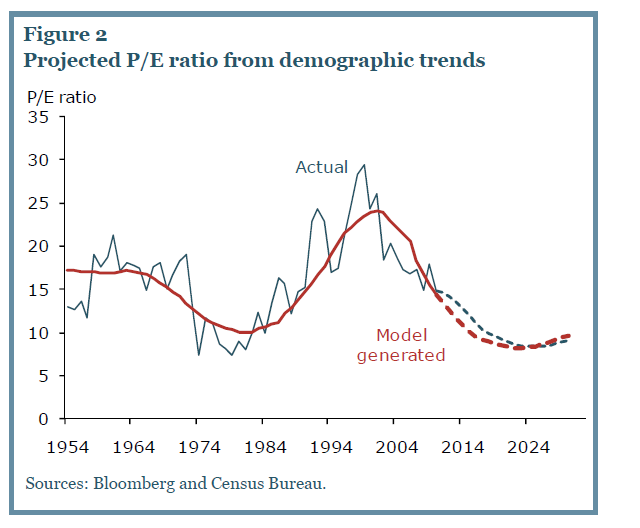
Take a look at this projection:

According to the research in this report, P/E ratios, an indicator of potential stock prices, is slated to continue downward through the early 2020s before rebounding in the latter half of that decade.

“Figure 2 shows that P/E should decline persistently from about 15 in 2010 to about 8.4 in 2025, before recovering to 9.14 in 2030.”

The report continues: “The model-generated path for real stock prices implied by demographic trends is quite bearish.  Real stock prices follow a downward trend until 2021, cumulatively declining 13% relative to 2010…real stock prices are not expected to return to their 2010 levels until 2027.”

Ouch.  That could sting a little.

So what does this data imply?

Should we all be in bonds until 2030?  Quite the contrary.  There will likely still be bullish trends throughout the upcoming cycle, so it pays to be vigilant. 

Instead, I believe this heralds the end of “buy and hold and you’ll be fine” investing.

This mean you’ll need to be cognizant of market trends and invest accordingly.  What does your advisor think about this report?  In all likelihood, he’s never heard of it, and will probably say something like “Just invest and stick with the plan, and you’ll be OK.”

You can do better.  If you just pay attention to the signs, you can profit from both sides of the market, both the ups and downs.  You just have to pay attention.

If you’d like to read this report for yourself, it’s available here or type in http://www.frbsf.org/publications/economics/letter/2011/el2011-26.html to read for yourself.

I’m interested in your thoughts…post your comments below.

Filed Under: investing news, successful investing Tagged With: federal reserve, investing, investing news, market report, San Francisco reserve, stock market, stocks, trends

  • « Previous Page
  • 1
  • 2

FOLLOW US

Search this site:

Recent Posts

  • Can My Savings Account Affect My Financial Aid? by Tamila McDonald
  • 12 Ways Gen X’s Views Clash with Millennials… by Tamila McDonald
  • What Advantages and Disadvantages Are There To… by Jacob Sensiba
  • 10 Tactics for Building an Emergency Fund from Scratch by Vanessa Bermudez
  • Call 911: Go To the Emergency Room Immediately If… by Stephen Kanaval
  • 7 Weird Things You Can Sell Online by Tamila McDonald
  • 10 Scary Facts About DriveTime by Tamila McDonald

Copyright © 2026 · News Pro Theme on Genesis Framework