• Home
  • About Us
  • Toolkit
  • Getting Finances Done
    • Hiring Advisors
    • Debt Management
    • Spending Plan
  • Insurance
    • Life Insurance
    • Health Insurance
    • Disability Insurance
    • Homeowners/Renters Insurance
  • Contact Us
  • Privacy Policy
  • Risk Tolerance Quiz

The Free Financial Advisor

You are here: Home / Archives for cryptocurrency

8 Personal Finance Debates That Are Dividing the Internet

March 27, 2025 by Latrice Perez Leave a Comment

white paper with text The Big Debate on a black background with stationery

Image Source: 123rf.com

The realm of personal finance is no longer just about numbers—it’s become a battleground for opinions on budgeting, saving, and investing. Online communities are split over which strategies truly work, sparking heated debates that capture the attention of millions. These discussions range from traditional budgeting methods to modern digital investment trends. Many individuals feel strongly about their approach to money management, often leading to passionate, polarizing conversations. In this article, we explore eight of the most contentious personal finance debates that are dividing the internet today.

1. Budgeting: Traditional Spreadsheets vs. App-Based Solutions

Many finance enthusiasts argue over the best method for tracking expenses. Traditionalists swear by hand-crafted spreadsheets that offer complete control and customization. On the other hand, supporters of modern apps appreciate the automation and real-time updates they provide. This debate highlights the tension between simplicity and technological convenience. Ultimately, the best choice depends on your individual habits and preferences.

2. Saving Strategies: The 50/30/20 Rule or Customized Plans?

There is ongoing disagreement about whether standard saving rules like 50/30/20 fit every lifestyle. Some experts insist that these rules provide a solid framework for financial health. Others argue that rigid formulas fail to account for individual goals and unexpected expenses. Customized plans that adjust to personal circumstances are often seen as more flexible. The debate centers on whether one-size-fits-all solutions can truly address everyone’s financial needs.

3. Investing: Passive Index Funds vs. Active Trading

The investment community is divided between advocates of passive index funds and proponents of active trading strategies. Passive investors argue that low-cost index funds yield steady, long-term growth without the need for constant monitoring. In contrast, active traders believe that diligent market analysis can outperform average returns. Both sides present compelling data and personal success stories to support their approach. This divide forces new investors to choose between simplicity and the potential for higher rewards.

4. Credit: Debt or Living Debt-Free?

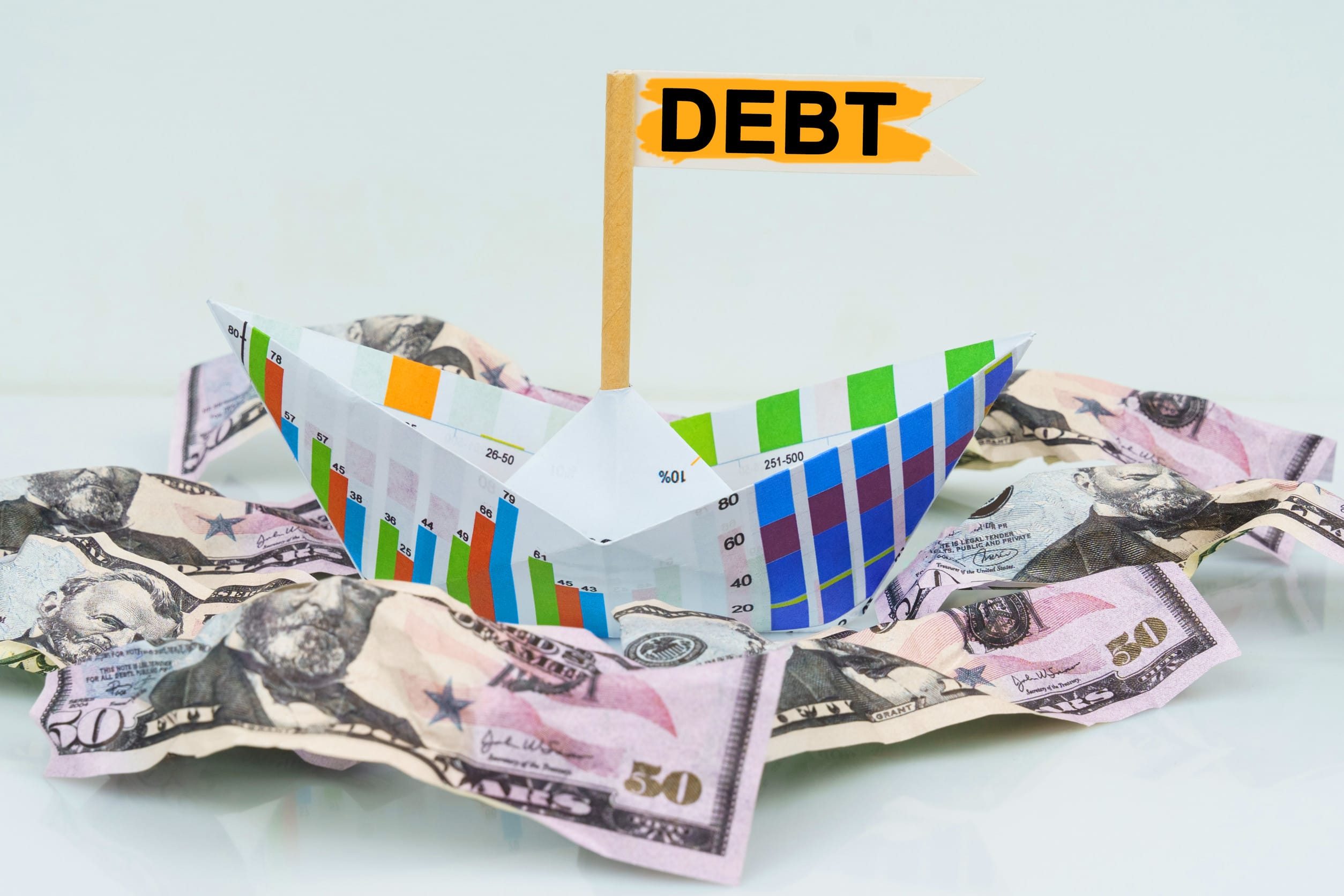
Business and finance concept. A paper boat from a business graph floats on a sea of money. The text is written on the flag - DEBT

Image Source: 123rf.com

Credit management is another hotly debated topic in personal finance. Some believe that strategic debt, when managed well, can boost your credit score and open financial doors. Others argue that any form of debt is a burden that prevents true financial freedom. The conversation often revolves around balancing short-term needs with long-term financial goals. Regardless of your stance, understanding the risks and benefits of debt is crucial for making informed decisions.

5. Emergency Funds: How Much Is Enough?

Experts often clash over the ideal size of an emergency fund. Conventional wisdom suggests that three to six months’ worth of living expenses is sufficient for most households. However, some argue that unpredictable economic conditions warrant a larger cushion. The debate intensifies as personal circumstances and job security vary widely among individuals. Ultimately, the “right” amount is a deeply personal decision influenced by risk tolerance and lifestyle factors.

6. Real Estate: Renting vs. Buying

The age-old debate of renting versus buying a home continues to divide opinions online. Proponents of buying argue that homeownership builds equity and represents a long-term investment. Renters, however, stress the flexibility and lower upfront costs that renting provides. This debate often touches on broader economic trends and personal financial priorities. The decision ultimately hinges on market conditions, lifestyle choices, and long-term goals.

7. Cryptocurrency: The Future of Money or a Risky Fad?

Cryptocurrency remains one of the most polarizing topics in personal finance. Some enthusiasts view it as the future of decentralized finance, capable of revolutionizing traditional banking. Critics, however, warn of its volatility and the lack of regulatory oversight, deeming it a speculative gamble. The passionate discourse reflects the rapid pace of technological change and the uncertainty of its long-term impact. Whether you embrace crypto or remain skeptical, the debate continues to evolve with the market.

8. Financial Independence: Early Retirement vs. Long-Term Work

The FIRE (Financial Independence, Retire Early) movement has ignited fierce discussions about the value of early retirement. Advocates argue that strategic saving and investing can allow one to leave the workforce decades earlier than traditional retirement ages. Detractors caution that early retirement may lead to boredom, financial insecurity, or missed opportunities for personal growth. Both camps offer valid points about the trade-offs between work, passion, and financial freedom. In the end, the decision is a personal one that must align with your values and life goals.

Personal Finance Battlefield

Personal finance is a deeply personal subject, and the debates surrounding it reflect diverse lifestyles and priorities. While the opinions may be divided, the most important takeaway is to educate yourself and choose strategies that align with your values. Open-mindedness and a willingness to adapt can help you navigate even the most contentious financial discussions. Remember, there is no one-size-fits-all solution—only the one that works best for you.

Which personal finance debate resonates with you the most? Share your thoughts and experiences in the comments below!

Read More:

10 Things You Should Never Ignore in Your Personal Finances

The Dark Side of Working in Finance—Burnout, Bonuses, and Big Risks

Latrice Perez

Latrice is a dedicated professional with a rich background in social work, complemented by an Associate Degree in the field. Her journey has been uniquely shaped by the rewarding experience of being a stay-at-home mom to her two children, aged 13 and 5. This role has not only been a testament to her commitment to family but has also provided her with invaluable life lessons and insights.

As a mother, Latrice has embraced the opportunity to educate her children on essential life skills, with a special focus on financial literacy, the nuances of life, and the importance of inner peace.

Filed Under: Personal Finance Tagged With: budgeting, credit management, cryptocurrency, emergency funds, financial independence, investing, Personal Finance, Real estate, saving strategies

Four Tips For Avoiding Cryptocurrency Scams

April 6, 2022 by Susan Paige Leave a Comment

The demand for cryptocurrency has become a global craze today, creating more opportunities for scammers. Whether you’re an experienced or new trader, you might fall into a cryptocurrency scam when you’re not careful. Therefore, you could lose a lot or even all of your hard-earned investment or assets.

Investing in cryptos has now become a trend worldwide. Scammers now have many ways to encourage or pursue people to fall into their schemes with the advent of technology. 

Here are some ways to combat or avoid cryptocurrency scams:

Be Careful Of The Apps You’re Installing

Because apps have many functions and provide several benefits to their users, crypto scammers use them to mimic other apps and use them to their advantage. If you fail to see the warning signs of these fake apps, you’re at risk of having your vital information stolen from you. 

For instance, they may have mimicked a crypto trading app. When you’re not careful, you may install and use it without knowing the danger it can cause you. It may work at first, but the app could steal your cryptocurrencies in no time. This is possible when hackers present you with an address to send your payments or receive your funds. However, you may be sending your funds or cryptos to the fraudster’s crypto wallet address instead. You can’t undo such transactions, so you’re left feeling helpless when this happens. 

Hence, you should always check the publisher’s credentials when downloading from the Google Play Store or Apple Store apps to avoid such scams. For example, you may look at here now if you want to download an Australian crypto exchange. You may also download a given link from a trusted source or the app developer’s official website.

Learn About Crypto Pyramid Schemes

Some fraudsters may show that their new ‘crypto’ is steadily gaining value by running a website. Unfortunately, they can make fake ‘real-time transaction logs’ or ‘mining and trading’ activity appear legit. They may even ‘prove’ that the crypto investors are doing well by showing regular payouts. These are all ways to encourage you to join the craze as one of their investors. 

When you make an account and invest in them, they’re more likely to create fake growth of your initial investment. It may show your gains and the period limit you should withdraw them. 

However, your earnings may come from the funds of other investors. This means they’re using other investors’ money to create interests or dividends on your account. Thus, the crypto you thought was yours could be a nonexistent fund. This scam is popularly known as Ponzi or pyramid scheme, named after Charles Ponzi, a con artist and swindler in the 1920s (per wikipedia).

What you can do to avoid such is to ensure that crypto exists. You must research the crypto you intend to invest your money in, its founders, and its utility. Look at third-party websites, such as this site that helps people check if crypto project is a scam, or review sites to determine their legitimacy. If you can’t find one or only see one or two review articles about it, your best course is to avoid it right away.

Don’t Fall For Giveaway Scams

Fraudsters also use the names of influencers or celebrities. They’ll try to promote their crypto offerings using famous personalities to organize fake giveaways. Some even use fake accounts to respond to the giveaway post so that it would appear legit. 

In this scheme, you may see a QR code or link to a website where you’ll enter your credentials to participate. They may ask for your crypto wallet address for ‘verification’ purposes before they can send you the ‘giveaway,’ which we all know would never come any day soon.

Hence, if the giveaway seems too good to be true, disregard it altogether. Moreover, never enter your wallet address in such cases. Legit crypto companies will never ask for your crypto-wallet information.

Picture of a man whose cryptocurrency wallet has been stolen.,

Read About Initial Coin Offering (ICO) Scams

The ICO is like a stock’s initial public offering where founders will outsource funds to support their crypto project or development. As an investor, you will receive the issuance of such cryptos in exchange for the funds you pledged. 

Some ICOs may not come from well-established companies. Hence, you should see if the company has any operating history or perform a background check on the management team and developers of the ICOs. It may be best to shy away from such if you can’t find any trustworthy information on them or they don’t provide a whitepaper. There’s a big chance they’ll abandon their investors once they’ve collected the funds, so you’ll never hear from them again. 

Conclusion: Be Safe, Stick To Major Well Known Platforms and Avoid Sketchy Links

The best way to avoid crypto scams is to buy or sell cryptos on a legitimate trading platform. Ensure you double-check links or apps before clicking on them. Furthermore, consider the tips mentioned here, so you’ll be safe from inviting schemes of crypto scammers.

For more great Free Financial Advisor articles, read these:

How To Increase Your Net Worth

Financial Resolutions, Debt, Saving and Crypto

Should You be Investing In Shiba Inu?

Is The ADA Cardano Going To The Moon?


Filed Under: risk management Tagged With: crypto, cryptocurrency, scams

Financial Resolutions: Debt, Savings, Investing, Real Estate, and Crypto

December 8, 2021 by Jacob Sensiba Leave a Comment

financial-resolutions

The new year is right around the corner so I thought it fitting to layout some resolutions for a few different financial topics. Here are financial resolutions for crypto, investing, real estate, savings, and debt.

Debt

Pay down or pay off your debt. If you have credit card debt, make it a goal for next year to pay it off completely. The interest rates that credit card companies charge are so brutal. Getting rid of credit card debt would relieve a lot of stress and save you a lot of money that you’re wasting on interest. Not to mention, whatever you’re currently paying towards your credit card can be used for something way more productive.

If all you have is a mortgage, make extra payments. If you have no debt, congratulations! Try and save more so there’s no chance of you going into debt again.

Savings

Would you like to buy a house next year? Save for your down payment. The bigger your down payment is the smaller your responsibility will be; in terms of monthly payments and in terms of total money owed. Especially if your down payment is 20% or more. If that’s the case, you don’t have to pay mortgage insurance (AKA PMI).

If a down payment isn’t something you need to save for, increase your savings rate for retirement. Or set yourself up to cover some unexpected expenses by creating an emergency fund. Do some math, establish a goal number (emergencies, down payment, retirement savings), and then create a plan to save and hit that number.

Investing

For the most part, investing will take place in your retirement account. And for most people, the amount of time you have until retirement is a couple of decades. With that said, you can be a little more aggressive with your investments.

If this description doesn’t fit you, then figure out what works for you. Determine your time horizon, risk tolerance, and what you’d be able to tolerate in terms of short-term losses. If you’d like to get a good idea about what your preference is, take our risk tolerance quiz.

Real Estate

This one is a little challenging because it’s not like you’re going to move once per year. Also, investing in real estate isn’t for everyone. So I’m going to try and hit a few groups with this one.

Buy a new home. If you need more space for your growing family, you got a new job that requires relocation, you want to be closer to your church or family members, then make a move.

Make improvements to your current home to increase the value of your home or to make better use of the space. It can also improve tax credits especially if you use sustainable materials like solar panels. Either way, the improvement has a positive effect on your living situation.

Most people can invest in real estate, they just do it differently. Some people are going to invest in physical properties and some can invest in Real Estate Investment Trusts (REIT). Either way, you need to be picky (like all investments) so you get a good return on your money.

Crypto

This applies to everything in this post, but especially here…do your homework. I like crypto. I think there are investment opportunities, but I also think there’s a possibility it all collapses. I like the technology it’s created on, but I don’t know how it’ll transform and what the adoptability will be. Invest only what you can afford to lose is my best advice. With all that said, make financial resolutions to get more educated about cryptocurrencies and the blockchain.

Related reading:

8 Ways to Improve Your Retirement Savings in 2018

Diving Deep into Debt

Worthy Goals to Set and Crush

How to Invest in Cryptocurrency: A Guide for Beginners

Relocating Without A Job? Here Are 10 Tips

Disclaimer:

**Securities offered through Securities America, Inc., Member FINRA/SIPC. Advisory services offered through Securities America Advisors, Inc. Securities America and its representatives do not provide tax or legal advice; therefore, it is important to coordinate with your tax or legal advisor regarding your specific situation. Please see the website for full disclosures: www.crgfinancialservices.com

Jacob Sensiba
Jacob Sensiba

Jacob Sensible is a financial advisor with decades of experience in the financial planning industry.  His journey into finance began out of necessity, stepping up to support his grandfather during a health crisis. This period not only grounded him in the essentials of stock analysis, investment strategies, and the critical roles of insurance and trusts in asset preservation but also instilled a comprehensive understanding of financial markets and wealth management.  Jacob can be reached at: jake.sensiba@mygfpartner.com.

mygfpartner.com/jacob-sensiba-wisconsin-financial-advisor/

Filed Under: Debt Management, Investing, money management, Personal Finance, Planning, Retirement, successful investing Tagged With: cryptocurrency, Debt, Debt Management, down payment, emergency fund, investing, Risk management, Saving

Should You Be Investing in Shiba Inu?

November 8, 2021 by Tamila McDonald Leave a Comment

investing in shiba inu

During the past year, cryptocurrencies like Bitcoin and Ethereum have reached new heights. Additionally, Dogecoin – the most prominent meme coin around – garnered a lot of attention, ultimately having a relatively tumultuous year. Due to Dogecoin’s rise into the spotlight, many wonder if Shiba Inu – a newer coin – is a worthwhile investment. If you’re considering purchasing Shiba Inu, here’s what you need to know.

A Word About Cryptocurrency

Before worrying about whether Shiba Inu is worth investing in specifically, it’s important to understand the risks involved in putting money into any cryptocurrency. While Bitcoin and some other older coins have seen values rise, the overall crypto market is incredibly volatile. Values rise and fall rapidly, at times with seemingly very little reason for the change. As a result, money can be made or lost in mere moments, often without much warning.

Additionally, it isn’t clear how future regulations may impact the market. Since long-term investing is often based on the desire for long-term growth, changes to laws could significantly alter the viability of cryptocurrency as an investment.

Finally, cryptocurrency scams are commonplace. While Shiba Inu isn’t necessarily a scam, it’s crucial to take any new coin with a grain of salt. Without some due diligence, the odds of making a mistake go up dramatically, potentially causing significant losses.

The Pros and Cons of Shiba Inu

The Pros

One of the points Shiba Inu has going in its favor is a sense of likability. The meme-based coin has an edge on the branding front, making it feel grassroots and accessible. That perception can make Shiba Inu more attractive to certain investors, potentially boosting its potential.

Shiba Inu is also part of Shibaswap, a form of peer-to-peer-style decentralized exchange that gives investors the ability to trade a select number of coins without a traditional platform. With Shibaswap, generating yield and tracking returns are possible, leading some to take great interest in the coin.

The Cons

On the downside, Shiba Inu is technically a Dogecoin parody. Some of its popularity is placed purely on investors who appreciate meme culture and not necessarily because the coin has any real value or long-term potential. As a result, interest in Shiba Inu can be a bit fickle, ebbing and flowing quickly.

Additionally, some of the interest in Shiba Inu is based primarily on familiarity. Some investors attempted to get Shiba Inu added to Robinhood, leading to some media attention that caused a value increase. However, that coverage had nothing to do with the merits of the coin.

Unlike Bitcoin, Shiba Inu currently has no meaningful applications outside of the investment space. Mainstream companies don’t allow shoppers to use the coin as payment. Additionally, since there is nothing functionally unique about Shiba Inu, the likelihood companies will choose it as a payment option over others is slim.

Shiba Inu also isn’t in short supply. Part of Bitcoin’s appeal was that the number available is relatively small. With Shiba Inu, there are one quadrillion coins, so it doesn’t have a sense of scarcity on its side.

Finally, there has been a lot of volatility surrounding Shiba Inu. Most investors are only holding the coin for weeks, indicating that many don’t view it as a long-term investment. As a result, there’s a good chance many will move away from the coin rapidly if something else catches their attention, potentially leading to significant value declines in a short period.

Should You Be Investing in Shiba Inu?

In the end, determining whether any particular cryptocurrency is going to be a success is challenging at best. Shiba Inu does have a few things going for it, particularly when it comes to widespread recognition and its meme-friendly positioning. Plus, while it isn’t a standout functionally, it operates like many other coins, so it isn’t falling behind when it comes to use potential.

However, companies aren’t actively behind Shiba Inu as a payment mechanism, and some platforms like Robinhood aren’t supporting Shiba Inu trading at this time. That could hold back the coin, essentially limiting its potential.

Additionally, the large supply of Shiba Inu coins prevents a sense of scarcity. As a result, prices may not reach the same heights as options like Bitcoin, which doesn’t necessarily work in investors’ favor.

Inherently Higher Risk

Finally, cryptocurrency is inherently higher risk than many investment alternatives. New coins regularly emerge, drawing attention away from those that were trending in the past. Even without those, the sheer number available means there isn’t any way to determine which ones will gain broader traction outside of the crypto investing sphere. Until companies start welcoming more as a form of payment, it’s incredibly difficult to figure out which will rise and which will fall.

Ultimately, only you can decide if Shiba Inu is worth buying. Check out how to buy SHIB in Canada. If you do your research and are comfortable with the risks, then adding it to your portfolio shouldn’t automatically be off the table. You’ll simply want to figure out what’s right for you. That way, if you move forward, you’ll know what could potentially occur.

Do you think investing in Shiba Inu is a good move? Have you already bought in and want to tell others about your experience? Share your thoughts in the comments below.

Read More:

  • The New Normal: Interesting Cryptocurrency Facts
  • How to Invest in Cryptocurrency: A Guide for Beginners
  • What Are NFTs and Are They Worth Investing In?
  • Best Trading Laptops
Tamila McDonald
Tamila McDonald

Tamila McDonald is a U.S. Army veteran with 20 years of service, including five years as a military financial advisor. After retiring from the Army, she spent eight years as an AFCPE-certified personal financial advisor for wounded warriors and their families. Now she writes about personal finance and benefits programs for numerous financial websites.

Filed Under: Investing Tagged With: cryptocurrency, Shiba Inu

Crypto, Reddit, Stock Market Thoughts

February 10, 2021 by Jacob Sensiba Leave a Comment

The last couple of weeks have been crazy in the stock market. With Reddit putting a short squeeze on Wall Street, crypto assets going gangbusters, and speculation about what inflation will do in the near future, there’s a lot to talk about.

Reddit vs Wall Street

Gamestop and AMC Entertainment are the two biggest names when we talk about Reddit investors.

A large number of shorts were put in by hedge funds and other big players on Wall Street. A specific Reddit account “recruited” its following to pile into the two companies named above. This group of “retail” investors drove the stock price up (as well as other investors that caught wind of their efforts).

Those hedge funds were forced to cover their shorts so they didn’t lose more money. The stock price for those two companies plummeted in the following days, but that doesn’t negate what Reddit did – they beat the big guys.

What’s a short?

A short is a type of trade. What you do is you borrow shares of a stock at a specific price in hopes that the stock price will drop. If it does, you buy back those shares at a lower price and collect the difference.

For example, if you bought shares of XYZ company at $20 and the share price of XYZ drops to $10, you would cover your short and earn $10 per share as a return.

It’s not for the faint of heart because stock prices effectively have no ceiling, so you could lose A LOT of money.

Crypto

Cryptocurrencies gained traction over the last few years as investors saw potential. After Bitcoin rose to $20,000 per BTC and crashed, it lost its allure.

Social media brought it back, thanks to Elon Musk. Slight changes in his Twitter bio moved the needle very effectively. Bitcoin is now hovering at $50,000 per BTC. Tesla invested a healthy sum in Bitcoin and will now accept payments in Bitcoin.

I believe other companies will adopt this policy and we will see Bitcoin used for purchases more regularly. There is a place for cryptocurrencies in this world, but it’s uncertain what kind of role it will play.

Short-term Thoughts

I go through quite a bit of research each week to get an idea of what the market environment looks like, what the economy is doing, and where there are risks and opportunities in the market.

With that said, the amount of times I’ve read the word “bubble” is alarming. The comparisons to the Dot Com Bubble and the Great Financial Crisis (GFC) are also a cause for concern.

Pundits are using the word “euphoria” more often.

There are a few things to pay attention to:

  1. The divergence between the stock market and the economy. Typically, near the end of the business cycle, a difference between how the market is doing and how the economy is doing grows. Eventually, things will revert to the mean. That’s to say, the difference between the two will shrink.
  2. Inflation. The Biden Administration is taking a different stance from past presidents. Inflation and overstimulation of the economy were areas of concern. President Biden is taking the other side of this argument, saying that he’d rather do too much, than not enough. Look for increased stimulus and less regard for inflation. If inflation starts to run hot, expect the FED to cool it down somehow.

Conclusion

Short-term policy changes and speculative movements in the stock market have little to no impact on the long-term performance of your portfolio. The one thing that really moves the needle is your behavior and how you respond to the news.

If you keep your long-term perspective in mind and keep your emotions in check, you should fare better than those that don’t.

Related reading:

Why Financial Literacy is Important

What You Can Learn from Different Market Environments

Some of the Practical Methods to Make Money Through BTC in 2021


*Securities offered through Securities America, Inc., Member FINRA/SIPC. Advisory services offered through Securities America Advisors, Inc. Securities America and its representatives do not provide tax or legal advice; therefore, it is important to coordinate with your tax or legal advisor regarding your specific situation. Please see the website for full disclosures: www.crgfinancialservices.com

Jacob Sensiba
Jacob Sensiba

Jacob Sensible is a financial advisor with decades of experience in the financial planning industry.  His journey into finance began out of necessity, stepping up to support his grandfather during a health crisis. This period not only grounded him in the essentials of stock analysis, investment strategies, and the critical roles of insurance and trusts in asset preservation but also instilled a comprehensive understanding of financial markets and wealth management.  Jacob can be reached at: jake.sensiba@mygfpartner.com.

mygfpartner.com/jacob-sensiba-wisconsin-financial-advisor/

Filed Under: Investing, money management, Personal Finance, risk management Tagged With: cryptocurrency, stock market, stocks

4 ICO Scams in 2018 and How to Avoid Becoming a Victim

March 26, 2018 by Tamila McDonald Leave a Comment

Interest in cryptocurrencies skyrocketed after the stunning rise of Bitcoin during late 2017. It also led new companies to join the game, creating new altcoins to attract investors.

[Read more…]

Tamila McDonald
Tamila McDonald

Tamila McDonald is a U.S. Army veteran with 20 years of service, including five years as a military financial advisor. After retiring from the Army, she spent eight years as an AFCPE-certified personal financial advisor for wounded warriors and their families. Now she writes about personal finance and benefits programs for numerous financial websites.

Filed Under: Investing Tagged With: cryptocurrency

  • « Previous Page
  • 1
  • 2

FOLLOW US

Search this site:

Recent Posts

  • Can My Savings Account Affect My Financial Aid? by Tamila McDonald
  • 12 Ways Gen X’s Views Clash with Millennials… by Tamila McDonald
  • What Advantages and Disadvantages Are There To… by Jacob Sensiba
  • 10 Tactics for Building an Emergency Fund from Scratch by Vanessa Bermudez
  • Call 911: Go To the Emergency Room Immediately If… by Stephen Kanaval
  • 7 Weird Things You Can Sell Online by Tamila McDonald
  • 10 Scary Facts About DriveTime by Tamila McDonald

Copyright © 2026 · News Pro Theme on Genesis Framework