• Home
  • About Us
  • Toolkit
  • Getting Finances Done
    • Hiring Advisors
    • Debt Management
    • Spending Plan
  • Insurance
    • Life Insurance
    • Health Insurance
    • Disability Insurance
    • Homeowners/Renters Insurance
  • Contact Us
  • Privacy Policy
  • Risk Tolerance Quiz

The Free Financial Advisor

You are here: Home / Archives for Joe Saul-Sehy

Joe is a former financial advisor and media representative for American Express and Ameriprise. He was the “Money Man” at Detroit television WXYZ-TV, appearing twice weekly. He’s also appeared in Bride, Best Life, and Child magazines, the Los Angeles Times, Chicago Sun-Times, Detroit News and Baltimore Sun newspapers and numerous other media outlets.  Joe holds B.A Degrees from The Citadel and Michigan State University. 

Getting Through the “Broke Week”

April 3, 2012 by Joe Saul-Sehy 16 Comments

Happy Tuesday, Minions!

I’m not here today…my nephews are visiting so I’m probably hiking in the mountains or playing board games…you know…tough work stuff.

I’ve asked my friend Michelle to sit in. She’s better looking than me. And writes better. Pretty annoying.

Michelle is a mom to 3 munchkins who, with her husband Jefferson, started one of my fav websites: See Debt Run.  They both contribute regularly to the site that puts the ‘personal’ in personal finance.  

Their site runs the gamut: they talk about advancing your career, saving money in day-to-day family life,  finding ways to supplement your income, and everything in between.  

I’m happy today she could provide some tips for the parents of the world, offering suggestions on how to get through a rough financial period without interrupting the normal family routine.

– – – – – – – – – – – – – – – – – – – – – – – – –


Getting Through Broke Week

Have you ever looked at the balance in your checking account and realized that your balance is flirting dangerously close to zero, yet payday is still a week away?

This used to be very much the norm for us, and still happens on occasion when unexpected expenses creep up.

Whenever one of these “broke weeks” pops up, we have to make some adjustments in our day-to-day life.  For example, we might find dinner in the back of the pantry and finally eat that old can of minestrone or black-eyed peas that normally would be overlooked for other options.  It isn’t the end of the world to have to bridge the gap for a few days without spending any money; you just have to make the most of these times.

When money is tight, we have to change some of the ways that we parent as well.  Below are a few tips to help you get through a “broke week” without rocking the family routine too much:

Come Out And Play?


In today’s high-tech world, most kids are obsessed with the newest gadgets and video games.  Unfortunately, all that stuff is expensive and has no place during lean times.  Even if they are nagging you, don’t take the kids to the movies or swing by a Redbox for that new PS3 game they’ve been talking about.

Tell the kids to go old-school and *gasp* just play outside.

They can grab the neighbors and start a wiffle ball game, ride their bikes or scooters, or just chase each other around for a bit.  That last one is assuming you don’t have my children.  In that case, your older child will chase and torment your middle child until he cries and the neighbors think that this time he really might be dying.

If you don’t have my children, carry on.

Really, there is an infinite amount of totally free outdoor entertainment for your kids, and it would serve them well to use their imaginations.  It would also serve them well to get off their butts for a couple hours.  Remember when we were kids?  I wasn’t even allowed to have video games, and I’m sure I played outside more frequently than kids today.  I remember riding off on my bike and not coming home again until I was hungry or until the street lights came on–whichever came first.

Yes, it is a different world today and, for the most part, I don’t let my kids out of my peripheral vision, but I do kick them out of the house and make them play in the backyard or tell them to go shoot hoops in the driveway on a regular basis.  It’s good for ’em!

Bored? Games!


So, the weather isn’t great?  For quality family time, you can’t beat a good board game.  Almost everyone has a few in their basement, and playing games is a great way to bond with your kids, and it wont cost you a cent (well, after you buy the board game obviously.)  Some of our favorites are Risk, Ticket to Ride, Forbidden Island, Apples to Apples, and Funglish, but we have many more that we rotate in.

If you are one of the few who doesn’t have–or like–board games, then grab a deck of cards and teach the kids how to play Hearts or Spades.  Not a card shark either?  Grab some dice and look up the rules to the game “Farkle” which is always a blast.  You can have a great time at home with your kids without even spending a dime.

Step Away From The Stores


You have to respect temptation, as it is a powerful beast.  And taking kids to the store with you?  You might as well hand over your credit card now, as we both know this is not going to end well.

Have you ever heard the saying that nobody ever leaves Target without spending $100?  Okay, it’s not really a saying, but it is unfortunately true
for a lot of people.  When you are broke, just keep away from that evil well-designed place with their cute marketing and bright, beautiful displays.  I don’t know how many times I’ve come home with a trunk full of toys and stuff I didn’t need, when all I went there for was socks and Lysol.  The same goes for Home Depot, Sephora, Best Buy, or whatever your personal poison is.  If you are out of a necessity (TP, deodorant, etc), then just pop into a less tempting store (maybe a drug store or Aldi) to get what you need.

Befriend Other Breeders


Being social can be expensive.

For most people, the idea of “getting together with friends” involves eating dinner somewhere and/or drinks if kids aren’t involved.

Actually, scratch that.

Sometimes I drink because kids are involved.  If you are broke, though, going out to eat just isn’t an option.  Don’t be ashamed of it.  Just tell your friends that things are a little tight this week and ask instead if you guys can just get together at their house or yours.  Hauling kids around can be stressful any time, but at a friends’ house, you should be able to relax a bit and let them run around and burn some energy, unless of course your friends live in a museum.

Letting your kids run around is good for their social needs as well.  Besides, it’s generally frowned upon inside restaurants anyway.

Trust me.

I’ve been the recipient of a stink-eye or two in my day.


Okay, what do you do during “broke week?” Let’s talk about it in the comments below:

Photo of Joe Saul-Sehy
Joe Saul-Sehy

Joe is a former financial advisor and media representative for American Express and Ameriprise. He was the “Money Man” at Detroit television WXYZ-TV, appearing twice weekly. He’s also appeared in Bride, Best Life, and Child magazines, the Los Angeles Times, Chicago Sun-Times, Detroit News and Baltimore Sun newspapers and numerous other media outlets.  Joe holds B.A Degrees from The Citadel and Michigan State University.

joesaulsehy.com/

Filed Under: money management, Planning

The Worst of the Free Financial Advisor Podcast – Episode 3: Top 5 Ways to Automate Your Money

April 2, 2012 by Joe Saul-Sehy 5 Comments

In this week’s show we welcome PK and the team from DQYDJ.net to the show!

OG and I talk estate planning, PK gives us a great financial automation tip and the roundtable talks weddings. …and Len Penzo is coo-coo for Cocoa Puffs….all that leading up to our top 5 ways to automate your finances.

Enjoy!


Show Notes: 

Open: Intern heads will roll!

<6:00> On the Blog: Estate Planning

<14.18> Fractional Sense – PK from DQYDJ.net – Automating Your Money

<21:35> Our Roundtable – Carrie (Careful Cents) Dominique (YourFinancesSimplified) Dr. Dean (The Millionaire Nurse Blog) Len (LenPenzo dot Com) – discuss weddings and an article from Untemplater.com: The Average Wedding Cost is Crazy: Why Do People Spend So Much Money?

<45:08> Contest Winner! Matt from Rambling Fever!

<50:10> Top 5 Ways to Automate Your Money


Subscribe to the show (or just listen) on iTunes here.

Download the show directly by right-clicking here.

Enhanced by Zemanta
Photo of Joe Saul-Sehy
Joe Saul-Sehy

Joe is a former financial advisor and media representative for American Express and Ameriprise. He was the “Money Man” at Detroit television WXYZ-TV, appearing twice weekly. He’s also appeared in Bride, Best Life, and Child magazines, the Los Angeles Times, Chicago Sun-Times, Detroit News and Baltimore Sun newspapers and numerous other media outlets.  Joe holds B.A Degrees from The Citadel and Michigan State University.

joesaulsehy.com/

Filed Under: Podcast Tagged With: Automation, Estate planning, LenPenzo

Are Senior Workers As Respected As They Should Be?–A Cuppa Joe Discussion

March 29, 2012 by Joe Saul-Sehy 21 Comments

My dad is a GM retiree.

Where do your thoughts jump when you read that statement?

I was in a coffee shop recently where two men were talking about legacy costs…paid out to people like my dad. These were both younger workers, and the opinion seemed to be that people like my dad are an unnecessary tax on the system.

One guy said, “Those people should have saved more money. If they’d saved, they wouldn’t need that pension.”

I know that immediately many people who read this will think my dad is part of the reason GM went bankrupt. He receives a generous pension, has health care coverage and lives comfortably. He’s relatively young still and I hope he lives for a long time. That means that his benefits will continue to weigh on the company.


No Savings? Why Not?


My uncle also is a GM retiree. Around the year 2001, as the stock market experienced day after day of unnerving free fall, I happened to be standing next to him at a funeral.

Uncle: The stock market sure is all over the place. Your job can’t be easy right now.

Me: No, it’s not. Lots of people with 401k plans out there taking a beating and looking for advice.

Uncle: 401k plans?

Me: Yeah, like the one you have at GM.

Uncle: You know, I’m glad I never bothered with that. Look at all the money those people lost. I’ll stick with the pension.

At first, I thought poorly of my uncle. But for him and many others working in industry, a 401k plan was always considered “icing on the cake.” He also receives a generous pension and has health care coverage. Why should he risk hard won dollars in investments that could tank?

Because he didn’t invest online, mainly to practice internet safety for seniors, he’ll now be a burden on the system for years to come. However, the course he chose was a viable option at the time.


Reworking the Implicit Deal


This article at Timeless Finance recommends (among other things) that older Canadians should be forced into retirement by age 60. According to the author, this will energize the workforce and help young people get jobs….all at the expense of older workers.

Would this really work as intended? Will it help?

Before we tackle that argument, let’s evaluate the historical situation: it was a different game for my dad than it is for many of you and I. He worked in an era of “work for a large company to care for your family for 30 years, and then the company will take care of you.”

It was an implicit deal.

Now the deal has changed, and there’s a push to change it further. I’m sure many older workers wish the deal had been explicit.

You have to be a moron to not understand the shaky economics of our world financial situation.

  • There’s more fallout to come from the housing crisis.
  • The student loan bubble is about to pop.
  • European states are ready to topple like dominos.

But do we have to immediately jump to changing the deal for people who played the game “correctly” only to find the rules changed later?


Will Eliminating Older Workers Help?


I only told you half of the story about my dad and uncle. The other half is that both my uncle and dad are gainfully employed at the moment. They both play by the rules (their income is low enough that it doesn’t affect their guaranteed income stream from Social Security or their pension plans).

It isn’t just good for my relatives; it seems it’s good for business. According to this Entrepreneur magazine article, companies that hire older workers reap benefits as wide-ranging as:

  • Higher quality work
  • Punctuality
  • Listening skills
  • Organizational skils
  • Honesty

According to the Timeless Finance author, both my dad’s and uncle’s part time jobs should be handed to younger workers.

But I’ve seen my uncle and dad work at their jobs. Young coworkers ask their opinion frequently. In fact, the owner of the golf course where my dad works often consults him about overall operations. Customers gravitate toward them, thinking these men know what they’re doing. Both of these men possess tons of insight and knowledge help their employers succeed.

My opinion: If I still had my boner of the week segments, this Timeless Finance article would have been on it. While some of the suggestions make sense to me, and we clearly need change, I believe that we should look elsewhere for money rather than eliminate experience for youth. I also think it’s a mistake to penalize people who played by the rules as they knew them until we’ve looked under other stones.

Okay, everyone….your thoughts? Do we treat seniors fairly? Should we have a mandatory retirement age?

(photo credit: Hubert Elliot in the Rowan County Maintenance Yard Office: NCDOT Communications, Flickr)

Enhanced by Zemanta
Photo of Joe Saul-Sehy
Joe Saul-Sehy

Joe is a former financial advisor and media representative for American Express and Ameriprise. He was the “Money Man” at Detroit television WXYZ-TV, appearing twice weekly. He’s also appeared in Bride, Best Life, and Child magazines, the Los Angeles Times, Chicago Sun-Times, Detroit News and Baltimore Sun newspapers and numerous other media outlets.  Joe holds B.A Degrees from The Citadel and Michigan State University.

joesaulsehy.com/

Filed Under: Cuppa Joe, Feature, Meandering, smack down! Tagged With: 401(k), free advice, free financial advice, Individual Retirement Account, Mandatory retirement, Pension

Estate Planning for Really Smart People

March 28, 2012 by Joe Saul-Sehy 21 Comments

I’m not a dummy, so I avoid that aisle of the bookstore. You should, too. Let’s concentrate on what really smart people would do instead.

If you’re an exceptionally brilliant person who just happens to know less than you should about estate planning, I’ve written this piece for you.

Estate planning is a complicated field, but at a basic level, there are only a few important items to understand. For individuals with significant assets, comprehending the nuances of estate planning becomes even more crucial. This process not only encompasses the distribution of assets but also involves strategies to minimize taxes and ensure that your wishes are executed efficiently. Luckily, understanding estate planning is like building a house: once you grasp the foundation, it’ll be easy to construct a manor later. However, you don’t need to do it alone. A professional financial advisor or wealth planner can help you understand estate planning in detail. Moreover, they use advanced estate planning software to simplify elements like wills, trusts, taxes, and estate planning documentation.

…and yes, I am in fact a ninja with similes.

The Will

In your will, write “I leave it all to AverageJoe.”

Okay, since you didn’t bite on that dubious advice, I’ll focus on some better tips: when you’re planning your estate, start with a basic document called a will.

If you’re estate is large or convoluted, you may need to gravitate toward more complex documents such as a trust, but you’ll still have a will as the base of your estate plan.

In short, a will is the basic block that everyone will need.

Here’s what you’ll accomplish in your will: you’ll determine where your belongings will go and how they’ll be divided. If you want to also control when they’re divided, you’ll need more complex documents (or a will which converts to a more complex document upon your demise).

In your will you’ll appoint a person to oversee the process. This person is often called the executor of your will.

Some practical advice: try to avoid naming two individuals. People fight about weird stuff when a loved one passes away. If you leave two people in charge equally, you’re asking for them to both fight for your interest. I’d rather you chose one single person who’s very comfortable being seen as “a jerk.”

Usually when I make that recommendation people’s mind springs directly to a specific person. Did yours?


What If I’m Sick and I Can’t Communicate With Medical Pros?

Hmmm…..this one’s a problem. Luckily, there’s an easy solution.

Here’s what we’ll do: We’ll throw into your estate planning package (doesn’t that sound official?) a document often called a Health Care Power of Attorney.

You may have heard the old story about “pulling the plug.” It used to be that you could just write down your wishes on a notarized piece of scrap paper and the doctor would follow it.

Today, that document, often referred to as a living will, isn’t recognized by many doctors and also isn’t legally binding in many states. Instead, you now nominate someone ahead of time to communicate on your behalf with doctor plug-puller.

Who would want that responsibility?

I certainly wouldn’t want the life-long psychotherapy I’ll need after deciding to pull the plug on my mother (not that I haven’t thought about it a time or two….but anger is fleeting, love is strong).

Here’s how you handle this: in the Health Care Power of Attorney, you’ll write down your wishes regarding end of life scenarios. That way, your nominated person will only be following your orders, not deciding what to do in the moment.

I told you this wasn’t difficult. In a kind-of-sick way, it’s fun. Let’s move on.


Who Will Manage My Vast Fortune I Haven’t Built Yet, But Will Someday?


You’ll also need someone to sort through your financial picture if you’re still alive, but unable to communicate or make decisions. For this, you’ll add a document called a Power of Attorney document.

In most cases, this is a springing power, meaning that it’s worthless until you’re incapacitated. You won’t have to worry about junior emptying your bank account the moment you make him your representative.

When it comes to both health care and financial powers of attorney, choose someone your age or younger. There’s a more-than-likely chance you’ll forget about these documents about 32 seconds after you’ve finished. You don’t want your power of attorney to pass away before you do.

On that note, consider a contingent power of attorney to back up your primary choice, in case your nominee can’t serve your wishes.


What About a Trust?


Trusts are important for more complex estates. Some bloggers with estate planning experience aren’t fans of trusts. Others live by them.

I’ll be blunt about trusts: I’ve seen more trust work done that was worthless than trusts which actually made sense. In many cases, there was only one reason for this: the attorney could bill more hours preparing a huge trust instead of a tiny will document.

There are good reasons you may decide a trust is for you:

  • you have children by two different spouses,
  • your net worth is well above $1M dollars (some estate attorneys will say above $5M is a better number),
  • you have specific charitable intentions,
  • there are business interests involved in your estate,
  • you have specific time frame wishes to dole cash out over longer periods or with specific caveats, and
  • You’re worried about privacy in your estate


Who Takes Care of My Beautiful Children?


Assuming you have children, you’ll choose a guardian in your will.

Many people have a will specifically for this reason. If you die intestate (that means without a will), the laws in your state will govern who cares for your children when you die. You’ve seen the mess they’ve made of our roads….imagine what they’ll do with your kids!


Should I Hire Someone Or Use A Kit?


This one is easy. A kit is FAR cheaper, but I’d hire an attorney every time.

Maybe you’re a whiz kid at estate planning. Good for you.

I’ve worked with families that have to clean up the mess left by an uber-guru such as yourself, and wading through your accounts isn’t pretty without professional help. If you work with an attorney, consider this to be your chance to pre-interviewing the person your family is 90 percent likely to deal with once you pass away.

Is this a more expensive approach? Heck yeah.

Will the lawyer’s will look suspiciously like the one in the will kit? In many cases, yup.

All of this is irrelevant. We’re talking about your children, your stuff, your healthcare. Do it right.


Okay, here’s the question of the day: is your choice of estate executor comfortable being “a jerk?”

Enhanced by Zemanta(photo credit: Grim Reaper: Chris Fritz, Flickr; Light socket: Rennett Stowe, Flickr)
Photo of Joe Saul-Sehy
Joe Saul-Sehy

Joe is a former financial advisor and media representative for American Express and Ameriprise. He was the “Money Man” at Detroit television WXYZ-TV, appearing twice weekly. He’s also appeared in Bride, Best Life, and Child magazines, the Los Angeles Times, Chicago Sun-Times, Detroit News and Baltimore Sun newspapers and numerous other media outlets.  Joe holds B.A Degrees from The Citadel and Michigan State University.

joesaulsehy.com/

Filed Under: Estate Planning, Planning Tagged With: Document, Estate planning, Health care proxy, Net worth, power of attorney, Will

The Roth IRA – Like Ice Cream, But in the Tax World

March 27, 2012 by Joe Saul-Sehy 7 Comments

Today’s post is part of a larger effort in the personal finance community to discuss Roth IRAs. Congratulations to Jeff Rose of Good Financial Cents for organizing such an effective Roth IRA movement day.


I remember when I was maybe nine. My dad FINALLY let me order my own banana split at the local Tastee-Freeze.

I’d watched him down banana splits with pride. First he’d take care of the cherry and whipped cream. Then he’d cut into the bananas and shovel them into his mouth along with heaping helpings of three big scoops of ice cream.

At age nine I was firmly convinced that more = better in the world of ice cream.

More = better with retirement accounts also, and the Roth IRA is like the banana slices along the side of those three big piles of ice cream.

Some of you may be thinking, “why isn’t the Roth IRA those three wonderful scoops of ice cream?” ….or maybe “how come it isn’t the cherry on top of the whole thing, like the crown jewel?”

The answer is simple: there are other ways to save, and the Roth IRA goes better along with them than without. In other words, you can have a banana or you can have ice cream.

The Roth IRA allows you to eat your bananas with ice cream on the same spoon. Confused yet? So am I, so let’s move on. I’ll explain that later.


What is a Roth IRA?


A Roth IRA is a tax shelter available to US taxpayers. Unlike a Traditional IRA, which gifts the possibility of a tax break today, Roth IRA contributions don’t help your current tax situation. Instead, Roth IRA money is distributed for your later goals on a tax free basis, assuming you follow some fairly simple IRS rules.


How Much Can I Contribute?


Roth IRA contribution amounts change yearly, so it’s best to consult the IRS website for the official answer to this question. Use Google or Bing to search “Roth IRA Contribution Limits (YEAR) .gov” and you’ll find the site. Here’s the most current page at the time of writing.

Persons over age 50 are allowed to make additional contributions above those persons who are younger. These are commonly referred to as “catch up” provisions.


Are There Income Limitations?


Yes, there are. As with contributions, income limits change often, so it’s best to consult the IRS website for these details.

In general, there is a top amount of money you’re allowed to earn each year and still make full contributions. Then, there is a phase-out income zone. If your income falls in this zone above the full contribution limit, you may contribute, but not the full amount.

Finally, people earning above the phase-out zone are not allowed to contribute to a Roth IRA. However, you may use a conversion Roth IRA tactic that we describe in detail in another piece. See: Help! I Make Too Much Money to Contribute to a Roth IRA!


What Type of Investments Are Available?


You can invest in nearly any type of investment, but most people stick with the basics: stocks, bonds, mutual funds, exchange traded funds, and certificates of deposits.

While it’s possible to invest in actual real estate property or actual pieces of precious metals, there are complicated rules around these investments and you should consult with experts who are knowledgeable in these areas before trying to invest.


When Can I Withdraw Funds?


The Roth IRA has different rules for your contribution and the interest your account earns.

Your contribution may be withdrawn at any time, without penalty. We discuss this in detail in this piece. See: Emergency Fund or Roth IRA?

The interest the account earns must stay in the account until you’re age 59 1/2 or older. At that time, you may remove interest without penalty as long as the money has been in the account at least five years.

You may also remove money for other goals pre-59 1/2, such as a first time home purchase or for qualified college expenses. In these cases, funds aren’t considered tax free, but are only tax deferred. However, you do have the flexibility to save for goals other than college without worrying about dividend interest or capital gains taxes.


Can I Change Existing IRA Accounts Over to a Roth IRA?


Sure. However, these accounts have different rules. Here’s a link to the IRS website which explains Roth Conversion IRAs.


Why is a Roth IRA Like the Banana?


Remember how I mentioned that my dad would spoon some Roth IRA into his mouth along with some of the ice cream?

When I finally was allowed to order my own banana split, I learned the magic: bananas and ice cream are flippin’ awesome together.

People ask all the time which is better, a Roth IRA or a Traditional IRA or 401k plan? My answer is this: it isn’t about one or the other. Traditional IRA plans and 401k plans give you nice tax breaks today. You should utilize those. But a Roth IRA gives you healthy tax breaks and flexibility down the road.

Because we don’t know what tax brackets are going to look like in the future, a Roth IRA allows you to hedge your bet on tax brackets and instead have plenty of options later.


How Do I Maximize My Roth IRA Contributions?


Because you’re allowed to change Roth IRA contributions back out, there are strategies which can take advantage of possible market fluctuation during the year. Here’s one such strategy: Your Roth IRA Conversion: Super-Sized


(photo credit: Gabrielsaldana, Flickr)

Enhanced by Zemanta
Photo of Joe Saul-Sehy
Joe Saul-Sehy

Joe is a former financial advisor and media representative for American Express and Ameriprise. He was the “Money Man” at Detroit television WXYZ-TV, appearing twice weekly. He’s also appeared in Bride, Best Life, and Child magazines, the Los Angeles Times, Chicago Sun-Times, Detroit News and Baltimore Sun newspapers and numerous other media outlets.  Joe holds B.A Degrees from The Citadel and Michigan State University.

joesaulsehy.com/

Filed Under: Retirement, successful investing, Tax Planning Tagged With: Individual Retirement Account, IRS, Roth, Roth IRA, Traditional IRA

The Worst of the Free Financial Advisor Podcast: Print Edition

March 26, 2012 by Joe Saul-Sehy Leave a Comment

Because Joe couldn’t be bothered to put together a podcast this week (he’s secretly out of town on business), we interns have decided to give you something more…..thrilling.

Here’s a shocking newspaper story from a top news source about intelligence in infants that we thought you could read rather than waste your precious time on the podcast.

Seriously.

You have better things to do anyway.

Enjoy the reprieve.

Love,

The FFA Intern Team

PS – AverageJoe has threatened assured us that the podcast will return next week.

Photo of Joe Saul-Sehy
Joe Saul-Sehy

Joe is a former financial advisor and media representative for American Express and Ameriprise. He was the “Money Man” at Detroit television WXYZ-TV, appearing twice weekly. He’s also appeared in Bride, Best Life, and Child magazines, the Los Angeles Times, Chicago Sun-Times, Detroit News and Baltimore Sun newspapers and numerous other media outlets.  Joe holds B.A Degrees from The Citadel and Michigan State University.

joesaulsehy.com/

Filed Under: irrelevant stories, Meandering, Podcast

The Roth IRA–Playing Games with Tax Brackets

March 23, 2012 by Joe Saul-Sehy 11 Comments

Our normal Friday Blog Post of the Week! segment will return next week.


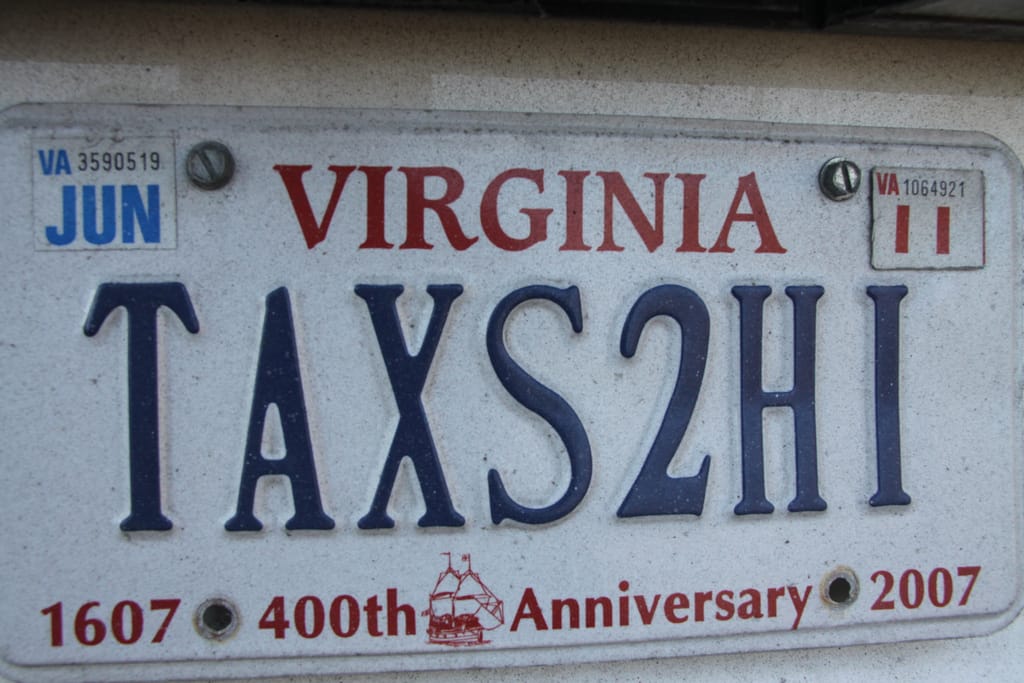
The Roth IRA is a Swiss Army knife for financial success.

In our past wildly exciting posts about the Roth IRA here and here, some of the commenters on these stories have discussed the efficacy of the strategies presented by the Other Guy.

In short: is it worth all the trouble jumping through hoops to get as much money into the Roth IRA as possible?

In a word: indubitably (I’ve wanted to use that word since I heard it in Mary Poppins. 10 points!)

While I’ll agree that if the only upside to these strategies are immediate returns on a few exotic Roth IRA gyrations, you’ll only gain a few extra dollars in your pocket for what seems like a lot of work.

…and I get exhausted switching television channels, so let’s not talk about work.

I prefer easy and exciting.

The Roth IRA has one exciting feature beyond those we’ve listed previously—flexibility later in your planning.


The problem with financial planning


When I read well-meaning blog posts about retirement or education planning (including my own), the writer always discusses assumptions.

You know what happens when you assume…but what choice do we have?

We’ll have to assume that the tax rate will go up/down/stay level.

We have to project inflation rates.

Finally, we have to decide when we’re going to die. (Well, at least you do…I’ve got my cryogenic tank next to Walt Disney ready to go. I’m gonna live forever.)

Back on point: Roth IRA plans, for those of you uncomfortable with this type of tax shelter, give you no tax break today but offers tax free income down the line. Many (yawn) dissenters say that tax treatment of a Roth IRA is irrelevant. You’ll pay the tax today or tomorrow. It’s all the same.

No it isn’t.

We’re working for maximum tax flexibility, not a few random bucks. Because I can’t predict income tax rates, capital gains rates, or estate tax rates, I’m going to create a financial future that is as flexible as possible, as soon as two current criteria are met:

– I’ve done what I can to maximize deductions today. I know what tax rates are right now, so I’ll take my tax break, thank you.

– I’m not locking up money unnecessarily for down the road when I’m experiencing short term needs for cash.


Here’s the Roth IRA Game


When you reach retirement, let’s pretend you want to live on $60,000. Tax brackets in America are tiered, meaning that you’ll pay 10 percent on the first dollars you make, until you hit the 15 percent bracket, which is what you’ll pay beginning with the first dollar in that bracket, until you reach the 25 percent bracket…..

Because we don’t know what tax brackets will be in the future, let’s pretend the 25 percent line will be at $50,000.


You Have Two Pots of Money


Most people have a pre-tax retirement plan. As I mentioned, I like my current pretax deductions, so I’ve maximum funded those. Therefore, I have monster amounts of money (otherwise known as oodles) inside of them. These dollars must come out of the plan and get taxed.

I’ll remove $50,000 per year from this plan. Some of it will be taxed at the 15 percent bracket and some at the 10 percent bracket.


Here’s Where the Roth IRA Comes In


Finally, I remove $10,000 from my Roth IRA. Now I’m living in the 25 percent tax bracket but the government is taxing us at the top of the 15 percent bracket.


Lots of Work for Big Payoffs


Now, I’ve avoided a 25 percent tax each year (or whatever my top tax rate would be….) on $10,000, or $2,500 in taxes. Of course, I paid those taxes already, but remember, if I’m worried about the HUGE AMOUNT OF WORK this takes, I’m only investing money after I’ve already secured current tax breaks.

(photo credit: Swiss Army Knife: IK’s World Trip, Flickr; License Plate: Gamma Man, Flickr)

Enhanced by Zemanta
Photo of Joe Saul-Sehy
Joe Saul-Sehy

Joe is a former financial advisor and media representative for American Express and Ameriprise. He was the “Money Man” at Detroit television WXYZ-TV, appearing twice weekly. He’s also appeared in Bride, Best Life, and Child magazines, the Los Angeles Times, Chicago Sun-Times, Detroit News and Baltimore Sun newspapers and numerous other media outlets.  Joe holds B.A Degrees from The Citadel and Michigan State University.
joesaulsehy.com/

Filed Under: Planning, smack down!, tax tips Tagged With: Roth, Roth IRA, Tax, Tax bracket

Goal Setting and Pretty Retirement Charts – Our Cuppa Joe Discussion

March 22, 2012 by Joe Saul-Sehy 10 Comments

Every Thursday we grab a cup o’ Joe and talk opinions on financial matters…..today we’ll chat about goal setting and workplace retirement plans.

My opinion: Do you know those 401k asset allocation charts in the front/back/middle of your workplace retirement plan booklet? They’re color coded circles of slick graphics, and are often found at the conclusion of a survey about the amount of risk you should take in your investments.

Those pie charts are nearly irrelevant when it comes to financial success.

Each day in a workplace somewhere in America you’ll find a fast-talking 401k-hocking yahoo teaching a group of people how to use these silly charts to determine how much risk they “want” to take.

How much risk you “want” to take?

“Want” and “financial success” rarely coexist when talking about money management. Most people want zero risk and huge returns. They also want Santa Claus to be a little more kind next year than last.

Is “how much risk do you want” really the question you should be asking with your 401k plan?


I have a better question.


Try this one on: How much risk do you need to take to reach your goal?

Isn’t that the question these surveys should be asking?

I know this doesn’t sound like rocket science, yet you’d think so if you’ve ever read workplace retirement plan guides. In many cases, risk tolerance charts and savings guidelines are presented as two entirely different discussions.

Huh?

Let’s be clear about what I’m discussing here. If you’re going to achieve financial success:

Find out how much you need to save.

Then learn what return you need on that savings.


If I had control of these workplace pie charts, here’s what I’d do


I’d gather everyone in the conference room and show the group how to determine the amount they need to save to reach financial success. I know that’ll differ for everyone, so it’ll be important to focus on goal calculators. With the boss’s permission, we’d follow this up with generous portions of alcohol. We’ll call it “Some of You Will Be Happy” Hour.

Second, I’d help everyone determine what return they need on that savings to achieve the retirement goal.

Sounds like I’m repeating myself, doesn’t it? I’m not.


Here’s where we finally insert the silly quiz


Third, the employees would be presented with the risk tolerance quiz. Everyone could see if the asset mix they (historically) would have needed to reach financial success matches their risk tolerance.

If so, more Happy Hour.

If it doesn’t: Houston, we have a problem.


The real problem


If you aren’t going to reach your goal, you have a choice to make: either save more money or raise your risk tolerance. One requires sweat, the other education.

Which path would you follow?

I believe that once we begin presenting 401k plans this way, instead of with some inane chart about your “risk tolerance” (lots of people very comfortably missing their goals out there), we’ll finally begin to realize that every goal can be met through a simple equation:


Savings x Return = Goal


How you approach one side will affect the other.


Okay, discussers, let’s go:  Do you have a workplace retirement plan? Did it come with a silly risk tolerance chart…or did they present retirement in the brilliant manner I have above?

Enhanced by Zemanta(photo credits: Nutty pie chart: Sebastien Paquet, Flickr;                 Teeter-totter: Rambergmedialigmages, Flickr
Photo of Joe Saul-Sehy
Joe Saul-Sehy

Joe is a former financial advisor and media representative for American Express and Ameriprise. He was the “Money Man” at Detroit television WXYZ-TV, appearing twice weekly. He’s also appeared in Bride, Best Life, and Child magazines, the Los Angeles Times, Chicago Sun-Times, Detroit News and Baltimore Sun newspapers and numerous other media outlets.  Joe holds B.A Degrees from The Citadel and Michigan State University.

joesaulsehy.com/

Filed Under: Cuppa Joe, Planning Tagged With: 401(k), Goal, Retirement, Risk aversion, Saving

The Worst of the Free Financial Advisor #2: Top 5 Reasons We Like the Roth IRA – Are Tax Refunds Bad? – Hiring an Advisor

March 19, 2012 by Joe Saul-Sehy 4 Comments

Holy big topics, Batman! We’ve got a great show for you today.

First – Joe & OG talk Hiring an Advisor. Should you hire one? If so, what should you look for? What questions should you ask?

Then – Len, Carrie, Dom  and of course Dr. Dean discuss tax refunds. Should you avoid one?

Finally – Our top 5 reasons we love the Roth IRA.

Subscribe to the show (or just listen) on iTunes here.

Download the show directly by right-clicking here.


Hiring an Advisor

FINRA.org BrokerCheck

CFP – Questions to Ask When Hiring a Financial Planner

5 Jaw-Dropping Financial Advisor Interview Questions

Ric Edelman: The Truth About Money (Amazon page)

Our Roundtable Members Sites:

Carrie Smith = CarefulCents.com

Dominique Brown = YourFinancesSimplified

Dr. Dean = The Millionaire Nurse Blog

Len Penzo = Len Penzo (dot) Com

The Squirrelers.com article we’re discussing: Tax Refunds Are Not Taboo


Photo of Joe Saul-Sehy
Joe Saul-Sehy

Joe is a former financial advisor and media representative for American Express and Ameriprise. He was the “Money Man” at Detroit television WXYZ-TV, appearing twice weekly. He’s also appeared in Bride, Best Life, and Child magazines, the Los Angeles Times, Chicago Sun-Times, Detroit News and Baltimore Sun newspapers and numerous other media outlets.  Joe holds B.A Degrees from The Citadel and Michigan State University.

joesaulsehy.com/

Filed Under: Hiring Advisors, Planning, Podcast, Tax Planning, tax tips

The Passive Income Lie: Our Cuppa Joe Discussion

March 15, 2012 by Joe Saul-Sehy 31 Comments

The concept of “work hard now so I can play later” bothers me. I like to play, and I don’t want to wait until later.

Luckily, my work = my play.

This is the way life is for me. Hard work is the journey and the destination.

That’s why I get so frustrated when I hear people say “I’m going to work really hard now so that I can sit back and relax later.”


They’re going to build up a truly passive income stream.

In this statement, it would seem that completely passive = perfect purpose.

What? Does that ever happen? And if it does happen, how often do you hear “This is exactly what I wanted! To sit here with nothing to do….”

My Story

Early in my career as a financial advisor, I was told the business was all about building a base of assets. This is a financial advisor’s version of passive income. Management would tell me, “bring on a ton of new clients now and roll over their money. Later on, that pile of cash will be making so much money for you that you won’t have to work hard.” It made sense. If could build my assets under management to $100M dollars and earn half a percent personally, I’d bring home $500k per year.

Sweet!

The Truth

I grew my practice to about $40M under management before I realized that this idea of working hard now so I could have fun later was a lie. ….at least for me.

First, as my practice grew, I attracted more demanding clients. It’s the same if you own rental houses or dividend stocks, isn’t it? As you grow the portfolio, you are pulled in more directions with your time managing assets. Decisions get more difficult. Strategies become more complex.

Every once in awhile, I’d try to take time off. The longest I could get away was two weeks, and by the end of the trip I usually was working about an hour and a half a day. My business demanded my time. How was I going to sit back and do nothing?

Second, I liked what I was doing. It was fun talking to my clients about their dreams. If I owned rental properties, I’d like to fix them up and receive rents. I own dividend stocks and like following the companies and diversifying the portfolio. When I step away, it demands that I continue to work, but it’s also fun.

In short, I’m starting to believe that the whole idea of work hard now/play later is a lie. Sure, I might work less hard. I also might delegate more of the tasks which aren’t my core activities, but I will never, ever stop working.

In fact, I’ve found proof that I probably don’t want to stop.

State of Flow

I first heard of the book Flow, by Mihaly Csikszentmihalyi (easy for you to say) during a USA Today interview with Jimmy Johnson, Super Bowl and NCAA National Championship winning coach. He was hot on this philosophy and had a history of professional success, so I went out and bought the book immediately.

It confirmed my suspicions about the meaning of life.

In the book, Csikszentmihalyi seeks to define what “optimal experience” is for a person. When are we in that state where we’re at one with the universe?

He asks–have you ever set out to accomplish a task and then lost track of time because you were so absorbed in it? He describes that perfect union of task and complete concentration as flow. This complete focus, to Csikszentmihalyi, is the optimal experience for a human.

He backs it up by studying people who play classical instruments. Their chances of becoming wealthy or famous are nearly zero, but they’ll practice for hours on end. Why? They crave the state of flow, where everything is working perfectly in harmony together.

There’s no promise that they’ll be rewarded down the line with riches. But they’re attracted to the work anyway. They’ll practice until their fingers bleed.

Do these people just not get it? Shouldn’t they be working hard at things that will make them money today so they can throw out that stupid instrument? I don’t think so.

I think the idea of sitting around is overrated.

Life is about chasing flow. Working so perfectly that you’re completely absorbed, using all of your energy to be the best you can.

Maybe you agree and maybe you don’t.

That’s what the cuppa Joe discussion are all about….grabbing some coffee and arguing a point.

Maybe the concept of passive income is cool if you hate your job. You want to grow your income in a way that you can work at those things you enjoy rather than those you’re forced to do to bring home the bacon.

I can see tha desire to have multiple income streams. What I can’t imagine is any discussion where I’m working hard now so I don’t work later. I don’t crave completely passive income because I’m pretty sure it’s unattainable.

The idea of my money working for me as I’m also working fires me up. The phrase “don’t work” literally doesn’t work for me.

How about for you? Let’s wrestle this out in the comment section.

(photos: Coffee Shop by dailylifeofmojo, Flickr; Immaculata Symphony by Jim Capaldi, Flickr)

Enhanced by Zemanta
Photo of Joe Saul-Sehy
Joe Saul-Sehy

Joe is a former financial advisor and media representative for American Express and Ameriprise. He was the “Money Man” at Detroit television WXYZ-TV, appearing twice weekly. He’s also appeared in Bride, Best Life, and Child magazines, the Los Angeles Times, Chicago Sun-Times, Detroit News and Baltimore Sun newspapers and numerous other media outlets.  Joe holds B.A Degrees from The Citadel and Michigan State University.

joesaulsehy.com/

Filed Under: book review, Cuppa Joe, passive income Tagged With: Finding Flow, Flow, Jimmy Johnson, Mihaly Csikszentmihalyi, Passive income, USA Today

  • « Previous Page
  • 1
  • …
  • 28
  • 29
  • 30
  • 31
  • 32
  • …
  • 34
  • Next Page »

FOLLOW US

Search this site:

Recent Posts

  • Can My Savings Account Affect My Financial Aid? by Tamila McDonald
  • 12 Ways Gen X’s Views Clash with Millennials… by Tamila McDonald
  • What Advantages and Disadvantages Are There To… by Jacob Sensiba
  • Call 911: Go To the Emergency Room Immediately If… by Stephen Kanaval
  • 10 Tactics for Building an Emergency Fund from Scratch by Vanessa Bermudez
  • 7 Weird Things You Can Sell Online by Tamila McDonald
  • 10 Scary Facts About DriveTime by Tamila McDonald

Copyright © 2026 · News Pro Theme on Genesis Framework