• Home
  • About Us
  • Toolkit
  • Getting Finances Done
    • Hiring Advisors
    • Debt Management
    • Spending Plan
  • Insurance
    • Life Insurance
    • Health Insurance
    • Disability Insurance
    • Homeowners/Renters Insurance
  • Contact Us
  • Privacy Policy
  • Risk Tolerance Quiz

The Free Financial Advisor

You are here: Home / Archives for Joe Saul-Sehy

Joe is a former financial advisor and media representative for American Express and Ameriprise. He was the “Money Man” at Detroit television WXYZ-TV, appearing twice weekly. He’s also appeared in Bride, Best Life, and Child magazines, the Los Angeles Times, Chicago Sun-Times, Detroit News and Baltimore Sun newspapers and numerous other media outlets.  Joe holds B.A Degrees from The Citadel and Michigan State University. 

High Yield Bond Investing for Beginners

April 24, 2012 by Joe Saul-Sehy 11 Comments

Imagine investing in a fund that built bigger and bigger dividends until you were ready to use them. Sound good?

I’ve always been a fan of high yield bonds as an asset class for this reason. My clients and I earned solid results by investing in these products.

Today, boys and girls, we’ll explain what a high yield bond is, how it reacts to different pressures and the method I’d recommend to buy a high yield bond if I were a beginner.


What is a High Yield Bond?


Let’s begin with the word “bond.”

Most people are comfortable with the idea of a stock. If you own stock in a company, congratulations! You are now the proud owner of a piece of that firm. How will you make money? Like any company owner, you’ll generally come out ahead as the company’s business prospects improve. If the company takes a downturn, you could stand to lose your entire investment.

A bond is better for people who don’t want that roller coaster ride. Instead, bond holders are more comfortable loaning a company money. The company gives you specific terms (for example: five years at a six percent interest rate), and you agree to loan them the money.

In essence, you aren’t a company owner. You’re Louie the Loan Shark. Sweet!

How Do I Decide Which Bond to Buy?


Well, Louie the Loanshark, what’s the first question you’re going to ask if you’re loaning someone money?

That one’s easy: How likely is it that I’ll get my money back?

In the case of High Yield bonds, it’s pretty shaky. If these companies were regular people, they’d be the type that’ve had their American Express Card taken away and their house payment is two months behind.

When I said Loan Shark, I meant it.

So, when you see bad credit, what do you do? You jack up the interest rate. If I’m going to risk my money, I’m going to need to see a good return. High yield bonds are the highest returning bond type on the market. You’ll receive much higher returns than any other type of bond because you’re taking more risk.

High yield bonds used to be called junk bonds. To dress up the category, somebody decided “high yield” was a prettier name. I’d agree.


Is This Category Too Risky For Me?


Maybe. It depends on your goals. But let’s mitigate the risk of buying a single bond.

If you’re a new investor, I wouldn’t try to purchase an individual bond (loan money to one company). Frankly, the risks in that arena are too high for a beginner, unless you’re completely open to the risk of losing all of your capital.

In this case, I prefer a mutual fund. With a fund you have humans buying and selling positions on the open market. Fund managers diversify the portfolio like an ETF would, but also can sell when a certain company starts to turn for the worse. You don’t want to worry about that.


Let’s Talk About Performance and the Dividend


In high yield bond funds the dividend usually is classified as interest, so this asset class is best used in your tax sheltered plan (RRSP or IRA).

First, you can expect the value of your fund to fluctuate. With a high yield bond fund, I’ve always considered this the roll of the ocean. If I still own the shares  and they’re pumping out a dividend, I have one goal: make that dividend grow.

Therefore, I reinvest dividends.

That purchases more shares, which I reinvest in the mutual fund. I’m always looking at the size of my dividend payment that’s reinvested and asking “is it large enough to supplement my income yet?” Until it is, I continue to reinvest.

One of my clients pretended the dividend was a little man who worked alongside him each month. Every dividend would head back into the factory to help make the next payment a larger amount.


Popular High Yield Bond Investor Questions


How much should I invest?

With any investment, you begin by finding the return you need to meet your goal. For some investors, high yield bonds will be too risky for their portfolio. For others, they’ll need growth in their portfolio and high yield will rarely give you huge returns.

How risky is a high yield bond fund?

I present the risks of a high yield bond as “high” because I want investors to understand the risk versus other bonds. However, on a long-term risk/reward pyramid, high yield bonds are less risky than large cap stocks. If you’re comfortable investing in stocks, a high yield bond mutual fund historically has been less risky.

If I Don’t Have an IRA or RRSP Should I Still Invest?

I prefer to use tax advantaged investments outside of a tax shelter and tax-creating assets inside of shelters. High yield bonds are heavily taxed when compared to other asset classes that earn a similar return. You can use a high yield bond mutual fund outside of a tax shelter, but realize you’ll pay more tax than you will with many other investment classes.

How to I Find a Good High Yield Bond Mutual Fund?

Read our pieces on using Morningstar to find good funds:

Part I: Researching Mutual Funds (or how to cure insomnia)

Part II: Evaluate a Mutual Fund in 10 Minutes


Not only will you see past performance, but this website will tell you about fees and how much you’ll need to invest to meet fund minimums.


(Photo Credit: Payday Loan Store, Swanksalot, Flickr; Loan Shark, Jesse Wagstaff, Flickr)


Okay, that’s my story. Do you use high yield in your portfolio? Are there criteria or tools you use to choose high yield bonds that are appropriate for a new investor that weren’t presented here? We’d love to hear them.

Photo of Joe Saul-Sehy
Joe Saul-Sehy

Joe is a former financial advisor and media representative for American Express and Ameriprise. He was the “Money Man” at Detroit television WXYZ-TV, appearing twice weekly. He’s also appeared in Bride, Best Life, and Child magazines, the Los Angeles Times, Chicago Sun-Times, Detroit News and Baltimore Sun newspapers and numerous other media outlets.  Joe holds B.A Degrees from The Citadel and Michigan State University.

joesaulsehy.com/

Filed Under: investment types, passive income, successful investing

The Worst of the Free Financial Advisor Episode 6: Top 5 Business Start-Up Tips

April 23, 2012 by Joe Saul-Sehy 6 Comments

Download the current episode my right clicking here.

Not sure how to download a podcast to your iPod? It takes less than five minutes and is very easy. Here’s the link to the Apple page explaining how to do it.


Paula Pant from AffordAnything joins the Roundtable Crew to talk tiny houses. I’m sure this site is worth a ton more because Paula agreed to hang out with us.

Show Notes:

<open> Show stats from Libsyn.com, our host. We have over 70 listeners (shortly after recording we reached 85!).

<9:16> OG & Joe’s financial concerns: OG is buying a car and Joe can’t stop going to restaurants

<17:09> Fractional Cents w/ PK from DQYDJ.NET – Kelly Criterion.

<26:52> The Roundtable: Tiny Houses

We discuss Sicorra’s piece: These Tiny Houses Fascinate Me

<58:41> Top 5 Tips to Start a Business

Books mentioned: Ravings Fans, The E-Myth, The Goal, Execution

(check these books out.  On Amazon right now, they’re all about 45% off…)


On the Sites:

Your Finances Simplified: Stop Paying Your Mortgage Today!…and be a Victim!

Len Penzo dot Com: Use a Ledger to Teach Kids Money Management Skills

The Millionaire Nurse Blog: 20 Ways to Improve YOUR Customer Service

Afford Anything: We Bought a Second Rental House!


The segment that shall not be named wasn’t included in this week’s show. Our Roundtable ran long.


Photo of Joe Saul-Sehy
Joe Saul-Sehy

Joe is a former financial advisor and media representative for American Express and Ameriprise. He was the “Money Man” at Detroit television WXYZ-TV, appearing twice weekly. He’s also appeared in Bride, Best Life, and Child magazines, the Los Angeles Times, Chicago Sun-Times, Detroit News and Baltimore Sun newspapers and numerous other media outlets.  Joe holds B.A Degrees from The Citadel and Michigan State University.

joesaulsehy.com/

Filed Under: business planning, Podcast

Getting Things Done (GTD) or Creativity: Which Is More Important? Our Thursday Cuppa Joe Discussion

April 19, 2012 by Joe Saul-Sehy 20 Comments

On Thursdays we grab a cup of coffee and talk about issues and opinions. Join the fun in our comments!

The Other Guy (OG) and I run a quirky house here.

We try to balance straightforward financial advice with fun topics. Sometimes it works and sometimes it doesn’t. Either way, as I’m sure you can see, we’re having a blast and bringing you along for the ride.


Wouldn’t it be better if we did one or the other? Wouldn’t a site work better if it were just humorous all the time or only provided financial advice? Maybe, but OG and I don’t think so.

I’ve always been obsessed with human motivation and process management. For people to learn, remember, and replicate a concept, I think the teacher needs to set a strong anchor. Maybe our anchor isn’t strong, but the anchor I always seem to remember is humor. So, we’ve decided that they go together.

This creates a problem.

In a recent Harvard Business Review Ideacast (podcast), Portland State University Assistant Professor of Psychology Charlotte Fritz discusses the concept of microbreaks.   Here’s how they work:  if you want to get things done (GTD), it’s better to engage intensely during the day and then drop everything when you head home. Working all night on the blackberry or computer doesn’t increase productivity. Taking microbreaks each day or mini vacations every several weeks instead of coffee breaks and a long vacation can pay dividends when trying to accomplish more tasks.

What’s wrong with this finding?

Is “getting more done” better or would you be wiser to get less done and produce brilliant, creative results?

Who better to argue against conventional definitions of productivity than a Disney alum. According to Don Hahn, author of Brain Storm, Unleashing Your Creative Self, (and the producer of The Lion King and Beauty and the Beast), the goal of GTD productivity stifles creativity. While a numbered checklist and intense focus on the bottom line increases productivity, it doesn’t make you more creative. You just turn into a machine.

If we’re trying to manage a site that balances something as serious a financial security and something as playful as humor, it’s a juggling act. I often feel the pull between the need to be creative with “funny” pieces and the desire to write something meaningful and direct.

But I don’t think the problem is only felt by OG and I here at the Free Financial Advisor.

We All Need Creativity

Every day in your job, wouldn’t you preform better if you could come up with creative solutions? You may think that you don’t need creativity, but if you’ve ever had a difficult boss or a particularly intense client, you know that a creative solution is sometimes the only way to win the day.

For creativity to blossom, we need down time, according to Hahn. We need time to let our mind wander. Not surprisingly, he advocates napping in the afternoon. His concept of GTD flips our predefined goals of greater productivity on their head. For creativity to blossom, do something that at first seems irrelevant. Listen to music and sit by the stream. Wander.

In short, I haven’t asked it, but it seems that he agrees with Fritz on the value of breaks, but isn’t onboard with why we want them in the first place.

The Financial Tie-In

I’ve often felt many workplaces are run too stringently. The boss doesn’t really get how her employees operate more effectively. A shop that provides more services for employees and that is able to create raving fans by first empowering workers to think and build creative solutions will win the day.

Even if they don’t win, it’s more interesting to invest money and follow companies that are fighting to win rather than finish every day with a .03 percent productivity improvement. Yawn.

I seek out and invest in companies that have a progressive view of workplace motivation….not because I’m a liberal thinker, but because I’m a greedy capitalist. Firms such as GE, Disney, Whole Foods and Google, at different times during their development have been able to attack more quickly because of their attention to process that creates innovative solutions.

The Good News

Both Assistant Professor Fritz and Mr. Hahn agree on one aspect: whether you’re looking for innovation or GTD, how you detach from the assembly line of productive work is intensely important to the outcome.

(photo credit: origami coffee cup: scarygami, Flickr; Dicky juggles: Mike Burns, Flickr)

Okay, that’s my story, minions! Now it’s your turn: how do you value creativity? Are you more interested in GTD solutions or finding a novel approach? Do you think you should work on being more creative?

Photo of Joe Saul-Sehy
Joe Saul-Sehy

Joe is a former financial advisor and media representative for American Express and Ameriprise. He was the “Money Man” at Detroit television WXYZ-TV, appearing twice weekly. He’s also appeared in Bride, Best Life, and Child magazines, the Los Angeles Times, Chicago Sun-Times, Detroit News and Baltimore Sun newspapers and numerous other media outlets.  Joe holds B.A Degrees from The Citadel and Michigan State University.

joesaulsehy.com/

Filed Under: Cuppa Joe, Meandering

Worst of the Free Financial Advisor Podcast Episode 5 – Top 5 Ways to Cut Vacation Expenses

April 16, 2012 by Joe Saul-Sehy 7 Comments

Instead of a party to celebrate that we actually made it to five complete episodes, we’ve decided to celebrate with about 10 extra minutes of fun.

This might be my favorite episode yet.

Enjoy!

Subscribe to the show on iTunes here.

Never downloaded a podcast to your iPod? It’s easy! Click here for instructions direct from Apple.


Show Notes:

<open> Listener Question: What’s the worst advice you’ve ever seen an advisor give a client? (Thanks to MyCanadianFinances for the question!)

<8:30> On the Blog – Why I Save

<11:25> Fractional Sense from PK @ DQYDJ.net – Tax Refunds

<15:39>  Shout Out from Steve Stewart @ The MoneyPlanSOS Podcast

<16:03>  Roundtable

Our Crew:

Len Penzo from LenPenzo.com
Carrie Smith from CarefulCents.com
Dominique Brown from YourFinancesSimplified

and special thanks to our first-ever roundtable guest:

Andrew from 101Centavos!

The Article We Discuss: Why Starting a Business is Less Not That Risky and Costs Less Than You Think at Planting Money Seeds.com. I think you’ll enjoy this site, especially if you’re looking for motivation and tips to be an entrepreneur.

Book Recommendations:

Carrie: Many Happy Returns: The Story of Henry Bloch, America’s Tax Man

Quitter

Dom:401(k) Sales Champion: A Guide for Financial Advisors to Acquire and Retain 401(k) Plans

The Trusted Advisor

Hot Prospects: The Proven Prospecting System to Ramp Up Your Sale

Len: Competitive Advantage: Creating and Sustaining Superior Performance

Andrew: Nuts! Southwest Airlines’ Crazy Recipe for Business and Personal Success

Joe: The E-Myth Revisited: Why Most Small Businesses Don’t Work and What to Do About It

On The Sites:

Why Coke Rewards is For Suckers @ LenPenzo.com

Negotiate for Lower Rent and Live Large on a Small Budget @ Careful Cents

UpliftingSisters.com Prom Dreams Giveaway @ YourFinancesSimplified

Why Study History, Indeed? … @ 101Centavos

<44:48> Top 5 Ways to Cut Travel Costs

Websites mentioned: Hotwire, TripAdvisor, Jetsetter


Music on the Show: Incompetech.com


Finally, I’d like to again thank everyone who’s listened to these early episodes of the show. They’ve been a blast for OG and I to produce, and the feedback has been outstanding so far. If you get a moment, please go to iTunes and review the show. As we receive more 5 star reviews, it’s more likely then that iTunes will help publicize the show.


Photo of Joe Saul-Sehy
Joe Saul-Sehy

Joe is a former financial advisor and media representative for American Express and Ameriprise. He was the “Money Man” at Detroit television WXYZ-TV, appearing twice weekly. He’s also appeared in Bride, Best Life, and Child magazines, the Los Angeles Times, Chicago Sun-Times, Detroit News and Baltimore Sun newspapers and numerous other media outlets.  Joe holds B.A Degrees from The Citadel and Michigan State University.

joesaulsehy.com/

Filed Under: Planning, Podcast

Four Tips for Tax Season

April 13, 2012 by Joe Saul-Sehy 11 Comments

This is a guest post from Eric at Narrow Bridge Finance as part of the Yakezie Blog Swap. This week, we are discussing the topic “Best Tips for Your Taxes.” You can see my post on the same topic at Eric’s site.


People around the United States are in a last minute flurry to find their W2s, 1099s, 1098s, and find the easiest and cheapest way to load all of that onto a 1040. If that sounded like a foreign language to you, don’t worry. Here are some of my favorite tips for navigating tax season.

Tip #1 – File Early

I guess if you are reading this, you probably already missed this one. But there is no time like the present to start planning to avoid next year’s procrastination.

I sent my taxes to my accountant around the end of February. Avoiding the stress of last minute filing can do wonders for your health and sanity. Planning ahead and filing early just makes life easier on you.

Tip #2 – Understand Your Forms

Decoding that foreign language is important. Knowing which tax forms to look for is a big first step. Here are the most common items to look out for:

· W2 – Earnings report from your employer

· 1099 – Miscellaneous income forms. These include bank interest, investment income, and freelance income.

· 1098 – Deduction forms. If you pay mortgage interest or higher education expenses, expect 1098s that you can use to lower your tax liability.

· 1040 – This is the form that you submit to the IRS that summarizes your annual taxes paid, taxes owed, and any refund or additional payment.

Tip #3 – Stay Organized

My taxes this year were two inches thick. Getting everything from my banks, investments, employer, and other income sources is a chore on its own. To stay organized, I made a checklist outlining everything I was expecting and marked forms off as they arrived.

When the form arrived, via mail or online, I filed hard copies in manila folders by type. My personal forms went into one folder and each of my side income sources had its own folder.

Make sure to keep each year separate but filed away in case you need it. It is important to understand how long to keep bank statements and other financial records.

Tip #4 – Understand How Your Taxes Work

You pay taxes every time you get a paycheck. You earn money all the time, and you might not remember it around tax time. To make sure you file correctly and avoid penalties and audits, you should understand how your taxes work.

Take time to learn about itemized deductions versus the standard deduction. Take time to learn about tax brackets. Whether you use tax software to file or have an accountant take care of it for you, you should understand the complexities of your taxes in case you are contacted by the IRS and to make sure you are not overpaying.

Get To It!

Now that you know my best tips, get those taxes done. The filing deadline is swiftly approaching, and you don’t want to get in trouble for being late.

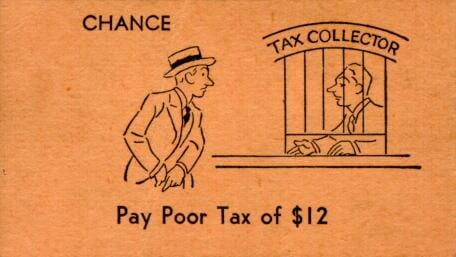
(Photo credit: Tax Sign – 401k, Flickr; Chance Card – OhioProgressive, Flickr)

Photo of Joe Saul-Sehy
Joe Saul-Sehy

Joe is a former financial advisor and media representative for American Express and Ameriprise. He was the “Money Man” at Detroit television WXYZ-TV, appearing twice weekly. He’s also appeared in Bride, Best Life, and Child magazines, the Los Angeles Times, Chicago Sun-Times, Detroit News and Baltimore Sun newspapers and numerous other media outlets.  Joe holds B.A Degrees from The Citadel and Michigan State University.

joesaulsehy.com/

Filed Under: Tax Planning, tax tips Tagged With: organizing taxes, tax filing, tax forms

Allowances and Overprotective Parents: Our Cuppa Joe Thursday Discussion

April 12, 2012 by Joe Saul-Sehy 26 Comments

A recent headline in USA Today, Aggressive ‘Helicopter’ Parents Force Easter Egg Hunt Cancellation spurred today’s topic. Some overbearing parents were so worried that their little kiddos couldn’t Easter egg hunt on their own and wouldn’t get their “fair share” of prizes that they violated the hunt rules and “helped” their children claim eggs…

….all while parents who had the fortitude to follow the rules watched as their kids came back with baskets empty.


My opinion:


We all want our kids to succeed and don’t want to see them cry. But sometimes, sending little Timmy out to play without his helmet can help him learn valuable life lessons.

We all learn from failure.

I’ve failed more often than the average person has tried. – Donald Trump

Back in my advising days, I’d ask parents how they were teaching their kids financial responsibility. I don’t think many advisors ask this question, because so many were surprised when I asked.

Often, they’d ask what I’d recommend.

One of my favorite recommendations was that they hand little Timmy or Tina an allowance.  I’d make it a big one, too.

One of my favorite pastimes was to watch their faces when I told them just how big I’d make it. I’m not talking “break the bank” big, but I am suggesting you hand them enough to make them go “wow!”

Here’s the deal:


You can trust your kids with a little money today or send them off to college later without a clue how to manage cash in their hand.

Let Timmy screw up. Have the guts to let him fall on his face.

Then, once he’s stepped in it the first time, be a parent enough to discuss his mistake. Do it a few days after he’s broken the new iTouch he bought, or when G.I. Joe is missing an arm.

Teach him how he could have bought security by saving or investing that money. Ask him if the toy really made him happier.

Stop sheltering your kids from real life until they show up as adults with no training and you’re not there to do it for them.

I’ll bet giving them $10 a few times will teach them well over $1,000 in lessons over their lifetime.  What a great investment!

Here’s what I did. I paid my kids a large allowance. Then I stopped buying popcorn at movies when we’d go. I wouldn’t by them books at the bookstore. There were no video games. They could buy that stuff, but it was their choice. Then we’d talk about the impact of those choices.

Today my kids both run websites at age 16 and own stocks on their own. They both have healthy savings accounts from jobs. I stopped paying an allowance years ago.

I’m not patting myself on the back. We’ve messed up our fair share and will in the future.  I’m just showing you that it’s possible to teach your kids about life without doing everything for them.

(photo credits: C’mon Kid, finish up: I’ve got work to do: Ed Yourdon, Flickr;  Kids and Money: GoodNCrazy, Flickr)


Thoughts anyone? Bueller?
Photo of Joe Saul-Sehy
Joe Saul-Sehy

Joe is a former financial advisor and media representative for American Express and Ameriprise. He was the “Money Man” at Detroit television WXYZ-TV, appearing twice weekly. He’s also appeared in Bride, Best Life, and Child magazines, the Los Angeles Times, Chicago Sun-Times, Detroit News and Baltimore Sun newspapers and numerous other media outlets.  Joe holds B.A Degrees from The Citadel and Michigan State University.

joesaulsehy.com/

Filed Under: money management, smack down! Tagged With: allowance, kids and money, money lessons for children

Sprint Teaches Me Geography

April 11, 2012 by Joe Saul-Sehy 14 Comments

Just to keep it real: that headline was a joke.


Backstory: I’d just gone fishing with my dad and some of his friends in northern Ontario. I wasn’t sure if my phone would work in the Canadian wilderness, so I asked my dad.

Dad: Sure, it’ll work fine.

Me: You sure? I have to stay in touch with the office if something goes haywire in the markets or with my clients.

Dad: You’ll be fine.

The short story:  I wouldn’t have a tale for you today if it’d worked. The owner of the fishing lodge bought me a phone card on a trip to town for supplies. I was allowed to stand in his living room and use his personal phone for about 15 minutes each day.


It was ugly.

So, a couple months later I was headed to Toronto for a business meeting. Being the think-ahead-guy I am (you may recognize that as another joke if you’ve been reading this blog for any length of time), I decided to call Sprint to verify that I could keep in touch with clients and my office.

Sprint: Thank you for calling Sprint. This is Betty. How may I help you?

Me: I’m headed to Toronto in the morning and I wanted to verify that I’ll have phone service.

Sprint: I’m happy to help you with that, sir. First, I need to verify some personal information.

It’s clear to me at this point that she didn’t even listen to my question. We verify that I really am AverageJoe, quite a sexy dude.

Sprint: Okay, now how can I help you sir?

Me: I have a work trip to Toronto, and I’d like to make sure my cell phone will work.

Sprint: Certainly. I can look that up for you. Where was that again?

Me: Toronto, Canada.

Sprint: Hold on a moment, sir. I’ll find out for you. Can you hold please?

She’s gone for flippin’ ever. I don’t mean “walk around the house” ever. I mean “fix lunch and dinner and mow the lawn before she gets back” ever.

Sprint: I’m sorry for the delay, sir.

Me: (I was starting to think she’d hung up on me) That’s quite alright.

Sprint: Where was it you’re heading?

Me: (amazed) Toronto. Ontario. Canada.

Sprint: Certainly, sir. Can you hold again? I apologize.

I remember her being very nice about it. Now I’m starting to think something is wrong.

It turns out, something was wrong.

Something was very, very wrong.

Sprint: Sir?

Me: Yes?

Here’s where the Sprint woman gave me the awful news for Americans everywhere.

Sprint: It appears that Toronto, Canada isn’t a part of the United States.

I couldn’t help it. There was only one possible reply.

Me: (indignant) SINCE WHEN?

I hung up. I couldn’t stop laughing.

(Not that it matters, but my phone worked. There were huge roaming fees…maybe so they could hire geography experts.)

(photo credit: Phones: David Paul Ohmer, Flickr, Toronto: Steven Harris, Flickr)


How about that? Canadians, are you sad you aren’t a part of the United States? Americans, are you sad the awesome city of Toronto isn’t part of the United States? What’s your best customer service story?
Photo of Joe Saul-Sehy
Joe Saul-Sehy

Joe is a former financial advisor and media representative for American Express and Ameriprise. He was the “Money Man” at Detroit television WXYZ-TV, appearing twice weekly. He’s also appeared in Bride, Best Life, and Child magazines, the Los Angeles Times, Chicago Sun-Times, Detroit News and Baltimore Sun newspapers and numerous other media outlets.  Joe holds B.A Degrees from The Citadel and Michigan State University.

joesaulsehy.com/

Filed Under: irrelevant stories, Meandering Tagged With: customer service

The Two Reasons I Save

April 10, 2012 by Joe Saul-Sehy 17 Comments

It’s show and tell time!

There isn’t much that makes me happier than looking at old pics of children. Even the ugliest of adults was once a beautiful, smiling baby.

We were cleaning out boxes of old photographs to scan and store when we came across this gem on the left.

In my mind, this picture was taken yesterday,

and yet my twins are now 16 years old.

Holy s$%! I’m old!

This time next year they will have been accepted at a college of their choice.

In less than two years Cheryl and I will be here alone.

I’ve met plenty of people who’ve said “I can’t save for that yet.”

The key word: yet.

Here’s my perspective:  Time runs away. 


That’s why I sock money away. What motivates you to save?

Photo of Joe Saul-Sehy
Joe Saul-Sehy

Joe is a former financial advisor and media representative for American Express and Ameriprise. He was the “Money Man” at Detroit television WXYZ-TV, appearing twice weekly. He’s also appeared in Bride, Best Life, and Child magazines, the Los Angeles Times, Chicago Sun-Times, Detroit News and Baltimore Sun newspapers and numerous other media outlets.  Joe holds B.A Degrees from The Citadel and Michigan State University.

joesaulsehy.com/

Filed Under: Meandering, Planning

The Worst of the Free Financial Advisor Podcast, Episode #4: Top 5 Ways to Blow Your Income Tax Refund

April 9, 2012 by Joe Saul-Sehy 13 Comments

Wow! We made it to Episode #4. Who knew?

Subscribe at iTunes here.

Download the Show directly here.

Don’t know how to load a podcast onto your iPod? It’s easy and takes less than 5 minutes to learn! Here’s a link to Apple’s easy-to-follow instructions.

 Show Notes

<Open> OG and Average Joe talk Apple stock.

<5:53> On the Blog – Michelle from SeeDebtRun.com guest posted for Joe this week.

The piece we discuss:  Getting Through the “Broke Week”

Our boardgame gift guide.

Other games mentioned: Jamaica and Pony Express

<8:56> Fractional Cents w/ PK from DQYDJ.net. What does currency cost?

Find the companion piece at DQYDJ.net here.

<14:17> Roundtable – Dr. Dean (The Millionaire Nurse Blog), Dominique (Your Finances Simplified), Len (Len Penzo dot Com) and Carrie (CarefulCents) talk debt.

The post we’re discussing is from SoOverDebt.com: The Three Types of Debt (and How to Get Out)

Dr. Dean’s Save on Gas: At the Expense of Our Marriage? at The Millionaire Nurse Blog

Dom’s 6 Awesome Places to Retire Abroad at YourFinancesSimplified

Len’s How to Fix Your Finances Without More Money at LenPenzo dot Com

Carrie’s Save Money on Spring Cleaning with These 6 Tips

< 42:40> Top 5 Ways to Blow Your Tax Return Check

Photo of Joe Saul-Sehy
Joe Saul-Sehy

Joe is a former financial advisor and media representative for American Express and Ameriprise. He was the “Money Man” at Detroit television WXYZ-TV, appearing twice weekly. He’s also appeared in Bride, Best Life, and Child magazines, the Los Angeles Times, Chicago Sun-Times, Detroit News and Baltimore Sun newspapers and numerous other media outlets.  Joe holds B.A Degrees from The Citadel and Michigan State University.
joesaulsehy.com/

Filed Under: Podcast

What Type of Advisor Has Your Best Interest at Heart?

April 4, 2012 by Joe Saul-Sehy 3 Comments

Minions,

I’m busy kicking my nephew’s butts at board games, so you’re off the hook this week. Instead of me blathering on about some inane topic, Tom Cleveland from Forex Traders wrote us a nice piece about verifying the credentials of your investment advisor. Take it away, Tom!

– – – – – – – – – – – – –

What Type of Advisor Has Your Best Interest at Heart?


The rally in stock prices that began last October has been nothing short of outstanding. The S&P 500 index has risen more than 27%, sitting just over 1,400. This rise is even more impressive because it has happened when volumes were low and without any kind of recovery in the housing sector. Europe seems to have temporarily stopped the bleeding, removing much of the market uncertainty and volatility in the process, but the global economic recovery is still straining to “get legs” and produce prosperity for all concerned down the road.

Where will the markets go from here and whose advice counts most when trying to find this answer? Do you want to believe someone that is looking out for your financial interests or someone trying to sell you securities on the side? Investors need consultants that they can trust that accept their fiduciary duty to assist you in planning your financial future, taking into account every variable that may have an impact going forward.

This person is surely not a broker/dealer.

Marketing types in the investment industry often disguise themselves in a “cloak of authenticity” when they approach you with the latest and greatest stock to own. They may claim to be an “adviser”, using the term quite loosely to gain your confidence and make a sale. They get away with this subterfuge because the average retail investor, as confirmed by study after study, rarely understands the various professional designations in the investment industry.

A financial planner or analyst must pass rigorous exams and educational requirements in order to earn the coveted “CFP” or “CFA” certifications. The simple fact is that the proposal from your broker/dealer may actually be a good one, but prudent due diligence would suggest that you first review the sales proposal with a professional advisor that will not bias his opinion due to some unseen commission structure.

What are the differences between these two professionals?


Put quite simply, a “Certified Financial Planner” deals directly with the public and a “Certified Financial Analyst” deals primarily in a corporate setting. Each has completed a strenuous college curriculum, steeped in investment issues, mathematics, insurance, and complex methods of fundamental and technical analysis. Professional examinations, actual focused time in the workplace, and continuing education round out the necessary knowledge and experience components.

A CFP will typically possess very good communication skills and enjoy working directly with clients. He will help you develop a financial plan for the retirement, protect your assets and family from risks with insurance, and advise you on proper ways to manage your portfolio of investments. Estate and tax planning are also topics within his area of competency. He has been trained to understand complex financial issues and know how to describe them in layman’s term for your benefit.

A CFA generally pursues a career more corporate in nature, performing similar functions that require complex analysis in a corporate setting. Whether managing the assets in a retirement trust for optimum return, hedging a currency risk when FX charts deems it appropriate, or minimizing the risks surrounding a business activity, he or she has the ability to use the tools of the trade to guide firms in the most prudent financial direction. Their backgrounds of study tend to be more in depth than that required for a CFP, since the amounts of money involved can be significant in the corporate world and the legal and financial issues, broader than with most individuals.

In either case, you are in good hands when you are dealing with a truly certified professional in the investment industry.

Photo of Joe Saul-Sehy
Joe Saul-Sehy

Joe is a former financial advisor and media representative for American Express and Ameriprise. He was the “Money Man” at Detroit television WXYZ-TV, appearing twice weekly. He’s also appeared in Bride, Best Life, and Child magazines, the Los Angeles Times, Chicago Sun-Times, Detroit News and Baltimore Sun newspapers and numerous other media outlets.  Joe holds B.A Degrees from The Citadel and Michigan State University.

joesaulsehy.com/

Filed Under: Hiring Advisors, Planning

  • « Previous Page
  • 1
  • …
  • 27
  • 28
  • 29
  • 30
  • 31
  • …
  • 34
  • Next Page »

FOLLOW US

Search this site:

Recent Posts

  • Can My Savings Account Affect My Financial Aid? by Tamila McDonald
  • 12 Ways Gen X’s Views Clash with Millennials… by Tamila McDonald
  • What Advantages and Disadvantages Are There To… by Jacob Sensiba
  • Call 911: Go To the Emergency Room Immediately If… by Stephen Kanaval
  • 10 Tactics for Building an Emergency Fund from Scratch by Vanessa Bermudez
  • 7 Weird Things You Can Sell Online by Tamila McDonald
  • 10 Scary Facts About DriveTime by Tamila McDonald

Copyright © 2026 · News Pro Theme on Genesis Framework