• Home
  • About Us
  • Toolkit
  • Getting Finances Done
    • Hiring Advisors
    • Debt Management
    • Spending Plan
  • Insurance
    • Life Insurance
    • Health Insurance
    • Disability Insurance
    • Homeowners/Renters Insurance
  • Contact Us
  • Privacy Policy
  • Risk Tolerance Quiz

The Free Financial Advisor

You are here: Home / Archives for book review

5 Iconic Gen X Books Everyone Should Read at Least Once

November 25, 2025 by Travis Campbell Leave a Comment

books

Image source: shutterstock.com

New stories appear in every succeeding generation, creating their own versions of what they believe to be real. The Gen X stories employed sarcastic speech to reveal their personalities, demonstrate their ability to solve complex problems, and reject simple answers. The essential Gen X books offer readers insight into their generation’s perspective while explaining how their core values persist in modern society. The works reveal how financial worries, personal identity issues, and social breakdowns from the past continue to affect society today. The direct approach in these works helps people overcome the surrounding distractions. The direct approach in these works makes them worth studying in more detail.

1. Fight Club by Chuck Palahniuk

This novel captures a raw sense of disillusionment. It digs into the quiet rage that sits under the pressure to perform, consume, and pretend everything is fine. The unnamed narrator’s unraveling strips away the polite lies of modern life and forces a confrontation with uncomfortable truths. It struck Gen X readers hard and still resonates with anyone feeling the weight of expectation.

The book reflects a financial undercurrent tied to identity. When everything becomes defined by what we buy, the ground shifts. People start measuring their value through things that break, fade, or mean nothing. Fight Club put that tension on display. That’s part of why it remains one of the most talked-about Gen X books decades later.

2. Generation X: Tales for an Accelerated Culture by Douglas Coupland

This collection gave the generation its name. It reads like a snapshot of lives caught between ambition and apathy. Three young adults retreat to the California desert, rejecting careers that feel hollow while telling stories about the world they left behind. Their conversations reveal a persistent fear of becoming irrelevant in a culture moving too fast to hold onto anything meaningful.

The book shows how economic uncertainty can shape a generation. When wages stagnate and expectations balloon, people search for grounding. Coupland’s characters openly admit their confusion. The honesty resonated then, and it resonates now, especially as these themes surface again in debates about modern work. Many Gen X books touch on these questions, but Coupland’s work does it with sharp clarity.

3. High Fidelity by Nick Hornby

Hornby’s novel speaks to anyone who has tried to organize life through lists and nostalgia. It follows Rob, a record-store owner stuck in his own head, cataloging past relationships as he tries to understand why none of them worked. Music forms the backdrop, but the real focus is emotional paralysis—how people avoid growth by clinging to the familiar.

The story also highlights a subtle financial thread. Rob’s avoidance habits spill into every part of his life, including money. He drifts instead of deciding. He waits instead of acting. That pattern hits close to home for readers who have delayed uncomfortable choices. Many Gen X books address cultural tension, but this one shines a light on the kind that happens inside one person’s mind, day after day.

4. White Noise by Don DeLillo

This novel blends dark humor with a sharp analysis of modern fears. It follows a blended family living in a small college town where every conversation seems to circle death, technology, or some chemical threat drifting through the air. The story’s surreal tone reflects the constant background noise of modern life—the alerts, warnings, and chatter that fill every moment.

The book also touches on financial fragility. Even academic families juggling respectable salaries face risks they can’t control. The world changes faster than they can prepare for it. DeLillo captures that tension without offering neat solutions. The uncertainty feels familiar today, especially in conversations about health, safety, and economic pressure.

5. The Virgin Suicides by Jeffrey Eugenides

Eugenides tells the story of five sisters through the collective voice of neighborhood boys who can’t stop trying to understand what happened to them. The novel examines suburban life with a sharp eye, exposing how appearances shield deeper fractures. The girls’ isolation grows while adults look away, convinced that maintaining order is the same as providing care.

The book’s structure gives it a haunting quality. Memory becomes its own unreliable narrator. By the final page, the weight of unspoken rules and emotional neglect feels suffocating. Many readers still return to it because it captures how fragile stability can be, even in places meant to feel safe. Within the landscape of Gen X books, this one stands out for its restrained but relentless tone.

The Lasting Grip of Gen X Stories

The books remain relevant because they introduce readers to difficult moral dilemmas that require personal decision-making, without offering straightforward solutions. The books present economic instability, changes in personal identity, and cultural expectations through their direct, unfiltered content. The unfiltered nature of Gen X literature is its main characteristic, as contemporary society demands quick answers rather than thoughtful reflection.

The books present to us stories that reveal our concealed truths during periods of social instability. The information we learn from these works motivates us to start changing our daily routines.

Which additional Gen X books would you include in this collection?

What to Read Next…

  • Why Even Wealthy Families Are Now Fighting Over Heirlooms
  • 6 Trends That Suggest The Middle Class Is Dying In Suburbia
  • 10 Money Mistakes People Make After Losing A Spouse
  • Why Do Adult Children Fight More Over Jewelry Than Homes?
  • What Happens When You Forget To Update Your Will Before Moving States
Travis Campbell
Travis Campbell

Travis Campbell is a digital marketer/developer with over 10 years of experience and a writer for over 6 years. He holds a degree in E-commerce and likes to share life advice he’s learned over the years. Travis loves spending time on the golf course or at the gym when he’s not working.

Filed Under: book review Tagged With: books, Culture, Gen X, literature, reading

10 Essential Books That Will Change Your Entire Investment Philosophy

October 21, 2025 by Travis Campbell Leave a Comment

book review

Image source: shutterstock.com

Changing your investment philosophy isn’t just about picking new stocks or chasing trends. It’s about understanding the principles that guide your decisions and shape your financial future. The right investment books can challenge your assumptions, help you avoid classic mistakes, and give you the confidence to build wealth with purpose. Whether you’re just getting started or looking to refine your approach, reading widely can help you create a strategy that fits your goals and risk tolerance.

With so much information online, it’s easy to get overwhelmed. Books offer a deeper dive and a chance to learn from the experience of legendary investors. This list of essential investment books will introduce you to concepts that can truly transform the way you think about money, markets, and long-term growth. If you’re ready to rethink your investment philosophy, these titles are a great place to begin.

1. The Intelligent Investor by Benjamin Graham

Often called the bible of value investing, this classic provides timeless lessons on risk management and market psychology. Benjamin Graham’s approach centers on analyzing a company’s fundamentals and focusing on the margin of safety. If you want to build an investment philosophy that stands the test of time, this book is a must-read. It’s not about quick wins—it’s about patience, discipline, and understanding what you own.

2. A Random Walk Down Wall Street by Burton G. Malkiel

This book challenges the notion that anyone can consistently beat the market. Malkiel makes a compelling case for passive investing through index funds. He explains how markets are generally efficient and why most attempts to outsmart them fail. If you’re rethinking your investment philosophy, this book will help you appreciate the value of low-cost, diversified portfolios.

3. Common Stocks and Uncommon Profits by Philip Fisher

Philip Fisher’s classic explores the qualitative side of investing. He emphasizes the importance of understanding a company’s management, innovation, and long-term prospects. Fisher’s “scuttlebutt” method—gathering information from a wide range of sources—can add a new dimension to your investment philosophy. It’s a great complement to value investing and can help you spot growth opportunities others might miss.

4. The Little Book of Common-Sense Investing by John C. Bogle

John Bogle, founder of Vanguard, revolutionized investing with the index fund. This book boils down decades of wisdom into practical advice for everyday investors. Bogle’s central message? Keep costs low, invest for the long term, and don’t try to time the market. If you’re looking to simplify your investment philosophy, this is the place to start.

5. One Up on Wall Street by Peter Lynch

Peter Lynch argues that average investors can beat the pros by investing in what they know. He shares stories of how everyday observations can lead to great stock picks. Lynch’s approach encourages you to stay curious, do your homework, and trust your judgment. This book can help you build an investment philosophy rooted in personal experience and solid research.

6. The Psychology of Money by Morgan Housel

This book dives into the emotional side of investing. Housel explores why we make the decisions we do with money and how our behavior affects our results. It’s filled with relatable stories and practical insights. If you want your investment philosophy to account for human nature, add this to your reading list. Understanding your own biases is just as important as understanding the markets.

7. Security Analysis by Benjamin Graham and David Dodd

For those who want to go deeper, this heavyweight classic is the foundation of value investing. Graham and Dodd provide a detailed framework for analyzing stocks and bonds. While it’s dense, the lessons on careful analysis and skepticism are invaluable. If you’re serious about developing an evidence-based investment philosophy, this book is essential.

8. The Bogleheads’ Guide to Investing by Taylor Larimore, Mel Lindauer, and Michael LeBoeuf

Written by fans of John Bogle, this guide offers a step-by-step approach to building wealth. It covers everything from asset allocation to tax strategies in clear, simple language. The book is especially helpful for those who want an investment philosophy centered on simplicity and efficiency. You’ll find actionable tips for every stage of your financial journey.

9. The Millionaire Next Door by Thomas J. Stanley and William D. Danko

This classic isn’t just about investing—it’s about the habits that lead to lasting wealth. The authors studied millionaires and found that most are disciplined savers who live below their means. If you want your investment philosophy to support long-term financial health, this book will show you why frugality and consistency matter more than flashy returns.

10. Antifragile: Things That Gain from Disorder by Nassim Nicholas Taleb

Taleb’s thought-provoking book explores how to thrive in an unpredictable world. He introduces the concept of “antifragility”—systems that grow stronger under stress. Applying this idea to your investment philosophy can help you build a portfolio that not only survives market shocks but also benefits from them. It’s a challenging read, but one that can broaden your view of risk and resilience.

Building Your Own Investment Philosophy

Reading these essential investment books is more than an academic exercise. Each one offers a unique perspective that can help you question old habits and shape a strategy that fits your life. Your investment philosophy should reflect your goals, values, and comfort with risk. Don’t be afraid to combine ideas and adapt as you learn.

The journey to financial wisdom is ongoing, and every great investor keeps learning.

Which investment book has influenced your philosophy the most? Share your thoughts in the comments below!

What to Read Next…

  • 7 Investment Loopholes That Can Be Closed Without Warning
  • Why So Many Investors Are Losing Assets In Plain Sight
  • Identifying Underpriced Stocks Using The Graham Formula
  • 10 Hidden Profit Sharing Clauses In Investment Products
  • How Financial Planners Are Recommending Riskier Portfolios In 2025
Travis Campbell
Travis Campbell

Travis Campbell is a digital marketer/developer with over 10 years of experience and a writer for over 6 years. He holds a degree in E-commerce and likes to share life advice he’s learned over the years. Travis loves spending time on the golf course or at the gym when he’s not working.

Filed Under: book review Tagged With: financial literacy, investing books, investment philosophy, Personal Finance, value investing, Wealth Building

6 Books That Decode Money Like Your Smartest Friend Would

September 22, 2025 by Travis Campbell Leave a Comment

books

Image source: pexels.com

Money can be confusing. There’s no single class in school that covers everything you need to know about personal finance. Most of us pick up bits and pieces along the way—sometimes from friends, sometimes from trial and error. But what if you could get the best advice from someone who’s not only smart, but also knows how to explain things in plain English? The best money books do exactly that. They break down complicated ideas, cut through jargon, and help you make sense of your finances. If you’re looking to take control of your money and make better decisions, the right financial books can be your smartest friend on the shelf.

1. The Psychology of Money by Morgan Housel

When it comes to understanding how we actually behave with money, few books are as insightful as The Psychology of Money. Housel doesn’t just talk about numbers—he explains why our feelings, habits, and backgrounds shape every financial decision. He uses simple stories and real-life examples to show why smart people sometimes make silly money choices. If you want to get better at personal finance, this book can help you see your money habits in a whole new light.

It’s not about formulas; it’s about understanding yourself and your relationship with money.

2. I Will Teach You to Be Rich by Ramit Sethi

Ramit Sethi’s book is like having a confident friend walk you through every step of managing your money. He covers everything from setting up bank accounts to investing and even negotiating bills. The tone is direct and practical, with a six-week program that helps you take action right away. Sethi’s advice is especially useful for people in their 20s and 30s, but anyone can benefit from his clear approach.

If you’re tired of vague advice and want a plan you can actually follow, this is one of the personal finance books that delivers real results. Plus, the humor makes it an easy read.

3. Your Money or Your Life by Vicki Robin and Joe Dominguez

This classic book isn’t just about budgeting; it’s about changing how you think about money and life. Robin and Dominguez ask you to consider what you truly value, and how your spending matches up. Their step-by-step program helps you track every dollar, cut unnecessary expenses, and build a life centered on what matters most.

Many readers say this book helped them finally get off the treadmill of living paycheck to paycheck. If you want to rethink your relationship with money and find financial freedom, this is one of the most influential personal finance books out there.

4. The Simple Path to Wealth by JL Collins

JL Collins wrote this book for his daughter, but it’s become a favorite for anyone who wants investing explained simply. Collins breaks down the basics of index funds, retirement accounts, and building wealth over time. There’s no jargon—just straightforward advice that helps you avoid common mistakes.

What sets this book apart is its focus on what actually works, not the latest trends. If you’re overwhelmed by investing, The Simple Path to Wealth shows you how to grow your money without stress.

5. Broke Millennial by Erin Lowry

If you feel like most money books talk over your head, Erin Lowry’s Broke Millennial is refreshingly different. She writes for people just starting out—those who might still be figuring out rent, student loans, and first jobs. The book covers the basics but also dives into awkward topics like talking about money with friends and family.

Lowry’s advice is actionable and honest. She’s not afraid to tackle the real-life questions people have about money. If you want a book that feels like a conversation with a friend, this is a great pick.

6. The Millionaire Next Door by Thomas J. Stanley and William D. Danko

Ever wondered what wealthy people actually do with their money? The Millionaire Next Door is based on research into how real millionaires live. The authors found that most wealthy people don’t drive flashy cars or live in mansions—they’re careful savers who make wise choices over time.

This book challenges many myths about wealth. If you want to learn how ordinary people build extraordinary wealth, this is one of the personal finance books you shouldn’t miss. It’s a reminder that small, consistent habits matter more than luck or high salaries.

Building Your Own Money Library

Reading the right personal finance books can change the way you handle your money. They give you the tools, confidence, and perspective to make smarter choices. Whether you’re just starting out or looking to level up your financial game, these books offer advice you can actually use.

Which personal finance books have helped you the most? Share your favorites or questions below—we’d love to hear from you!

What to Read Next…

  • Why ChatGPT May Be Generating Fake Financial Advice And Getting Away With It
  • The Benefits Of Taking Personal Loans And Their Impact On Credit Scores
  • Are These 6 Helpful Budget Tips Actually Ruining Your Finances
  • 7 Tactics Grocery Stores Use To Keep You From Thinking About Price
  • 8 Everyday Services That Are Slowly Becoming Subscription Only
Travis Campbell
Travis Campbell

Travis Campbell is a digital marketer/developer with over 10 years of experience and a writer for over 6 years. He holds a degree in E-commerce and likes to share life advice he’s learned over the years. Travis loves spending time on the golf course or at the gym when he’s not working.

Filed Under: book review Tagged With: book recommendations, financial literacy, investing, money management, Personal Finance Books

These 10 Books Will Make You Rich

April 27, 2025 by Travis Campbell Leave a Comment

books

Image Source: pexels.com

Financial success isn’t just about earning more—it’s about thinking differently about money. The right books can transform your financial mindset and provide practical wealth-building strategies. Whether you’re struggling with debt or looking to maximize investments, these ten influential books contain wisdom that has helped countless readers achieve financial freedom. Each offers unique insights that, when applied consistently, can dramatically improve your financial future.

1. “Rich Dad Poor Dad” by Robert Kiyosaki

Robert Kiyosaki’s classic contrasts the financial philosophies of his biological father (the “poor dad”) and his best friend’s father (the “rich dad”). The core lesson revolves around understanding assets versus liabilities and how the wealthy make money work for them rather than working for money.

Kiyosaki emphasizes building passive income streams through investments like real estate and businesses. His accessible storytelling makes complex financial concepts digestible for beginners. The book challenges conventional wisdom about home ownership, employment, and education, encouraging readers to develop financial intelligence beyond what’s typically taught in schools.

2. “The Psychology of Money” by Morgan Housel

Housel’s masterpiece explores how our personal experiences, biases, and emotions shape our financial decisions—often more than mathematical formulas. Through 19 short stories, he illustrates that successful investing isn’t about what you know, but how you behave.

The book emphasizes that building wealth has more to do with saving consistently, avoiding catastrophic mistakes, and understanding your relationship with money than finding the perfect investment. Housel’s insights on the difference between being rich and appearing rich are particularly valuable in today’s social media-driven world.

3. “The Millionaire Next Door” by Thomas J. Stanley and William D. Danko

Based on extensive research, this eye-opening book reveals that most millionaires live well below their means, in average neighborhoods, driving modest cars. The authors identify seven common traits among these “everyday millionaires,” including living frugally, allocating time and money efficiently, and believing financial independence is more important than displaying social status.

The book’s research shows that many high-income professionals fail to accumulate significant wealth because they succumb to lifestyle inflation. Instead, the truly wealthy often own businesses, invest consistently, and prioritize financial security over status symbols.

4. “Your Money or Your Life” by Vicki Robin and Joe Dominguez

This transformative book introduces the concept of “life energy”—the idea that we exchange our limited time on Earth for money. Robin and Dominguez provide a nine-step program to transform your relationship with money and achieve financial independence.

The book’s unique “enough” philosophy helps readers identify when they’ve reached the point where more consumption doesn’t equal more happiness. By tracking every penny and evaluating expenses based on fulfillment rather than cost, readers often discover they need less money than they thought to live their ideal lives.

5. “The Simple Path to Wealth” by JL Collins

Written initially as letters to his daughter, Collins offers straightforward investment advice through low-cost index funds. He demystifies the stock market and provides a clear strategy anyone can follow regardless of financial background.

The book’s strength lies in its simplicity—Collins advocates for a remarkably uncomplicated approach to building wealth through consistent investing in broad market index funds. His explanations of financial independence and the “4% rule” for retirement withdrawals have become foundational concepts in the FIRE (Financial Independence, Retire Early) movement.

6. “Atomic Habits” by James Clear

While not strictly a finance book, Clear’s work on habit formation is essential for financial success. Building wealth requires consistent behaviors over time, and this book provides a framework for establishing positive money habits that compound.

Clear’s “1% better every day” philosophy applies perfectly to saving and investing. The book offers practical strategies for overcoming procrastination, designing your environment for success, and making good financial decisions automatic rather than requiring constant willpower.

7. “I Will Teach You to Be Rich” by Ramit Sethi

Sethi’s no-nonsense approach targets millennials with practical, actionable advice on automating finances, negotiating raises, and spending consciously on what truly matters. His “conscious spending plan” replaces traditional budgeting with a system that eliminates guilt while maximizing savings.

The book provides specific scripts for negotiating fees, detailed instructions for setting up investment accounts, and strategies for using credit cards responsibly to build rewards. Sethi’s emphasis on earning more rather than just cutting costs sets this book apart from typical frugality-focused financial advice.

8. “The Intelligent Investor” by Benjamin Graham

Warren Buffett’s mentor wrote this investing bible that introduces the concept of “value investing”—buying stocks for less than their intrinsic value. Graham’s principles have guided generations of successful investors.

The book’s enduring concept of “Mr. Market”—an emotional character who sometimes offers stocks at irrational prices—teaches readers to capitalize on market volatility rather than fear it. Graham’s emphasis on margin of safety and long-term thinking provides a solid foundation for anyone serious about stock market investing.

9. “Think and Grow Rich” by Napoleon Hill

After interviewing over 500 successful people, including Henry Ford and Thomas Edison, Hill distilled their wisdom into 13 principles for success. This classic emphasizes the power of desire, faith, and persistence in achieving financial goals.

Hill’s concept of the “mastermind alliance”—surrounding yourself with supportive, knowledgeable people—remains relevant for modern wealth-building. The book’s focus on developing a wealth mindset makes it a powerful complement to more tactical financial books.

10. “The Total Money Makeover” by Dave Ramsey

Ramsey’s step-by-step plan for getting out of debt and building wealth has helped millions transform their finances. His “debt snowball” method—paying off the smallest debts first for psychological wins—makes debt elimination achievable for anyone feeling overwhelmed.

The book’s straightforward “baby steps” provide a clear roadmap from financial distress to wealth building. Ramsey’s no-debt approach may be controversial in some financial circles, but his principles of living below your means and saving consistently are universally applicable wealth-building strategies.

The Wealth Formula Hidden in Plain Sight

The true power of these books isn’t in any single strategy but in the consistent principles they share: spend less than you earn, invest the difference, avoid debt, and focus on the long term. Financial success isn’t mysterious—it’s methodical. While get-rich-quick schemes promise overnight wealth, these books reveal that sustainable wealth comes from applying fundamental principles consistently over time.

According to a study by Thomas Corley, 85% of self-made millionaires read two or more books per month. The Financial Industry Regulatory Authority reports that individuals with higher financial literacy are more likely to accumulate wealth and avoid costly mistakes. These books provide that essential financial education that’s rarely taught in traditional schooling.

Have you read any of these wealth-building books? Which one had the most significant impact on your financial journey, and what specific strategy did you implement from it?

Read More

These Are the 6 Things That Rich People Invest In That Most Know Nothing About

Penniless at 50? 8 Things You Should Have Done by 30 to Be Rich Now

Travis Campbell
Travis Campbell

Travis Campbell is a digital marketer/developer with over 10 years of experience and a writer for over 6 years. He holds a degree in E-commerce and likes to share life advice he’s learned over the years. Travis loves spending time on the golf course or at the gym when he’s not working.

Filed Under: book review Tagged With: financial freedom, financial literacy, investing books, money management, money mindset, Personal Finance, Wealth Building

7 Essential Books for Personal Growth

April 25, 2025 by Travis Campbell Leave a Comment

books

Image Source: pexels.com

In today’s fast-paced world, personal development remains one of the most valuable investments you can make. The right books can transform your mindset, habits, and ultimately your life trajectory. Whether you’re facing career challenges, relationship hurdles, or simply seeking to maximize your potential, these seven carefully selected titles offer powerful frameworks for meaningful change. Each recommendation provides unique insights that have helped millions of readers worldwide break through limitations and create lasting transformation. Let’s explore these literary companions that can guide your growth journey.

1. Atomic Habits by James Clear

James Clear’s masterpiece breaks down the science of habit formation into practical, actionable steps. Rather than focusing on massive changes, Clear advocates for the power of tiny improvements—just 1% better each day—that compound dramatically over time.

The book introduces the four laws of behavior change: make it obvious, attractive, easy, and satisfying. By understanding these principles, readers can design their environment to support positive habits while eliminating negative ones. Clear’s evidence-based approach is supported by compelling research and memorable anecdotes.

This book’s balance of scientific rigor and practical application makes it exceptional. You’ll learn not just why habits matter but exactly how to implement systems that make good habits inevitable and bad habits impossible. As Clear writes, “You do not rise to the level of your goals. You fall to the level of your systems.”

2. Mindset: The New Psychology of Success by Carol Dweck

Stanford psychologist Carol Dweck’s groundbreaking research on mindset has revolutionized how we think about learning and achievement. The core concept—distinguishing between fixed and growth mindsets—provides a powerful lens for understanding personal development.

Those with fixed mindsets believe their qualities are carved in stone, leading them to easily avoid challenges and give up. In contrast, those with growth mindsets see challenges as opportunities to develop their abilities through dedication and hard work. This fundamental difference affects everything from parenting to business leadership.

Dweck supports her theories with extensive research spanning decades, showing how praise for effort rather than intelligence creates resilience and motivation. The book offers practical strategies for cultivating a growth mindset in yourself and others, making it essential reading for anyone committed to continuous improvement.

3. Man’s Search for Meaning by Viktor Frankl

Viktor Frankl’s profound memoir of his experiences in Nazi concentration camps offers timeless wisdom about finding purpose even in the most horrific circumstances. As both a survivor and a psychiatrist, Frankl provides unique insights into human resilience.

The book introduces logotherapy, Frankl’s therapeutic approach centered on the belief that our primary drive is not pleasure but the pursuit of meaning. Through vivid, often harrowing accounts, Frankl demonstrates how those who maintained a sense of purpose were more likely to survive the camps.

What makes this book transformative is its universal application. Frankl’s observation that “those who have a ‘why’ to live can bear almost any ‘how'” resonates across cultures and generations. By focusing on responsibility rather than freedom, readers gain a framework for finding meaning in their own challenges and suffering.

4. Daring Greatly by Brené Brown

Brené Brown’s research on vulnerability challenges conventional wisdom about strength and weakness. Drawing from twelve years of research, she argues that vulnerability—the willingness to show up and be seen despite uncertainty—is our most accurate measure of courage.

The book explores how shame and fear of vulnerability lead to disengagement, while embracing vulnerability enables deeper connections, creativity, and joy. Brown’s accessible writing style combines research findings with personal anecdotes, making complex concepts relatable.

Particularly valuable are the practical strategies for developing “shame resilience” and cultivating what Brown calls “wholehearted living.” Her TED talk on vulnerability has been viewed over 50 million times, demonstrating the universal appeal of her message about embracing imperfection.

5. Deep Work by Cal Newport

Cal Newport makes a compelling case for the value of focused, uninterrupted work in an age of constant distraction. He defines “deep work” as professional activities that push cognitive capabilities to their limit in a distraction-free state.

Newport argues that deep work is increasingly rare yet increasingly valuable in our economy. The book provides both philosophical arguments for deep work and practical training regimens to develop this skill. Readers learn specific strategies for eliminating distractions, batching shallow tasks, and creating rituals that support sustained concentration.

This book is a counter-cultural message about digital minimalism and intentional technology use, which distinguishes it. Newport’s evidence-based approach challenges popular notions about multitasking and social media, offering a refreshing perspective on productivity in the digital age.

6. Thinking, Fast and Slow by Daniel Kahneman

Nobel Prize-winning psychologist Daniel Kahneman synthesizes decades of research on cognitive biases and decision-making to explore how we think comprehensively. The book introduces two systems that drive our thinking: System 1 (fast, intuitive) and System 2 (slow, deliberate).

Kahneman reveals how these systems shape our judgments and decisions, often leading to predictable errors. From overconfidence to loss aversion, the book catalogs cognitive biases that affect everything from financial investments to personal relationships.

The practical value lies in recognizing these patterns in our own thinking. Understanding our cognitive limitations allows us to design better decision-making processes and avoid common pitfalls. Kahneman’s work has influenced fields from economics to medicine, making it essential reading for anyone seeking to improve their reasoning.

7. The Four Agreements by Don Miguel Ruiz

Drawing from ancient Toltec wisdom, Don Miguel Ruiz offers a powerful code of conduct that can rapidly transform lives. The four agreements—be impeccable with your word, don’t take anything personally, don’t make assumptions, and always do your best—provide a simple yet profound framework for personal freedom.

What makes this book remarkable is its accessibility and immediate applicability. Unlike many personal growth books that require complex systems, Ruiz’s agreements can be implemented immediately, with noticeable effects on relationships and inner peace.

The spiritual dimension of this work adds depth without requiring specific religious beliefs. By focusing on our agreements with ourselves, Ruiz helps readers identify and replace limiting beliefs with liberating alternatives, creating space for authentic personal growth.

The Transformative Journey of Continuous Learning

Personal growth isn’t a destination but a lifelong journey of continuous learning and application. These seven books represent diverse approaches—from habit formation to meaning-making, from vulnerability to cognitive psychology—that together provide a comprehensive toolkit for transformation. The most powerful personal growth comes not from passive reading but from active implementation, where ideas become habits and insights become actions. By approaching these works with openness and commitment to application, you can leverage centuries of wisdom to navigate your unique path toward becoming your best self.

What personal growth book has significantly impacted your life, and how has it changed your perspective or habits? Share your experience in the comments below!

Read More

5 Books That Shaped My Career

Here Are 5 Books That Everyone Should Read to Improve Their Financial Literacy

Travis Campbell
Travis Campbell

Travis Campbell is a digital marketer/developer with over 10 years of experience and a writer for over 6 years. He holds a degree in E-commerce and likes to share life advice he’s learned over the years. Travis loves spending time on the golf course or at the gym when he’s not working.

Filed Under: book review Tagged With: Atomic Habits by James Clear, Books for Personal Growth, Deep Work by Cal Newport, Man's Search for Meaning by Viktor Frankl, Mindset

10 Powerful Books That Will Change Your Mindset Forever

April 8, 2025 by Travis Campbell Leave a Comment

books on shelf

Image Source: unsplash.com

Reading the right book at the right time can completely transform your perspective on money, success, and life itself. These ten powerful books offer more than just information—they provide the mental frameworks needed to build wealth, achieve goals, and live with purpose. Whether you’re struggling financially or looking to take your success to the next level, these mind-shifting reads will equip you with the tools to create lasting change.

1. Rich Dad Poor Dad by Robert Kiyosaki

Robert Kiyosaki’s classic has transformed millions of readers’ understanding of wealth creation. Through contrasting the mindsets of his biological father (the “poor dad”) and his mentor (the “rich dad”), Kiyosaki reveals why some people build wealth while others struggle financially. The book challenges conventional wisdom about money, emphasizing that true financial freedom comes from acquiring assets that generate income. Kiyosaki’s straightforward approach to explaining complex financial concepts makes this an accessible starting point for anyone looking to develop financial intelligence. His emphasis on financial education rather than simply earning a higher salary continues to resonate with readers seeking to break free from the rat race.

2. Think and Grow Rich by Napoleon Hill

Napoleon Hill’s masterpiece remains one of the most influential personal development books ever written. After studying over 500 successful individuals, Hill distilled their wisdom into principles anyone can apply. The book’s central premise—that our thoughts directly influence our financial reality—has helped countless readers overcome limiting beliefs. Hill’s work emphasizes that success begins with a burning desire, followed by faith, specialized knowledge, and persistent action. By teaching readers to harness the power of their subconscious mind, Think and Grow Rich provides a blueprint for achievement that extends far beyond financial success to encompass all areas of life.

3. The Psychology of Money by Morgan Housel

Morgan Housel’s modern classic explores how our emotions and biases shape our financial decisions. Through engaging stories and research, Housel demonstrates that successful money management isn’t about what you know, but how you behave. The book’s insights on the role of luck, the importance of reasonable expectations, and the value of contentment offer a refreshing perspective on wealth building. Housel’s emphasis on personal history and psychology helps readers understand why traditional financial advice often fails and how to develop habits that lead to lasting prosperity.

4. Your Money or Your Life by Vicki Robin and Joe Dominguez

This revolutionary book challenges readers to reconsider their relationship with money by introducing the concept of “life energy”—the time and vitality we exchange for income. Robin and Dominguez provide a nine-step program for transforming your relationship with money and achieving financial independence. Their approach helps readers align spending with personal values, eliminate debt, and build savings. The book’s emphasis on conscious consumption and finding fulfillment beyond material possessions has inspired a generation of readers to pursue financial freedom on their own terms.

5. The Millionaire Next Door by Thomas J. Stanley and William D. Danko

Based on extensive research, this eye-opening book reveals that most millionaires aren’t the flashy celebrities we see in media but ordinary people living below their means. Stanley and Danko identify seven common traits among the wealthy, including frugality, financial independence, and strategic planning. Their findings challenge popular assumptions about wealth and success, showing that sustainable prosperity comes from disciplined habits rather than high incomes. The book’s practical insights on wealth accumulation continue to help readers develop the mindset needed for long-term financial security.

6. Atomic Habits by James Clear

While not strictly a financial book, Clear’s work on habit formation has profound implications for money management. By breaking down the science of habit formation into practical strategies, Clear shows how tiny changes can lead to remarkable results. His four-step model for building good habits and breaking bad ones provides a framework for developing financial disciplines that compound over time. The book’s emphasis on identity-based habits helps readers transform their self-concept from spenders to savers and investors.

7. The Total Money Makeover by Dave Ramsey

Dave Ramsey’s no-nonsense approach to personal finance has helped millions escape debt and build wealth. Through his seven “Baby Steps,” Ramsey provides a clear roadmap for financial transformation, beginning with an emergency fund and debt elimination. The book’s straightforward advice and emphasis on behavioral change rather than complex strategies make it accessible to readers at all financial levels. Ramsey’s tough love approach challenges readers to take responsibility for their financial choices and make the sacrifices necessary for long-term success.

8. Mindset: The New Psychology of Success by Carol Dweck

Carol Dweck’s research on fixed versus growth mindsets has revolutionary implications for financial success. By understanding how our beliefs about our abilities affect our actions, readers can overcome self-imposed limitations and develop resilience in the face of setbacks. The book’s insights on embracing challenges, persisting through obstacles, and learning from criticism provide valuable tools for navigating the ups and downs of financial markets and entrepreneurship.

9. The Intelligent Investor by Benjamin Graham

Warren Buffett’s mentor Benjamin Graham provides timeless wisdom on value investing that goes beyond technical analysis to address the psychological aspects of investing. Graham’s concepts of “Mr. Market” and “margin of safety” help readers develop the emotional discipline needed for successful long-term investing. By emphasizing fundamental analysis and rational decision-making, the book equips readers to avoid the common pitfalls of fear and greed that derail many investors.

10. The 4-Hour Workweek by Timothy Ferriss

Tim Ferriss challenges conventional notions about work, retirement, and lifestyle design. By introducing concepts like mini-retirements, outsourcing, and automated income, Ferriss offers a radical alternative to the traditional work-until-65 model. The book’s emphasis on effectiveness over efficiency and lifestyle over deferred gratification has inspired countless readers to reimagine their relationship with work and money. Ferriss’s practical strategies for creating location-independent income continue to resonate with those seeking greater freedom and fulfillment.

Transforming Your Mindset, Transforming Your Life

These ten books offer more than just financial strategies—they provide frameworks for thinking that can transform your entire approach to money and success. By challenging conventional wisdom and addressing the psychological aspects of wealth building, these authors help readers develop the mindset needed for lasting prosperity.

Which of these mindset-shifting books has had the greatest impact on your financial journey? Share your experiences in the comments below!

Read More

5 Ideas That Shaped My Career

Need To Get Your Retirement In Order: Start By Reading These 5 Retirement Planning Books

Travis Campbell
Travis Campbell

Travis Campbell is a digital marketer/developer with over 10 years of experience and a writer for over 6 years. He holds a degree in E-commerce and likes to share life advice he’s learned over the years. Travis loves spending time on the golf course or at the gym when he’s not working.
Filed Under: book review Tagged With: financial freedom, mindset books, money psychology, Personal Finance Books, success principles, Wealth Building

Here Are 5 Books That Everyone Should Read to Improve Their Financial Literacy

October 16, 2024 by Vanessa Bermudez Leave a Comment

Here Are 5 Books That Everyone Should Read to Improve Their Financial Literacy

123rf

In today’s fast-paced world, having a solid understanding of financial literacy is essential. Whether you’re just starting out or looking to refine your skills, these five books offer invaluable insights to help you manage your money better. Let’s dive into the must-reads for anyone serious about improving their financial knowledge.

1. “Rich Dad Poor Dad” by Robert T. Kiyosaki

“Rich Dad Poor Dad” is a classic when it comes to financial literacy. In this book, Kiyosaki shares lessons learned from his two “dads”—one rich and one poor—on how they viewed money, investing, and education. The book emphasizes the importance of financial independence and investing in assets that generate passive income. Through relatable stories, Kiyosaki breaks down complex financial concepts, making them accessible to everyone. This book will challenge the way you think about money and is a great starting point for those new to personal finance.

2. “The Total Money Makeover” by Dave Ramsey

Dave Ramsey’s “The Total Money Makeover” is a straightforward guide to financial freedom, focusing on debt elimination and disciplined spending. Ramsey provides a step-by-step plan to help readers get out of debt, save for emergencies, and build wealth through smart budgeting. The book is full of real-life success stories, offering both motivation and practical advice. Ramsey’s approach is strict, but it’s highly effective for those struggling with debt or poor financial habits. If you’re serious about transforming your finances, this book is an essential read.

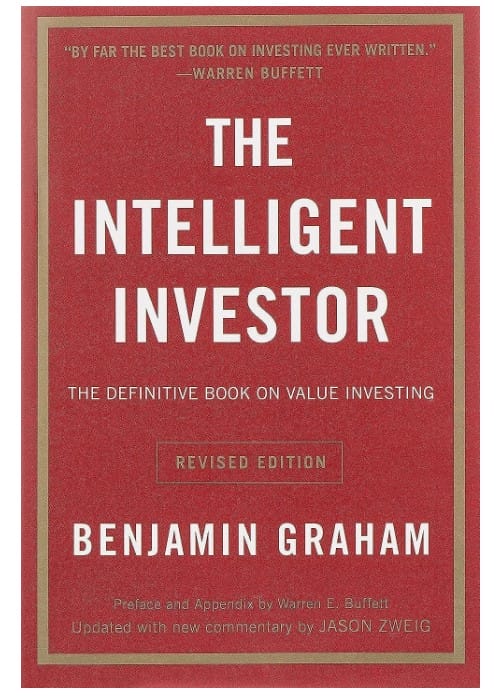
3. “The Intelligent Investor” by Benjamin Graham

The Intelligent Investor by Benjamin Graham

Amazon

For anyone interested in learning about investing, “The Intelligent Investor” by Benjamin Graham is a must-read. Known as one of the greatest investment advisors of all time, Graham’s book introduces the concept of value investing, which focuses on purchasing stocks that are undervalued by the market. The book is packed with timeless financial principles that help readers understand risk, reward, and long-term strategies for building wealth. Graham also emphasizes the importance of research and patience in investing, making this book a valuable resource for both beginners and seasoned investors. Warren Buffett himself cites it as one of his most influential reads.

4. “Your Money or Your Life” by Vicki Robin and Joe Dominguez

“Your Money or Your Life” takes a unique approach to financial literacy by focusing on the relationship between money and happiness. The authors guide readers through nine steps to transform their relationship with money, helping them track spending, reduce expenses, and ultimately achieve financial independence. This book teaches readers to see money as a tool for creating the life they want, rather than an end goal. Robin and Dominguez’s philosophy promotes mindful spending and sustainable living, making it a refreshing take on personal finance. It’s perfect for those looking to simplify their financial life and focus on what truly matters.

5. “I Will Teach You to Be Rich” by Ramit Sethi

“I Will Teach You to Be Rich” by Ramit Sethi

Amazon

Ramit Sethi’s “I Will Teach You to Be Rich” is a modern, no-nonsense guide to managing your money, with an emphasis on automating your finances and investing smartly. Sethi’s witty, conversational tone makes complex financial strategies easy to understand and follow. He covers everything from credit cards and savings accounts to investing and budgeting, offering practical advice for millennials and young professionals. The book is perfect for those looking to build wealth without feeling overwhelmed by financial jargon. Sethi’s approach is all about living a rich life, where money supports your goals and dreams.

Building Financial Literacy for a Secure Future

Improving your financial literacy is one of the most important investments you can make in yourself. These five books provide the foundational knowledge you need to take control of your finances, whether you’re aiming to get out of debt, build wealth, or simply become more confident in managing your money. By incorporating the lessons from these must-read books, you’ll be better equipped to make informed financial decisions and secure your financial future. Don’t wait—start building your financial literacy today!

Vanessa Bermudez
Vanessa Bermudez
Vanessa Bermudez is a content writer with over eight years of experience crafting compelling content across a diverse range of niches. Throughout her career, she has tackled an array of subjects, from technology and finance to entertainment and lifestyle. In her spare time, she enjoys spending time with her husband and two kids. She’s also a proud fur mom to four gentle giant dogs.

Filed Under: book review Tagged With: financial literacy, Investing Tips, money management, Personal Finance Books, Wealth Building

10 Gen X Books You Should Have Read by Now

May 24, 2024 by Vanessa Bermudez Leave a Comment

a girl reading a book

123rf

Generation X grew up in a world brimming with change: the rise of personal computing, the end of the Cold War, and the advent of MTV. This generation’s unique blend of cynicism, realism, and cultural innovation is vividly reflected in its literature. From groundbreaking novels that challenged societal norms to transformative stories that captured the essence of a changing world, here are ten must-read books that define the Gen X experience.

1. “Generation X: Tales for an Accelerated Culture” by Douglas Coupland

Generation X Tales for an Accelerated Culture by Douglas Coupland

Wikipedia

This is the book that not only named the generation but also captured its spirit of disillusionment and ironic detachment. Douglas Coupland’s 1991 novel paints a portrait of young adults fleeing conventional career paths to find meaning in a post-modern world. It’s witty, sharp, and eerily prophetic about societal shifts toward isolation and media saturation. A true cultural artifact, this book is essential reading for understanding the ethos of those who came of age in the late 20th century.

2. “American Psycho” by Bret Easton Ellis

American Psycho by Bret Easton Ellis

Wikipedia

A controversial masterpiece, Bret Easton Ellis’s 1991 novel dives deep into the materialism and superficiality of the 1980s corporate America. Through the eyes of its protagonist, Patrick Bateman, a wealthy New York investment banker with a psychopathic ego, the book explores themes of identity, consumerism, and the hidden savagery of human nature. Its shocking content and bleak humor make it a compelling critique of the era’s excesses.

3. “Fight Club” by Chuck Palahniuk

Fight Club by Chuck Palahniuk

Wikipedia

Before it was a cult film, Fight Club was a novel that struck a nerve with its raw depiction of male disillusionment. Palahniuk’s narrative delves deep into consumer culture, mental health, and personal identity through the eyes of an unnamed insomniac protagonist. The book’s violent critique of modern society is both shocking and thought-provoking, challenging readers to question the structures and values that define their lives. It’s a must-read for its bold commentary and a narrative that captures the restless spirit of a generation.

4. “High Fidelity” by Nick Hornby

High Fidelity by Nick Hornby

Wikipedia

Blending humor, heartache, and rock music, Nick Hornby’s 1995 novel is a pitch-perfect reflection on love, growing up, and the importance of a good mixtape in pre-digital times. The story follows Rob, a record store owner who revisits his “Top 5” breakups and confronts his own shortcomings. Hornby captures the angst and absurdity of romantic relationships in a way that resonates with anyone who’s ever looked back at their younger self with a mixture of fondness and face-palming.

5. “Prozac Nation” by Elizabeth Wurtzel

Prozac Nation by Elizabeth Wurtzel

Wikipedia

Elizabeth Wurtzel’s 1994 memoir offers a raw and unflinching look at the struggles of growing up with depression at a time when the conversation around mental health was vastly different. Wurtzel’s narrative captures the challenges of navigating life’s complexities under the shadow of such an illness, making it a landmark text in the discussion of mental health and a voice for generational angst.

6. “The Secret History” by Donna Tartt

The Secret History by Donna Tartt

Wikipedia

In this 1992 debut, Donna Tartt weaves a compelling tale of murder and intrigue set within the confines of a small, elite college in New England. The novel is a deep dive into themes of aesthetic beauty, the nature of evil, and the bonds of friendship, all told with a captivating sense of suspense. It’s a literary thriller that packs a powerful punch, reflecting the Gen X fascination with subverting narratives.

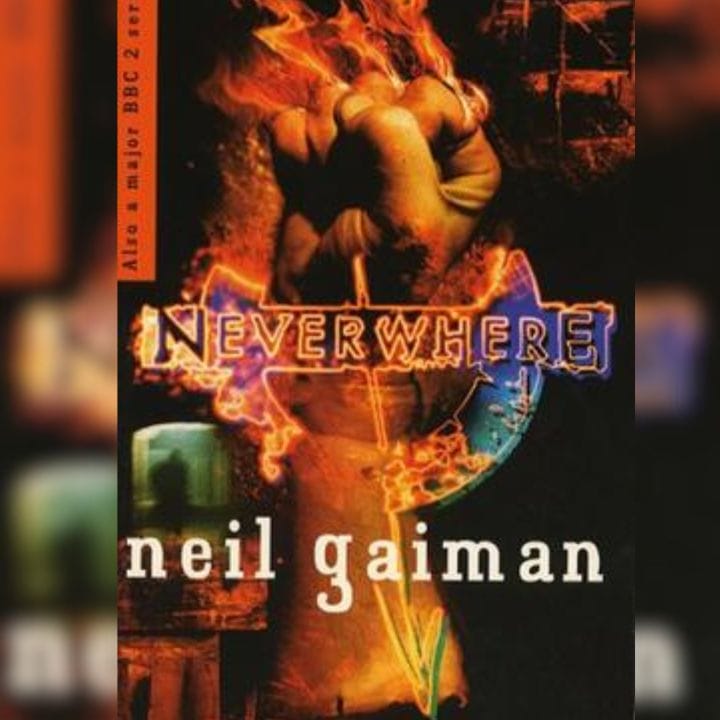
7. “Neverwhere” by Neil Gaiman

Neverwhere by Neil Gaiman

Wikipedia

Neil Gaiman’s 1996 fantasy novel takes readers to an imaginative underworld beneath the streets of London. This tale combines elements of the mundane and the magical in a way that speaks to the Gen X experience of finding magic in the margins of society. Gaiman crafts a universe teeming with bizarre characters and vivid settings, mirroring the generation’s quest for the extraordinary in the everyday.

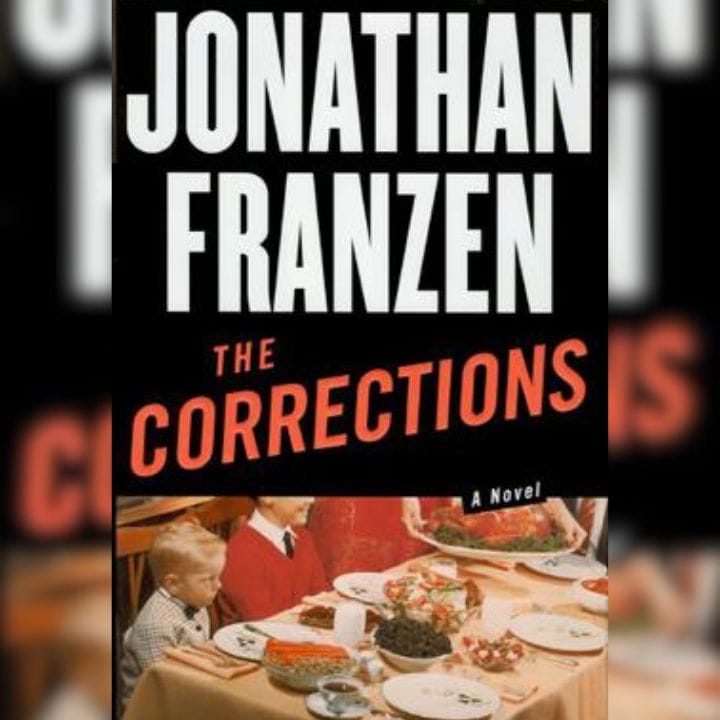
8. “The Corrections” by Jonathan Franzen

The Corrections by Jonathan Franzen

Wikipedia

Franzen’s novel is a complex portrayal of a Midwestern family grappling with their past and their very different individual futures. Through the story of the Lambert family, Franzen addresses capitalism, old age, and familial responsibility, all key concerns for Generation X as they navigate the transition from youth to midlife. The Corrections offers a biting yet empathetic look at the challenges of personal and social change.

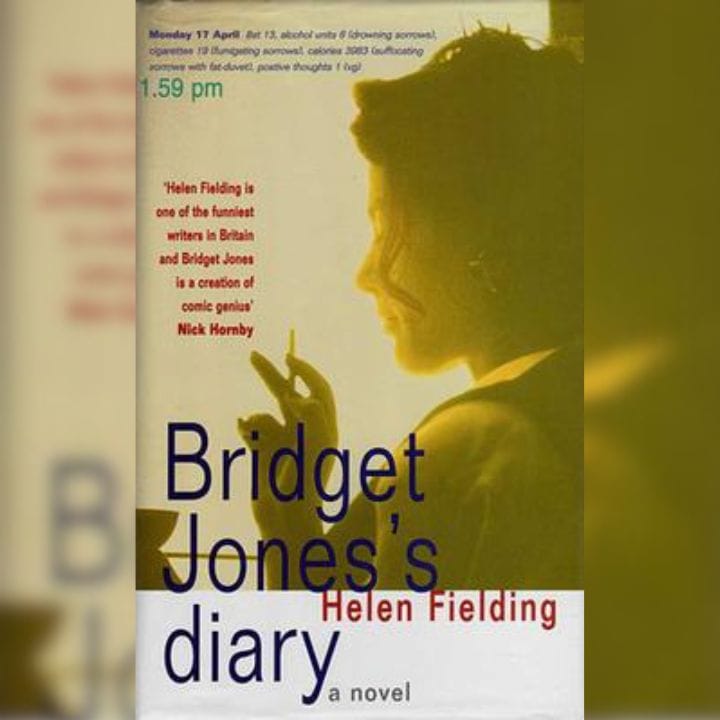
9. “Bridget Jones’s Diary” by Helen Fielding

Bridget Jones's Diary by Helen Fielding

Wikipedia

Helen Fielding’s 1996 novel introduced Bridget Jones to the world, a character whose romantic mishaps and personal blunders resonate with the existential queries of the single, modern-day woman. Through Bridget’s diary entries, Fielding captures the comedic side of the often tumultuous search for love, self-acceptance, and a really good pair of jeans. It’s a light-hearted yet poignant narrative that encapsulates the feel of the era.

10. “The Virgin Suicides” by Jeffrey Eugenides

The Virgin Suicides by Jeffrey Eugenides

Wikipedia

Jeffrey Eugenides’ 1993 debut is an eerie, haunting exploration of the unattainable and the tragic. Told through the collective voice of a group of boys obsessed with five enigmatic sisters, the novel examines themes of desire, loss, and the opaque world of teenage girls. Its lyrical prose and mysterious plot make it an unforgettable read that captures the enigmatic pulse of its generation.

Time to Pick Up These Books

gen x books

123rf

These ten books offer a glimpse into the psyche of Generation X, revealing their introspective depths, their cultural vibrancy, and their enduring influence on literature and beyond. Whether you’re a nostalgic Gen Xer or a curious reader from another generation, these books promise insights into a transformative era. 

Read More

Maximizing QuickBooks Reporting Features

Are People Still Selling Books on Amazon

Vanessa Bermudez
Vanessa Bermudez
Vanessa Bermudez is a content writer with over eight years of experience crafting compelling content across a diverse range of niches. Throughout her career, she has tackled an array of subjects, from technology and finance to entertainment and lifestyle. In her spare time, she enjoys spending time with her husband and two kids. She’s also a proud fur mom to four gentle giant dogs.

Filed Under: book review Tagged With: 90s Nostalgia, Classic Reads, Gen X Books, Literary Gems, Must Read Books

5 Ideas That Shaped My Career

April 16, 2013 by Joe Saul-Sehy 40 Comments

Reading can be the difference between a good career and a great one. How are you taking control?

Last week I went all “Joe Negative” with my 5 pieces of bad advice from investment gurus. The goal with that piece wasn’t to be argumentative…it was to help people realize that no advisor is infallible, and although starting with the guru is good, finishing with your own plan is better.

This week, to prove just how optimistically positive I can be, I thought it’d be great to review the top 5 pieces of career advice I’ve ever read from the popular press. Sure, some of these are from pop self help books, but these lessons have proven their weight during my career:

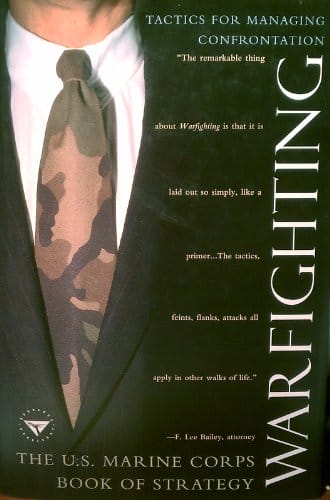
5) The concept of “Move and Fire” – Marine Corps Book of Strategy

Amazon

While I’ll agree that the concept of business as battle is often overplayed, the idea of “move and fire” is a valuable weapon for a businessperson. Often, I’d want to either respond to a client request or work on improving relationships. By quickening the tempo of my communications with clients, surprising them with data when they didn’t expect it, and advising them on areas where they didn’t realize I was an expert, I was actually able to decrease my overall workload because I wasn’t getting silly requests on client terms. The “battlefield” of my career began to be dictated on my terms.
I also realized that to grow the business I couldn’t be one-faceted. I had to attack from all angles. That’s when my media blitz began and I gathered as many television, radio and print opportunities as possible. By moving and firing, instead of going slowly, I pushed past many people who waited for someone else to throw them a chance.

Get it at amazon now for $6.

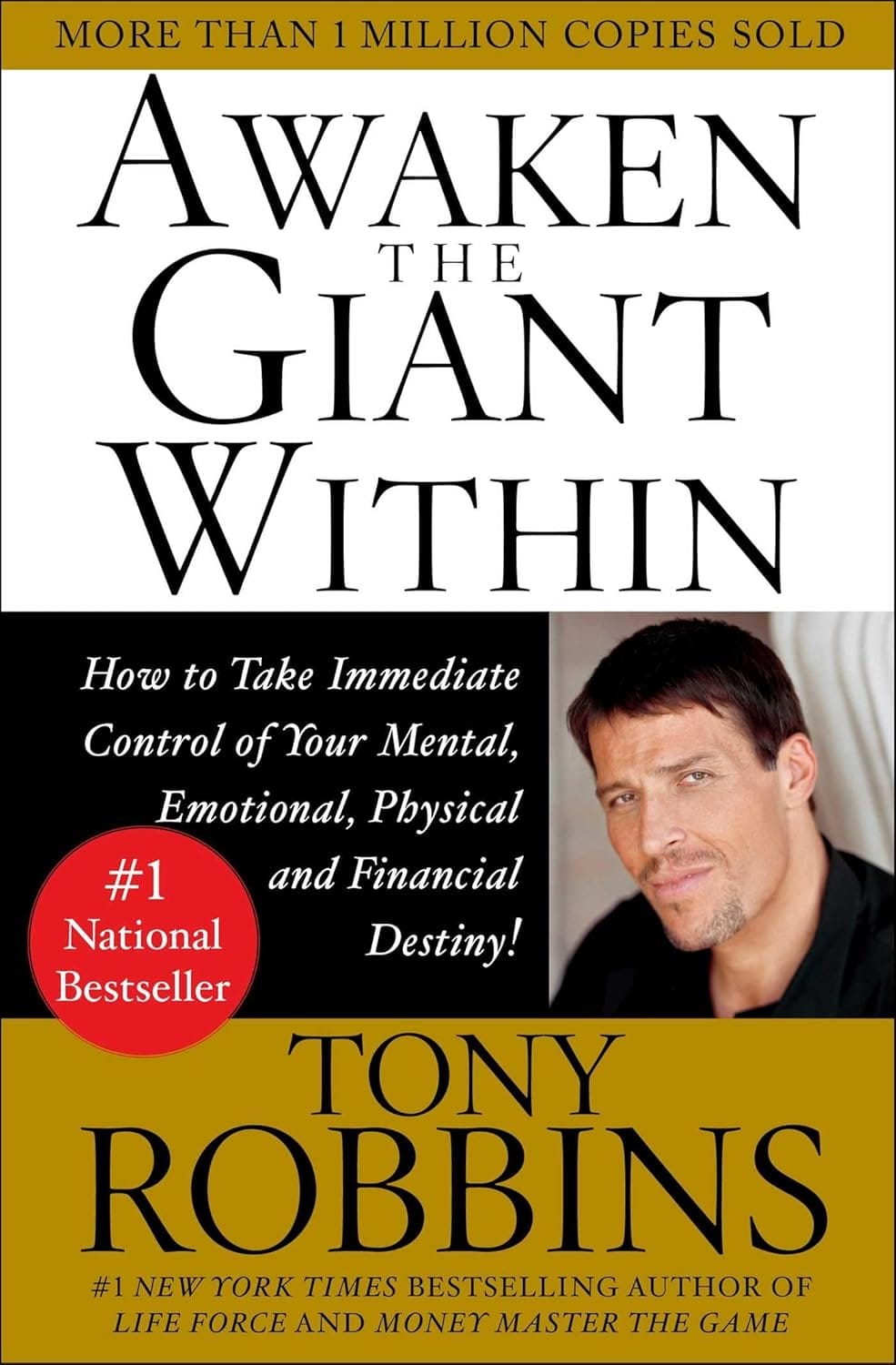
4) “The past doesn’t equal the future” – Tony Robbins (Awaken the Giant Within)

career

Amazon

In business, you need to have a short memory or you’re dead. I saw many workers in all of my jobs (from high school through financial planning) who couldn’t get over the time they’d been passed over for a raise, the undeserved reprimand from a boss, or the tongue lashing from a client. Get over it.
I also experienced a phenomenon with young workers who couldn’t grasp concepts and refused to learn about them. I’d recommend listening to podcasts, reading work related blogs and books, or watching videos. Often, I was surprised to hear, “Yeah, I don’t really do that stuff.” Instead, they seemed to think that it was management’s job to teach everything you need to know to have a successful career.

Don’t wait on your manager to make you great. Just because you weren’t a reader yesterday doesn’t mean you aren’t today. Just because you were loud and brash at work doesn’t mean you have to be tomorrow. Just because you don’t dress appropriately for work doesn’t mean you’ll forget the tie tomorrow. The past doesn’t equal the future indeed.

Another related concept that nearly made this list was Tony Robbin’s assertion that success increases as you make decisions faster. While people often avoid decisions for fear of “being wrong,” Robbins pushes readers to click at a faster rate. Your brain will find ways to make your decisions better.

“I’ve failed more often than the average person has tried.” Donald Trump

Buy it now at Amazon for $12.39.

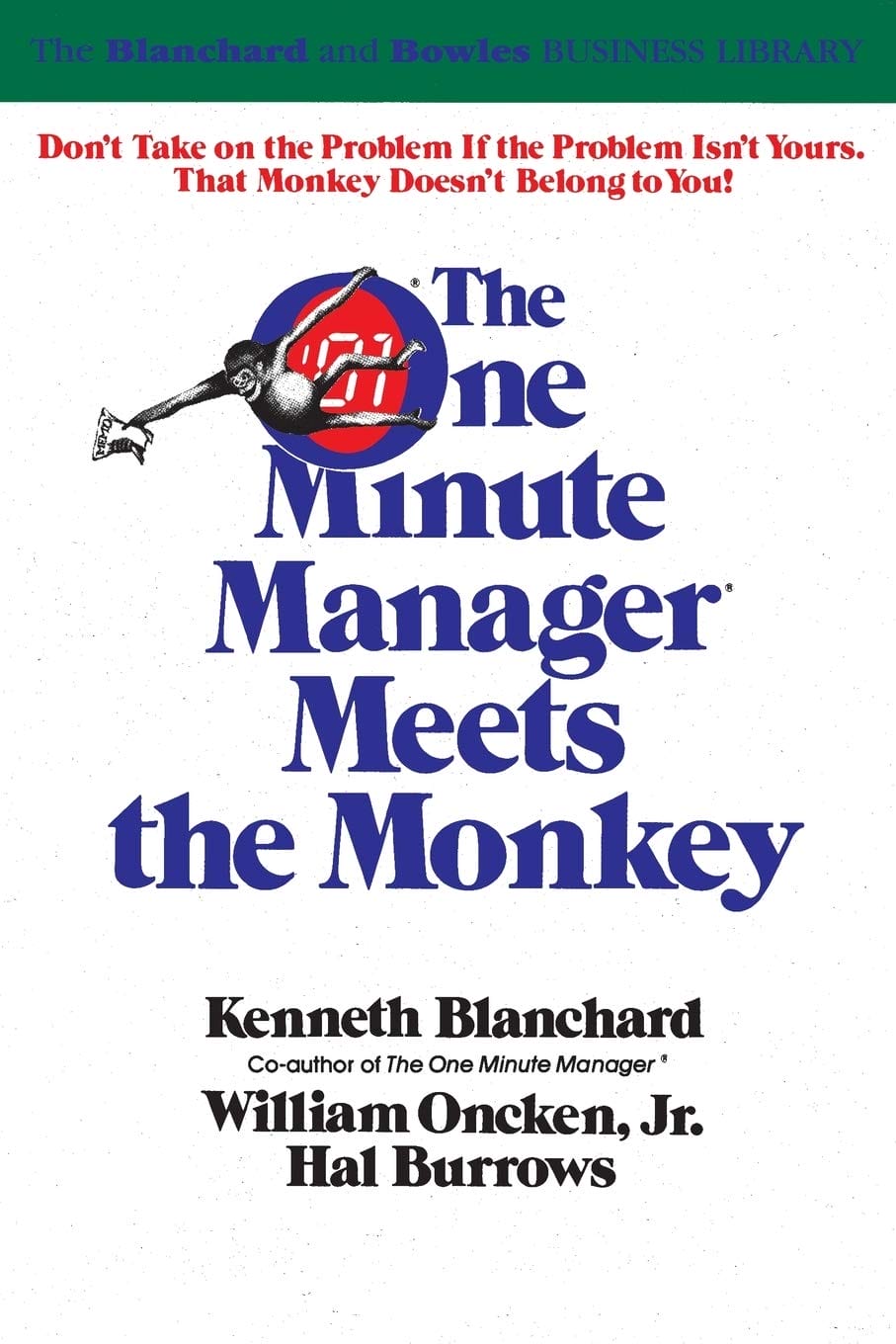
3) Beware “The Monkey” – Ken Blanchard (One Minute Manager Meets the Monkey)

career

Amazon

While the whole One Minute Manager series was a little short on great ideas, the concept of “the monkey” helps great people accomplish more without becoming bogged down in irrelevant tasks.
Here’s the monkey: a co-worker walks into your office with a problem….we’ll call the problem “the monkey.” Instead of saying, “I’ve got a problem I need you to help me with,” co-worker says:

“We have a problem.”

The second that you agree that “we” have a problem, one of the monkey’s arms is around your shoulder. When you say, “I’ll take care of it,” the friend leaves your office and you now own a monkey while the friend is free of the problem.

Once I began to recognize “the monkey” and learned to say, “Let me help YOU with YOUR problem,” my life became much simpler because I never took “the monkey” on my shoulders. I could work on my own monkeys without inadvertently taking on everyone elses’…a common problem for achievers.

Get it now at Amazon for just $9.69.

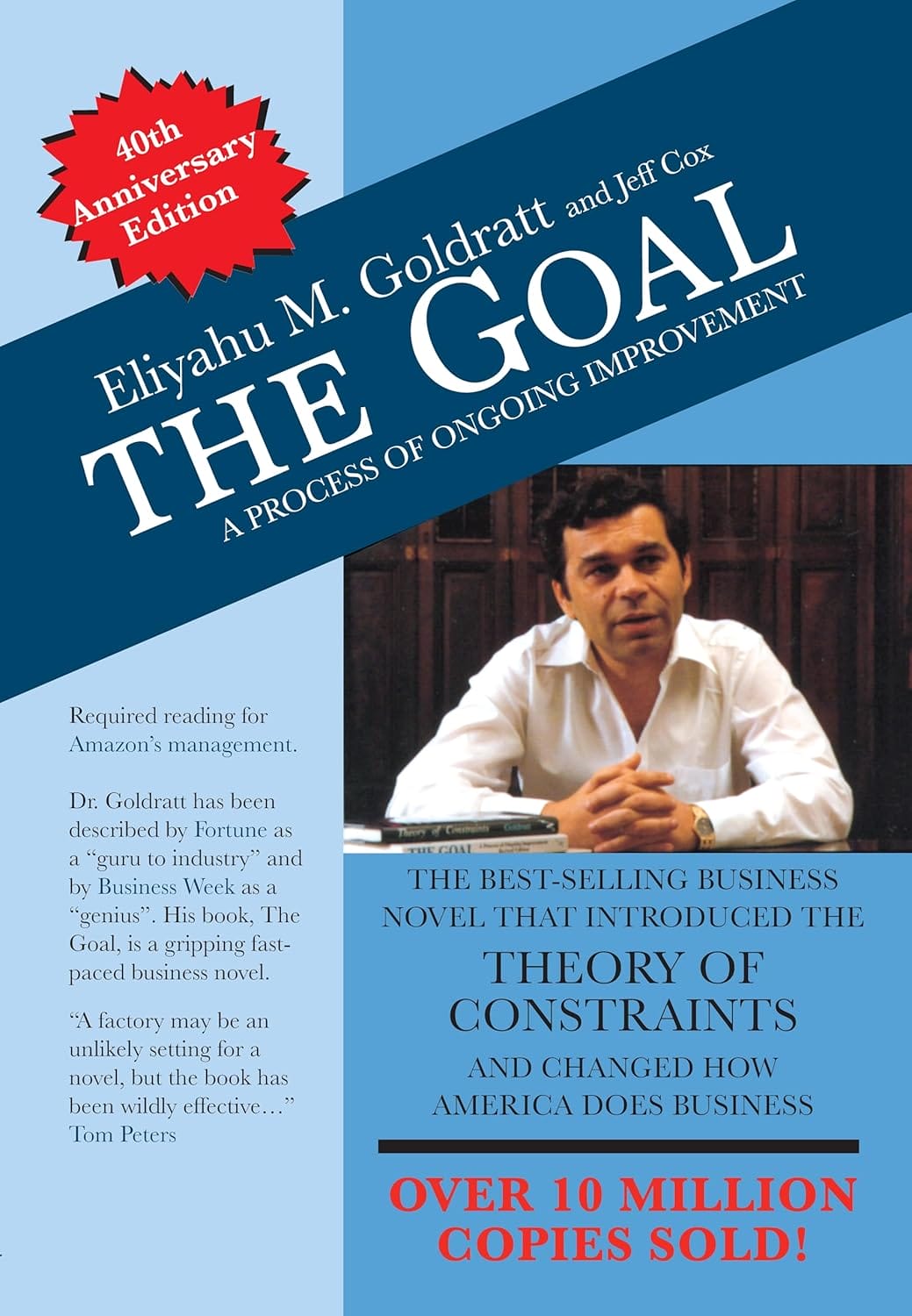
2) Remember “the Goal” (The Goal)

career

Amazon

While the One Minute Manager didn’t wow me, The Goal by Eliyahu Goldratt completely bowled me over. I can explain the concept here in a couple of sentences, but I won’t be able to convey the magnitude of how much this change in perspective increased my ability to achieve.  In essence: many people measure results in areas other than the one that matters: throughput. If I can increase the speed of something that doesn’t reach the customer, why do I care? The only job that matters: finding the bottleneck and working on increasing the output through that area of the process.

I often worked with managers and clients who’d complain about a certain department or facet of their plan that wasn’t performing well or workers who didn’t seem to be working as hard as they could. When processes are measured, though, many times these weren’t the areas the manager should be worried about. A manager should worry first about the area which is the bottleneck decreasing throughput. It seems obvious and not really a big deal, doesn’t it? This is #2 on my list because once I read the book (and the follow up, “It’s Not Luck”) my business changed dramatically.

Buy it now at amazon for $21.94.

1)   The best battle is the one that’s never fought – Sun Tzu (The Art of War)

career

Amazon

Sorry about two “war” books in the same piece, but this one was easily my favorite piece of advice. When I’m at odds with someone I’ve learned that instead of bringing on the fight, are there ways that I can still “win” without fighting at all.

With Sun Tzu’s help I became more proactive. If I could answer potential questions or concerns my clients had BEFORE they occurred, I’d avoid a problem later. I’d also think of any way that my competitors might try to steal my business and make sure that my clients were iron-clad mine. In setting up financial plans I’d imagine all the ways the plan would be tested and raise defenses against them.

Sun Tzu can be found all over my financial planning tips. It’s:

–       the reason I’m a stickler on the emergency fund, regardless of the interest rate.

–       the single biggest reason my budget for married people focuses on communication, not spreadsheets.

–       The reason I start with problems that might occur rather than insurance when dealing with “what if” scenarios.

Get it right now for $13.47 at Amazon.

There they are…my top 5. I’m excited to read your best career advice in the comments below. What should have made my list?

Enhanced by Zemanta
Photo of Joe Saul-Sehy
Joe Saul-Sehy

Joe is a former financial advisor and media representative for American Express and Ameriprise. He was the “Money Man” at Detroit television WXYZ-TV, appearing twice weekly. He’s also appeared in Bride, Best Life, and Child magazines, the Los Angeles Times, Chicago Sun-Times, Detroit News and Baltimore Sun newspapers and numerous other media outlets.  Joe holds B.A Degrees from The Citadel and Michigan State University.

joesaulsehy.com/

Filed Under: book review, Productivity Tagged With: Business, Eliyahu M. Goldratt, Ken Blanchard, One Minute Manager, Sun Tzu, The Goal (novel), The One Minute Manager Meets the Monkey, Tony Robbin

101 Ways to Make Extra Money In Your Spare Time – A Review

March 12, 2013 by Joe Saul-Sehy 26 Comments

Wondering how to make a few extra dollars? We read Jackie Beck’s new book to dig for moolah.

Yesterday Jackie Beck appeared on our podcast to discuss some of the ideas from her book 101 Ways to Make Extra Money in Your Spare Time. For those of you that don’t listen to podcasts, I thought I’d review the book here. My overall feeling: this is well worth the investment in time and money if you’re in the book’s target group.

Let’s start out with what this book isn’t. If you’re a person who’s confident that you’re doing everything it takes to make money, this book isn’t for you. Of course, the title gives this away, right? It also isn’t an in depth look at any of the 101 ways to make money, although Jackie includes tons of links in the e-book to many, many outlets for readers to begin gathering more information.  As a sometimes-reader of magazines like Real Simple, I’m often disappointed when good tips seem to be skewed toward one gender or another (in the case  of Real Simple, it’s women….which is why I don’t read the magazine often). 101 Ways to Make Money includes ideas for men and women, and of varying skill level. Simply put, there’s a little something for everyone.


Who Should Read 101 Ways To Make Extra Money In Your Spare Time?


Jackie mentioned online that her early readers seem to be stay-at-home moms. While I stated that this book does a great job of remaining gender neutral, it’s ideal for a stay-at-home mom or anyone looking to earn a few extra dollars on the side. It’s also great for that person who works a 9-5 job and is hunting for something else to bring in a few (or many) extra dollars. From raking leaves (obvious and easy) to setting up an Etsy shop and selling crafts (more pointed and needing a little skill), there are lots of tasks that can easily fit into a weekend or after work schedule.


The Capital Problem


In many cases, it takes money to make money, and that’s the case with some of these suggestions. Don’t think that you’re going to get 101 pairs of ruby slippers you tap together three times to fill your greedy little paws with cash. There will be work, and in many cases, you might need a little moolah to fund your new business venture.


Readability


Jackie, who writes at the MoneyCrush blog, among other places, is a seasoned writer, and it shows. Her style is easy and straightforward. While I breezed through this book, it wasn’t because it was void of information. In fact, Jackie’s style makes it simple to grasp some fairly complicated ways to make money as if it were easy.


Why Pay For A Book of Ideas?


When I first heard about this book, I thought, “why the hell would I pay money for a book of ideas, when there are so many resources on the internet?” Here’s exactly why: for me, time is valuable and the cost of having a consolidated list that points you toward deeper text on any of the ideas presented is invaluable. Do you want to spend your time figuring out how to make money or do you want to find a way quickly and spend your time working the idea? If you’re like me, your time is valuable and you’re hoping to just get on with it. Jackie’s book, priced at $4.99, is an ultra-low cost way to cut to the chase scene in your money-making pursuit.


What Don’t I Like About the Book?


If I had to pick something that could have been improved, it is how little  these ideas are explored. There’s no discussion of the capital outlay it might take to be successful in each business or the amount of money each one could reasonably bring in. Of course, I understand that this isn’t the point of the book and I’m nit-picking. I could easily see Jackie digging into some of these ideas to help readers gain a leg up on marketing, competition and creative ways to stand out from the crowd of other people doing these same tasks, if she chose to expand the book in the future.


Final Analysis:


For people looking to make a few easy dollars or to dip their toe into entrepreneurship, 101 Ways to Make Extra Money In Your Spare Time has the ideas you need to help you create a spark. If you don’t ask it for details, you’re going to be a happy reader, and at less than $5, it’s easy to justify making this investment to more quickly focus on the right income earning path for you.

Interested in purchasing the book? We liked it enough that we joined Jackie Beck’s affiliate program. Click the link here or in the article to head to Jackie’s order page if you have questions, want more info, or would like to purchase a copy.

Photo of Joe Saul-Sehy
Joe Saul-Sehy

Joe is a former financial advisor and media representative for American Express and Ameriprise. He was the “Money Man” at Detroit television WXYZ-TV, appearing twice weekly. He’s also appeared in Bride, Best Life, and Child magazines, the Los Angeles Times, Chicago Sun-Times, Detroit News and Baltimore Sun newspapers and numerous other media outlets.  Joe holds B.A Degrees from The Citadel and Michigan State University.

joesaulsehy.com/

Filed Under: book review, Productivity Tagged With: 101 Ways to Make Extra Money, book review, ideas to make money, Jackie Beck, side hustle

  • 1
  • 2
  • Next Page »

FOLLOW US

Search this site:

Recent Posts

  • Can My Savings Account Affect My Financial Aid? by Tamila McDonald
  • 12 Ways Gen X’s Views Clash with Millennials… by Tamila McDonald
  • What Advantages and Disadvantages Are There To… by Jacob Sensiba
  • 10 Tactics for Building an Emergency Fund from Scratch by Vanessa Bermudez
  • Call 911: Go To the Emergency Room Immediately If… by Stephen Kanaval
  • 7 Weird Things You Can Sell Online by Tamila McDonald
  • 10 Scary Facts About DriveTime by Tamila McDonald

Copyright © 2026 · News Pro Theme on Genesis Framework