• Home
  • About Us
  • Toolkit
  • Getting Finances Done
    • Hiring Advisors
    • Debt Management
    • Spending Plan
  • Insurance
    • Life Insurance
    • Health Insurance
    • Disability Insurance
    • Homeowners/Renters Insurance
  • Contact Us
  • Privacy Policy
  • Risk Tolerance Quiz

The Free Financial Advisor

You are here: Home / Archives for Joe Saul-Sehy

Joe is a former financial advisor and media representative for American Express and Ameriprise. He was the “Money Man” at Detroit television WXYZ-TV, appearing twice weekly. He’s also appeared in Bride, Best Life, and Child magazines, the Los Angeles Times, Chicago Sun-Times, Detroit News and Baltimore Sun newspapers and numerous other media outlets.  Joe holds B.A Degrees from The Citadel and Michigan State University. 

Find Your Perfect College

February 8, 2012 by Joe Saul-Sehy 15 Comments

There are many unsuccessful methods you could use when choosing a college. I’ve made a list of a few:

  1. Attend the school your boy/girlfriend decides on. Really, it’ll last forever. Promise.
  2. Choose among the fliers that come in the mail. Why search when they can find you?
  3. Great football/basketball/rugby/volleyball team? That must = great academics.

Choosing a college is a decision that can impact your entire life. You should use a better method to decide than those above.

My Story: I worried a ton about what college I should attend, just like you might be right now. I knew the weight of the decision: I might meet my spouse while in college. I would make friends that would last my entire life. Lots of thoughts. Most of them misguided. Hopefully, you’ll do a better job than I did.

In the end, I chose a college based on a running scholarship and the fact that it was a military school far away. It was one of the most half-baked decisions I’ve ever made, and within two years I was back at a state university closer to home. That said, I would never discourage someone from a military college education. It was difficult and enlightening–just what I needed at the time. More about that another day.

While every education decision is intensely personal, here’s what I should have done:


What Are Your Strengths?


Many people ask “what do you want to do” while you’re in high school. I don’t know about you, but I had no clue. I wanted to be an architect because I thought Frank Lloyd Wright was cool. I can’t draw stick people. Slight problem. I wanted to be a lawyer because I thought those shows on television were cool. People were well dressed. I didn’t know that you sat in a room much of the time reading law books. Boring (for me). Another problem. I might have been an engineer if I didn’t think that was just the dude who drove the train.

List your strengths. Had a been realistic, I would have known that:

– I’m creative—not in a drawing or musical way, but I can quickly come up with creative solutions to a problem

– Because I stuttered at a young age, I’d overcompensated and become a good public speaker

– I’m not great in large groups, but thrive in small discussions

– Because of my ADD, I love to dig into problems and bury myself in finding solutions

List yours. What tendencies do you see?


What Schools Match Your Strengths?


Your next task is to eliminate schools that don’t match your taste. There are few ways to figure out what is a good match than to:

  1. Make a “long list” of colleges you may wish to explore further. How do you do this? Using your strengths list above, go to the Peterson’s College Search: College Compatibility Tool. You’ll see we use Peterson’s a ton for college planning at our house (as I did when I was a practicing financial advisor). The reason for this: it’s a comprehensive, free resource that’s easy to navigate. This site saves you a mountain of time and energy looking for phone numbers, admission info, financial aid, student body facts, and more. I’m not compensated by, nor do I have any affiliation with this company or website. I’m just a huge fan and user. Some people endorse Presidential candidates. I endorse websites. Another point about this website? U.S. News and World Report has a similar program, but they charge around $30. Ouch.
  2. Visit some schools. You’ll begin to see if some scare you because they’re too big or suffocate you because they feel too small. I didn’t do this myself. What a mistake. In fact, both colleges I attended I’d never set foot on before I went there. Use Petersons to link to the Facebook page of a school, find the phone number for admissions, and schedule a tour and briefing on the college.
  3. Read. I swear my twins come from different parents. My daughter reads voraciously about colleges, while my son would rather visit the school. However, once he gets to the college, he studies the literature about the place non-stop. Some of her favorite books are:
    • Treasure Schools: America’s College Gems. We would have NEVER contemplated visiting some of the tough, beautiful little schools across the country if my daughter hadn’t read this book. It succinctly makes the case for a small school education.
    • Colleges That Change Lives: 40 Schools That Will Change the Way You Think About Colleges. This book makes the case that it doesn’t take an Ivy league school to receive an Ivy league-style education. If you match your strengths with some of the 41 schools listed, you’ll find a winner.
    • The Insider’s Guide to the Colleges, 2012: Students on Campus Tell You What You Really Want to Know. Want a simple statement about how awesome this book is? Try this: it’s in the 38th edition. What my kids fear is that there are some hidden reasons not to attend their favorite school. By giving some insight from a student’s perspective, this has worked to quell some fears.
  4. When we visited MIT this summer, they had great advice: read some of the student and faculty blogs attached to the university. You’ll get a great feel for some of the personalities and exciting events on campus. You’ll also read some of the dirt about the school as if you were already there. Don’t just stick with the school-sponsored blogs. A simple search could lead you to some eye-opening blogs from students.

 

How Competitive Are These Colleges and Will I Be Accepted?


If you’ve read and researched, you’ll already know how competitive these schools may be. But, there are two sources which we use to dig further:

 Will I be accepted into the school? There’s no sense pursuing a school if I can’t meet the entrance requirements. For this, we’ll use Petersons again, but this time, we’ll dig into the actual school page. We’re looking for the Admissions page, which tells us testing criteria (how many students beat common scores on the SAT, ACT and possibly others) and what will be required to apply.

You won’t want to apply to every school on your “long” list (which hopefully is shorter by now), because there’s a fee for each one. Only apply to schools you seriously hope to attend.

Is the school competitive? To find out how a school ranks in your particular area of focus, we’ll turn to U.S. News and World Report annual ranking of colleges and universities. This site duplicates some of the Peterson’s information, while also providing additional ranking details in many areas. Much has been made of the U.S. News and World Report rankings and some school’s attempts to manipulate these rankings.

Here’s the deal for us: a school’s ranking isn’t the final factor when choosing a school. However, it is another barometer for us to watch when making a choice.

An example: my son seems to be focusing on engineering programs. He also likes Catholic schools. Unfortunately, Boston College, a school he liked a ton, doesn’t have an engineering program (that’s not the end of the road for Boston College, but it’s a big red mark against it). Notre Dame does have an engineering program, but U.S. News and World Report ranks it in the mid 50’s, while the University of Texas (in—state public) and Texas A&M (in-state public), both rank in the top 10.

While he may be able to secure enough scholarships to attend Notre Dame, and while it certainly is a door-opening name in some circles, he’s more likely to focus now on the less expensive in-state options.


What Do the Schools Cost?


Attending college is a cost/benefit decision. While I’ve had friends who ran off to school without any purpose other than beer and women, or who majored in a degree without employment prospects, it’s probably a better idea to spend your money wisely and study a field that’ll end in gainful employment opportunities.

I strongly believe that you should NOT study something just for the job prospects, though. Keep your focus on your passion and the dollars will follow, as long as there are some jobs available. I’ve met many people who felt they’d wasted their life chasing a dollar instead of their dream.

Research your dream jobs to find out what the employment prospects look like. While dreams are fine, they’re better if they pay. Between two dreams, choose the one that’ll secure your income first.

As a personal example, I’m a recovering financial advisor. I also wanted to write. I spent the first years of my life earning a great living in the financial planning industry. Then, once I’d accumulated enough to support my new career, switched to writing. This way, I’ve been able to chase both dreams, where if I’d become a writer first, it would have been much more of a struggle.

Once again, head to Peterson’s College Search to find out the “retail” cost of colleges. I’ve placed retail in quotes so you don’t have a heart attack when you see the huge difference in price between many private colleges when compared to their public counterparts. While a public school may still end up being more expensive, it’s important to focus on how much you’re going to actually pay when you attend a school. You may be surprised to find that the bottom line isn’t always much different between public and private schools.

While we visited schools this summer, we found a good question to ask was what price the average person pays. You’ll be surprised to find a number far south of the huge expense you anticipated.


What If My Son/Daughter Is Too Young To Know What School To Attend?


While you won’t need to be this specific, you will want to narrow your choices of colleges to focus on the Peterson’s College Search link. By making a list of schools that you’d like to afford, it’ll be easy to begin a program to plan for the future. Make sure and inflate the cost of college. According to FinAid.org, it’s wise to project college costs growing at double the normal inflation rate. This means you should expect an 8 percent per year inflation rate in your college cost planning. This is a good place to start your plan.

For more information on this topic, see our post:

http://www.thefreefinancialadvisor.com/2012/01/5-steps-to-a-successful-college-plan/

(((Two women & map photo: jazzguy Wikimedia Commons; Cambridge Photograph © Christian Richardt, 24 October, 2004)))

That’s my story. Now it’s your turn: What tools did you use to find The Perfect College for you? Dartboard? Lucky ducks?


Enhanced by Zemanta


Photo of Joe Saul-Sehy
Joe Saul-Sehy

Joe is a former financial advisor and media representative for American Express and Ameriprise. He was the “Money Man” at Detroit television WXYZ-TV, appearing twice weekly. He’s also appeared in Bride, Best Life, and Child magazines, the Los Angeles Times, Chicago Sun-Times, Detroit News and Baltimore Sun newspapers and numerous other media outlets.  Joe holds B.A Degrees from The Citadel and Michigan State University.

joesaulsehy.com/

Filed Under: College Planning, Planning Tagged With: Choosing a College, college choices, college planning, Higher education, Ivy League, U.S. News & World Report

When Charts & Graphs Lie

February 7, 2012 by Joe Saul-Sehy 13 Comments

Today is Part II of our discussion on charts and graphs. For Part One, you’ll want this link to:

Boner of the Week: Have You Been Lied To By Charts and Graphs

Sometimes, before jumping into an argument on how you feel about data presented in a graph or chart, it’s a good idea to focus on whether the data presented is actually showing you something truthful.

Our friend PK at dqydj.net (which is a fantastic blog on economics, politics and investing), helped us out with his wizard-ly chart skills and created a graph that hid four lies.

Here it is again:

DQYDJ1UnemploymentRate

There are FOUR lies PK is telling in this graph. Did you guess all four?

Okay, let’s reveal them:


Lie #1: Long Trend Line


Marketers are funny. They’ll draw some pretty long-range conclusions from very short term data. That’s true in this case. PK has taken the general line from October 2011 to December 2011 and—as if using a ruler—decided the next several months would follow similarly.

How does this apply to your financial picture?

– According to Bloomberg Businessweek, the stock market has had it’s best run in 23 years to begin a year. It’s a mistake to think that less than 40 days of good news will create 365 days of stock market bliss.

– Often, government statistics are revised. Basing any financial move on short-term and possibly short-lived data could wreak havoc on your financial life.

Lie #2: Small Sample Size


Check out PK’s graph again. He’s basing the entire graph on FOUR MONTHS of data before he gives you the equally tragic long trend line. In politics, where trends seem to change every three minutes, people often draw conclusions about an election many months into the future based on short term data:

– After Huffington Post (among others) reported on Rick Perry’s quick surge in the polls, articles such as this one that appeared in The New Republic—declaring that Rick Perry is going to be hard to beat—dominated editorial pages. There were only 15 days between the Huffington Post “surge” article and the “he’s probably gonna win” New Republic story. I wonder if any of these writers ever go back and read how reactive this seems several months later? Probably not, because using a small sample size to predict future results sells subscriptions.

– In the financial world, marketers of securities predict the bottom of an investment based on short-term data. It also holds with bloggers. Check out these predictions from the website Trading Authority. In the commentary, the “expert” uses short term data to predict an upswing in these stocks, predicting they “Could Jump 50 Percent”. Wow! Sounds like returns I’d love to have in my portfolio.


How did he do? Let’s look:


TradingAuthority Predictions on 6/3/2011
TickerPrice 6/3/11Price 2/5/12Change% Loss
SCHW16.7612.74-4.02-24%
WFR9.645.39-4.25-44%
GHL51.5547.61-3.39-6%


Ouch.

These results weren’t graphed, but both the “Rick Perry is Uncatchable” and “These Stocks Are Going to the Moon” cases could easily have been presented to an unaware public in chart or graph form to make a bigger (untrue) statement.

(By the way, finding this site wasn’t hard. I just performed a Bing search for “Upturn in Stock That Failed” and clicked on the first link that matched what I was looking for.)

The point? Don’t take short-term results and use them to predict long-term trends.


Lie #3: X Axis Compression


If you want to take fairly small results and turn them into “Wow!” returns, just compress the graph. Look at how thin PK has made this graph by squeezing months together across the X (bottom) axis. That “black diamond super difficult ski hill” drop would look more like a “bunny hill” if he’d stretched the graph across the page. Since your eye is drawn to the slope, a skilled marketer will change the degree of descent to reiterate whatever point she’s making.


Lie #4: Y Axis Stretch


Similar to lie #3 above, marketers will stretch data across the Y Axis (up/down) further to prove that there is far more movement than there truly should be.

– Beware people showing a stock “bouncing around” and then showing a chart which stretches the distance between prices.

– Remember, the inverse is also true: If a marketer wants to show a position as safe, they’ll compress the numbers to reduce the perceived volatility.


Here’s the Actual Chart PK Started From


DQYDJ2natlunemployment


The actual Bureau of Labor Statistics-derived chart has little in common with the “trend” chart we displayed above. But because PK wanted to show you quickly declining unemployment, he was able to manipulate this (true) graph to create a very, very wicked lie.

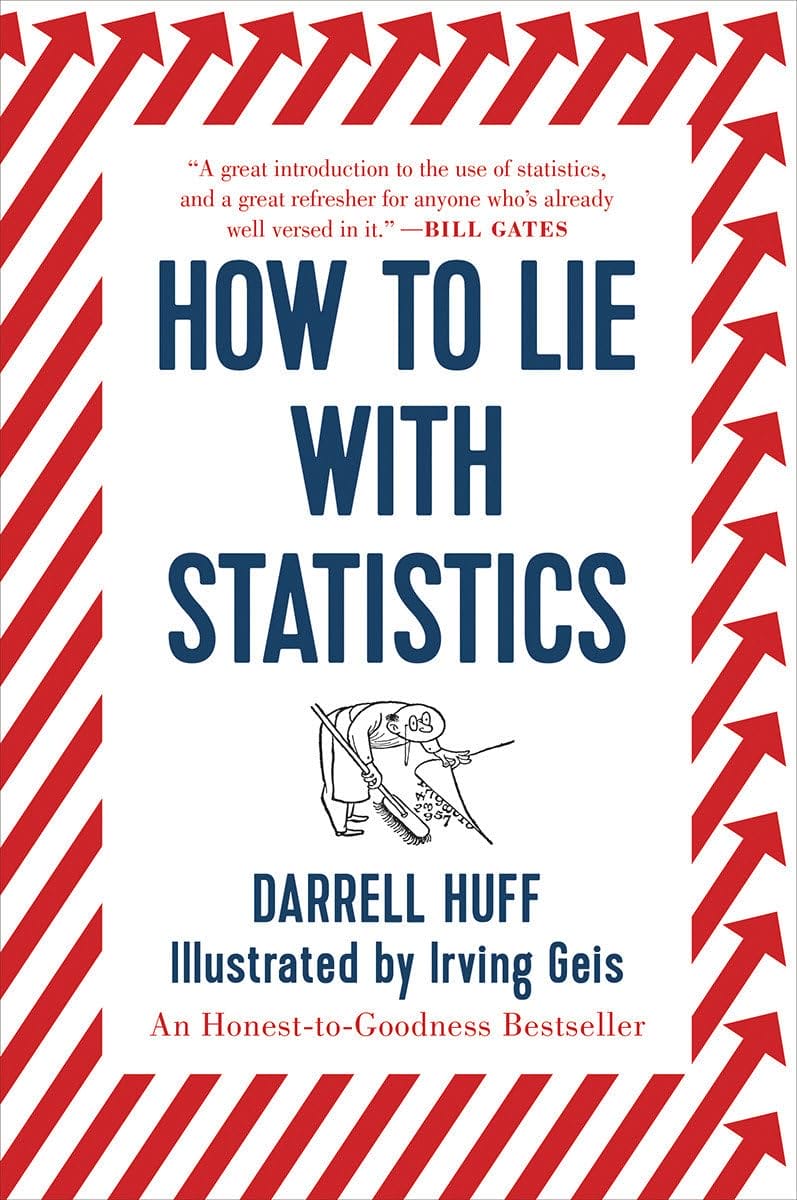
Want more on avoiding manipulative charts and graphs? Try this book: How to Lie With Statistics – get it for $7.44 at Amazon.

charts and graphs

Amazon

Okay, that’s my story, now it’s your turn. Have you had to create graphs you knew were “untrue” in your work? Have you been presented with graphs that weren’t completely accurate? How many of PK’s tricks were you able to find before reading today’s post?

(I’d like to again thank http://www.dqydj.netfor his help on this two-part series. I wish I had his ability to show timely and accurate charts like he and his partners have at dqydj.net. For more great charts, graphs, politics, economics and investment discussions, visit his website.)

Photo of Joe Saul-Sehy
Joe Saul-Sehy

Joe is a former financial advisor and media representative for American Express and Ameriprise. He was the “Money Man” at Detroit television WXYZ-TV, appearing twice weekly. He’s also appeared in Bride, Best Life, and Child magazines, the Los Angeles Times, Chicago Sun-Times, Detroit News and Baltimore Sun newspapers and numerous other media outlets.  Joe holds B.A Degrees from The Citadel and Michigan State University.

joesaulsehy.com/

Filed Under: money management, Planning, smack down!, successful investing Tagged With: charts, charts lie, graphs, graphs lie, inaccurate

Boner of the Week: Nearly Fooled By Charts and Graphs

February 6, 2012 by Joe Saul-Sehy 13 Comments

Sure, I like making up measurements, facts and figures as much as the next guy. But when the numbers aren’t real, we award The Boner of the Week! to the most outrageous news I read during the last seven days.

So, I’m researching content last week and stumble across this attention-grabbing headline: Gallup State Numbers Predict Huge Obama Loss.

I’m a political junkie, so I bite on the link.

And it’s our Boner of the Week.

Know why? This chart doesn’t state that the President will lose. This states that the editorial writer (and the board that allowed this garbage to pass as news) is apparently hoping President Obama will lose.

As both of my readers already know, this isn’t a political post and this certainly isn’t a political blog. I’d love to get my hands on a similar graph from the other side (I’m sure they exist). My goal isn’t politics at all. It’s just to teach an important lesson:

Dear Minions,

It’s important to know that professional people use charts and graphs ….err… creatively…. to lure away your money, your votes, or your trust. We can “prove” lots of points with a misleading chart.


What Does This Graph Really Prove?


  • The President’s approval rating ain’t high. (alert the press)
  • If the election were against his approval rating instead of against an actual opponent, he’d get his ass kicked.


Not quite the hard-hitting news originally implied by Senior Editorial Writer, Conn Carroll (Conn’s name might have been more apropos if it had just been Con).


Let’s Show You a Magic Trick


I’ve asked PK from DQYDJ.net, a charts and graphs wizard and fellow political junkie (AND you WILL get political discussion galore on his awesome site), to build us some clever graphs.

The chart below shows CBO data on unemployment numbers (a hot topic right now and relates to overall financial health of the United States economy). This graph projects unemployment for the next several months.

PK, how about a magic graph from DQYDJ:


DQYDJ1UnemploymentRate


Awesome.

Any guesses why this graph is misleading? Use the “comment” section below to fill in your answer.

((PK has included at least FOUR techniques to mislead you here. We’ll show them all in tomorrow’s thrilling conclusion!))

Thanks again to PK from DQYDJ.NET: Personal Finance, Economics, Politics, Investing and the Offbeat for the Night and Weekend Crowd. 

Enhanced by Zemanta
Photo of Joe Saul-Sehy
Joe Saul-Sehy

Joe is a former financial advisor and media representative for American Express and Ameriprise. He was the “Money Man” at Detroit television WXYZ-TV, appearing twice weekly. He’s also appeared in Bride, Best Life, and Child magazines, the Los Angeles Times, Chicago Sun-Times, Detroit News and Baltimore Sun newspapers and numerous other media outlets.  Joe holds B.A Degrees from The Citadel and Michigan State University.
joesaulsehy.com/

Filed Under: irrelevant stories, Meandering, smack down! Tagged With: bad graph assumptions, Boner of Week, incorrect graphs

Emergency Fund or Roth IRA?

February 1, 2012 by Joe Saul-Sehy 13 Comments

If you’re teetering on the edge of a trip down investing lane–but aren’t sure that you’re ready to begin locking money away–a Roth IRA just might be like two tickets to paradise. Pack your bags, we’ll leave tonight.

I just made that up. I know it sounds familiar. Deal with it.

Unlike its nasty cousin, the “For Retirement Only With a Couple Exceptions” Traditional IRA, a Roth has some attractive properties for people who need money in a safe place but are thinking “I’d like to start slipping some cash into a retirement account.” Two tickets to paradise.

Of course, this paradise has some weeds, but what do you want? I never promised you a rose garden.

Just made that up, too. I know…it’s a gift. Thank you.


Paradise Ticket #1: Emergency Fund


While it still makes absolute sense to have “need it right now” money outside of a Roth IRA, here’s the magical property that makes this shelter a fine second tier cash reserve emergency fund: you’re allowed to take principal back out whenever you want. If you remove funds contributed during the current year, it’s as if you’d never made a contribution in the first place. If it’s beyond the first year, you may take out up to the amount you’ve contributed.

That’s awesomesaucewithacherryontop because if you need money quickly, there’s no reason why you can’t access the cash you contributed.

Before you fight me on this, let’s work through it logically:

– When you make a Roth IRA contribution, do you receive any immediate tax benefit? No.

– How can the government penalize you for something that you received no benefit from? They can’t.

You want proof? Okay, here’s the IRS applicable document, Publication 590, Individual Retirement Arrangements. Check out the chart on page 63 and then the ordering rules on page 64.

More proof? At the bottom of the page I’ve included links to two less well written articles than mine. No charge.

When will you get into trouble? If you try and take any interest the account has earned, you’ll pay penalties to receive this interest unless it’s been in the account for five years and you’re 59 1/2 (whichever is later) OR qualify for one of the few exceptions to the penalty (you’ll still pay tax on the money when you withdraw it).


Paradise Ticket #2: Retirement


If you don’t end up needing the money, because your car didn’t break down, junior didn’t need to be bailed out of jail (again), and the dog stayed out of your neighbor’s trash bins for a change, this money can be used for retirement. At some point, once you’ve completely secured the reserve, you can switch these funds into more appropriate investments for retirement.

Ultimately, of course, this is what a Roth IRA should be used for: retirement savings. By easing into the Roth IRA plan, you’ll build the account early so there’s plenty of money available when you’re ready to begin in earnest.

Like Steve McQueen you’ll have a fast Roth IRA machine and they’ll never catch you tonight.


The Downside


Oh, yeah, you weren’t thinking about having a Roth IRA as your only emergency fund, were you? A Roth IRA is, to put it bluntly, an absolutely rotten place for a first tier reserve.

Here’s just a sample of our problem:

–  Remember when I said you can get money in a hurry? It’s not like the payday loan shop down the street or Louie on the corner. If your money is at an institution close by (like a neighborhood bank), you can probably take out funds now. If not, you’ll either have to wait for money to be transferred to a non-IRA account or until they can mail you a check. That’s not instant money. It’s “we’re going on an emergency trip to visit ailing Grandma in her cottage in the woods, and I paid for it with my credit card but don’t want to pay interest on the charge” money.

– If you take out all of your principal, you’ll only have some interest in the account. This money MUST stay in a Roth IRA for five years or until 59 1/2, which ever is later (as mentioned above). To take it out early, you’ll pay an IRS penalty. Although this may be a negligible amount on a small interest amount, it’ll make your tax return more complicated.

For these two reasons, I wouldn’t start a Roth IRA as your main emergency fund. Instead, only use it as second tier money.


What Type of Investment Should I Use, Joe?


It’s your cash reserve, silly. We don’t want to use anything that fluctuates at all. I know interest rates are poor, but if you’re only beginning, you’ll need the highest paying account the bank will allow while still keeping your money safe.

Don’t lock up the funds in a CD or you won’t be able to access the money, ruining why you used this strategy in the first place. It has to be a liquid account, like a savings account.

Once you have enough, transfer your money to a higher paying money market. Often this is between $500 and $2,000.

As soon as your cash reserve emergency fund is full, begin saving money into real retirement accounts that match your long term goals. Use a 401k for tax advantages today. Open a 529 plan for your children’s college.

Before long you’ll have so much cash they’ll be lining down the block just to watch what you’ve got.

So delicious.


How to Get Money In There Without Stealing It


The only way you’ll successfully save money is if you leave it outside of those pockets of yours. You know the ones. The I-can’t-hold-cash-for-longer-than-a-couple-minutes-without-spending-it pockets. Instead, make saving a bill.

Better yet, make it an automatic payment bill.

By setting up an automatic payment into your account you won’t have to remember to fund your account. Instead, money will flow directly from a checking or savings account into the Roth IRA, building it while you focus on other areas.

If possible, set up a separate direct deposit into your first tier reserve at your bank and then an automatic payment from the first tier reserve directly into the Roth IRA reserve account. That way, you’ll never have the money in your hot little hands.

If you want money in your hands AND to make Roth IRA contributions systematically, it’s going to be much harder, and there’s a good chance you’ll fail.

You can’t always get what you want. But if you set up an automatic payment plan you just might get what you need.


A Good Strategy


Once you’ve achieved your first tier reserve ($1,000 fast if you’re a fan of the bald dude on the radio, or other similar “quick cash” amount), split your automatic investment between your first tier reserve and a Roth IRA. This will help you ease into the investment world without the fear that the money is untouchable.

I’ve used this plan with nervous beginners to help calm them into rolling toward doing the right move: investing in their 401k where the money IS untouchable. It’s a good way to ease your mind.

…and before you know it you’ll be on your way to a million dollars. Then you could buy yourself a green dress.

But not a real green dress; that’s cruel.

No, I can’t stop.


Other Documents That Totally Agree With Me:

The Motley Fool: All About IRAs

My Money Blog: Can I Really Withdraw My Roth IRA Contributions at Any Time Without Tax or Penalty?

Enhanced by Zemanta
Photo of Joe Saul-Sehy
Joe Saul-Sehy

Joe is a former financial advisor and media representative for American Express and Ameriprise. He was the “Money Man” at Detroit television WXYZ-TV, appearing twice weekly. He’s also appeared in Bride, Best Life, and Child magazines, the Los Angeles Times, Chicago Sun-Times, Detroit News and Baltimore Sun newspapers and numerous other media outlets.  Joe holds B.A Degrees from The Citadel and Michigan State University.

joesaulsehy.com/

Filed Under: money management, successful investing, Tax Planning, tax tips Tagged With: emergency fund, emergency fund Roth IRA, Internal Revenue Service, Mutual fund, Retirement, Roth IRA

5 Steps to a Successful College Plan

January 31, 2012 by Joe Saul-Sehy 7 Comments

My personal bar for my children’s education is modest. I hope they’re happy and successful enough that they won’t need to live at home. That’s it. Sure, I’d love for them to have wealth beyond measure (or at least enough to support ‘ole dad in his golden years), but that’s icing on the cake.

I know for certain they’ll need a solid education to have a leg up when searching for a job. Paying for college isn’t a gift to my kids…it’s a gift to me and my own retirement plan….without children begging me for cash.

If you haven’t thought about how you’ll plan for college, now is a great time.

Here are the five steps you’ll need to navigate to create a successful college attack:

What’s Your Target

If junior is only two years old, it’s impossible to discern whether that giggle means she wants to attend Harvard or the local community college. But because a college degree is so expensive, parents need to decide what they can afford early on to set a reasonable target.

Decide these three points as soon as possible:

– What type of school would you like to afford?

– How much college should your child pay for on their own?

– What are you going to do to help junior find money to afford their portion (assuming you’ll make junior foot some of the bill)

Once you’ve determined the type of school you’d like to afford, now we know what we’re aiming for.

Price Your School

Here’s the single most ugly step in planning for education:  peeking at the price tag.

Unfortunately, it’s impossible to create a successful college plan without knowing what it’ll cost. Visit college websites to determine how expensive your little pride-and-joy’s educational journey is going to be. As I just mentioned, this eye-popping experience may cause you to rethink point #1 above. In my experience helping clients plan, we’d set some lofty college goals, knowing that at the very least, if they miss the top rung, they’d still be able to afford the next lower rung.

According to FinAid.org, it’s a good idea to plan on education costs rising at double the inflation rate. This means that a number around eight percent inflation would work as a conservative estimate.

What does this mean? When you begin putting money aside, you aren’t going to need to save today’s costs of an education. Au contraire, you’re going to need to meet the cost in future dollars. That means that you’ll need to use a calculator add eight percent per year to today’s cost to find out the true goal. Armed with this number, you’ll then backtrack to today to find out how much you’ll need to save per month to reach your future education cost goal. Now you have benchmarks and a target. Game on!

Understand Financial Aid Programs

Many people understand that saving into an IRA plan can damage your retirement plan if you’re going to leave work at age 35. These same people fail to realize that certain ways of saving can severely impact the amount of money you’ll need to save for college for your children.  Most students don’t qualify for scholarships so families use a student loan application for financial help with some or all of college’s costs. Using an online service can help you compare lenders to find the best rate depending on how much you may require.

Simply put, different than retirement–which you want to enjoy–college is an experience to survive. If you can succeed in finding a prestigious institution that will cost you nothing to attend, that’s fantastic. For most, the goal is “maximum education for minimum price.”

To receive the minimum price, you must pay attention to how you save money. Colleges will only subsidize your education if you qualify in one of three areas:

  • academic scholarships.
  • athletic scholarships.
  • need-based aid.

If your child is young enough, you can help junior secure good grades to possibly qualify for an academic scholarship. Qualifying is half of the battle. The other half is actually finding and applying for these opportunities. While colleges try and lure the best and brightest they can find, your child in one of millions who’ll attend college some day. Much like a car dealership has to advertise a good deal, you’ll need to advertise your student.

That sounds awful. I’d just rather focus on grades.

Great. I promise you that someone who markets their grades will find many, many opportunities that the person who just focuses on grades alone will find. Hunt. Search. Show off your honor roll student. Colleges will pay you back by showing you opportunities you may not have discovered if left on your own.

Although every parent would like to think that their gifted athlete is headed for an NCAA Division I scholarship, this isn’t normally the case. There are far more gifted athletes than there are programs available. Even if you do have a child with a natural ability to run, jump or throw, you’ll need to still shop your athlete to schools to make sure coaches know you’re interested.

Scholarships often go to students who successfully market themselves rather than the most qualified individual.

That leaves need-based aid programs. A dollar saved depends on how it’s saved. If it’s saved in the students name, it counts differently than if it’s saved in a parent’s name. Also, money in a retirement plan is counted differently than cash in the bank. How you save is vitally important when a college is counting up how much you have. Do yourself a favor and learn how schools count before filling out aid forms. Colleges use a formula called “expected family contribution” to determine how much you’ll be able to afford. Learn this formula. In fact, if possible, find out before you begin saving for college so you’ll have funds in the most appropriate spots to qualify for the maximum amount of aid possible.

Decide How You’ll Save

Popular savings vehicles such as stocks, mutual funds, 529 plans, pre-paid plans, Roth IRA investments and savings bonds all have distinct advantages and disadvantages. The type of fund you use will play a huge role in your savings plan.

Begin the investment selection process with your time frame. For short-term savings, 529 plan (low-risk options) and savings bonds offer safety that others cannot.  Long term savers may choose more aggressive options, such as stock-based mutual funds, exchange traded funds or real estate investments.

Here’s the big key: sheltering your money is every bit as important as picking the right investment. Because 529 plans, pre-paid options, a custodial account and IRAs will affect a family’s expected family contribution for college, it’s important to understand the affects of these shelters on possible aid packages once junior reaches college age. Also, many plans have penalties for early withdrawals or withdrawals for anything outside of qualified college expenses.

Writer Stephen Covey talks about picking up a stick in his book 7 Habits of Highly Effective People. He says that when you pick up one end of a stick, you also pick up the other end. How does this apply to college savings? It’s simple: it’s every bit as important to know how you’ll withdraw money from a plan when you open it as it is to understand funding methods and available investment options.

Apply for Grants, Scholarships and Aid

Finally, you’ll want to focus on a few opportunities where you know you stand a chance of possibly finding funds to help pay college costs. Generally, people don’t just throw money at college programs. There is often something in it for the organization distributing money. By understanding what they want from the student, it’ll be much easier to secure help than by simply thinking that someone is just going to gift your son or daughter a college education.

Schools may want work-study, banks want interest on loans, companies may want a contract for your student’s work. Create a list of grants, scholarships and aid and learn the process of applying for each of these important programs. Many use a form called the FAFSA (Free Application for Federal Student Aid). Read this form ahead of time to learn what questions will be asked.

Some universities offer financial assistance, depending on the student’s need and his or her academic potential. These students will have to fill out the FAFSA and then set up an appointment with the school’s admissions adviser to discuss potential solutions. Setting up this appointment is also a great idea to find out about scholarships and employer tuition reimbursement programs. If you are already working, speaking with your employer about helping you out with your tuition costs can’t hurt and could benefit both parties in the future if you earn your degree and stay at your current job.

Hopefully, this will help distill your successful college plan process into bite-sized morsels to attack. Clearly, there are nuances in each of these five steps. However, by breaking them down into these pieces, you’ll find that what might have seemed like a Herculean task is really a manageable process that you can navigate if you have a little patience and start right now!

Enhanced by Zemanta
Photo of Joe Saul-Sehy
Joe Saul-Sehy

Joe is a former financial advisor and media representative for American Express and Ameriprise. He was the “Money Man” at Detroit television WXYZ-TV, appearing twice weekly. He’s also appeared in Bride, Best Life, and Child magazines, the Los Angeles Times, Chicago Sun-Times, Detroit News and Baltimore Sun newspapers and numerous other media outlets.  Joe holds B.A Degrees from The Citadel and Michigan State University.

joesaulsehy.com/

Filed Under: Planning Tagged With: 529 plan, college planning, education planning, expected family contribution, steps to successful college plan, Student financial aid in the United States

How to Think Like an Old, Crafty Cat

January 26, 2012 by Joe Saul-Sehy 6 Comments

Yesterday ended The Cat Picture Stays Up For 7 Days Protest. I know, it felt like 8 days, and maybe it actually was, but our timing here at the Blog has always been less-than-stellar. I scored my first 8 track player in 1982, right as cassettes were becoming popular. I heard a rumor that you can heat up food using some microwave machine now. Just sayin’.

Why was there a protest? I’ve detailed part of the conversation, but here’s the rest:

Doug: I’m serious. Dog people hate cats. Don’t you think of those crazy cat ladies every time you see a cat?

Me: Dude, I own a cat. Are you calling me a cat lady?

Doug: I’d call you crazy, but you’d take it as a compliment.

Me: Touche’

Doug: People need to respect their financial professionals. Dog people won’t respect you if you’ve got cat pictures all over your site.

…and that’s when I decided the silly picture I’d only stuck on the blog page as a placeholder was going to stay up for 7 whole days. In spite. For no real reason. Surely not to offend “dog people”, but maybe to prove to Doug that though they may not respect me, BOTH of my readers will stick by the site, even with a cat picture or two.

But minions, you know I can do better than that. MUCH better.

SO! My friend Emily Hunter, from MillionWaysToSave.com has agreed to write a Goodbye To The Cat Picture tribute piece, discussing the myriad of crazy things cats can teach us about financial planning. This is our FIRST guest post on the AverageJoe Money Blog, so please give a big, warm welcome to Emily! I’d like to dedicate this piece to my good friend, Doug.

******* ******* *******

I recently wrote a post about how to plan your financial life like a kitten, because kittens are fearless, brave, and bold.

…but a case can be made for the opposite: sometimes it’s far better to be the wise old cat. Here’s how:

Move with Deliberation
Have you ever noticed that the old cats wait until the red dot of the laser pointer is nearly upon their paws before they pounce?  They calculate the move, waiting for minutes until the time is right for their finely honed claws to sink into the imaginary irritation.

With your financial picture, planning is absolutely essential if you’re going to formulate and maintain a path toward financial freedom.  Deliberate on all of the consequences, then move.

Teach Others
When faced with the nearly boundless energy of a kitten, an older cat will do one of two things: tell the kitten that it wants to be left alone, or teach it in the ways of felinity.  After all, the older cat has been around for years and is knowledgeable about  the ways of the world.

As someone on the path to your own financial freedom, you’ve learned a number of things along the way (and maybe the HARD way).  You’ve learned the zen of budgeting.  You’ve found some great online tools to use for your purposes.  You’ve probably even learned the folly of having a rash spending week.  These are things that you learn through experience, and they should be passed to the younger generation.

Play to Strengths
Older cats have done their homework and already determined the best methods of finding goodies.  They have learned that their human really enjoys it when they curl up into a ball and expose their belly.  They have also learned that some play is good for pushing the agenda now and again.  As a smart older feline, learning these ropes was essential at the time, and you’ve practiced them to the point of superiority.

There are some parts of the financial path which you simply knock out of the park.  They were lucrative stock trades, coupon clipping forays that saved you a boatload of money, or timely budgeting that helped bring you peace and tranquility within the house.  Playing toward those strengths (though still retaining a tiny bit of that feisty kitten-like experimentation) is essential.

After all, if it really works, why do anything else?


Make FriendsMake Friends

Cats decidedly are NOT pack animals, but they do conspire to get the larger score when it suits them.  When there are other cats in the house, there is an initial play to establish dominance, but after that phase ends, they still have to live in at least semi-harmony with the new additions.  Each feline has its own personality, and there’s always the potential for learning.

Make friends with people who are on the same path as you, whether they’re financial bloggers, fellow mommies or people who like rainstorms.  They might be able to teach you some new tricks that will help speed your learning curve.  At the least, they will more than likely let you share your journey to make your days more enjoyable.

Lay in the Sun
Older cats have perfected the skill of sunbathing down pat.  They manage to capitalize on the largest, longest lasting sunny spot and milk it for all it’s worth.  They work as smart as possible to find this ideal position, and then only move when it’s absolutely necessary.  No matter the age, a cat is still adorable when stretching in the sun.

You’ve honed your skills to the point where you believe that you can take a brief rest from the never-ending pursuit of financial freedom and financial relevancy.  As you become an older cat, you will be able to take breaks and truly enjoy the knowledge and wisdom that you have accrued.  There is NO sin in laying in that sunny spot for a day or two and reaping the rewards. Find your dream space and bathe in it. You earned it, baby.

Whether you are a kitten or an older cat, there is always something to learn on your path to financial freedom.  While kittens may be simply adorable, they lack the knowledge to contemplate complex strategies beyond where their next pouncy toy might come from.  Older cats seem to laze around, but it’s deceptive. Maybe the older cat appears to be sitting too long, watching the world pass him by….but just maybe he’s figured out the secrets of the universe.

That’s my story, now it’s your turn:  What type of kitty are you?

Photo credits: (Cooper sitting on my damned keyboard: Me; Cat pouncing: Jennifer Barnard, Wikimedia Commons; Two cats sleeping: Ildar Sagdejev, Wikimedia Commons.)

About our guest author:  Emily Hunter is a for-hire writer and the principal blogger at http://www.millionwaystosave.com, an encyclopedic blog of ways to save money on everything from books to water. She lives in the south with one boyfriend, one kitten, and over a thousand ink pens.  To contact Emily directly, whether about this guest post or something else, send an email to justyammer@gmail.com.

Photo of Joe Saul-Sehy
Joe Saul-Sehy

Joe is a former financial advisor and media representative for American Express and Ameriprise. He was the “Money Man” at Detroit television WXYZ-TV, appearing twice weekly. He’s also appeared in Bride, Best Life, and Child magazines, the Los Angeles Times, Chicago Sun-Times, Detroit News and Baltimore Sun newspapers and numerous other media outlets.  Joe holds B.A Degrees from The Citadel and Michigan State University.

joesaulsehy.com/

Filed Under: successful investing Tagged With: Cat, cats teach finance, crazy cat lady, Humor, I'm not nuts, Kitten

I’m Not an Expert on Everything

January 25, 2012 by Joe Saul-Sehy 13 Comments

I’ve told you before but will remind you again: I’m a farm boy.

Shortly after our wedding, I surprised Cheryl with two tickets to the theater in Detroit, which was about an hour and a half from our home. The show I’d chosen was an obscure one called Les Miserables’, which I’ve since learned is French for “Joe will hate this.”

I don’t want to give away my age, but this was before the days of GPS. We took my motor-car with only a map. Back then these were printed on a thing called paper. You kids wouldn’t understand.

Because I’m a bear-of-little-brain, I missed my turn and soon found myself circling a neighborhood I’d describe as “less than optimal for people headed to the theater.”

I was horrified when I turned a corner and saw a woman walking alone in this neighborhood in a shiny formal red dress. She was over-the-top decked out with her outfit and poofy hair. For a second, I thought about asking her if she needed a ride, since it was clear that she must be walking to the theater. Maybe she could help with directions. For some reason…probably because I didn’t know the neighborhood, I decided to drive on.

…another ten minutes, and still no sign of our theater.

BUT, turning yet another corner, I spotted the same woman again. This time, she was standing on the curb, waiting for traffic to clear.

Average Joe Money Blog Masonic Temple Theater

Here's the theater we were searching for. I know what you're thinking and agree. It totally blends in with the buildings around it.

Me: Let’s follow her. She knows where the theater is.

Cheryl: She knows where something is.

I slowed the car.

Cheryl: What are you doing?

Me: I told you already; I’m going to see what direction this woman goes.

Cheryl, confused: Why would we do that?

Me: Look at her. She’s got to be headed to the theater! I’m sick of driving in circles.

Cheryl: Are you kidding me?

Me: What?

Cheryl: Really? She’s a hooker!

My head nearly swivels off as I try to get a better look, like I’ve just discovered a baby Zebra in the corner of the pen at the zoo.

Me: Wow! Really? THAT’S a hooker?

Cheryl: Holy S%$!, Joe. Pull away, before she thinks we want a threesome.

I drive. We finally find the theater. I hate the show, except the one song where they’re all getting drunk. By intermission, I want to be drunk, too. We head for the concession area.

Cheryl: I can’t believe you didn’t know that was a hooker.

Me: It was a really nice dress.

Cheryl, putting her arm around me: I love that my man isn’t an expert on everything.

(Photo of Les Miserables – New York, Wikimedia Commons; Photo of Masonic Temple, Detroit by MikeRussell)

Okay, that’s my story. Now it’s your turn. Any “mistaken identity” stories to share? 


Enhanced by Zemanta
Photo of Joe Saul-Sehy
Joe Saul-Sehy

Joe is a former financial advisor and media representative for American Express and Ameriprise. He was the “Money Man” at Detroit television WXYZ-TV, appearing twice weekly. He’s also appeared in Bride, Best Life, and Child magazines, the Los Angeles Times, Chicago Sun-Times, Detroit News and Baltimore Sun newspapers and numerous other media outlets.  Joe holds B.A Degrees from The Citadel and Michigan State University.

joesaulsehy.com/

Filed Under: irrelevant stories, Meandering Tagged With: Cheryl, Detroit, I need to learn some French, Les Misérables

5 Jaw-Dropping Financial Advisor Interview Questions

January 24, 2012 by Joe Saul-Sehy 14 Comments

Some people need professional help–not the type I’ve been told to find–but financial help. I’ve met many of these people firsthand. Over my years working as an advisor, it was difficult watching people walk into my office grossly underprepared for a meeting with an advisor know what to expect. I could tell by the look in their eyes that they hoped I was honest and actually knew what I was doing.

I know the look because it’s the same one on my face when I’m talking to an auto mechanic.

Luckily, you’ve come to the right place. There are five questions that are important to ask a financial advisor.

But is that all I need to ask? Five questions?

Nope. Hopefully these start you on the right track to building a dialogue with the advisor about your personal financial circumstances and dreams.

Whether you’ve found the name of an advisor from a friend (good idea), by their reputation (scary), or even through an internet, mailing or yellow pages search (most frightening), you’ll want to still ask these specific financial advisor interview questions. You have seen in the media that well respected names with degrees, certifications and mountains of clout have ended up as bad people. Although these questions won’t make sure that you won’t get ripped off, they will give you a better idea regarding your advisors methods and whether they’ll fit with your long term and short term plans.

  1. Tell me about your education. Listen to their experiences, any testing they’ve taken and professional credentials, such as a Certified Financial Planner (CFP), Chartered Financial Consultant (ChFC) or one of a host of other designations. For “vanilla” financial planning, the two listed above (CFP and ChFC) are the two broad certificate designations. Others, such as a Chartered Retirement Planning Counselor (CRPC) or Chartered Financial Analyst (CFA) either are more narrow designations or focus on one aspect of a financial plan.
  2. How long have you been practicing? Suze Orman recommends hiring an advisor who’s been practicing for at least ten years. Back when I started, I thought that advice was complete baloney. Once I’d been an advisor for ten years, I completely agreed with her. Why? Because there are so many nuances and situations that are new in the wide world of financial planning that for the first ten years you’re often running into brand new situations. Your financial life is important enough that you shouldn’t have your paid professional help “practicing” on you.
  3. How does your financial planning process operate? Here’s the scoop: you can throw investment darts as well as any advisor, so you aren’t hiring him for that purpose. People hire an advisor not for the 80 percent of stuff you can do easily yourself, but for the 20 percent that he can do with far more accuracy and efficiency than you.
    • The base of any advisor’s work should be encompassed in a written financial plan that’s backed up by hard data. You’ll use this to mark your progress toward your goals and to hold the advisor accountable to their promises.
    • This plan can only be written if you’ve taken home some type of survey about your expenses, income, assets and liabilities.
    • Finally, you don’t want an advisor who’s only concerned with your assets (unless that’s all you’re concerned about….but I dare anyone to tell me that your budget, estate plan, insurance needs and tax situation don’t all tie into your asset mix). Your plan should place weight on those areas of your financial house that need work now. If you’re talking budget and he’s talking Roth IRA, you know it isn’t a match.
  4. Who will be working with me? In larger practices, experienced advisors often have less-knowledgeable associates who work with some clients. I don’t want to hire one advisor only to find out later that I’ll end up working with another. Make sure you know how the relationship will work before entering into an agreement. The advisor might also have specialists that help out in areas outside their knowledge base. Ask how referral arrangements work between the advisor and any other professionals they recommend.
  5. How are you compensated? Advisors are paid three different ways:5 Financial Advisor Interview Questions
    • Fee only. Some people prefer these advisors because they’re only paid to dispense advice. You decide whether to take it or not and generally implement solutions on your own. Although I understand this thinking in a perfect world, I’ll tell you that the people who hired me did so NOT because they weren’t smart enough to plan on their own. On the contrary, I worked with people who were CEOs and CFOs of corporations, experts in taxation, engineers and entrepreneurs. These people had drive. I learned that they didn’t just hire me for knowledge. They hired me to make sure they took the time to implement the plan.
    • Fee based. These advisors charge a fee for planning, but may charge an additional fee for managing assets OR receive commissions for some products. I was this type of planner, charging anywhere from $750 per year to $5,000 per year, then collecting both fees and commissions. Critics say these types of advisors “double dip” on charges, and you can end up paying large sums of money. That’s all correct, if my client wanted it that way. I ALWAYS told my clients how to avoid my fees and commissions, and often helped them set up accounts at other places. Once again, it depended on the client. My job was to identify strengths and weaknesses. If they wanted me to babysit their money or there was a product through me that helped better than those elsewhere….I was paid for that additional support.
    • Commission only.  These advisors will perform financial planning analysis for free, and are only paid when you implement solutions through them. Critics (like me) believe that these plans have to be slanted toward the methods supported by the advisor’s company, because that’s the only way they’re going to bring home a paycheck. I must say, though, that I knew some commission-only advisors who were top people in their field. They would only support a product they sold in the correct situation, and would actively refer people away from their product if it didn’t fit the need.

As you can see, it’s difficult to find a “perfect” set of financial advisor interview questions for your needs. But by asking these five questions, you’ll gain an understanding of the process the advisor uses, their fee structure and how their practice operates. You’ll also see the advisor’s personal history and gain an understanding of their personal feelings. This is a good start. Once you’ve asked these five questions, move toward your goals and find out how you like the advisor’s answers. It’s like hiring a coach: if you don’t listen to them, it was a big fat waste of money.

Want more questions? Try these resources:

NAPFA.org (National Association of Personal Financial Advisors) How to Find a Financial Advisor

CFP.net (Certified Financial Planner Board of Standards) Questions to Ask When Choosing a Financial Planner (.pdf document)

Photo attribution: Icon Checklist (Wikimedia Commons, Ckepper), Discussion (Wikimedia Commons, HBS1908)

That’s my story, now it’s your turn: have you interviewed an advisor before? Any good questions or stories from that experience that our readers might like?

Enhanced by Zemanta
Photo of Joe Saul-Sehy
Joe Saul-Sehy

Joe is a former financial advisor and media representative for American Express and Ameriprise. He was the “Money Man” at Detroit television WXYZ-TV, appearing twice weekly. He’s also appeared in Bride, Best Life, and Child magazines, the Los Angeles Times, Chicago Sun-Times, Detroit News and Baltimore Sun newspapers and numerous other media outlets.  Joe holds B.A Degrees from The Citadel and Michigan State University.

joesaulsehy.com/

Filed Under: Hiring Advisors Tagged With: Certified Financial Planner, Chartered Financial Analyst, finance, Financial adviser, Financial plan

Stop Reading About Last Year’s Top Ten Mutual Funds

January 17, 2012 by Joe Saul-Sehy 7 Comments

Okay, play before work: when theOtherGuy and I were designing the new site last Friday, it was a total nightmare. I wanted to get the Blog Post of the Week! up before midnight (so that Andrea from SoOverDebt.com could get both of our reader’s attention). Running out of time, I just grabbed a pic of my blog-writing friend Cooper. My cat.

Yesterday, my friend Doug—who has a lifetime of tech work behind him–was commenting on the new site layout:

(finally) Doug: …and one more thing, get rid of the cat picture.

me: Ha!

Doug: I know you think I’m joking. I’m not. It’s a deal breaker. Take down the cat.

me: (suddenly miffed for no reason whatsoever): Ha!

So now, completely out of spite, Cooper’s pic is going to stay on the site for the next seven days. Our Alexa site rank will probably plummet. No advertisers will touch us (nothing new there). But because Doug said “deal breaker”, Cooper gets his seven days of near-fame.

Now, on with the show……

SmartMoney.com yesterday published a list of the top 100 funds of the past 5 years. We’re inundated with these types of lists in January. I had a rare opportunity to read USA Today on my way home from Disney last week, and long-time finance writer John Waggoner penned a piece titled Fund Investors Ran in Place in ‘11. The story discussed what we already know: 2011 was a roller coaster year, with the average stock fund, according to Lipper, losing 2.9 percent. Investors are scrambling to find better results.

That wasn’t shocking.

What I found annoying was the story’s partner: “More on Funds, Quarterly, Yearly Results Tables….”. It was pretty much the same story I saw yesterday at SmartMoney. The obvious (unstated) connection I believe readers will make is that they’ll find better fund by reviewing the best ones from last quarter or last year.

USA Today and SmartMoney wouldn’t run stories featuring the top ten mutual funds (or 100….or whatever) if people didn’t search for this information. I don’t fault them at all. It sells. Turning to the USA Today piece, here’s a listing of the 4th quarter’s best and worst, as well as the 12 months’ best and worst funds. One page over I find the list of the top funds over 5 and 10 years.

Yuck.

Stop reading about the Top Ten Mutual Funds.

In his seminal investing book The Truth About Money 4th Edition’ target=_blank>The Truth About Money, financial advisor Ric Edelman discusses this thirst people have to throw money at last year’s winners. We want to own winning funds. Many of us have heard grandpa tell stories about the legendary returns of Fidelity Magellan back in the day, or of that high-flying Janus Twenty fund in the months leading up to the tech wreck. We want those days back. We’d love nothing more than to be invested with some manager who always makes us money. But as Edelman describes, history works against you if you’re trying to find great results this year by reviewing last year’s winners.

Looking at the top ten mutual funds rarely produces winning result.

WHY SHOULDN’T I INVEST IN LAST YEAR’S WINNERS?

  • When everyone clamors to enter a fund, investing millions of new dollars, the fund is doomed to failure. According to this study: Star Power: The Effect of Morningstar Ratings on Mutual Fund Flow, funds with high returns one year and Morningstar rating upgrades nearly immediately experience an unnaturally high gain in assets. These assets must be invested by the manager, who finds it more difficult to spread the investment among quality names. You’ll rarely find a manager can keep up with these huge asset spikes.
  • Often, the top ten mutual funds and ETFs are in specific categories which spiked during that calendar year. In 2010, commodity names like silver and cotton performed handsomely. In other years, real estate, large company stocks, or internet stocks have been big winners. If you invested in silver or cotton in January, 2011 based on 2010 results, you stepped in it. To mis-quote Sarah Palin, “how’s that workin’ for ya’ now?”
  • You may pay handsomely for a top fund. Funds with high expenses which spike may be especially dangerous. One top fund of 2010, Morgan Stanley Focus Growth B (AMOBX) carries an expense ratio of 1.77 percent. This fund competes against the S&P 500. If you’d purchased iShares S&P 500 index exchange traded fund, your expense would have been 0.09 percent, plus any trading costs. Big difference.

Here are some top funds, ETFs and ETNs listed in “best of” 2010 publications and their 2011 results:

Fund Name2010 Result2010 S&P2011 Result2011 S&PWho Listed
M.S. Focus Growth B AMOBX25.8715.06-6.432.11The Street
Fidelity Growth Co. FDGRX20.55 0.67 The
Street
Fidelity Contrafund FCNTX16.93 -0.12 The
Street
Proshares Ultra Silver AGQ182.44 -47.47 USA Today
iPath DJ-UBS Cotton Index96.22 -22.71 USA Today

In November of 2010, TheStreet.com listed the top performing funds competing with the S&P 500 here.

In January 2011, USA Today published a chart of the top performing funds of the year, which included ETFs and ETNs.

HOW SHOULD I PICK FUNDS?

  • As writer Steven Covey preaches, begin with your end in mind by laying out achievable goals.
  • Determine the return you’ll need to reach your goal.
  • Pick a mix of assets which has historically achieved that goal with as little risk as possible, using asset allocation software.
  • Choose funds using this primer we unveiled last year (for free!)
  • Protect your downside with stop losses (if possible) or a strict loss-management strategy. We’ll address this area in the next few weeks.

(Photo credit: Crosa: Wikimedia Commons)

Enhanced by Zemanta
Photo of Joe Saul-Sehy
Joe Saul-Sehy

Joe is a former financial advisor and media representative for American Express and Ameriprise. He was the “Money Man” at Detroit television WXYZ-TV, appearing twice weekly. He’s also appeared in Bride, Best Life, and Child magazines, the Los Angeles Times, Chicago Sun-Times, Detroit News and Baltimore Sun newspapers and numerous other media outlets.  Joe holds B.A Degrees from The Citadel and Michigan State University.

joesaulsehy.com/

Filed Under: investment websites, low cost investing, successful investing Tagged With: Funds, investing, Morningstar, Mutual fund

Networking 101: Meeting Basketball Industry Insiders (a How Not To Manual)

January 11, 2012 by Joe Saul-Sehy 15 Comments

Let’s take a break from serious planning for a moment and give you some insight into my daily life. Here’s another glimpse into the stumbling life of a guy just trying to fit in. or not.

If you’ve ever wondered how to hob-knob with influential and important people in the basketball world, I’m the most perfect guy to know. Like a battle-scarred veteran, I’ve been there. Not only do I have a long, impressive history of meeting important people, but I must note that I’ve often preferred non-conventional methods to befriend insiders.

This is my story. Feel free to use this method:

As an up-and-coming and remarkably handsome young financial advisor, I recommended my clients complete their estate plan. My highest net worth clients all were entrusted to the work of one attorney. He called one day to ask if I’d like to be his guest with a friend at a Pistons game.

Me: “Sure, dude.”

Always keep the lingo real.

That’s Step One: To fully integrate with the top echelons of society, all you have to do is recommend lots of your friends complete their estate plans. Then, coerce the attorney into inviting you to a sporting event as a thank you. Simple.

We met at the Palace of Auburn Hills entrance. It’s a beautiful venue to watch any event, even from my favorite seats. To disguise myself as not yet wealthy, I generally try to sit three rows or closer to the roof.

John, the attorney, flashed tickets at me and my friend Paul.

John: “You’re going to love these.”

Me (thinking): “that’s cool. Maybe we’ll be sitting a few rows closer.

Okay, the strangeness began when we entered the area itself not at the upper level, but the lower deck. This was already new territory for me. I wasn’t sure if I spoke the language or knew the customs down here. Is my foam We’re Number One finger considered classless? Is it okay to yell at the refs from here? What are the traditions in this foreign land? I was a terrified stranger.

Step Two: Breathe. Realize, it’ll be okay.

A Piston’s person: “Tickets?”

Luckily, John took care of the whole thing. He had this practiced “I’ve been here before hand flip.” John really has skillz.

When we arrived at the next rep, about halfway down the lower bowl, she glanced at our tickets and pointed us further down.

If it was a trip to hell I would have been frightened; we were headed to the inner circle.

…we made it to the bottom of the arena, and still another Pistons rep.

He looked our tickets over carefully,then:

“Follow me.”

Ready? Our seats were folding chairs along the edge of the court.

Holy $%#!

The-Palace-of-Auburn-Hills

Now you know Step Three: make sure your lawyer friend has awesome seats to the game.

Preferably know this information ahead of time, but my method seemed to work just fine. Maybe I’m just lucky.

Then, utter disappointment: we weren’t in the front-front row of chairs. No….my loser attorney friend was only able to score second row tickets to the game. You must realize how disappointing this was. Somehow I recovered. At this point, you’re with the who’s who of basketball. Which brings up the next key:

Step Four: bring on the alcohol.

Now, I used beer. You could choose something different, but you have to have enough grease on your vocal wheels to ease into conversations with the who’s who. Alcohol gets a bad rap for “causing health problems,” but I must recommend it to really spice up your trip to the ball game. (Okay, I have to pause for a second. If your sarcasm-meter isn’t working properly, that last paragraph you shouldn’t take literally. Alcohol created the $%#! mess that I’m about to describe, so use your good judgment and drink responsibly – Joe).

During the team warm ups, then-Piston superstar Grant Hill walked onto the court with a new pair of shoes. Instead of a swoosh or stripes down the side, these were white with two blue lines running straight up the spine. They looked like slippers with a racing stripe.

Me: “Check out those shoes. Wow. Is he playing basketball or at home cooking pancakes?”granthill

John: “Oh yeah! Those are the new Fila Hill Ninety6, also called Fila Hill 2. They’re the hot new shoe.”

Paul: “They’re pretty strange looking.”

Me: “Beep, beep. Excuse me. My understatement meter is going off. I’m not sure I like ‘em.”

Then I continued to drink beer. I wasn’t driving, and hey, we were sitting courtside.

Here’s another cool perk I never realized. A server comes to your chair and takes your order when you’re sitting courtside. I wasn’t going to have to mix with those foul smelling little people clogging the concourse dippin’ dots stands and popcorn vendors.

This was the life. I’ve never been happier in a folding chair.

At this point, an apology: I find basketball kind of boring. Hopefully the truth is that I don’t understand the intricacies of the sport. I prefer to think that’s the case. It’s better than thinking that my basketball-loving friends are a bunch of morons with nothing better to do.

I wasn’t bored here, though. Between the beer, those cheerleaders, and being able to hear the players talking, I was having a blast. Our seats were about at the free throw line.

Near halftime, Grant Hill even walked over and inbounded the ball right in front of us.

Don’t underestimate the thrill it is to have a real, live NBA player’s butt in your face until you’ve been there. Maybe not a bucket-list moment, but I still get emotional talking about it. I could have pinched Grant Hill’s ass and he would have jumped sky high on television. Hilarity.

Truth be told, I didn’t even consider pinching Grant Hill’s butt. I was too busy looking at his shoes.

Me: “I really don’t know if I like those. Who do you think makes the design decisions at Fila?”

John: “I don’t know, but I think they’re drinking something stronger than beer.”

Step Five – Take the Card When It’s Handed to You

During intermission I was on a role. Shawn Bradley, playing his last year of basketball for the ‘76ers, towered over us.

John: “I never realized how incredibly thin that guy is,”

Me: “He needs to eat the whole box of Wheaties.”

Paul: “My mom’s roast beef would fatten him up. Did wonders for me.”

Me: “I’d love to keep talking about Bradley’s anorexia, but those shoes of Grant Hill are just plain weird. I’m not sure if I like them or not.”

Paul: “Quit worrying about the damned shoes. Eat some of this popcorn. Have you seen the server? We need another beer.”

Paul…always focused. That’s the sign of a true friend.

So, another beer came, and so did the third quarter. The ball rolled out of bounds right next to us. Grant Hill walked over to inbound the ball. It’s amazing how a guy walks right in front of you and never once looks anyone in the face. At the same time, he’s looking like he isn’t really trying to avoid looking you in the face. It’s an art, I’m sure.

But, this time, I wasn’t at all focused on on his facial avoidance ability.

Me: “Okay, I’ve made a decision. I really don’t like the shoes.”

John: “Really? Wow, it only took you three quarters?”

Me: “Yup. Hatin’ the shoes. Just wondering, though. Do you think he gets paid to wear them?”

And that’s when the guy in front of me turned around in his chair, face red with anger. He had a card in his hand and shoved it in my face.

Angry guy: “In fact, he does get paid. Call me some time and I’ll tell you how much.”

I looked at the card. It was the Fila rep in charge of the Fila Hill line of shoes.

You meet all kinds of amazing people at the basketball game.

Step Six – Realize You’re Wrong

Me: “Well, when I said I hated them, I meant…”

Fila Dude: “You know what? I don’t care what you think.”

John: (no words–just a shot to my ribs)

Fila Dude: “I’m not trying to be mean.” (Editor’s note: yes he was) “We just don’t really care what middle class white guys in suits think. You aren’t our target market.”

Me: “Good point.”

Note: I should have thought of something clever to reply at this point. Had I mentioned some awesome design tips, maybe I’d be working at Fila right now, focused on the task of bringing to market the Fila AverageJoe instead of writing this blog. Call it the fickle wind of fate that I couldn’t find any carefully crafted quip to retort. Or, call it too much beer.

Your choice.

Photo of Joe Saul-Sehy
Joe Saul-Sehy

Joe is a former financial advisor and media representative for American Express and Ameriprise. He was the “Money Man” at Detroit television WXYZ-TV, appearing twice weekly. He’s also appeared in Bride, Best Life, and Child magazines, the Los Angeles Times, Chicago Sun-Times, Detroit News and Baltimore Sun newspapers and numerous other media outlets.  Joe holds B.A Degrees from The Citadel and Michigan State University.

joesaulsehy.com/

Filed Under: Feature, irrelevant stories, Meandering, smack down! Tagged With: Fila Hill, foot in mouth, Grant Hill shoes, networking

  • « Previous Page
  • 1
  • …
  • 30
  • 31
  • 32
  • 33
  • 34
  • Next Page »

FOLLOW US

Search this site:

Recent Posts

  • Can My Savings Account Affect My Financial Aid? by Tamila McDonald
  • 12 Ways Gen X’s Views Clash with Millennials… by Tamila McDonald
  • What Advantages and Disadvantages Are There To… by Jacob Sensiba
  • Call 911: Go To the Emergency Room Immediately If… by Stephen Kanaval
  • 10 Tactics for Building an Emergency Fund from Scratch by Vanessa Bermudez
  • 7 Weird Things You Can Sell Online by Tamila McDonald
  • 10 Scary Facts About DriveTime by Tamila McDonald

Copyright © 2026 · News Pro Theme on Genesis Framework