• Home
  • About Us
  • Toolkit
  • Getting Finances Done
    • Hiring Advisors
    • Debt Management
    • Spending Plan
  • Insurance
    • Life Insurance
    • Health Insurance
    • Disability Insurance
    • Homeowners/Renters Insurance
  • Contact Us
  • Privacy Policy
  • Risk Tolerance Quiz

The Free Financial Advisor

You are here: Home / Archives for Planning

Goal Setting and Pretty Retirement Charts – Our Cuppa Joe Discussion

March 22, 2012 by Joe Saul-Sehy 10 Comments

Every Thursday we grab a cup o’ Joe and talk opinions on financial matters…..today we’ll chat about goal setting and workplace retirement plans.

My opinion: Do you know those 401k asset allocation charts in the front/back/middle of your workplace retirement plan booklet? They’re color coded circles of slick graphics, and are often found at the conclusion of a survey about the amount of risk you should take in your investments.

Those pie charts are nearly irrelevant when it comes to financial success.

Each day in a workplace somewhere in America you’ll find a fast-talking 401k-hocking yahoo teaching a group of people how to use these silly charts to determine how much risk they “want” to take.

How much risk you “want” to take?

“Want” and “financial success” rarely coexist when talking about money management. Most people want zero risk and huge returns. They also want Santa Claus to be a little more kind next year than last.

Is “how much risk do you want” really the question you should be asking with your 401k plan?


I have a better question.


Try this one on: How much risk do you need to take to reach your goal?

Isn’t that the question these surveys should be asking?

I know this doesn’t sound like rocket science, yet you’d think so if you’ve ever read workplace retirement plan guides. In many cases, risk tolerance charts and savings guidelines are presented as two entirely different discussions.

Huh?

Let’s be clear about what I’m discussing here. If you’re going to achieve financial success:

Find out how much you need to save.

Then learn what return you need on that savings.


If I had control of these workplace pie charts, here’s what I’d do


I’d gather everyone in the conference room and show the group how to determine the amount they need to save to reach financial success. I know that’ll differ for everyone, so it’ll be important to focus on goal calculators. With the boss’s permission, we’d follow this up with generous portions of alcohol. We’ll call it “Some of You Will Be Happy” Hour.

Second, I’d help everyone determine what return they need on that savings to achieve the retirement goal.

Sounds like I’m repeating myself, doesn’t it? I’m not.


Here’s where we finally insert the silly quiz


Third, the employees would be presented with the risk tolerance quiz. Everyone could see if the asset mix they (historically) would have needed to reach financial success matches their risk tolerance.

If so, more Happy Hour.

If it doesn’t: Houston, we have a problem.


The real problem


 

If you aren’t going to reach your goal, you have a choice to make: either save more money or raise your risk tolerance. One requires sweat, the other education.

Which path would you follow?

I believe that once we begin presenting 401k plans this way, instead of with some inane chart about your “risk tolerance” (lots of people very comfortably missing their goals out there), we’ll finally begin to realize that every goal can be met through a simple equation:


Savings x Return = Goal


How you approach one side will affect the other.


Okay, discussers, let’s go:  Do you have a workplace retirement plan? Did it come with a silly risk tolerance chart…or did they present retirement in the brilliant manner I have above?

Enhanced by Zemanta(photo credits: Nutty pie chart: Sebastien Paquet, Flickr;                 Teeter-totter: Rambergmedialigmages, Flickr

Photo of Joe Saul-Sehy
Joe Saul-Sehy

Joe is a former financial advisor and media representative for American Express and Ameriprise. He was the “Money Man” at Detroit television WXYZ-TV, appearing twice weekly. He’s also appeared in Bride, Best Life, and Child magazines, the Los Angeles Times, Chicago Sun-Times, Detroit News and Baltimore Sun newspapers and numerous other media outlets.  Joe holds B.A Degrees from The Citadel and Michigan State University.

joesaulsehy.com/

Filed Under: Cuppa Joe, Planning Tagged With: 401(k), Goal, Retirement, Risk aversion, Saving

The Worst of the Free Financial Advisor #2: Top 5 Reasons We Like the Roth IRA – Are Tax Refunds Bad? – Hiring an Advisor

March 19, 2012 by Joe Saul-Sehy 4 Comments

Holy big topics, Batman! We’ve got a great show for you today.

First – Joe & OG talk Hiring an Advisor. Should you hire one? If so, what should you look for? What questions should you ask?

Then – Len, Carrie, Dom  and of course Dr. Dean discuss tax refunds. Should you avoid one?

Finally – Our top 5 reasons we love the Roth IRA.

Subscribe to the show (or just listen) on iTunes here.

Download the show directly by right-clicking here.


Hiring an Advisor

FINRA.org BrokerCheck

CFP – Questions to Ask When Hiring a Financial Planner

5 Jaw-Dropping Financial Advisor Interview Questions

Ric Edelman: The Truth About Money (Amazon page)

Our Roundtable Members Sites:

Carrie Smith = CarefulCents.com

Dominique Brown = YourFinancesSimplified

Dr. Dean = The Millionaire Nurse Blog

Len Penzo = Len Penzo (dot) Com

The Squirrelers.com article we’re discussing: Tax Refunds Are Not Taboo


Photo of Joe Saul-Sehy
Joe Saul-Sehy

Joe is a former financial advisor and media representative for American Express and Ameriprise. He was the “Money Man” at Detroit television WXYZ-TV, appearing twice weekly. He’s also appeared in Bride, Best Life, and Child magazines, the Los Angeles Times, Chicago Sun-Times, Detroit News and Baltimore Sun newspapers and numerous other media outlets.  Joe holds B.A Degrees from The Citadel and Michigan State University.

joesaulsehy.com/

Filed Under: Hiring Advisors, Planning, Podcast, Tax Planning, tax tips

HELP! I Make Too Much Money to Contribute to a Roth IRA…Now What?

March 13, 2012 by The Other Guy 22 Comments

First of all, you make how much money?

Congratulations!

If you make so much money you can’t contribute to a Roth IRA, then a certain amount of back slapping and high-fiving are in order.

If you need a refresher on the Roth IRA limits to determine if you can contribute, we’ve got your back:

If You Have Taxable Compensation and Your Filing Status Is…And Your Modified AGI Is…

Then…

married filing jointly or qualifying widow(er)

Less than $173,000

you can contribute up to the limit.

at least $173,000 but less than $183,000

the amount you can contribute is reduced.

$183,000 or more

you cannot contribute to a Roth IRA.

married filing separately and you lived with your spouse at any time during the year

 zero (-0-)

you can contribute up to the limit.

 more than zero (-0-) but less than $10,000

 the amount you can contribute is reduced.

 $10,000 or more

you cannot contribute to a Roth IRA.

single, head of household, or married filing separately and you did not live with your spouse at any time during the year

less than $110,000

you can contribute up to the limit.

at least $110,000 but less than $125,000

the amount you can contribute is reduced.

$125,000 or more

you cannot contribute to a Roth IRA.

Information courtesy of the IRS 

A couple things to point out in our table above:

– First, don’t think just because you make a lot of money and your spouse doesn’t that you can just file “married and separate.”  The IRS thought you might consider that maneuver, and now caps income at $10,000 for those who consider that loop-hole.

Also, be aware of what “Modified” AGI means.  Leave it to the government to complicate an already complex issue.

Here’s how you calculate your “Modified” AGI (also courtesy of the IRS)

Modified AGI.   Your modified AGI for Roth IRA purposes is your adjusted gross income (AGI) as shown on your return modified as follows.

  1. Subtracting the following.
    1. Roth IRA conversions included on Form 1040, line 15b; Form 1040A, line 11b; or Form 1040NR, line 16b. Conversions are discussed under Can You Move Amounts Into a Roth IRA, later.
    2. Roth IRA rollovers from qualified retirement plans included on Form 1040, line 16b; Form 1040A, line 12b; or Form 1040NR, line 17b.
  2. Add the following deductions and exclusions:
    1. Traditional IRA deduction,
    2. Student loan interest deduction,
    3. Tuition and fees deduction,
    4. Domestic production activities deduction,
    5. Foreign earned income exclusion,
    6. Foreign housing exclusion or deduction,
    7. Exclusion of qualified bond interest shown on Form 8815, and
    8. Exclusion of employer-provided adoption benefits shown on Form 8839.
Here’s the point: Knowing your Modified AGI is not as simple as just looking at your W2 to figure out if you’ve made too much money.
If you haven’t done your taxes yet, Turbo Tax or HR Block software will help you find this amount automatically.
Let’s assume–after all these funky calculations–that it’s true: you’ve earned too much money.
Here’s some good news: You, Mr. or Ms. High Wage Earner, still can contribute to a Roth IRA.
You just have to do it the right way.  Luckily for you, I’m going to show how:
  • First, open a non-deductible IRA at your favorite brokerage house (Fidelity, E-trade, Schwab, etc.).
  • Next, fund your non-deductible IRA up to your maximum IRA contribution limit ($5,000 for those under 50; $6,000 for those turning 50 in the tax year of the contribution);
  • Wait at least 30 days, or a statement cycle so you can show the money was in an IRA  – *DO NOT INVEST YOUR MONEY DURING THIS 30 DAY WAITING PERIOD;
  • Then, call your brokerage firm and perform a Roth IRA Conversion of your IRA money.  You’ll owe tax on the gain (probably just a couple cents of interest), but other than that…pretty easy!

You’ll likely have to fill out a special tax form next year (IRS Form 8606) discussing the conversion, but there will be no tax, no penalty, and now you have a Roth IRA.

A couple of rules:

  1. If you have other IRA money (other than the $5,000 you just put in), you cannot just tell the IRS you want to convert the non-taxable kind.  You have to convert IRAs pro-rata which mean only a percentage of your money will be tax free.  If you have other IRA money (not 401(k) money, IRA money), before embarking on this strategy – discuss this with a knowledgeable tax advisor who knows what they’re taking about.
  2. Unlike a normal Roth IRA contribution, you do not have immediate access to these dollars.  You can access them after 5 years – just like any other conversion monies.
  3. Don’t tempt fate and try to do this at the end of a tax year.  There are too many chances for last minute screw-ups.  Complete this process during the middle part of the year so you have plenty of time to fix problems before the year’s over.  The IRS doesn’t like multiple 1099 forms and stuff like that…as an aside, neither does your accountant.

So there…badaboom, badabing.  Now even the 1%-ers can have a Roth.  Just like Congress intended.

Enhanced by Zemanta

Filed Under: Planning, successful investing, Tax Planning, tax tips Tagged With: Adjusted gross income, Individual Retirement Account, Internal Revenue Service, Modified AGI, Roth, Roth IRA, too much money, Traditional IRA

5 Good Reasons to Hire a Financial Advisor and 2 Bad Ones

March 7, 2012 by Joe Saul-Sehy 15 Comments

The decision to hire an advisor to help with your financial planning isn’t a step I recommend lightly. I’ve been lucky: over 16 years of practice I was hired mostly for good reasons, although some others were….not so much.


Most people don’t need a financial advisor.

I’d tell individuals before they hired me that 90 percent of what I did, they could do themselves. My job was to guide them through sometimes stormy financial waters. As a bonus, I’d save them time and money by already knowing tricks they could probably find online. My staff would fill out annoying paperwork, and we had access to the best professionals in related fields. If you needed good advice, I either could provide it or knew how to find it fast.

In fact, at some points I was more of a concierge than a financial advisor….while most of my contacts were finance-related, I knew good babysitters and how to get a table at the top restaurants in town!

Here are five good reasons to hire a financial advisor:


1) You don’t have time.

I worked with many successful people who could have easily completed their plans alone. Most of my clients were engineers or executives working for Microsoft and Chrysler. These were intelligent people (often financially savvy, too).

They recognized that they needed a good plan drafted that they could examine and sign off on. They also needed someone to facilitate the legwork. It had to be someone knowledgeable who had their back. They needed to be able to review everything on a plane or between meetings.


2) You aren’t going to look at the stuff yourself.

Some of my clients were smart people, but in completely different areas. I had a client who was a very well-known artist. He needed to be forced to have consistent meetings about his meetings. Without me, he wouldn’t ever review how he was doing.


3) You don’t want a full financial education.

This type of client would sometimes frustrate me, but I had a large number of them as clients. Different from my artist and executive clients who were generally well educated, financially savvy people, these clients would just rather pay me to do it.

These clients were very happy to meet with me and talk financial planning. They’d listen and nod. I was pretty sure that they were getting the basics about what we were talking about. I tried to keep it entertaining, because I knew they hated being in my office.

Some were looking for the concierge treatment. For those people, we had client dinners, good coffee in the lobby and occasionally went to sporting events or concerts. They didn’t care about how the money was managed, as long as it was done with as little input on their end as possible.

These clients sometimes scared me, because if things went wrong, they had no idea why and didn’t want to learn from anyone but me. If this sounds like you, it’s better to hire a good advisor than wreck your financial ship because nobody’s at the helm.


4) You want a smart coach in your corner…

…to steer your plan in the right direction.

Some of my clients I knew were only going to be with me for a short time. My job was to educate them how to do it themselves. Some advisors won’t do this. I was happy to help. I liked talking strategy anyway, so if I had a willing client who was coachable, I’d take them through the process. As a bonus, I handled most of the annoying parts (like filling out Roth IRA forms) because they were paying me a fee. It wasn’t why they wanted me as an advisor, but it was definitely icing on the cake.


5) You want an ally to point out flaws in your strategy.

This was probably my least profitable type of relationship, but the one I appreciated the most. I had a few Do It Yourself investors who already had a complete strategy and just wanted to hire me for a couple of hours a year so they could tell me their strategy. I always had questions, then feedback, and nearly always, adjustments I’d recommend.

One client, Paul, said he specifically hired me because our philosophies clashed and he wanted to make sure his strategy looked good from the other point of view. He thought about his plan so often that he usually had a winning approach, even though I definitely would have rarely completed the plan the way he did.


There are a couple of important reasons NOT to hire an advisor:


1) You want someone to do it for you.

There’s a subtle difference between this person and the one in #3 above. The person in #3 was happy to meet with me every few months and talk about money. They wanted some small amount of “here’s why we’re doing this.”

Then there’s the person who just wanted “take this cash and make it work.”

I care about my former clients. I never can care about your money more than you do. I’m the money babysitter, you’re the parent. Act the part.


2) You want to day trade with a partner.

I had two clients who could never get through their skull that I was very happy that they day traded…but leave me out of it.

Initially we’d separate the portfolio into two sections: the “long term investment” portion, that I’d help steer, and then the “play money” portion that they’d day trade. I’d make clear that they were on their own with the play money account.

Invariably, these two clients would call in a panic and tell me that Jim Cramer had just said something on television and they needed to sell…but what did I think first? Should they sell? Should the go contrarian and buy more? Could I look up some charts for them? Maybe call a couple fund managers and ask their opinion off the record?

No thank you.

The math on my practice worked this way: 150 families, all of whom paid for and should demand my attention.

If I met with each client on average 3 times per year for an hour and a half, that meant 675 hours of meetings. Additionally, I’d call each client twice a year minimum and talk for 20 minutes (assuming there weren’t urgent financial events afoot or you hadn’t called me first). That was another 50 hours.

We won’t even approach all of the emails I sent or returned daily. Remember that I mentioned Microsoft employees? Those people love email.

After 10 hours of preparation time a week and 10 hours of strategy/internal and analysis time (not to mention any marketing we were doing), that left 30 hours for client meetings. After holidays, I worked about 48 weeks a year.

Where was I going to find time to day trade your account?


That’s my story. Now it’s your turn: have you interviewed advisors? How did the meeting go? What did you like/didn’t like about their approach?


Enhanced by Zemanta
Photo of Joe Saul-Sehy
Joe Saul-Sehy

Joe is a former financial advisor and media representative for American Express and Ameriprise. He was the “Money Man” at Detroit television WXYZ-TV, appearing twice weekly. He’s also appeared in Bride, Best Life, and Child magazines, the Los Angeles Times, Chicago Sun-Times, Detroit News and Baltimore Sun newspapers and numerous other media outlets.  Joe holds B.A Degrees from The Citadel and Michigan State University.

joesaulsehy.com/

Filed Under: Hiring Advisors, money management, Planning, successful investing Tagged With: Certified Financial Planner, Financial adviser, Financial services, Planning

Your Roth IRA Conversion: Super Sized

March 6, 2012 by Joe Saul-Sehy 9 Comments

This is part 1 of a series of posts by theOtherGuy over the next three Tuesdays on Roth IRA strategies.

Among the greatest inventions created by man are:

1) The wheel.

2) Fire.

3) Internet blogs.

4) The Roth IRA.

If you’ve been living under a rock and have no idea why a Roth IRA made the list, let’s take a five word primer: Tax. Free. For. Ev. Er. (I know they’re not all words, but get used to it; I’m a finance guy, not some kind of English guru).

If 100 percent tax free retirement money doesn’t get you all hot-and-bothered, I’m not sure what will.


Houston, We Have Some Problems


Contributions are limited by your income. In 2012, for a single person to contribute to a Roth IRA he or she would have to have a Modified AGI of less than $110,000 to contribute the full amount. For married couples, income limits are phased in beginning at $173,000.

The amount you can contribute per year is capped. You’re allowed to contribute $5,000 per year ($6,000 if you’re over age 50). At most, married couples are limited to $10 – $12,000 per year per family. That still gives you plenty of money to save if you’re 30 years old, but if you’re more…shall we say…”middle aged” (editors note: take it easy on us older people—AvgJoe) then you may be running out of years to max fund this terribly awesome retirement savings vehicle.

So, how can you get more money in a Roth IRA if you’re only able to contribute $5,000 per year? Use a Roth IRA conversion instead.


Disclaimer: What I’m about to share with you could cause MAJOR financial harm if you don’t complete the steps perfectly. I strongly recommend you work this out with a tax and financial professional who knows your unique situation and who can help you make sure you get this right. We can’t be responsible for the zillion dollar tax bill they received because they missed a step.


Why Should I Convert?


Let’s say you’re 28 years old and have $40,000 sitting in an IRA that’s from your old 401k plan(s). You also have an existing Roth IRA–and you’re contributing–but it’s growing slowly.

If we assume your $40,000 grows at 7% per year, then that account should be worth about $685,000 by the time you’re 70 years old.

You probably don’t care, but here’s why you should: at age 70 and 1/2 (well, technically, by April 1, the year following the year in which you turn 70 1/2) you have to take money out of your IRA. It doesn’t matter if you don’t need the cash. Your friends at the IRS want their tax money. So, if you have $685,000 in an account at age 70, you’re going to need to take out approximately $25,000 that year. Then you’ll take out more each year until you die.

All of this money will be taxable. Ouch.

Let’s do a Roth IRA Conversion for 2011 this year instead.


What Would Happen To Your Old 401k Money In a Roth IRA?

You guessed it; no taxes, no minimum withdrawals. One hundred percent tax free forever. That’s why turning old 401k money into Roth IRA funds is a great idea for most people.


Here’s a Plan to Super Size Your Gains:


Each year for the next four years, take all $40,000 from your IRA and perform what’s called a Roth IRA Conversion. I’ve been throwing this phase around quite a bit, so let’s explain how it works.

With a conversion, you agree to pay taxes today on the amount you flip to a Roth IRA Conversion in 2011 in exchange for never paying taxes ever again on that money. It’s a great deal – provided you do it right.

You may think, “But it’s 2012 now!” Remember: it’s currently 2011 tax time.

Most people are familiar with the Roth Conversion concept, but let’s Super Size it.


Making Lemonade From Lemons


What happens if you convert your $40,000 on January 1 and invest it in some crappy investment that loses 30% of it’s value? Now, on December 31, you have an account with $28,000 in it…but guess what? The IRS wants it’s taxes paid on the full $40,000 you converted.

Rotten deal, right?

Well, not-so-fast, my friend! The IRS allows you to “Re-characterize” those funds back to a Traditional IRA for whatever reason you please.

So if you converted $10,000 and it lost value, then you could “un-do” it and say, “Nah, I changed my mind.” No taxes. No penalties. Just some paperwork.


Here’s the Cooler Part


You have until your tax filing deadline plus extensions to undo your Roth Characterization. For most of us, we can file an extension until around October 15, instead of the normal filing day of April 15th.

Follow me here: you can perform a Roth Conversion on January 1 and have an “Un-do” switch available until October 15 the following year!

Motivational speakers will tell you that life is about making good use of time.

IRS rules allow you over a year and a half to change your mind.


Here’s what we do with that time


Let’s say you’re like most people without supernatural powers and have no idea how the financial markets are going to perform – nor do you know what asset class is going to be the big winner over the next year.

Convert your $40,000 and split the investment into four different asset class buckets:


If you do this on January 1 (or the middle of February, it doesn’t much matter) you’ll now have until October NEXT YEAR to make a decision on what you’d like to do. After the next 20 months have gone by, maybe your chart now looks like this:


If you keep the Small Cap section, (which grew from $10,000 to $20,000), you’ll pay taxes only on the original $10,000 conversion amount from 20 months ago! Then, you “re-characterize” the other three sections back into their original Traditional IRA bucket and viola! You have big bang for your buck.

You only recharacterized the portion that was sure to grow tax free. The remainder you waited until next year and did it again.

Less tax and more money. I know. I’m brilliant. You don’t have to tell people you read this and can claim it as your own personal strategy. It’ll be our secret.


There are Plenty-o-Caveats


1) You MUST pay taxes due by the normal tax filing day (around April 15th most years) on the conversion amount.  If you converted all  $40,000, you’ll owe the government a HUGE bill on tax day, BUT you’ll receive that money back when you file taxes by October 15.

2) You’ll need to file an extension on your taxes by the normal filing date. There are IRS failure to file penalties.

3) If you screw this up, there are no do-overs. The IRS has very specific rules and they are to be followed to the “T”. Don’t beg forgiveness for incompetence later. It won’t work.

4) If you use this strategy, you must wait at least 31 days before you “re-convert” these funds.

This strategy can be done with any amount, it doesn’t have to be the full $40,000. I recommend this approach regardless of dollar amount – if you decided to only convert $5,000 of your old 401k savings to a Roth it would make still make sense , why pay more taxes than you need?


With Tax Time Approaching, Know Your Options


If you did a Roth IRA conversion last year, you have the option of “un-doing” it until your tax filing deadline plus extensions this year. If you have old 401k money in an IRA – consider moving it out piece-by-piece to a Roth IRA.


Part two of this series will cover what happens if you make too much money and don’t have money to convert…that’s a good problem to have, but then what?

Enhanced by Zemanta
Photo of Joe Saul-Sehy
Joe Saul-Sehy

Joe is a former financial advisor and media representative for American Express and Ameriprise. He was the “Money Man” at Detroit television WXYZ-TV, appearing twice weekly. He’s also appeared in Bride, Best Life, and Child magazines, the Los Angeles Times, Chicago Sun-Times, Detroit News and Baltimore Sun newspapers and numerous other media outlets.  Joe holds B.A Degrees from The Citadel and Michigan State University.

joesaulsehy.com/

Filed Under: Planning, Retirement, successful investing, Tax Planning, tax tips Tagged With: Individual Retirement Account, old 401k money, Roth, Roth IRA, roth ira conversion, Roth IRA conversion 2011, traditional ira strategy, what to do with a 401k rollover

Budget Spreadsheet on Steroids: A Mint Review

February 28, 2012 by Joe Saul-Sehy 17 Comments

By now, you should know that I strongly believe it’s great money management systems, not mental strength, that creates wealth.

In earlier pieces on budgeting, we tackled two important topics:

– Many successful people don’t have create time to create or track a budget spreadsheet, so automating the process is important for success:  Forget 5 Steps To Budget Success–How About One.

– Budgeting with a partner is as much about communication asit is about counting pennies. Cheryl and I use this budget to make sure we’re on the same page:  The Twenty-Minute-a-Week Budget: A Busy Couple’s Best Friend.

If you’re a busy person who can’t write down every expense on the fly, it’s important to stay on top of data. You’ve heard me mention a tool called Mint which I use to monitor my financial life.


What is Mint? Let’s take a tour.


Mint.com is a free website that tracks your money management. For the most part, it does so seamlessly, handling all the budget spreadsheet tasks and more. I get excited whenever I log into my Mint account, because it puts a wealth of information at my fingertips.

With Mint, I know:

– How much I’ve spent this month

– My net worth at a glance

– My investment status

– Opportunities to improve

Of course, just because it’s free doesn’t mean there isn’t a cost. Mint assails you with  partner offers and a myriad of ways that you could do better, using products solicited through the site. Like I mentioned in my review of Upromise, to me this is a small price to pay for a robust tool that saves me from creating a budget spreadsheet and looks for opportunities to save me money.

In many ways, Mint is like another pair of eyes that can point out strengths and weaknesses.


Setting Up the Account


When you first log onto Mint, you’ll enter in information about your financial life. It’s going to ask for your brokerage, home, savings, checking, and credit cards. It’ll be helpful to have login information ready at your fingertips.

If you aren’t sold on Mint, give it a quick tour to see how it’ll affect your money management decisions. Put in only one or two accounts at first. You can always add the rest later if you like it.

Sometimes adding information to your Mint account isn’t easy, even though it seems like it should be. I use a small regional bank. Mint had 22 variations of the name, and it took me about 15 minutes to discover which bank was mine. That was a pain.

Besides this issue, though, I was able to quickly put the bulk of my finances into the system. That’s when the magic began.


Mint Alerts


Forget spending hours on the budget. Mint automates the process so you focus on results.

You’ll be able to set up custom alerts on Mint, but right out of the gate, it informed me that my house payment was due in three days and I had a credit card payment due now. A budget spreadsheet would have never noticed any of these things.

It’s the focused alerts that keep me coming back for more. Who has time to set 20 individual alerts across the financial universe when I can aggregate this information into one convenient spot.


The Budget


Mint laid out my expenses clearly in a graph format. I can quickly see if my expenses are where they should be, without having to dig through my expense history.

Better yet, I can place constraints around budget categories and ask Mint to notify me if an area of spending is out of control. This feature is awesome for busy people. You’ll know immediately if an area of the budget is compromised without having to go check your stuff.

We just completed a trip to Austin, Texas for the state swim meet. Mint told me that I’d spent far more on dining out than I normally do. For a quick money management update, this is handy information. Even though I was aware of my overage in this case, the reminder from Mint is always welcome.


When Mint Doesn’t Work


Like any budget, diet or workout schedule, Mint only works if you use it. You have to visit the site frequently or set up alerts to make sure that the information is useable.

I like Mint in combination with our weekly family planning meeting specifically for this reason. By reviewing our Mint budget spreadsheet at every meeting, we make sure that the data we’re collecting helps us make good decisions in the future.


Security


I’m not a security expert, and it worries me that I’m trusting Mint with my entire money management financial life. Here’s how I justify it: Mint is aligned with nearly every financial institution in the country. Their security experts have to be satisfied that Mint is a safe place for customer information before agreeing to be a part of the network.

Is this a valid argument? Probably not. That said, for me time is money. Mint is a time-proven entity that saves me a ton of hassle and has saved my financial bacon on more than one occasion. There are threats to my financial security all around. I have to trust some sites or I’ll end up at home with my abacus, getting nothing done.


What do you use to automate your budget? Do you manually create a budget spreadsheet or have you found a quicker way? If you use Mint, is there an area you like that I didn’t mention? Are there parts of Mint you find frustrating?

(assembly line image credit: Paul Esson, Flickr)


Interested in trying Mint? This will take you to the home page: Mint.com


Photo of Joe Saul-Sehy
Joe Saul-Sehy

Joe is a former financial advisor and media representative for American Express and Ameriprise. He was the “Money Man” at Detroit television WXYZ-TV, appearing twice weekly. He’s also appeared in Bride, Best Life, and Child magazines, the Los Angeles Times, Chicago Sun-Times, Detroit News and Baltimore Sun newspapers and numerous other media outlets.  Joe holds B.A Degrees from The Citadel and Michigan State University.

joesaulsehy.com/

Filed Under: budget tips, investment websites, money management, Planning Tagged With: Mint, money management sites, top budget sites, using Mint

The Twenty-Minute-a-Week Budget: A Busy Couple’s Best Friend

February 15, 2012 by Joe Saul-Sehy 21 Comments

There are few times when I feel closer to Cheryl than when we’re talking about money.

I’m not talking about the stereotypical “You spent how much on coffee?” discussion, either. I’m talking about the heart-to-heart sit down where you walk through your dreams, goals and daily expenses.


It’s during these times that we both get excited because we’re moving in a unified direction toward concrete goals.

In theory, it should be easy. Talks about money should come naturally to two people who love each other and share much of their daily existence. You and I both know that it isn’t easy. You have to grind it out, because there are so many other, less important discussions that crowd out money talks. Things like “what are you laying out for dinner” and “what are we doing Saturday” get in the way of “what do we want to do with our money to successfully plan the rest of our lives?”

I tend to agree with David Chilton, author of the financial planning book The Wealthy Barber.  Like him, when I read yet-another-blog-post about yet-another-budget-idea, I think “budgets are baloney.” Like him, I believe that people do what they have to do to make ends meet.

The problem is that we spend far more time planning the near end than the far end.

My personal story about why most budgets don’t work:

As a financial advisor, I’d work with people on their budget. We’d figure out how much the family should spend on dinners, travel and holidays. Everyone would leave the meeting happy, ready for the challenge. A couple weeks later when we’d meet again, I’d be disappointed that the budget hadn’t worked. The couple wasn’t able to stay within the confines of this well-laid roadmap.

At first, I blamed the couples I worked with. They weren’t trying hard enough. They were so focused on irrelevant stuff that they weren’t truly trying to make a difference in the one area of their life that could change literally everything about their existence: their daily spending, their children’s education and their retirement vision. Everything.

Then I realized that I wasn’t following the type of budget I was recommending, either.

Who was I fooling? Certainly not my wife and kids. Sure, we were saving some money for retirement and college, but we weren’t doing nearly as well as you’d think, based on the money we were making. We’d find a reason for another dinner out, a treat for the kids, maybe an expensive dessert. Just little things. Almost always forgettable.

It was depressing.

So, I searched for a better way. And, the good news, is that after lots of trial and error, I found a successful budget plan.

I use it. Many clients use it. It’s had an astounding success rate. I wish I’d kept track of the statistics. Sadly, I never thought about it in those terms at the time.

So, with the usual aplomb you expect here, this is my scientific assertion: “This budget works for tons of people, dude.”

The Premise

The real truth behind my budget plan is this: most couples don’t talk about money. That’s all that my budget tried to accomplish. Rather than writing down every penny or looking backward at expenses, this budget looks forward. We’re paying attention to last week’s expenses, but only so we don’t keep making horrible mistakes.

The truth in many families is that they operate like mine: one member of the team lives in a castle in fantasyland—while the other is focused on the bottom line. Often, it’s not even one person in fantasyland, but both partners are living only half of the truth. In my family it worked like this:

Daily expenses: Cheryl knows every penny and I’m in fantasyland

Investments and Planning: I know every penny and Cheryl is in fantasyland

At first, you may think, “This works for them! They’re delegating tasks that each of them are good at. This works.”

I don’t dispute that couples should delegate tasks. My budget allows for one member of the family to know the intricate details of their favorite area. The problem is that fights occur when the second partner has no clue what’s going on. I’m focused on our stock that tanked or the insurance application that’s been sitting on the table for four days (and Cheryl still hasn’t signed), while she can’t figure out why I’d go and fill the car up with gas when I work from home and never use it. We needed that money for other expenses this week, and now it’s spent and wasting away in the driveway.

So, all this budget does is accomplishes one single goal: it gets you talking about money.

You’ll be amazed by how transformative it is.

Early Budget Attempts

This is funny. Initially when I set out to design a “better budget,” I had this cerebral concept of a “family meeting”, but didn’t know how it would work. We chiseled this budget through trial and error. When you try my system—and I hope you try it–you’ll find areas that don’t work for you. Please write me about how you’ve adapted this budget to meet your own needs. I’m always happy to find another success story who’s taken this and melded it to their situation.

Cheryl and I decided to try out my meeting idea. We had lots of papers and stuff and we sat down on a Sunday afternoon.

Here’s a list of all the things that went wrong:

1) We felt like dorks. There was no agenda or plan, just a “meeting.” I realized nearly immediately that we’d actually need something to discuss during this time, or I’d just be staring at my lovely wife for an hour. I find that to be fun, but nothing gets done.

2) We meandered. Sometimes our budget talk became a “why is Nick not focusing on his math homework?” discussion. Not what we’re looking for.

3) Once we got rolling, the meeting ran really long and was sometimes contentious. I realized that it was awesome for a single meeting, but committing to that every week when we’re both driven and busy with daily tasks was impossible to ask.

4) We’d forget important papers. Sometimes we’d have the water bill and other times we’d have the 401k, but rarely did we have everything we needed to make informed decisions.

5) The meeting wagon often left without us. A month would go by without the meeting because life got in the way. Money disagreement weeds would crowd the nice budget tree we were growing.

Our Findings

1) The budget needed to include a data collection system. Chasing papers is frustrating and time consuming.

2) We needed a clear agenda so we didn’t just stare at each other.

3) It had to be a quick meeting. We set a goal of fifteen minutes. Usually we take twenty, but we’re still trying.

4) We’d have to focus not just on today’s meeting, but how we can improve the process. We’ve honed this process for over ten years now.

5) We acknowledge that we’ll fall off the wagon sometimes. It’s important to get right back on and keep moving.

The Budget

We use a basket like this near the door to collect all bills and investment statements.

1) Bills and investment statements go into a basket near the door. Cheryl likes to pay bills immediately when they arrive. Unfortunately, that didn’t work for our budget because the important part, talking about expenses, would be missed if she just paid it right away. We now pay bills weekly. Some of my clients that are paid monthly only pay bills once per month, but look at every bill weekly that’s arrived.

2) The meeting has a set time and day of the week. Ours is Sunday afternoon. This started when my kids were young enough that they’d nap, so we’d take care of the budget meeting during that time. Now we meet at that time out of habit. This has become one of my favorite times of the week.

3) Here’s the agenda:

  • Each person looks through every bill. Cheryl opens one and I open another. We look quickly through each bill and then pass it to the other person. In this way, each of us knows what every expense is that passes through the house! We’ve found so, so many mistakes on our bills that it’ll need to be a separate post. We’ve also discovered ways to lower our heating bills, water bills and cell phone packages, among others. Just because it’s right in front of us.
  • Each person looks through every investment and insurance statement. We ask questions about each one and either answer them or write them down.
  • We delegate responsibilities. Cheryl usually pays the bills (the part she likes to do) and I call the investment and insurance people. I also usually investigate changes to our cell plans or call about mistakes on the bill (the part I like to do).
  • We talk about big expenses coming up that week, month and year. The main reason for this part of the budget is that I can’t stand being surprised by major expenses like school clothing. Shopping bags at the entrance to our house have caused more fights in our marriage than any others.
  • We review the Mint expense summary (I’ve printed this off just before the meeting).

That’s it. Fifteen to twenty minutes per week and we’ve accomplished the following:

  • We both know what the bills are in our house and the investments.
  • We still focus on our areas of expertise and enjoyment
  • Major expenses all are discussed before they’re made

This budget has solved more fights among couples than any other system I’ve seen or created. It may be easy to rip holes in because it’s not very analytical or sophisticated, but it works. I think this is because it acknowledges that people are busy creatures, and if you have a career and family, any budget plan has to be flexible enough to keep up.

In the next few weeks I’ll begin digging into pieces of this plan. We’ll examine areas of the budget that we’ve been able to cut. We’ll talk about home improvements that can lower your expenses. We’ll talk about automating your household so that the twenty-minute-a-week budget is a reality.

Okay, that’s my story. Now it’s your turn: What problems do you run into with your budget? Are there tricks you use that successfully help you avoid “the money fight?”

Enhanced by Zemanta
Photo of Joe Saul-Sehy
Joe Saul-Sehy

Joe is a former financial advisor and media representative for American Express and Ameriprise. He was the “Money Man” at Detroit television WXYZ-TV, appearing twice weekly. He’s also appeared in Bride, Best Life, and Child magazines, the Los Angeles Times, Chicago Sun-Times, Detroit News and Baltimore Sun newspapers and numerous other media outlets.  Joe holds B.A Degrees from The Citadel and Michigan State University.

joesaulsehy.com/

Filed Under: budget tips, Debt Management, money management, Planning Tagged With: Budget, budget for busy people, David Chilton, Personal Finance, simple budget, Wealthy Barber

College Savings Simplified: The Best Places to Save Money For Education

February 14, 2012 by Joe Saul-Sehy 3 Comments

While I tend to do things the hard way, finding college savings isn’t one of the areas where I complicate a task. For some reason, my sixteen year old twins helps me focus on whether a 529 plan, Roth IRA, or savings bonds will treat me right.

So, even though I’ll generally remember to add softener to the washing machine just after it’s finished, I understand how college plans operate up and down.

If you’re saving for college, it’s important to categorically work through the details of each plan to determine which best fits your needs.

…because there IS A right way to save for college, and a wrong way to save.

The bad news? The BEST way to plan college savings differs depending on who you are and what your circumstances may be.

I know that sounds generic and evasive, but it’s true: the best way to save for college will depend on your own income, current savings and college goal, so the best course of action will be this:

Know what plans exist and how they’ll affect your ability for financial aid before investing a dime.

If you haven’t yet, you should read the pieces on:

– 5 Steps to a Successful College Plan – This will guide your plan of attack when creating a college plan.

– Narrow Your College Search – This will focus your college search to those schools which are the best fit, both financially and for your particular interests.

After reading these two thorough primers, you’ll be armed with an idea of the cost and feasibility of your favorite school.


Let’s now save for the goal: education.


Complicated Ways to Save For College


Some methods of saving for college are so fraught with risk that I’m reticent to ever recommend them to people. That doesn’t mean that these college savings plans are bad; on the contrary, they all have some huge upside potential, provided that all the right conditions exist. Here are a few:


In-State Tuition Reimbursement Plans – Many states offer plans which reimburse the cost of college credits at a later date. This can be a fantastic way to lock in the price of a college, provided that everything goes according to plan.

Upside: Paying today’s rates for in-state public institutions. Don’t have to worry about market conditions or returns on investment.

Downside: Have to worry about state plan solvency. More than one state has already notified participants that they might not be able to meet their obligation. In fact, some plans no longer guarantee that your dollars will lock in present rates. Instead, these plans invest your money with state funds. Who wants their state government as a money manager?


Life Insurance – Some life insurance plans, such as whole life and universal life are presented as attractive options for education savings vehicles.

Upside: These plans are financial-aid friendly. When completing a FAFSA application, money inside of life insurance policies doesn’t count against your savings, acting as a nice shelter. Also, if for some reason the insured passes away, money is available for education.

Downside: You may have to cancel your life insurance policy to withdraw education funds. What if you still need the policy? Also, do you really need life insurance? If the answer is yes, and you’re sure that you will no longer need coverage after this incident, then this might be a good option.

Watch out for fees, too. Not only will you pay for insurance, but often a policy which offers stocks and bonds are filled to the brim with fees to manager and (maybe more importantly) to withdraw funds.

Still want life insurance in your account? Read this good article at FinAid.org for a more in-depth argument: Variable Life Insurance Policies.


Annuities – Tax deferred savings may seem like a good option for education planning. Why save into an account that’ll be taxed every year when you can shelter your money?

Upside: These accounts are FAFSA friendly, meaning that they are not usually counted in the equation for financial aid. Many annuities offer some flexible savings options.

Downside: Too many to mention here, but mostly: fees and penalties. Make sure you’re going to be over age 59 1/2 before you remove money, because if not, there’ll be IRA penalties on top of whatever the annuity company may charge.

Taxes can be a bear. Here’s why: when you withdraw cash, dollars in the account are removed in a LIFO (last in-first out) accounting manner. This means that all interest on the account must be taken before principal is removed. Why is this a big deal? Taxes. You’ll pay taxes as if you earned the money in the year you remove the money. This income may also make your chances of receiving financial aid worse in the following year.


Less Complicated But FAFSA or Tax Return Unfriendly


Stocks or Stock Based Mutual Funds – These accounts can be used whenever you wish, assuming the dollars aren’t inside of a tax shelter. In some years there’s a chance of nice returns, too.

Upside: Returns. While there are no guarantees, over long periods of time the instability of a stock or stock-based exchange-traded fund or mutual fund can be countered with a high average annual return.

Downside: Risk. There is a chance you could lose a substantial amount of principal if you don’t monitor or manage your money. Also, this type of investing isn’t FAFSA-friendly. Dollars that aren’t sheltered count directly against your chances of financial aid.


Bonds or Bond-Based Mutual Funds – More stable than stocks, these types of funds have performed attractively over the last ten years.

Upside: Returns with generally less risk than stocks above. Because bonds throw off dividends as one of the main methods of creating returns, these investments often perform more consistently than stocks.

Downside: Taxes. Bonds often throw off an attractive dividend that savers often reinvest. This money, unless it comes from a special type of bond such as a municipal bond fund, is taxable every year, slowing down your return. While there has been tax reduction with capital gains taxes, these are taxed as income, which is a much higher tax bite. These are also FAFSA unfriendly investments, unless you use government savings bonds. These can be good to you tax-wise, as long as they’re titled correctly and cashed in the same year as you’re paying qualified education expenses.


The Easy Way To Save For College


Roth IRA Plans – A Roth IRA is generally a retirement savings vehicle. Money invested gives you no tax benefit today, but can be taken tax free during your retirement years. You’ll have to follow a few rules, but you are allowed to withdraw funds for college. You may also use nearly any time of investment you choose inside of a Roth IRA.

Upside: Tax shelter. This money can grow tax deferred for education, and if you end up not using it can be used later for retirement, tax free.

Downside: Retirement savings. The best use of a Roth IRA is clearly as a retirement savings vehicle. While money can be used for college, why miss out on the main Roth opportunities around retirement?


Coverdell Education Savings Accounts (ESAs) – These plans allow you to save not only for college, but also for earlier years of private school expenses.

Upside: Flexibility. This tax shelter allows you to use money for many types of education options, so it’s great if you’ll have elementary, high school and college savings needs.Classroom

Downside: Funding. Man, these accounts are small. Because you can only place $2,000 per year into this type of account, they often don’t make sense. I’d also meet people with very limited funds in a few different Coverdell IRAs. Who can manage all these little accounts effectively?

The IRS page on Coverdell ESAs is very helpful. Find more details here.


529 Plans – State sponsored education plans offer a good tax shelter, are somewhat FAFSA friendly, and eliminate taxation of dollars as long as funds are used for qualified education expenses.

Upside: Amounts of savings. You can pack tons of money into these plans. Most allow as much as $300,000 to be invested into a 529 account. These accounts can either be in self-directed fund options or can be in age-based options. If you don’t use the money for the primary beneficiary, funds may be used by siblings, parents, children or other close relatives. In these plans your choice of education institutions isn’t limited to a single state. You may use these dollars in any state and still receive the tax benefit.

Downside: Money earned in a 529 plan must be used for education expenses or you’re slammed with penalties. If you aren’t sure about saving for college, funding your Roth IRA first might be a better idea, because while these funds are flexible for college funds, money will be trapped here.


Of these, the savings option I like best is a 529 plan, because of its flexibility, range of schools that accept funds, and tax treatment. While it isn’t best for everyone, for the vast majority it’s where you should save for college.


Here’s How To Evaluation 529 Plans


Just like we’ve told you previously that Morningstar is the best way to evaluate mutual funds, I like savingforcollege.com to evaluate 529 plan options.

Here’s a link to savingforcollege.com. Have a look around to see how thorough this site is on investing for education.

The Good – Lots of information on FAFSA and college savings options. Great reviews on the fees associated with 529 plan savings accounts.

The Bad – While fees are certainly important, I’m about returns. Savingforcollege.com does a poor job of comparing how money managers work unless you’re willing to fork over some money for a premium membership. When compared to more robust money management sites such as Morningstar.com, there’s no reason to pay for this information.


Can I recommend a single-best 529 plan?


Absolutely not.

Check your state’s plan options at savingforcollege.com to see how they stack up. Always evaluate a few national plans to see how they compare against your own state’s options.

My favorite national plan is UPromise, though I also like the T. Rowe Price option.

Why Upromise?

I’ll attack this next week, but here’s a preview: not only is the plan managed better than most options available, but if you sign up your credit and debit cards, but using the Upromise Rewards program (which you can sign up for whether you use a Upromise 529 plan or not) you’ll receive points which can translate into extra money into the 529 plan later. Combine the benefits of low cost investing, good management and extra money, and you’ve found a plan that’s hard to beat.

If you want to compare Upromise with your state’s plans, here’s a link for more information: Upromise is the smart way to save for college!

Enhanced by Zemanta
Photo of Joe Saul-Sehy
Joe Saul-Sehy

Joe is a former financial advisor and media representative for American Express and Ameriprise. He was the “Money Man” at Detroit television WXYZ-TV, appearing twice weekly. He’s also appeared in Bride, Best Life, and Child magazines, the Los Angeles Times, Chicago Sun-Times, Detroit News and Baltimore Sun newspapers and numerous other media outlets.  Joe holds B.A Degrees from The Citadel and Michigan State University.

joesaulsehy.com/

Filed Under: College Planning, low cost investing, Planning, successful investing, Tax Planning Tagged With: FAFSA, FinAid.org, life insurance, Mutual fund, Roth IRA, Student financial aid in the United States

Find Your Perfect College

February 8, 2012 by Joe Saul-Sehy 15 Comments

There are many unsuccessful methods you could use when choosing a college. I’ve made a list of a few:

  1. Attend the school your boy/girlfriend decides on. Really, it’ll last forever. Promise.
  2. Choose among the fliers that come in the mail. Why search when they can find you?
  3. Great football/basketball/rugby/volleyball team? That must = great academics.

Choosing a college is a decision that can impact your entire life. You should use a better method to decide than those above.

My Story: I worried a ton about what college I should attend, just like you might be right now. I knew the weight of the decision: I might meet my spouse while in college. I would make friends that would last my entire life. Lots of thoughts. Most of them misguided. Hopefully, you’ll do a better job than I did.

In the end, I chose a college based on a running scholarship and the fact that it was a military school far away. It was one of the most half-baked decisions I’ve ever made, and within two years I was back at a state university closer to home. That said, I would never discourage someone from a military college education. It was difficult and enlightening–just what I needed at the time. More about that another day.

While every education decision is intensely personal, here’s what I should have done:


What Are Your Strengths?


Many people ask “what do you want to do” while you’re in high school. I don’t know about you, but I had no clue. I wanted to be an architect because I thought Frank Lloyd Wright was cool. I can’t draw stick people. Slight problem. I wanted to be a lawyer because I thought those shows on television were cool. People were well dressed. I didn’t know that you sat in a room much of the time reading law books. Boring (for me). Another problem. I might have been an engineer if I didn’t think that was just the dude who drove the train.

List your strengths. Had a been realistic, I would have known that:

– I’m creative—not in a drawing or musical way, but I can quickly come up with creative solutions to a problem

– Because I stuttered at a young age, I’d overcompensated and become a good public speaker

– I’m not great in large groups, but thrive in small discussions

– Because of my ADD, I love to dig into problems and bury myself in finding solutions

List yours. What tendencies do you see?


What Schools Match Your Strengths?


Your next task is to eliminate schools that don’t match your taste. There are few ways to figure out what is a good match than to:

  1. Make a “long list” of colleges you may wish to explore further. How do you do this? Using your strengths list above, go to the Peterson’s College Search: College Compatibility Tool. You’ll see we use Peterson’s a ton for college planning at our house (as I did when I was a practicing financial advisor). The reason for this: it’s a comprehensive, free resource that’s easy to navigate. This site saves you a mountain of time and energy looking for phone numbers, admission info, financial aid, student body facts, and more. I’m not compensated by, nor do I have any affiliation with this company or website. I’m just a huge fan and user. Some people endorse Presidential candidates. I endorse websites. Another point about this website? U.S. News and World Report has a similar program, but they charge around $30. Ouch.
  2. Visit some schools. You’ll begin to see if some scare you because they’re too big or suffocate you because they feel too small. I didn’t do this myself. What a mistake. In fact, both colleges I attended I’d never set foot on before I went there. Use Petersons to link to the Facebook page of a school, find the phone number for admissions, and schedule a tour and briefing on the college.
  3. Read. I swear my twins come from different parents. My daughter reads voraciously about colleges, while my son would rather visit the school. However, once he gets to the college, he studies the literature about the place non-stop. Some of her favorite books are:
    • Treasure Schools: America’s College Gems. We would have NEVER contemplated visiting some of the tough, beautiful little schools across the country if my daughter hadn’t read this book. It succinctly makes the case for a small school education.
    • Colleges That Change Lives: 40 Schools That Will Change the Way You Think About Colleges. This book makes the case that it doesn’t take an Ivy league school to receive an Ivy league-style education. If you match your strengths with some of the 41 schools listed, you’ll find a winner.
    • The Insider’s Guide to the Colleges, 2012: Students on Campus Tell You What You Really Want to Know. Want a simple statement about how awesome this book is? Try this: it’s in the 38th edition. What my kids fear is that there are some hidden reasons not to attend their favorite school. By giving some insight from a student’s perspective, this has worked to quell some fears.
  4. When we visited MIT this summer, they had great advice: read some of the student and faculty blogs attached to the university. You’ll get a great feel for some of the personalities and exciting events on campus. You’ll also read some of the dirt about the school as if you were already there. Don’t just stick with the school-sponsored blogs. A simple search could lead you to some eye-opening blogs from students.


How Competitive Are These Colleges and Will I Be Accepted?


If you’ve read and researched, you’ll already know how competitive these schools may be. But, there are two sources which we use to dig further:

 Will I be accepted into the school? There’s no sense pursuing a school if I can’t meet the entrance requirements. For this, we’ll use Petersons again, but this time, we’ll dig into the actual school page. We’re looking for the Admissions page, which tells us testing criteria (how many students beat common scores on the SAT, ACT and possibly others) and what will be required to apply.

You won’t want to apply to every school on your “long” list (which hopefully is shorter by now), because there’s a fee for each one. Only apply to schools you seriously hope to attend.

Is the school competitive? To find out how a school ranks in your particular area of focus, we’ll turn to U.S. News and World Report annual ranking of colleges and universities. This site duplicates some of the Peterson’s information, while also providing additional ranking details in many areas. Much has been made of the U.S. News and World Report rankings and some school’s attempts to manipulate these rankings.

Here’s the deal for us: a school’s ranking isn’t the final factor when choosing a school. However, it is another barometer for us to watch when making a choice.

An example: my son seems to be focusing on engineering programs. He also likes Catholic schools. Unfortunately, Boston College, a school he liked a ton, doesn’t have an engineering program (that’s not the end of the road for Boston College, but it’s a big red mark against it). Notre Dame does have an engineering program, but U.S. News and World Report ranks it in the mid 50’s, while the University of Texas (in—state public) and Texas A&M (in-state public), both rank in the top 10.

While he may be able to secure enough scholarships to attend Notre Dame, and while it certainly is a door-opening name in some circles, he’s more likely to focus now on the less expensive in-state options.


What Do the Schools Cost?


Attending college is a cost/benefit decision. While I’ve had friends who ran off to school without any purpose other than beer and women, or who majored in a degree without employment prospects, it’s probably a better idea to spend your money wisely and study a field that’ll end in gainful employment opportunities.

I strongly believe that you should NOT study something just for the job prospects, though. Keep your focus on your passion and the dollars will follow, as long as there are some jobs available. I’ve met many people who felt they’d wasted their life chasing a dollar instead of their dream.

Research your dream jobs to find out what the employment prospects look like. While dreams are fine, they’re better if they pay. Between two dreams, choose the one that’ll secure your income first.

As a personal example, I’m a recovering financial advisor. I also wanted to write. I spent the first years of my life earning a great living in the financial planning industry. Then, once I’d accumulated enough to support my new career, switched to writing. This way, I’ve been able to chase both dreams, where if I’d become a writer first, it would have been much more of a struggle.

Once again, head to Peterson’s College Search to find out the “retail” cost of colleges. I’ve placed retail in quotes so you don’t have a heart attack when you see the huge difference in price between many private colleges when compared to their public counterparts. While a public school may still end up being more expensive, it’s important to focus on how much you’re going to actually pay when you attend a school. You may be surprised to find that the bottom line isn’t always much different between public and private schools.

While we visited schools this summer, we found a good question to ask was what price the average person pays. You’ll be surprised to find a number far south of the huge expense you anticipated.


What If My Son/Daughter Is Too Young To Know What School To Attend?


While you won’t need to be this specific, you will want to narrow your choices of colleges to focus on the Peterson’s College Search link. By making a list of schools that you’d like to afford, it’ll be easy to begin a program to plan for the future. Make sure and inflate the cost of college. According to FinAid.org, it’s wise to project college costs growing at double the normal inflation rate. This means you should expect an 8 percent per year inflation rate in your college cost planning. This is a good place to start your plan.

For more information on this topic, see our post:

http://www.thefreefinancialadvisor.com/2012/01/5-steps-to-a-successful-college-plan/

(((Two women & map photo: jazzguy Wikimedia Commons; Cambridge Photograph © Christian Richardt, 24 October, 2004)))

That’s my story. Now it’s your turn: What tools did you use to find The Perfect College for you? Dartboard? Lucky ducks?

Enhanced by Zemanta


Photo of Joe Saul-Sehy
Joe Saul-Sehy

Joe is a former financial advisor and media representative for American Express and Ameriprise. He was the “Money Man” at Detroit television WXYZ-TV, appearing twice weekly. He’s also appeared in Bride, Best Life, and Child magazines, the Los Angeles Times, Chicago Sun-Times, Detroit News and Baltimore Sun newspapers and numerous other media outlets.  Joe holds B.A Degrees from The Citadel and Michigan State University.

joesaulsehy.com/

Filed Under: College Planning, Planning Tagged With: Choosing a College, college choices, college planning, Higher education, Ivy League, U.S. News & World Report

When Charts & Graphs Lie

February 7, 2012 by Joe Saul-Sehy 13 Comments

Today is Part II of our discussion on charts and graphs. For Part One, you’ll want this link to:

Boner of the Week: Have You Been Lied To By Charts and Graphs

Sometimes, before jumping into an argument on how you feel about data presented in a graph or chart, it’s a good idea to focus on whether the data presented is actually showing you something truthful.

Our friend PK at dqydj.net (which is a fantastic blog on economics, politics and investing), helped us out with his wizard-ly chart skills and created a graph that hid four lies.

Here it is again:

DQYDJ1UnemploymentRate

There are FOUR lies PK is telling in this graph. Did you guess all four?

Okay, let’s reveal them:


Lie #1: Long Trend Line


Marketers are funny. They’ll draw some pretty long-range conclusions from very short term data. That’s true in this case. PK has taken the general line from October 2011 to December 2011 and—as if using a ruler—decided the next several months would follow similarly.

How does this apply to your financial picture?

– According to Bloomberg Businessweek, the stock market has had it’s best run in 23 years to begin a year. It’s a mistake to think that less than 40 days of good news will create 365 days of stock market bliss.

– Often, government statistics are revised. Basing any financial move on short-term and possibly short-lived data could wreak havoc on your financial life.

Lie #2: Small Sample Size


Check out PK’s graph again. He’s basing the entire graph on FOUR MONTHS of data before he gives you the equally tragic long trend line. In politics, where trends seem to change every three minutes, people often draw conclusions about an election many months into the future based on short term data:

– After Huffington Post (among others) reported on Rick Perry’s quick surge in the polls, articles such as this one that appeared in The New Republic—declaring that Rick Perry is going to be hard to beat—dominated editorial pages. There were only 15 days between the Huffington Post “surge” article and the “he’s probably gonna win” New Republic story. I wonder if any of these writers ever go back and read how reactive this seems several months later? Probably not, because using a small sample size to predict future results sells subscriptions.

– In the financial world, marketers of securities predict the bottom of an investment based on short-term data. It also holds with bloggers. Check out these predictions from the website Trading Authority. In the commentary, the “expert” uses short term data to predict an upswing in these stocks, predicting they “Could Jump 50 Percent”. Wow! Sounds like returns I’d love to have in my portfolio.


How did he do? Let’s look:


TradingAuthority Predictions on 6/3/2011
TickerPrice 6/3/11Price 2/5/12Change% Loss
SCHW16.7612.74-4.02-24%
WFR9.645.39-4.25-44%
GHL51.5547.61-3.39-6%


Ouch.

These results weren’t graphed, but both the “Rick Perry is Uncatchable” and “These Stocks Are Going to the Moon” cases could easily have been presented to an unaware public in chart or graph form to make a bigger (untrue) statement.

(By the way, finding this site wasn’t hard. I just performed a Bing search for “Upturn in Stock That Failed” and clicked on the first link that matched what I was looking for.)

The point? Don’t take short-term results and use them to predict long-term trends.


Lie #3: X Axis Compression


If you want to take fairly small results and turn them into “Wow!” returns, just compress the graph. Look at how thin PK has made this graph by squeezing months together across the X (bottom) axis. That “black diamond super difficult ski hill” drop would look more like a “bunny hill” if he’d stretched the graph across the page. Since your eye is drawn to the slope, a skilled marketer will change the degree of descent to reiterate whatever point she’s making.


Lie #4: Y Axis Stretch


Similar to lie #3 above, marketers will stretch data across the Y Axis (up/down) further to prove that there is far more movement than there truly should be.

– Beware people showing a stock “bouncing around” and then showing a chart which stretches the distance between prices.

– Remember, the inverse is also true: If a marketer wants to show a position as safe, they’ll compress the numbers to reduce the perceived volatility.


Here’s the Actual Chart PK Started From


DQYDJ2natlunemployment


The actual Bureau of Labor Statistics-derived chart has little in common with the “trend” chart we displayed above. But because PK wanted to show you quickly declining unemployment, he was able to manipulate this (true) graph to create a very, very wicked lie.

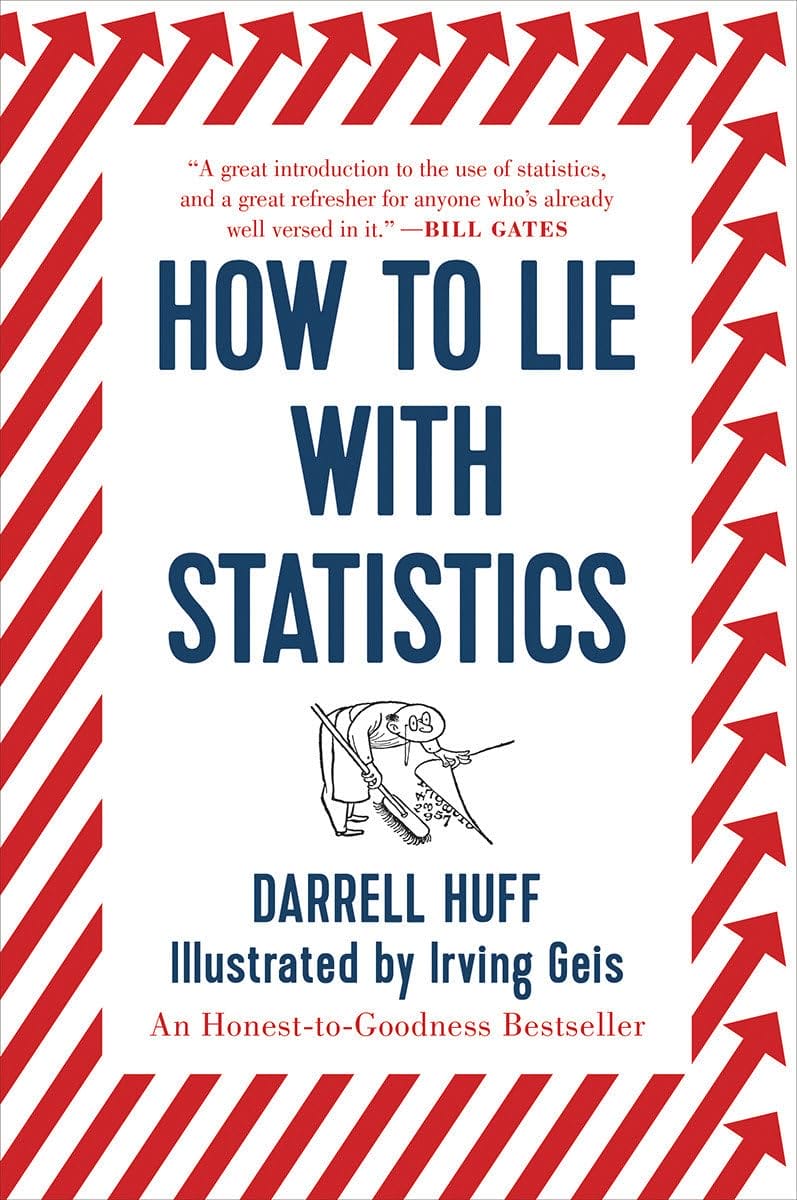
Want more on avoiding manipulative charts and graphs? Try this book: How to Lie With Statistics – get it for $7.44 at Amazon.

charts and graphs

Amazon

Okay, that’s my story, now it’s your turn. Have you had to create graphs you knew were “untrue” in your work? Have you been presented with graphs that weren’t completely accurate? How many of PK’s tricks were you able to find before reading today’s post?

(I’d like to again thank http://www.dqydj.netfor his help on this two-part series. I wish I had his ability to show timely and accurate charts like he and his partners have at dqydj.net. For more great charts, graphs, politics, economics and investment discussions, visit his website.)

Photo of Joe Saul-Sehy
Joe Saul-Sehy

Joe is a former financial advisor and media representative for American Express and Ameriprise. He was the “Money Man” at Detroit television WXYZ-TV, appearing twice weekly. He’s also appeared in Bride, Best Life, and Child magazines, the Los Angeles Times, Chicago Sun-Times, Detroit News and Baltimore Sun newspapers and numerous other media outlets.  Joe holds B.A Degrees from The Citadel and Michigan State University.

joesaulsehy.com/

Filed Under: money management, Planning, smack down!, successful investing Tagged With: charts, charts lie, graphs, graphs lie, inaccurate

  • « Previous Page
  • 1
  • …
  • 10
  • 11
  • 12
  • 13
  • 14
  • Next Page »

FOLLOW US

Search this site:

Recent Posts

  • Can My Savings Account Affect My Financial Aid? by Tamila McDonald
  • 12 Ways Gen X’s Views Clash with Millennials… by Tamila McDonald
  • What Advantages and Disadvantages Are There To… by Jacob Sensiba
  • Call 911: Go To the Emergency Room Immediately If… by Stephen Kanaval
  • 10 Tactics for Building an Emergency Fund from Scratch by Vanessa Bermudez
  • 7 Weird Things You Can Sell Online by Tamila McDonald
  • 10 Scary Facts About DriveTime by Tamila McDonald

Copyright © 2026 · News Pro Theme on Genesis Framework