• Home
  • About Us
  • Getting Finances Done
    • Hiring Advisors
    • Debt Management
    • Spending Plan
  • Insurance
    • Life Insurance
    • Health Insurance
    • Disability Insurance
    • Homeowners/Renters Insurance
  • Contact Us
  • Our Editorial Commitment

The Free Financial Advisor

You are here: Home / Archives for identity theft

9 Everyday Situations That Could Secretly Be a Setup for a Scam

March 10, 2025 by Latrice Perez Leave a Comment

Scammers
Image Source: 123rf.com

Most people think they can spot a scam from a mile away, but the truth is that scams have become more sophisticated and harder to detect. Scammers no longer rely solely on obvious tricks like fake lottery winnings or suspicious emails from foreign princes. Instead, they use everyday situations—places you visit, services you use, and interactions that seem completely normal—to manipulate unsuspecting victims. You could be walking into a setup without even realizing it. Here are nine everyday situations that could secretly be part of a scam.

A “Good Samaritan” Offering to Help at the ATM

Imagine you’re at an ATM, and your card suddenly won’t work. A stranger standing nearby kindly offers to help, suggesting you try a different way to insert the card or a new PIN combination. What you don’t realize is that they may have been watching you enter your PIN and are looking for an opportunity to steal your card. In some cases, scammers place fake card readers or devices that jam the ATM to trick people into seeking help, allowing them to steal banking information. If you ever run into trouble at an ATM, go inside the bank for assistance rather than trusting a stranger.

The “Accidental” Bump and Spill Trick

You’re walking down the street or through a busy shopping center when someone bumps into you and spills coffee or another liquid on your clothes. As they frantically apologize and help clean up the mess, you’re distracted—just long enough for their accomplice to pickpocket you. This scam is common in crowded areas where people are rushing and not paying full attention to their belongings. If someone spills something on you, secure your wallet and phone before engaging with them.

Fake Wi-Fi Networks in Public Places

You sit down at a coffee shop or airport and connect to the free Wi-Fi without a second thought. What you don’t know is that scammers often create fake Wi-Fi networks with names similar to the official ones. When you connect, they can intercept your data, including passwords, emails, and financial information. Always confirm the official network name with staff before connecting, and never enter sensitive information while using public Wi-Fi unless you have a VPN enabled.

The “Overpayment” Scam When Selling Online

If you sell items online, be wary of buyers who “accidentally” send you too much money and ask you to refund the difference. Scammers often use stolen credit cards or fake checks that later bounce, leaving you with no product and no money. The safest way to sell items is through trusted platforms that offer secure payment methods, and never send refunds for overpayments until you’re sure the money has cleared.

The “Found Wallet” Scam

Someone approaches you, claiming they found a wallet full of cash and suggesting that you split the money before turning it in. This is a classic distraction scam. As soon as you agree, an “angry owner” appears, accusing you of stealing. The scammers then demand money from you to “settle” the situation before it escalates. If someone claims they found a wallet, insist on turning it in to the police and walk away if they resist.

The Fake Charity Collector

You’re outside a grocery store, and a person in a uniformed vest asks for donations to a well-known charity. They have a clipboard, a collection bucket, and a heartwarming story about why your donation is needed. The problem? The charity is fake, and the money goes straight into their pocket. Scammers rely on emotions to pressure people into giving quickly without verifying legitimacy. Before donating, ask for official documentation or look up the charity online to ensure it’s real.

The “Broken” Gas Pump Card Reader

Gas Pump
Image Source: 123rf.com

You pull up to a gas station, insert your card, and the machine doesn’t work. A helpful stranger tells you that the reader is down and suggests you pay inside instead. What they don’t tell you is that they just installed a card skimmer on the pump to steal your credit card information. Before inserting your card, always check for anything unusual on the reader, such as a loose or bulky card slot. If a pump seems suspicious, move to another one or pay inside directly with the cashier.

The “Free” Trial That Won’t Let You Cancel

You sign up for a free trial of a service, expecting to cancel before being charged. However, when you try to cancel, the website is impossible to navigate, the phone number doesn’t work, or the cancellation process is deliberately complicated. Many companies, even legitimate ones, use this tactic to keep charging you for a service you don’t want. Always read the fine print before signing up for a free trial and use a virtual credit card that allows you to block future charges.

The Fake Customer Service Call

You receive a call from someone claiming to be from your bank, Amazon, or a utility company, saying there’s a problem with your account. They may even spoof the official number so it looks legitimate. The caller then asks for your personal information to “verify” your account. This is a classic phishing scam designed to steal sensitive details. If you get an unexpected call from a company asking for account details, hang up and contact the company directly using the number on their official website.

How to Protect Yourself from Everyday Scams

Scammers are becoming more creative, using everyday situations to take advantage of unsuspecting people. The best defense is awareness and skepticism. If something feels off, take a step back and think before acting. Never share personal information with strangers, double-check credentials before trusting someone, and always verify payment methods when buying or selling items.

If you’ve encountered any of these scams or have tips on how to avoid them, share your experience in the comments.

Read More:

5 Little-Known Laws That Can Protect You from Getting Scammed

Is It Really Your “Dream” Job? 10 Ways to Avoid Job Scams

Latrice Perez

Latrice is a dedicated professional with a rich background in social work, complemented by an Associate Degree in the field. Her journey has been uniquely shaped by the rewarding experience of being a stay-at-home mom to her two children, aged 13 and 5. This role has not only been a testament to her commitment to family but has also provided her with invaluable life lessons and insights.

As a mother, Latrice has embraced the opportunity to educate her children on essential life skills, with a special focus on financial literacy, the nuances of life, and the importance of inner peace.

Filed Under: Personal Finance Tagged With: Consumer Protection, cyber security, Financial Security, fraud prevention, identity theft, online scams, personal safety, Public Safety, scam awareness, scams

5 Little-Known Laws That Can Protect You from Getting Scammed

March 6, 2025 by Latrice Perez Leave a Comment

Little Known Laws
Image Source: 123rf.com

Scammers are becoming more sophisticated, finding new ways to deceive people and steal their money. While many consumers rely on common-sense fraud prevention tips, they often overlook legal protections that could save them from financial disaster. Some of the most powerful consumer protection laws are not widely known, but they can help you fight back against scammers, recover lost funds, and prevent fraud in the first place. Knowing these laws can empower you to take legal action if you ever become a victim of a scam.

1. Unfair and Deceptive Acts and Practices (UDAP) Statutes

Every state in the U.S. has its own Unfair and Deceptive Acts and Practices (UDAP) laws designed to protect consumers from fraud, false advertising, and scams. These laws make it illegal for businesses and individuals to engage in deceptive practices, such as making misleading claims about products or services. UDAP laws also apply to scams involving financial fraud, false billing, and fraudulent contracts.

One key advantage of UDAP laws is that they allow consumers to sue businesses for damages. In some states, victims can receive triple damages if the fraud was intentional. These laws can also apply to scams targeting the elderly or disabled, leading to additional penalties for scammers. If you’ve been tricked into a fraudulent deal, checking your state’s UDAP laws may provide a legal way to recover your losses.

2. The Cooling-Off Rule for Door-to-Door Sales

Many scams occur when aggressive salespeople pressure consumers into making impulsive purchases, especially at home or in temporary locations. The Federal Trade Commission (FTC) has a Cooling-Off Rule that gives consumers three business days to cancel certain purchases made outside of a normal business setting. This includes sales made at your home, a trade show, or a temporary store location, such as a hotel conference room.

This law is particularly useful for people who fall for high-pressure sales tactics involving overpriced home repair services, timeshares, or expensive subscription-based products. If a seller fails to inform you of your right to cancel, they are violating the law. Always check if your purchase qualifies under the Cooling-Off Rule before assuming you’re stuck with a bad deal.

3. The Fraud and Scam Reduction Act

Scammers frequently target elderly individuals, knowing they may be less familiar with digital fraud tactics. The Fraud and Scam Reduction Act, passed in 2022, was created to help prevent financial scams that disproportionately impact seniors. The law requires the Federal Trade Commission to work with businesses, banks, and consumer protection agencies to develop better fraud prevention strategies.

One of the key aspects of this law is its focus on improving scam awareness through education. Banks and financial institutions are encouraged to train employees to recognize signs of fraud targeting elderly customers. If you or a family member has been scammed, this law provides additional support by ensuring that consumer protection agencies are actively working to prevent similar fraud in the future.

4. The Fair Credit Billing Act (FCBA) for Unauthorized Charges

Credit card fraud is one of the most common types of scams, but many consumers don’t realize that they have strong legal protections under the Fair Credit Billing Act (FCBA). This law allows consumers to dispute unauthorized charges on their credit card statements and requires credit card companies to investigate claims within 30 days.

Under the FCBA, you are only liable for up to $50 of unauthorized charges, and most credit card companies waive even that fee. If a scammer fraudulently charges your credit card, you can file a dispute and have the charges removed. This law also protects you from being billed for goods or services that were never delivered. Many people assume that once a charge appears on their statement, they have to pay it, but the FCBA ensures that fraudulent or incorrect charges can be reversed.

5. The Fair Debt Collection Practices Act (FDCPA) to Prevent Fake Debt Scams

Debt Collection
Image Source: 123rf.com

One of the most common scam tactics involves fake debt collection calls, where scammers pretend to be from a debt collection agency or law firm. They pressure victims into paying non-existent debts by using threats or aggressive tactics. The Fair Debt Collection Practices Act (FDCPA) protects consumers from such scams by strictly regulating how real debt collectors can operate.

Under the FDCPA, debt collectors are prohibited from harassing consumers, making false claims, or threatening legal action they cannot take. If you receive a suspicious debt collection call, you have the right to request written proof of the debt. Scammers often rely on fear and urgency to trick people into paying, but knowing your FDCPA rights can prevent you from falling for this common scam.

6. Bonus Protection: The Electronic Fund Transfer Act (EFTA) for Unauthorized Bank Withdrawals

Many scammers try to steal money by accessing bank accounts through fraudulent electronic transfers. The Electronic Fund Transfer Act (EFTA) protects consumers from unauthorized withdrawals and ensures that banks must investigate disputed transactions.

If a scammer gains access to your bank account and withdraws funds without your authorization, you have 60 days to report the fraudulent activity. If you notify your bank within this timeframe, they are required to investigate and may be liable for reimbursing your money. The EFTA is particularly important in protecting against online banking fraud and identity theft.

Use Legal Protections to Fight Back

While scammers continue to develop new schemes, legal protections exist to help consumers fight back. The Unfair and Deceptive Acts and Practices (UDAP) statutes, Cooling-Off Rule, Fraud and Scam Reduction Act, Fair Credit Billing Act (FCBA), and Fair Debt Collection Practices Act (FDCPA) all provide valuable safeguards against fraud. Additionally, the Electronic Fund Transfer Act (EFTA) offers protection against unauthorized bank withdrawals.

Being aware of these laws allows you to take action if you become a victim of fraud and prevents scammers from exploiting you. Understanding your legal rights is one of the most effective ways to protect yourself, your finances, and your personal information.

Have you ever used a consumer protection law to fight back against a scam? How did it work out? Share your experience in the comments.

Read More:

The One Thing You Should Never Do If You Get a Call from “Your Bank”

Online Shopping Dangers: 7 Red Flags That Scream “Scam!”

Latrice Perez

Latrice is a dedicated professional with a rich background in social work, complemented by an Associate Degree in the field. Her journey has been uniquely shaped by the rewarding experience of being a stay-at-home mom to her two children, aged 13 and 5. This role has not only been a testament to her commitment to family but has also provided her with invaluable life lessons and insights.

As a mother, Latrice has embraced the opportunity to educate her children on essential life skills, with a special focus on financial literacy, the nuances of life, and the importance of inner peace.

Filed Under: Personal Finance Tagged With: Consumer Protection, cooling-off rule, credit card fraud, debt collection scams, fair credit billing, financial fraud, fraud laws, identity theft, legal rights, scam prevention

The One Thing You Should Never Do If You Get a Call from “Your Bank”

March 5, 2025 by Latrice Perez Leave a Comment

Make a Phone Call
Image Source: 123rf.com

Getting a call from your bank can be alarming, especially if the person on the other end claims there’s suspicious activity on your account. Your first instinct might be to cooperate immediately, eager to protect your money. But before you do anything, stop and think. Scammers have become incredibly sophisticated, and they know exactly how to make you panic and act without questioning. There’s one mistake that could cost you everything, and knowing how to avoid it could save you from financial disaster.

Never Give Out Your Personal or Banking Information

The biggest mistake you can make when receiving a call from someone claiming to be your bank is giving them your personal information. Scammers often pose as bank representatives, using fear tactics to pressure you into handing over sensitive details like your account number, PIN, or online banking login. They may claim they need to verify your identity or that your account is in immediate danger. No legitimate bank will ever ask for this information over the phone. If someone insists, it’s a clear sign that you’re dealing with a scam.

Scammers Use Caller ID Spoofing to Trick You

One reason these scams work so well is that fraudsters can manipulate caller ID to make it look like your bank is calling. This technique, known as spoofing, allows them to display an official bank phone number, making their call appear legitimate. Many people assume that if the number looks right, the call must be real. Unfortunately, this false sense of security leads them to lower their guard and provide information they wouldn’t otherwise share. Never trust a call solely based on the number displayed on your phone.

They Create a Sense of Urgency to Make You Act Fast

Scammers rely on fear and urgency to prevent you from thinking critically. They may claim that your account has been compromised, that there have been fraudulent transactions, or that your funds are at risk of being locked. The goal is to push you into making a quick decision before you have time to verify the situation. They may even threaten immediate consequences, like closing your account or freezing your funds. If a caller pressures you to act immediately, take it as a red flag. A real bank will never rush you into making financial decisions over the phone.

Fraudsters May Ask You to Move Your Money

One of the most dangerous scams involves criminals convincing victims to transfer their own money into a so-called “safe” account. They might tell you that your account has been hacked and that you need to move your funds to protect them. In reality, they are tricking you into wiring money directly into their control. Banks will never ask you to transfer money to another account for security reasons. If you ever receive such a request, hang up immediately and contact your bank through official channels.

They May Ask You to Provide a One-Time Passcode

Passcode
Image Source: 123rf.com

Many banks use two-factor authentication to verify your identity, often sending a one-time passcode to your phone or email. Scammers know this and will attempt to trick you into sharing that code with them. They may claim they are sending a security code to verify your identity when, in reality, they are using it to gain access to your online banking. If a caller asks for a one-time passcode, assume they are a scammer. Banks will never request this information over the phone.

Scammers Might Direct You to a Fake Website

A common tactic fraudsters use is directing victims to a fake banking website that looks nearly identical to the real thing. They may instruct you to log in to “confirm your account details” or “fix an issue.” If you enter your credentials, you’re handing them over to scammers who can then access your real account. Always type in your bank’s official website yourself instead of clicking on links provided by an unsolicited caller. If there’s an issue, you can check your account directly through secure channels.

They Will Try to Keep You on the Phone

Another trick scammers use is keeping you on the phone while they attempt to access your account in real time. They may ask you to verify information, reset your password, or approve a transaction while they guide you through the process. This is a method of controlling the situation and preventing you from realizing something is wrong. If a caller insists that you stay on the line while taking financial actions, end the call immediately. Take a moment to verify things on your own before making any decisions.

What to Do Instead of Engaging with the Caller

If you receive a call from someone claiming to be your bank, the safest thing you can do is hang up and contact your bank directly. Use the official number found on your bank’s website or your bank statement, not the number that called you. If there’s a real issue with your account, your bank will confirm it through official means. Never call back a number provided by the caller, as it could lead you right back to the scammers.

Report Suspicious Calls to Protect Yourself and Others

If you suspect a scam, report it to your bank and the appropriate authorities. Many banks have fraud departments that track these scams and warn other customers. You can also report the call to the Federal Trade Commission (FTC) or other consumer protection agencies. Spreading awareness about these tactics helps prevent others from falling victim. The more people recognize these scams, the harder it becomes for fraudsters to succeed.

Fear, Urgency and Trust

Scammers prey on fear, urgency, and trust, making it easy for even the smartest people to fall for their schemes. The one thing you should never do if you get a call from “your bank” is give out your personal or banking information. If a caller pressures you, creates a sense of urgency, or asks for sensitive details, it’s time to hang up and call your bank directly. Protecting your finances starts with knowing how to spot a scam before it’s too late.

Have you ever received a suspicious call from someone claiming to be your bank? How did you handle it? Share your experience in the comments to help others stay safe.

Read More:

Online Shopping Dangers: 7 Red Flags That Scream “Scam!”

The Truth Behind the Lies: 10 Signs Your Partner May Be a Con Artist

Latrice Perez

Latrice is a dedicated professional with a rich background in social work, complemented by an Associate Degree in the field. Her journey has been uniquely shaped by the rewarding experience of being a stay-at-home mom to her two children, aged 13 and 5. This role has not only been a testament to her commitment to family but has also provided her with invaluable life lessons and insights.

As a mother, Latrice has embraced the opportunity to educate her children on essential life skills, with a special focus on financial literacy, the nuances of life, and the importance of inner peace.
Filed Under: Banking & Finance Tagged With: banking scams, caller ID spoofing, Financial Security, fraud alerts, fraud prevention, identity theft, online banking safety, phishing scams, phone scams, scam awareness

14 Online Behaviors That Put You at Risk of Cybercrime

April 9, 2024 by Teri Monroe Leave a Comment

online risky behaviors that lead to cybercrime

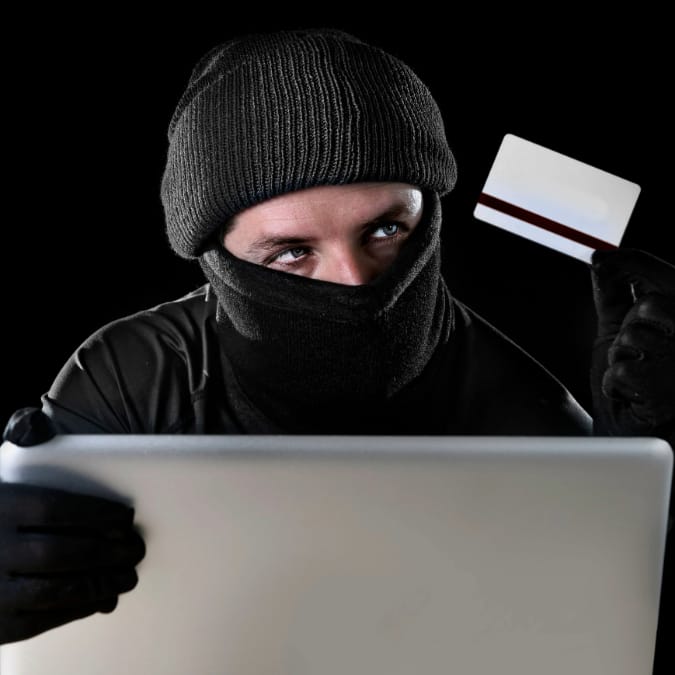
In today’s digital age, the internet has become an integral part of our daily lives, offering convenience, connectivity, and countless opportunities. However, along with its benefits come risks, particularly regarding cybersecurity. With over 2328 attacks per day, there is a hacker attack online about every 39 seconds. There are some behaviors online that put you more at risk of cybercrime than you may be aware.

Cybercriminals constantly evolve tactics to exploit vulnerabilities and steal sensitive information from unsuspecting individuals. While technology has advanced to combat cyber threats, individuals must also be vigilant and aware of their online behaviors that can expose them to cybercrime. Here are 14 common online habits that can put you at risk.

1. Weak Passwords

weak passwords

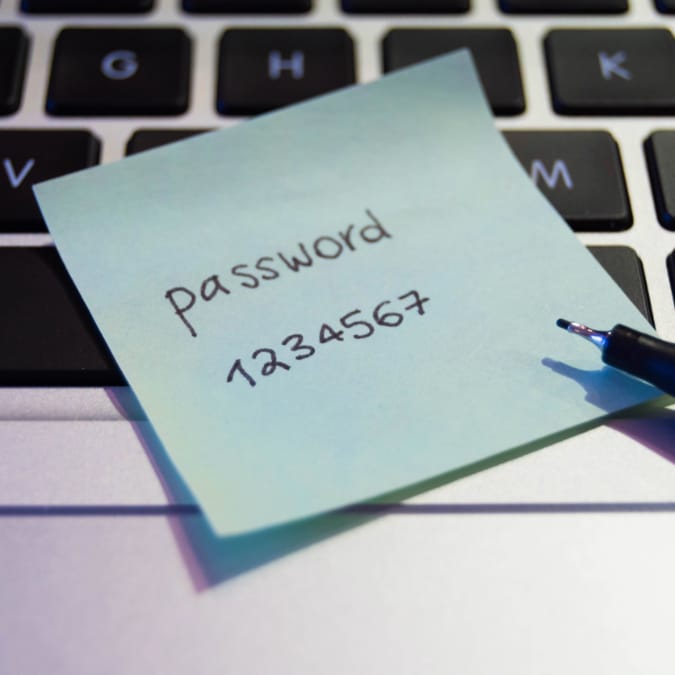
According to Verizon’s annual Data Breach Index Report, up to 80% of successful data breaches result from compromised login credentials. Using simple or easily guessable passwords makes it easier for cybercriminals to access your accounts. 

As many as 2 in 3 users are at risk for data breaches because of their passwords. Strong, unique passwords that combine letters, numbers, and special characters are essential for better security.

2. Reusing Passwords

reusing passwords cybercrime

A study found that 34% of respondents use a variation of the same password across multiple sites. Using the same password across multiple accounts increases the risk of a security breach. If one account is compromised, cybercriminals can also gain access to other accounts.

3. Clicking on Suspicious Links

phishing scams

Clicking links in unsolicited emails, pop-up ads, or social media messages can lead to phishing scams or malware infections. Always verify the source and legitimacy of links before clicking on them.

Cybercriminals are constantly changing their tactics to make phishing scams more believable. Phishing emails and text messages often tell a story to trick you into clicking on a link or opening an attachment. You might get an unexpected email or text message that looks like it’s from a company you know or trust, like a bank, credit card company, or utility company. 

4. Ignoring Software Updates

software updates to avoid cybercrime

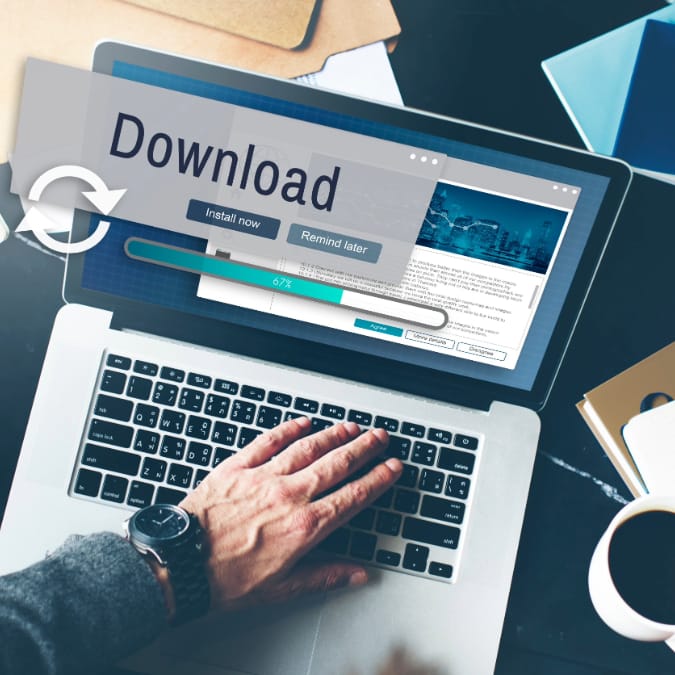
Neglecting to update your operating system, antivirus software, web browsers, and other applications leaves your devices vulnerable to known security vulnerabilities. Install updates regularly to patch security flaws and protect against cyber threats.

5. Downloading Unauthorized Software

downloading suspicious software

Downloading pirated software, games, movies, or music from untrusted sources often exposes users to malware, ransomware, or other malicious software hidden within the files.

6. Sharing Personal Information

identity theft

Revealing sensitive personal information such as full name, address, phone number, or financial details on social media platforms or unsecured websites can lead to identity theft or fraud.

If you believe your information has been compromised, you can report it to the FTC. This can help you determine the next steps and prevent fraud and identity theft in the future.

7. Using Public Wi-Fi Unprotected

public wifi security risk

Connecting to public Wi-Fi networks without using a Virtual Private Network (VPN) or other encryption measures exposes your data to interception by cybercriminals monitoring the network. This risky online behavior makes you an easy target for cybercrime.

8. Ignoring Privacy Settings

data privacy settings online security

Failing to review and adjust privacy settings on social media accounts, online profiles, or mobile apps may inadvertently expose your personal information to the public or third-party advertisers. 

Pew Research found that only about one in five adults say they always or often read a company’s privacy policy before agreeing to it.

9. Falling for Social Engineering Tactics

hacked from falling for social engineering

Cybercriminals often employ social engineering techniques to manipulate users into divulging confidential information or performing actions that compromise security, such as posing as tech support or a trusted acquaintance. 

10. Not Backing Up Data

external devices to prevent data loss

Failing to regularly back up important files and documents can leave you vulnerable to data loss in the event of a cyber attack, ransomware infection, or hardware failure. You can choose to back up files to the cloud or external devices.

11. Overlooking Email Security

ignoring email security online behavior putting you at risk

Opening email attachments or downloading files from unknown senders without verifying their authenticity can lead to malware infections or phishing attacks.

12. Ignoring Two-Factor Authentication

ignoring two step authentication online behavior that can put you at risk

Disabling or neglecting to enable two-factor authentication (2FA) on online accounts leaves them more susceptible to unauthorized access, as it adds an extra layer of security beyond just a password. 2FA usually requires your password and another factor such as a security token or biometric factor.

13. Engaging with Untrustworthy Sites

online gambling risky behavior

Participating in online activities such as illegal file sharing or gambling on untrustworthy websites increases the likelihood of encountering malware or falling victim to scams. These online behaviors put you directly at risk of cybercrime.

14. Not Monitoring Financial Accounts

checking financial accounts

A recent Ipsos poll found that nearly 1 in 3 Americans have been victims of online financial fraud or cybercrime. Failing to regularly monitor bank statements, credit card transactions, and other financial accounts for unauthorized activity may delay detecting fraudulent charges or identity theft.

Staying Safe Online

managing online behaviors that put you at risk

Safeguarding against cybercrime requires awareness, vigilance, and proactive measures to protect yourself online. By avoiding these risky online behaviors and adopting good cybersecurity practices, you can reduce your risk of falling victim to cyber threats and ensure a safer digital experience. 

Remember, staying informed and exercising caution are crucial steps in defending against the ever-evolving landscape of cybercrime.

Read More

15 Things Smart People Only Leave To Charity In Their Wills

10 Surprising Ways Boomer Grandparents Are Splurging On Their Grandkids

Photograph of Teri Monroe
Teri Monroe
Teri Monroe started her career in communications working for local government and nonprofits. Today, she is a freelance finance and lifestyle writer and small business owner. Teri holds a B.A. From Elon University.  In her spare time, she loves golfing with her husband, taking her dog Milo on long walks, and playing pickleball with friends.

Filed Under: Crime Tagged With: cybercrime, cybersecurity, hackers, identity theft, online behaviors

Is It Safe to Throw Away Bank Statements?

October 28, 2020 by Jacob Sensiba Leave a Comment

throw-away-bank-statements


Before we answer the question as to whether or not it’s safe to throw away bank statements, we need to cover how long you should keep certain statements. The following list is provided by TrueShred.

Statements to shred right away:

  • Sales receipts (unless you need them for tax purposes; in that case, scan them first)
  • ATM receipts
  • Packing slips and online purchase orders
  • Canceled and voided checks (that aren’t tax-related)
  • Utility, internet, and cell phone bills (once paid)
  • Credit card, insurance, and bank account solicitations that come in the mail
  • Expired warranty coverage
  • Correspondences from the DMV or IRS (once settled)
  • Travel-related materials (besides your passport)

List of documents to throw out after 3 years

  • Bank statements
  • Credit card statements (once paid)
  • Pay stubs (once checked against your W-2 for accuracy)
  • Medical bills (once paid and free of insurance disputes)


List of documents to throw out after 7 years

  • Tax returns
  • W-2s
  • Tax-related receipts and canceled checks
  • Records for any tax deductions you took
  • Other tax records

List of documents to throw out (variable intervals)

  • Auto titles (keep for as long as you own the car)
  • Home deeds (keep for as long as you own the property)
  • Disputed medical bills (keep until the issue is resolved)
  • Home improvement receipts (keep until you sell your house and pay any related capital gains taxes)

List of documents to keep forever

  • Birth certificates
  • Adoption papers
  • Social Security cards
  • Marriage certificates
  • Divorce decrees
  • Citizenship papers
  • Passports
  • Death certificates

You should keep these documents in a very safe place. I’d recommend a fireproof safe to keep these things protected.

How should you dispose of sensitive documents?

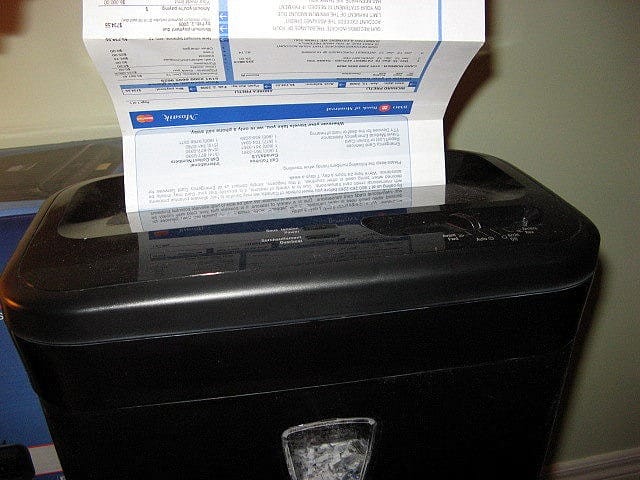
It is safe to throw away your bank statements, as long as you do so in a particular fashion. If you have a significant amount of paperwork, hire a shredding service. If you don’t have that type of volume, put it through a shredder. Tearing the papers up once or twice won’t do the trick.

Another safe disposal method, as recommended by Patch.com is to wrap up unused or spoiled food with the sensitive documents, and throw them in the refuse bin. Scavengers are more likely to “skip over” the refuse bin when they’re looking for sensitive information for identity theft purposes.

Below, are several ways to dispose of your sensitive documents without the use of a shredder. This list is provided by WigglyWisdom.com.

  1. Hand shred – tear up the paper with your hands. Make sure you tear the vital information and place it in separate recycling bins.
  2. Burn them – local ordinances can hinder your ability to do this, so be sure to check the laws for your municipality. Tear up the paper first, in the same way, you would for point #1, in case a piece of paper flies away.
  3. Compost – paper breaks down and can add carbon to your compost pile.
  4. Soak them in water – 24 hours in a bucket of water can leave your documents illegible.

There are three other items on that list if you’d like to learn a little more.

Conclusion

Bank statements and other financial documents contain incredibly sensitive information. It’s important you a) keep proper records and b) dispose of these items in a safe manner.

Related:

Earlier this year, I wrote a piece about the most important financial documents. If you’d like to learn more, go check that out here.


**Securities offered through Securities America, Inc., Member FINRA/SIPC. Advisory services offered through Securities America Advisors, Inc. Securities America and its representatives do not provide tax or legal advice; therefore, it is important to coordinate with your tax or legal advisor regarding your specific situation. Please see website for full disclosures: www.crgfinancialservices.com

Jacob Sensiba
Jacob Sensiba

Jacob Sensible is a financial advisor with decades of experience in the financial planning industry.  His journey into finance began out of necessity, stepping up to support his grandfather during a health crisis. This period not only grounded him in the essentials of stock analysis, investment strategies, and the critical roles of insurance and trusts in asset preservation but also instilled a comprehensive understanding of financial markets and wealth management.  Jacob can be reached at: jake.sensiba@mygfpartner.com.

mygfpartner.com/jacob-sensiba-wisconsin-financial-advisor/

Filed Under: Banking, Personal Finance, risk management, Tax Planning Tagged With: bank, bank statements, documents, identity theft, statements

Family Member Opened an Account in My Name-Now What?

May 18, 2020 by Tamila McDonald Leave a Comment

family member opened an account in my name

When people envision identity theft, they picture some stranger masquerading as them. But that isn’t always what plays out. During one year, about 550,000 victims of identity theft said that a person they knew took their information, not a stranger. While getting your identity stolen is always a difficult situation, when a family member is responsible, it’s even more complex. So if you have the question, if a family member opens an account in my name? Here’s what you need to know.

[Read more…]

Tamila McDonald
Tamila McDonald

Tamila McDonald is a U.S. Army veteran with 20 years of service, including five years as a military financial advisor. After retiring from the Army, she spent eight years as an AFCPE-certified personal financial advisor for wounded warriors and their families. Now she writes about personal finance and benefits programs for numerous financial websites.

Filed Under: credit cards Tagged With: credit cards, identity theft

5 Must-Know Privacy Lessons I Learned From 9-11

September 11, 2012 by Joe Saul-Sehy 18 Comments

I was late to work and sneaking up the stairwell to my office. A passing friend said, “A second plane just hit the World Trade Center.”

There’d been a first plane? The World Trade Center? It must be a little Cessna.

The entire office huddled around televisions. I wasn’t prepared for what they were watching. The heroism of everyday people that day still amazes me.

Later in the week, among the flurry of stories echoing the disaster, one personal finance problem emerged: private financial documents with personal client information littered the streets of Manhattan. Many of the firms in the World Trade Center were financial companies (in fact, one firm owned by a cousin of a client, Alger Mutual Funds, lost David Alger and 35 other staffers that day). I began helping the media complete stories about “How to Protect Your Privacy.”

Although we can’t prevent another 9-11, we can make sure that our financial documents are the last thing we worry about when far more important concerns (such as people) should dominate our thoughts. Here are five lessons I took far more seriously after that day than I had previously:


5 Steps To Protect Your Identity


shredder1) Shred unnecessary documents. A good shredder pays for itself immediately. If you’re using it for household bills, this Amazon shredder will only set you back $29.99. Businesses should invest in a more robust tool.

2) Don’t give out your social security number, telephone number, or other unnecessary information on documents. I hand over wrong numbers like a hot woman at the bar. Create a separate email address reserved for email forms and correspondence with companies.

3) Check your credit report regularly. You’ll want to keep a tight watch over predators trying to access your credit. Companies with free credit tools like Quizzle or CreditKarma are great places to monitor lender activity. On episode #2 of our Two Guys & Your Money podcast, Len Penzo reported that he turns off his credit with each credit company until he needs it. Look for other mistakes while you’re there: a recent ABC news story reported that over 90% of all credit reports have inaccurate information.

4) Review every credit card statement. Ever wonder why Mr. Monopoly looks shocked when you draw the “Bank Error in Your Favor….Collect $40” card in the popular board game? It’s because errors happen all the time and they’re rarely in your favor. More importantly, you may see early signs of thieves trying to gain access to your credit.

5) Back up your documents – I’ve recently begun transferring my paper documents into digital form. Keep these in two places in case you lose access to the first or thieves steal the data.

Foremost in my mind today is the tragic and unnecessary loss of life on 9-11. I learned far greater lessons than the five I pointed out above. However, I also learned a little about taking care of my financial life so that if tragedy strikes, the threat to my identity is minimized.


What steps do you still need to take to better protect your financial privacy?

Enhanced by Zemanta
Photo of Joe Saul-Sehy
Joe Saul-Sehy

Joe is a former financial advisor and media representative for American Express and Ameriprise. He was the “Money Man” at Detroit television WXYZ-TV, appearing twice weekly. He’s also appeared in Bride, Best Life, and Child magazines, the Los Angeles Times, Chicago Sun-Times, Detroit News and Baltimore Sun newspapers and numerous other media outlets.  Joe holds B.A Degrees from The Citadel and Michigan State University.

joesaulsehy.com/

Filed Under: credit score, Debt Management, money management, risk management Tagged With: credit monitoring, credit thief, CreditKarma, identity theft, protect identity, Quizzle

  • « Previous Page
  • 1
  • …
  • 6
  • 7
  • 8

Follow Us

Search this site:

Recent Posts

  • Can My Savings Account Affect My Financial Aid? by Tamila McDonald
  • 12 Ways Gen X’s Views Clash with Millennials… by Tamila McDonald
  • What Advantages and Disadvantages Are There To… by Jacob Sensiba
  • 10 Tactics for Building an Emergency Fund from Scratch by Vanessa Bermudez
  • Call 911: Go To the Emergency Room Immediately If… by Stephen Kanaval
  • 7 Weird Things You Can Sell Online by Tamila McDonald
  • 10 Scary Facts About DriveTime by Tamila McDonald

Copyright © 2026 · News Pro Theme on Genesis Framework