• Home
  • About Us
  • Toolkit
  • Getting Finances Done
    • Hiring Advisors
    • Debt Management
    • Spending Plan
  • Insurance
    • Life Insurance
    • Health Insurance
    • Disability Insurance
    • Homeowners/Renters Insurance
  • Contact Us
  • Privacy Policy
  • Risk Tolerance Quiz

The Free Financial Advisor

You are here: Home / Archives for credit score

Are Medical Collections Still Relevant to Your Credit Score?

May 31, 2021 by Tamila McDonald Leave a Comment

do medical collections still affect your credit score

Staying healthy can be surprisingly expensive. As a result, many households end up with large medical bills. At times, the bills pile up so high that paying them seems (or legitimately becomes) impossible, causing the household to default on the debt. When that happens, the account can end up in medical collections. If you’re wondering do medical collections still affect your credit score, here’s what you need to know.

How Medical Debt Impacts Your Credit

Medical debt doesn’t usually have an impact on your credit score as long as you are paying the bill on time every month. When that happens, most healthcare facilities don’t bother reporting the account to the major credit bureaus, so neither the amount you owe nor your payment history ends up in your file.

In some cases, even a late or missed payment or two doesn’t cause an issue. Typically, it’s only when you default on the debt and end up in medical collections that you put your credit at risk.

What Are Medical Collections?

Medical collections are a recovery process designed to help healthcare facilities secure payments on past-due medical debt. In some cases, the standard procedure involves selling the debts to a traditional collections agency. However, larger healthcare facilities may have internal collections departments that essentially serve the same function.

It’s important to note that internal collections teams can differ from the healthcare facility’s regular billing department. However, some may use a blended approach.

Do Medical Collections Still Affect Your Credit Score

Once a medical debt ends up in collections – either internally at the healthcare facility or by being sold to a debt collection agency – the default can end up on your credit report. Once it does, it has a similar impact to any other debt that is past due, including a negative impact on your credit score.

However, unlike traditional debts, medical collections don’t appear on your report right away. All three major credit bureaus have a grace period of 180 days, giving you time to resolve the debt before it ends up on your credit report and impacts your score.

Once the grace period passes, the account appears on your report. At that time, you’ll see a negative impact on your score, including potentially a drop of 100 points or more.

How to Avoid Medical Collections

Usually, the simplest way to avoid medical collections is to make payment arrangements. Many healthcare facilities offer payment plans, particularly for large balances. At some facilities, extended payment arrangements can be set up for free and may not involve any interest.

If you can pay most, but not all, of what you owe, the healthcare facility may be open to considering your account paid-in-full in exchange for that lump sum. This is particularly true if you can pay in cash, as some clinics and hospitals do offer discounts for that.

If you’re a low-income household, you may qualify for financial assistance through the healthcare facility as well. Many larger hospitals and clinic systems do have financial assistance programs available, though you typically have to ask about them directly. Request information about eligibility and, if you may qualify, see what you need to do to apply. With that, your balance may end up fully paid or significantly reduced, making it more manageable.

What to Do If Your Account Is in Medical Collections

If your debt is already in medical collections and is legitimately yours, paying it off is usually your best bet. For internal collections, contact the healthcare facility to see if you can work out payment arrangements. If the debt has been sent to an external collections agency, then you’ll need to work with them.

While paying off the debt won’t remove the account from your credit report, the account details will be updated to show that you ultimately ended up handling it. This can benefit your credit score.

If paying it genuinely isn’t feasible, then you need to do some research. Learn more about the statute of limitations on debt collection efforts based on where you live, as the rules can vary from one state to the next. Additionally, find out what kinds of actions reset the clock, as a seemingly innocuous statement on your end can potentially give a collections agency more time to pursue you.

It’s also important to note that, even when a collections agency can no longer attempt to collect the debt, it doesn’t disappear from your credit report right away. Instead, it can show up for up to seven years from the date the account originally became delinquent, causing long-term harm to your score.

How to Dispute Medical Debt That Isn’t Yours

Sometimes, a medical collections account appears on a credit report even though the debt doesn’t belong to that person. This is normally identity theft or administrative errors relating to the account.

If the medical debt isn’t yours, then you do have the ability to dispute it. Usually, the first step you’ll need to take is to contact the collections agency or healthcare facility. Do this by sending a certified letter and tell them you want them to validate that the debt is yours. Also say that, if they can’t provide validation within 30 days (or whatever is allowed by state law in your area), you want the account removed from your credit report.

You can also go another route. All three major credit bureaus have dispute procedures in place. Through those, you can provide information showing that the debt doesn’t belong to you and request it be removed from your report. However, this approach usually only yields results if you have proof of an error.  Which isn’t always easy to find.

While disputing a medical debt can be a lengthy process, it can be worth pursuing. That way, you can get the illegitimate account off your report. Thus, restoring your credit score along the way.

Do medical collections still affect your credit score to this day? Has there been an impact in your financial life in other ways due to a medical bill going to collections? Share your thoughts in the comments below.

Read More:

  • Why Your Credit Score Matters
  • What Could Cause a Credit Score Drop of 100 Points?
  • How to Boost Your Credit Score and Avoid Loan Rejection
Tamila McDonald
Tamila McDonald

Tamila McDonald is a U.S. Army veteran with 20 years of service, including five years as a military financial advisor. After retiring from the Army, she spent eight years as an AFCPE-certified personal financial advisor for wounded warriors and their families. Now she writes about personal finance and benefits programs for numerous financial websites.

Filed Under: credit score Tagged With: credit score, medical collections

What Happens if Debt Is Sold to a Collection Agency?

November 11, 2020 by Jacob Sensiba Leave a Comment

When debt is sold to a collection agency, it’s incredibly common to get upset and/or worried. Odds are, you’ll start getting calls, emails, and text messages about you paying what’s owed.

In today’s post, we’ll discuss what leads to debt going to collections, what to do, what the collections agency can do, and what happens to your credit.

Why does debt go to collections?

Debt goes into collections when you’re behind a certain period of time (usually 30+ days) on your payment.

The lender will either use their own debt collectors or hire a third party to collect. What might also happen is your debt is sold to a collection agency, where they buy the debt from the lender (at a reduced amount than what you actually owe) and then attempt to collect on that amount.

Mortgages

With regard to mortgages, there are certain time periods to keep in mind:

  • 1 – 15 days – Typical grace period. Your payment must be paid in this period.
  • 16 30 days – You’ll start getting reminders, and you’ll likely pay a small late fee. No damage to your credit.
  • 31 – 59 days – Reminder calls and letters will increase. Your credit will reflect your current late status and your credit score will fall.
  • 60 – 90 days – The reminder calls and letters will stop. Someone from your lender will come to your house.

Read more on this subject, here.

What to do when your debt is sold to a collection agency

Don’t ignore it. The best thing you can do is get ahead of it. Gather information about the debt in question. Have them send it to you in writing.

Contact the creditor. Dispute it if you believe there are inaccuracies, or if it’s just not your debt. If it is your debt and everything is accurate, try to negotiate with the lender – they prefer to receive some of what you owe!

If the collection agency is harassing you, submit a request in writing for them to stop.

What if you’re at your wit’s end and don’t know what to do? Hire an attorney. All correspondence, going forward, has to go through them. If anything, get a consultation from an attorney (which is often offered for free) and see what they recommend.

What can they do?

When it comes to collections and the law, there are a few things they can do and several things they can’t do. If you want to know more about that, click here.

Your credit

There are two important things to know when it comes to collections and your credit report.

  1. A collection (or a charge off) hurts your credit score. Not only that, but your payment history (number one factor when calculating your score) will no longer be 100%, and that’s damaging as well.
  2. A collection will stay on your credit report for 7 years. You can implement strategies to improve your score, but you’ll only be able to do so much while that collection is on there.

Having a debt sold to a collection agency isn’t the end of the world. There are several things you can do to rectify it, dispute, or recover from it.

Related reading:

What You Need To Know About Bankruptcy

Deep Dive Into Credit Cards

What Affects Your Credit Score

Jacob Sensiba
Jacob Sensiba

Jacob Sensible is a financial advisor with decades of experience in the financial planning industry.  His journey into finance began out of necessity, stepping up to support his grandfather during a health crisis. This period not only grounded him in the essentials of stock analysis, investment strategies, and the critical roles of insurance and trusts in asset preservation but also instilled a comprehensive understanding of financial markets and wealth management.  Jacob can be reached at: jake.sensiba@mygfpartner.com.

mygfpartner.com/jacob-sensiba-wisconsin-financial-advisor/

Filed Under: credit cards, credit score, Debt Management, money management, Personal Finance Tagged With: credit, credit score, Debt, Debt Collectors

How Long Does Bankruptcy Stay on Credit Report?

July 8, 2020 by Jacob Sensiba Leave a Comment

Filing for bankruptcy is a tough decision to make. It can provide relief when you’re drowning in debt, but it does have consequences when it comes to your credit. How long does bankruptcy stay on your credit report?

We’re going to explore the answer to that question, as well as a few other items, in this article.

What is bankruptcy?

It’s a legal proceeding when an individual or an entity is relieved from some or all of their debts. Whether it’s all or some, and how that process takes place depends on the type of bankruptcy that’s filed.

  • Chapter 7 – Liquidable assets are sold in order to pay off debts. When those assets are exhausted, the remaining debt is discharged.
  • Chapter 11 – The most expensive option, which is usually used by companies (General Motors and J.C. Penny, for example). This is a reorganization plan that enables companies to remain open while getting their financial obligations situated.
  • Chapter 13 – Only available to individuals. The person filing implements a payment plan and is typically able to keep their assets (house, car, etc.). The debt must be paid off in 3 to 5 years.

Federal student loans are often excluded from being discharged, so you’ll be on the hook for that.

Let’s take a look at how bankruptcy affects your credit report.

How it affects credit

I’ll state the obvious by telling you that bankruptcy negatively affects your credit. Typically, you can expect your score to drop by 20-25%. This also depends on your current credit score and credit strength.

Discharges on more accounts and/or accounts with higher balances will affect your score more than discharges on a small number of accounts and/or low balances.

Delinquency usually proceeds bankruptcy and those stay on your report for 7 years. Chapter 7 bankruptcy stays on your credit report for 10 years, while chapter 13 stays on for 7 years.

What to do after

Inspect your credit report with a fine-toothed comb. Make sure that the debts discharged were actually discharged. If you find errors, go through the proper channels to get those corrected.

Once you’ve filed, you can immediately start building your credit back up. The first step is to ALWAYS pay your bills on time. I’ve stated before that on-time payment history is the number one factor when calculating your credit score.

The next step is to open a credit account. This should be something small and manageable. I often suggest a secured credit card. With this type of account, you make a deposit and that deposit acts as your credit limit.

Establish a positive payment history and keep your utilization well below 30%.

Bankruptcy on your report

You don’t have to do anything to remove the bankruptcy from your credit report. It will fall off on its own.

Review your credit report once the 7 or 10 year period ends. At that point, depending which type you filed, the bankruptcy should come off.

Give it a few months as your credit report often lags a little after the activity actually took place.

Stay diligent. Bankruptcy is not a death sentence, it’s a fresh start. Pay on time, keep your utilization low, and keep your spending in check.

Related reading:

How to Answer a Civil Summons for a Credit Card

What You Need to Know About Bankruptcy

What Affects Your Credit Score

Jacob Sensiba
Jacob Sensiba

Jacob Sensible is a financial advisor with decades of experience in the financial planning industry.  His journey into finance began out of necessity, stepping up to support his grandfather during a health crisis. This period not only grounded him in the essentials of stock analysis, investment strategies, and the critical roles of insurance and trusts in asset preservation but also instilled a comprehensive understanding of financial markets and wealth management.  Jacob can be reached at: jake.sensiba@mygfpartner.com.

mygfpartner.com/jacob-sensiba-wisconsin-financial-advisor/

Filed Under: credit score, Debt Management, money management, Personal Finance Tagged With: bankruptcy, credit, credit report, Debt

Financial Stability and Marriage

March 18, 2020 by Jacob Sensiba Leave a Comment


Marriage and finances. Why do these so often go together like oil and water? Why is money such a contentious topic in most households?

It’s because people go through life differently. Depending on how you were raised, what you learned, and what you personally experienced, your money philosophy will be different from that of your spouse.

Before we talk about that, however, I’d like to touch on financial stability and why the growing trend is being financially stable before committing to someone.

Financial Stability

It makes sense from a psychological perspective. Having financial stability makes you appear more mature and that you have your priorities straight. People who see that, probably see someone that’s ready for a commitment.

Additionally, getting married, and marriage in general, can be an expensive endeavor.

Obviously, it depends on the wedding you want, but the average price tag on a wedding nowadays is around $25,000 (source). Add onto that a honeymoon that could take you to another state, if not another country, and you’re spending a lot of money within the first month of being married.

What, historically, follows is a house and kids. Both, though worth every penny and minute, are expensive.

Because everyone has a different experience, and there are so many of them out there, I can’t go into detail about every one of them. Instead, I’ll speak generally about what they are trying to do.

Debt

People are trying to get out of or get a firm grasp on their debt. Whether it’s student loans, credit card debt, or medical bills, nobody wants to go into a committed relationship, let alone marriage, with a significant amount of debt.

Not only does debt hinder you from putting it towards future wants and needs, but when you get married, your debt becomes your spouse’s debt as well. You don’t want to burden them with that.

People want to be financially stable going into a marriage so they can afford the wants that often come with marriage, and they don’t want to be sacked with debt that brings down the family balance sheet.

Credit

Another piece of the financial puzzle that people try improving is their credit score. Your credit score plays a factor in almost every important life event. Where you live, where you work, and what you drive, your score could play a role.

Your financial philosophy is how you view money and how you use it.

Philosophy

Are you a saver or a spender? Do you view credit cards as a tool or a money sucker? When you do spend, do you prefer to buy stuff or experiences? Would you rather invest with the chance to earn more or put those dollars in a savings account for safekeeping?

As I mentioned before, your upbringing, what you’ve learned, and your personal experiences shaped the answers to these questions.

When you commit to a relationship, you’re going to have different answers. The key with any part of marriage, and money is no exception, are compromise and communication. You have to find some middle ground so each individual is getting their needs met, to an extent.

What you have to do is sit down with your significant other, dive deep into each other’s life experiences with regard to money, and what’s important to you, both now and in the future.

Once you have a good understanding of where you’re both coming from and what you want, you can work together to develop a plan, and once you have that plan, you can start executing

Related Reading:

5 Steps Before Tying the Knot

The Psychology of Money

How My Relationship with Money Changed

What Affects Your Credit Score?

Jacob Sensiba
Jacob Sensiba

Jacob Sensible is a financial advisor with decades of experience in the financial planning industry.  His journey into finance began out of necessity, stepping up to support his grandfather during a health crisis. This period not only grounded him in the essentials of stock analysis, investment strategies, and the critical roles of insurance and trusts in asset preservation but also instilled a comprehensive understanding of financial markets and wealth management.  Jacob can be reached at: jake.sensiba@mygfpartner.com.

mygfpartner.com/jacob-sensiba-wisconsin-financial-advisor/

Filed Under: credit score, Debt Management, Investing, money management, Personal Finance, Planning Tagged With: Financial Stability, Marriage

Different Ways To Think About Money

August 21, 2019 by Jacob Sensiba

Your money philosophy and how you think about your finances make a big difference in the decisions you make.

Whether you’re just starting your financial journey or you’re well into it, it’s a good idea to take a step back and define that philosophy.

Money is a tool

Sure, there are monetary goals you would like to achieve. For example, $1 million nest egg has long been touted as the number you need to hit for a comfortable retirement, but hitting, somewhat, arbitrary numbers aren’t everything.

Money is a tool. If used properly, you really can achieve financial success. Taking the money you’ve saved and putting it to work for you is a very simple, yet effective way to use it.

Another monetary tool is a credit card. Credit cards offer a variety of reward programs, like travel miles, cashback, among others. Additionally, it enables you to build and strengthen your credit report.

It is important, however, that if you are using a credit card, you must do so responsibly. Accumulating credit card debt can really set you back, financially.

Related reading: A Deep Dive Into Credit Cards

Focus on the solution, not the problem

Often times, we focus too much on the issues with our finances. I have too much debt, I have too little saved for retirement, or my expenses are killing my ability to save.

Instead of focusing on the problem, focus on what can be done to fix it.

If you have too much debt, develop a plan to pay it down. If your retirement savings are low, figure out how you can increase your savings rate. Expenses hurting your ability to save, cut your expenses.

“Whatever the problem, be part of the solution. Don’t just sit around raising questions and pointing out obstacles.” Tina Fey

Related reading: How To Cut Spending

Money using emotional bandwidth

It is true that money is relatively important. I say relatively to try and redirect to my first point when I mentioned that money is to be used as a tool.

It affords you food to eat, clothes to wear, and a place to live, among other things. If your basic needs are met and future goals are being worked towards, you have to try and stop worrying that you don’t have enough.

This is extremely challenging to do because we, as a society, are so fixated on money and material items that money can buy. It also doesn’t help that comparing ourselves to others is essentially baked into our DNA.

Believe me, I know that learning to stop worrying is incredibly difficult, but retraining your brain to view your finances differently can be extremely liberating.

Related reading: The Psychology Of Money

Think long-term

To be a successful investor or to be able to financially plan effectively, you have to think long term.

The market is going to have its ups and downs. As an investor, it’s important to ride out those down periods and continue to invest. If you have 15+ years until you need that money, you should be able to recoup your losses.

With regard to saving, I typically take the “bucket” approach. I have three buckets, short-term, medium-term, and long-term. Be advised: the following is how I define these time horizons.

  • The short-term bucket is for items under 5 years away. For example, when I want certain debts paid off or a down payment for a house.
  • Medium-term is anything 5-15 years away. The main one in this category is my son’s college savings.
  • Long-term is retirement savings, exclusively.

Related reading: How To Make Long-Term Investing Decisions

Buying experiences versus buying stuff

Money to a certain extent can buy happiness. As long as it’s being spent on experiences rather than stuff.

Memories with family and friends, visiting different destinations and attractions are the things we’ll cherish most.

Stuff breaks and toys are outgrown. What people won’t forget, however, is the time you spent with them.

Make that a priority. I know, as a fairly new parent (my son is almost 2), that I am constantly aware of how finite time is and that I need to make the most of those moments I spend with him.

The way you think about money pulls weight in how you use it. When creating a financial plan, I would prioritize figuring that out. How you think can lead to how you act.

Jacob Sensiba
Jacob Sensiba

Jacob Sensible is a financial advisor with decades of experience in the financial planning industry.  His journey into finance began out of necessity, stepping up to support his grandfather during a health crisis. This period not only grounded him in the essentials of stock analysis, investment strategies, and the critical roles of insurance and trusts in asset preservation but also instilled a comprehensive understanding of financial markets and wealth management.  Jacob can be reached at: jake.sensiba@mygfpartner.com.

mygfpartner.com/jacob-sensiba-wisconsin-financial-advisor/

Filed Under: credit cards, credit score, Debt Management, Investing, money management, Personal Finance, Planning, Retirement

Strategies For Improving Your Credit Score

July 24, 2019 by Jacob Sensiba

Your credit score is extremely important, nowadays. It determines whether or not you qualify for other credit accounts, and if so, what terms. It plays a factor in where you live, and it can even impact job opportunities.

That said, it’s crucial you do everything you can to improve and keep your score high.

What impacts your score?

There are five factors that play a role in calculating your credit score. They are listed below with percentages to discern how big of a role each one plays.

  1. Payment history (35%) – How frequently do you make on-time payments. This number should be 100%
  2. Credit utilization (30%) – How much credit have you used compared to how much you have available. For example, if you have $20,000 of credit available and used $5,000, you have a utilization rate of 25%. Credit rating agencies want to see it below 30%, but the lower, the better.
  3. Credit age (15%) – How old are your current credit accounts? The older, the better. This means that every time you open a new credit account, your credit age drops.
  4. Types of credit (10%) – Credit cards, loans, student loans, etc. Variety helps here.
  5. Number of credit inquiries (10%) – Hard credit inquiries negatively affect your score. Like the utilization, low numbers are better.

(Source)

What hurts your score

There are a few things that negatively impact your score. I’ll list the bad things from the list above, then I’ll list a few others.

  • Poor payment history – If your payment history is below 100%, you’re already starting from behind. Anything under 100% gets notched down.
  • High utilization rate – As I said, rating agencies want to see utilization rates under 30%, so anything over that will bring your score down.
  • Low credit age – Older accounts are better for your score
  • Only one type of credit account
  • A large number of credit inquiries
  • Bankruptcy – Negatively affects your credit score and stays on your credit report for 10 years.
  • Liens and judgments taken out against you – Negatively affects your score and stays on your report for 7 years

Starting from a low score

If you are starting from a lower score, it could be from past experiences (bankruptcy or liens), and if that’s the case, you can only improve. Unfortunately, time is your enemy right now until those drop off.

The first place I would start is to pay off your current debt. If you don’t have any open credit accounts, the next step is to open one.

Individuals with low scores will have trouble opening credit accounts, so I would start with a secured credit card.

A secured credit card is like a regular one, except you establish the credit limit with a deposit. The amount of your deposit is the amount of your limit.

This is a slow and steady way to improve your payment history and show the credit rating agency that you’re responsible.

Current credit accounts

Speaking generally, I advise people to keep their credit accounts open. The one exception is you do plan on closing a credit account, make it one you recently set up.

Getting rid of a new account will increase your credit age, which should increase your score.

New credit accounts

If you’re looking to increase your score, I’d recommend abstaining from opening any new accounts, unless you’re someone that needs to open that secured credit card to rebuild your score.

The other two exceptions would be opening an account for a credit card balance transfer or a personal loan for debt consolidation.

Opening new accounts hurt twice. One, you effectively lower your credit age. And two, when you apply for a credit account, it counts as a hard credit inquiry.

Don’t do it unless you have to, and if the long-term benefits outweigh the short-term penalties.

Pay down debts

Paying down debt is a slow way to improve your credit score, but it’s a tremendous way to improve your finances overall.

Less debt means less money needed to service that debt. Less debt means a lower utilization rate (number 2 factor).

Also, when you make debt payments [on time], you’re strengthening your payment history (number 1 factor).

I recently wrote an article, linked here, about paying down debts. Give it a read. In that article, you’ll also find helpful resources on similar topics.

Utilities

The last thing I would do is check to make sure your utility provider (for me, my local municipality has its own utility company) is listed on your credit report.

My previous utility company (WE Energies) did come up on my credit report. It’s another “credit type” and another way to strengthen your payment history.

Further reading:

  • A Guide to Credit Tradelines: What Do They Actually Do For Your Score?
  • What Hurts Your Score? 10 Things That Can Really Affect Your Rating
  • What You Need To Know About Bankruptcy
Jacob Sensiba
Jacob Sensiba

Jacob Sensible is a financial advisor with decades of experience in the financial planning industry.  His journey into finance began out of necessity, stepping up to support his grandfather during a health crisis. This period not only grounded him in the essentials of stock analysis, investment strategies, and the critical roles of insurance and trusts in asset preservation but also instilled a comprehensive understanding of financial markets and wealth management.  Jacob can be reached at: jake.sensiba@mygfpartner.com.

mygfpartner.com/jacob-sensiba-wisconsin-financial-advisor/

Filed Under: credit cards, credit score, Debt Management, money management, Personal Finance

How To Pump Up Your Finances

April 17, 2019 by Jacob Sensiba Leave a Comment

By “pump up,” I mean to do something that improves your financial situation in any way. Reduce expenses, start a rainy day fund, invest for the future, etc.

With that said, let’s take a look at some simple strategies to pump up your finances.

Cut the fat

I’d start by creating a budget. Look at the past three months of income and expenses. Total the expenses, total your income and compare the two. This will give you a clear picture of how much you are spending versus how much you make.

After that, you can go back with a magnifying glass and see exactly where your money is going, and stop spending money where it is necessary, or at least reduce it.

You can also reduce the fees you pay to invest. Mutual funds and ETFs are the most popular vehicles used today, but they come with a cost. It’s listed as an expense ratio. That ratio should be as low as possible. Ideally, it’ll be under .20%.

A quick tip to cut your expenses – get rid of cable/dish. There are too many services available now. You don’t need to spend $100+ on TV anymore.

Increase savings rate

Hopefully, you are saving something. If you are having trouble setting money aside because of limited resources, give this article a read for some help.

You should be saving in at least two places. An emergency fund and a retirement plan.

  • Emergency fund – Say you are contributing $20 per month. This is a good place to start, but you’re going to want to save more so you have enough in case your car breaks down or you lose your job. After three months of saving $20/month. Increase that amount by $5. After another three months, at which point you’ll have gotten used to not having that extra $5, increase it again. Rinse and repeat.
  • Retirement plan – If you have a retirement plan with your employer and they match, you’ll want to contribute at least enough to get that match. That’s your starting point. Then you’ll follow the same steps as the emergency fund. After a few months, increase the contribution percentage. If you don’t have a plan with your employer, set up an IRA, start contributing what’s comfortable for you, and follow those same steps.

I mentioned you should have AT LEAST these two accounts. Personally, I have several savings accounts. They are set up for different reasons. I have one for holiday spending, one for car repairs, and one for travel expenses. Giving your money a “job” makes it more likely that you’ll use that money for that “job.”

Switch to an online bank

Most online banks have higher interest rates on savings accounts. They also, typically, have lower rates on loans (based on credit score).

If you are saving money for a rainy day and putting it with a brick and mortar bank, you’re most likely earning next to nothing. Better to put that money in an account where you’ll earn a little interest.

Refinance high-interest rate loans

I’m going to dedicate this section to credit cards because that’s what most people think of when they hear high-interest rates.

There are three strategies you can use.

  1. Balance transfer – Many credit card companies offer a 0% APR on balance transfers for a certain period of time. Some have terms for 21 months. The interest rate will jump after the 21st month, though, so make sure your balance is paid off before then.
  2. Personal loan – If you have credit card debt and don’t, or can’t, utilize a 0% balance transfer, then a personal loan is your next option. You get a loan for the total amount of outstanding credit card debt. Then the institution will send a payment to each credit card company and pay off your credit card debt. You’ll be left with one payment. Be advised, credit matters here (also for balance transfers) so if the interest rate on the personal loan is higher than the average interest rate of your credit cards, don’t do it.
  3. The last option is to call the credit card company and ask for a lower rate. More often than not, if it’s available, they’ll give it to you. It won’t lower your payment a whole lot, but it’ll definitely help.

If you want to learn more about credit cards, click here.

Improve your credit

Your credit score makes a difference. It can impact what loans you qualify for, the interest rate, where you live, and where you work.

If you want to start making moves in your financial life, you need to improve your credit.

There are three really simple ways to do this.

  1. Pay more than the minimum on your outstanding debt and pay on time – on time payments is the #1 factor when calculating your score.
  2. Call your utility company and see if they report to the credit agency. It’ll count as another credit account (a factor) and it’ll influence your on-time payments.
  3. Open a secured credit card – You open this type of card with a deposit. The deposit will act as your credit limit. If you deposit $500, you’ll have a credit limit of $500. Make regular, small purchases and pay the entire balance right away. Credit agencies like to so activity and, as I’ve said, on-time payments.

If you want to learn more about improving your credit, click here.

Conclusion

If you want to improve your financial life, it’s actually pretty straight forward. Spend less than you make, save money for the future, pay down debt, and improve your credit. If you do these four things (obviously, easier said than done), goals that once seemed far fetched, can be within reach.

Please visit my website for our disclosures.


If reading this blog post makes you want to try your hand at blogging, we have good news for you; you can do exactly that on Saving Advice. Just click here to get started.

Jacob Sensiba
Jacob Sensiba

Jacob Sensible is a financial advisor with decades of experience in the financial planning industry.  His journey into finance began out of necessity, stepping up to support his grandfather during a health crisis. This period not only grounded him in the essentials of stock analysis, investment strategies, and the critical roles of insurance and trusts in asset preservation but also instilled a comprehensive understanding of financial markets and wealth management.  Jacob can be reached at: jake.sensiba@mygfpartner.com.

mygfpartner.com/jacob-sensiba-wisconsin-financial-advisor/

Filed Under: Banking, budget tips, credit cards, credit score, Debt Management, low cost investing, Personal Finance, Retirement

Understanding Your Credit Score

May 8, 2017 by Emilie Burke Leave a Comment

Having a great credit score can mean lower credit card and loan interest rates, the ability to acquire new credit, and even better job opportunities.  A good score can save you money over time and provide you a better lifestyle.  But what do they mean?

Credit scores show your financial responsibility and accountability. Banks, credit card companies, utility companies, employers, and land lords want to see a good score so they know that you are responsible with your money.  Other factors like income and work history will play into a company’s decision to extend credit, but you may still be denied if your credit score is low.

There are a few things you should be able to understand about your credit score.

Negative information on your credit report can stay there for up 7 years and bankruptcies can stay for up to 10 years. Even if you’ve paid off a debt, the information usually remains.  However, once a debt is paid, the creditor doesn’t have much reason to care whether the information is on your report or not so disputing can result in the information being removed, raising your score.

What do credit score numbers mean?

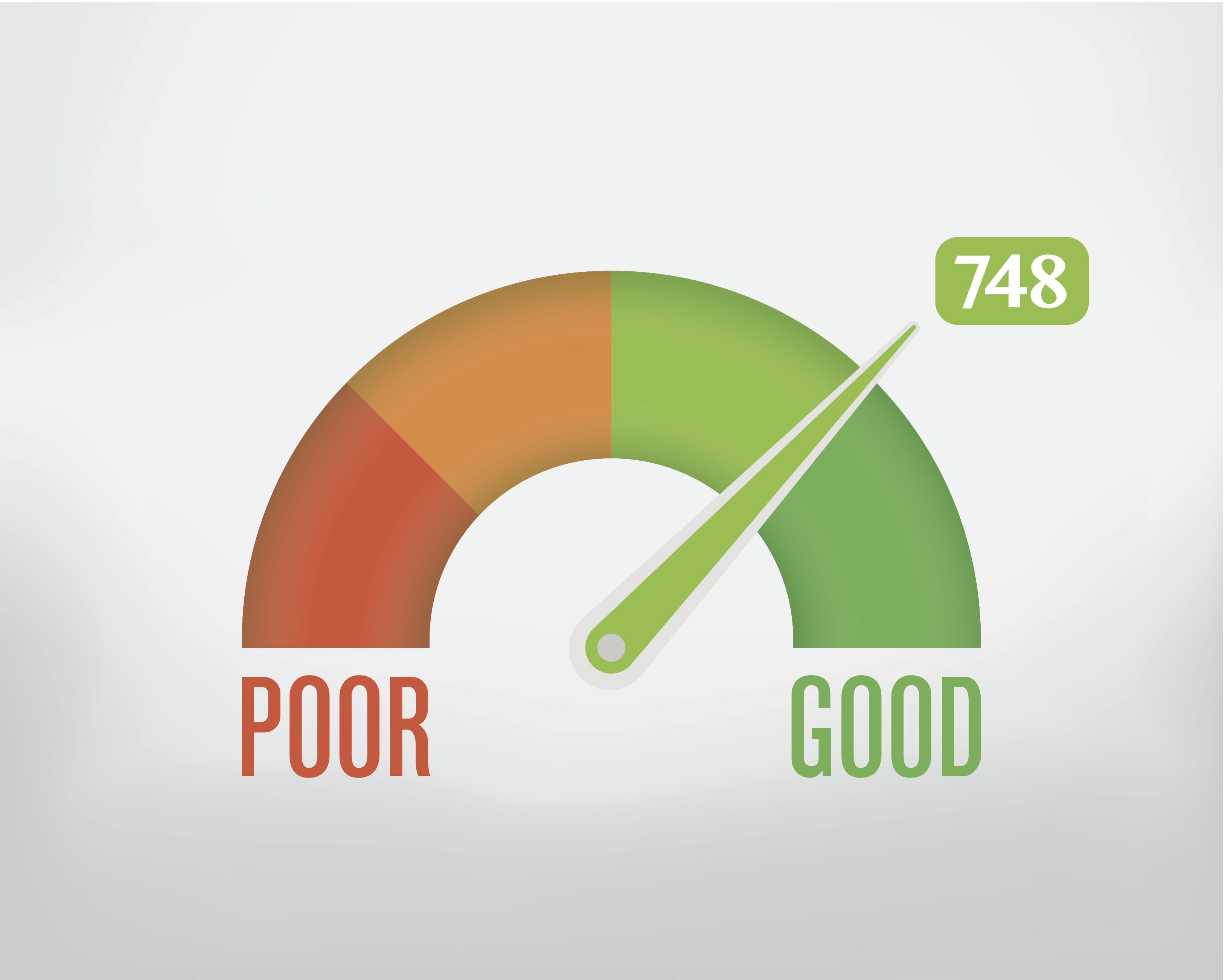
750 – 850: A- Excellent

700 – 749: B- Very Good

660 – 699: C- Average

580 – 659: D- Poor

300 – 579: F- Worst

Your history of payments (how frequently or infrequently and the amount) along with the overall amount of your debt are the two biggest factors to determining your credit score. Revolving credit debt (credit cards) account for more points against you than personal debt (loans).

Your credit score includes:

  • The number of times you’ve paid late and the amount of time they were late (30, 60, 90 days or more)
  • The type of accounts you have and how long you’ve had them
  • Your total amount of debt
  • Any public records like collections or lawsuits

By law, you are entitled to a free copy of your credit report each year from the three credit reporting agencies. Although in most cases, this report does not include your credit score, that’s typically an additional fee.

You can maintain or improve your credit score by keeping your accounts open and paying them on time. The longer you’re in good standing with your accounts, the better your score.

Surprisingly, closing your accounts can have a negative impact on your score, especially if the account is paid in full and always on time.  If you no longer need a credit card, pay it off but don’t close it.  The available credit line with no balance will improve your score.

How do you improve a low score?

By making a few simple adjustments, your score can start to increase within just a few months.

If you do have negative accounts on your credit, the best thing you can do is start adding as many positive accounts and paying down as much debt as possible.

  • Pay your credit card, loan, and utility bills on time.
  • Keep your accounts open and in good standing
  • Pay off any collections then dispute them and have them removed

It’s a good idea to take a look at your credit report at least once a year so you can fix any mistakes by writing a letter to the credit bureau.

Something to be aware of, the higher your credit score the more impact a late payment will have on it so keep your payments current.

Improving your score is not impossible; it just takes some effort, time, and persistence to improve it.  Once you do, keep up with your payments and review your report annually for any mistakes.

Emilie Burke writer at the Free Financial Advisor
Emilie Burke

Emilie is a prolific blogger, and influencer inspiring millennial women to live financially, physically, and professionally fit lives. She writes about overcoming debt, while balancing trying to eat healthy, stay fit, and have a little fun along the way. She is a politics major turned data engineer who graduated from Princeton University in 2015.  She currently lives in North Carolina with her college sweetheart Casey who is currently stationed at Fort Bragg. She enjoys eating food, cuddling with her dog, and binge watching HGTV.

Filed Under: credit score

5 Must-Know Privacy Lessons I Learned From 9-11

September 11, 2012 by Joe Saul-Sehy 18 Comments

I was late to work and sneaking up the stairwell to my office. A passing friend said, “A second plane just hit the World Trade Center.”

There’d been a first plane? The World Trade Center? It must be a little Cessna.

The entire office huddled around televisions. I wasn’t prepared for what they were watching. The heroism of everyday people that day still amazes me.

Later in the week, among the flurry of stories echoing the disaster, one personal finance problem emerged: private financial documents with personal client information littered the streets of Manhattan. Many of the firms in the World Trade Center were financial companies (in fact, one firm owned by a cousin of a client, Alger Mutual Funds, lost David Alger and 35 other staffers that day). I began helping the media complete stories about “How to Protect Your Privacy.”

Although we can’t prevent another 9-11, we can make sure that our financial documents are the last thing we worry about when far more important concerns (such as people) should dominate our thoughts. Here are five lessons I took far more seriously after that day than I had previously:


5 Steps To Protect Your Identity


shredder1) Shred unnecessary documents. A good shredder pays for itself immediately. If you’re using it for household bills, this Amazon shredder will only set you back $29.99. Businesses should invest in a more robust tool.

2) Don’t give out your social security number, telephone number, or other unnecessary information on documents. I hand over wrong numbers like a hot woman at the bar. Create a separate email address reserved for email forms and correspondence with companies.

3) Check your credit report regularly. You’ll want to keep a tight watch over predators trying to access your credit. Companies with free credit tools like Quizzle or CreditKarma are great places to monitor lender activity. On episode #2 of our Two Guys & Your Money podcast, Len Penzo reported that he turns off his credit with each credit company until he needs it. Look for other mistakes while you’re there: a recent ABC news story reported that over 90% of all credit reports have inaccurate information.

4) Review every credit card statement. Ever wonder why Mr. Monopoly looks shocked when you draw the “Bank Error in Your Favor….Collect $40” card in the popular board game? It’s because errors happen all the time and they’re rarely in your favor. More importantly, you may see early signs of thieves trying to gain access to your credit.

5) Back up your documents – I’ve recently begun transferring my paper documents into digital form. Keep these in two places in case you lose access to the first or thieves steal the data.

Foremost in my mind today is the tragic and unnecessary loss of life on 9-11. I learned far greater lessons than the five I pointed out above. However, I also learned a little about taking care of my financial life so that if tragedy strikes, the threat to my identity is minimized.


What steps do you still need to take to better protect your financial privacy?

Enhanced by Zemanta
Photo of Joe Saul-Sehy
Joe Saul-Sehy

Joe is a former financial advisor and media representative for American Express and Ameriprise. He was the “Money Man” at Detroit television WXYZ-TV, appearing twice weekly. He’s also appeared in Bride, Best Life, and Child magazines, the Los Angeles Times, Chicago Sun-Times, Detroit News and Baltimore Sun newspapers and numerous other media outlets.  Joe holds B.A Degrees from The Citadel and Michigan State University.

joesaulsehy.com/

Filed Under: credit score, Debt Management, money management, risk management Tagged With: credit monitoring, credit thief, CreditKarma, identity theft, protect identity, Quizzle

  • « Previous Page
  • 1
  • …
  • 4
  • 5
  • 6

FOLLOW US

Search this site:

Recent Posts

  • Can My Savings Account Affect My Financial Aid? by Tamila McDonald
  • 12 Ways Gen X’s Views Clash with Millennials… by Tamila McDonald
  • What Advantages and Disadvantages Are There To… by Jacob Sensiba
  • 10 Tactics for Building an Emergency Fund from Scratch by Vanessa Bermudez
  • Call 911: Go To the Emergency Room Immediately If… by Stephen Kanaval
  • 7 Weird Things You Can Sell Online by Tamila McDonald
  • 10 Scary Facts About DriveTime by Tamila McDonald

Copyright © 2026 · News Pro Theme on Genesis Framework