• Home
  • About Us
  • Getting Finances Done
    • Hiring Advisors
    • Debt Management
    • Spending Plan
  • Insurance
    • Life Insurance
    • Health Insurance
    • Disability Insurance
    • Homeowners/Renters Insurance
  • Contact Us
  • Our Editorial Commitment

The Free Financial Advisor

You are here: Home / Archives for Retirement

Will My 401(k) Last for the Rest Of My Life?

April 23, 2018 by Leave a Comment

If you’re starting to think about retirement, and your career has largely been in the private sector, your 401(k) balance could be the most important factor in determining whether you’re on track to retire or not.

Whether your 401(k) will cover your spending needs until the end of your life will depend on a lot of factors. It’s important to not just pin your hopes on a certain target for an account balance–a million dollars, two million dollars, whatever–and instead look at the whole picture. So let’s start with a few other questions that are just as important.

Are You Saving as Much as You Can in Your 401(k)?

There’s almost no way around it: You have to save money to make money. There is often a bit of a free lunch–call it a free appetizer–when it comes to 401(k)s, though: The amount your employer matches your own contributions. It could be a dollar-for-dollar match up to point, or some percentage of what you contribute yourself that increases over time. Either way, you definitely want to contribute at least this amount, or you’re leaving that free appetizer on the plate.

But that should really only be the beginning of any 401(k) savings plan. Fidelity advises saving 15% of pretax income.  If you’re 30 or 40 years old and haven’t given the issue much thought until now, that number should serve as the minimum you should save.

Get into the habit of increasing your contribution percentage each year. Psychologically speaking, if you never see it hit your paycheck (because it’s going straight to your retirement account), you won’t miss it. Set an annual calendar reminder to increase that contribution, even by a half a percentage point. Between the contribution increases and salary increases, you should be able to put your contributions on a sharp upward trajectory.

What Else have You Got?

Once you have your plan for annually boosting 401(k) savings in place, consider what other sources of income you are counting on at retirement. Social Security is an obvious one. If you’re lucky you might have a pension of some sort. Brokerage accounts, rental property, or the planned sale of some asset like a business should all be taken into account as well–and will almost certainly affect how long you can expect your 401(k) will last.
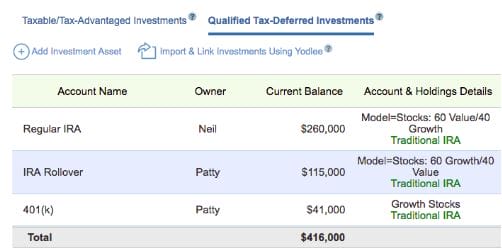
Will you run out of 401(k) money in retirement?

Another reason not to simply come up with an arbitrary hit-your-number mark: Spending matters. At the risk of stating the obvious, your 401(k) and other investment assets will generally last longer if you plan to sip rather than gulp.

You’ll want to have a very solid grip on your plan’s MPG–that is, your projected spending in retirement–to get an accurate reading.
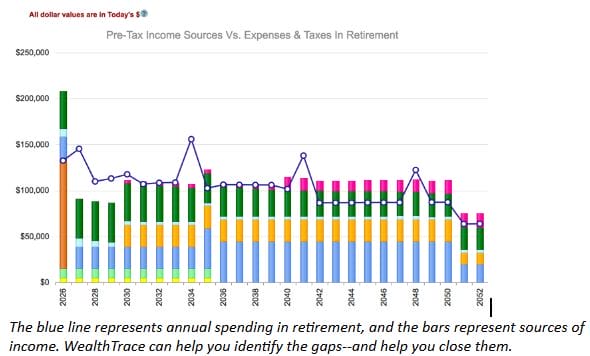
Will your 401(k) plan last long enough?

What Is It Costing You?

Even if you are diligent about saving to your 401(k), you probably haven’t considered what the plans might be costing you.

And why would you? The plan administrator’s fees–in addition to the fees paid to the fund companies themselves–are largely out of your control.

But it’s important–especially the further you are from retirement. Fees can really chip away at account balances over time. Consider a 401(k) returning about 7% annually. Here’s what happens if we modify the fees by half a percentage point and assume contributions of $18,000 per year.

Will Your 401(k) Plan Last Long Enough

Your main recourse here is to talk to your HR department and start asking questions. What are the fees of running the plan? How do they compare with fees offered by other plan administrators for companies of your size? Making sure the HR team has done their due diligence on this could mean tens of thousands of dollars to you.

You can also look at the fees charged by the funds themselves. Funds have expense ratios; actively managed funds generally have higher expense ratios than passively managed funds. To keep things really simple, consider a target-date retirement fund, which shifts its asset classes toward less risk the closer you get to retirement. (And if your plan does not offer a target date retirement fund, it should.)

Your 401(k) Is One Piece of a Larger Puzzle

A large 401(k) balance could have a big effect on when you can retire and your living standard when you do. But looking at it in the context of everything else we’ve talked about here is more important than an absolute dollar figure. Total savings, where you plan to invest your assets, the cost of those investments, and your spending habits are all complementary forces that will factor into a successful retirement plan.

Read More

  • How to Split an IRA or 401(k) in a Divorce
  • Five 401(k) Alternatives You Need to Know About
  • Saving to Boost Your 401(k)
  • IRS Announces 2018 Pension Plan Limitations
  • Avoid These Common Mistakes When Planning for Retirement
  • How to Save for Retirement
  • Investing Your Way to Retirement

Filed Under: Retirement, Uncategorized Tagged With: 401(k), Retirement, retirement plan

Five 401K Alternatives You Need to Know About

January 23, 2017 by Emilie Burke 1 Comment

A 401K is a savings plan for retirement that is sponsored by your employer. Employees can save a piece of their paycheck before taxes are taken out, and put it toward their retirement.

Talking about far-off retirement plans can be overwhelming and boring. After all, it’s way easier to think about the here-and-now. We budget, save for vacation and pay the bills. That seems like enough… right?

On the contrary, planning for retirement is incredibly vital and cannot be forgotten or overlooked.

The 401K may be a good fit for your lifestyle, but there can also be cons. Your employer may not be matching the money that you contribute, and also could require tenure before allowing you to withdraw. If you aren’t sure about the 401K, there are many different options out there to consider.

Here are some alternatives to the typical 401K that may compliment your lifestyle and finances better.

  1. Index Funds- These are funds invested on an index of stocks. (You may have heard of S&P 500 or the Dow.) By investing in an index fund, you basically are investing in all the companies that make up that particular index (instead of investing in certain stocks). You are at the same risk as those who buy stock individually, but since the market typically increases over time, index funds could be used as an investing option for retirement.
  1. Roth IRAs and Traditional IRAs- IRA stands for Individual Retirement Account. Roth and Traditional IRAs differ from the 401K by bypassing the employer altogether. You save completely on your own for retirement. The biggest difference between the Roth and Traditional lies with when you pay your income taxes. Check out the two and see if one of these may be a better retirement plan for you.
  1. Simplified Employee Pension IRAs- SEP IRAs are a great option for any of you independent contractors, free-lance workers, or business owners out there. It is very similar to the Traditional IRA and could be very beneficial with your taxes. It doesn’t matter how small your business is, so definitely check it out!
  1. Variable Annuities- These are contracts between you, the investor, and an insurance company. The investor purchases a variable annuity upfront or over a period of time, and the insurance company makes periodic payments to you after retirement. However, there can be high fees and tax penalties, so do your research and insure that the contract is safe and beneficial for you.
  1. Bonds- Bonds may be great to dabble in addition to the 401K or any of the other retirement options listed above. Bonds essentially are saving accounts that pay interest rates. You set these rates at the time of purchase, and it’s an incredibly safe and stable investment. Because of its safety, they typically return less money than other higher risk investments. However, your money will be safe and making interest for retirement.

Do some research on what your employer offers and which option may be the best fit for you. Regardless of what you choose to use, saving for retirement should be a priority in your life.

Emilie Burke writer at the Free Financial Advisor
Emilie Burke

Emilie is a prolific blogger, and influencer inspiring millennial women to live financially, physically, and professionally fit lives. She writes about overcoming debt, while balancing trying to eat healthy, stay fit, and have a little fun along the way. She is a politics major turned data engineer who graduated from Princeton University in 2015.  She currently lives in North Carolina with her college sweetheart Casey who is currently stationed at Fort Bragg. She enjoys eating food, cuddling with her dog, and binge watching HGTV.

Filed Under: Retirement

The Failure of Retirement Plans in the USA

September 7, 2016 by James Hendrickson Leave a Comment

face-774839_640It is difficult to believe but some surveys recently have suggested that the average couple has just $5,000 in a retirement savings account. The Economic Policy Institute has analyzed Federal Reserve data and has stated that the top 10% have at least $275,000 which in itself is not fantastic bearing in mind that life expectancy is increasing and many people can expect to live well beyond 80.


There was a dramatic change in retirement saving in the 1980s. Previously companies guaranteed pensions to their employees. The introduction of the 401(k) changed the emphasis. Workers were given control of their retirement rather than having to rely on their employers’ generosity or the Social Security System. Instead companies made contributions up to a certain level into their employees’ individual plans but has no responsibility for their success or failure. Hindsight is a wonderful thing but it has been little short of a disaster with the vast majority well short of what they will need to fund a comfortable retirement.

The figures are so poor because it appears that nearly have of couples of working age have no savings at all and almost 40% of those within 10 years of retirement are in the same position. The problem is compounded by the fact that the Social Security System is fragile at best. Without a significant injection of funds existing benefits will fall by as much as 25% early in the 2030s. That significant injection can only come from taxation and that is a very unpopular topic, especially among Republicans.

Even now the average benefit is little over $1,000 a month which can hardly provide any real source of comfort.

401(k) Policy Hasn’t Worked

The theory that the introduction of the 401(k) would ensure that everyone would have the retirements they wanted has been thoroughly misguided. Their reliance on Social Security has risen dramatically rather than fallen. Those in the low tax bracket have little financial benefit in saving and this is the band of people who are in the greatest need. Tax breaks are therefore fairly irrelevant for the majority. Tax breaks are great for higher earners but they are not in as great need. All those with that $275,000 mentioned above come in the middle to top wage bracket. They would have probably saved anyway without the need for a tax incentive policy.

The Impact of the Recession

The question is whether the plans are wrong or whether people have simply found themselves unable to make proper provisions for themselves? The recession certainly caused widespread misery especially for those tempted to take on too much credit. The real estate market had been buoyant and everyone had expected to make money from investing before the Collateralized Debt Obligation crisis hit their plans. Plenty of people took out multiple credit cards and spent money they simply did not have. Their logic, if they had any, was that there were other cards offering 0% balance transfers where they could move their debt to avoid paying interest. Those deals were temporary and the escape routes soon closed.

“The mistakes made in pension strategy decades ago have been compounded by people’s reluctance or inability to save anyway. Everyone needs to look at their finances and take whatever action needed to improve their future.”

Defaults, unemployment and utter misery followed. Many were unable to meet their liabilities and although debt has been written off and the economy has recovered it seems that personal finances in the Country have barely improved. The figures of what retirement savings the average working family have are proof enough. If you add the average credit card debt in the USA exceeding $5.000, dividing the debt by the number of cards in circulation, the picture gets worse. When you take away the number of cards whose owners pay in full at the end of each statement period, the debt goes up to over $15,000.

It is what it is. Every family will know how they stand or at least they should. There is no point in ignoring financial problems because they will not disappear as if by magic. Everyone should take time to write down their income and regular expenditure as well as their debts and assets. If the figures are to be believed there is only a small minority that can feel satisfied with what they see.

Courses of Action

The rest will need to take one or more of the following courses of action:

  • Credit Card Debt. If you have significant debt and you cannot afford to pay off your balances you will be paying a high rate of interest as well as having core debt. You should look at taking out a consolidation loan to pay those balances off in full. The rate of interest you will be paying on the nation 21 cash loans are much lower than credit card companies charge.
  • A budget. You must start to discipline yourself when it comes to spending. There is no point in paying off those balances simply to build them up again.
  • Look at whether you can make savings on some of your regular bills. They can include utilities and insurance for example. There are comparative websites that will do much of the initial research for you.
  • After you have created a surplus don’t suddenly think you can begin to spend. This surplus should be put towards retirement or an emergency fund. Both are important and ideally you will create an emergency fund worth about 3 months of your regular expenditure.

If your financial situation is poor you have to act. Retirement can be a cold and lonely place if you have not got the money to make it comfortable.

Photograph of James Hendrickson
James Hendrickson

James Hendrickson is an internet entrepreneur, blogging junky, hunter and personal finance geek. When he’s not lurking in coffee shops in Portland, Oregon, you’ll find him in the Pacific Northwest’s great outdoors. James has a masters degree in Sociology from the University of Maryland at College Park and a Bachelors degree on Sociology from Earlham College. He loves individual stocks, bonds and precious metals.

www.dinksfinance.com

Filed Under: Retirement

Become a Financial Expert Step-by-Step

July 15, 2015 by Kathleen Celmins Leave a Comment

answers word on register or hanging folder showing solution concept

Americans are overconfident about their finances, feeling more secure than their actions warrant, according to the latest Financial Literacy Survey conducted by Harris Poll for the National Foundation for Credit Counseling and NerdWallet. While more than nine out of 10 people feel “very” or “somewhat” confident about their most recent financial decision and two out of three give themselves an A or B in financial knowledge, six out of 10 are spending money each month without a budget, an equal amount aren’t able to save or buy a car because of student loans, and more than four in 10 aren’t saving for retirement. Ouch.

Becoming a genuine financial expert means taking a step back and arming yourself with the knowledge to build a solid foundation for investment confidence.

Savings Basics

Knowing how much to save is the most fundamental question in personal finance. While many financial advisers recommend following a rule of thumb such as saving 10 to 20 percent of your budget per month, Forbes recommends developing a customized savings plan based on how much you will need to invest to fund your annual living expenses.

The first step in the Forbes strategy is to estimate how much you’ll need to save up to fund the lifestyle you want given your projected annual expenses, whether your goal is to retire at a traditional age or to achieve financial freedom early. Once you’ve set this goal, calculate how long it would take you to reach it assuming your current savings rate and annual rate of return, and then make any necessary adjustments you need to achieve your goal within your desired time frame. Forbes suggests setting a goal based on the assumption that you’ll be spending 4 percent of your savings per year in retirement, and they provide spreadsheet and calculator tools to help you do the math.

Building Credit

While building your nest egg, it’s also important to build your credit so you can achieve your major purchasing goals. FICO’s consumer myFICO site explains the variables that go into credit scoring, which include your history of repaying debs, amount owed in relation to your income, mix of credit cards and loans, and frequency of submitting credit applications. For a more advanced understanding of credit, consider specialized educational resources. For example, Moody’s Analytics offers a Corporate Credit Ratings Analysis seminar.

Investment Foundations

For most people working in a traditional job, a 401(k) plan should be the foundation of your investment strategy. Daily Finance provides a good overview of 401(k) basics, explaining how you can roll over your money into a new 401(k) or an IRA if you leave your job. For those seeking 401(k) alternatives, NetCredit outlines other fundamental options such as traditional, Roth, and SEP IRAs, annuities, and index funds.

Retirement Planning

Your 401(k) plan or equivalent normally forms one component of a complete investment plan designed to achieve your major financial goals, chief of which should be saving for retirement. A complete retirement income plan should include a diversified mix of withdrawals from an investment portfolio, fixed-income annuities and variable annuities. A financial adviser can help you select a specific investment mix appropriate to your goals, income and risk preference.

If you’re looking for more assistance and want a financial advisor check out these articles to help pick the right one for you

What is the Role of a Financial Advisor?
Afraid To Meet With a Financial Advisor? Here’s How the First Meeting Goes
Hiring a Financial Advisor: Clues from the Receptionist

Photograph of Kathleen Celmins
Kathleen Celmins

Kathleen Celmins is a marketing expert who works with small to medium-sized businesses to help them scale their revenue, especially in the products they create around their own intellectual property.   In addition to decades of marketing and leadership experience, she holds a BA from Pacific University.  In her spare time, she enjoys parenting, entrepreneurship, and monetizing content.

Filed Under: Retirement

5 Tips to Prepare for Retirement

March 21, 2015 by Joe Saul-Sehy Leave a Comment

You may be young, but it’s never too early to prepare for retirement. According to a study via the National Retirement Risk Index (NRRI) and the Retirement readiness Rating, 43% to 52% of Americans are not going to live their retirement years in the standard they’d hoped, according to their current living standards?

So what’s the best way to be prepared for the life you want to lead when you retire?  Start planning now. Check out the following five tips to do so.

1.      Contribute to an IRA or Your Employers 401(k)

So you’ve started working for an employer who has a 401(k). You may feel you don’t have the money to spare to contribute, but you’re losing out on more by not contributing. For one, it’s an excellent tax deduction, reducing your taxable income. Also, most employers offering this plan offer some matching contribution. Don’t leave behind that free money on the table. These savings plans handcuff you from quickly accessing this money, so saving it up is a breeze.

2.      Save Up Automatically

Here is another way to start saving towards retirement. You can use this in combination with putting money into your IRA. Start saving money into a savings account by having it pulled automatically from your paycheck each pay period. Talk to your human resource or payroll department about taking a specific dollar amount or percentage, and deposit it into this designated account. This is a guaranteed way to get it in monthly.

3.      Live Healthy to Save More

It’s said living healthy is costly, especially if you eat organic foods. However, organic products aren’t the only road to good health. There are other things you can do such as regular exercise, cut down on your fat intake, and stop smoking. The results: you reduce the chances of developing cardiovascular or lung diseases and live longer. This helps you save by eliminating excess doctors’ visits, hospital stays, prescriptions, and as a bonus you’ll also save on not purchasing excess, unhealthy items.

4.      Start Eliminating Debt

Getting rid of debt now will help you prepare drastically when you retire. Not having to worry about a mortgage, car note, or credit card bills help you have money for future lifestyle and vacation plans. The sooner you pay these off, the faster you can start saving for an emergency fund to use instead of your retirement savings for emergencies.

5.      Start a Side Business

In a study called Work in Retirement: Myths and Motivations, they studied 7,727 adults regarding their position on returning to work after retirement, 30% said they would go back to work. Instead of working for someone else, prepare now to work for yourself. This will help you enjoy your retirement years as you want, when you want.

Don’t feel it’s too late to prepare for retirement. Implement the above five tips now and keep on target for future goals.

Photo of Joe Saul-Sehy
Joe Saul-Sehy

Joe is a former financial advisor and media representative for American Express and Ameriprise. He was the “Money Man” at Detroit television WXYZ-TV, appearing twice weekly. He’s also appeared in Bride, Best Life, and Child magazines, the Los Angeles Times, Chicago Sun-Times, Detroit News and Baltimore Sun newspapers and numerous other media outlets.  Joe holds B.A Degrees from The Citadel and Michigan State University.

joesaulsehy.com/

Filed Under: Featured, money management, Planning, Retirement

Start Saving for Retirement Now (Yes, You) With These 5 Simple Tips

March 24, 2014 by Joe Saul-Sehy 8 Comments

Six out of 10 Americans don’t use a budget or track their spending, according to the 2013 Harris Interactive Consumer Financial Literacy Survey. This statistic jives with HelloWallet’s report from last October, which found that 60 percent of households are accumulating debt faster than retirement savings. No matter what stage of life you’re in, you need a plan to save for retirement. Start with the following tips:

Schedule Planning Time

As people grow older, they’re more willing to pay attention to their finances. Thirty-eight percent of Americans ages 25-32 say they’re too busy to think about long-term financial goals, and that number steadily declines to 13 percent for those over 66, Northwestern Mutual has found. However, the number who feel too rushed by society’s pace to stick to long-term goals grows from 61 to 75 percent over the same age margin. Together, these numbers paint a picture of an aging population increasingly aware of their urgent financial needs but too stressed out to take appropriate action.

To counteract this trend, make a commitment to yourself and your finances. Set aside some time to review your goals, ideally with the help of a professional advisor. Then get in the habit of taking 15 minutes a week to review your budget.

Retirement planning on The Free Financial Advisor

Steer by Long-Term Financial Goals

Use your long-term financial goals to guide your short-term budgeting. Fidelity Investments offers various calculators and tools to help you estimate how much you need to set aside each month to reach your retirement goals. Wells Fargo provides a worksheet to help you break down your financial goals into intervals of one year, two to five years, and five years and over.

Use a Budgeting Strategy

Yes, you need a budget. Consider following financial expert Elizabeth Warren’s 50/30/20 rule: Put 50 percent of your monthly after-tax income toward essential living expenses, 30 percent toward discretionary spending and 20 percent toward savings and debt repayment.

Pursue Saving and Debt Repayment Strategically

According to financial advisor Dave Ramsey, you should initially put the savings and debt repayment portion of your budget toward a $1,000 emergency fund and paying down your credit card balances before pursuing retirement and other savings goals. When applying this strategy, you can save for retirement faster by reducing your debt obligations. If you receive regular payments from an annuity or structured settlement, consider contacting a company that purchases future annuity payments for a lump sum of cash now. You can then use this money to help repay your debt.

Invest Your Savings Productively

To grow your savings, check if your employer offers a 401(k) plan or another retirement savings plan, and start contributing—especially if it’s a matching plan. If not, invest in a traditional IRA or Roth IRA. After that, the next place to invest is an index mutual fund, suggests the Wall Street Journal.

Photo of Joe Saul-Sehy
Joe Saul-Sehy

Joe is a former financial advisor and media representative for American Express and Ameriprise. He was the “Money Man” at Detroit television WXYZ-TV, appearing twice weekly. He’s also appeared in Bride, Best Life, and Child magazines, the Los Angeles Times, Chicago Sun-Times, Detroit News and Baltimore Sun newspapers and numerous other media outlets.  Joe holds B.A Degrees from The Citadel and Michigan State University.

joesaulsehy.com/

Filed Under: Planning, Retirement

Stock Market Punishment: The First Lesson of 2013

January 7, 2013 by Joe Saul-Sehy 38 Comments

The podcast team is giving the interns a well-deserved week off, so lucky reader….YOU get a FREE extra blog post from Average Joe. I know. Pinch yourself. It’s real. Almost like our awesome rare Saturday post this week.

Look at what the media did to you again.

The sky is falling! Fiscal cliff! Doom! Stock market will be in shambles! Hide your children!

Big ratings for the financial channels, huh?

If you listened and moved your money out of the market, it destroyed your chances for a great return in 2013.

MAYBE you’ll recover if you jumped out before the big two-day run up in stocks. The chances, though, are against you: historically, if you miss the 10 best days in the stock market, you lose about 5.18%, or nearly half your return for the year. If you paid trading fees to avoid the “fiscal cliff disaster,” this only exacerbated your problem.

Here’s what the panicked investor missed in the S&P 500 last week:

December 31: 1.7%

January 2: 2.5%

January 3: –.03%

January 4: .05%

In short, if you missed two days last week you lost out on 4.2%. Those types of returns don’t come around often.

By the way, don’t go in the comments and tell me that “all you lost was a little time….” go back and read the stats above first. You lost a ton.


let’s calculate the cost of listening to the media on this one


Suppose you’re 25 years old and you have managed to save $10,000 into your 401k plan. You lost out on $420. Sounds like no big deal, right?

Let’s use the rule of 72 to determine just how much you really lost:

The rule of 72 says that if you divide the interest rate you think you’ll achieve into 72, you’ll come up with the approximate number of years it’ll take your money to double. Cool, huh?

Assuming that you wanted this money for retirement (401k, right? That’s not your “mad money” account….I hope), we’ll use age 70 for your withdrawal. We’ll also use a realistic return assumption of 8%.

8% / 72 = 9 years for your money to double.

So, that $420 you lost wasn’t really $420, was it?

It would have doubled when you were 34, 43, 52, 61, 70.

Your “little” $420 wasn’t $420. By 32 it was $820. At 41 it was $1,640. By age 50 you’d lost $3,280. At 59 the gap was $6,560. When you went for the money at 69 you had $13,200 less.


it gets worse


If you’re 30 and gambled $50,000 that the market would tank, it’s uglier. Let’s also use 9% rather than 8%, since people looking long term historically have used 10% as their assumption (which I believe is too high, BTW).

Check out what more money and a “little” one percent difference do to your loss:

Rule of 72 = 8 years for money to double.

Funds double at 38, 46, 54, 62, 70

$2,100 lost during two day run-up in market.

= 4,200 loss at 38, 8,400 loss at 46, 16,800 at 54, 33,600 at 62 and

…$67,200 at age 70.

On our “What Did We Learn in 2012” podcast, expert after expert told you the same thing: don’t listen to national media finance porn and don’t chase short term results.

If you did, I’m going to play Dr. Phil now: How’s that workin’ out for ya?


Photo: Joe Shlabotnik

Photo of Joe Saul-Sehy
Joe Saul-Sehy

Joe is a former financial advisor and media representative for American Express and Ameriprise. He was the “Money Man” at Detroit television WXYZ-TV, appearing twice weekly. He’s also appeared in Bride, Best Life, and Child magazines, the Los Angeles Times, Chicago Sun-Times, Detroit News and Baltimore Sun newspapers and numerous other media outlets.  Joe holds B.A Degrees from The Citadel and Michigan State University.

joesaulsehy.com/

Filed Under: investing news, Retirement, risk management, successful investing Tagged With: best 10 days in stock market, lessons of 2013, stock market 2013 lessons, stock market punishment

Five Money-Saving Tasks That’ll Help You Cha-Ching! in the 4th Quarter

October 4, 2012 by Joe Saul-Sehy 28 Comments

I love the sound of the cash register ringing, don’t you?

If you’re going to be successful in your financial life, treat it as if it’s a business and you’re trying to hear that awesome cash register sound. If you don’t, you’ll always prioritize yourself behind more “important” activities like your job (nevermind that the job is there to help your net worth…that’s probably the subject of another post).

Every business has a mandatory list of activities that can’t be ignored. So does your financial life.

Here are five items that MUST be on that list this quarter:

1) Mutual fund capital gains. Even if you don’t have mutual funds outside of an IRA now, you should learn how these rules work. When the manager (or system, for an index fund) trades stocks or bonds inside of the fund a capital gain is generated. Someone has to pay it, and there’s no real fair method, so the mutual fund company declares a date and divides the gain among shareholders of record. Even if you didn’t sell the fund, you’re responsible for your portion of the manager’s buying and selling.

With results so far in 2012 looking up, there’s a good chance you might get hit with a tax bill this year. Avoiding this tax is legal and easy. Find the dates the fund declares capital gains and transfer your money to a different fund in the same family. This avoids fees for switching and the manager’s capital gains tax.

Grab a calculator before you move any money. You’ll still be on the hook for capital gains taxes you generate by selling as well. The cost of switching might outweigh the savings you’ll realize from avoiding any taxes created by the fund manager.

2) The lemon drop. Hoping to skim off some of that skyrocketing Apple stock? Cover a portion of your capital gain by also selling your brother in law’s “can’t lose” loser. There’s no time like now to weed your portfolio of positions that aren’t going anywhere. Although you’re only allowed to show $3k in net capital losses each year, leftovers can be carried over to deduct in future years.

3) Charitable giving. Hopefully you’ve given to your favorite community non-profits throughout the year, but if not (and especially if you itemize), you’ll want to make cash and in-kind donations in before December 31. Keep receipts for your gifts. The IRS has tightened charitable giving laws in recent years.

4) Estimate your taxes and decide when to pay property taxes. If you own a home winter taxes are deductible either in December or January, your choice. Did you receive a big bonus this year? Take the extra deduction now to help lower your tax due. If you make too much, it might be a better idea to wait until next year. High income earners aren’t allowed to claim all of their itemized deductions (ask your accountant about whether you’re subject to phaseouts).

5) Goal evaluation and setting. The 4th quarter is the perfect time to begin thinking about your short and long term goals. Did you hit your benchmark in 2012? If not, what are you going to change in 2013?

While people generally talk a good game about benchmarking, most of my clients were surprised when I pulled the actual number out of their plan to see if they’d hit the mark during a year. By sticking with actual data and avoiding the “Yeah, it feels like I had a good year” you’ll be able to make the necessary course corrections to save the right amount of money in the upcoming year.

I’ll be addressing each of these areas in more detail during the course of the quarter, but do yourself a favor and schedule these tasks now. These are five activities that you don’t want to miss!

What other events are on your 4th quarter financial calendar?

Enhanced by Zemanta
Photo of Joe Saul-Sehy
Joe Saul-Sehy

Joe is a former financial advisor and media representative for American Express and Ameriprise. He was the “Money Man” at Detroit television WXYZ-TV, appearing twice weekly. He’s also appeared in Bride, Best Life, and Child magazines, the Los Angeles Times, Chicago Sun-Times, Detroit News and Baltimore Sun newspapers and numerous other media outlets.  Joe holds B.A Degrees from The Citadel and Michigan State University.

joesaulsehy.com/

Filed Under: money management, Planning, Retirement, successful investing, Tax Planning, tax tips Tagged With: Business, Capital gain, Internal Revenue Service, investing, IRS, Mutual fund, mutual fund capital gains, Tax

Managing Your 401k or IRA: Does Moving Money Around Every Day Help Your Returns?

July 26, 2012 by Joe Saul-Sehy 17 Comments

I was invited to speak to a nice group of people at Walsh College in Troy, Michigan last night. One woman asked, “What do you say to someone who messes with their 401k non-stop?”

btw: Thanks, Greg, for the invite! Hopefully I didn’t bore your students silly.

Let’s face it:

90% of us fall into one of two camps:

1) You obsess over your 401k and tinker with it constantly.

or

2) You only remember you have a 401k or IRA plan when the statement arrives.

I’d say that nearly 90% of the 90% number above fall into the latter category. So, when I hear about someone tinkering with their 401k or IRA all the time I think, “Why?” and then I ask “Would it help to tell them to stop?”


Why People Do It


I don’t have any scientific evidence, only years of experience with people. Here’s the complete list I can imagine:

– Natural worrier.

– Concerned they won’t reach retirement.

– Anxious to get every last penny out of investments.

– Intensely interested in investing.

– Secretly always wanted to be a day trader.

I can’t think of any others (fill in my blanks in the comments below).


Would It Help To Tell Them To Stop?


I think the answer to this question largely depends on how the individual answers the question “Why People Do It”.


Natural Worrier


I could tell this person all day that he isn’t helping himself, but the only method that actually has worked for me in the past is DATA. If I explain how funds in a 401k plan work, it’s easy to see how much damage you’re doing to your retirement.

First, a 401k plan is a professionally managed investment. This doesn’t guarantee success, but it does mean there are people who work with money all day managing the funds.

Second, each investment is a collection of stocks that largely move with the market. Do you really think you can beat the market? According to a New York Times article, investors spent over $100 billion dollars in 2008 trying to beat the market, and largely lost due to fees. You would have been better off buying and holding low cost index funds.

Besides fees, your ability to time the market isn’t probably as good as you’d hope. According to one of my favorite Kiplinger articles: Can You Time The Market?, there are certainly some good indicators you can track, but the pitfalls are enormous. Going with your “gut” feeling about the market isn’t going to pave the way for a successful retirement.


Concerned They Won’t Reach Retirement


This person needs data, but instead of information on investment returns, they need a financial plan. I’ve found that once this person sees in writing that they’re okay (or not okay) they largely settle down.

Not only can you use the Planwise tool imbedded in our site, but many retirement calculators exist on other (less) popular sites, like Yahoo! Finance, CNNMoney, and MSN Money.


Intensely Interested In Investing


These are some of my favorite people. They want better returns and are willing to go the extra mile to learn more about investments. They’ve dove (dived?) into the 401k because it’s available and easy to understand.

I recommend this person reviews the same data presented above on investment returns (and that his chance of helping his return is going to prove more difficult than just “moving money around”). Then I recommend he take community education classes on investing rather than experiment with hard-won retirement dollars.


Secret Day Trader


I try to present the data above on how hard it is to add to your investment returns first (but this rarely works for the person who is sure they’ll beat the market in their spare time). Once this tactic has failed, I’ll recommend developing a small Roth IRA to use as a “sandbox” to play day trader in. These people are usually placated if they have a “play” account to go along with their professionally managed “backstop” account. How much do I recommend people place in the day trader account? First, we look at what the goal will cost, then I recommend taking money that isn’t crucial to the goal. You don’t want to miss your goal because you thought today was a great time to buy Facebook and it turned out you were wrong…..

Photo of Joe Saul-Sehy
Joe Saul-Sehy

Joe is a former financial advisor and media representative for American Express and Ameriprise. He was the “Money Man” at Detroit television WXYZ-TV, appearing twice weekly. He’s also appeared in Bride, Best Life, and Child magazines, the Los Angeles Times, Chicago Sun-Times, Detroit News and Baltimore Sun newspapers and numerous other media outlets.  Joe holds B.A Degrees from The Citadel and Michigan State University.

joesaulsehy.com/

Filed Under: Planning, Retirement

Americans Are Worried About Retirement. Really?

July 24, 2012 by Joe Saul-Sehy 18 Comments

Yesterday’s USA Today featured a study commissioned by the Consumer Federation of America and Certified Financial Planner Board of Standard, which revealed that more households are struggling financially than 15 years ago.

I’m not shocked by this “revelation.” Talking to one of my favorite bloggers, Len Penzo (from the aptly named Len Penzo dot Com) a couple weeks ago, Len commented that a “big” financial blogger is lucky to find 700-800 unique visitors per day. I know that financial blogs don’t always have the money answers, but on a recent visit to web-traffic website Compete.com, I saw that another favorite, humorist writer The Bloggess receives about 1400 unique visitors a day.

So, using my extraordinary math and non-scientific research skills, it appears that about double the number of people enjoy humor during their day than seek out financial management techniques and discussion.


Are we really worried?


People sometimes think that financial plans are for the rich. “I don’t have money to plan,” you may be telling yourself right now. But how can you get out of debt if you don’t plan your financial future?

The survey shows that when low-income families put together a financial plan, they’re able to stay out of debt and pay credit card bills in their entirety. However, only 31% of people surveyed have put together a financial plan (with or without an advisor’s help).

31%? And the headline reads that we’re “worried about retirement?”

More evidence of financial ennui from the study: more people are living paycheck to paycheck, less are saving toward their college-bound children’s education, less can retire at age 65 and more think they won’t be able to cover basic expenses in retirement.

It sounds like we have big financial headaches and 69% of people aren’t attacking the problem.

Normally, I’m a “glass half-full” kind of guy. However, in this case, I think the headline “Americans Worried About Retirement” should be replaced with “Americans Screwed and Not Doing Much About It.”

I’m glad you’re visiting today to be the few…the proud…the 31%!

Captain America photo: Gage Skidmore


Let’s vote: Glass half full? Half empty?

Photo of Joe Saul-Sehy
Joe Saul-Sehy

Joe is a former financial advisor and media representative for American Express and Ameriprise. He was the “Money Man” at Detroit television WXYZ-TV, appearing twice weekly. He’s also appeared in Bride, Best Life, and Child magazines, the Los Angeles Times, Chicago Sun-Times, Detroit News and Baltimore Sun newspapers and numerous other media outlets.  Joe holds B.A Degrees from The Citadel and Michigan State University.

joesaulsehy.com/

Filed Under: irrelevant stories, Meandering, Planning, Retirement

  • « Previous Page
  • 1
  • …
  • 35
  • 36
  • 37
  • 38
  • Next Page »

Follow Us

Search this site:

Recent Posts

  • Can My Savings Account Affect My Financial Aid? by Tamila McDonald
  • 12 Ways Gen X’s Views Clash with Millennials… by Tamila McDonald
  • What Advantages and Disadvantages Are There To… by Jacob Sensiba
  • 10 Tactics for Building an Emergency Fund from Scratch by Vanessa Bermudez
  • Call 911: Go To the Emergency Room Immediately If… by Stephen Kanaval
  • 7 Weird Things You Can Sell Online by Tamila McDonald
  • 10 Scary Facts About DriveTime by Tamila McDonald

Copyright © 2026 · News Pro Theme on Genesis Framework