• Home
  • About Us
  • Getting Finances Done
    • Hiring Advisors
    • Debt Management
    • Spending Plan
  • Insurance
    • Life Insurance
    • Health Insurance
    • Disability Insurance
    • Homeowners/Renters Insurance
  • Contact Us
  • Our Editorial Commitment

The Free Financial Advisor

You are here: Home / Archives for Retirement

The Roth IRA – Like Ice Cream, But in the Tax World

March 27, 2012 by Joe Saul-Sehy 7 Comments

Today’s post is part of a larger effort in the personal finance community to discuss Roth IRAs. Congratulations to Jeff Rose of Good Financial Cents for organizing such an effective Roth IRA movement day.


I remember when I was maybe nine. My dad FINALLY let me order my own banana split at the local Tastee-Freeze.

I’d watched him down banana splits with pride. First he’d take care of the cherry and whipped cream. Then he’d cut into the bananas and shovel them into his mouth along with heaping helpings of three big scoops of ice cream.

At age nine I was firmly convinced that more = better in the world of ice cream.

More = better with retirement accounts also, and the Roth IRA is like the banana slices along the side of those three big piles of ice cream.

Some of you may be thinking, “why isn’t the Roth IRA those three wonderful scoops of ice cream?” ….or maybe “how come it isn’t the cherry on top of the whole thing, like the crown jewel?”

The answer is simple: there are other ways to save, and the Roth IRA goes better along with them than without. In other words, you can have a banana or you can have ice cream.

The Roth IRA allows you to eat your bananas with ice cream on the same spoon. Confused yet? So am I, so let’s move on. I’ll explain that later.


What is a Roth IRA?


A Roth IRA is a tax shelter available to US taxpayers. Unlike a Traditional IRA, which gifts the possibility of a tax break today, Roth IRA contributions don’t help your current tax situation. Instead, Roth IRA money is distributed for your later goals on a tax free basis, assuming you follow some fairly simple IRS rules.


How Much Can I Contribute?


Roth IRA contribution amounts change yearly, so it’s best to consult the IRS website for the official answer to this question. Use Google or Bing to search “Roth IRA Contribution Limits (YEAR) .gov” and you’ll find the site. Here’s the most current page at the time of writing.

Persons over age 50 are allowed to make additional contributions above those persons who are younger. These are commonly referred to as “catch up” provisions.


Are There Income Limitations?


Yes, there are. As with contributions, income limits change often, so it’s best to consult the IRS website for these details.

In general, there is a top amount of money you’re allowed to earn each year and still make full contributions. Then, there is a phase-out income zone. If your income falls in this zone above the full contribution limit, you may contribute, but not the full amount.

Finally, people earning above the phase-out zone are not allowed to contribute to a Roth IRA. However, you may use a conversion Roth IRA tactic that we describe in detail in another piece. See: Help! I Make Too Much Money to Contribute to a Roth IRA!


What Type of Investments Are Available?


You can invest in nearly any type of investment, but most people stick with the basics: stocks, bonds, mutual funds, exchange traded funds, and certificates of deposits.

While it’s possible to invest in actual real estate property or actual pieces of precious metals, there are complicated rules around these investments and you should consult with experts who are knowledgeable in these areas before trying to invest.


When Can I Withdraw Funds?


The Roth IRA has different rules for your contribution and the interest your account earns.

Your contribution may be withdrawn at any time, without penalty. We discuss this in detail in this piece. See: Emergency Fund or Roth IRA?

The interest the account earns must stay in the account until you’re age 59 1/2 or older. At that time, you may remove interest without penalty as long as the money has been in the account at least five years.

You may also remove money for other goals pre-59 1/2, such as a first time home purchase or for qualified college expenses. In these cases, funds aren’t considered tax free, but are only tax deferred. However, you do have the flexibility to save for goals other than college without worrying about dividend interest or capital gains taxes.


Can I Change Existing IRA Accounts Over to a Roth IRA?


Sure. However, these accounts have different rules. Here’s a link to the IRS website which explains Roth Conversion IRAs.


Why is a Roth IRA Like the Banana?


Remember how I mentioned that my dad would spoon some Roth IRA into his mouth along with some of the ice cream?

When I finally was allowed to order my own banana split, I learned the magic: bananas and ice cream are flippin’ awesome together.

People ask all the time which is better, a Roth IRA or a Traditional IRA or 401k plan? My answer is this: it isn’t about one or the other. Traditional IRA plans and 401k plans give you nice tax breaks today. You should utilize those. But a Roth IRA gives you healthy tax breaks and flexibility down the road.

Because we don’t know what tax brackets are going to look like in the future, a Roth IRA allows you to hedge your bet on tax brackets and instead have plenty of options later.


How Do I Maximize My Roth IRA Contributions?


Because you’re allowed to change Roth IRA contributions back out, there are strategies which can take advantage of possible market fluctuation during the year. Here’s one such strategy: Your Roth IRA Conversion: Super-Sized


(photo credit: Gabrielsaldana, Flickr)

Enhanced by Zemanta
Photo of Joe Saul-Sehy
Joe Saul-Sehy

Joe is a former financial advisor and media representative for American Express and Ameriprise. He was the “Money Man” at Detroit television WXYZ-TV, appearing twice weekly. He’s also appeared in Bride, Best Life, and Child magazines, the Los Angeles Times, Chicago Sun-Times, Detroit News and Baltimore Sun newspapers and numerous other media outlets.  Joe holds B.A Degrees from The Citadel and Michigan State University.
joesaulsehy.com/

Filed Under: Retirement, successful investing, Tax Planning Tagged With: Individual Retirement Account, IRS, Roth, Roth IRA, Traditional IRA

Your Roth IRA Conversion: Super Sized

March 6, 2012 by Joe Saul-Sehy 9 Comments

This is part 1 of a series of posts by theOtherGuy over the next three Tuesdays on Roth IRA strategies.

Among the greatest inventions created by man are:

1) The wheel.

2) Fire.

3) Internet blogs.

4) The Roth IRA.

If you’ve been living under a rock and have no idea why a Roth IRA made the list, let’s take a five word primer: Tax. Free. For. Ev. Er. (I know they’re not all words, but get used to it; I’m a finance guy, not some kind of English guru).

If 100 percent tax free retirement money doesn’t get you all hot-and-bothered, I’m not sure what will.


Houston, We Have Some Problems


Contributions are limited by your income. In 2012, for a single person to contribute to a Roth IRA he or she would have to have a Modified AGI of less than $110,000 to contribute the full amount. For married couples, income limits are phased in beginning at $173,000.

The amount you can contribute per year is capped. You’re allowed to contribute $5,000 per year ($6,000 if you’re over age 50). At most, married couples are limited to $10 – $12,000 per year per family. That still gives you plenty of money to save if you’re 30 years old, but if you’re more…shall we say…”middle aged” (editors note: take it easy on us older people—AvgJoe) then you may be running out of years to max fund this terribly awesome retirement savings vehicle.

So, how can you get more money in a Roth IRA if you’re only able to contribute $5,000 per year? Use a Roth IRA conversion instead.


Disclaimer: What I’m about to share with you could cause MAJOR financial harm if you don’t complete the steps perfectly. I strongly recommend you work this out with a tax and financial professional who knows your unique situation and who can help you make sure you get this right. We can’t be responsible for the zillion dollar tax bill they received because they missed a step.


Why Should I Convert?


Let’s say you’re 28 years old and have $40,000 sitting in an IRA that’s from your old 401k plan(s). You also have an existing Roth IRA–and you’re contributing–but it’s growing slowly.

If we assume your $40,000 grows at 7% per year, then that account should be worth about $685,000 by the time you’re 70 years old.

You probably don’t care, but here’s why you should: at age 70 and 1/2 (well, technically, by April 1, the year following the year in which you turn 70 1/2) you have to take money out of your IRA. It doesn’t matter if you don’t need the cash. Your friends at the IRS want their tax money. So, if you have $685,000 in an account at age 70, you’re going to need to take out approximately $25,000 that year. Then you’ll take out more each year until you die.

All of this money will be taxable. Ouch.

Let’s do a Roth IRA Conversion for 2011 this year instead.


What Would Happen To Your Old 401k Money In a Roth IRA?

You guessed it; no taxes, no minimum withdrawals. One hundred percent tax free forever. That’s why turning old 401k money into Roth IRA funds is a great idea for most people.


Here’s a Plan to Super Size Your Gains:


Each year for the next four years, take all $40,000 from your IRA and perform what’s called a Roth IRA Conversion. I’ve been throwing this phase around quite a bit, so let’s explain how it works.

With a conversion, you agree to pay taxes today on the amount you flip to a Roth IRA Conversion in 2011 in exchange for never paying taxes ever again on that money. It’s a great deal – provided you do it right.

You may think, “But it’s 2012 now!” Remember: it’s currently 2011 tax time.

Most people are familiar with the Roth Conversion concept, but let’s Super Size it.


Making Lemonade From Lemons


What happens if you convert your $40,000 on January 1 and invest it in some crappy investment that loses 30% of it’s value? Now, on December 31, you have an account with $28,000 in it…but guess what? The IRS wants it’s taxes paid on the full $40,000 you converted.

Rotten deal, right?

Well, not-so-fast, my friend! The IRS allows you to “Re-characterize” those funds back to a Traditional IRA for whatever reason you please.

So if you converted $10,000 and it lost value, then you could “un-do” it and say, “Nah, I changed my mind.” No taxes. No penalties. Just some paperwork.


Here’s the Cooler Part


You have until your tax filing deadline plus extensions to undo your Roth Characterization. For most of us, we can file an extension until around October 15, instead of the normal filing day of April 15th.

Follow me here: you can perform a Roth Conversion on January 1 and have an “Un-do” switch available until October 15 the following year!

Motivational speakers will tell you that life is about making good use of time.

IRS rules allow you over a year and a half to change your mind.


Here’s what we do with that time


Let’s say you’re like most people without supernatural powers and have no idea how the financial markets are going to perform – nor do you know what asset class is going to be the big winner over the next year.

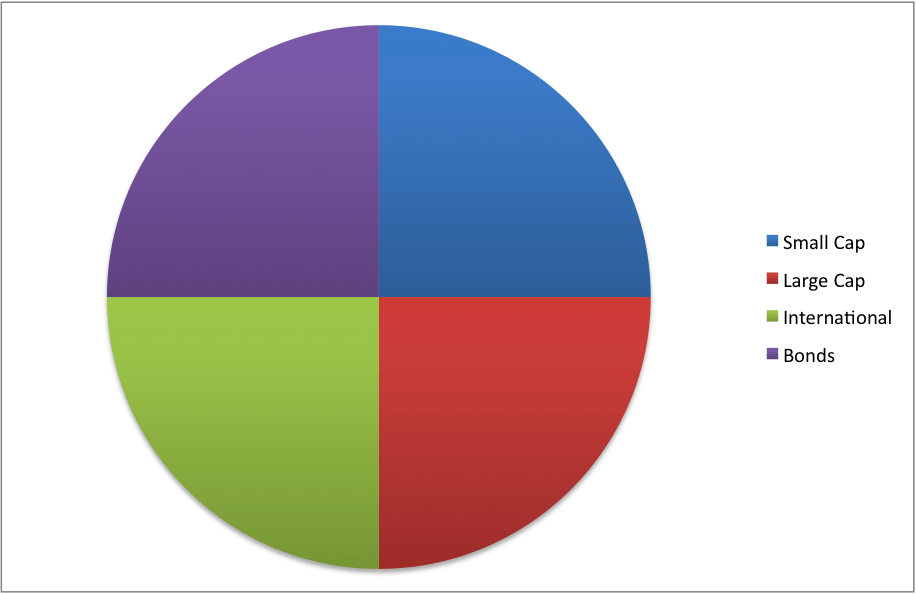
Convert your $40,000 and split the investment into four different asset class buckets:


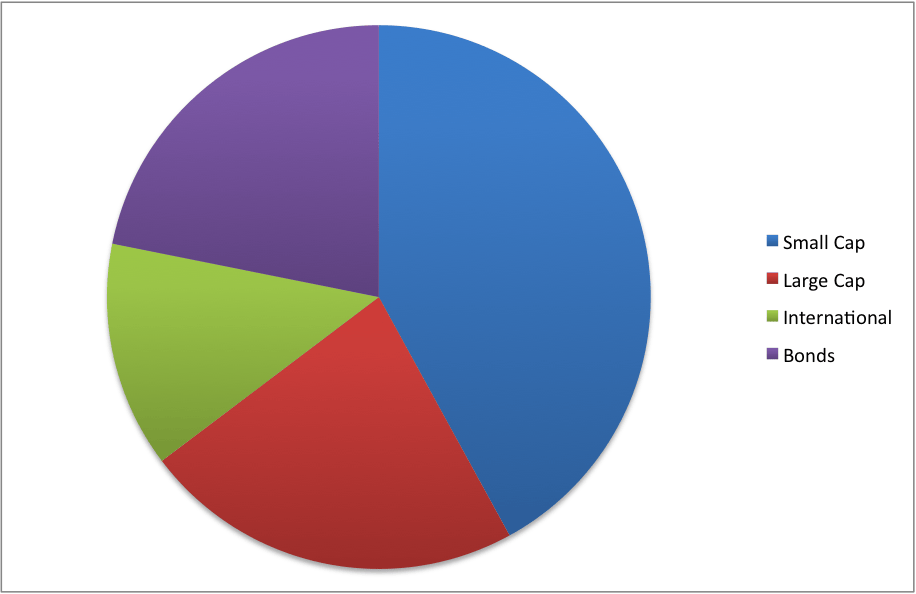
If you do this on January 1 (or the middle of February, it doesn’t much matter) you’ll now have until October NEXT YEAR to make a decision on what you’d like to do. After the next 20 months have gone by, maybe your chart now looks like this:


If you keep the Small Cap section, (which grew from $10,000 to $20,000), you’ll pay taxes only on the original $10,000 conversion amount from 20 months ago! Then, you “re-characterize” the other three sections back into their original Traditional IRA bucket and viola! You have big bang for your buck.

You only recharacterized the portion that was sure to grow tax free. The remainder you waited until next year and did it again.

Less tax and more money. I know. I’m brilliant. You don’t have to tell people you read this and can claim it as your own personal strategy. It’ll be our secret.


There are Plenty-o-Caveats


1) You MUST pay taxes due by the normal tax filing day (around April 15th most years) on the conversion amount.  If you converted all  $40,000, you’ll owe the government a HUGE bill on tax day, BUT you’ll receive that money back when you file taxes by October 15.

2) You’ll need to file an extension on your taxes by the normal filing date. There are IRS failure to file penalties.

3) If you screw this up, there are no do-overs. The IRS has very specific rules and they are to be followed to the “T”. Don’t beg forgiveness for incompetence later. It won’t work.

4) If you use this strategy, you must wait at least 31 days before you “re-convert” these funds.

This strategy can be done with any amount, it doesn’t have to be the full $40,000. I recommend this approach regardless of dollar amount – if you decided to only convert $5,000 of your old 401k savings to a Roth it would make still make sense , why pay more taxes than you need?


With Tax Time Approaching, Know Your Options


If you did a Roth IRA conversion last year, you have the option of “un-doing” it until your tax filing deadline plus extensions this year. If you have old 401k money in an IRA – consider moving it out piece-by-piece to a Roth IRA.


Part two of this series will cover what happens if you make too much money and don’t have money to convert…that’s a good problem to have, but then what?

Enhanced by Zemanta
Photo of Joe Saul-Sehy
Joe Saul-Sehy

Joe is a former financial advisor and media representative for American Express and Ameriprise. He was the “Money Man” at Detroit television WXYZ-TV, appearing twice weekly. He’s also appeared in Bride, Best Life, and Child magazines, the Los Angeles Times, Chicago Sun-Times, Detroit News and Baltimore Sun newspapers and numerous other media outlets.  Joe holds B.A Degrees from The Citadel and Michigan State University.
joesaulsehy.com/

Filed Under: Planning, Retirement, successful investing, Tax Planning, tax tips Tagged With: Individual Retirement Account, old 401k money, Roth, Roth IRA, roth ira conversion, Roth IRA conversion 2011, traditional ira strategy, what to do with a 401k rollover

  • « Previous Page
  • 1
  • …
  • 36
  • 37
  • 38

Follow Us

Search this site:

Recent Posts

  • Can My Savings Account Affect My Financial Aid? by Tamila McDonald
  • 12 Ways Gen X’s Views Clash with Millennials… by Tamila McDonald
  • What Advantages and Disadvantages Are There To… by Jacob Sensiba
  • 10 Tactics for Building an Emergency Fund from Scratch by Vanessa Bermudez
  • Call 911: Go To the Emergency Room Immediately If… by Stephen Kanaval
  • 7 Weird Things You Can Sell Online by Tamila McDonald
  • 10 Scary Facts About DriveTime by Tamila McDonald

Copyright © 2026 · News Pro Theme on Genesis Framework