• Home
  • About Us
  • Getting Finances Done
    • Hiring Advisors
    • Debt Management
    • Spending Plan
  • Insurance
    • Life Insurance
    • Health Insurance
    • Disability Insurance
    • Homeowners/Renters Insurance
  • Contact Us
  • Our Editorial Commitment

The Free Financial Advisor

You are here: Home / Archives for Banking

The Hidden Loophole That Lets Banks Take More of Your Money

March 24, 2025 by Latrice Perez Leave a Comment

Banking
Image Source: 123rf.com

In today’s banking landscape, consumers often encounter a myriad of fees that, while seemingly minor individually, collectively contribute significantly to banks’ revenues. These hidden charges, often termed “junk fees,” can erode personal savings and complicate financial planning. Understanding these fees is crucial for consumers aiming to protect their financial well-being.​

The Prevalence of Hidden Bank Fees

Banks employ various fees that may not be immediately apparent to account holders. These can include overdraft fees, maintenance charges, ATM usage fees, and more. Such fees often catch consumers off guard, especially when they are not clearly disclosed or are buried within lengthy terms and conditions. This lack of transparency can lead to unexpected financial burdens, particularly for those who are already financially vulnerable.

The Financial Impact on Consumers

The cumulative effect of these hidden fees is substantial. For instance, in 2023, banks charged consumers over $8 billion in overdraft fees alone, averaging about $60 per household. These fees disproportionately affect lower-income individuals and communities of color, exacerbating existing financial inequalities. Moreover, the unpredictability of such charges can hinder effective budgeting and savings efforts, making it challenging for consumers to achieve financial stability.​

Banks’ Revenue from Fees

Banking Fees
Image Source: 123rf.com

Fee income constitutes a significant portion of banks’ revenues. In the third quarter of 2024, U.S. banks reported a more than 5% year-over-year growth in non-interest income, which includes fees. This reliance on fee-based income underscores the importance for consumers to be vigilant about the potential charges associated with their banking activities.

Regulatory Actions and Consumer Advocacy

Recognizing the burden of hidden fees on consumers, regulatory bodies have initiated measures to address these practices. The Consumer Financial Protection Bureau (CFPB) launched an initiative to reduce exploitative junk fees charged by banks and financial companies. Similarly, the Federal Trade Commission (FTC) proposed a rule to ban junk fees, highlighting how these charges make it harder for consumers to shop for the best products or services and punish businesses that are honest upfront. These efforts aim to promote transparency and protect consumers from unfair financial practices.​

Steps Consumers Can Take

To mitigate the impact of hidden bank fees, consumers can take proactive steps:

  1. Review Account Statements Regularly: Regularly monitoring account statements can help identify unexpected charges promptly.​

  2. Understand Fee Structures: Familiarize yourself with your bank’s fee schedule to anticipate potential charges.​

  3. Maintain Minimum Balances: Keeping the required minimum balance can help avoid maintenance fees.​

  4. Opt for Overdraft Protection: Enrolling in overdraft protection can prevent costly overdraft fees.​

  5. Utilize In-Network ATMs: Using ATMs within your bank’s network can help avoid additional withdrawal fees.​

By staying informed and vigilant, consumers can better navigate the banking system and protect their financial interests.​

Potential Hidden Fees

While banks play a crucial role in the financial system, it’s essential for consumers to be aware of the potential hidden fees that can erode their savings. By understanding these charges and taking proactive measures, individuals can safeguard their financial well-being and contribute to a more transparent banking environment.​

Have you found yourself paying hidden fees and wondering why? What measures did you take to reduce or get rid of the fees? Let us know in the comments below.

Read More:

How to Make Banks Pay You Instead of the Other Way Around

Think You’re Helping? The Risky Truth About Giving Money to the Homeless at Stoplights

Latrice Perez

Latrice is a dedicated professional with a rich background in social work, complemented by an Associate Degree in the field. Her journey has been uniquely shaped by the rewarding experience of being a stay-at-home mom to her two children, aged 13 and 5. This role has not only been a testament to her commitment to family but has also provided her with invaluable life lessons and insights.

As a mother, Latrice has embraced the opportunity to educate her children on essential life skills, with a special focus on financial literacy, the nuances of life, and the importance of inner peace.

Filed Under: Banking Tagged With: bank revenue from fees, consumer financial protection, financial literacy, hidden bank fees, junk fees

Need Big Bills? These 4 Bank ATMs Dispense $100 Bills on Demand

March 17, 2025 by Latrice Perez Leave a Comment

100 dollar bills
Image Source: 123rf.com

Most ATMs are designed to dispense $20 bills by default, but sometimes you need higher denominations. Whether you’re making a large cash purchase, withdrawing money for travel, or simply don’t want to carry a thick stack of smaller bills, getting $100 bills straight from an ATM can be a major convenience.

Fortunately, some banks have ATMs that allow customers to choose their preferred bill denominations—including $100 bills. If you’re wondering where to find these machines, here are four banks that offer ATMs with the option to withdraw $100 bills.

1. Chase Bank

Chase has been upgrading its ATMs to provide more flexible cash withdrawal options. Many of its modern ATMs allow customers to select their preferred denominations, including $100 bills. When withdrawing money, users can customize their selection rather than receiving only $20 bills.

These ATMs are primarily found in Chase branches and high-traffic areas. To locate an ATM that dispenses $100 bills, customers can use Chase’s online ATM locator, which provides details on the features of each machine.

2. Bank of America

Bank of America has also introduced ATMs with customizable withdrawal options, giving customers the ability to choose their preferred bill denominations. Many of these machines dispense $100 bills, making it easier for customers who need larger amounts of cash without receiving stacks of smaller bills.

Bank of America’s website and mobile app allow users to find nearby ATMs that offer specific denominations. If you’re planning to withdraw larger bills, checking ahead can help ensure you find the right machine.

3. U.S. Bank

U.S. Bank is another financial institution that has upgraded its ATM network to offer more flexible withdrawal options. Many of its ATMs now allow customers to withdraw cash in multiple denominations, including $100 bills. This feature is particularly useful for those who prefer fewer, larger bills rather than numerous smaller ones.

To find a U.S. Bank ATM that dispenses $100 bills, customers can use the bank’s online ATM locator or inquire at their local branch about which machines have this capability.

4. PNC Bank

PNC Bank’s advanced ATMs, particularly those equipped with the PNC DepositEasySM feature, allow customers to select their preferred bill denominations during withdrawals. Many of these machines include the option to withdraw $100 bills, making them convenient for those needing larger denominations.

PNC Bank customers can check the bank’s website or mobile app to find an ATM that provides this option. Since not all ATMs offer every denomination, using the locator tool can save time and ensure you visit a machine with the features you need.

How to Find ATMs That Dispense $100 Bills

ATM Machine with hand using it
Image Source: 123rf.com

Not all ATMs within these banks’ networks will have the option to withdraw $100 bills, so it’s important to check before heading out. Here are a few ways to locate the right machine:

  • Use the Bank’s ATM Locator – Most major banks have online ATM locators that specify which machines offer customizable withdrawal options.
  • Look for Machines at Full-Service Branches – ATMs located inside or near full-service bank branches are more likely to have larger denominations available.
  • Check for Denomination Options on the Screen – Some ATMs display denomination options during the withdrawal process, allowing you to select $100 bills if they’re available.

Making Withdrawals More Convenient

With the increasing demand for customizable cash withdrawals, more banks are offering ATMs that provide $100 bills. If you prefer withdrawing larger denominations, checking your bank’s ATM locator or visiting a full-service branch can help you find a machine that meets your needs.

Have you ever needed a $100 bill from an ATM but couldn’t find one? Share your experience in the comments below.

Read More:

8 Things You Didn’t Know About Digital-Only Banks (And Why They’re the Future)

Check Your Credit Report NOW—5 Signs of Identity Theft

Latrice Perez

Latrice is a dedicated professional with a rich background in social work, complemented by an Associate Degree in the field. Her journey has been uniquely shaped by the rewarding experience of being a stay-at-home mom to her two children, aged 13 and 5. This role has not only been a testament to her commitment to family but has also provided her with invaluable life lessons and insights.

As a mother, Latrice has embraced the opportunity to educate her children on essential life skills, with a special focus on financial literacy, the nuances of life, and the importance of inner peace.

Filed Under: Banking Tagged With: $100 bills, ATM locator, ATMs, bank withdrawals, banking tips, cash machines, financial convenience, large denomination cash, money management, personal finance tips

7 Credit Unions with the Worst In-Person Customer Service

March 15, 2025 by Latrice Perez Leave a Comment

Credit Union words
Image Source: 123rf.com

Credit unions are often lauded for their member-focused approach and personalized service. However, not all credit unions consistently meet these expectations, especially regarding in-person customer interactions. Based on recent reports and customer feedback, here are eight credit unions that have been highlighted for subpar in-person customer service:​

1. Randolph-Brooks Federal Credit Union (RBFCU)

In January 2025, RBFCU experienced a data breach that potentially exposed the personal banking information of over 4,600 customers. The breach involved the compromise of customer names and financial details through a physical breach of one of the credit union’s ATMs. This incident raised concerns about the credit union’s security measures and response protocols, leading to dissatisfaction among affected members.

2. Navy Federal Credit Union

Despite being the largest credit union in the United States, Navy Federal Credit Union has faced criticism regarding its in-person customer service.  Some members have reported long wait times and challenges in resolving account issues promptly at branch locations. While the credit union offers a wide range of services, the quality of in-person interactions has been a point of concern for some members.

3. Digital Federal Credit Union (DCU)

DCU, based in Marlborough, Massachusetts, serves over 1 million members. Despite its size and extensive service offerings, some members have expressed dissatisfaction with in-person services, citing long wait times and a perceived lack of personalized attention at branch locations. ​

4. Wright-Patt Credit Union

customer service at bank
Image Source: 123rf.com

Wright-Patt Credit Union operates numerous branches across Ohio. While it has received accolades for its services, some members have reported inconsistencies in the quality of in-person customer service, mentioning issues such as limited staffing and extended wait times during peak hours.

5. Michigan Schools and Government Credit Union (MSGCU)

MSGCU, headquartered in Clinton Township, Michigan, serves over 137,000 members. Despite its growth and range of services, some members have reported challenges with in-person customer service, including perceived inefficiencies and a lack of personalized attention at certain branch locations.

6. PSCU

PSCU, formerly known as Payment Systems for Credit Unions, is the largest credit union service organization in the United States. Despite its extensive reach and service offerings, some member credit unions have reported challenges with in-person customer service, citing issues such as limited staffing and extended wait times during peak hours. ​

7. First Tech Credit Union

First Tech Credit Union, which is set to merge with Digital Federal Credit Union, has faced criticism regarding its in-person customer service. Members have reported long wait times and challenges in resolving account issues promptly at branch locations. The upcoming merger aims to address these issues by combining resources and improving service offerings. ​

Is Your Credit Union Really Putting You First?

While credit unions often pride themselves on offering a more personal banking experience than big banks, not all of them live up to the promise. Inconsistent in-person service, long wait times, and poor issue resolution can make even the most member-friendly institution feel frustrating. If you’ve experienced subpar service at your credit union, it may be time to reconsider where you keep your money. Look for institutions that prioritize customer care, transparency, and efficiency—because when it comes to your finances, you deserve better.

Have you had a bad in-person experience at a credit union? Share your story in the comments below!

Read More:

8 Things You Didn’t Know About Digital-Only Banks (And Why They’re the Future)

Check Your Credit Report NOW—5 Signs of Identity Theft

Latrice Perez

Latrice is a dedicated professional with a rich background in social work, complemented by an Associate Degree in the field. Her journey has been uniquely shaped by the rewarding experience of being a stay-at-home mom to her two children, aged 13 and 5. This role has not only been a testament to her commitment to family but has also provided her with invaluable life lessons and insights.

As a mother, Latrice has embraced the opportunity to educate her children on essential life skills, with a special focus on financial literacy, the nuances of life, and the importance of inner peace.

Filed Under: Banking Tagged With: credit unions, customer service, financial institutions, in-person banking, member satisfaction

17 Rare Coins That Could Be Hiding in Your Change

April 11, 2024 by Teri Monroe Leave a Comment

rare coins

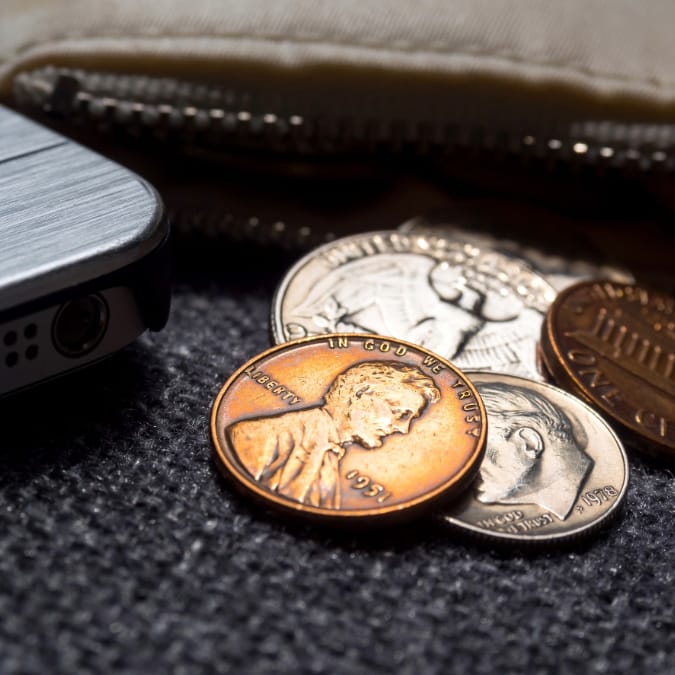
Have you ever glanced at the loose change jangling in your pocket and wondered if there could be something more than just small denominations? Well, believe it or not, there could be rare coins nestled among the ordinary ones, waiting to be discovered.

While most people dismiss coins as mere pocket change, collectors know that some coins are worth far more than their face value due to their rarity, historical significance, or minting errors. Here, we unveil 17 rare coins that could potentially be hiding in your change.

1. 1943 Copper Penny

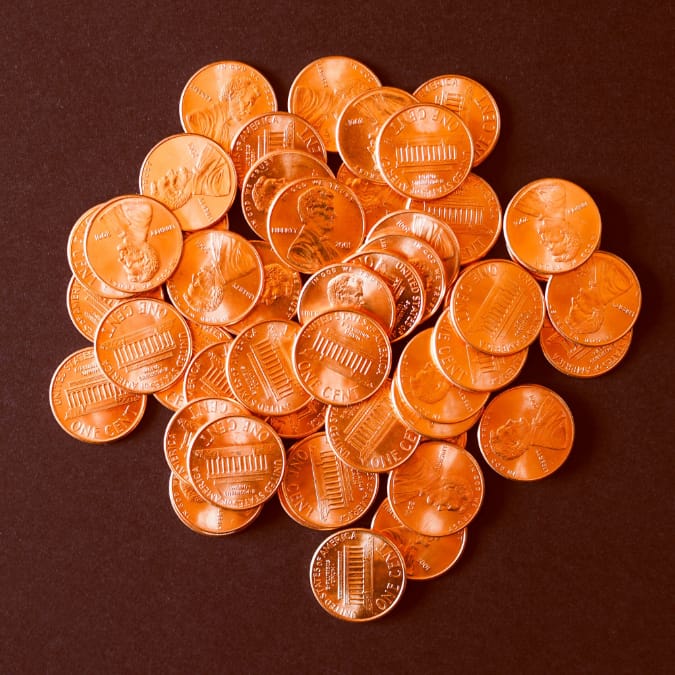
pennies

During World War II, due to a shortage of copper, the U.S. Mint produced pennies using zinc-coated steel. However, a small number of copper pennies were mistakenly minted that year, making them extremely rare and valuable. Approximately forty 1943 copper–alloy cents are known to remain in existence. Astonishingly, the highest amount paid for a 1943 copper cent was $82,500 in 1996.

2. 1955 Doubled Die Penny

penny

A small number of 1955 pennies were struck with a doubled die, resulting in a noticeable doubling of the lettering and date on the coin. These are highly sought after by collectors, but many fakes are on the market so it’s important to consult an expert.

3. 1969-S Lincoln Cent with Doubled Die Obverse

woman counting change

Similar to the 1955 Doubled Die Penny, the 1969-S Lincoln Cent exhibits doubling on the obverse side, particularly noticeable in the date and lettering. It is believed that less than 100 examples of the authentic 1969-S Doubled Die Obverse cents were produced. Again, there are many fakes of this coin in circulation, so it’s best to get the opinion of a coin expert.

4. 1970-S Small Date Lincoln Cent

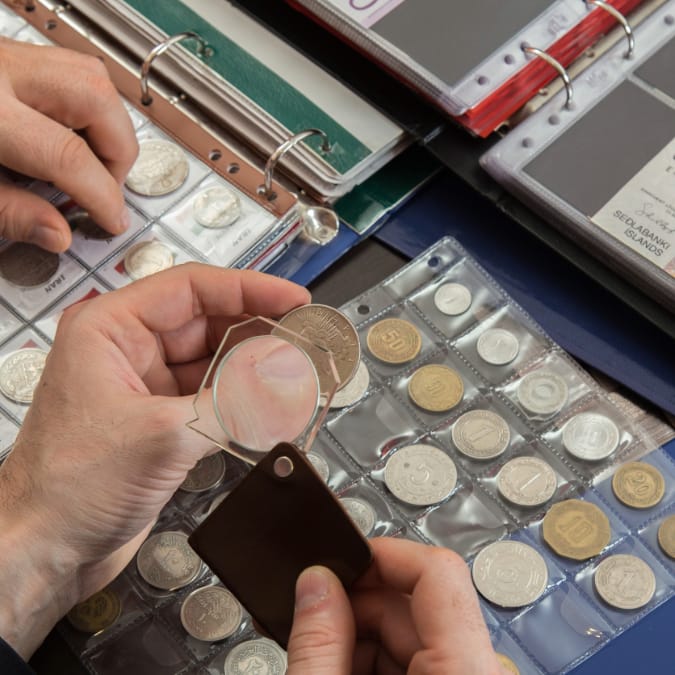
inspecting coin collection

A rare variety of the 1970-S Lincoln Cent features a smaller date font, making it distinct from the more common large date variety. The 1970-S Small Date is a relatively scarce variety and one of the most collectible of all Lincoln Memorial Cents.

5. 1982-D Small Date Copper Penny

coin collectors

In 1982, the composition of the U.S. penny changed from copper to zinc, but a small number of pennies were mistakenly struck using copper planchets, making them valuable collector’s items. The 1982-D Small Date Copper Alloy Lincoln Cent sold at auction in 2016 for $18,800.

6. 2004-D Wisconsin State Quarter with Extra Leaf

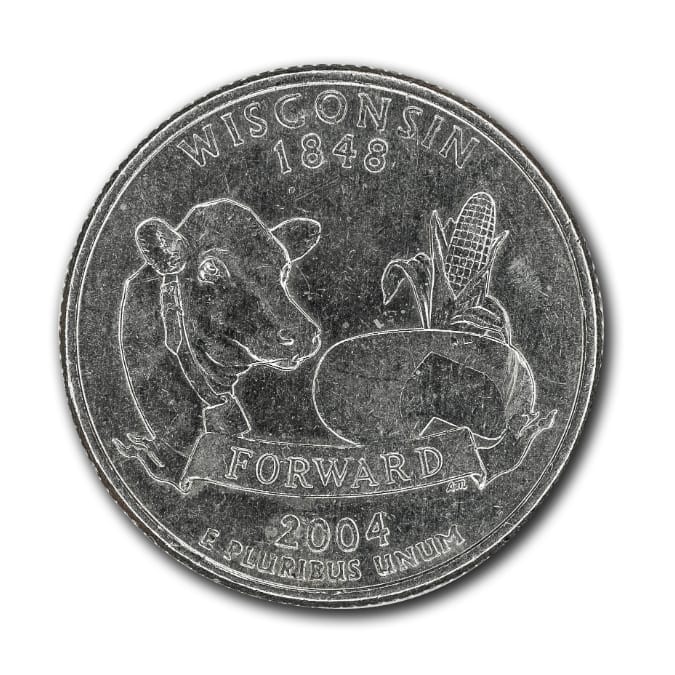
Wisconsin Quarter

Some Wisconsin state quarters minted in 2004 exhibit an extra leaf on the ear of corn on the reverse side. Because of this, they are considered rare and are sought after by collectors.

There were two different varieties discovered for the Wisconsin Extra Leaf Quarters. One of them being the “Low Leaf” variety, which is the most common of the two. The second variety is the “High Leaf” variety, which is the scarcer of the two.

7. 2005-D Speared Bison Jefferson Nickel

Nickels

A small number of 2005 Jefferson Nickels depict a die gouge resembling a spear running through the bison’s body, adding to their uniqueness and value.

8. 2009-D District of Columbia Quarter with Extra Leaf

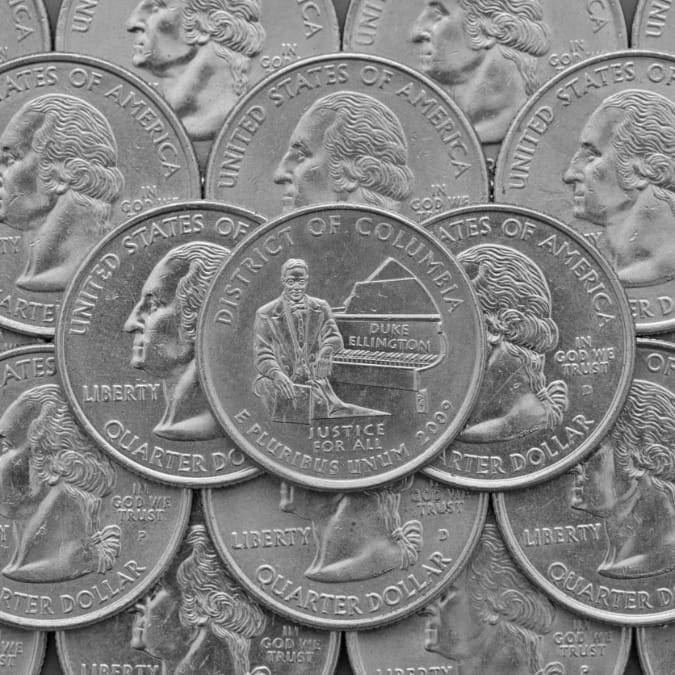
District of Columbia Quarter

Similar to the 2004 Wisconsin Quarter, some 2009-D District of Columbia quarters feature an extra leaf on the left side of the barrel, making them rare and desirable among collectors. Today, these sell for around $75.

9. 2009-S Proof Lincoln Bicentennial Cent

rolls of coins

The 2009 series of Lincoln Bicentennial cents includes four different reverse designs honoring different aspects of Abraham Lincoln’s life. The proof versions of these coins are highly collectible.

10. 2015-P Homestead National Monument Quarter with Die Break

quarters

A die break error on some 2015-P Homestead National Monument quarters creates a distinctive break on the roof of the building, adding to their rarity and appeal.

11. 2015-P Blue Ridge Parkway Quarter with Die Break

wallet coins

Similar to the Homestead National Monument quarter, some 2015-P Blue Ridge Parkway quarters feature a die break error, increasing their value among collectors.

12. 2017-P Effigy Mounds Quarter with Die Chip

change

Die chip errors are common in coin minting, but some 2017-P Effigy Mounds quarters exhibit particularly noticeable chips near the mound on the reverse side, thus making them collectible.

13. 2019-W Lowell National Historical Park Quarter

coin production

In 2019, the U.S. Mint released quarters with the “W” mint mark for the first time, primarily for circulation in coin sets. For this reason, the Lowell National Historical Park quarter with the “W” mint mark is highly sought after.

14. 2019-W American Memorial Park Quarter

counting quarters

Just like the Lowell National Historical Park quarter, the 2019-W American Memorial Park quarter is rare due to its “W” mint mark and is prized by collectors.

15. 2020-W Salt River Bay Quarter

emptying pocket

Continuing the trend of “W” mint mark quarters, the 2020-W Salt River Bay quarter is another rare find that collectors eagerly seek out.

16. 2020-P Samoa National Park Quarter with Bat Coin Error

quarters

A fascinating error occurred on some 2020-P Samoa National Park quarters, where a fruit bat was inadvertently depicted with the rear end of a horse, therefore making these coins unique and valuable.

17. 2021 Tuskegee Airmen National Historic Site Quarter with Obverse Die Clash

quarters

Some 2021 Tuskegee Airmen National Historic Site quarters exhibit a die clash error on the obverse side, where elements from the reverse design are imprinted onto the obverse. As a result, this enhances their collectability.

Why You Should Check Your Pockets

spare change

Before you dismiss your spare change as insignificant, take a closer look. You might just stumble upon a rare and valuable coin hiding in plain sight. After all, these 17 examples demonstrate that treasure can indeed be found in the most unexpected places, even in the coins jingling in your pocket.

So, next time you receive change, don’t be too quick to spend it. Instead, examine it closely; you never know what hidden gems you will discover.

Read More

Can My Savings Account Affect My Financial Aid?

12 Ways Gen X’s Views Clash with Millennials and Boomers

Photograph of Teri Monroe
Teri Monroe
Teri Monroe started her career in communications working for local government and nonprofits. Today, she is a freelance finance and lifestyle writer and small business owner. Teri holds a B.A. From Elon University.  In her spare time, she loves golfing with her husband, taking her dog Milo on long walks, and playing pickleball with friends.

Filed Under: Banking, Personal Finance Tagged With: coin collecting, rare coins, spare change

What Happens When You Fall Behind On Your Mortgage?

October 16, 2023 by Jacob Sensiba 33 Comments

what-to-do-when-youre-behind-on-your-mortgage
What does the bank do if you’re barely hanging onto your mortgage? What if you’re still a little behind, or a lot behind, on your mortgage?

First, it depends on your definition of behind.  It may not be the same as the bank’s definition (not shocking). Let’s examine:

1 – 15 Days Late

Most companies allow a 15-day grace period before tacking on any additional fees.  I know that being self-employed, my mortgage company calls me on the second of the month if I didn’t pay on the first, but there’s nothing to worry about if you’re “behind” less than 15 days.  No big deal.  That’s why they call it a “grace” period.

15 – 30 Days Late

If you’re in that 15 to 30-day time frame, prepare for a ton of telephone calls from your mortgage service provider (probably between two and four a day).  You’ll also begin receiving letters reminding you that if you forgot to pay your bill, now would be the perfect time to make that payment.

Back when my income was very unsteady, a sneaky trick my mortgage company would pull was to send out another bill insinuating that I was two months behind and that if I disagreed with them I should call ASAP.  Sneaky snake oil salesmen they were.

During this fifteen to thirty day period, if you can’t pay, don’t worry about the phone calls.  You’ll have to pay a small late fee of some kind, but there still won’t be any damage to your credit report.

30 – 59 Days Late

It’s important to note here:  If you’re running up against that 30-day late period, it’s best to drop everything and pay your mortgage.  Even if you’re habitually late 29 days; it’s better than being 30 days late from a credit reporting standpoint.

Now the letters and phone calls increase dramatically until you’re 60 days late.  Your credit report will note your current late status. Your credit score will fall.

60 – 90 Days Late

Here the phone calls and letters will cease.  Does the mortgage company give up?  Ah…that would be nice, but alas, no.  They change tactics.

Once you’re over 60 days late, they’re going to send someone out to your house, just to make sure it and you are still there.  You can see these people coming a mile away.

They circle your block two or three times, usually, they don’t look like they belong in your neighborhood, then they run up to your front door, peer in a window or two and leave a note on your door saying “Sorry we missed you.  Please call us at once.”

It’s at this point you should start preparing for your next steps.  If you’re 60 or 90 days past due, it’s probably a lingering problem, but all hope isn’t lost.

The best thing you can do when you’re behind is to communicate with your lender.  Home lenders have instituted a number of programs to help you work through your late status.

The second biggest thing to remember is that the people you talk to don’t know you and you don’t know them.  They don’t care about your problems.  It makes no difference to them whether you stay in your house.  They’re a thousand miles away in a cubicle.  Stay calm while talking to your lender.

When you’re behind more than 30 days, you need to start talking – but don’t wait until it’s too late.  Call your mortgage company, explain your personal circumstances, and begin laying the groundwork to solve the problem.

Can you pay the late payment over a couple of months?  How about rolling that payment to the back of the mortgage?  Can they waive a fee or two?  Sometimes they will, sometimes not, but you’ll never know if you don’t ask.

Next week I’ll talk about the different options you have when you’re really behind on your mortgage and what they all mean.  Stay tuned!

For more on paying off your Mortgage and ways to help you do it check out these articles.

Pay a Little Extra on Your Mortgage – What a Difference it Makes
6 Tips for Paying off Your Mortgage Quickly (Without Going Broke)
Don’t Be Afraid to Refinance: 6 Options to Meet Your Financial Needs

Photo: Hanging On: Jess2284


*Securities offered through Securities America, Inc., Member FINRA/SIPC. Advisory services offered through Securities America Advisors, Inc. Securities America and its representatives do not provide tax or legal advice; therefore, it is important to coordinate with your tax or legal advisor regarding your specific situation. Please see website for full disclosures: www.crgfinancialservices.com

Jacob Sensiba
Jacob Sensiba

Jacob Sensible is a financial advisor with decades of experience in the financial planning industry.  His journey into finance began out of necessity, stepping up to support his grandfather during a health crisis. This period not only grounded him in the essentials of stock analysis, investment strategies, and the critical roles of insurance and trusts in asset preservation but also instilled a comprehensive understanding of financial markets and wealth management.  Jacob can be reached at: jake.sensiba@mygfpartner.com.

mygfpartner.com/jacob-sensiba-wisconsin-financial-advisor/

Filed Under: Banking, Debt Management, Real Estate

What Happens When Your Debit Card Expires?

December 9, 2020 by Jacob Sensiba Leave a Comment

Depending on what financial philosophy you subscribe to, a debit card may be your best friend. Paying with a debit card is a surefire way (outside of loans) to make sure you don’t have any debt. But what happens when your debit card expires?

In today’s post, we’ll answer that question, as well as some related questions.

Why do debit cards expire?

The reason debit cards expire is to prevent fraud. Banks and credit unions make you “renew” your card to thwart fraud.

Think about it. When you’re making a purchase online, they ask for various pieces of information. Name, billing address, card number, security code (CVV), and EXPIRATION DATE.

This also gives the card issuer (bank or credit union) the ability to keep their customer’s identity safe. Every few years, cards get more sophisticated and come up with a new feature. Magnetic strip, then chip reader, then contactless.

Your card number shouldn’t change when it is renewed. The only time your number would change is if you cancel your card, due to losing it or someone stealing it (or the number, expiration date, and CVV), and you need your financial institution to issue you a new one.

Your replacement card

When your debit card expires, your replacement card will come in the mail at least one week before your card is set to expire.

Once you receive your replacement card, activate it, and securely destroy your old card. There are a couple of ways to destroy your old debit card.

  • Shred it
  • Cut it up and place pieces of the old card in different refuse bins around your home. Better to even throw out pieces across multiple pickups. One week, throw out a piece. Then throw out more than next week. And so on.
  • For more…read a related post about recycling bank statements.

Word to the wise

Expired debit cards cannot be used to make purchases. If you try, your card will decline. If you have recurring purchases tied to your card, make sure that’s updated with the new expiration date.

Related reading:

The Things You Need To Do to Protect Yourself From Identity Theft

5 Ways to Prevent Identity Theft from Happening to You

A Deep Dive into Credit Cards


**Securities offered through Securities America, Inc., Member FINRA/SIPC. Advisory services offered through Securities America Advisors, Inc. Securities America and its representatives do not provide tax or legal advice; therefore, it is important to coordinate with your tax or legal advisor regarding your specific situation. Please see website for full disclosures: www.crgfinancialservices.com

Jacob Sensiba
Jacob Sensiba

Jacob Sensible is a financial advisor with decades of experience in the financial planning industry.  His journey into finance began out of necessity, stepping up to support his grandfather during a health crisis. This period not only grounded him in the essentials of stock analysis, investment strategies, and the critical roles of insurance and trusts in asset preservation but also instilled a comprehensive understanding of financial markets and wealth management.  Jacob can be reached at: jake.sensiba@mygfpartner.com.

mygfpartner.com/jacob-sensiba-wisconsin-financial-advisor/

Filed Under: Banking, credit cards, money management, Personal Finance Tagged With: credit card, Debit card, expiration date, secure disposal

Is It Safe to Throw Away Bank Statements?

October 28, 2020 by Jacob Sensiba Leave a Comment

throw-away-bank-statements


Before we answer the question as to whether or not it’s safe to throw away bank statements, we need to cover how long you should keep certain statements. The following list is provided by TrueShred.

Statements to shred right away:

  • Sales receipts (unless you need them for tax purposes; in that case, scan them first)
  • ATM receipts
  • Packing slips and online purchase orders
  • Canceled and voided checks (that aren’t tax-related)
  • Utility, internet, and cell phone bills (once paid)
  • Credit card, insurance, and bank account solicitations that come in the mail
  • Expired warranty coverage
  • Correspondences from the DMV or IRS (once settled)
  • Travel-related materials (besides your passport)

List of documents to throw out after 3 years

  • Bank statements
  • Credit card statements (once paid)
  • Pay stubs (once checked against your W-2 for accuracy)
  • Medical bills (once paid and free of insurance disputes)


List of documents to throw out after 7 years

  • Tax returns
  • W-2s
  • Tax-related receipts and canceled checks
  • Records for any tax deductions you took
  • Other tax records

List of documents to throw out (variable intervals)

  • Auto titles (keep for as long as you own the car)
  • Home deeds (keep for as long as you own the property)
  • Disputed medical bills (keep until the issue is resolved)
  • Home improvement receipts (keep until you sell your house and pay any related capital gains taxes)

List of documents to keep forever

  • Birth certificates
  • Adoption papers
  • Social Security cards
  • Marriage certificates
  • Divorce decrees
  • Citizenship papers
  • Passports
  • Death certificates

You should keep these documents in a very safe place. I’d recommend a fireproof safe to keep these things protected.

How should you dispose of sensitive documents?

It is safe to throw away your bank statements, as long as you do so in a particular fashion. If you have a significant amount of paperwork, hire a shredding service. If you don’t have that type of volume, put it through a shredder. Tearing the papers up once or twice won’t do the trick.

Another safe disposal method, as recommended by Patch.com is to wrap up unused or spoiled food with the sensitive documents, and throw them in the refuse bin. Scavengers are more likely to “skip over” the refuse bin when they’re looking for sensitive information for identity theft purposes.

Below, are several ways to dispose of your sensitive documents without the use of a shredder. This list is provided by WigglyWisdom.com.

  1. Hand shred – tear up the paper with your hands. Make sure you tear the vital information and place it in separate recycling bins.
  2. Burn them – local ordinances can hinder your ability to do this, so be sure to check the laws for your municipality. Tear up the paper first, in the same way, you would for point #1, in case a piece of paper flies away.
  3. Compost – paper breaks down and can add carbon to your compost pile.
  4. Soak them in water – 24 hours in a bucket of water can leave your documents illegible.

There are three other items on that list if you’d like to learn a little more.

Conclusion

Bank statements and other financial documents contain incredibly sensitive information. It’s important you a) keep proper records and b) dispose of these items in a safe manner.

Related:

Earlier this year, I wrote a piece about the most important financial documents. If you’d like to learn more, go check that out here.


**Securities offered through Securities America, Inc., Member FINRA/SIPC. Advisory services offered through Securities America Advisors, Inc. Securities America and its representatives do not provide tax or legal advice; therefore, it is important to coordinate with your tax or legal advisor regarding your specific situation. Please see website for full disclosures: www.crgfinancialservices.com

Jacob Sensiba
Jacob Sensiba

Jacob Sensible is a financial advisor with decades of experience in the financial planning industry.  His journey into finance began out of necessity, stepping up to support his grandfather during a health crisis. This period not only grounded him in the essentials of stock analysis, investment strategies, and the critical roles of insurance and trusts in asset preservation but also instilled a comprehensive understanding of financial markets and wealth management.  Jacob can be reached at: jake.sensiba@mygfpartner.com.

mygfpartner.com/jacob-sensiba-wisconsin-financial-advisor/

Filed Under: Banking, Personal Finance, risk management, Tax Planning Tagged With: bank, bank statements, documents, identity theft, statements

How To Pump Up Your Finances

April 17, 2019 by Jacob Sensiba Leave a Comment

By “pump up,” I mean to do something that improves your financial situation in any way. Reduce expenses, start a rainy day fund, invest for the future, etc.

With that said, let’s take a look at some simple strategies to pump up your finances.

Cut the fat

I’d start by creating a budget. Look at the past three months of income and expenses. Total the expenses, total your income and compare the two. This will give you a clear picture of how much you are spending versus how much you make.

After that, you can go back with a magnifying glass and see exactly where your money is going, and stop spending money where it is necessary, or at least reduce it.

You can also reduce the fees you pay to invest. Mutual funds and ETFs are the most popular vehicles used today, but they come with a cost. It’s listed as an expense ratio. That ratio should be as low as possible. Ideally, it’ll be under .20%.

A quick tip to cut your expenses – get rid of cable/dish. There are too many services available now. You don’t need to spend $100+ on TV anymore.

Increase savings rate

Hopefully, you are saving something. If you are having trouble setting money aside because of limited resources, give this article a read for some help.

You should be saving in at least two places. An emergency fund and a retirement plan.

  • Emergency fund – Say you are contributing $20 per month. This is a good place to start, but you’re going to want to save more so you have enough in case your car breaks down or you lose your job. After three months of saving $20/month. Increase that amount by $5. After another three months, at which point you’ll have gotten used to not having that extra $5, increase it again. Rinse and repeat.
  • Retirement plan – If you have a retirement plan with your employer and they match, you’ll want to contribute at least enough to get that match. That’s your starting point. Then you’ll follow the same steps as the emergency fund. After a few months, increase the contribution percentage. If you don’t have a plan with your employer, set up an IRA, start contributing what’s comfortable for you, and follow those same steps.

I mentioned you should have AT LEAST these two accounts. Personally, I have several savings accounts. They are set up for different reasons. I have one for holiday spending, one for car repairs, and one for travel expenses. Giving your money a “job” makes it more likely that you’ll use that money for that “job.”

Switch to an online bank

Most online banks have higher interest rates on savings accounts. They also, typically, have lower rates on loans (based on credit score).

If you are saving money for a rainy day and putting it with a brick and mortar bank, you’re most likely earning next to nothing. Better to put that money in an account where you’ll earn a little interest.

Refinance high-interest rate loans

I’m going to dedicate this section to credit cards because that’s what most people think of when they hear high-interest rates.

There are three strategies you can use.

  1. Balance transfer – Many credit card companies offer a 0% APR on balance transfers for a certain period of time. Some have terms for 21 months. The interest rate will jump after the 21st month, though, so make sure your balance is paid off before then.
  2. Personal loan – If you have credit card debt and don’t, or can’t, utilize a 0% balance transfer, then a personal loan is your next option. You get a loan for the total amount of outstanding credit card debt. Then the institution will send a payment to each credit card company and pay off your credit card debt. You’ll be left with one payment. Be advised, credit matters here (also for balance transfers) so if the interest rate on the personal loan is higher than the average interest rate of your credit cards, don’t do it.
  3. The last option is to call the credit card company and ask for a lower rate. More often than not, if it’s available, they’ll give it to you. It won’t lower your payment a whole lot, but it’ll definitely help.

If you want to learn more about credit cards, click here.

Improve your credit

Your credit score makes a difference. It can impact what loans you qualify for, the interest rate, where you live, and where you work.

If you want to start making moves in your financial life, you need to improve your credit.

There are three really simple ways to do this.

  1. Pay more than the minimum on your outstanding debt and pay on time – on time payments is the #1 factor when calculating your score.
  2. Call your utility company and see if they report to the credit agency. It’ll count as another credit account (a factor) and it’ll influence your on-time payments.
  3. Open a secured credit card – You open this type of card with a deposit. The deposit will act as your credit limit. If you deposit $500, you’ll have a credit limit of $500. Make regular, small purchases and pay the entire balance right away. Credit agencies like to so activity and, as I’ve said, on-time payments.

If you want to learn more about improving your credit, click here.

Conclusion

If you want to improve your financial life, it’s actually pretty straight forward. Spend less than you make, save money for the future, pay down debt, and improve your credit. If you do these four things (obviously, easier said than done), goals that once seemed far fetched, can be within reach.

Please visit my website for our disclosures.


If reading this blog post makes you want to try your hand at blogging, we have good news for you; you can do exactly that on Saving Advice. Just click here to get started.

Jacob Sensiba
Jacob Sensiba

Jacob Sensible is a financial advisor with decades of experience in the financial planning industry.  His journey into finance began out of necessity, stepping up to support his grandfather during a health crisis. This period not only grounded him in the essentials of stock analysis, investment strategies, and the critical roles of insurance and trusts in asset preservation but also instilled a comprehensive understanding of financial markets and wealth management.  Jacob can be reached at: jake.sensiba@mygfpartner.com.

mygfpartner.com/jacob-sensiba-wisconsin-financial-advisor/

Filed Under: Banking, budget tips, credit cards, credit score, Debt Management, low cost investing, Personal Finance, Retirement

Global Banks Fined Over $5 Billion… for Currency Rigging!

May 22, 2015 by Kathleen Celmins Leave a Comment

Global Banks Fined Over $5 Billion... for Currency Rigging!
Global Banks Fined Over $5 Billion… for Currency Rigging!

Look, I’ll be the first to admit: I’m no currency expert. In fact, the only time I ever even think about foreign exchanges are when I’m traveling abroad.

But even I noticed that there was a huge currency rigging scandal this week.

Apparently, five huge global banks got caught conspiring to manipulate the price of dollars and Euros to increase profits.

That’s a super shady thing to do, and now they have to pay… big time.

When Banks Pay $5 Billion in Fees, Everyone Loses

One thing I don’t quite understand about this story is, “who loses here?”

I mean, yes, fixing markets for your own benefit is a bad thing to do. We’re looking for the invisible hand to move markets, not the visible strong arm of the biggest banks in the world. It’s just that this is different than Abramoff, who lied to investors and stole money.

Does anyone lose here?

Does anyone win?

I wonder if the $5B in fees is less than the ridiculous profits they made by fixing currency in their favor. And if it is, doesn’t that just teach the banks to keep doing what they’re doing? Maybe they’ll want to use different internet chat rooms so they’re not so easily caught, but even if they are, they still come out ahead, after the fees have been paid.

Does currency rigging affect us all in ways we don’t feel?

That’s my conclusion.

There is money to be made in currency exchanging, even if you’re not a huge bank that has the power to collude and adjust the market in your favor.

In fact, there are plenty of people who make their living on the Foreign Exchange Market (Forex for short).

I haven’t delved into it myself, but if you’re interested, do your homework. Read that Wikipedia page, learn the ins and outs, then use a company like CMC Markets, one of the first companies to provide online forex training, to start dabbling in foreign currencies.

Then come back and tell us about your experience.

Photograph of Kathleen Celmins
Kathleen Celmins

Kathleen Celmins is a marketing expert who works with small to medium-sized businesses to help them scale their revenue, especially in the products they create around their own intellectual property.   In addition to decades of marketing and leadership experience, she holds a BA from Pacific University.  In her spare time, she enjoys parenting, entrepreneurship, and monetizing content.

Filed Under: Banking

Good News: Small Business Confidence Is High. Here’s Why

January 11, 2015 by Joe Saul-Sehy Leave a Comment

Some news today for our UK readers. Will this spill over into the USA? Hopefully!

A recent survey by the Federation of Small Businesses (FSB) is welcome news to the UK economy which in part is dependent upon the success of that sector. The regular quarterly survey showed that 60% of respondents expected growth in their business in the coming months, a clear sign that they believe the recession has been left behind.  The result is consistent with the conclusion from the previous six surveys. While the South East was inevitably the most positive region, the greatest improvement in attitude came from the North East, which has often lagged behind when growth has started elsewhere.

Support

The results mirror reports from the Office of National Statistics which announced that in the second quarter of 2014 there had been 3.2% growth compared with the same period the year before. The International Monetary Fund (IMF) agrees; it sees the UK as one of the best performing economies around.

 Coins

FSB Chairman, John Allan, interprets the news as confirmation of the role small business is playing in the recovery in the UK. At the same time, he wants all political parties to commit to ensuring the momentum continues.

Go for Growth

It is important that all small businesses see this time as an opportunity to go for growth, now that consumers largely seem committed to spending once more after years of recession had everyone thinking twice. If you are wondering how to expand your own business and are short of the capital needed to do it, the solution may be small business loans UK from companies which reflect the same confidence in the future.

Positive Approach

The online financial sector has certainly benefitted from taking a positive view towards lending, sometimes in stark contrast to traditional financial institutions that have tended to take a conservative approach to any applications. These lenders still need information from applicants, but put far more emphasis on their ability to repay the loans rather than any historical problems that may have occurred.

If you think that this may be your opportunity, you can look at websites that will largely explain everything you need to know from the detail of the process to the information required with the application. You can get an idea of the cash flow commitment you will face if you are approved, and the term of a loan. Interest rates are at historically low levels and look likely to remain so for some months yet. Those are months in which your business could be growing, if you decide it is time to finance expansion plans or similar. Take some time to check out how your business could benefit from a small business loan to boost growth.

Image courtesy of TaxCredits.net

Source: http://www.bbc.com/news/business-29197510

Photo of Joe Saul-Sehy
Joe Saul-Sehy

Joe is a former financial advisor and media representative for American Express and Ameriprise. He was the “Money Man” at Detroit television WXYZ-TV, appearing twice weekly. He’s also appeared in Bride, Best Life, and Child magazines, the Los Angeles Times, Chicago Sun-Times, Detroit News and Baltimore Sun newspapers and numerous other media outlets.  Joe holds B.A Degrees from The Citadel and Michigan State University.

joesaulsehy.com/

Filed Under: Banking, International News

  • « Previous Page
  • 1
  • …
  • 11
  • 12
  • 13
  • 14
  • Next Page »

Follow Us

Search this site:

Recent Posts

  • Can My Savings Account Affect My Financial Aid? by Tamila McDonald
  • 12 Ways Gen X’s Views Clash with Millennials… by Tamila McDonald
  • What Advantages and Disadvantages Are There To… by Jacob Sensiba
  • 10 Tactics for Building an Emergency Fund from Scratch by Vanessa Bermudez
  • Call 911: Go To the Emergency Room Immediately If… by Stephen Kanaval
  • 7 Weird Things You Can Sell Online by Tamila McDonald
  • 10 Scary Facts About DriveTime by Tamila McDonald

Copyright © 2026 · News Pro Theme on Genesis Framework