• Home
  • About Us
  • Getting Finances Done
    • Hiring Advisors
    • Debt Management
    • Spending Plan
  • Insurance
    • Life Insurance
    • Health Insurance
    • Disability Insurance
    • Homeowners/Renters Insurance
  • Contact Us
  • Our Editorial Commitment

The Free Financial Advisor

You are here: Home / Archives for successful investing

How I Chose My High Yield Bond Fund

May 1, 2012 by Joe Saul-Sehy 16 Comments

Last week I described the ultra-thrilling process of how high yield bond funds work. The reason I penned that particular post was simple. I was in the process of buying one.

In today’s entry, lets look “over my shoulder” to see the method I used to pick my new fund. Many people don’t get to see how someone with 16 years of professional experience chooses an investment in their portfolio. Choosing a high yield mutual fund is a little like exploring through a wasteland of worthless investments (as you’ll soon see), and I think there’s a few crucial basics beginners can learn from my adventure.

Why? Like reading a map, you’re going to be surprised by how straightforward and simple the process is. Buying funds isn’t complicated and you too can find a good mutual fund within minutes while feeling comfortable that you performed adequate due diligence.

The key part of the process is spending some good time with the map first. If you know what you’re looking for, exploring for the fund is the easy part.

Leading up to choosing a fund, I determined the following:

  1. I knew my end goal. I wasn’t just throwing money in the general direction of my problems or praying for high returns. I didn’t use a “more is better” approach. That usually lands investors in an ugly spot, when their greed turns profits to huge losses. I was looking for retirement, and needed to maintain at least a 6 percent return to get there.
  2. I had already determined my asset mix to reach my goal. On our podcast and in previous posts, I’ve discussed finding the appropriate diversified asset mix for your goals. Mine included high yield bonds, mostly because they have a history of achieving my target return.
  3. I knew how much money I needed in high yield bonds to meet my goal. Normally, I’m not a fan of mutual funds. But, because it was a small amount and a manager can oversee the process of avoiding defaults, I decided one mutual fund would do the trick. For more sizable chunks, I’d hire multiple managers or switch from a mutual fund to individual bonds.

Why is it important to determine these three criteria first?

Like deciding which size ice cream cone you’re getting, it’s best to look at your current situation, or waistline, first. Plus, there’s another, overreaching reason:

I’m lazy.

Could you imagine the horror of searching through a gazillion mutual funds in a trillion different asset classes to find the one that fit my needs? Why would I spend countless hours oogling different investments I’ll never buy. I want to narrow the search as much as possible before investing. Why waste all that time I could be watching Cake Boss or Millionaire Matchmaker sorting through countless asset classes that I’ll never use?

I’m not going to waste time searching for investments. I’ll figure out the map first and then choose the right vehicle to get me to my goal.

…and that, class, is how we reached this point: choosing the vehicle.

Let’s begin.

My search began at TD Ameritrade. That’s because the IRA holding the cash I was going to use is housed there. If you’re not familiar with IRA custodians, you have a choice between many different places. Some decide on a bank, others a financial brokerage firm. I chose TD Ameritrade because I’m comfortable choosing investments alone but appreciate their stock and bond tools. They aren’t the cheapest provider, but I’m comfortable with the fee structure.

Fees


Just like a trip to the grocery store, every asset search begins with a discussion of “how much is this going to cost.” In many cases, I don’t want a mutual fund at all because they’re expensive, but in the high yield asset class, I want one. I don’t want to guess if one of the companies I own is going to go bankrupt. I also don’t want to do the homework necessary to avoid picking a loser (remember the lazy part above?).

Some mutual funds manage your cash for a reasonable fee, while others might as well be carrying a gun and wearing a mask.

But they’re not the only robbers.

It turns out that TD Ameritrade also is in on the “let’s gouge our customer” game. They’ve forged deals with some fund companies to offer their mutual funds at a lower cost. To tell you just how much lower, I was originally eyeing a Pioneer high yield offering. Imagine my surprise when I found out that I’d have to pay $49 when I bought AND AGAIN when I sold. Ouch.

As an aside, why not just round this ridiculous fee to $50? Wouldn’t anyone dumb enough to pay $49 shrug at a dollar more? If they want to play the psychological game make it $49.99. They’re leaving $10 on the table. I should work for TD Ameritrade…..


Screening: Expenses


So, armed with the list of funds that are available on my platform, I visit TD Ameritrade’s mutual fund screener site. There are many of these all over the web. The Wall Street Journal has a good one, as do Morningstar, Yahoo and MSN.

I used TD Ameritrade’s own screener for one reason. The first screen for me should be called “funds that avoid the ridiculous fee.” Because that’s too obvious, they named it, “No trading cost fund list.”

Screening: Manager


The second screen is for manager. If I have a manager at all, I want one who’s a little seasoned, but different than most investors, I also don’t want one who’s crusty. A fund manager nearing retirement might be milking her reputation at this point. Well-known managers such as Bill Gross at PIMCO are going to survive a couple down years with their portfolio if they decide to take a mental vacation at this point in the game. I don’t want that person.

I want them hungry.

There is no “avoid managers who have been around too long” screen, so I’m stuck using one based on minimum tenure. I don’t want one with less than three years in the saddle, personally, so I choose that screen.

Screening: Star Rating

Like I said, I’m lazy. I want Morningstar to do most of the heavy lifting for me. Although I’m smart enough to know that many lower-ranked funds could do well next year, I don’t have the time to search through them all.

In other areas, where I’m looking for more than a consistent dividend check and a fairly stable value, I might screen for more complex areas. In high yield, that’s it.

I press the “search” button.

Examining the List.

Now I feel like a kid in a candy store. Laid out in front of me is a shortened list of candidates for the title of “good enough to examine up-close.”

My attention now turns to fund evaluation company Morningstar, where I’m going to dig into each fund in detail.

I’m particularly interested in:

  • how each fund performed against it’s competitors,
  • what the dividend looks like, and
  • how the fund is managed.

I dig into these areas quickly. Simple internet searches lead me to mines of information. I’m too lazy to waste time flipping through funds, but when I’ve found my potential targets, I dig in like a rib-lover at the barbeque cook-off.

What Did I Choose?

Ultimately, the USAA High Income Fund won the day.

Why?

For an average fee of .90%, the dividend to me approaches 7% (6.93% as of this writing). The fund manager, R. Matthew Freund, has 21 years of experience (with USAA since 1994), so is mature yet not quite at retirement age. There’s been a co-manager named Julianne Bass since 2007, so there is younger blood overseeing day-to-day operations as well.

The fund has beaten the high yield sector over the past five years, but not by a ton. For the most part this fund’s performance has been slightly above or below the index. When it’s missed, it missed well above its asset category. It hasn’t had a major hiccup.

At this point, I like to guess what I’d rank the fund. I’d give it four stars out of five. It’s a winner, but not a thoroughbred. It won’t be the “hot thing” anytime soon. Perfect for this job.

Morningstar agrees, rating the fund four stars out of five. It’s an above average competitor with average fees and solid management.

Perfect. Often five star funds attract scads of assets, forcing me to look elsewhere as the management can’t invest all of the cash it’s attracted. I’m less concerned with the management of the fund over the past five years as I am over the next five. Because this fund isn’t meant to be the “go baby go” part of my portfolio, I’m fine with boring. In fact, I expect it and hope for it. Let’s get my 7% return so I can focus my energy elsewhere.

That’s how I picked the fund.

Complex? Nope.

I’d be willing to bet that this little 1000 word example is more homework than 95 percent of people complete when choosing investments. Even if a professional picks funds for you, there should be a list of screens you use to oversee picks.

It’s your portfolio. Take charge. It isn’t difficult.

(photo credit: Statue, Eusebius, Flickr;

Enhanced by Zemanta
Photo of Joe Saul-Sehy
Joe Saul-Sehy

Joe is a former financial advisor and media representative for American Express and Ameriprise. He was the “Money Man” at Detroit television WXYZ-TV, appearing twice weekly. He’s also appeared in Bride, Best Life, and Child magazines, the Los Angeles Times, Chicago Sun-Times, Detroit News and Baltimore Sun newspapers and numerous other media outlets.  Joe holds B.A Degrees from The Citadel and Michigan State University.

joesaulsehy.com/

Filed Under: investment types, investment websites, low cost investing, money management, Planning, successful investing Tagged With: High-yield debt, Investment management, Morningstar, Mutual fund, PIMCO, TD Ameritrade, USAA, Wall Street Journal

High Yield Bond Investing for Beginners

April 24, 2012 by Joe Saul-Sehy 11 Comments

Imagine investing in a fund that built bigger and bigger dividends until you were ready to use them. Sound good?

I’ve always been a fan of high yield bonds as an asset class for this reason. My clients and I earned solid results by investing in these products.

Today, boys and girls, we’ll explain what a high yield bond is, how it reacts to different pressures and the method I’d recommend to buy a high yield bond if I were a beginner.


What is a High Yield Bond?


Let’s begin with the word “bond.”

Most people are comfortable with the idea of a stock. If you own stock in a company, congratulations! You are now the proud owner of a piece of that firm. How will you make money? Like any company owner, you’ll generally come out ahead as the company’s business prospects improve. If the company takes a downturn, you could stand to lose your entire investment.

A bond is better for people who don’t want that roller coaster ride. Instead, bond holders are more comfortable loaning a company money. The company gives you specific terms (for example: five years at a six percent interest rate), and you agree to loan them the money.

In essence, you aren’t a company owner. You’re Louie the Loan Shark. Sweet!

How Do I Decide Which Bond to Buy?


Well, Louie the Loanshark, what’s the first question you’re going to ask if you’re loaning someone money?

That one’s easy: How likely is it that I’ll get my money back?

In the case of High Yield bonds, it’s pretty shaky. If these companies were regular people, they’d be the type that’ve had their American Express Card taken away and their house payment is two months behind.

When I said Loan Shark, I meant it.

So, when you see bad credit, what do you do? You jack up the interest rate. If I’m going to risk my money, I’m going to need to see a good return. High yield bonds are the highest returning bond type on the market. You’ll receive much higher returns than any other type of bond because you’re taking more risk.

High yield bonds used to be called junk bonds. To dress up the category, somebody decided “high yield” was a prettier name. I’d agree.


Is This Category Too Risky For Me?


Maybe. It depends on your goals. But let’s mitigate the risk of buying a single bond.

If you’re a new investor, I wouldn’t try to purchase an individual bond (loan money to one company). Frankly, the risks in that arena are too high for a beginner, unless you’re completely open to the risk of losing all of your capital.

In this case, I prefer a mutual fund. With a fund you have humans buying and selling positions on the open market. Fund managers diversify the portfolio like an ETF would, but also can sell when a certain company starts to turn for the worse. You don’t want to worry about that.


Let’s Talk About Performance and the Dividend


In high yield bond funds the dividend usually is classified as interest, so this asset class is best used in your tax sheltered plan (RRSP or IRA).

First, you can expect the value of your fund to fluctuate. With a high yield bond fund, I’ve always considered this the roll of the ocean. If I still own the shares  and they’re pumping out a dividend, I have one goal: make that dividend grow.

Therefore, I reinvest dividends.

That purchases more shares, which I reinvest in the mutual fund. I’m always looking at the size of my dividend payment that’s reinvested and asking “is it large enough to supplement my income yet?” Until it is, I continue to reinvest.

One of my clients pretended the dividend was a little man who worked alongside him each month. Every dividend would head back into the factory to help make the next payment a larger amount.


Popular High Yield Bond Investor Questions


How much should I invest?

With any investment, you begin by finding the return you need to meet your goal. For some investors, high yield bonds will be too risky for their portfolio. For others, they’ll need growth in their portfolio and high yield will rarely give you huge returns.

How risky is a high yield bond fund?

I present the risks of a high yield bond as “high” because I want investors to understand the risk versus other bonds. However, on a long-term risk/reward pyramid, high yield bonds are less risky than large cap stocks. If you’re comfortable investing in stocks, a high yield bond mutual fund historically has been less risky.

If I Don’t Have an IRA or RRSP Should I Still Invest?

I prefer to use tax advantaged investments outside of a tax shelter and tax-creating assets inside of shelters. High yield bonds are heavily taxed when compared to other asset classes that earn a similar return. You can use a high yield bond mutual fund outside of a tax shelter, but realize you’ll pay more tax than you will with many other investment classes.

How to I Find a Good High Yield Bond Mutual Fund?

Read our pieces on using Morningstar to find good funds:

Part I: Researching Mutual Funds (or how to cure insomnia)

Part II: Evaluate a Mutual Fund in 10 Minutes


Not only will you see past performance, but this website will tell you about fees and how much you’ll need to invest to meet fund minimums.


(Photo Credit: Payday Loan Store, Swanksalot, Flickr; Loan Shark, Jesse Wagstaff, Flickr)


Okay, that’s my story. Do you use high yield in your portfolio? Are there criteria or tools you use to choose high yield bonds that are appropriate for a new investor that weren’t presented here? We’d love to hear them.

Photo of Joe Saul-Sehy
Joe Saul-Sehy

Joe is a former financial advisor and media representative for American Express and Ameriprise. He was the “Money Man” at Detroit television WXYZ-TV, appearing twice weekly. He’s also appeared in Bride, Best Life, and Child magazines, the Los Angeles Times, Chicago Sun-Times, Detroit News and Baltimore Sun newspapers and numerous other media outlets.  Joe holds B.A Degrees from The Citadel and Michigan State University.

joesaulsehy.com/

Filed Under: investment types, passive income, successful investing

The Roth IRA – Like Ice Cream, But in the Tax World

March 27, 2012 by Joe Saul-Sehy 7 Comments

Today’s post is part of a larger effort in the personal finance community to discuss Roth IRAs. Congratulations to Jeff Rose of Good Financial Cents for organizing such an effective Roth IRA movement day.


I remember when I was maybe nine. My dad FINALLY let me order my own banana split at the local Tastee-Freeze.

I’d watched him down banana splits with pride. First he’d take care of the cherry and whipped cream. Then he’d cut into the bananas and shovel them into his mouth along with heaping helpings of three big scoops of ice cream.

At age nine I was firmly convinced that more = better in the world of ice cream.

More = better with retirement accounts also, and the Roth IRA is like the banana slices along the side of those three big piles of ice cream.

Some of you may be thinking, “why isn’t the Roth IRA those three wonderful scoops of ice cream?” ….or maybe “how come it isn’t the cherry on top of the whole thing, like the crown jewel?”

The answer is simple: there are other ways to save, and the Roth IRA goes better along with them than without. In other words, you can have a banana or you can have ice cream.

The Roth IRA allows you to eat your bananas with ice cream on the same spoon. Confused yet? So am I, so let’s move on. I’ll explain that later.


What is a Roth IRA?


A Roth IRA is a tax shelter available to US taxpayers. Unlike a Traditional IRA, which gifts the possibility of a tax break today, Roth IRA contributions don’t help your current tax situation. Instead, Roth IRA money is distributed for your later goals on a tax free basis, assuming you follow some fairly simple IRS rules.


How Much Can I Contribute?


Roth IRA contribution amounts change yearly, so it’s best to consult the IRS website for the official answer to this question. Use Google or Bing to search “Roth IRA Contribution Limits (YEAR) .gov” and you’ll find the site. Here’s the most current page at the time of writing.

Persons over age 50 are allowed to make additional contributions above those persons who are younger. These are commonly referred to as “catch up” provisions.


Are There Income Limitations?


Yes, there are. As with contributions, income limits change often, so it’s best to consult the IRS website for these details.

In general, there is a top amount of money you’re allowed to earn each year and still make full contributions. Then, there is a phase-out income zone. If your income falls in this zone above the full contribution limit, you may contribute, but not the full amount.

Finally, people earning above the phase-out zone are not allowed to contribute to a Roth IRA. However, you may use a conversion Roth IRA tactic that we describe in detail in another piece. See: Help! I Make Too Much Money to Contribute to a Roth IRA!


What Type of Investments Are Available?


You can invest in nearly any type of investment, but most people stick with the basics: stocks, bonds, mutual funds, exchange traded funds, and certificates of deposits.

While it’s possible to invest in actual real estate property or actual pieces of precious metals, there are complicated rules around these investments and you should consult with experts who are knowledgeable in these areas before trying to invest.


When Can I Withdraw Funds?


The Roth IRA has different rules for your contribution and the interest your account earns.

Your contribution may be withdrawn at any time, without penalty. We discuss this in detail in this piece. See: Emergency Fund or Roth IRA?

The interest the account earns must stay in the account until you’re age 59 1/2 or older. At that time, you may remove interest without penalty as long as the money has been in the account at least five years.

You may also remove money for other goals pre-59 1/2, such as a first time home purchase or for qualified college expenses. In these cases, funds aren’t considered tax free, but are only tax deferred. However, you do have the flexibility to save for goals other than college without worrying about dividend interest or capital gains taxes.


Can I Change Existing IRA Accounts Over to a Roth IRA?


Sure. However, these accounts have different rules. Here’s a link to the IRS website which explains Roth Conversion IRAs.


Why is a Roth IRA Like the Banana?


Remember how I mentioned that my dad would spoon some Roth IRA into his mouth along with some of the ice cream?

When I finally was allowed to order my own banana split, I learned the magic: bananas and ice cream are flippin’ awesome together.

People ask all the time which is better, a Roth IRA or a Traditional IRA or 401k plan? My answer is this: it isn’t about one or the other. Traditional IRA plans and 401k plans give you nice tax breaks today. You should utilize those. But a Roth IRA gives you healthy tax breaks and flexibility down the road.

Because we don’t know what tax brackets are going to look like in the future, a Roth IRA allows you to hedge your bet on tax brackets and instead have plenty of options later.


How Do I Maximize My Roth IRA Contributions?


Because you’re allowed to change Roth IRA contributions back out, there are strategies which can take advantage of possible market fluctuation during the year. Here’s one such strategy: Your Roth IRA Conversion: Super-Sized


(photo credit: Gabrielsaldana, Flickr)

Enhanced by Zemanta
Photo of Joe Saul-Sehy
Joe Saul-Sehy

Joe is a former financial advisor and media representative for American Express and Ameriprise. He was the “Money Man” at Detroit television WXYZ-TV, appearing twice weekly. He’s also appeared in Bride, Best Life, and Child magazines, the Los Angeles Times, Chicago Sun-Times, Detroit News and Baltimore Sun newspapers and numerous other media outlets.  Joe holds B.A Degrees from The Citadel and Michigan State University.

joesaulsehy.com/

Filed Under: Retirement, successful investing, Tax Planning Tagged With: Individual Retirement Account, IRS, Roth, Roth IRA, Traditional IRA

HELP! I Make Too Much Money to Contribute to a Roth IRA…Now What?

March 13, 2012 by The Other Guy 22 Comments

First of all, you make how much money?

Congratulations!

If you make so much money you can’t contribute to a Roth IRA, then a certain amount of back slapping and high-fiving are in order.

If you need a refresher on the Roth IRA limits to determine if you can contribute, we’ve got your back:

If You Have Taxable Compensation and Your Filing Status Is…And Your Modified AGI Is…

Then…

married filing jointly or qualifying widow(er)

Less than $173,000

you can contribute up to the limit.

at least $173,000 but less than $183,000

the amount you can contribute is reduced.

$183,000 or more

you cannot contribute to a Roth IRA.

married filing separately and you lived with your spouse at any time during the year

 zero (-0-)

you can contribute up to the limit.

 more than zero (-0-) but less than $10,000

 the amount you can contribute is reduced.

 $10,000 or more

you cannot contribute to a Roth IRA.

single, head of household, or married filing separately and you did not live with your spouse at any time during the year

less than $110,000

you can contribute up to the limit.

at least $110,000 but less than $125,000

the amount you can contribute is reduced.

$125,000 or more

you cannot contribute to a Roth IRA.

Information courtesy of the IRS 

A couple things to point out in our table above:

– First, don’t think just because you make a lot of money and your spouse doesn’t that you can just file “married and separate.”  The IRS thought you might consider that maneuver, and now caps income at $10,000 for those who consider that loop-hole.

Also, be aware of what “Modified” AGI means.  Leave it to the government to complicate an already complex issue.

Here’s how you calculate your “Modified” AGI (also courtesy of the IRS)

Modified AGI.   Your modified AGI for Roth IRA purposes is your adjusted gross income (AGI) as shown on your return modified as follows.

  1. Subtracting the following.
    1. Roth IRA conversions included on Form 1040, line 15b; Form 1040A, line 11b; or Form 1040NR, line 16b. Conversions are discussed under Can You Move Amounts Into a Roth IRA, later.
    2. Roth IRA rollovers from qualified retirement plans included on Form 1040, line 16b; Form 1040A, line 12b; or Form 1040NR, line 17b.
  2. Add the following deductions and exclusions:
    1. Traditional IRA deduction,
    2. Student loan interest deduction,
    3. Tuition and fees deduction,
    4. Domestic production activities deduction,
    5. Foreign earned income exclusion,
    6. Foreign housing exclusion or deduction,
    7. Exclusion of qualified bond interest shown on Form 8815, and
    8. Exclusion of employer-provided adoption benefits shown on Form 8839.
Here’s the point: Knowing your Modified AGI is not as simple as just looking at your W2 to figure out if you’ve made too much money.
If you haven’t done your taxes yet, Turbo Tax or HR Block software will help you find this amount automatically.
Let’s assume–after all these funky calculations–that it’s true: you’ve earned too much money.
Here’s some good news: You, Mr. or Ms. High Wage Earner, still can contribute to a Roth IRA.
You just have to do it the right way.  Luckily for you, I’m going to show how:
  • First, open a non-deductible IRA at your favorite brokerage house (Fidelity, E-trade, Schwab, etc.).
  • Next, fund your non-deductible IRA up to your maximum IRA contribution limit ($5,000 for those under 50; $6,000 for those turning 50 in the tax year of the contribution);
  • Wait at least 30 days, or a statement cycle so you can show the money was in an IRA  – *DO NOT INVEST YOUR MONEY DURING THIS 30 DAY WAITING PERIOD;
  • Then, call your brokerage firm and perform a Roth IRA Conversion of your IRA money.  You’ll owe tax on the gain (probably just a couple cents of interest), but other than that…pretty easy!

You’ll likely have to fill out a special tax form next year (IRS Form 8606) discussing the conversion, but there will be no tax, no penalty, and now you have a Roth IRA.

A couple of rules:

  1. If you have other IRA money (other than the $5,000 you just put in), you cannot just tell the IRS you want to convert the non-taxable kind.  You have to convert IRAs pro-rata which mean only a percentage of your money will be tax free.  If you have other IRA money (not 401(k) money, IRA money), before embarking on this strategy – discuss this with a knowledgeable tax advisor who knows what they’re taking about.
  2. Unlike a normal Roth IRA contribution, you do not have immediate access to these dollars.  You can access them after 5 years – just like any other conversion monies.
  3. Don’t tempt fate and try to do this at the end of a tax year.  There are too many chances for last minute screw-ups.  Complete this process during the middle part of the year so you have plenty of time to fix problems before the year’s over.  The IRS doesn’t like multiple 1099 forms and stuff like that…as an aside, neither does your accountant.

So there…badaboom, badabing.  Now even the 1%-ers can have a Roth.  Just like Congress intended.

Enhanced by Zemanta

Filed Under: Planning, successful investing, Tax Planning, tax tips Tagged With: Adjusted gross income, Individual Retirement Account, Internal Revenue Service, Modified AGI, Roth, Roth IRA, too much money, Traditional IRA

5 Good Reasons to Hire a Financial Advisor and 2 Bad Ones

March 7, 2012 by Joe Saul-Sehy 15 Comments

The decision to hire an advisor to help with your financial planning isn’t a step I recommend lightly. I’ve been lucky: over 16 years of practice I was hired mostly for good reasons, although some others were….not so much.


Most people don’t need a financial advisor.

I’d tell individuals before they hired me that 90 percent of what I did, they could do themselves. My job was to guide them through sometimes stormy financial waters. As a bonus, I’d save them time and money by already knowing tricks they could probably find online. My staff would fill out annoying paperwork, and we had access to the best professionals in related fields. If you needed good advice, I either could provide it or knew how to find it fast.

In fact, at some points I was more of a concierge than a financial advisor….while most of my contacts were finance-related, I knew good babysitters and how to get a table at the top restaurants in town!

Here are five good reasons to hire a financial advisor:


1) You don’t have time.

I worked with many successful people who could have easily completed their plans alone. Most of my clients were engineers or executives working for Microsoft and Chrysler. These were intelligent people (often financially savvy, too).

They recognized that they needed a good plan drafted that they could examine and sign off on. They also needed someone to facilitate the legwork. It had to be someone knowledgeable who had their back. They needed to be able to review everything on a plane or between meetings.


2) You aren’t going to look at the stuff yourself.

Some of my clients were smart people, but in completely different areas. I had a client who was a very well-known artist. He needed to be forced to have consistent meetings about his meetings. Without me, he wouldn’t ever review how he was doing.


3) You don’t want a full financial education.

This type of client would sometimes frustrate me, but I had a large number of them as clients. Different from my artist and executive clients who were generally well educated, financially savvy people, these clients would just rather pay me to do it.

These clients were very happy to meet with me and talk financial planning. They’d listen and nod. I was pretty sure that they were getting the basics about what we were talking about. I tried to keep it entertaining, because I knew they hated being in my office.

Some were looking for the concierge treatment. For those people, we had client dinners, good coffee in the lobby and occasionally went to sporting events or concerts. They didn’t care about how the money was managed, as long as it was done with as little input on their end as possible.

These clients sometimes scared me, because if things went wrong, they had no idea why and didn’t want to learn from anyone but me. If this sounds like you, it’s better to hire a good advisor than wreck your financial ship because nobody’s at the helm.


4) You want a smart coach in your corner…

…to steer your plan in the right direction.

Some of my clients I knew were only going to be with me for a short time. My job was to educate them how to do it themselves. Some advisors won’t do this. I was happy to help. I liked talking strategy anyway, so if I had a willing client who was coachable, I’d take them through the process. As a bonus, I handled most of the annoying parts (like filling out Roth IRA forms) because they were paying me a fee. It wasn’t why they wanted me as an advisor, but it was definitely icing on the cake.


5) You want an ally to point out flaws in your strategy.

This was probably my least profitable type of relationship, but the one I appreciated the most. I had a few Do It Yourself investors who already had a complete strategy and just wanted to hire me for a couple of hours a year so they could tell me their strategy. I always had questions, then feedback, and nearly always, adjustments I’d recommend.

One client, Paul, said he specifically hired me because our philosophies clashed and he wanted to make sure his strategy looked good from the other point of view. He thought about his plan so often that he usually had a winning approach, even though I definitely would have rarely completed the plan the way he did.


There are a couple of important reasons NOT to hire an advisor:


1) You want someone to do it for you.

There’s a subtle difference between this person and the one in #3 above. The person in #3 was happy to meet with me every few months and talk about money. They wanted some small amount of “here’s why we’re doing this.”

Then there’s the person who just wanted “take this cash and make it work.”

I care about my former clients. I never can care about your money more than you do. I’m the money babysitter, you’re the parent. Act the part.


2) You want to day trade with a partner.

I had two clients who could never get through their skull that I was very happy that they day traded…but leave me out of it.

Initially we’d separate the portfolio into two sections: the “long term investment” portion, that I’d help steer, and then the “play money” portion that they’d day trade. I’d make clear that they were on their own with the play money account.

Invariably, these two clients would call in a panic and tell me that Jim Cramer had just said something on television and they needed to sell…but what did I think first? Should they sell? Should the go contrarian and buy more? Could I look up some charts for them? Maybe call a couple fund managers and ask their opinion off the record?

No thank you.

The math on my practice worked this way: 150 families, all of whom paid for and should demand my attention.

If I met with each client on average 3 times per year for an hour and a half, that meant 675 hours of meetings. Additionally, I’d call each client twice a year minimum and talk for 20 minutes (assuming there weren’t urgent financial events afoot or you hadn’t called me first). That was another 50 hours.

We won’t even approach all of the emails I sent or returned daily. Remember that I mentioned Microsoft employees? Those people love email.

After 10 hours of preparation time a week and 10 hours of strategy/internal and analysis time (not to mention any marketing we were doing), that left 30 hours for client meetings. After holidays, I worked about 48 weeks a year.

Where was I going to find time to day trade your account?


That’s my story. Now it’s your turn: have you interviewed advisors? How did the meeting go? What did you like/didn’t like about their approach?


Enhanced by Zemanta
Photo of Joe Saul-Sehy
Joe Saul-Sehy

Joe is a former financial advisor and media representative for American Express and Ameriprise. He was the “Money Man” at Detroit television WXYZ-TV, appearing twice weekly. He’s also appeared in Bride, Best Life, and Child magazines, the Los Angeles Times, Chicago Sun-Times, Detroit News and Baltimore Sun newspapers and numerous other media outlets.  Joe holds B.A Degrees from The Citadel and Michigan State University.

joesaulsehy.com/

Filed Under: Hiring Advisors, money management, Planning, successful investing Tagged With: Certified Financial Planner, Financial adviser, Financial services, Planning

Your Roth IRA Conversion: Super Sized

March 6, 2012 by Joe Saul-Sehy 9 Comments

This is part 1 of a series of posts by theOtherGuy over the next three Tuesdays on Roth IRA strategies.

Among the greatest inventions created by man are:

1) The wheel.

2) Fire.

3) Internet blogs.

4) The Roth IRA.

If you’ve been living under a rock and have no idea why a Roth IRA made the list, let’s take a five word primer: Tax. Free. For. Ev. Er. (I know they’re not all words, but get used to it; I’m a finance guy, not some kind of English guru).

If 100 percent tax free retirement money doesn’t get you all hot-and-bothered, I’m not sure what will.


Houston, We Have Some Problems


Contributions are limited by your income. In 2012, for a single person to contribute to a Roth IRA he or she would have to have a Modified AGI of less than $110,000 to contribute the full amount. For married couples, income limits are phased in beginning at $173,000.

The amount you can contribute per year is capped. You’re allowed to contribute $5,000 per year ($6,000 if you’re over age 50). At most, married couples are limited to $10 – $12,000 per year per family. That still gives you plenty of money to save if you’re 30 years old, but if you’re more…shall we say…”middle aged” (editors note: take it easy on us older people—AvgJoe) then you may be running out of years to max fund this terribly awesome retirement savings vehicle.

So, how can you get more money in a Roth IRA if you’re only able to contribute $5,000 per year? Use a Roth IRA conversion instead.


Disclaimer: What I’m about to share with you could cause MAJOR financial harm if you don’t complete the steps perfectly. I strongly recommend you work this out with a tax and financial professional who knows your unique situation and who can help you make sure you get this right. We can’t be responsible for the zillion dollar tax bill they received because they missed a step.


Why Should I Convert?


Let’s say you’re 28 years old and have $40,000 sitting in an IRA that’s from your old 401k plan(s). You also have an existing Roth IRA–and you’re contributing–but it’s growing slowly.

If we assume your $40,000 grows at 7% per year, then that account should be worth about $685,000 by the time you’re 70 years old.

You probably don’t care, but here’s why you should: at age 70 and 1/2 (well, technically, by April 1, the year following the year in which you turn 70 1/2) you have to take money out of your IRA. It doesn’t matter if you don’t need the cash. Your friends at the IRS want their tax money. So, if you have $685,000 in an account at age 70, you’re going to need to take out approximately $25,000 that year. Then you’ll take out more each year until you die.

All of this money will be taxable. Ouch.

Let’s do a Roth IRA Conversion for 2011 this year instead.


What Would Happen To Your Old 401k Money In a Roth IRA?

You guessed it; no taxes, no minimum withdrawals. One hundred percent tax free forever. That’s why turning old 401k money into Roth IRA funds is a great idea for most people.


Here’s a Plan to Super Size Your Gains:


Each year for the next four years, take all $40,000 from your IRA and perform what’s called a Roth IRA Conversion. I’ve been throwing this phase around quite a bit, so let’s explain how it works.

With a conversion, you agree to pay taxes today on the amount you flip to a Roth IRA Conversion in 2011 in exchange for never paying taxes ever again on that money. It’s a great deal – provided you do it right.

You may think, “But it’s 2012 now!” Remember: it’s currently 2011 tax time.

Most people are familiar with the Roth Conversion concept, but let’s Super Size it.


Making Lemonade From Lemons


What happens if you convert your $40,000 on January 1 and invest it in some crappy investment that loses 30% of it’s value? Now, on December 31, you have an account with $28,000 in it…but guess what? The IRS wants it’s taxes paid on the full $40,000 you converted.

Rotten deal, right?

Well, not-so-fast, my friend! The IRS allows you to “Re-characterize” those funds back to a Traditional IRA for whatever reason you please.

So if you converted $10,000 and it lost value, then you could “un-do” it and say, “Nah, I changed my mind.” No taxes. No penalties. Just some paperwork.


Here’s the Cooler Part


You have until your tax filing deadline plus extensions to undo your Roth Characterization. For most of us, we can file an extension until around October 15, instead of the normal filing day of April 15th.

Follow me here: you can perform a Roth Conversion on January 1 and have an “Un-do” switch available until October 15 the following year!

Motivational speakers will tell you that life is about making good use of time.

IRS rules allow you over a year and a half to change your mind.


Here’s what we do with that time


Let’s say you’re like most people without supernatural powers and have no idea how the financial markets are going to perform – nor do you know what asset class is going to be the big winner over the next year.

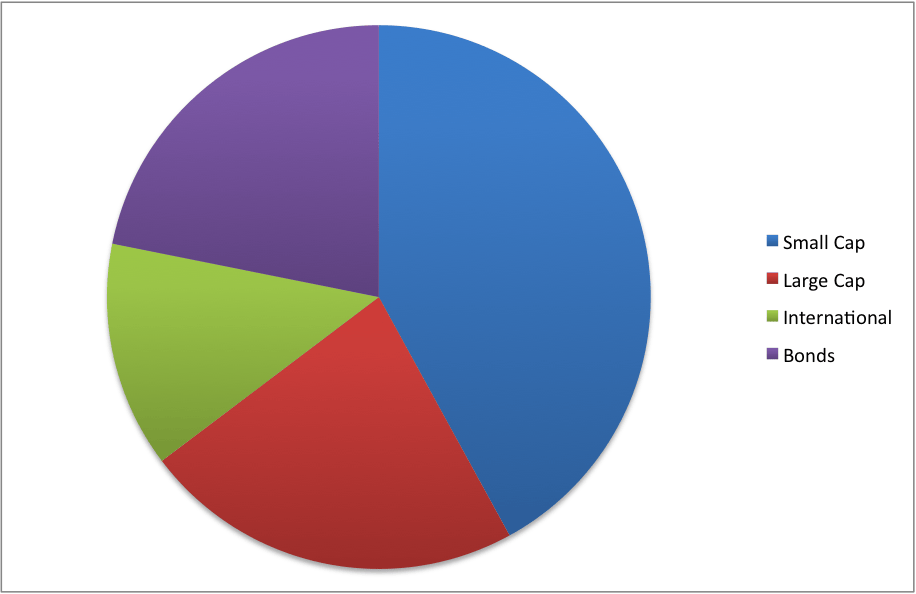
Convert your $40,000 and split the investment into four different asset class buckets:


If you do this on January 1 (or the middle of February, it doesn’t much matter) you’ll now have until October NEXT YEAR to make a decision on what you’d like to do. After the next 20 months have gone by, maybe your chart now looks like this:


If you keep the Small Cap section, (which grew from $10,000 to $20,000), you’ll pay taxes only on the original $10,000 conversion amount from 20 months ago! Then, you “re-characterize” the other three sections back into their original Traditional IRA bucket and viola! You have big bang for your buck.

You only recharacterized the portion that was sure to grow tax free. The remainder you waited until next year and did it again.

Less tax and more money. I know. I’m brilliant. You don’t have to tell people you read this and can claim it as your own personal strategy. It’ll be our secret.


There are Plenty-o-Caveats


1) You MUST pay taxes due by the normal tax filing day (around April 15th most years) on the conversion amount.  If you converted all  $40,000, you’ll owe the government a HUGE bill on tax day, BUT you’ll receive that money back when you file taxes by October 15.

2) You’ll need to file an extension on your taxes by the normal filing date. There are IRS failure to file penalties.

3) If you screw this up, there are no do-overs. The IRS has very specific rules and they are to be followed to the “T”. Don’t beg forgiveness for incompetence later. It won’t work.

4) If you use this strategy, you must wait at least 31 days before you “re-convert” these funds.

This strategy can be done with any amount, it doesn’t have to be the full $40,000. I recommend this approach regardless of dollar amount – if you decided to only convert $5,000 of your old 401k savings to a Roth it would make still make sense , why pay more taxes than you need?


With Tax Time Approaching, Know Your Options


If you did a Roth IRA conversion last year, you have the option of “un-doing” it until your tax filing deadline plus extensions this year. If you have old 401k money in an IRA – consider moving it out piece-by-piece to a Roth IRA.


Part two of this series will cover what happens if you make too much money and don’t have money to convert…that’s a good problem to have, but then what?

Enhanced by Zemanta
Photo of Joe Saul-Sehy
Joe Saul-Sehy

Joe is a former financial advisor and media representative for American Express and Ameriprise. He was the “Money Man” at Detroit television WXYZ-TV, appearing twice weekly. He’s also appeared in Bride, Best Life, and Child magazines, the Los Angeles Times, Chicago Sun-Times, Detroit News and Baltimore Sun newspapers and numerous other media outlets.  Joe holds B.A Degrees from The Citadel and Michigan State University.

joesaulsehy.com/

Filed Under: Planning, Retirement, successful investing, Tax Planning, tax tips Tagged With: Individual Retirement Account, old 401k money, Roth, Roth IRA, roth ira conversion, Roth IRA conversion 2011, traditional ira strategy, what to do with a 401k rollover

College Savings Simplified: The Best Places to Save Money For Education

February 14, 2012 by Joe Saul-Sehy 3 Comments

While I tend to do things the hard way, finding college savings isn’t one of the areas where I complicate a task. For some reason, my sixteen year old twins helps me focus on whether a 529 plan, Roth IRA, or savings bonds will treat me right.

So, even though I’ll generally remember to add softener to the washing machine just after it’s finished, I understand how college plans operate up and down.

If you’re saving for college, it’s important to categorically work through the details of each plan to determine which best fits your needs.

…because there IS A right way to save for college, and a wrong way to save.

The bad news? The BEST way to plan college savings differs depending on who you are and what your circumstances may be.

I know that sounds generic and evasive, but it’s true: the best way to save for college will depend on your own income, current savings and college goal, so the best course of action will be this:

Know what plans exist and how they’ll affect your ability for financial aid before investing a dime.

If you haven’t yet, you should read the pieces on:

– 5 Steps to a Successful College Plan – This will guide your plan of attack when creating a college plan.

– Narrow Your College Search – This will focus your college search to those schools which are the best fit, both financially and for your particular interests.

After reading these two thorough primers, you’ll be armed with an idea of the cost and feasibility of your favorite school.


Let’s now save for the goal: education.


Complicated Ways to Save For College


Some methods of saving for college are so fraught with risk that I’m reticent to ever recommend them to people. That doesn’t mean that these college savings plans are bad; on the contrary, they all have some huge upside potential, provided that all the right conditions exist. Here are a few:


In-State Tuition Reimbursement Plans – Many states offer plans which reimburse the cost of college credits at a later date. This can be a fantastic way to lock in the price of a college, provided that everything goes according to plan.

Upside: Paying today’s rates for in-state public institutions. Don’t have to worry about market conditions or returns on investment.

Downside: Have to worry about state plan solvency. More than one state has already notified participants that they might not be able to meet their obligation. In fact, some plans no longer guarantee that your dollars will lock in present rates. Instead, these plans invest your money with state funds. Who wants their state government as a money manager?


Life Insurance – Some life insurance plans, such as whole life and universal life are presented as attractive options for education savings vehicles.

Upside: These plans are financial-aid friendly. When completing a FAFSA application, money inside of life insurance policies doesn’t count against your savings, acting as a nice shelter. Also, if for some reason the insured passes away, money is available for education.

Downside: You may have to cancel your life insurance policy to withdraw education funds. What if you still need the policy? Also, do you really need life insurance? If the answer is yes, and you’re sure that you will no longer need coverage after this incident, then this might be a good option.

Watch out for fees, too. Not only will you pay for insurance, but often a policy which offers stocks and bonds are filled to the brim with fees to manager and (maybe more importantly) to withdraw funds.

Still want life insurance in your account? Read this good article at FinAid.org for a more in-depth argument: Variable Life Insurance Policies.


Annuities – Tax deferred savings may seem like a good option for education planning. Why save into an account that’ll be taxed every year when you can shelter your money?

Upside: These accounts are FAFSA friendly, meaning that they are not usually counted in the equation for financial aid. Many annuities offer some flexible savings options.

Downside: Too many to mention here, but mostly: fees and penalties. Make sure you’re going to be over age 59 1/2 before you remove money, because if not, there’ll be IRA penalties on top of whatever the annuity company may charge.

Taxes can be a bear. Here’s why: when you withdraw cash, dollars in the account are removed in a LIFO (last in-first out) accounting manner. This means that all interest on the account must be taken before principal is removed. Why is this a big deal? Taxes. You’ll pay taxes as if you earned the money in the year you remove the money. This income may also make your chances of receiving financial aid worse in the following year.


Less Complicated But FAFSA or Tax Return Unfriendly


Stocks or Stock Based Mutual Funds – These accounts can be used whenever you wish, assuming the dollars aren’t inside of a tax shelter. In some years there’s a chance of nice returns, too.

Upside: Returns. While there are no guarantees, over long periods of time the instability of a stock or stock-based exchange-traded fund or mutual fund can be countered with a high average annual return.

Downside: Risk. There is a chance you could lose a substantial amount of principal if you don’t monitor or manage your money. Also, this type of investing isn’t FAFSA-friendly. Dollars that aren’t sheltered count directly against your chances of financial aid.


Bonds or Bond-Based Mutual Funds – More stable than stocks, these types of funds have performed attractively over the last ten years.

Upside: Returns with generally less risk than stocks above. Because bonds throw off dividends as one of the main methods of creating returns, these investments often perform more consistently than stocks.

Downside: Taxes. Bonds often throw off an attractive dividend that savers often reinvest. This money, unless it comes from a special type of bond such as a municipal bond fund, is taxable every year, slowing down your return. While there has been tax reduction with capital gains taxes, these are taxed as income, which is a much higher tax bite. These are also FAFSA unfriendly investments, unless you use government savings bonds. These can be good to you tax-wise, as long as they’re titled correctly and cashed in the same year as you’re paying qualified education expenses.


The Easy Way To Save For College


Roth IRA Plans – A Roth IRA is generally a retirement savings vehicle. Money invested gives you no tax benefit today, but can be taken tax free during your retirement years. You’ll have to follow a few rules, but you are allowed to withdraw funds for college. You may also use nearly any time of investment you choose inside of a Roth IRA.

Upside: Tax shelter. This money can grow tax deferred for education, and if you end up not using it can be used later for retirement, tax free.

Downside: Retirement savings. The best use of a Roth IRA is clearly as a retirement savings vehicle. While money can be used for college, why miss out on the main Roth opportunities around retirement?


Coverdell Education Savings Accounts (ESAs) – These plans allow you to save not only for college, but also for earlier years of private school expenses.

Upside: Flexibility. This tax shelter allows you to use money for many types of education options, so it’s great if you’ll have elementary, high school and college savings needs.Classroom

Downside: Funding. Man, these accounts are small. Because you can only place $2,000 per year into this type of account, they often don’t make sense. I’d also meet people with very limited funds in a few different Coverdell IRAs. Who can manage all these little accounts effectively?

The IRS page on Coverdell ESAs is very helpful. Find more details here.


529 Plans – State sponsored education plans offer a good tax shelter, are somewhat FAFSA friendly, and eliminate taxation of dollars as long as funds are used for qualified education expenses.

Upside: Amounts of savings. You can pack tons of money into these plans. Most allow as much as $300,000 to be invested into a 529 account. These accounts can either be in self-directed fund options or can be in age-based options. If you don’t use the money for the primary beneficiary, funds may be used by siblings, parents, children or other close relatives. In these plans your choice of education institutions isn’t limited to a single state. You may use these dollars in any state and still receive the tax benefit.

Downside: Money earned in a 529 plan must be used for education expenses or you’re slammed with penalties. If you aren’t sure about saving for college, funding your Roth IRA first might be a better idea, because while these funds are flexible for college funds, money will be trapped here.


Of these, the savings option I like best is a 529 plan, because of its flexibility, range of schools that accept funds, and tax treatment. While it isn’t best for everyone, for the vast majority it’s where you should save for college.


Here’s How To Evaluation 529 Plans


Just like we’ve told you previously that Morningstar is the best way to evaluate mutual funds, I like savingforcollege.com to evaluate 529 plan options.

Here’s a link to savingforcollege.com. Have a look around to see how thorough this site is on investing for education.

The Good – Lots of information on FAFSA and college savings options. Great reviews on the fees associated with 529 plan savings accounts.

The Bad – While fees are certainly important, I’m about returns. Savingforcollege.com does a poor job of comparing how money managers work unless you’re willing to fork over some money for a premium membership. When compared to more robust money management sites such as Morningstar.com, there’s no reason to pay for this information.


Can I recommend a single-best 529 plan?


Absolutely not.

Check your state’s plan options at savingforcollege.com to see how they stack up. Always evaluate a few national plans to see how they compare against your own state’s options.

My favorite national plan is UPromise, though I also like the T. Rowe Price option.

Why Upromise?

I’ll attack this next week, but here’s a preview: not only is the plan managed better than most options available, but if you sign up your credit and debit cards, but using the Upromise Rewards program (which you can sign up for whether you use a Upromise 529 plan or not) you’ll receive points which can translate into extra money into the 529 plan later. Combine the benefits of low cost investing, good management and extra money, and you’ve found a plan that’s hard to beat.

If you want to compare Upromise with your state’s plans, here’s a link for more information: Upromise is the smart way to save for college!

Enhanced by Zemanta
Photo of Joe Saul-Sehy
Joe Saul-Sehy

Joe is a former financial advisor and media representative for American Express and Ameriprise. He was the “Money Man” at Detroit television WXYZ-TV, appearing twice weekly. He’s also appeared in Bride, Best Life, and Child magazines, the Los Angeles Times, Chicago Sun-Times, Detroit News and Baltimore Sun newspapers and numerous other media outlets.  Joe holds B.A Degrees from The Citadel and Michigan State University.
joesaulsehy.com/

Filed Under: College Planning, low cost investing, Planning, successful investing, Tax Planning Tagged With: FAFSA, FinAid.org, life insurance, Mutual fund, Roth IRA, Student financial aid in the United States

When Charts & Graphs Lie

February 7, 2012 by Joe Saul-Sehy 13 Comments

Today is Part II of our discussion on charts and graphs. For Part One, you’ll want this link to:

Boner of the Week: Have You Been Lied To By Charts and Graphs

Sometimes, before jumping into an argument on how you feel about data presented in a graph or chart, it’s a good idea to focus on whether the data presented is actually showing you something truthful.

Our friend PK at dqydj.net (which is a fantastic blog on economics, politics and investing), helped us out with his wizard-ly chart skills and created a graph that hid four lies.

Here it is again:

DQYDJ1UnemploymentRate

There are FOUR lies PK is telling in this graph. Did you guess all four?

Okay, let’s reveal them:


Lie #1: Long Trend Line


Marketers are funny. They’ll draw some pretty long-range conclusions from very short term data. That’s true in this case. PK has taken the general line from October 2011 to December 2011 and—as if using a ruler—decided the next several months would follow similarly.

How does this apply to your financial picture?

– According to Bloomberg Businessweek, the stock market has had it’s best run in 23 years to begin a year. It’s a mistake to think that less than 40 days of good news will create 365 days of stock market bliss.

– Often, government statistics are revised. Basing any financial move on short-term and possibly short-lived data could wreak havoc on your financial life.

Lie #2: Small Sample Size


Check out PK’s graph again. He’s basing the entire graph on FOUR MONTHS of data before he gives you the equally tragic long trend line. In politics, where trends seem to change every three minutes, people often draw conclusions about an election many months into the future based on short term data:

– After Huffington Post (among others) reported on Rick Perry’s quick surge in the polls, articles such as this one that appeared in The New Republic—declaring that Rick Perry is going to be hard to beat—dominated editorial pages. There were only 15 days between the Huffington Post “surge” article and the “he’s probably gonna win” New Republic story. I wonder if any of these writers ever go back and read how reactive this seems several months later? Probably not, because using a small sample size to predict future results sells subscriptions.

– In the financial world, marketers of securities predict the bottom of an investment based on short-term data. It also holds with bloggers. Check out these predictions from the website Trading Authority. In the commentary, the “expert” uses short term data to predict an upswing in these stocks, predicting they “Could Jump 50 Percent”. Wow! Sounds like returns I’d love to have in my portfolio.


How did he do? Let’s look:


TradingAuthority Predictions on 6/3/2011
TickerPrice 6/3/11Price 2/5/12Change% Loss
SCHW16.7612.74-4.02-24%
WFR9.645.39-4.25-44%
GHL51.5547.61-3.39-6%


Ouch.

These results weren’t graphed, but both the “Rick Perry is Uncatchable” and “These Stocks Are Going to the Moon” cases could easily have been presented to an unaware public in chart or graph form to make a bigger (untrue) statement.

(By the way, finding this site wasn’t hard. I just performed a Bing search for “Upturn in Stock That Failed” and clicked on the first link that matched what I was looking for.)

The point? Don’t take short-term results and use them to predict long-term trends.


Lie #3: X Axis Compression


If you want to take fairly small results and turn them into “Wow!” returns, just compress the graph. Look at how thin PK has made this graph by squeezing months together across the X (bottom) axis. That “black diamond super difficult ski hill” drop would look more like a “bunny hill” if he’d stretched the graph across the page. Since your eye is drawn to the slope, a skilled marketer will change the degree of descent to reiterate whatever point she’s making.


Lie #4: Y Axis Stretch


Similar to lie #3 above, marketers will stretch data across the Y Axis (up/down) further to prove that there is far more movement than there truly should be.

– Beware people showing a stock “bouncing around” and then showing a chart which stretches the distance between prices.

– Remember, the inverse is also true: If a marketer wants to show a position as safe, they’ll compress the numbers to reduce the perceived volatility.


Here’s the Actual Chart PK Started From


DQYDJ2natlunemployment


The actual Bureau of Labor Statistics-derived chart has little in common with the “trend” chart we displayed above. But because PK wanted to show you quickly declining unemployment, he was able to manipulate this (true) graph to create a very, very wicked lie.

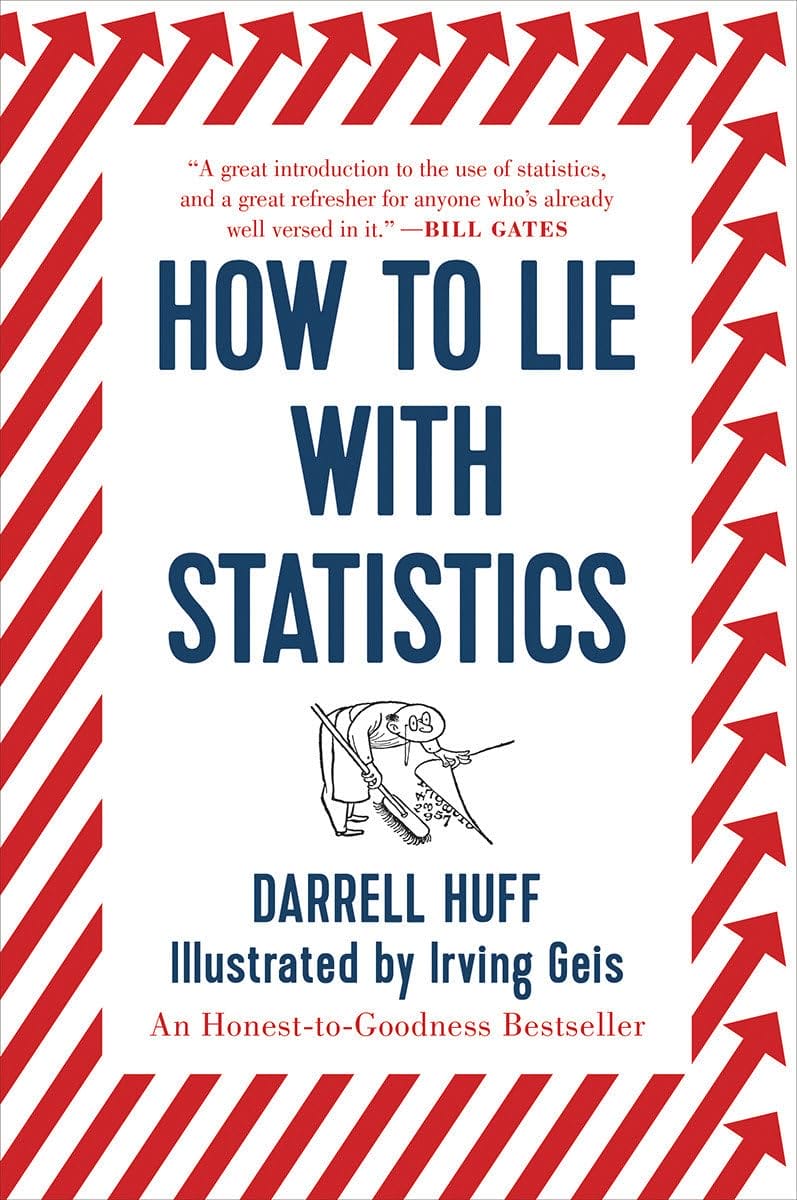
Want more on avoiding manipulative charts and graphs? Try this book: How to Lie With Statistics – get it for $7.44 at Amazon.

charts and graphs
Amazon

Okay, that’s my story, now it’s your turn. Have you had to create graphs you knew were “untrue” in your work? Have you been presented with graphs that weren’t completely accurate? How many of PK’s tricks were you able to find before reading today’s post?

(I’d like to again thank http://www.dqydj.netfor his help on this two-part series. I wish I had his ability to show timely and accurate charts like he and his partners have at dqydj.net. For more great charts, graphs, politics, economics and investment discussions, visit his website.)

Photo of Joe Saul-Sehy
Joe Saul-Sehy

Joe is a former financial advisor and media representative for American Express and Ameriprise. He was the “Money Man” at Detroit television WXYZ-TV, appearing twice weekly. He’s also appeared in Bride, Best Life, and Child magazines, the Los Angeles Times, Chicago Sun-Times, Detroit News and Baltimore Sun newspapers and numerous other media outlets.  Joe holds B.A Degrees from The Citadel and Michigan State University.

joesaulsehy.com/

Filed Under: money management, Planning, smack down!, successful investing Tagged With: charts, charts lie, graphs, graphs lie, inaccurate

Emergency Fund or Roth IRA?

February 1, 2012 by Joe Saul-Sehy 13 Comments

If you’re teetering on the edge of a trip down investing lane–but aren’t sure that you’re ready to begin locking money away–a Roth IRA just might be like two tickets to paradise. Pack your bags, we’ll leave tonight.

I just made that up. I know it sounds familiar. Deal with it.

Unlike its nasty cousin, the “For Retirement Only With a Couple Exceptions” Traditional IRA, a Roth has some attractive properties for people who need money in a safe place but are thinking “I’d like to start slipping some cash into a retirement account.” Two tickets to paradise.

Of course, this paradise has some weeds, but what do you want? I never promised you a rose garden.

Just made that up, too. I know…it’s a gift. Thank you.


Paradise Ticket #1: Emergency Fund


While it still makes absolute sense to have “need it right now” money outside of a Roth IRA, here’s the magical property that makes this shelter a fine second tier cash reserve emergency fund: you’re allowed to take principal back out whenever you want. If you remove funds contributed during the current year, it’s as if you’d never made a contribution in the first place. If it’s beyond the first year, you may take out up to the amount you’ve contributed.

That’s awesomesaucewithacherryontop because if you need money quickly, there’s no reason why you can’t access the cash you contributed.

Before you fight me on this, let’s work through it logically:

– When you make a Roth IRA contribution, do you receive any immediate tax benefit? No.

– How can the government penalize you for something that you received no benefit from? They can’t.

You want proof? Okay, here’s the IRS applicable document, Publication 590, Individual Retirement Arrangements. Check out the chart on page 63 and then the ordering rules on page 64.

More proof? At the bottom of the page I’ve included links to two less well written articles than mine. No charge.

When will you get into trouble? If you try and take any interest the account has earned, you’ll pay penalties to receive this interest unless it’s been in the account for five years and you’re 59 1/2 (whichever is later) OR qualify for one of the few exceptions to the penalty (you’ll still pay tax on the money when you withdraw it).


Paradise Ticket #2: Retirement


If you don’t end up needing the money, because your car didn’t break down, junior didn’t need to be bailed out of jail (again), and the dog stayed out of your neighbor’s trash bins for a change, this money can be used for retirement. At some point, once you’ve completely secured the reserve, you can switch these funds into more appropriate investments for retirement.

Ultimately, of course, this is what a Roth IRA should be used for: retirement savings. By easing into the Roth IRA plan, you’ll build the account early so there’s plenty of money available when you’re ready to begin in earnest.

Like Steve McQueen you’ll have a fast Roth IRA machine and they’ll never catch you tonight.


The Downside


Oh, yeah, you weren’t thinking about having a Roth IRA as your only emergency fund, were you? A Roth IRA is, to put it bluntly, an absolutely rotten place for a first tier reserve.

Here’s just a sample of our problem:

–  Remember when I said you can get money in a hurry? It’s not like the payday loan shop down the street or Louie on the corner. If your money is at an institution close by (like a neighborhood bank), you can probably take out funds now. If not, you’ll either have to wait for money to be transferred to a non-IRA account or until they can mail you a check. That’s not instant money. It’s “we’re going on an emergency trip to visit ailing Grandma in her cottage in the woods, and I paid for it with my credit card but don’t want to pay interest on the charge” money.

– If you take out all of your principal, you’ll only have some interest in the account. This money MUST stay in a Roth IRA for five years or until 59 1/2, which ever is later (as mentioned above). To take it out early, you’ll pay an IRS penalty. Although this may be a negligible amount on a small interest amount, it’ll make your tax return more complicated.

For these two reasons, I wouldn’t start a Roth IRA as your main emergency fund. Instead, only use it as second tier money.


What Type of Investment Should I Use, Joe?


It’s your cash reserve, silly. We don’t want to use anything that fluctuates at all. I know interest rates are poor, but if you’re only beginning, you’ll need the highest paying account the bank will allow while still keeping your money safe.

Don’t lock up the funds in a CD or you won’t be able to access the money, ruining why you used this strategy in the first place. It has to be a liquid account, like a savings account.

Once you have enough, transfer your money to a higher paying money market. Often this is between $500 and $2,000.

As soon as your cash reserve emergency fund is full, begin saving money into real retirement accounts that match your long term goals. Use a 401k for tax advantages today. Open a 529 plan for your children’s college.

Before long you’ll have so much cash they’ll be lining down the block just to watch what you’ve got.

So delicious.


How to Get Money In There Without Stealing It


The only way you’ll successfully save money is if you leave it outside of those pockets of yours. You know the ones. The I-can’t-hold-cash-for-longer-than-a-couple-minutes-without-spending-it pockets. Instead, make saving a bill.

Better yet, make it an automatic payment bill.

By setting up an automatic payment into your account you won’t have to remember to fund your account. Instead, money will flow directly from a checking or savings account into the Roth IRA, building it while you focus on other areas.

If possible, set up a separate direct deposit into your first tier reserve at your bank and then an automatic payment from the first tier reserve directly into the Roth IRA reserve account. That way, you’ll never have the money in your hot little hands.

If you want money in your hands AND to make Roth IRA contributions systematically, it’s going to be much harder, and there’s a good chance you’ll fail.

You can’t always get what you want. But if you set up an automatic payment plan you just might get what you need.


A Good Strategy


Once you’ve achieved your first tier reserve ($1,000 fast if you’re a fan of the bald dude on the radio, or other similar “quick cash” amount), split your automatic investment between your first tier reserve and a Roth IRA. This will help you ease into the investment world without the fear that the money is untouchable.

I’ve used this plan with nervous beginners to help calm them into rolling toward doing the right move: investing in their 401k where the money IS untouchable. It’s a good way to ease your mind.

…and before you know it you’ll be on your way to a million dollars. Then you could buy yourself a green dress.

But not a real green dress; that’s cruel.

No, I can’t stop.


Other Documents That Totally Agree With Me:

The Motley Fool: All About IRAs

My Money Blog: Can I Really Withdraw My Roth IRA Contributions at Any Time Without Tax or Penalty?

Enhanced by Zemanta
Photo of Joe Saul-Sehy
Joe Saul-Sehy

Joe is a former financial advisor and media representative for American Express and Ameriprise. He was the “Money Man” at Detroit television WXYZ-TV, appearing twice weekly. He’s also appeared in Bride, Best Life, and Child magazines, the Los Angeles Times, Chicago Sun-Times, Detroit News and Baltimore Sun newspapers and numerous other media outlets.  Joe holds B.A Degrees from The Citadel and Michigan State University.

joesaulsehy.com/

Filed Under: money management, successful investing, Tax Planning, tax tips Tagged With: emergency fund, emergency fund Roth IRA, Internal Revenue Service, Mutual fund, Retirement, Roth IRA

How to Think Like an Old, Crafty Cat

January 26, 2012 by Joe Saul-Sehy 6 Comments

Yesterday ended The Cat Picture Stays Up For 7 Days Protest. I know, it felt like 8 days, and maybe it actually was, but our timing here at the Blog has always been less-than-stellar. I scored my first 8 track player in 1982, right as cassettes were becoming popular. I heard a rumor that you can heat up food using some microwave machine now. Just sayin’.

Why was there a protest? I’ve detailed part of the conversation, but here’s the rest:

Doug: I’m serious. Dog people hate cats. Don’t you think of those crazy cat ladies every time you see a cat?

Me: Dude, I own a cat. Are you calling me a cat lady?

Doug: I’d call you crazy, but you’d take it as a compliment.

Me: Touche’

Doug: People need to respect their financial professionals. Dog people won’t respect you if you’ve got cat pictures all over your site.

…and that’s when I decided the silly picture I’d only stuck on the blog page as a placeholder was going to stay up for 7 whole days. In spite. For no real reason. Surely not to offend “dog people”, but maybe to prove to Doug that though they may not respect me, BOTH of my readers will stick by the site, even with a cat picture or two.

But minions, you know I can do better than that. MUCH better.

SO! My friend Emily Hunter, from MillionWaysToSave.com has agreed to write a Goodbye To The Cat Picture tribute piece, discussing the myriad of crazy things cats can teach us about financial planning. This is our FIRST guest post on the AverageJoe Money Blog, so please give a big, warm welcome to Emily! I’d like to dedicate this piece to my good friend, Doug.

******* ******* *******

I recently wrote a post about how to plan your financial life like a kitten, because kittens are fearless, brave, and bold.

…but a case can be made for the opposite: sometimes it’s far better to be the wise old cat. Here’s how:

Move with Deliberation
Have you ever noticed that the old cats wait until the red dot of the laser pointer is nearly upon their paws before they pounce?  They calculate the move, waiting for minutes until the time is right for their finely honed claws to sink into the imaginary irritation.

With your financial picture, planning is absolutely essential if you’re going to formulate and maintain a path toward financial freedom.  Deliberate on all of the consequences, then move.

Teach Others
When faced with the nearly boundless energy of a kitten, an older cat will do one of two things: tell the kitten that it wants to be left alone, or teach it in the ways of felinity.  After all, the older cat has been around for years and is knowledgeable about  the ways of the world.

As someone on the path to your own financial freedom, you’ve learned a number of things along the way (and maybe the HARD way).  You’ve learned the zen of budgeting.  You’ve found some great online tools to use for your purposes.  You’ve probably even learned the folly of having a rash spending week.  These are things that you learn through experience, and they should be passed to the younger generation.

Play to Strengths
Older cats have done their homework and already determined the best methods of finding goodies.  They have learned that their human really enjoys it when they curl up into a ball and expose their belly.  They have also learned that some play is good for pushing the agenda now and again.  As a smart older feline, learning these ropes was essential at the time, and you’ve practiced them to the point of superiority.

There are some parts of the financial path which you simply knock out of the park.  They were lucrative stock trades, coupon clipping forays that saved you a boatload of money, or timely budgeting that helped bring you peace and tranquility within the house.  Playing toward those strengths (though still retaining a tiny bit of that feisty kitten-like experimentation) is essential.

After all, if it really works, why do anything else?


Make FriendsMake Friends

Cats decidedly are NOT pack animals, but they do conspire to get the larger score when it suits them.  When there are other cats in the house, there is an initial play to establish dominance, but after that phase ends, they still have to live in at least semi-harmony with the new additions.  Each feline has its own personality, and there’s always the potential for learning.

Make friends with people who are on the same path as you, whether they’re financial bloggers, fellow mommies or people who like rainstorms.  They might be able to teach you some new tricks that will help speed your learning curve.  At the least, they will more than likely let you share your journey to make your days more enjoyable.

Lay in the Sun
Older cats have perfected the skill of sunbathing down pat.  They manage to capitalize on the largest, longest lasting sunny spot and milk it for all it’s worth.  They work as smart as possible to find this ideal position, and then only move when it’s absolutely necessary.  No matter the age, a cat is still adorable when stretching in the sun.

You’ve honed your skills to the point where you believe that you can take a brief rest from the never-ending pursuit of financial freedom and financial relevancy.  As you become an older cat, you will be able to take breaks and truly enjoy the knowledge and wisdom that you have accrued.  There is NO sin in laying in that sunny spot for a day or two and reaping the rewards. Find your dream space and bathe in it. You earned it, baby.

Whether you are a kitten or an older cat, there is always something to learn on your path to financial freedom.  While kittens may be simply adorable, they lack the knowledge to contemplate complex strategies beyond where their next pouncy toy might come from.  Older cats seem to laze around, but it’s deceptive. Maybe the older cat appears to be sitting too long, watching the world pass him by….but just maybe he’s figured out the secrets of the universe.

That’s my story, now it’s your turn:  What type of kitty are you?

Photo credits: (Cooper sitting on my damned keyboard: Me; Cat pouncing: Jennifer Barnard, Wikimedia Commons; Two cats sleeping: Ildar Sagdejev, Wikimedia Commons.)

About our guest author:  Emily Hunter is a for-hire writer and the principal blogger at http://www.millionwaystosave.com, an encyclopedic blog of ways to save money on everything from books to water. She lives in the south with one boyfriend, one kitten, and over a thousand ink pens.  To contact Emily directly, whether about this guest post or something else, send an email to justyammer@gmail.com.

Photo of Joe Saul-Sehy
Joe Saul-Sehy

Joe is a former financial advisor and media representative for American Express and Ameriprise. He was the “Money Man” at Detroit television WXYZ-TV, appearing twice weekly. He’s also appeared in Bride, Best Life, and Child magazines, the Los Angeles Times, Chicago Sun-Times, Detroit News and Baltimore Sun newspapers and numerous other media outlets.  Joe holds B.A Degrees from The Citadel and Michigan State University.

joesaulsehy.com/

Filed Under: successful investing Tagged With: Cat, cats teach finance, crazy cat lady, Humor, I'm not nuts, Kitten

  • « Previous Page
  • 1
  • …
  • 3
  • 4
  • 5
  • 6
  • 7
  • Next Page »

Follow Us

Search this site:

Recent Posts

  • Can My Savings Account Affect My Financial Aid? by Tamila McDonald
  • 12 Ways Gen X’s Views Clash with Millennials… by Tamila McDonald
  • What Advantages and Disadvantages Are There To… by Jacob Sensiba
  • 10 Tactics for Building an Emergency Fund from Scratch by Vanessa Bermudez
  • Call 911: Go To the Emergency Room Immediately If… by Stephen Kanaval
  • 7 Weird Things You Can Sell Online by Tamila McDonald
  • 10 Scary Facts About DriveTime by Tamila McDonald

Copyright © 2026 · News Pro Theme on Genesis Framework