• Home
  • About Us
  • Getting Finances Done
    • Hiring Advisors
    • Debt Management
    • Spending Plan
  • Insurance
    • Life Insurance
    • Health Insurance
    • Disability Insurance
    • Homeowners/Renters Insurance
  • Contact Us
  • Our Editorial Commitment

The Free Financial Advisor

You are here: Home / Archives for Retirement

Creating A Financial Plan You Can Stick To

April 24, 2019 by Jacob Sensiba Leave a Comment

The more I read and the more I meet with people, the more I realize that setting up a financial plan is more than dollars and cents.

Yes, the better financial plans have your typical items. Save this much, invest in these things, and contribute to this retirement plan.

But the best plans not only have this to take care of your financial needs but they’re also set up in a way that your psychological needs are met as well.

Can you stick with it?

The best plan is anyone that you can stick with. When setting up your plan, go through it slowly. Take each item one step at a time and consider possible scenarios when determining a particular section.

For example, when setting up a plan for your emergency fund, figure out what’s realistic for how much you’ll need and how long it will take you to get there.

Also, figure out how it will be replenished if/when it’s ever used. Perhaps you’ll have an automatic deposit setup indefinitely?

Another thing to keep in mind is including some flexibility in your plan. For example, if part of the process is setting up a budget and your weakness is eating takeout, include a little bit of money for it.

I generally advocate for eating your meals at home, but if it’s inevitable that you’ll go out to eat, it’s better to include a little bit of it, rather than trying to avoid it.

Will you gasp every time the market dips?

Investing is a vital part of your financial plan. Investing is what helps your savings grow, but at times, your investments can lose value.

Our psychology plays a big role in our success as an investor. It’s said that we experience the pain of a loss two times stronger than we experience the joy of a gain.

That said, you need to plan accordingly to keep your emotions in check. If you let them take control of your decisions, you could end up selling your investments after you’ve already lost value, at which point it may be better for you to stay in.

Most investable assets are in a retirement plan of some sort, so your time horizon is, more than likely, long-term. 20+ years for instance. Your risk tolerance is the other part to take into consideration.

How much are you willing to lose until you say, uncle? In a six month period, would you have to sell after you lost 10%, 20%, 30%, or more? Your answer to this will help determine what you are able to stomach.

The next thing to do is to stress test your portfolio. The popular investing/research websites will have this. You plug in your portfolio with dollar amounts and ticker symbols, and then (depending on the site) you can select a variety of scenarios to see how your portfolio would do during that scenario.

The 2008 Financial Crisis is a common one.

Conclusion

Creating a financial plan that has the potential to meet your goals is important, and having a plan that you’re comfortable with and one that will help you sleep at night is optimal.

Make sure, when you are developing your plan, that you are factoring in your behavior as an investor and as a human. We are emotional creatures, and that makes investing a little more difficult.


If reading this blog post makes you want to try your hand at blogging, we have good news for you; you can do exactly that on Saving Advice. Just click here to get started.

Jacob Sensiba
Jacob Sensiba

Jacob Sensible is a financial advisor with decades of experience in the financial planning industry.  His journey into finance began out of necessity, stepping up to support his grandfather during a health crisis. This period not only grounded him in the essentials of stock analysis, investment strategies, and the critical roles of insurance and trusts in asset preservation but also instilled a comprehensive understanding of financial markets and wealth management.  Jacob can be reached at: [email protected].
mygfpartner.com/jacob-sensiba-wisconsin-financial-advisor/

Filed Under: Investing, money management, Personal Finance, Planning, Retirement, risk management, successful investing

How To Pump Up Your Finances

April 17, 2019 by Jacob Sensiba Leave a Comment

By “pump up,” I mean to do something that improves your financial situation in any way. Reduce expenses, start a rainy day fund, invest for the future, etc.

With that said, let’s take a look at some simple strategies to pump up your finances.

Cut the fat

I’d start by creating a budget. Look at the past three months of income and expenses. Total the expenses, total your income and compare the two. This will give you a clear picture of how much you are spending versus how much you make.

After that, you can go back with a magnifying glass and see exactly where your money is going, and stop spending money where it is necessary, or at least reduce it.

You can also reduce the fees you pay to invest. Mutual funds and ETFs are the most popular vehicles used today, but they come with a cost. It’s listed as an expense ratio. That ratio should be as low as possible. Ideally, it’ll be under .20%.

A quick tip to cut your expenses – get rid of cable/dish. There are too many services available now. You don’t need to spend $100+ on TV anymore.

Increase savings rate

Hopefully, you are saving something. If you are having trouble setting money aside because of limited resources, give this article a read for some help.

You should be saving in at least two places. An emergency fund and a retirement plan.

  • Emergency fund – Say you are contributing $20 per month. This is a good place to start, but you’re going to want to save more so you have enough in case your car breaks down or you lose your job. After three months of saving $20/month. Increase that amount by $5. After another three months, at which point you’ll have gotten used to not having that extra $5, increase it again. Rinse and repeat.
  • Retirement plan – If you have a retirement plan with your employer and they match, you’ll want to contribute at least enough to get that match. That’s your starting point. Then you’ll follow the same steps as the emergency fund. After a few months, increase the contribution percentage. If you don’t have a plan with your employer, set up an IRA, start contributing what’s comfortable for you, and follow those same steps.

I mentioned you should have AT LEAST these two accounts. Personally, I have several savings accounts. They are set up for different reasons. I have one for holiday spending, one for car repairs, and one for travel expenses. Giving your money a “job” makes it more likely that you’ll use that money for that “job.”

Switch to an online bank

Most online banks have higher interest rates on savings accounts. They also, typically, have lower rates on loans (based on credit score).

If you are saving money for a rainy day and putting it with a brick and mortar bank, you’re most likely earning next to nothing. Better to put that money in an account where you’ll earn a little interest.

Refinance high-interest rate loans

I’m going to dedicate this section to credit cards because that’s what most people think of when they hear high-interest rates.

There are three strategies you can use.

  1. Balance transfer – Many credit card companies offer a 0% APR on balance transfers for a certain period of time. Some have terms for 21 months. The interest rate will jump after the 21st month, though, so make sure your balance is paid off before then.
  2. Personal loan – If you have credit card debt and don’t, or can’t, utilize a 0% balance transfer, then a personal loan is your next option. You get a loan for the total amount of outstanding credit card debt. Then the institution will send a payment to each credit card company and pay off your credit card debt. You’ll be left with one payment. Be advised, credit matters here (also for balance transfers) so if the interest rate on the personal loan is higher than the average interest rate of your credit cards, don’t do it.
  3. The last option is to call the credit card company and ask for a lower rate. More often than not, if it’s available, they’ll give it to you. It won’t lower your payment a whole lot, but it’ll definitely help.

If you want to learn more about credit cards, click here.

Improve your credit

Your credit score makes a difference. It can impact what loans you qualify for, the interest rate, where you live, and where you work.

If you want to start making moves in your financial life, you need to improve your credit.

There are three really simple ways to do this.

  1. Pay more than the minimum on your outstanding debt and pay on time – on time payments is the #1 factor when calculating your score.
  2. Call your utility company and see if they report to the credit agency. It’ll count as another credit account (a factor) and it’ll influence your on-time payments.
  3. Open a secured credit card – You open this type of card with a deposit. The deposit will act as your credit limit. If you deposit $500, you’ll have a credit limit of $500. Make regular, small purchases and pay the entire balance right away. Credit agencies like to so activity and, as I’ve said, on-time payments.

If you want to learn more about improving your credit, click here.

Conclusion

If you want to improve your financial life, it’s actually pretty straight forward. Spend less than you make, save money for the future, pay down debt, and improve your credit. If you do these four things (obviously, easier said than done), goals that once seemed far fetched, can be within reach.

Please visit my website for our disclosures.


If reading this blog post makes you want to try your hand at blogging, we have good news for you; you can do exactly that on Saving Advice. Just click here to get started.

Jacob Sensiba
Jacob Sensiba

Jacob Sensible is a financial advisor with decades of experience in the financial planning industry.  His journey into finance began out of necessity, stepping up to support his grandfather during a health crisis. This period not only grounded him in the essentials of stock analysis, investment strategies, and the critical roles of insurance and trusts in asset preservation but also instilled a comprehensive understanding of financial markets and wealth management.  Jacob can be reached at: [email protected].
mygfpartner.com/jacob-sensiba-wisconsin-financial-advisor/

Filed Under: Banking, budget tips, credit cards, credit score, Debt Management, low cost investing, Personal Finance, Retirement

How much do I need in retirement?

August 22, 2018 by Jacob Sensiba 5 Comments

Conventional advice tells you that, for retirement, you need $1 million to $1.5 million saved, or that you need 10 to 12 times your current annual salary.

For example, if you make $100,000 per year, you’ll need $1 million to $1.2 million saved for retirement.

Are these numbers and calculations good enough? Is there a better, more accurate way to figure out what you’ll need to save for retirement?

In this post, we’ll look into that and more.

Check out retirement calculators

There’s a huge number of them out there. I recommend trying a few different ones, that way you can compare and average out the numbers. They’ll ask you things like age, current savings, current income, future contributions, etc.

Here are a few of the better ones.

  • Nerdwallet Retirement Calculator
  • Vanguard Retirement Income Calculator
  • Bankrate Retirement Calculator
  • AARP Retirement Calculator

Using some or all of these calculators, you can probably get a good idea of where you’re at currently, how to improve, and where you’ll need to be at the end.

What are the factors?

There are a variety of different factors at play. You’ll have different expenses and different income levels, and some of those numbers won’t stay steady throughout retirement.

For example, a couple’s health care costs in retirement are said to be $275,000 (Source). However, not all of that will hit you in the first few years of retirement.

More than likely, you’ll have minimal costs in the beginning, and they’ll slowly increase as you age.

Where will you live?

This can be a huge variable in retirement. Its widely known that different areas of the country have a higher cost of living. San Francisco is more expensive than Lincoln, Nebraska.

Another important factor regarding your living situation is if you have a mortgage or not. No mortgage means fewer expenses, which is less going out of your pocket, and more that can be saved for the future.

Not having a mortgage can also give you some leverage. If you decide that your current home is too big and would like to downsize, you can use the proceeds from the sale of your previous home to, hopefully, buy your new one outright.

Living Expenses

We’ve talked briefly about health care expenses during retirement and we talked about housing. Without a doubt, these are the two largest expenses during retirement. There are a few more to consider, however.

  • Transportation – did you relocate? Or do you have family in other parts of the country? Transportation and lodging need to be taken into account when figuring out your expenses for retirement, especially if you’ll be traveling regularly.
  • Entertainment – you might be looking for something to fill your time. It could be filled with expensive hobbies or other activities. If you are looking for something to do, or are looking to start a hobby, be sure your budget will allow for it.
  • Remaining expenses – the leftover expenses are ones you deal with right now (food, clothes, utilities, bills, insurance, etc.)

A budget is just as important in retirement as it is now, if not more so. Keeping track of your expenses and your income is very essential to your finances during retirement.

You often hear people in retirement say they are on a fixed income. What that means is they have lost their ability to earn more money. What they have is it. If you are spending more than your savings and your income allows, you are setting yourself up for failure.

Income

Your income from retirement could come from a variety of places.

  • Social security – provided by the government. The normal advice regarding social security is that it shouldn’t replace more than 40% of your income. Meaning 60% should come from another place. Your monthly payout from Social Security does increase the longer you delay taking it, and the reverse is true if you take it early.
  • Pension – these are becoming less and less popular as time goes on. They were huge back in the day when workers would stay with one company until they retired, but because people switch jobs so often nowadays, employers don’t want to take the chance. If you have one, consider yourself lucky.
  • Retirement savings – more than likely, this is where the other significant portion of your income will come from. This is where having a financial advisor is beneficial because you have to use enough of your savings to afford your retirement, but not too much so you don’t run out of money. Tricky.
  • Other areas – there can be other sources of income during retirement. You could have some dividend or interest income from your investments, you could work part-time to stay active and earn a little extra, or you could possibly have a rental property or several.

If you want to learn more about where your income could come from in retirement, click here.

Wherever your income comes from, it’s important to coordinate effectively so you maximize your current income without jeopardizing your savings.

What will you do in retirement?

How you spend your time will also have a huge effect on your expenses.

If you plan on spending most of your time with your grandkids, retirement could be more affordable than if you planning on golfing a few times per week. Although it could quite possibly be much more expensive than golf, we all know how grandparents are with their grandchildren.

If money is tight and you are looking for things to fill your day, there are many free or low-cost activities available to you.

  • Volunteer – not only is this a free activity. You’ll feel useful, you’ll get to use your brain, and you’ll have a sense of community, all are shown to increase longevity.
  • Go to the park – take a walk, bring a book, or just interact with nature and the community.
  • Community center – not all municipalities have one, but go to your local community center or go to your municipality’s website. There you will find local events, most of which are free.
  • Discounts – most places offer senior discounts. If you aren’t offered one, make sure you ask for it. This really could save you a lot of money on activities, food, etc.

How long will you live

The most depressing point in this post, but one of the most important. Unfortunately (or fortunately, depending on how you look at it), no one knows how long we are going to live for.

One way to get a little indication, but not really, is your family history. If your grandparents or parents lived into their 80s, 90s, or 100s, the chances of you living a long life are a little higher.

On the flip side, if most of your relatives passed away in their 60s or 70s, your odds of living into your 80s and 90s are lower.

However, this really is no indication on how long you’ll live for. One of the most important things you can do for yourself is to live a healthy lifestyle. Take a walk once or twice per day, do something daily that will engage your mind, interact with friends and people in your community, and eat better.

The 4% Rule

You’ve probably heard this before too. Here’s what it is. Once you retire, you withdraw 4% of your retirement savings every year. This is considered a safe withdrawal rate, as the withdrawals would consist mostly of interest, dividends, and unrealized gains from your investments.

Let’s say you have $1 million saved for retirement. The 4% rule would allow you to withdraw $40,000 per year. All else staying the same, you have 25 years worth of withdrawals using this method. Be advised that no growth was factored into this calculation.

Conclusion

I suppose you’d like an answer to the question we proposed in the beginning. Here it is. It depends. It depends on your current and future expenses, it depends on where you’re income will come from, it depends on how much income you expect (outside of retirement savings), and it depends on how you live your life during retirement.

Most importantly, you need to work with a financial professional, ideally someone that specializes in retirement planning.

Jacob Sensiba
Jacob Sensiba

Jacob Sensible is a financial advisor with decades of experience in the financial planning industry.  His journey into finance began out of necessity, stepping up to support his grandfather during a health crisis. This period not only grounded him in the essentials of stock analysis, investment strategies, and the critical roles of insurance and trusts in asset preservation but also instilled a comprehensive understanding of financial markets and wealth management.  Jacob can be reached at: [email protected].

mygfpartner.com/jacob-sensiba-wisconsin-financial-advisor/

Filed Under: budget tips, Personal Finance, Planning, Retirement

How does Investment Strategy Change with Age?

July 4, 2018 by Jacob Sensiba Leave a Comment

As we all know, as we age and our lives change. Our financial responsibilities and investment strategies change along with it.

In most cases, there are two truths to abide by. You have saved as much as you can and invest according to your risk tolerance, time horizon, and goals.

But what else is there? How do my financial life and my investment strategy change with time?

Starting career

Either you are just out of school or have been in the workforce for a few years. Regardless of which path you came from, there are two things on your list. Get rid of debt, or at least get it under control, and save for retirement.

There are several ways to plan for debt repayment.

  • Debt Snowball
  • Debt Avalanche
  • Balance transfers (credit cards)
  • Personal Loan (loan consolidation)
  • Refinance (student loans)

Check out this post on paying off your debt, here.

Step two is saving for retirement. If the company you work for offers a retirement plan, sign up for it. Max out your contributions if you can, but at the very least, contribute enough to get the employer match (if it’s offered).

Also, open a Roth IRA. If you have a little extra, contribute some to a Roth IRA in addition to your workplace plan.

Your investments. Time is your best friend at this point. Most of your investment allocation should be focused towards growth. Don’t put all of your eggs in one basket, diversify among stocks and bonds.

Again, the majority (at least 70%) of your portfolio should be in stocks, in some form or another.

Starting family

If you’re like the average American, your family starts to form around your 30th birthday. Hopefully, you’ve got a good head start on paying down your debt and saving for your retirement. Continue on that path.

With a family, comes saving for your kid’s college education, as well as other expenses (house, car, etc.). Contribute a little every month to a 529 College Savings Plan. The funds within this account can be invested aggressively, similar to your allocation in your twenties.

Your retirement savings is still in a good spot. Similar to your twenties, regarding the stock and bond allocation.

One last thing, get some disability and life insurance. If you have people that count on you, you need to protect them.

High earning years

More than likely, this will be your forties and fifties. At this point in your life, the average American is in their peak earning years, so take advantage of that and increase your retirement savings.

This will also be the time that your kids either go off to college or enter the workforce. Congratulations (kind of) you are empty nesters. You no longer have a college education to save for. More can go towards your retirement.

More than likely, though, you will have miscellaneous expenses from your kids that you will continue to pay for.

Your investment strategy will change slightly. You are getting closer to retirement so it’s time to start protecting what you’ve saved. A little less in stocks and a little more in bonds. Think 60/40 or 50/50.

Near retirement

You are in the home stretch! At this point, your debts (including your house, hopefully) should be paid off. All assets and your retirement savings should be looking healthy.

Your investment allocation will be similar to the last section. Definitely 50/50 if not 40/60, stocks to bonds.

Retirement

Congratulations, you’ve made it to your retirement. This can be liberating for some, but for others, this is an emotional challenge.

You’ve spent the last 40 or so years saving for retirement and now you are expected to start spending it. This is very tough for a lot of people.

From my experience and in my opinion, you should retain some sort of activity. Something that gets you out of the house, something that forces you to socialize, and something that makes you use your brain.

Staying social and sharp mentally could add some extra time to your life.

Your investments should be conservative. At least 40/60, but the more conservative the better. And it’s usually not a bad idea to keep some of your savings in cash, for emergencies such as health expenses (which will certainly go up at this point).

You don’t have many or any, more chances to earn more money, so it’s very important that you protect what you’ve saved.

Conclusion

The above information can be very useful to the average person. Paying off your debt and making your retirement savings a priority is very important.

Unfortunately, there is a retirement savings crisis in America. People aren’t saving nearly enough for retirement. They are counting on other sources, like Social Security or pensions to fund their retirement.

This isn’t enough. You won’t receive enough from Social Security to support yourself and pensions are few and far between, nowadays. We all need to do a better job of saving.

This article was created for informational purposes only. The above items are not to be taken for personal financial advice. Please consult with a professional about your personal situation.


If reading this blog post makes you want to try your hand at blogging, we have good news for you; you can do exactly that on Saving Advice. Just click here to get started.

Jacob Sensiba
Jacob Sensiba

Jacob Sensible is a financial advisor with decades of experience in the financial planning industry.  His journey into finance began out of necessity, stepping up to support his grandfather during a health crisis. This period not only grounded him in the essentials of stock analysis, investment strategies, and the critical roles of insurance and trusts in asset preservation but also instilled a comprehensive understanding of financial markets and wealth management.  Jacob can be reached at: [email protected].
mygfpartner.com/jacob-sensiba-wisconsin-financial-advisor/

Filed Under: College Planning, Insurance, Investing, Personal Finance, Retirement

Will My 401(k) Last for the Rest Of My Life?

April 23, 2018 by Leave a Comment

If you’re starting to think about retirement, and your career has largely been in the private sector, your 401(k) balance could be the most important factor in determining whether you’re on track to retire or not.

Whether your 401(k) will cover your spending needs until the end of your life will depend on a lot of factors. It’s important to not just pin your hopes on a certain target for an account balance–a million dollars, two million dollars, whatever–and instead look at the whole picture. So let’s start with a few other questions that are just as important.

Are You Saving as Much as You Can in Your 401(k)?

There’s almost no way around it: You have to save money to make money. There is often a bit of a free lunch–call it a free appetizer–when it comes to 401(k)s, though: The amount your employer matches your own contributions. It could be a dollar-for-dollar match up to point, or some percentage of what you contribute yourself that increases over time. Either way, you definitely want to contribute at least this amount, or you’re leaving that free appetizer on the plate.

But that should really only be the beginning of any 401(k) savings plan. Fidelity advises saving 15% of pretax income.  If you’re 30 or 40 years old and haven’t given the issue much thought until now, that number should serve as the minimum you should save.

Get into the habit of increasing your contribution percentage each year. Psychologically speaking, if you never see it hit your paycheck (because it’s going straight to your retirement account), you won’t miss it. Set an annual calendar reminder to increase that contribution, even by a half a percentage point. Between the contribution increases and salary increases, you should be able to put your contributions on a sharp upward trajectory.

What Else have You Got?

Once you have your plan for annually boosting 401(k) savings in place, consider what other sources of income you are counting on at retirement. Social Security is an obvious one. If you’re lucky you might have a pension of some sort. Brokerage accounts, rental property, or the planned sale of some asset like a business should all be taken into account as well–and will almost certainly affect how long you can expect your 401(k) will last.

Will you run out of 401(k) money in retirement?

Another reason not to simply come up with an arbitrary hit-your-number mark: Spending matters. At the risk of stating the obvious, your 401(k) and other investment assets will generally last longer if you plan to sip rather than gulp.

You’ll want to have a very solid grip on your plan’s MPG–that is, your projected spending in retirement–to get an accurate reading.

Will your 401(k) plan last long enough?

What Is It Costing You?

Even if you are diligent about saving to your 401(k), you probably haven’t considered what the plans might be costing you.

And why would you? The plan administrator’s fees–in addition to the fees paid to the fund companies themselves–are largely out of your control.

But it’s important–especially the further you are from retirement. Fees can really chip away at account balances over time. Consider a 401(k) returning about 7% annually. Here’s what happens if we modify the fees by half a percentage point and assume contributions of $18,000 per year.

Will Your 401(k) Plan Last Long Enough

Your main recourse here is to talk to your HR department and start asking questions. What are the fees of running the plan? How do they compare with fees offered by other plan administrators for companies of your size? Making sure the HR team has done their due diligence on this could mean tens of thousands of dollars to you.

You can also look at the fees charged by the funds themselves. Funds have expense ratios; actively managed funds generally have higher expense ratios than passively managed funds. To keep things really simple, consider a target-date retirement fund, which shifts its asset classes toward less risk the closer you get to retirement. (And if your plan does not offer a target date retirement fund, it should.)

Your 401(k) Is One Piece of a Larger Puzzle

A large 401(k) balance could have a big effect on when you can retire and your living standard when you do. But looking at it in the context of everything else we’ve talked about here is more important than an absolute dollar figure. Total savings, where you plan to invest your assets, the cost of those investments, and your spending habits are all complementary forces that will factor into a successful retirement plan.

Read More

  • How to Split an IRA or 401(k) in a Divorce
  • Five 401(k) Alternatives You Need to Know About
  • Saving to Boost Your 401(k)
  • IRS Announces 2018 Pension Plan Limitations
  • Avoid These Common Mistakes When Planning for Retirement
  • How to Save for Retirement
  • Investing Your Way to Retirement

Filed Under: Retirement, Uncategorized Tagged With: 401(k), Retirement, retirement plan

Five 401K Alternatives You Need to Know About

January 23, 2017 by Emilie Burke 1 Comment

A 401K is a savings plan for retirement that is sponsored by your employer. Employees can save a piece of their paycheck before taxes are taken out, and put it toward their retirement.

Talking about far-off retirement plans can be overwhelming and boring. After all, it’s way easier to think about the here-and-now. We budget, save for vacation and pay the bills. That seems like enough… right?

On the contrary, planning for retirement is incredibly vital and cannot be forgotten or overlooked.

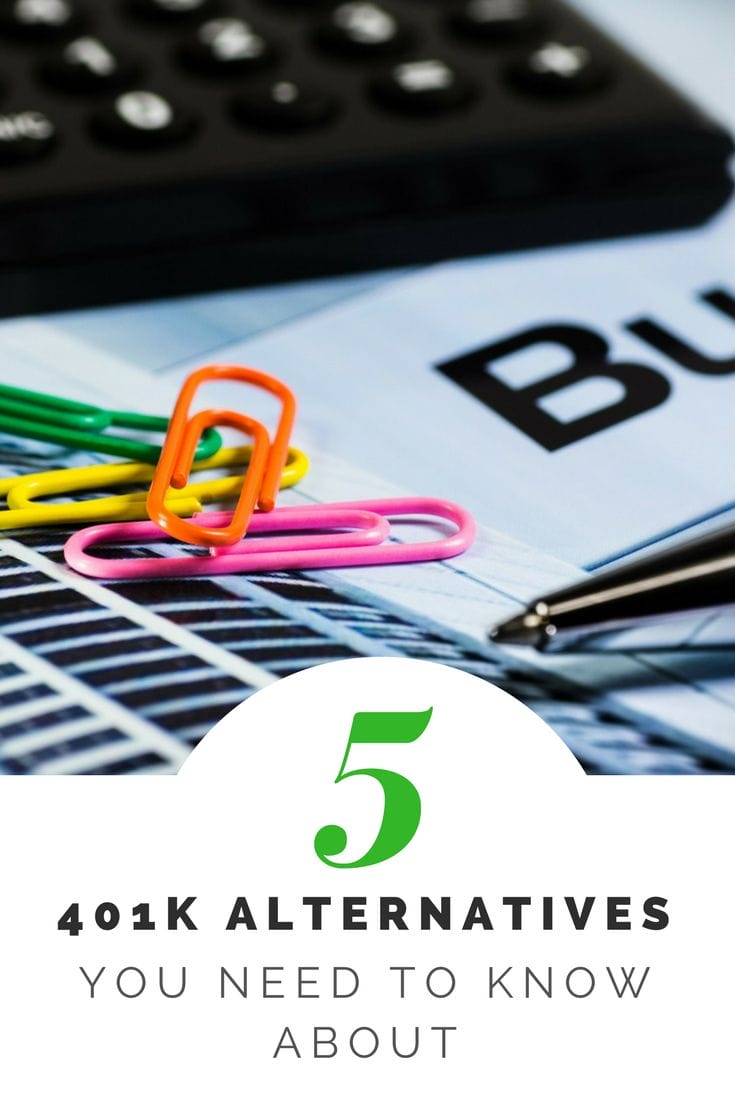
Pinterest graphic with a calculator and paper clips: "5 401K Alternatives You Need to Know About"

The 401K may be a good fit for your lifestyle, but there can also be cons. Your employer may not be matching the money that you contribute, and also could require tenure before allowing you to withdraw. If you aren’t sure about the 401K, there are many different options out there to consider.

Here are some alternatives to the typical 401K that may compliment your lifestyle and finances better.

  1. Index Funds- These are funds invested on an index of stocks. (You may have heard of S&P 500 or the Dow.) By investing in an index fund, you basically are investing in all the companies that make up that particular index (instead of investing in certain stocks). You are at the same risk as those who buy stock individually, but since the market typically increases over time, index funds could be used as an investing option for retirement.
  1. Roth IRAs and Traditional IRAs- IRA stands for Individual Retirement Account. Roth and Traditional IRAs differ from the 401K by bypassing the employer altogether. You save completely on your own for retirement. The biggest difference between the Roth and Traditional lies with when you pay your income taxes. Check out the two and see if one of these may be a better retirement plan for you.
  1. Simplified Employee Pension IRAs- SEP IRAs are a great option for any of you independent contractors, free-lance workers, or business owners out there. It is very similar to the Traditional IRA and could be very beneficial with your taxes. It doesn’t matter how small your business is, so definitely check it out!
  1. Variable Annuities- These are contracts between you, the investor, and an insurance company. The investor purchases a variable annuity upfront or over a period of time, and the insurance company makes periodic payments to you after retirement. However, there can be high fees and tax penalties, so do your research and insure that the contract is safe and beneficial for you.
  1. Bonds- Bonds may be great to dabble in addition to the 401K or any of the other retirement options listed above. Bonds essentially are saving accounts that pay interest rates. You set these rates at the time of purchase, and it’s an incredibly safe and stable investment. Because of its safety, they typically return less money than other higher risk investments. However, your money will be safe and making interest for retirement.

Do some research on what your employer offers and which option may be the best fit for you. Regardless of what you choose to use, saving for retirement should be a priority in your life.

Emilie Burke writer at the Free Financial Advisor
Emilie Burke

Emilie is a prolific blogger, and influencer inspiring millennial women to live financially, physically, and professionally fit lives. She writes about overcoming debt, while balancing trying to eat healthy, stay fit, and have a little fun along the way. She is a politics major turned data engineer who graduated from Princeton University in 2015.  She currently lives in North Carolina with her college sweetheart Casey who is currently stationed at Fort Bragg. She enjoys eating food, cuddling with her dog, and binge watching HGTV.

Filed Under: Retirement

The Failure of Retirement Plans in the USA

September 7, 2016 by James Hendrickson Leave a Comment

face-774839_640It is difficult to believe but some surveys recently have suggested that the average couple has just $5,000 in a retirement savings account. The Economic Policy Institute has analyzed Federal Reserve data and has stated that the top 10% have at least $275,000 which in itself is not fantastic bearing in mind that life expectancy is increasing and many people can expect to live well beyond 80.

There was a dramatic change in retirement saving in the 1980s. Previously companies guaranteed pensions to their employees. The introduction of the 401(k) changed the emphasis. Workers were given control of their retirement rather than having to rely on their employers’ generosity or the Social Security System. Instead companies made contributions up to a certain level into their employees’ individual plans but has no responsibility for their success or failure. Hindsight is a wonderful thing but it has been little short of a disaster with the vast majority well short of what they will need to fund a comfortable retirement.

The figures are so poor because it appears that nearly have of couples of working age have no savings at all and almost 40% of those within 10 years of retirement are in the same position. The problem is compounded by the fact that the Social Security System is fragile at best. Without a significant injection of funds existing benefits will fall by as much as 25% early in the 2030s. That significant injection can only come from taxation and that is a very unpopular topic, especially among Republicans.

Even now the average benefit is little over $1,000 a month which can hardly provide any real source of comfort.

401(k) Policy Hasn’t Worked

The theory that the introduction of the 401(k) would ensure that everyone would have the retirements they wanted has been thoroughly misguided. Their reliance on Social Security has risen dramatically rather than fallen. Those in the low tax bracket have little financial benefit in saving and this is the band of people who are in the greatest need. Tax breaks are therefore fairly irrelevant for the majority. Tax breaks are great for higher earners but they are not in as great need. All those with that $275,000 mentioned above come in the middle to top wage bracket. They would have probably saved anyway without the need for a tax incentive policy.

The Impact of the Recession

The question is whether the plans are wrong or whether people have simply found themselves unable to make proper provisions for themselves? The recession certainly caused widespread misery especially for those tempted to take on too much credit. The real estate market had been buoyant and everyone had expected to make money from investing before the Collateralized Debt Obligation crisis hit their plans. Plenty of people took out multiple credit cards and spent money they simply did not have. Their logic, if they had any, was that there were other cards offering 0% balance transfers where they could move their debt to avoid paying interest. Those deals were temporary and the escape routes soon closed.

“The mistakes made in pension strategy decades ago have been compounded by people’s reluctance or inability to save anyway. Everyone needs to look at their finances and take whatever action needed to improve their future.”

Defaults, unemployment and utter misery followed. Many were unable to meet their liabilities and although debt has been written off and the economy has recovered it seems that personal finances in the Country have barely improved. The figures of what retirement savings the average working family have are proof enough. If you add the average credit card debt in the USA exceeding $5.000, dividing the debt by the number of cards in circulation, the picture gets worse. When you take away the number of cards whose owners pay in full at the end of each statement period, the debt goes up to over $15,000.

It is what it is. Every family will know how they stand or at least they should. There is no point in ignoring financial problems because they will not disappear as if by magic. Everyone should take time to write down their income and regular expenditure as well as their debts and assets. If the figures are to be believed there is only a small minority that can feel satisfied with what they see.

Courses of Action

The rest will need to take one or more of the following courses of action:

  • Credit Card Debt. If you have significant debt and you cannot afford to pay off your balances you will be paying a high rate of interest as well as having core debt. You should look at taking out a consolidation loan to pay those balances off in full. The rate of interest you will be paying on the nation 21 cash loans are much lower than credit card companies charge.
  • A budget. You must start to discipline yourself when it comes to spending. There is no point in paying off those balances simply to build them up again.
  • Look at whether you can make savings on some of your regular bills. They can include utilities and insurance for example. There are comparative websites that will do much of the initial research for you.
  • After you have created a surplus don’t suddenly think you can begin to spend. This surplus should be put towards retirement or an emergency fund. Both are important and ideally you will create an emergency fund worth about 3 months of your regular expenditure.

If your financial situation is poor you have to act. Retirement can be a cold and lonely place if you have not got the money to make it comfortable.

Photograph of James Hendrickson
James Hendrickson

James Hendrickson is an internet entrepreneur, blogging junky, hunter and personal finance geek. When he’s not lurking in coffee shops in Portland, Oregon, you’ll find him in the Pacific Northwest’s great outdoors. James has a masters degree in Sociology from the University of Maryland at College Park and a Bachelors degree on Sociology from Earlham College. He loves individual stocks, bonds and precious metals.

www.dinksfinance.com

Filed Under: Retirement

Start Saving for Retirement Now (Yes, You) With These 5 Simple Tips

March 24, 2014 by Joe Saul-Sehy 8 Comments

Six out of 10 Americans don’t use a budget or track their spending, according to the 2013 Harris Interactive Consumer Financial Literacy Survey. This statistic jives with HelloWallet’s report from last October, which found that 60 percent of households are accumulating debt faster than retirement savings. No matter what stage of life you’re in, you need a plan to save for retirement. Start with the following tips:

Schedule Planning Time

As people grow older, they’re more willing to pay attention to their finances. Thirty-eight percent of Americans ages 25-32 say they’re too busy to think about long-term financial goals, and that number steadily declines to 13 percent for those over 66, Northwestern Mutual has found. However, the number who feel too rushed by society’s pace to stick to long-term goals grows from 61 to 75 percent over the same age margin. Together, these numbers paint a picture of an aging population increasingly aware of their urgent financial needs but too stressed out to take appropriate action.

To counteract this trend, make a commitment to yourself and your finances. Set aside some time to review your goals, ideally with the help of a professional advisor. Then get in the habit of taking 15 minutes a week to review your budget.

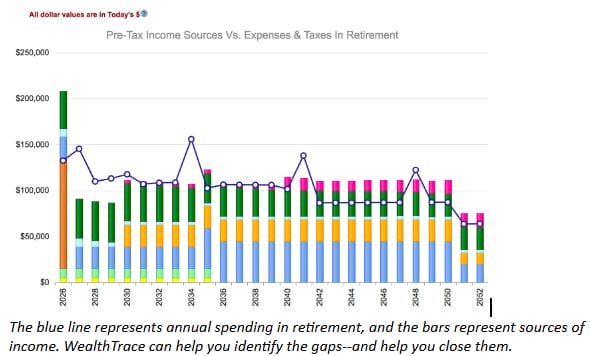
Retirement planning on The Free Financial Advisor

Steer by Long-Term Financial Goals

Use your long-term financial goals to guide your short-term budgeting. Fidelity Investments offers various calculators and tools to help you estimate how much you need to set aside each month to reach your retirement goals. Wells Fargo provides a worksheet to help you break down your financial goals into intervals of one year, two to five years, and five years and over.

Use a Budgeting Strategy

Yes, you need a budget. Consider following financial expert Elizabeth Warren’s 50/30/20 rule: Put 50 percent of your monthly after-tax income toward essential living expenses, 30 percent toward discretionary spending and 20 percent toward savings and debt repayment.

Pursue Saving and Debt Repayment Strategically

According to financial advisor Dave Ramsey, you should initially put the savings and debt repayment portion of your budget toward a $1,000 emergency fund and paying down your credit card balances before pursuing retirement and other savings goals. When applying this strategy, you can save for retirement faster by reducing your debt obligations. If you receive regular payments from an annuity or structured settlement, consider contacting a company that purchases future annuity payments for a lump sum of cash now. You can then use this money to help repay your debt.

Invest Your Savings Productively

To grow your savings, check if your employer offers a 401(k) plan or another retirement savings plan, and start contributing—especially if it’s a matching plan. If not, invest in a traditional IRA or Roth IRA. After that, the next place to invest is an index mutual fund, suggests the Wall Street Journal.

Photo of Joe Saul-Sehy
Joe Saul-Sehy

Joe is a former financial advisor and media representative for American Express and Ameriprise. He was the “Money Man” at Detroit television WXYZ-TV, appearing twice weekly. He’s also appeared in Bride, Best Life, and Child magazines, the Los Angeles Times, Chicago Sun-Times, Detroit News and Baltimore Sun newspapers and numerous other media outlets.  Joe holds B.A Degrees from The Citadel and Michigan State University.

joesaulsehy.com/

Filed Under: Planning, Retirement

Stock Market Punishment: The First Lesson of 2013

January 7, 2013 by Joe Saul-Sehy 38 Comments

The podcast team is giving the interns a well-deserved week off, so lucky reader….YOU get a FREE extra blog post from Average Joe. I know. Pinch yourself. It’s real. Almost like our awesome rare Saturday post this week.

Look at what the media did to you again.

The sky is falling! Fiscal cliff! Doom! Stock market will be in shambles! Hide your children!

Big ratings for the financial channels, huh?

If you listened and moved your money out of the market, it destroyed your chances for a great return in 2013.

MAYBE you’ll recover if you jumped out before the big two-day run up in stocks. The chances, though, are against you: historically, if you miss the 10 best days in the stock market, you lose about 5.18%, or nearly half your return for the year. If you paid trading fees to avoid the “fiscal cliff disaster,” this only exacerbated your problem.

Here’s what the panicked investor missed in the S&P 500 last week:

December 31: 1.7%

January 2: 2.5%

January 3: –.03%

January 4: .05%

In short, if you missed two days last week you lost out on 4.2%. Those types of returns don’t come around often.

By the way, don’t go in the comments and tell me that “all you lost was a little time….” go back and read the stats above first. You lost a ton.


let’s calculate the cost of listening to the media on this one


Suppose you’re 25 years old and you have managed to save $10,000 into your 401k plan. You lost out on $420. Sounds like no big deal, right?

Let’s use the rule of 72 to determine just how much you really lost:

The rule of 72 says that if you divide the interest rate you think you’ll achieve into 72, you’ll come up with the approximate number of years it’ll take your money to double. Cool, huh?

Assuming that you wanted this money for retirement (401k, right? That’s not your “mad money” account….I hope), we’ll use age 70 for your withdrawal. We’ll also use a realistic return assumption of 8%.

8% / 72 = 9 years for your money to double.

So, that $420 you lost wasn’t really $420, was it?

It would have doubled when you were 34, 43, 52, 61, 70.

Your “little” $420 wasn’t $420. By 32 it was $820. At 41 it was $1,640. By age 50 you’d lost $3,280. At 59 the gap was $6,560. When you went for the money at 69 you had $13,200 less.


it gets worse


If you’re 30 and gambled $50,000 that the market would tank, it’s uglier. Let’s also use 9% rather than 8%, since people looking long term historically have used 10% as their assumption (which I believe is too high, BTW).

Check out what more money and a “little” one percent difference do to your loss:

Rule of 72 = 8 years for money to double.

Funds double at 38, 46, 54, 62, 70

$2,100 lost during two day run-up in market.

= 4,200 loss at 38, 8,400 loss at 46, 16,800 at 54, 33,600 at 62 and

…$67,200 at age 70.

On our “What Did We Learn in 2012” podcast, expert after expert told you the same thing: don’t listen to national media finance porn and don’t chase short term results.

If you did, I’m going to play Dr. Phil now: How’s that workin’ out for ya?


Photo: Joe Shlabotnik

Photo of Joe Saul-Sehy
Joe Saul-Sehy

Joe is a former financial advisor and media representative for American Express and Ameriprise. He was the “Money Man” at Detroit television WXYZ-TV, appearing twice weekly. He’s also appeared in Bride, Best Life, and Child magazines, the Los Angeles Times, Chicago Sun-Times, Detroit News and Baltimore Sun newspapers and numerous other media outlets.  Joe holds B.A Degrees from The Citadel and Michigan State University.

joesaulsehy.com/

Filed Under: investing news, Retirement, risk management, successful investing Tagged With: best 10 days in stock market, lessons of 2013, stock market 2013 lessons, stock market punishment

Managing Your 401k or IRA: Does Moving Money Around Every Day Help Your Returns?

July 26, 2012 by Joe Saul-Sehy 17 Comments

I was invited to speak to a nice group of people at Walsh College in Troy, Michigan last night. One woman asked, “What do you say to someone who messes with their 401k non-stop?”

btw: Thanks, Greg, for the invite! Hopefully I didn’t bore your students silly.

Let’s face it:

90% of us fall into one of two camps:

1) You obsess over your 401k and tinker with it constantly.

or

2) You only remember you have a 401k or IRA plan when the statement arrives.

I’d say that nearly 90% of the 90% number above fall into the latter category. So, when I hear about someone tinkering with their 401k or IRA all the time I think, “Why?” and then I ask “Would it help to tell them to stop?”


Why People Do It


I don’t have any scientific evidence, only years of experience with people. Here’s the complete list I can imagine:

– Natural worrier.

– Concerned they won’t reach retirement.

– Anxious to get every last penny out of investments.

– Intensely interested in investing.

– Secretly always wanted to be a day trader.

I can’t think of any others (fill in my blanks in the comments below).


Would It Help To Tell Them To Stop?


I think the answer to this question largely depends on how the individual answers the question “Why People Do It”.


Natural Worrier


I could tell this person all day that he isn’t helping himself, but the only method that actually has worked for me in the past is DATA. If I explain how funds in a 401k plan work, it’s easy to see how much damage you’re doing to your retirement.

First, a 401k plan is a professionally managed investment. This doesn’t guarantee success, but it does mean there are people who work with money all day managing the funds.

Second, each investment is a collection of stocks that largely move with the market. Do you really think you can beat the market? According to a New York Times article, investors spent over $100 billion dollars in 2008 trying to beat the market, and largely lost due to fees. You would have been better off buying and holding low cost index funds.

Besides fees, your ability to time the market isn’t probably as good as you’d hope. According to one of my favorite Kiplinger articles: Can You Time The Market?, there are certainly some good indicators you can track, but the pitfalls are enormous. Going with your “gut” feeling about the market isn’t going to pave the way for a successful retirement.


Concerned They Won’t Reach Retirement


This person needs data, but instead of information on investment returns, they need a financial plan. I’ve found that once this person sees in writing that they’re okay (or not okay) they largely settle down.

Not only can you use the Planwise tool imbedded in our site, but many retirement calculators exist on other (less) popular sites, like Yahoo! Finance, CNNMoney, and MSN Money.


Intensely Interested In Investing


These are some of my favorite people. They want better returns and are willing to go the extra mile to learn more about investments. They’ve dove (dived?) into the 401k because it’s available and easy to understand.

I recommend this person reviews the same data presented above on investment returns (and that his chance of helping his return is going to prove more difficult than just “moving money around”). Then I recommend he take community education classes on investing rather than experiment with hard-won retirement dollars.


Secret Day Trader


I try to present the data above on how hard it is to add to your investment returns first (but this rarely works for the person who is sure they’ll beat the market in their spare time). Once this tactic has failed, I’ll recommend developing a small Roth IRA to use as a “sandbox” to play day trader in. These people are usually placated if they have a “play” account to go along with their professionally managed “backstop” account. How much do I recommend people place in the day trader account? First, we look at what the goal will cost, then I recommend taking money that isn’t crucial to the goal. You don’t want to miss your goal because you thought today was a great time to buy Facebook and it turned out you were wrong…..

Photo of Joe Saul-Sehy
Joe Saul-Sehy

Joe is a former financial advisor and media representative for American Express and Ameriprise. He was the “Money Man” at Detroit television WXYZ-TV, appearing twice weekly. He’s also appeared in Bride, Best Life, and Child magazines, the Los Angeles Times, Chicago Sun-Times, Detroit News and Baltimore Sun newspapers and numerous other media outlets.  Joe holds B.A Degrees from The Citadel and Michigan State University.

joesaulsehy.com/

Filed Under: Planning, Retirement

  • « Previous Page
  • 1
  • …
  • 43
  • 44
  • 45
  • 46
  • Next Page »

Follow Us

Search this site:

Recent Posts

  • Can My Savings Account Affect My Financial Aid? by Tamila McDonald
  • 12 Ways Gen X’s Views Clash with Millennials… by Tamila McDonald
  • What Advantages and Disadvantages Are There To… by Jacob Sensiba
  • Call 911: Go To the Emergency Room Immediately If… by Stephen Kanaval
  • 7 Weird Things You Can Sell Online by Tamila McDonald
  • 10 Scary Facts About DriveTime by Tamila McDonald
  • How to Avoid NJ Exit Tax by Jacob Sensiba

Copyright © 2026 · News Pro Theme on Genesis Framework