• Home
  • About Us
  • Getting Finances Done
    • Hiring Advisors
    • Debt Management
    • Spending Plan
  • Insurance
    • Life Insurance
    • Health Insurance
    • Disability Insurance
    • Homeowners/Renters Insurance
  • Contact Us
  • Our Editorial Commitment

The Free Financial Advisor

You are here: Home / Archives for tax filing

7 Ways to Report Your Income to The IRS When Your Employer Refuses to Issue a W2

February 5, 2025 by Latrice Perez Leave a Comment

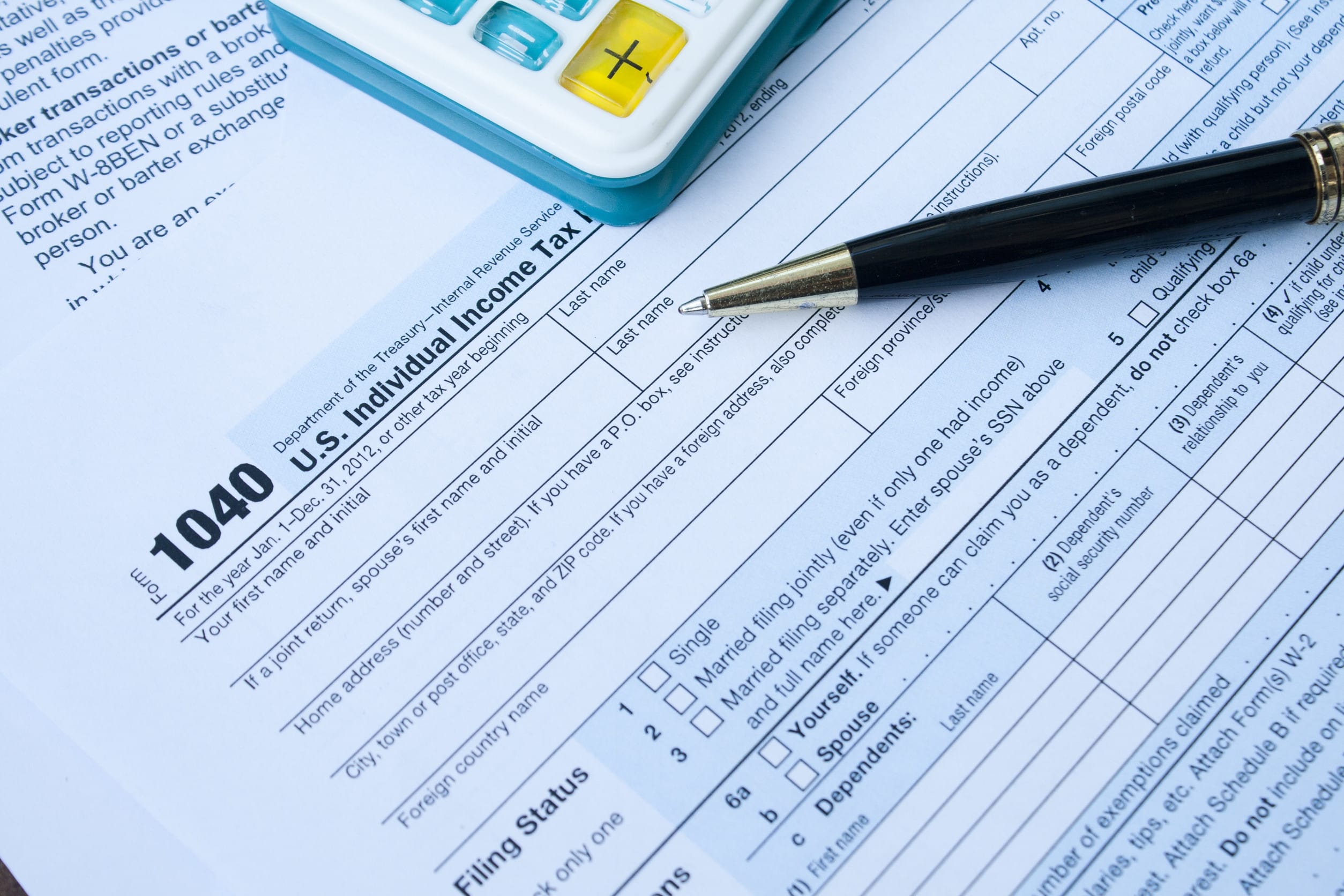
Filing Your Taxes
Image Source: 123rf.com

Tax season is stressful enough without having to deal with the added complication of your employer refusing to provide you with a W2. This can leave you feeling stuck without a W2, wondering how to report your income and fulfill your tax obligations. Fortunately, there are several options available to ensure that you can still file your taxes properly, even if your W2 is nowhere to be found. Here’s a breakdown of the seven steps you should take to report your income to the IRS when your employer refuses to issue a W2.

1. Contact Your Employer and Attempt to Resolve the Issue

The first step in handling this situation is to contact your employer directly. It’s possible that the W2 has been delayed or that there was a simple oversight in issuing it. Reach out to your HR or payroll department to inquire about the missing form. Explain your situation and politely ask when you can expect to receive it. Keep a record of your communications in case you need to escalate the issue later. If the employer continues to refuse to provide the form, it may be time to take further action.

2. Review Your Pay Stubs and Gather Your Income Information

While you’re waiting for your W2, gather all the pay stubs you have from the tax year in question. Pay stubs provide essential details about your earnings, tax withholding, and other deductions. The total earnings and the amount of federal, state, and local taxes withheld can help you estimate your income for the year. If your employer is not forthcoming with a W2, you can use these pay stubs as a reference for reporting your income. Make sure to compile all your pay stubs from the year, as they will provide a clearer picture of your total income and taxes paid.

3. Use IRS Form 4852: Substitute for Form W2

If you still haven’t received your W2, you can fill out IRS Form 4852, which serves as a substitute for the missing W2. Form 4852 allows you to report your income and withholding without relying on your employer’s W2. When completing this form, use the information from your pay stubs or any other records of your earnings for the year. You’ll need to provide details such as your wages, the amount of federal income tax withheld, and any other relevant information. Be aware that using Form 4852 may delay the processing of your return, as the IRS may need additional time to verify the information provided.

4. Report Your Income on Schedule C if You’re Self-Employed

If you were treated as a contractor or self-employed worker, rather than a traditional employee, you will need to report your income differently. In this case, you would file Schedule C (Profit or Loss From Business) along with your Form 1040. On Schedule C, you’ll report your total income from self-employment and any business-related expenses. Although this isn’t the same as receiving a W2, it still allows you to report your earnings to the IRS accurately. If you’re unsure whether you qualify as self-employed or what income to report, it’s a good idea to consult a tax professional for guidance.

5. File Your Taxes Using Form 1040

Once you have gathered all the necessary information—whether through Form 4852 or by reporting income on Schedule C—it’s time to file your taxes using Form 1040. This form is used by most individual taxpayers to report their income, deductions, and credits. You will include your total income, deductions, and the taxes you’ve already paid (through withholding or estimated payments) on Form 1040. Keep in mind that if you’re using Form 4852, the IRS may take longer to process your return, so be patient if your refund is delayed. Double-check everything on your 1040 before submitting to ensure accuracy and completeness.

6. Contact the IRS if Your Employer Continues to Refuse

Contact IRS
Image Source: 123rf.com

If you’ve made multiple attempts to reach your employer and they are still refusing to issue your W2, it’s time to contact the IRS directly. The IRS can assist in situations where an employer refuses to provide a W2. You’ll need to provide the IRS with details such as your employer’s name, address, and your dates of employment, along with copies of your pay stubs or other supporting documentation. The IRS may contact your employer to request the missing form on your behalf. However, keep in mind that the IRS might not be able to resolve the issue immediately, so it’s best to allow some time for them to act.

7. Consider Filing for an Extension if You Need More Time

If you’re unable to resolve the W2 issue in time for the tax filing deadline, consider filing for an extension. Filing for an extension gives you an additional six months to file your return, though it doesn’t extend the time to pay any taxes owed. If you expect to owe taxes, it’s crucial to estimate and pay the amount due by the original deadline to avoid interest and penalties. Filing for an extension can give you the breathing room you need to ensure your taxes are reported correctly, even if your W2 has not been provided. Remember, the extension applies only to filing, not to payment.

Don’t Let a Missing W2 Derail Your Taxes

It can be frustrating and stressful when your employer refuses to provide you with the necessary tax forms, but there are steps you can take to ensure your taxes are filed accurately. From contacting your employer to using IRS Form 4852 or Schedule C, there are several ways to report your income and avoid penalties. If you are unable to resolve the issue with your employer, contacting the IRS or filing for an extension can help give you the extra time needed to gather your documentation. Don’t let a missing W2 keep you from fulfilling your tax obligations—stay proactive and seek out solutions.

Read More:

Are There Taxes That Have to Be Paid On Yearly Bonuses?

Taxes for Life: Even in Retirement You Need These 5 Hacks for Retirement Tax Planning

Latrice Perez

Latrice is a dedicated professional with a rich background in social work, complemented by an Associate Degree in the field. Her journey has been uniquely shaped by the rewarding experience of being a stay-at-home mom to her two children, aged 13 and 5. This role has not only been a testament to her commitment to family but has also provided her with invaluable life lessons and insights.

As a mother, Latrice has embraced the opportunity to educate her children on essential life skills, with a special focus on financial literacy, the nuances of life, and the importance of inner peace.

Filed Under: tax tips Tagged With: contractor income, Form 4852, income reporting, IRS, missing W2, self-employment tax, tax extension, tax filing, W2 issues

Tax Tips for Tax Time

January 19, 2022 by Jacob Sensiba Leave a Comment

April is fast approaching and soon, everyone will have to visit their accountants and file their taxes. That said, we need to make sure we are filing taxes correctly. Keeping accurate and up-to-date records is important. Here are some tax tips and how to be well-prepared for tax time.

Contribute to retirement accounts

If you haven’t done so yet, or you’d like to contribute more, you have until tax filing day to do so. For a refresher, here are the contribution limits for some IRAs: IRA/Roth IRA – Max contribution is $6,000 ($7,000 if you’re over 50 or older).

If you have a SEP IRA and you get an extension, you have until October 17, 2022, to make your 2021 contribution.

This is more of a tip for the end of the year, but make sure you take your Required Minimum Distributions. For people that are either over 70 ½ or over 72, depending on when you turned those ages, you need to withdraw money from your IRA. If you don’t, you’ll pay a tax penalty of 50% of the amount you should have withdrawn. For example, if your required amount was $10,000. You’ll pay a $5,000 tax penalty if you didn’t take that distribution.

Make a last-minute estimated payment

If you didn’t pay enough or you didn’t make a payment to the IRS for 2021 taxes, you have until you file to make your payment.

According to the IRS rules, you must pay 100% of last year’s tax liability or 90% of this year’s or you will owe an underpayment penalty.

Get tax docs in order

Get all of your tax documents in order. For earnings for the year, you’ll need one to several forms, depending on what you do for a living and how your business is set up. W2s are pretty common. If you’re an independent contractor, you’ll need 1099. 

Itemize your deductions

Most people will take the standardized deduction, which is $12,550 for single filers and $25,100 for married couples filing jointly.

However, if you are self-employed or you have a lot of expenses that are tax-deductible, itemize your deductions. You could save a lot more money IF your total itemized deductions are larger than the standardized deduction.

Home office tax deduction

With the move to work from home still taking place, it might make sense to take advantage of the home office tax deduction. Here are some of the rules:

  • You must use the space exclusively for business
  • Expenses related to the space used for business are tax-deductible but need to be calculated according to the amount of square footage used for business
  • A lot of taxpayers stay away from this deduction, as they think it’s a red flag for an audit. If you’re legitimately using the space as you say and you aren’t fabricating numbers, then you have nothing to worry about

Last-minute tax tips for tax time

Triple-check your work if you prepared your own taxes and file on time. If you’re having someone prepare your taxes on your behalf, make your appointment ASAP because their calendars will fill up really fast.

Related reading:

Tax Tips for Small Business Owners

Are You Ready for Tax Time?

Why Financial Literacy is Important

Disclaimer:

**Securities offered through Securities America, Inc., Member FINRA/SIPC. Advisory services offered through Securities America Advisors, Inc. Securities America and its representatives do not provide tax or legal advice; therefore, it is important to coordinate with your tax or legal advisor regarding your specific situation. Please see the website for full disclosures: www.crgfinancialservices.com

Jacob Sensiba
Jacob Sensiba

Jacob Sensible is a financial advisor with decades of experience in the financial planning industry.  His journey into finance began out of necessity, stepping up to support his grandfather during a health crisis. This period not only grounded him in the essentials of stock analysis, investment strategies, and the critical roles of insurance and trusts in asset preservation but also instilled a comprehensive understanding of financial markets and wealth management.  Jacob can be reached at: jake.sensiba@mygfpartner.com.

mygfpartner.com/jacob-sensiba-wisconsin-financial-advisor/

Filed Under: money management, Personal Finance, Small business, Tax Planning, tax tips Tagged With: business tax, Income tax, Retirement, Tax, tax deductible, tax filing, tax planning, tax tips, taxes

Four Tips for Tax Season

April 13, 2012 by Joe Saul-Sehy 11 Comments

This is a guest post from Eric at Narrow Bridge Finance as part of the Yakezie Blog Swap. This week, we are discussing the topic “Best Tips for Your Taxes.” You can see my post on the same topic at Eric’s site.


People around the United States are in a last minute flurry to find their W2s, 1099s, 1098s, and find the easiest and cheapest way to load all of that onto a 1040. If that sounded like a foreign language to you, don’t worry. Here are some of my favorite tips for navigating tax season.

Tip #1 – File Early

I guess if you are reading this, you probably already missed this one. But there is no time like the present to start planning to avoid next year’s procrastination.

I sent my taxes to my accountant around the end of February. Avoiding the stress of last minute filing can do wonders for your health and sanity. Planning ahead and filing early just makes life easier on you.

Tip #2 – Understand Your Forms

Decoding that foreign language is important. Knowing which tax forms to look for is a big first step. Here are the most common items to look out for:

· W2 – Earnings report from your employer

· 1099 – Miscellaneous income forms. These include bank interest, investment income, and freelance income.

· 1098 – Deduction forms. If you pay mortgage interest or higher education expenses, expect 1098s that you can use to lower your tax liability.

· 1040 – This is the form that you submit to the IRS that summarizes your annual taxes paid, taxes owed, and any refund or additional payment.

Tip #3 – Stay Organized

My taxes this year were two inches thick. Getting everything from my banks, investments, employer, and other income sources is a chore on its own. To stay organized, I made a checklist outlining everything I was expecting and marked forms off as they arrived.

When the form arrived, via mail or online, I filed hard copies in manila folders by type. My personal forms went into one folder and each of my side income sources had its own folder.

Make sure to keep each year separate but filed away in case you need it. It is important to understand how long to keep bank statements and other financial records.

Tip #4 – Understand How Your Taxes Work

You pay taxes every time you get a paycheck. You earn money all the time, and you might not remember it around tax time. To make sure you file correctly and avoid penalties and audits, you should understand how your taxes work.

Take time to learn about itemized deductions versus the standard deduction. Take time to learn about tax brackets. Whether you use tax software to file or have an accountant take care of it for you, you should understand the complexities of your taxes in case you are contacted by the IRS and to make sure you are not overpaying.

Get To It!

Now that you know my best tips, get those taxes done. The filing deadline is swiftly approaching, and you don’t want to get in trouble for being late.

(Photo credit: Tax Sign – 401k, Flickr; Chance Card – OhioProgressive, Flickr)

Photo of Joe Saul-Sehy
Joe Saul-Sehy

Joe is a former financial advisor and media representative for American Express and Ameriprise. He was the “Money Man” at Detroit television WXYZ-TV, appearing twice weekly. He’s also appeared in Bride, Best Life, and Child magazines, the Los Angeles Times, Chicago Sun-Times, Detroit News and Baltimore Sun newspapers and numerous other media outlets.  Joe holds B.A Degrees from The Citadel and Michigan State University.

joesaulsehy.com/

Filed Under: Tax Planning, tax tips Tagged With: organizing taxes, tax filing, tax forms

  • « Previous Page
  • 1
  • 2
  • 3

Follow Us

Search this site:

Recent Posts

  • Can My Savings Account Affect My Financial Aid? by Tamila McDonald
  • 12 Ways Gen X’s Views Clash with Millennials… by Tamila McDonald
  • What Advantages and Disadvantages Are There To… by Jacob Sensiba
  • 10 Tactics for Building an Emergency Fund from Scratch by Vanessa Bermudez
  • Call 911: Go To the Emergency Room Immediately If… by Stephen Kanaval
  • 7 Weird Things You Can Sell Online by Tamila McDonald
  • 10 Scary Facts About DriveTime by Tamila McDonald

Copyright © 2026 · News Pro Theme on Genesis Framework