• Home
  • About Us
  • Toolkit
  • Getting Finances Done
    • Hiring Advisors
    • Debt Management
    • Spending Plan
  • Insurance
    • Life Insurance
    • Health Insurance
    • Disability Insurance
    • Homeowners/Renters Insurance
  • Contact Us
  • Privacy Policy
  • Risk Tolerance Quiz

The Free Financial Advisor

You are here: Home / Archives for scams

5 Things You Should Do If You Get A Random Zelle Deposit

May 12, 2025 by Travis Campbell 1 Comment

online banking

Image Source: 123rf.com

Have you ever checked your bank account and noticed a mysterious Zelle deposit from someone you don’t know? It’s a situation that can leave you feeling both curious and concerned. With the rise of digital payment platforms like Zelle, these unexpected transactions are becoming more common, and they’re not always as innocent as they seem. Knowing how to handle a random Zelle deposit is crucial for protecting your finances, whether it’s a simple mistake or a potential scam. In this article, we’ll walk you through the five essential steps you should take if you ever find yourself in this situation. By the end, you’ll feel confident and prepared to handle any surprise Zelle activity that comes your way.

1. Don’t Spend the Money

The first and most important thing to remember if you receive a random Zelle deposit is not to spend the money. It might be tempting to treat yourself, but using funds that aren’t yours can lead to serious consequences. Banks can reverse transactions if they determine the deposit was made in error or as part of a scam. If you’ve already spent the money, you could owe your bank or even face legal trouble. Unauthorized or mistaken payments can be reversed, and recipients may be required to return the funds. So, please resist the urge to use the money and keep it untouched in your account until you know more.

2. Check for Accompanying Messages or Emails

After noticing the random Zelle deposit, check your email, text messages, and Zelle app notifications for any communication from the sender. Sometimes, the person who sent the money will reach out to explain the mistake and request a return. However, be cautious—scammers often use this tactic to trick you into sending money back, sometimes even more than you received. If you receive a message, verify the sender’s identity before taking action. Never click on suspicious links or provide personal information. If the message seems legitimate, you can contact your bank for guidance on how to proceed safely.

3. Contact Your Bank Immediately

If you receive a random Zelle deposit, your next step should be contacting your bank or credit union immediately. Explain the situation and provide any details you have about the transaction. Your bank can investigate the deposit, determine if it was a mistake, and advise you on the proper steps to take. They may also place a hold on the funds to prevent accidental use. Prompt communication with your bank protects you from potential scams and demonstrates your good faith in resolving the issue. Most banks have dedicated fraud departments handling Zelle-related concerns, so don’t hesitate to ask for help.

4. Don’t Return the Money Directly to the Sender

Don’t do it if someone contacts you claiming to be the sender and asks you to return the money via Zelle or another payment method. This is a common scam tactic. Scammers may send you a fraudulent deposit, then ask for the money back, only for the original transaction to be reversed later, leaving you out of pocket. Instead, always work through your bank to resolve the issue. Your bank can safely return the funds to the rightful owner if necessary. Returning money directly to a stranger increases your risk of falling victim to fraud. For more information on Zelle scams and how to avoid them, visit Zelle’s official security page.

5. Monitor Your Account for Suspicious Activity

After you’ve reported the random Zelle deposit and followed your bank’s instructions, keep a close eye on your account. Monitor your transactions for unauthorized activity, such as unexpected withdrawals or additional deposits. Scammers sometimes use small deposits to test if an account is active before attempting larger fraudulent transactions. Set up account alerts if your bank offers them, so you’ll immediately be notified of any unusual activity. If you notice anything suspicious, report it to your bank immediately. Staying vigilant is key to protecting your finances in the digital age.

Stay Safe and Informed with Zelle Deposits

Receiving a random Zelle deposit can be confusing, but taking the proper steps can protect you from scams and financial headaches. Remember, don’t spend the money, check for messages, contact your bank, avoid returning funds directly, and monitor your account closely. By following these tips, you’ll be prepared to handle any unexpected Zelle activity confidently. Digital payment platforms like Zelle are convenient but require a healthy dose of caution. Stay informed, trust your instincts, and always prioritize your financial security.

Have you ever received a random Zelle deposit? How did you handle it? Share your story or tips in the comments below!

Read More

How to Prevent Being a Victim of Fraud

What to Do About Debt Collectors

Travis Campbell
Travis Campbell

Travis Campbell is a digital marketer/developer with over 10 years of experience and a writer for over 6 years. He holds a degree in E-commerce and likes to share life advice he’s learned over the years. Travis loves spending time on the golf course or at the gym when he’s not working.

Filed Under: Banking Tagged With: banking, digital payments, fraud prevention, money management, Personal Finance, scams, Zelle

9 Everyday Situations That Could Secretly Be a Setup for a Scam

March 10, 2025 by Latrice Perez Leave a Comment

Scammers

Image Source: 123rf.com

Most people think they can spot a scam from a mile away, but the truth is that scams have become more sophisticated and harder to detect. Scammers no longer rely solely on obvious tricks like fake lottery winnings or suspicious emails from foreign princes. Instead, they use everyday situations—places you visit, services you use, and interactions that seem completely normal—to manipulate unsuspecting victims. You could be walking into a setup without even realizing it. Here are nine everyday situations that could secretly be part of a scam.

A “Good Samaritan” Offering to Help at the ATM

Imagine you’re at an ATM, and your card suddenly won’t work. A stranger standing nearby kindly offers to help, suggesting you try a different way to insert the card or a new PIN combination. What you don’t realize is that they may have been watching you enter your PIN and are looking for an opportunity to steal your card. In some cases, scammers place fake card readers or devices that jam the ATM to trick people into seeking help, allowing them to steal banking information. If you ever run into trouble at an ATM, go inside the bank for assistance rather than trusting a stranger.

The “Accidental” Bump and Spill Trick

You’re walking down the street or through a busy shopping center when someone bumps into you and spills coffee or another liquid on your clothes. As they frantically apologize and help clean up the mess, you’re distracted—just long enough for their accomplice to pickpocket you. This scam is common in crowded areas where people are rushing and not paying full attention to their belongings. If someone spills something on you, secure your wallet and phone before engaging with them.

Fake Wi-Fi Networks in Public Places

You sit down at a coffee shop or airport and connect to the free Wi-Fi without a second thought. What you don’t know is that scammers often create fake Wi-Fi networks with names similar to the official ones. When you connect, they can intercept your data, including passwords, emails, and financial information. Always confirm the official network name with staff before connecting, and never enter sensitive information while using public Wi-Fi unless you have a VPN enabled.

The “Overpayment” Scam When Selling Online

If you sell items online, be wary of buyers who “accidentally” send you too much money and ask you to refund the difference. Scammers often use stolen credit cards or fake checks that later bounce, leaving you with no product and no money. The safest way to sell items is through trusted platforms that offer secure payment methods, and never send refunds for overpayments until you’re sure the money has cleared.

The “Found Wallet” Scam

Someone approaches you, claiming they found a wallet full of cash and suggesting that you split the money before turning it in. This is a classic distraction scam. As soon as you agree, an “angry owner” appears, accusing you of stealing. The scammers then demand money from you to “settle” the situation before it escalates. If someone claims they found a wallet, insist on turning it in to the police and walk away if they resist.

The Fake Charity Collector

You’re outside a grocery store, and a person in a uniformed vest asks for donations to a well-known charity. They have a clipboard, a collection bucket, and a heartwarming story about why your donation is needed. The problem? The charity is fake, and the money goes straight into their pocket. Scammers rely on emotions to pressure people into giving quickly without verifying legitimacy. Before donating, ask for official documentation or look up the charity online to ensure it’s real.

The “Broken” Gas Pump Card Reader

Gas Pump

Image Source: 123rf.com

You pull up to a gas station, insert your card, and the machine doesn’t work. A helpful stranger tells you that the reader is down and suggests you pay inside instead. What they don’t tell you is that they just installed a card skimmer on the pump to steal your credit card information. Before inserting your card, always check for anything unusual on the reader, such as a loose or bulky card slot. If a pump seems suspicious, move to another one or pay inside directly with the cashier.

The “Free” Trial That Won’t Let You Cancel

You sign up for a free trial of a service, expecting to cancel before being charged. However, when you try to cancel, the website is impossible to navigate, the phone number doesn’t work, or the cancellation process is deliberately complicated. Many companies, even legitimate ones, use this tactic to keep charging you for a service you don’t want. Always read the fine print before signing up for a free trial and use a virtual credit card that allows you to block future charges.

The Fake Customer Service Call

You receive a call from someone claiming to be from your bank, Amazon, or a utility company, saying there’s a problem with your account. They may even spoof the official number so it looks legitimate. The caller then asks for your personal information to “verify” your account. This is a classic phishing scam designed to steal sensitive details. If you get an unexpected call from a company asking for account details, hang up and contact the company directly using the number on their official website.

How to Protect Yourself from Everyday Scams

Scammers are becoming more creative, using everyday situations to take advantage of unsuspecting people. The best defense is awareness and skepticism. If something feels off, take a step back and think before acting. Never share personal information with strangers, double-check credentials before trusting someone, and always verify payment methods when buying or selling items.

If you’ve encountered any of these scams or have tips on how to avoid them, share your experience in the comments.

Read More:

5 Little-Known Laws That Can Protect You from Getting Scammed

Is It Really Your “Dream” Job? 10 Ways to Avoid Job Scams

Latrice Perez

Latrice is a dedicated professional with a rich background in social work, complemented by an Associate Degree in the field. Her journey has been uniquely shaped by the rewarding experience of being a stay-at-home mom to her two children, aged 13 and 5. This role has not only been a testament to her commitment to family but has also provided her with invaluable life lessons and insights.

As a mother, Latrice has embraced the opportunity to educate her children on essential life skills, with a special focus on financial literacy, the nuances of life, and the importance of inner peace.

Filed Under: Personal Finance Tagged With: Consumer Protection, cyber security, Financial Security, fraud prevention, identity theft, online scams, personal safety, Public Safety, scam awareness, scams

Four Tips For Avoiding Cryptocurrency Scams

April 6, 2022 by Susan Paige Leave a Comment

The demand for cryptocurrency has become a global craze today, creating more opportunities for scammers. Whether you’re an experienced or new trader, you might fall into a cryptocurrency scam when you’re not careful. Therefore, you could lose a lot or even all of your hard-earned investment or assets.

Investing in cryptos has now become a trend worldwide. Scammers now have many ways to encourage or pursue people to fall into their schemes with the advent of technology. 

Here are some ways to combat or avoid cryptocurrency scams:

Be Careful Of The Apps You’re Installing

Because apps have many functions and provide several benefits to their users, crypto scammers use them to mimic other apps and use them to their advantage. If you fail to see the warning signs of these fake apps, you’re at risk of having your vital information stolen from you. 

For instance, they may have mimicked a crypto trading app. When you’re not careful, you may install and use it without knowing the danger it can cause you. It may work at first, but the app could steal your cryptocurrencies in no time. This is possible when hackers present you with an address to send your payments or receive your funds. However, you may be sending your funds or cryptos to the fraudster’s crypto wallet address instead. You can’t undo such transactions, so you’re left feeling helpless when this happens. 

Hence, you should always check the publisher’s credentials when downloading from the Google Play Store or Apple Store apps to avoid such scams. For example, you may look at here now if you want to download an Australian crypto exchange. You may also download a given link from a trusted source or the app developer’s official website.

Learn About Crypto Pyramid Schemes

Some fraudsters may show that their new ‘crypto’ is steadily gaining value by running a website. Unfortunately, they can make fake ‘real-time transaction logs’ or ‘mining and trading’ activity appear legit. They may even ‘prove’ that the crypto investors are doing well by showing regular payouts. These are all ways to encourage you to join the craze as one of their investors. 

When you make an account and invest in them, they’re more likely to create fake growth of your initial investment. It may show your gains and the period limit you should withdraw them. 

However, your earnings may come from the funds of other investors. This means they’re using other investors’ money to create interests or dividends on your account. Thus, the crypto you thought was yours could be a nonexistent fund. This scam is popularly known as Ponzi or pyramid scheme, named after Charles Ponzi, a con artist and swindler in the 1920s (per wikipedia).

What you can do to avoid such is to ensure that crypto exists. You must research the crypto you intend to invest your money in, its founders, and its utility. Look at third-party websites, such as this site that helps people check if crypto project is a scam, or review sites to determine their legitimacy. If you can’t find one or only see one or two review articles about it, your best course is to avoid it right away.

Don’t Fall For Giveaway Scams

Fraudsters also use the names of influencers or celebrities. They’ll try to promote their crypto offerings using famous personalities to organize fake giveaways. Some even use fake accounts to respond to the giveaway post so that it would appear legit. 

In this scheme, you may see a QR code or link to a website where you’ll enter your credentials to participate. They may ask for your crypto wallet address for ‘verification’ purposes before they can send you the ‘giveaway,’ which we all know would never come any day soon.

Hence, if the giveaway seems too good to be true, disregard it altogether. Moreover, never enter your wallet address in such cases. Legit crypto companies will never ask for your crypto-wallet information.

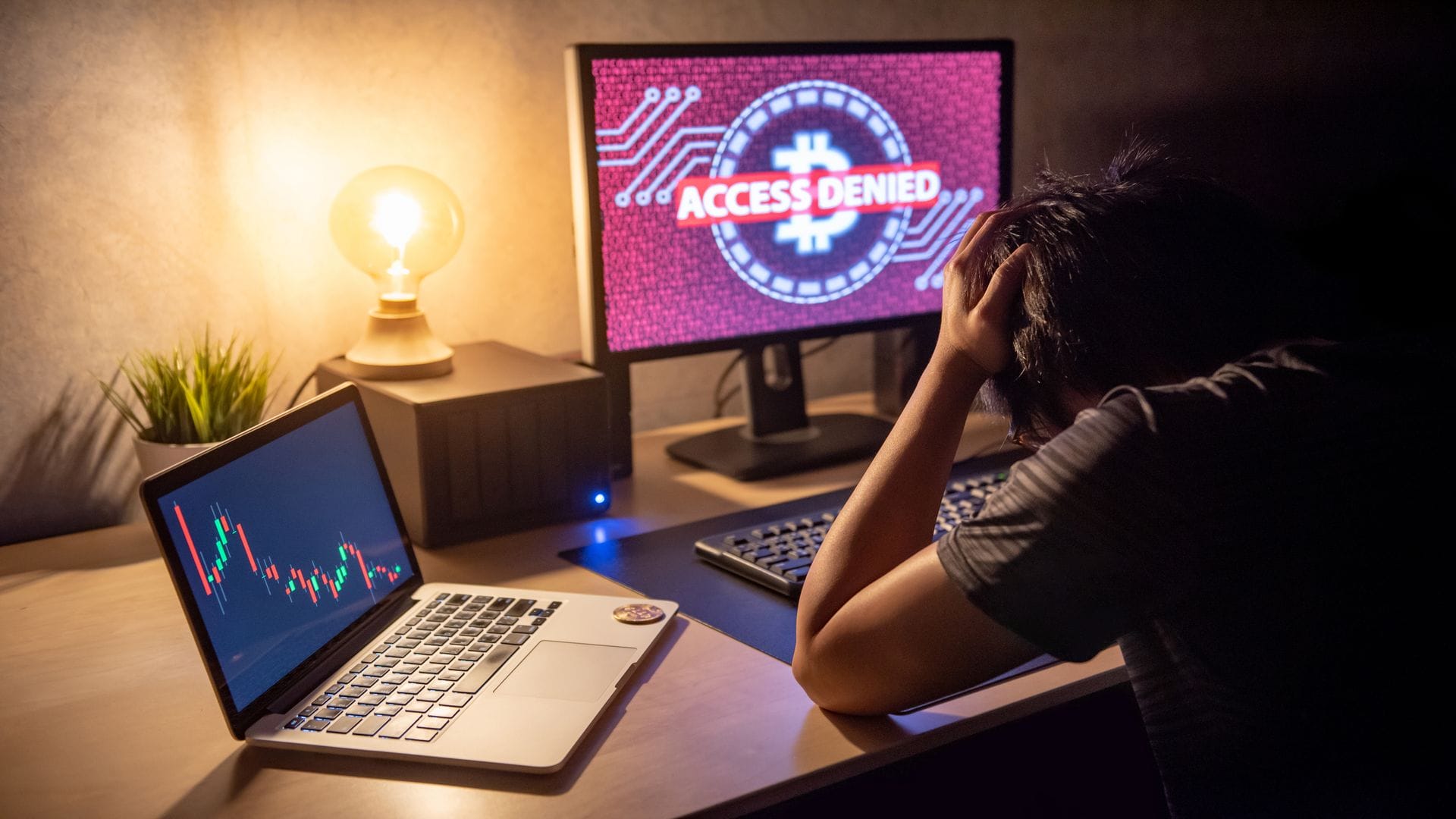
Picture of a man whose cryptocurrency wallet has been stolen.,

Read About Initial Coin Offering (ICO) Scams

The ICO is like a stock’s initial public offering where founders will outsource funds to support their crypto project or development. As an investor, you will receive the issuance of such cryptos in exchange for the funds you pledged. 

Some ICOs may not come from well-established companies. Hence, you should see if the company has any operating history or perform a background check on the management team and developers of the ICOs. It may be best to shy away from such if you can’t find any trustworthy information on them or they don’t provide a whitepaper. There’s a big chance they’ll abandon their investors once they’ve collected the funds, so you’ll never hear from them again. 

Conclusion: Be Safe, Stick To Major Well Known Platforms and Avoid Sketchy Links

The best way to avoid crypto scams is to buy or sell cryptos on a legitimate trading platform. Ensure you double-check links or apps before clicking on them. Furthermore, consider the tips mentioned here, so you’ll be safe from inviting schemes of crypto scammers.

For more great Free Financial Advisor articles, read these:

How To Increase Your Net Worth

Financial Resolutions, Debt, Saving and Crypto

Should You be Investing In Shiba Inu?

Is The ADA Cardano Going To The Moon?


Filed Under: risk management Tagged With: crypto, cryptocurrency, scams

  • « Previous Page
  • 1
  • 2
  • 3

FOLLOW US

Search this site:

Recent Posts

  • Can My Savings Account Affect My Financial Aid? by Tamila McDonald
  • 12 Ways Gen X’s Views Clash with Millennials… by Tamila McDonald
  • What Advantages and Disadvantages Are There To… by Jacob Sensiba
  • 10 Tactics for Building an Emergency Fund from Scratch by Vanessa Bermudez
  • Call 911: Go To the Emergency Room Immediately If… by Stephen Kanaval
  • 7 Weird Things You Can Sell Online by Tamila McDonald
  • 10 Scary Facts About DriveTime by Tamila McDonald

Copyright © 2026 · News Pro Theme on Genesis Framework