• Home
  • About Us
  • Toolkit
  • Getting Finances Done
    • Hiring Advisors
    • Debt Management
    • Spending Plan
  • Insurance
    • Life Insurance
    • Health Insurance
    • Disability Insurance
    • Homeowners/Renters Insurance
  • Contact Us
  • Privacy Policy
  • Risk Tolerance Quiz

The Free Financial Advisor

You are here: Home / Archives for Joe Saul-Sehy

Joe is a former financial advisor and media representative for American Express and Ameriprise. He was the “Money Man” at Detroit television WXYZ-TV, appearing twice weekly. He’s also appeared in Bride, Best Life, and Child magazines, the Los Angeles Times, Chicago Sun-Times, Detroit News and Baltimore Sun newspapers and numerous other media outlets.  Joe holds B.A Degrees from The Citadel and Michigan State University. 

Saving Money Isn’t Work: It’s a Mindset Shift

April 20, 2013 by Joe Saul-Sehy 13 Comments

When I’ve given speeches at community groups, I’m often surprised to hear, “This sounds like a lot of work.”

It’s hard to know what to say to this. Do I say:

–       “But it’s worth it.”

–       “Not really”

or even,

–       “Maybe a little work, but it focuses your mind on saving instead of spending”

None of these approach the truth. Saving money isn’t easy or hard….it’s a complete mindset change.


Finding Opportunity Where You Don’t Expect


As I wrote in Can’t Save? Write it Out, Bitches!, often, we don’t look hard enough for opportunities. I took a quick trip to the store yesterday for bread and ketchup to work on my famous sloppy joes (well, not yet famous, but I’ve not given up). Without thinking, I jumped in the car and paid full-on retail for both of these items.

In today’s world, with my iPad sitting on the counter, it wouldn’t have been hard to find a coupon. In fact, a look this morning (that took less than three minutes) found me $.50 off the bread I purchased and $.25 off the ketchup. Lots of savings? No, but by changing my mindset and doing this all the time, I can find tons of opportunities, no matter where I am.


–       Saving on insurance with comparison sites

–       Saving on airfare and hotels with online discounters

–       Saving on food with Tesco vouchers

–       Saving on restaurants with newspaper coupons


It’s easy to find ways to save, but instead of just grabbing the keys and leaving home, you need to take a few minutes.


It isn’t frugal as much as it’s smart


I’ll be the first to tell you that I have no interest in saving $.75 on bread and ketchup. However, if it’s the same ketchup and bread, the same hotel room, the same airline, and I don’t have to take significant time to find the deal…that’s not about saving $.75. It’s about learning to treat money with respect.

So, the next time you grab the keys to head to the store, think for a moment. Could I look for deals online? Could I find aggregator sites that would help me get this done better/cheaper/quicker (or all three at the same time?). Could I be saving daily with discount codes, coupons and deals for the same stuff I was going to buy anyway? Better yet, could this be the Roth IRA contribution you weren’t able to make this year because you “didn’t have any money?”

Photo: Saad Faruque

Enhanced by Zemanta
Photo of Joe Saul-Sehy
Joe Saul-Sehy

Joe is a former financial advisor and media representative for American Express and Ameriprise. He was the “Money Man” at Detroit television WXYZ-TV, appearing twice weekly. He’s also appeared in Bride, Best Life, and Child magazines, the Los Angeles Times, Chicago Sun-Times, Detroit News and Baltimore Sun newspapers and numerous other media outlets.  Joe holds B.A Degrees from The Citadel and Michigan State University.
joesaulsehy.com/

Filed Under: budget tips Tagged With: Coupon, Roth IRA, Saving, Tesco

Average Joe’s Friday Read-Along: Documents and Plans Edition

April 19, 2013 by Joe Saul-Sehy 18 Comments

A sad reminder of the times: Cheryl wanted to have a meeting this weekend to review “where everything is kept.” She wants us both to be clear about where we keep account passwords, insurance policies, estate documents, and to establish who we call first in the event of needing help after a severe disability or death.

It’s sickening why we need to have this meeting, but we’ll have it.

On a better note, we have some huge news coming up in the next few weeks. I realize that what’s “HUGE” to me is slightly interesting to maybe 4 people on the internet…but if I haven’t made the usual rounds this week as much as I’d have liked, you’ll see the reason in about nine days (hopefully).


State of the Union


I’m pleased with the progress our little blog has made this month. If you read our Diary, you know that we had a horrible February. March was back on track, and April has been explosive. Something funny? Here’s a reason to keep blogging: we experienced a wave of traffic on Tuesday and I couldn’t figure out why…until a quick trip to Google Analytics made me laugh. It seems that lots of people were reading our I Forgot To File My Taxes article from a year ago.  Hmmmm…..can’t figure out why that was so popular.


8 Great Blog Posts You Might Have Missed This Week, So I’ll Remind You:


When I originally posted this, I hadn’t seen this piece from a friend’s business partner’s spouse. She ran the Boston Marathon and finished about two minutes before the first bomb went off. Here’s her personal story at E2Dietitian’s Blog.

Not so much a post, as it was a movement….I was happy to see Shannon, from The Heavy Purse gather up a large contingent of financial bloggers to write about Financial Literacy Month. Here’s a link to her carnival and all the blogs that took part. We’ll do our part for financial literacy on Monday when we interview Barbara Friedberg on the podcast about her new book, How To Get Rich: Wealth Building Guide for the Financially Illiterate.

At Money Beagle I enjoyed a post about saving money, even though you think you can’t. He recently started shopping at Aldi. Check out the comments in There Are Always Savings Opportunities for another view about Aldi from a reader. Great post and interesting discussion.

eemusings reminded me of the great Cal Newport’s blog while she was commenting on our site last week. He needs a link from me like I need this doughnut in front of me (oops! No longer there….). However, you need to be reading Cal Newport’s work. Check out In Choosing a Job: Don’t Ask “What Are You Good At?”, Instead Ask, “What Are You Willing To Get Good At.”

Speaking of eemusings, I enjoyed reading Love Where You Live: Auckland on her site, NZMuse.

Combining tight, creative prose and financial topics is an art few explore, but Mackenzie at The Random Path both tackles the challenge and succeeds in At Night. Ever stayed up worrying about your bills? This story is for you.

I remember owning a pool growing up. A few days after we moved in, a strange thing happened: people who we hadn’t seen in years suddenly started calling and dropping by. Weird…. Guess what happened two years later when we moved from that house? That’s right…a lot less “drop in” business. How much does a pool really cost? The PoP’s at Planting Our Pennies 2nd installment in their three part series on the topic is called: We Only Have a Pool Because It’s Free. Check out the disgusting comments, too. They’re hilarious.

Our friend Dominique Brown at Your Finances Simplified is buying more rental properties. Like tales of negotiation and intrigue? Okay, maybe it’s light on the intrigue, but Negotiating Rental Property #5 – They Send a Repair Sheet – Dumb Move! is a fitting end to another multi-post story.

I like the way that My Financial Independence Journey features different companies each week on their blog. They’re often fun reads whether you’re interested in the stock or not. I like the thorough analysis. Check out Air Products and Chemicals (APD) Dividend Stock Analysis.


Hello, My Name Is….


I’m happy to say a big “howdy!” to Cash Cow Couple. Over the last several weeks Jacob and Vanessa have already written some fun, informative content. Check out Applying Pokemon in Real Life for a good starting point.


Photo: Martin Pettitt

Photo of Joe Saul-Sehy
Joe Saul-Sehy

Joe is a former financial advisor and media representative for American Express and Ameriprise. He was the “Money Man” at Detroit television WXYZ-TV, appearing twice weekly. He’s also appeared in Bride, Best Life, and Child magazines, the Los Angeles Times, Chicago Sun-Times, Detroit News and Baltimore Sun newspapers and numerous other media outlets.  Joe holds B.A Degrees from The Citadel and Michigan State University.

joesaulsehy.com/

Filed Under: Carnival

5 Ideas That Shaped My Career

April 16, 2013 by Joe Saul-Sehy 40 Comments

Reading can be the difference between a good career and a great one. How are you taking control?

Last week I went all “Joe Negative” with my 5 pieces of bad advice from investment gurus. The goal with that piece wasn’t to be argumentative…it was to help people realize that no advisor is infallible, and although starting with the guru is good, finishing with your own plan is better.

This week, to prove just how optimistically positive I can be, I thought it’d be great to review the top 5 pieces of career advice I’ve ever read from the popular press. Sure, some of these are from pop self help books, but these lessons have proven their weight during my career:

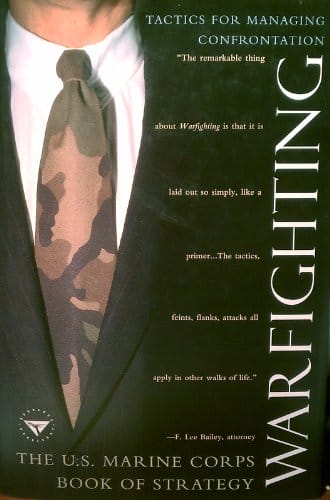
5) The concept of “Move and Fire” – Marine Corps Book of Strategy

Amazon

While I’ll agree that the concept of business as battle is often overplayed, the idea of “move and fire” is a valuable weapon for a businessperson. Often, I’d want to either respond to a client request or work on improving relationships. By quickening the tempo of my communications with clients, surprising them with data when they didn’t expect it, and advising them on areas where they didn’t realize I was an expert, I was actually able to decrease my overall workload because I wasn’t getting silly requests on client terms. The “battlefield” of my career began to be dictated on my terms.
I also realized that to grow the business I couldn’t be one-faceted. I had to attack from all angles. That’s when my media blitz began and I gathered as many television, radio and print opportunities as possible. By moving and firing, instead of going slowly, I pushed past many people who waited for someone else to throw them a chance.

Get it at amazon now for $6.

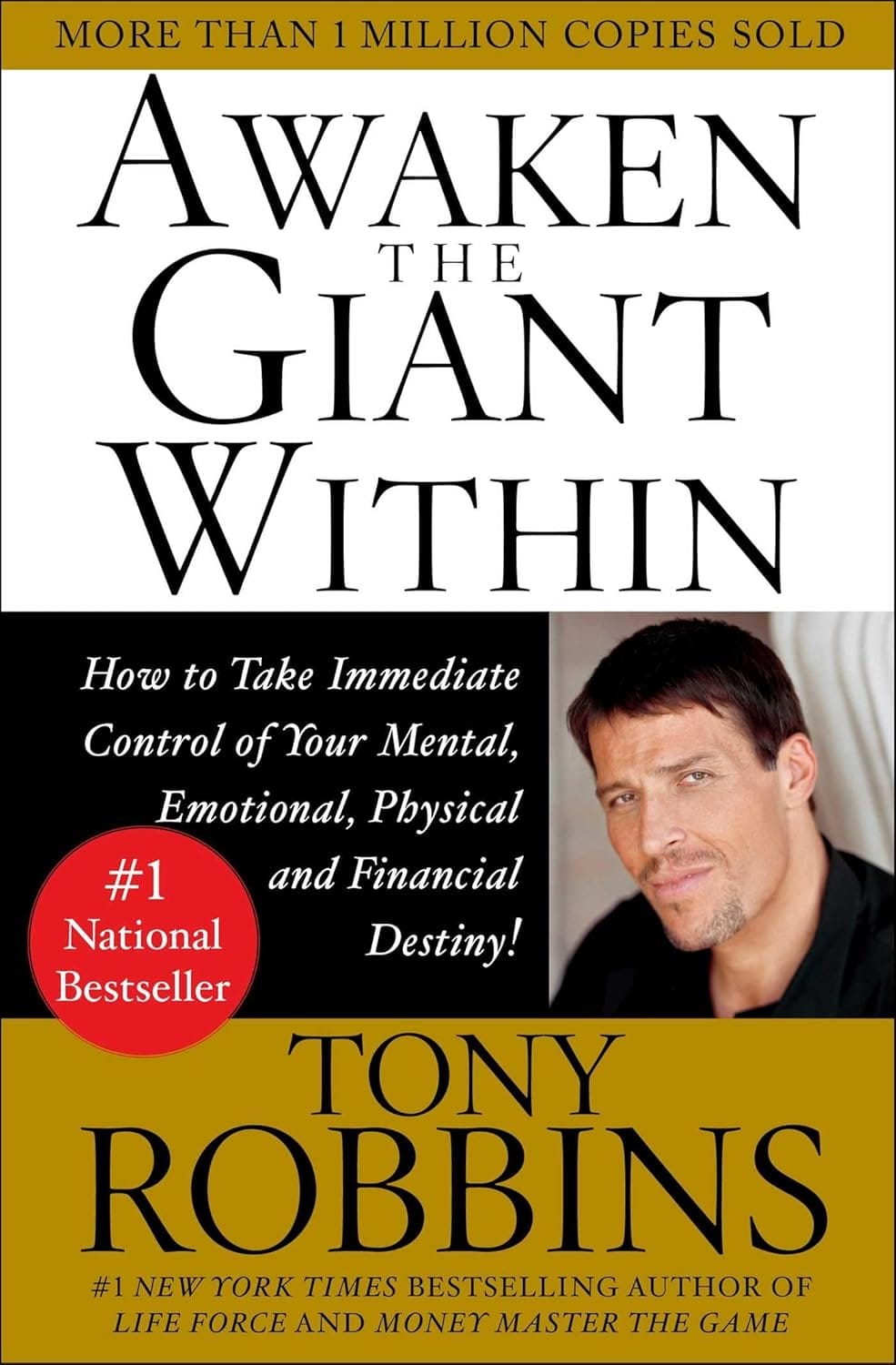
4) “The past doesn’t equal the future” – Tony Robbins (Awaken the Giant Within)

career

Amazon

In business, you need to have a short memory or you’re dead. I saw many workers in all of my jobs (from high school through financial planning) who couldn’t get over the time they’d been passed over for a raise, the undeserved reprimand from a boss, or the tongue lashing from a client. Get over it.
I also experienced a phenomenon with young workers who couldn’t grasp concepts and refused to learn about them. I’d recommend listening to podcasts, reading work related blogs and books, or watching videos. Often, I was surprised to hear, “Yeah, I don’t really do that stuff.” Instead, they seemed to think that it was management’s job to teach everything you need to know to have a successful career.

Don’t wait on your manager to make you great. Just because you weren’t a reader yesterday doesn’t mean you aren’t today. Just because you were loud and brash at work doesn’t mean you have to be tomorrow. Just because you don’t dress appropriately for work doesn’t mean you’ll forget the tie tomorrow. The past doesn’t equal the future indeed.

Another related concept that nearly made this list was Tony Robbin’s assertion that success increases as you make decisions faster. While people often avoid decisions for fear of “being wrong,” Robbins pushes readers to click at a faster rate. Your brain will find ways to make your decisions better.

“I’ve failed more often than the average person has tried.” Donald Trump

Buy it now at Amazon for $12.39.

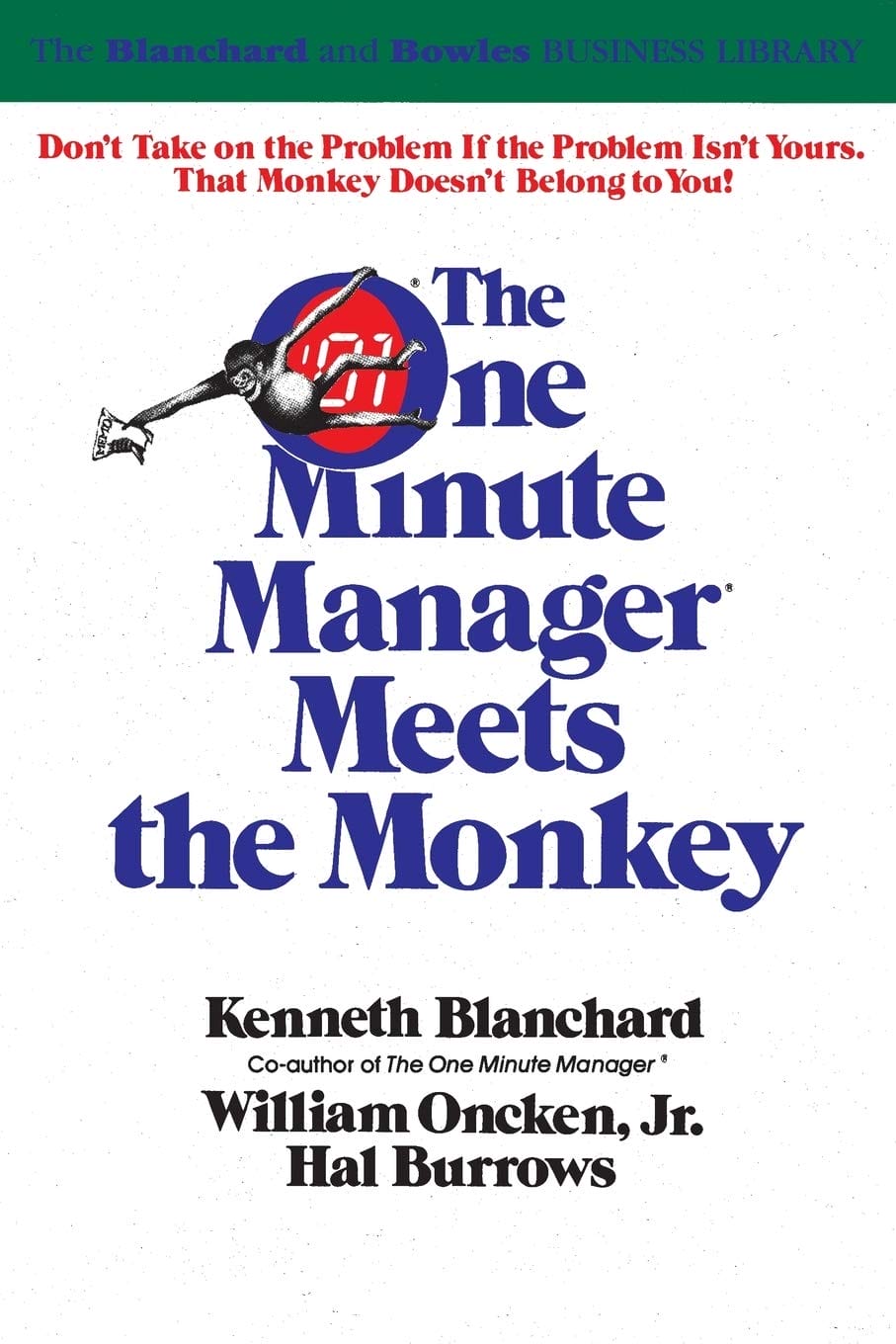
3) Beware “The Monkey” – Ken Blanchard (One Minute Manager Meets the Monkey)

career

Amazon

While the whole One Minute Manager series was a little short on great ideas, the concept of “the monkey” helps great people accomplish more without becoming bogged down in irrelevant tasks.
Here’s the monkey: a co-worker walks into your office with a problem….we’ll call the problem “the monkey.” Instead of saying, “I’ve got a problem I need you to help me with,” co-worker says:

“We have a problem.”

The second that you agree that “we” have a problem, one of the monkey’s arms is around your shoulder. When you say, “I’ll take care of it,” the friend leaves your office and you now own a monkey while the friend is free of the problem.

Once I began to recognize “the monkey” and learned to say, “Let me help YOU with YOUR problem,” my life became much simpler because I never took “the monkey” on my shoulders. I could work on my own monkeys without inadvertently taking on everyone elses’…a common problem for achievers.

Get it now at Amazon for just $9.69.

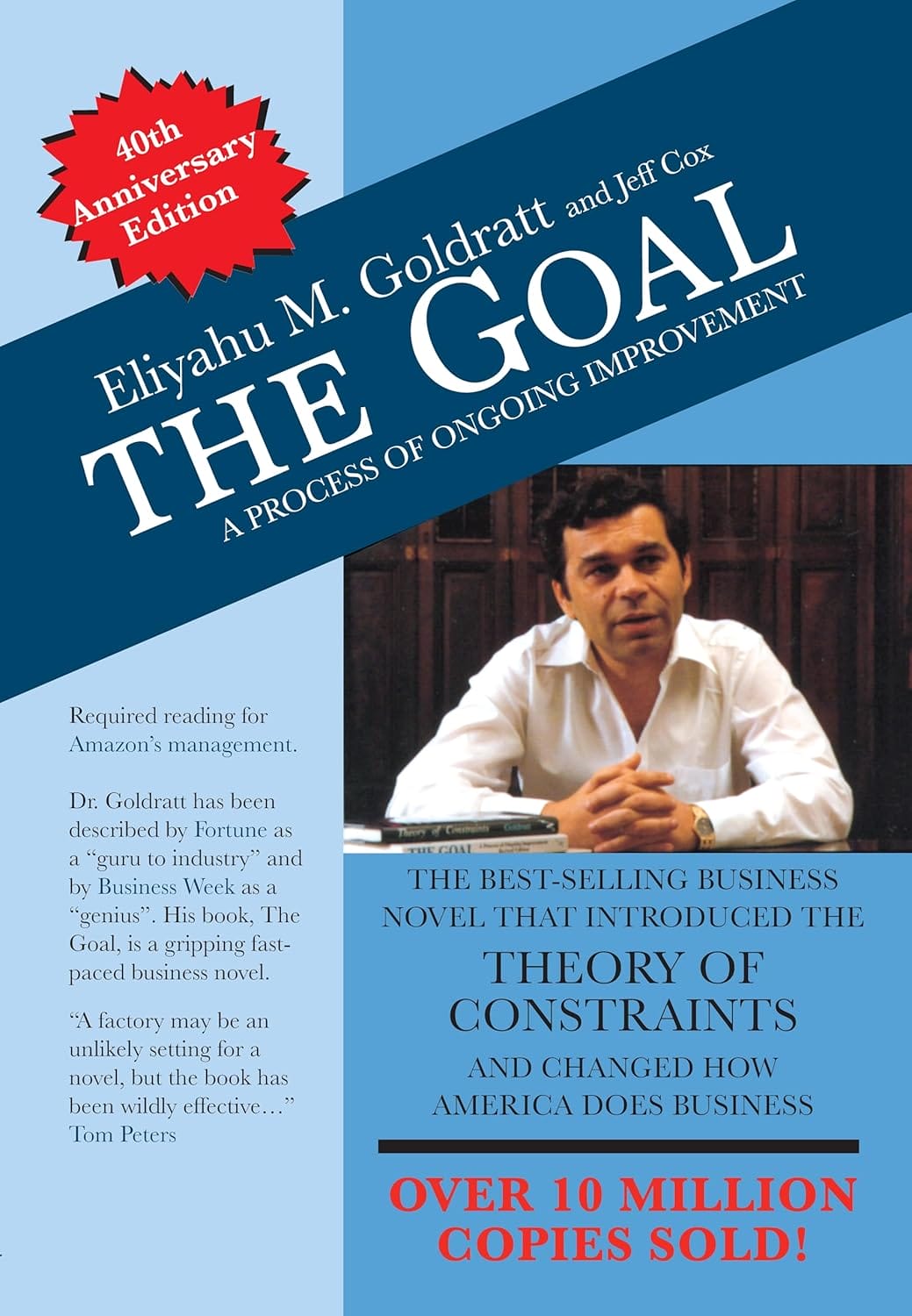
2) Remember “the Goal” (The Goal)

career

Amazon

While the One Minute Manager didn’t wow me, The Goal by Eliyahu Goldratt completely bowled me over. I can explain the concept here in a couple of sentences, but I won’t be able to convey the magnitude of how much this change in perspective increased my ability to achieve.  In essence: many people measure results in areas other than the one that matters: throughput. If I can increase the speed of something that doesn’t reach the customer, why do I care? The only job that matters: finding the bottleneck and working on increasing the output through that area of the process.

I often worked with managers and clients who’d complain about a certain department or facet of their plan that wasn’t performing well or workers who didn’t seem to be working as hard as they could. When processes are measured, though, many times these weren’t the areas the manager should be worried about. A manager should worry first about the area which is the bottleneck decreasing throughput. It seems obvious and not really a big deal, doesn’t it? This is #2 on my list because once I read the book (and the follow up, “It’s Not Luck”) my business changed dramatically.

Buy it now at amazon for $21.94.

1)   The best battle is the one that’s never fought – Sun Tzu (The Art of War)

career

Amazon

Sorry about two “war” books in the same piece, but this one was easily my favorite piece of advice. When I’m at odds with someone I’ve learned that instead of bringing on the fight, are there ways that I can still “win” without fighting at all.

With Sun Tzu’s help I became more proactive. If I could answer potential questions or concerns my clients had BEFORE they occurred, I’d avoid a problem later. I’d also think of any way that my competitors might try to steal my business and make sure that my clients were iron-clad mine. In setting up financial plans I’d imagine all the ways the plan would be tested and raise defenses against them.

Sun Tzu can be found all over my financial planning tips. It’s:

–       the reason I’m a stickler on the emergency fund, regardless of the interest rate.

–       the single biggest reason my budget for married people focuses on communication, not spreadsheets.

–       The reason I start with problems that might occur rather than insurance when dealing with “what if” scenarios.

Get it right now for $13.47 at Amazon.

There they are…my top 5. I’m excited to read your best career advice in the comments below. What should have made my list?

Enhanced by Zemanta
Photo of Joe Saul-Sehy
Joe Saul-Sehy

Joe is a former financial advisor and media representative for American Express and Ameriprise. He was the “Money Man” at Detroit television WXYZ-TV, appearing twice weekly. He’s also appeared in Bride, Best Life, and Child magazines, the Los Angeles Times, Chicago Sun-Times, Detroit News and Baltimore Sun newspapers and numerous other media outlets.  Joe holds B.A Degrees from The Citadel and Michigan State University.

joesaulsehy.com/

Filed Under: book review, Productivity Tagged With: Business, Eliyahu M. Goldratt, Ken Blanchard, One Minute Manager, Sun Tzu, The Goal (novel), The One Minute Manager Meets the Monkey, Tony Robbin

Spring Cleaning Your Finances – 2GYM Episode 36

April 15, 2013 by Joe Saul-Sehy 2 Comments

Have shows come automatically to your iPod! Use the 2 Guys iTunes page here.

Listen to shows on your smartphone! Try the Stitcher app here.

Do you have trouble finding information quickly? Getting lost in the clutter? This week’s episode is for you! We’re talking spring cleaning your money. I know it snowed last week in some places…but that just gives you another reason to bury yourself in your home office and create some fantastic systems! Sarah Kirkish, professional organizer with Work Life Organization, joins us in the basement to talk about tracking your financial life.

Equally as important, powerful women invade the basement to discuss comments in a book by Facebook COO Sheryl Sandberg about women and careers. Are women selling themselves short? Tune in to hear!

Joe & OG talk about some surprising statistics from the Bureau of Labor Statistics about employment and education. We give you hints to give something away, and talk about Oz, The Great and Powerful.

Show Notes, as always, will materialize throughout the day Monday.


Show Notes


<> Open

<> Joe & OG – Surprising College Statistics — Should you attend college? Based on information from the Bureau of Labor Statistics, the answer is overwhelmingly “yes.”

<> Sarah Kirkish – Organizing your life….finances and all.

Find Sarah and the white paper she discusses on the show at Work Life Organization.

<> Let’s Give Something Away

<> Women’s Panel – The “lay of the land” for women: families, careers, role models and pay inequality.

Thanks for our panel! Check out:

Sandy’s blog: Yes, I Am Cheap – (recent post – Popular Landlord and Tenant Rental Scams)

Suba’s blog: Wealthinformatics – (recent post – 2013 Tax Day Freebies – Mixing Taxes and Fun!)

Barbara’s blog: Barbara Friedberg Personal Finance – (new book at Amazon.com – How to Get Rich: Wealth Building Guide to the Financially Illiterate)

<> End Show

Films – Joe – Oz the Great and Powerful (thumb down)


Photo of Joe Saul-Sehy
Joe Saul-Sehy

Joe is a former financial advisor and media representative for American Express and Ameriprise. He was the “Money Man” at Detroit television WXYZ-TV, appearing twice weekly. He’s also appeared in Bride, Best Life, and Child magazines, the Los Angeles Times, Chicago Sun-Times, Detroit News and Baltimore Sun newspapers and numerous other media outlets.  Joe holds B.A Degrees from The Citadel and Michigan State University.

joesaulsehy.com/

Filed Under: Podcast

4 Guidelines for Paying Down That Credit Card Debt

April 14, 2013 by Joe Saul-Sehy 10 Comments

If you’re like me, then the past month or two of your life has involved getting your financial ducks in a row in order to file your taxes. Now that tax season is essentially over, it’s a good time to take a look at your credit card situation before you take a much-deserved break from obsessing over your finances. If you’ve got any significant credit card debt, then you’re probably thinking of the best strategy to go about paying off that debt. As a former victim of credit card debt, I know that drowning in debt is not fun, and often leaves you feeling trapped. However, I’m here to tell you that you can get that debt paid off, and it’s easier than you may think as long as you are responsible with your spending. In addition to being responsible, stick to the four guidelines below to get that debt paid off most effectively.


  1. Pay down your highest APR credit card debt first. This point is the most important, and should probably go without saying, but I’m going to say it anyway. If you have several different credit cards that you’ve accrued debt on, you need to pay off the balance that is charging you the most interest first. If you fail to get those high-interest credit card balances paid down, then you will find yourself falling deeper and deeper into the debt hole.
  2. Always make the minimum payment. Sometimes it may seem as if there is no end in sight to the debt you have accrued. Since I’ve personally been through this myself, I know that there is an end in sight. However, if you fail to make your minimum payments each month, your credit score is going to take a pretty significant hit so that even when you have all your debt paid off, you will end up with a poor credit score, which isn’t going to be useful when it comes time to buy a house or car. Generally, the minimum payment each month isn’t a huge amount of money, so do everything you can in order to get that minimum payment in.
  3. Consider a balance transfer. If you have a decent credit score but have accrued sizeable debt on credit cards that charge high interest rates, it may be in your best interest to consider a balance transfer in order to consolidate your debt onto a credit card with a 0% APR introductory period on balance transfers. Not all balance transfer credit cards are created equally, however, so you will want to make sure you compare credit cards so that you can find a card that offers a long 0% introductory APR period. The longer the intro period, the more time you have to get that debt paid off without accruing any interest.
  4. Get rid of debt before trying to save. Generally, the credit card debt you accrue will charge a much higher interest rate than the interest you will earn on cash that you save. While it’s always smart to have a small stockpile of cash for extreme emergencies, most of your income should go to paying down that debt. If you try to save most of your money before paying down that credit card debt, you’ll be stuck in debt for much longer than you need to be, as well as hurting your credit score.


This article was written by Logan Abbott. Logan is the editor of MyRatePlan.com, and a personal finance and credit card expert with over a decade of experience.

Enhanced by Zemanta
Photo of Joe Saul-Sehy
Joe Saul-Sehy

Joe is a former financial advisor and media representative for American Express and Ameriprise. He was the “Money Man” at Detroit television WXYZ-TV, appearing twice weekly. He’s also appeared in Bride, Best Life, and Child magazines, the Los Angeles Times, Chicago Sun-Times, Detroit News and Baltimore Sun newspapers and numerous other media outlets.  Joe holds B.A Degrees from The Citadel and Michigan State University.

joesaulsehy.com/

Filed Under: Debt Management, money management Tagged With: Balance transfer, credit card, Credit card debt, credit score, debt consolidation

Bad Advice? Here’s Some From Top Money Gurus

April 9, 2013 by Joe Saul-Sehy 49 Comments

Don’t let experts paint your future with a broad brush. Reach down to understand where you disagree, then latch on to the rest.


Early in my career I made a horrible mistake: I disagreed with Suze Orman’s advice in a discussion with a potential client. Guess what I found out? I don’t have a big enough megaphone to win that argument. The potential client went away. I learned not to fight with Suze, even if she isn’t in the room.

Now, however, as a slightly more mature (and infinitely more handsome) individual investor, I’ve learned that it’s okay to disagree. It takes an understanding of the guru’s overall approach to reaffirm the other 95% you agree with. I’ve realized that Suze Orman, as much as I dislike the finger pointing and incredibly ego-driven persona, is a credit to the financial community (did I just write that?). Experts like Suze and those below speak to a wide audience so they have to use broad terms.

Sometimes I just think the brush is a little too wide.


5 Topics Where “Experts” Get It Wrong


Liz should be writing "I'm a little off on the "Risk" chapter of this book."

Liz should be writing “I’m a little off on the “Risk” chapter of this book.”

5) Liz Weston – Don’t Avoid Risk, Embrace It. While Liz Weston is far from controversial, I’m not a fan of the way she presents risk. She says that to be an investor, you can’t be afraid. You must have some risk in your portfolio to reach results.

In short, if you want it, you need to gamble a little.

Being afraid is a good thing. Fear motivates. What are you afraid of? Here’s what you should be afraid of

…that you won’t reach your goal

…that you’ll leave your family destitute

…that you’ll become disabled and be unable to care for yourself or anyone else.

This fear helps you look closely at all the risk, not just stock market volatility. Afraid of losing money? Try sticking it in a CD for 30 years and see what it buys. Afraid of flushing your money down the toilet? Pay off that loan at 3% (before the itemized tax deduction) instead of keeping up with inflation. While I understand the sentiment, you owe it to yourself to get ahead, not bust your ass paddling like a salmon against the current.


4) David Chilton – Budgets are a myth. I enjoy the book the Wealthy Barber, and love the message in Chilton’s smackdown on budgets: budgets create frustration, because it’s so difficult to adhere to one. The key instead, is to focus on saving money. If you have an emergency fund and know how you spend, you’re more likely to “win” with your financial picture.

While I can see Chilton’s point (probably more than any of the other four I’ve outlined here), there still is a place for budgets. By attempting to stick to a budget and knowing ahead of time that it won’t always work, you’re a step ahead of those who just don’t budget at all. You need to know where you spend your cash.

theFreeFinancialAdvisor.com Financial Gurus Bad Advice

You don’t need an advisor! Just buy all forty of my books….

3) Suze Orman – You Don’t Need an Advisor. Suze’s main premise here is spot on: nobody knows your money like you do, and nobody will care as much as you do. That’s 100% true. I couldn’t care about my client’s money emotionally. In fact, my clients would have fired me if I’d been making emotional decisions with their cash.

Here’s the difference between Suze and I: I live in the real world.

I practiced financial planning for some of the brightest minds in the metro Detroit area. These people could financial plan their lives on their own. So, if I don’t care as much as they do, why did smart people hire me?

Simple. I disagreed with them and broadened their horizons.

How many CEOs don’t have advisors? How many heads of state don’t have advisors? If you’re looking to get ahead, decide when the right time is to add an advisor to your team, and then make sure you pick a good one. I think we spend too much time clustering the whole financial world into one big ball of money-grubbing rotten advisors. Keep that approach and you’ll find yourself starved for time and falling behind the people who decided to find top notch help.


2) Dave Ramsey – Debt Snowball. Okay….first, I know that Ramsey’s method was recently commended for working more often because people are emotional beings and pay down debt more quickly when they set smaller milestones. I get it.

What I don’t get is why people don’t ask themselves the question, “How do I do this faster?” What if you could have use the portion of the debt snowball plan that works–the psychological part–but combine it with a method that attacks interest payments most quickly (that’s how you’ll save the big bucks).

With options around like Ready For Zero, Payoff, and others, there is no reason to continue using the Debt Snowball method. You can psychologically attack your debt AND eat up those extra interest payments. You’ll laugh your way to the bank.


We discuss Dave Ramsey’s fight with the internet over 12% rates of return on our podcast: Two Guys and Your Money, Episode 35: Pat Flynn Lets Go.


1) David Bach – The Latte Factor. What idiotic, absolute drivel. I’ve never seen a person become wealthy by avoiding a latte. Sure, maybe there’s a bigger message here, because the poor person who’s drinking an overpriced Starbucks drink is the same person who’s also buying up clothing on credit at Nordstrom. They’re over their head.

Want to become rich? Stop thinking about $4 decisions with 95% of your brain and instead prioritize. If you could make a $150 decision while in a Starbucks, why wouldn’t you? Decide which action pays the highest, avoid complexity, and jump.

No latte or evaluate your insurance? – Evaluate insurance!

No latte or clip coupons? – Clip coupons!

No latte or restructure your portfolio? – Restructure your portfolio!

No latte or find money-saving vacation ideas? – Vacation ideas!


Read the “big” books by the financial gurus and understand the REAL message. Weston, Orman, Ramsey, Chilton and (sigh) even Bach all offer good advice…just avoid the bad stuff that sounds good. How do you know which is which? Think!

Photos: Liz Weston: marubozo; Suze Orman: David Shankbone; BucksFee: JellyDude

Where do you disagree with “the Experts” in your financial plan? 


Photo of Joe Saul-Sehy
Joe Saul-Sehy

Joe is a former financial advisor and media representative for American Express and Ameriprise. He was the “Money Man” at Detroit television WXYZ-TV, appearing twice weekly. He’s also appeared in Bride, Best Life, and Child magazines, the Los Angeles Times, Chicago Sun-Times, Detroit News and Baltimore Sun newspapers and numerous other media outlets.  Joe holds B.A Degrees from The Citadel and Michigan State University.

joesaulsehy.com/

Filed Under: Investing, Planning

Pat Flynn Lets Go – Two Guys and Your Money Episode #35

April 8, 2013 by Joe Saul-Sehy 16 Comments

Have shows come automatically to your iPod! Use the 2 Guys iTunes page here.

Listen to shows on your smartphone! Try the Stitcher app here.

Ever been let go from a job? If so, you know what an excruciating experience it can be. Your sense of loss and identity can become muddled. “Who am I?” and “What should I do next?” are big looming questions. Pat Flynn faced these questions when he was downsized as an architect. His story of a transitioning to a new adventure is one you have to hear…and we’re happy to bring it to you here!

If you don’t know Pat Flynn, you’re in for a treat this episode. Like Natalie Sisson and Chris Klinke, who told awesome stories about their journey on a past 2 Guys & Your Money episode, Pat Flynn also has a unique story. After being downsized from his dream job, he decided to pursue a different path than many expected….and is experiencing great success.

PK, Joe & OG discuss the recent Dave Ramsey brouhaha AND we finish the show by talking about films.

Of course, we’re giving five lucky listeners some Laura Vanderkam books, too!


Show Notes


<> Open

<> Joe & OG – The Dave Ramsey debate…is a 12% return something we should be fighting about on Twitter?

<> Pat Flynn – Let Go

Here’s the link to Pat’s website and the Let Go project.

<> Let’s Give Something Away

This month, we’re giving away a signed copy of Jean Chatzky’s book Money 911. You can tweet about the podcast, like us on Facebook, or (for lots of entries) guess the voice on the show.

Click Here for the Giveaway Entry Page

<> PK’s Fractional Cents – My Take on Dave Ramsey’s Twitter Debate

A recent piece from PK’s website, Don’t Quit Your Day Job:

<> Show Close – Films

OG – Olympus Has Fallen

Joe – Old episodes of the X Files

* There may or may not be a part of the show where we have another contest involving jokes.

Okay, whether you listened to the podcast or not….a couple questions: do you think Dave Ramsey should have mentioned 12% return….OR when was the time you had to “let go” of your past to latch on to a better future? I’d love to discuss both of these in the comments below.

Photo of Joe Saul-Sehy
Joe Saul-Sehy

Joe is a former financial advisor and media representative for American Express and Ameriprise. He was the “Money Man” at Detroit television WXYZ-TV, appearing twice weekly. He’s also appeared in Bride, Best Life, and Child magazines, the Los Angeles Times, Chicago Sun-Times, Detroit News and Baltimore Sun newspapers and numerous other media outlets.  Joe holds B.A Degrees from The Citadel and Michigan State University.

joesaulsehy.com/

Filed Under: Podcast

How I Learned To Love Charitable Volunteering

April 7, 2013 by Joe Saul-Sehy 9 Comments

Charity begins at home, right? Think again.

I used to think that to dive into volunteering projects, I’d have to first be super-passionate about a cause…you know….like you see in movies. I’d have a megaphone and shout over tons of protesters who also want more licorice flavor in their chewing gum (or whatever the cause…don’t feel bad if yours isn’t as important as my example). I’d seen thousands of people walking for cancer or raising money for the heart association, or some other cause. I didn’t feel it. I’d read the brochures. Sure I felt bad for people who lost their homes, and yes, I hated reading about the tragedy of cancer or the horrible life of someone in abject poverty. But still, it didn’t strike me.

I was complaining about this to a close friend one day, who said, “You’re got it wrong, Joe! You get involved FIRST and the passion comes later.”

Man, was she right.

The closest I’d felt to any cause was the Arthritis Foundation. I finally decided to help out for some selfish reasons:

1) My mom had arthritis. I might as well raise money that would help someone in my family.

2) (and sadly, probably nearly as important to the selfish version of me at the time) The president of the local Arthritis Foundation Chapter was a client of mine.

So, I jumped in.

Arthritis became my cause. Whenever I had a birthday party, backyard barbeque, or whatever, I asked friends to skip the potluck and instead bring a sealed envelope with a check for the Arthritis Foundation. I volunteered at the Jingle Bell Run (their big fundraiser) and sat in with other professionals planning bigger events to try and raise more funds.


What I’d Been Missing from Volunteering


Sure, I was giving, but man, was I also receiving! Now, I’m not saying that you should get involved with community charitable projects because of what you’ll gain, but there are so, so many advantages:

1) Networking. I never knew that in my field (financial advising), the BEST place to be was at charitable giving events. All of my target market was there (people with cash) and they were predisposed to like me because I was lending a hand.

2) Tax write offs. When I gave money, I was allowed to use these funds as an itemized deduction on my tax return.

3) Great feelings. There’s nothing more fun than meeting the people you’re helping out.

4) Travel. My friend Chris helped out after the earthquake in Pakistan and also after the tsunami on the Indian Ocean. He’s seen the world…and helped humanity at the same time.


Expanding Your Volunteering Reach


We went further. Cheryl took the kids on a medical mission trip to Guatemala. Suddenly, we saw that there were opportunities all over the world you could take advantage of. You can build houses in the Appalachians, fight poverty in Africa, or volunteer work Sydney with UNICEF. Imagine a trip to Sydney, Australia and pitching in!

Unfortunately, I couldn’t go with my family last summer on the trip, but all three agreed that using free time to volunteer, while exhausting, was more rewarding than just hanging out on a beach somewhere.

Cheryl didn’t only volunteer. She planned a trip for two weeks and saw the sites the second half. If you volunteered in Sydney, for example, you could take a portion of the trip to help out and another portion to tour.

I’ll second what my friend told me: don’t feel the passion around charitable giving? Get involved first. I promise the passion will follow.

Photo of Joe Saul-Sehy
Joe Saul-Sehy

Joe is a former financial advisor and media representative for American Express and Ameriprise. He was the “Money Man” at Detroit television WXYZ-TV, appearing twice weekly. He’s also appeared in Bride, Best Life, and Child magazines, the Los Angeles Times, Chicago Sun-Times, Detroit News and Baltimore Sun newspapers and numerous other media outlets.  Joe holds B.A Degrees from The Citadel and Michigan State University.

joesaulsehy.com/

Filed Under: charitable giving

Average Joe’s Friday Read-Along

April 5, 2013 by Joe Saul-Sehy 21 Comments

There are few feelings better than knowing you have a whole flippin’ weekend with absolutely nothing to do. Nothing! It’s been a long time coming, so this weekend I promise to put my feet up and do…well…..

1)   There’s a clean up day on local trails. I will be doing that BUT I’ll be outside enjoying the spring weather in Texas. This is the best time of year here. If you think differently, stick it in your ear. (I’m even beginning to get cocky like a Texan!)

2)   My garage is a mess. It’s gonna need some TLC BUT I’ll be in the fresh air AND I’ll see that train set again that I’ve promised myself for 30 years I’d finally put together….

3)   The symphony is playing Saturday night. We’re going to go see them. I HATED the symphony until a good friend dragged my wife and I to a performance for his birthday (I couldn’t say no….it was his birthday!) Now? I’ll go any time I can….even on “do nothing” weekend.

4)   My son has pretty much decided on the University of Texas. We’re going to put down his $200 deposit so he can start picking his dorm this weekend BUT I’ll be clearing up that ultimate “how much money are we spending on college?” discussion.

5)   I’ve got an office that needs some love BUT it’ll make it easier to work next week if I tackle that.


Sigh. Looks like my “do nothing” weekend is all planned out…..


Let’s Look at Eight Great Blog Posts You Might Have Missed


How about if we start with my friend Mr. MMD at My Money Design and his fun post called Would You Borrow Money to Invest in Stocks? I’m ready for next week’s post: Would You Borrow Someone’s Toothbrush?

Justin at The Frugal Path is down with the kid’s stories in his epic piece Paying Off Credit Cards, the Little Debtor Who Could. Congrats to Justin on his first six months of blogging, also!

One of my favoritest writers (it’s my blog and I say it’s a word, okay? Let’s move on….) on the interwebs is Andrew at 101Centavos. This week he spins his quirky tales of gardening in mining stocks in a hilarious direction….Gardening for Zombies.

Kim at Eyes on the Dollar asks a great question about Unethical Doctors – What Can You Do? I love the discussion in the comments.

Our good friend Erin at The Dog Ate My Wallet had a surprise this week….she lost her job! Read The Financial Side of My Layoff on how she’s viewing the coming changes…it’s an uplifting post and reminds me that the glass can be half full or half empty….I decide.

Our new friend Nola at New Take Travel wrote a good post about house swapping: How Can You Trust Strangers In Your Home? I’m excited about trying out house swapping on a vacation…and Nola’s blog is a key resource.

Jen at The Happy Homeowner is right on the money. You can’t just wish your way to wealth. Financial Freedom Doesn’t Just Happen, It’s Earned.

Finally, congrats to our friend (and podcast contributor) Carrie Smith at Careful Cents. She quit her job to freelance! Check it out Why I Quit My Job (and Think You Should, Too).


April Fools!


I have to give a special award to my favorite April Fool’s post. It’s a tie between the PoP’s at Planting Our Pennies with Rebranding – Now Spending Our Pennies and John at Frugal Rules with How to Get Rich Quickly. Nice job. Of course, we participated in the action on our podcast, too. Check out our biggest episode ever.


The Diary


I’ll be releasing a new Diary post this week. It’s nearly done. Matt at Dumb Passive Income is currently working on SEO for a piece of ours. We’ll see what he’s able to come up with. Thanks also to Lance at Money, Life and More for some good Diary suggestions this week.

Interested in reading our behind-the-scenes rambling about blogging? We don’t do that on the blog…it all happens on the Diary.


Hello, My Name Is:


A special welcome to Cash Rebel, who I visited for the first time this week. Mosey over to see this sweet Q1 Update for a sample.

….and a howdy-doody to cartoonist Mark Anderson and his Andertoons website. Mark followed me on Twitter, and I checked out his long-running blog. It’s become an awesome respite from financial pieces all day….check out his tutorial on how to draw a cartoon baby chick. Even I can do it!


We’re Very Popular and Modest, Too:


A huge thanks to those who’ve mentioned us in the last few weeks.

At Nerd’s Eye View, Michael Kitces pointed readers toward How Color Affects Your Investment Decisions in his Weekend Reading post, as did Laurie at The Frugal Farmer in Out on the Town, Good Reads for the Week, Marvin at Brick By Brick Investing in Wealth Building Bricks, Session #9, and Maria at The Money Principle in Principled Money Posts #38, Happy Easter. I’m thrilled that Maria will be making the long trek to Saint Louis for FinCon.

Thank you to John at Frugal Rules, Holly at Club Thrifty and Tonya at Budget & the Beach for featuring OG’s We Gave Frugal the Finger in Frugal Friday: Missing from a Wal-mart Near You edition, I Just Wrote a Check for $8,700 and Link Love /Week in Review.

A special thanks to Marvin from Brick By Brick Investing for using my awesome kids as an example in his rant against a sickeningly self-absorbed teenager in . You have to read Marvin’s post to believe this young woman’s point of view….read Ridiculous Entitled Generation for some fun (check out the pics of the woman’s house!).

I know there are people who recognized us that I’ve probably missed. Thanks to everyone who did. I’m grateful for all the sharing of our work.

Have a fantastic-alicious weekend,


j.


Photo of Joe Saul-Sehy
Joe Saul-Sehy

Joe is a former financial advisor and media representative for American Express and Ameriprise. He was the “Money Man” at Detroit television WXYZ-TV, appearing twice weekly. He’s also appeared in Bride, Best Life, and Child magazines, the Los Angeles Times, Chicago Sun-Times, Detroit News and Baltimore Sun newspapers and numerous other media outlets.  Joe holds B.A Degrees from The Citadel and Michigan State University.

joesaulsehy.com/

Filed Under: Carnival

Jemstep Portfolio Manager Review: Finding the Asset Allocation Middle Ground

April 2, 2013 by Joe Saul-Sehy 15 Comments

How do you review your investments? We give Jemstep a test-drive to see if it’s worth your time and money.

As OG bemoaned last week when writing about his broken garage door, at some point, calling a professional is the right move. In the comments, there were some wonderful discussions about finding “experts” without consulting with a person locally by using YouTube videos, better online tools and calling trusted friends.


The Middle Ground in Asset Allocation

There’s plenty of middle ground between wingin’ it and hiring a financial advisor when picking the right basket of investments. One tool I’ve had the opportunity to test drive is Jemstep. After meeting a Jemstep rep at FINCON last year, I was impressed enough with the product to have Simon Roy, the firm’s president, on our 2 Guys & Your Money podcast. He informed me that they were upgrading the product, and now it’s available.

The “New” Jemstep Portfolio Manager

Jemstep is a program that helps you diversify your investments. You know that dartboard you’ve been throwing at? No longer. Jemstep takes the guesswork out of discovering which investments you should be using and pinpoints suitable replacements for duds (or, surprisingly, good investments in asset classes that really don’t meet your investment needs). During my trial run, JemStep told me some things I’d (shamefully) already knew: I’d let my winners run a little too long, and Jemstep recommended cutting back in those “overgrown” areas where the risks now exceeded the chance for rewards.

How Jemstep Portfolio Manager Works

The Jemstep approach is consistent with that of an advisor. First, JemStep asks you questions about your goals. What do you need your portfolio to do? It asks questions about how far away the goal is, how much you may need to access at a time, and other relevant questions. I found this process fun. The interface is intuitive and the style of the website draws you in.

Jemstep Portfolio Manager Review at The Free Financial Advisor

Jemstep asks you for information about your retirement goal, among others. The interface is easy to use, and the blue lines below tell you just how far you still have to go: I have to still fill in information on my finances and investment preferences.

Once you’ve answered goal-related questions, you can upload your portfolio directly from your broker or add in funds manually. Finally, JemStep does it’s work and voila….gives you the correct asset allocation for your goal.

Jemstep Portfolio Manager basic recommendations

Here is the basic recommended portfolio. With these changes, I stand to gain over $9,000 per year in retirement. Yee-haw!

The premium version of Jemstep includes lists of what investments you should sell (in many cases only trim back), which investments you should accumulate, and new suggestions for your portfolio (often in asset classes that don’t exist in your portfolio). Here’s what that looks like:

jAction-Plan

Jemstep not only tells me which investments to sell, but alerts me to potential capital gains taxes. Every sell recommendation is accompanied by a detailed reason why this investment is on the chopping block. In this case: Apple is one of my worst performers and I have too much individual stock for a portfolio of this size.

The Cost

The Jemstep pricing model isn’t surprising. You can access basic advice for free (this includes the asset allocation you should be using, plus the differences between your portfolio and the suggested one). The premium model, which includes continuous tracking, rebalancing advice, a detailed breakdown of recommended sale quantities and investments, is also free for people just starting out. Pricing begins at $17.99 per month for portfolios over $25,000, and increases based on the amount of money Jemstep is helping you manage. While some who are looking for a freebie might be turned off by the price, this is less than the 1% fee often charged by a financial pro. Want professional advice in your corner without having to sit in an office with some team of people? Great. Jemstep won’t call you with hot stock tips and is there when you need it. In exchange, you’ll pay a model comparable to those used by seasoned investors for less than half the cost.

What I Like, What I Don’t

Here’s what I love: this asset allocation is a proven winner that points you toward the low cost, high return investments in a balanced portfolio. If you’ve ever wanted to have a well-managed portfolio but didn’t know where to start, Jemstep is a great place to begin. Different than some generic asset allocation models that I’ve used, JemStep points you toward specific investment options. For the person who wants to make sure they have low cost investments with a proven track record, Jemstep is for you.

Jemstep partnered with Windham Capital Management to create their recommendations. When back-tested against the S&P 500, Jemstep’s recommended portfolio was impressive: all five of their model portfolios outperformed the S&P 500 over the last 14 years with significantly less risk.

Here’s what I don’t like: results. Yes, JemStep provides impressive results, but will you use them? As I’ve stated before, financial advisors exist for one reason: to make sure that the job is finished. When people left my office, the portfolio moves were complete and people could go about their lives, knowing that the important decisions had been made. A JemStep rep was excited to tell me that 12% of JemStep users actually made changes to their portfolio “because it’s so hard to get people to take action.”

She’s right on.

While 12% usage is a great number for an often-free tool used by people on the internet, you should examine yourself. Are you going to follow through and actually take the advice on JemStep? If you don’t trust yourself to do the job, pay more and hire a human being who’ll give you a shove.

Overall Impression

If you’re managing your own money and aren’t sure how to do it well, give Jemstep a shot and follow the recommendations. If you don’t like your advisor or wonder if the recommendations you’re receiving are any good, take the time to use JemStep to give yourself a “second opinion.” The tool is robust enough that you’ll know immediately if your advisor isn’t diversifying your portfolio in a way that makes sense for your goals.

Jemstep can be found at Jemstep.com. I am not an affiliate of Jemstep and was not compensated for this review.

Enhanced by Zemanta
Photo of Joe Saul-Sehy
Joe Saul-Sehy

Joe is a former financial advisor and media representative for American Express and Ameriprise. He was the “Money Man” at Detroit television WXYZ-TV, appearing twice weekly. He’s also appeared in Bride, Best Life, and Child magazines, the Los Angeles Times, Chicago Sun-Times, Detroit News and Baltimore Sun newspapers and numerous other media outlets.  Joe holds B.A Degrees from The Citadel and Michigan State University.

joesaulsehy.com/

Filed Under: low cost investing, Planning Tagged With: Asset Allocation, diversification, Financial adviser, financial advisor, Investment, JemStep

  • « Previous Page
  • 1
  • …
  • 13
  • 14
  • 15
  • 16
  • 17
  • …
  • 34
  • Next Page »

FOLLOW US

Search this site:

Recent Posts

  • Can My Savings Account Affect My Financial Aid? by Tamila McDonald
  • 12 Ways Gen X’s Views Clash with Millennials… by Tamila McDonald
  • What Advantages and Disadvantages Are There To… by Jacob Sensiba
  • Call 911: Go To the Emergency Room Immediately If… by Stephen Kanaval
  • 10 Tactics for Building an Emergency Fund from Scratch by Vanessa Bermudez
  • 7 Weird Things You Can Sell Online by Tamila McDonald
  • 10 Scary Facts About DriveTime by Tamila McDonald

Copyright © 2026 · News Pro Theme on Genesis Framework