
• Home
  • About Us
  • Toolkit
  • Getting Finances Done
    • Hiring Advisors
    • Debt Management
    • Spending Plan
  • Insurance
    • Life Insurance
    • Health Insurance
    • Disability Insurance
    • Homeowners/Renters Insurance
  • Contact Us
  • Privacy Policy
  • Risk Tolerance Quiz

The Free Financial Advisor

You are here: Home / Archives for Facebook

6 Scary Things Now Running Rampant on Facebook

March 25, 2025 by Latrice Perez Leave a Comment

Facebook

Image Source: 123rf.com

Facebook remains one of the largest social media platforms worldwide, connecting billions of people every day. However, its vast user base and global reach have also made it a hotbed for various alarming trends and malicious activities. From scams and disinformation to privacy invasions and cyberbullying, numerous unsettling issues are now rampant on Facebook. Understanding these threats is essential for protecting your online safety and maintaining a healthy digital presence. In this article, we explore six of the scariest phenomena currently flourishing on the platform.

Phishing Scams and Fake Links

One of the most pervasive dangers on Facebook is the proliferation of phishing scams. Fraudulent posts and messages often include fake links designed to steal personal information, such as passwords and credit card details. Users may unknowingly click on these links, falling victim to identity theft and financial loss. The sophistication of these scams has increased, making them harder to detect at first glance. Staying vigilant and avoiding suspicious links is essential for online safety.

Fake Profiles and Impersonation

Fake profiles are a growing menace on Facebook, where scammers create accounts that mimic real individuals or institutions. These fraudulent accounts often send friend requests or direct messages to lure unsuspecting users into sharing personal information. Impersonation can lead to identity theft, scams, or even social engineering attacks. The prevalence of fake profiles undermines trust on the platform, making it harder to discern genuine connections. Recognizing the red flags of fake accounts is a critical step in protecting yourself online.

Viral Misinformation and Disinformation
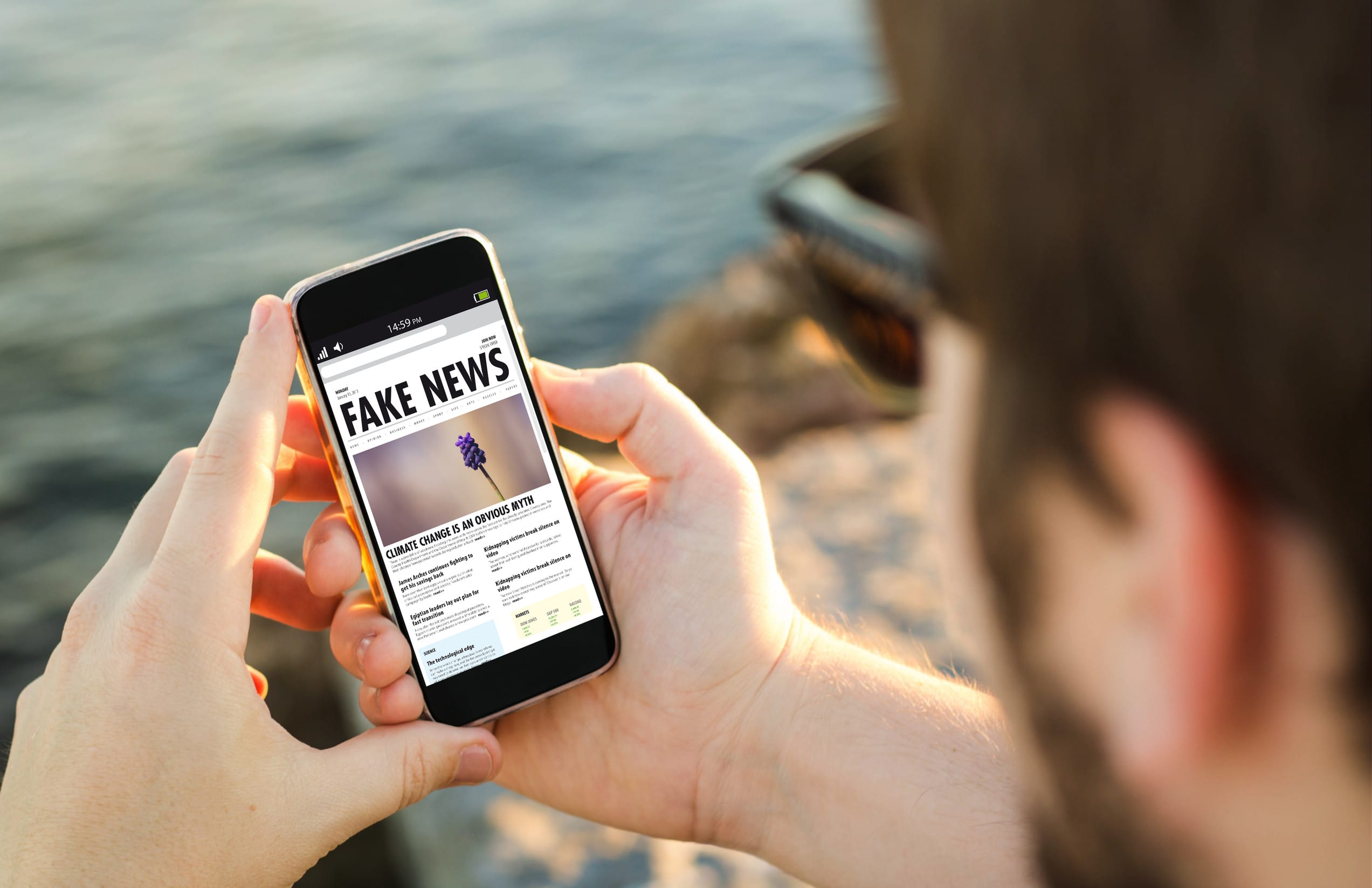
Fake News

Image Source: 123rf.com

Misinformation spreads like wildfire on Facebook, often amplified by algorithms that prioritize engaging content. False stories, manipulated images, and misleading videos can shape public opinion and incite panic or division. The rapid dissemination of disinformation can have real-world consequences, affecting everything from public health to political stability. Combating this requires critical thinking, fact-checking, and responsible sharing practices. The digital age demands that we all become more discerning consumers of information.

Data Privacy Breaches

Facebook has faced repeated scrutiny over data privacy issues, with numerous incidents of personal information being exposed or misused. Third-party apps and dubious advertisements can access user data without proper consent. These breaches can lead to targeted scams, identity theft, and other forms of exploitation. Protecting your privacy by adjusting your account settings and being cautious about what you share is more important than ever. Data privacy remains one of the most pressing concerns for users on the platform.

Cyberbullying and Online Harassment

Cyberbullying has become an all-too-common issue on Facebook, affecting users of all ages but especially younger individuals. Harassing comments, doxxing, and targeted abuse can severely impact mental health and emotional well-being. The anonymity provided by the internet often emboldens perpetrators to engage in abusive behavior without facing consequences. Victims of cyberbullying may feel isolated, fearful, or even depressed as a result. Addressing online harassment requires a combination of personal vigilance and robust platform policies.

Scams and Fraudulent Marketplaces

Facebook’s Marketplace and various buy/sell groups are frequently exploited by scammers looking to defraud unsuspecting users. Fraudulent listings, counterfeit products, and bogus transactions are common, leaving victims with financial losses and frustration. The ease with which scammers can create appealing yet deceptive offers makes vigilance essential. Users should always verify seller credibility and exercise caution when making purchases online. Protecting yourself in these digital marketplaces is critical to avoiding scams.

Navigating Facebook Safely

While Facebook offers incredible opportunities for connection and community, it also hosts a variety of risks that can compromise your safety and privacy. Staying informed about these threats, from phishing scams to cyberbullying, is the first step toward protecting yourself. By adopting cautious online habits, verifying sources, and adjusting privacy settings, you can enjoy the benefits of social media while minimizing its dangers. The digital world is constantly evolving, and so must our strategies for staying safe.

Have you encountered any of these issues on Facebook? Share your experiences and safety tips in the comments below!

Read More:

10 Scary Facts About DriveTime

11 Things You’re Doing Online That Hackers Love

Latrice Perez

Latrice is a dedicated professional with a rich background in social work, complemented by an Associate Degree in the field. Her journey has been uniquely shaped by the rewarding experience of being a stay-at-home mom to her two children, aged 13 and 5. This role has not only been a testament to her commitment to family but has also provided her with invaluable life lessons and insights.

As a mother, Latrice has embraced the opportunity to educate her children on essential life skills, with a special focus on financial literacy, the nuances of life, and the importance of inner peace.


Filed Under: Personal Finance Tagged With: Cyberbullying and Online Harassment, Data Privacy Breaches, Facebook, Scams and Fraudulent Marketplaces, Social media

Own a Business? Think About Your Plan

August 8, 2013 by Joe Saul-Sehy 9 Comments

Hey, everyone! I’m back here….it appears OG and I are going to write at FFA once per week. My posts here will be more structured and on-task than my writing at Stacking Benjamins. If you’re looking for more humorous writing, find me there……


I just got off the phone with my coach. We have a session three times per month and they’re a powerful use of time. Not only do we focus on business, but on the balance between my business, personal and spiritual life.

This month we’ve begun digging deep. Here’s what we’re working through:

1)   I’ve listed all of my important strategic priorities for the fall.

If I don’t prioritize what’s important to me right now, I find that it gets lost in the shuffle. It’s better to plan my fall now to make sure that those events that are important to my business and family all make the cut.

2)   I took out the calendar and planned my model week. This also included making sure I block out time for family and friends. I don’t want to get buried in my work and forget my priorities.

For me, the Apple calendar works best because I use mostly Apple products. However, you should do something similar and find a good  calendar that will automatically sync with all your devices. That way, whenever you remember something that needs to be added to a calendar, you don’t have to worry about being at your desk.

3)   I reviewed my business accounts. Because I’m starting to build up some money in my business accounts that I’ll be spending later in the year, I’m interested in business savings. By setting up separate accounts, I can make sure my “buckets of money” for different projects don’t inadvertently get spent on other, less important pursuits.

4)   I scheduled creativity.  This is an important one for me. To write entertaining pieces and fun podcasts takes a ton of creative “juice.” Studies have shown that a neatly sewn calendar actually decreases creativity. I’ve scheduled time to read (called R&D) and time to play games with friends. I also schedule time to listen to other podcasts and read other blogs.

5)   I created automation whenever possible. If I could automate it, I’ve scheduled ways to get it done. Much of my twitter and Facebook posting can be prescheduled. Because I’ve found a bank that offers free business banking, I’ve automated much of my financial tasks. Anyone helping me on the back end of the site is given tasks each Monday so that I’m able to concentrate on the reader experience.


That’s what I’m doing to plan for the fall. How about you?

Enhanced by Zemanta
Photo of Joe Saul-Sehy
Joe Saul-Sehy

Joe is a former financial advisor and media representative for American Express and Ameriprise. He was the “Money Man” at Detroit television WXYZ-TV, appearing twice weekly. He’s also appeared in Bride, Best Life, and Child magazines, the Los Angeles Times, Chicago Sun-Times, Detroit News and Baltimore Sun newspapers and numerous other media outlets.  Joe holds B.A Degrees from The Citadel and Michigan State University.

joesaulsehy.com/

Filed Under: Banking, money management Tagged With: Business, business planning, Calendar, Facebook, Time management

Facebook and Morgan Stanley: Who is To Blame?

May 30, 2012 by The Other Guy 15 Comments

Whose responsibility is it when your investment in Facebook or Morgan Stanley declines in value? The company? A broker?

Certainly you’re not to blame.

The current proliferation of lawsuits against these companies makes me ask a straightforward question. Should there be lawsuits against Facebook and Morgan Stanley? (See these articles for more information if you don’t know what I’m talking about: Forbes: Facebook Lawsuits Piling Up.)

I’m reminded of society’s lack of personal responsibility each and every time I drive up the highway to see my mom.  I haven’t added all the advertisements up, but there is a certain personal injury lawyer in our town who advertises everywhere.  I don’t know this lawyer intimately, but my wife works in the same office building and sees the people who come in and out of the front door.  There are all sorts of people trying to sue for anything under the sun.  Instead of trying to take over the world, they’ll just take it from someone else, because somehow, they’re “owed” something.

One of my favorite books is The Road Less Traveled by M. Scott Peck, M.D.  That book contains my favorite quote from any book:

We cannot solve life’s problems except by solving them. This statement may seem idiotically tautological or self-evident, yet it is seemingly beyond the comprehension of much of the human race. This is because we must accept responsibility for a problem before we can solve it. We cannot solve a problem by saying “It’s not my problem.” We cannot solve a problem by hoping that someone else will solve it for us. I can solve a problem only when I say “This is my problem and it’s up to me to solve it.”  But many, so many, seek to avoid the pain of their problems by saying to themselves: “This problem was caused me by other people, or social circumstances beyond my control, and therefore it is up to other people or society to solve this problem for me. It is not really my personal problem.”

This is as true in the investment world as anywhere. As an investor, you must accept responsibility for your own investing decisions.  You cannot blame others for your decisions (or indecisions).  You won’t help your cause with a “I’m mad I made a bad decision in investing so I wanna sue everyone” mentality.  Recent lawsuits against Facebook and Morgan Stanley make me crazy – I don’t believe for a second that if some magical prospectus would’ve fallen from the sky that all these people wouldn’t have bought Facebook stock.  There’s all this talk about how Morgan Stanley screwed everyone and how Facebook lied — why didn’t these people do their own research?  Take some personal responsibility!  I’m pretty sure that had Facebook stock gone from $38 to $75 in one day, Morgan Stanley would not have called all the new shareholders and said “Oops, we priced this incorrectly so we need to sue you to find a more correct price.”

As an investor, you and you alone are responsible for the actions and outcomes of your investing decisions.  Whether you have an advisor, a consultant, or are a DIY’er, remember one thing: it’s your money.

Be accountable for it.

Enhanced by Zemanta

Filed Under: Meandering, smack down!, successful investing Tagged With: Business, Facebook, Initial public offering, investing, M. Scott Peck, Morgan Stanley, personal accountability, Wall Street

Facebook and Zynga IPOs – Should You Buy?

December 13, 2011 by The Other Guy 19 Comments

We’ve all felt the magnetic pull of an IPO. The roaring 90’s come back to us. Why am I a blogger? I could invest in an IPO and be knee-deep in a Carribean island swimming pool holding a margarita the size of my face. Then again, I wouldn’t hold the margarita. I’d hire someone else to hold it.

So…the upcoming Facebook and Zynga IPOs – Should You Get In or Stay Out?

IPOs (initial public offering) seem to have lost a little of their luster over the past decade or so, but nevertheless everyone still turns their heads when a “big name” walks by and announces an IPO. Earlier this year it was the Groupon IPO, last year it was the “new” General Motors.

When a company announces their IPO, many people want “in” – it’s easy to see why: who among us hasn’t asked (at least to themselves, if not aloud) I wonder what would’ve happened if…

• I would’ve bought Microsoft in the 1980s;
• I would’ve bought Apple when Steve Jobs came back on board;
• I would’ve bought Google at $85/share…

As a financial advisor, my goal is to make sure my clients don’t “should” all over themselves.

(OK sidebar: If you didn’t laugh at that last sentence, you really need to read it out loud. Go ahead…get it? “Should” on one’s self? I can’t believe my comedy career never took off…okay….back to our regularly scheduled programming)

It tempts you because it seems like easy money. Who doesn’t like to live in fantasy land for a few minutes each day? My fantasy investment purchase? Greek debt insurance 2 years ago. That’s some serious jenga. But I digress.

So, here’s the deal with IPOs and why they’re not your best option:

1. Unless you have an “in” (think: your brother works for Facebook) you’re not gonna get any IPO shares

This means that if you try to buy into the Facebook IPO the day it opens, you won’t receive the IPO price (which is what everyone will talk about on CNBC). You’ll purchase your shares at a different–and often much higher–cost.

2. They don’t usually make money – at least not right away:

Image representing Zynga as depicted in CrunchBase

Image via CrunchBase

Like visions of gold, we conveniently remember IPO “winners” like Google or Amazon. We block out the long, tired stack of losers. Remember Pets.com? How about Vonage…they aren’t dead, but that IPO was a mess. eToys? Amazon.com, a mammoth stock by today’s standards, IPO’d in mid-1997…and didn’t make any percentage gains for several months. Google’s IPO occurred in 2004. The stock experienced a big spike, and then lay flat for 6 months. Often, IPOs don’t pay off for years, even when they’re winners like Google or Amazon.

3. The people who make the real money? The CEO, executive team and investment bankers. This is a big cha ching! event for them.

The Blackstone Group, a private equity and asset management firm, announced in 2007 announced they were going public. The issue drew so much attention that no one really paid any attention to the prospectus.

Why does it matter?

Well, it turns out that The Blackstone Group IPO launch only included “part” of their business (not that part that made money, mind you). After all the shares were gobbled up and the CEO and investment bankers off-loaded their shares (the CEO made $2.6 Billion–lovin’ the capital “B”), any gullible shareholders were stuck with a 42% loss in the first 12 months.  Here’s a great book discussing the lengths at which dirty CEO’s will go to cover their fraud.

Here’s our thoughts:

If you want to own a “cool new shiny Zynga IPO”, but don’t want to do the homework involved with reading the prospectus or making friends with an employee to get the “insider” price, buy a mutual fund in that same space. If it’s as awesome as you think, the fund manager will buy some (probably at the actual Zynga IPO price) and you’ll own some by proxy. If it’s a sham, the fund manager, who has a thousand times more resources than you, will probably pass – allowing you the easy way to decide whether to pass as well.

Plus, really, do you think it’s a good idea to put every dollar you own in Zynga shares–even if you could? What’s the best that could happen? Your money could double? Triple?

Sure. But what’s the risk?

We’re curious about your opinion. What do you think about the Facebook or Zynga IPO? Are you buying the hype?

Enhanced by Zemanta

Filed Under: investing news, investment types, Meandering, successful investing Tagged With: Blackstone Group, Facebook, free financial advice, free financial advisor, General Motors, Initial public offering, IPO, Zynga

FOLLOW US

Search this site:

Recent Posts

  • Can My Savings Account Affect My Financial Aid? by Tamila McDonald
  • 12 Ways Gen X’s Views Clash with Millennials… by Tamila McDonald
  • What Advantages and Disadvantages Are There To… by Jacob Sensiba
  • 10 Tactics for Building an Emergency Fund from Scratch by Vanessa Bermudez
  • Call 911: Go To the Emergency Room Immediately If… by Stephen Kanaval
  • 7 Weird Things You Can Sell Online by Tamila McDonald
  • 10 Scary Facts About DriveTime by Tamila McDonald

Copyright © 2026 · News Pro Theme on Genesis Framework