• Home
  • About Us
  • Getting Finances Done
    • Hiring Advisors
    • Debt Management
    • Spending Plan
  • Insurance
    • Life Insurance
    • Health Insurance
    • Disability Insurance
    • Homeowners/Renters Insurance
  • Contact Us
  • Our Editorial Commitment

The Free Financial Advisor

You are here: Home / Archives for Retirement

7 Tips to Get The Most Out Of Your 401k v/s Pension

January 11, 2021 by Tamila McDonald Leave a Comment


7 Tips to Get The Most Out Of Your 401k vs Pension

When it comes to company-sponsored retirement plans, 401(k)s are likely the most common offering. While pensions were once fairly widely used, that isn’t the case any longer. For some professionals, this is incredibly frustrating. Pensions – also called defined benefit plans – come with a level of stability and predictability that you don’t always find with a 401(k). Investment returns can be volatile, and some earnings may be eaten away by fees and other costs. However, that doesn’t mean the results in a pension vs 401k calculator can’t come out in favor of the latter. If you want to know how to pull that off, here are seven tips that can help.

1. Contribute Early and Consistently

With 401(k)s, compound interest is your friend. By contributing at a younger age and continuing to do so for as long as you are eligible, you’re allowing the magic of compound interest to work for you.

Additionally, by making regular contributions, you can offset some of the impacts of volatility. While some of your money will be invested when the market is strong, you also get to invest when prices in the market are low. In the end, this often balances your investing out over time, which does work in your favor.

2. Contribute the Maximum Amount Every Year

Each year, the IRS sets a maximum contribution limit for 401(k)s. Ideally, you want to contribute up to that amount, ensuring you can stash away as much money as possible.

For 2021, the employee 401(k) contribution limit is $19,500. For individuals who are 50 years old or older, they can also add in catch-up contributions up to an additional $6,500.

It’s important to note that employer contributions aren’t counted toward that limit. Only what you save is used to determine if you’ve hit the limit, so employer contributions can send you above and beyond those amounts.

Ultimately, contributing the maximum amount gives you the best chance of coming out ahead in the pension vs. 401(k) debate.

3. Capture Your Full Employer Match

In many ways, employer matches are like free money. They add to your savings without impacting your income, but only if you’re actively contributing enough to qualify for the match.

If you’re contributing the maximum amount each year, you save more than enough to get the full match. However, if you can’t set aside the maximum amount, work to dedicate enough of your funds to receive your full employer match. That way, you get as much free money as possible, increasing your odds of having enough in savings to have your 401(k) perform at least as strongly as a pension.

4. Aim for 15 to 20 Percent

Another option for winning the pension vs. 401(k) game is to make sure you are stashing away at least 15 to 20 percent of your income. Now, this can include your employer match. So, if your employer will match up 3 percent, that means you need to dedicate 12 to 18 percent to hit that mark.

Precisely how much you need to set aside may vary on either your current income level or your target retirement annual income amount. Some professionals may be able to get by saving less if they tend toward frugality, plan to retire in a low-cost area, or have outside investments or retirement income sources that will bolster their financial security during their golden years.

However, it typically doesn’t hurt to over-save a bit. Worst case, your retirement will be more comfortable than you initially hoped, and that isn’t necessarily a bad thing.

5. Diversify Your Portfolio

While diversifying your portfolio won’t automatically lead to gains, it can help protect the value of your 401(k). Typically, when markets shift, some sectors are affected more than others.

By diversifying, you create a level of stability by ensuring you don’t keep all of your eggs in one basket. Usually, when some of your investments are trending downwards, others aren’t. You end up better equipped to ride out normal market fluctuations, ensuring your portfolio as a whole is heading in the right direction no matter what a portion of your individual investments is doing.

6. Reconsider Your Risk Level

The risk level represented in your 401(k) plays a role in how much your savings may grow over time. Higher-risk investments typically have the potential to yield greater growth. However, there’s also a chance for more significant losses.

If your portfolio is diverse, you can often afford to take on additional risk. This is especially true for younger professionals who have enough time to ride out a degree of volatility.

While you don’t want to take on so much risk as to keep yourself up at night worrying about your 401(k), consider being as aggressive as you can while still feeling comfortable about your choice. That way, you’re giving your portfolio a chance to grow.

7. Reevaluate Your Portfolio Annually

Investment decisions you make when you first start with a 401(k) may not be ideal down the road. Economic conditions change, sectors shifts, and the value of various investments will move around.

If you want to make the most of your 401(k), review your portfolio annually. See if your allocations still make sense or if making an adjustment is a smart move. Not only can this allow you to alter your strategy based on economic shifts, but it also gives you a chance to reassess your risk level and portfolio composition. You can make changes to make sure you are diversified and that your risk level feels appropriate based on your life stage.

Do you have any other tips that can help someone get the most out of their 401(k) vs. pension? Share your thoughts in the comments below.

Read More:

  • Investment Tips: How Much Should I Have in My 401(k)?
  • Will My 401(k) Last for the Rest of My Life?
  • Five 401(k) Alternatives You Need to Know About
Tamila McDonald
Tamila McDonald

Tamila McDonald is a U.S. Army veteran with 20 years of service, including five years as a military financial advisor. After retiring from the Army, she spent eight years as an AFCPE-certified personal financial advisor for wounded warriors and their families. Now she writes about personal finance and benefits programs for numerous financial websites.

Filed Under: Retirement Tagged With: 40l(k), pensions

Why Understanding Your Paycheck Stub Is Important

November 25, 2020 by Jacob Sensiba Leave a Comment

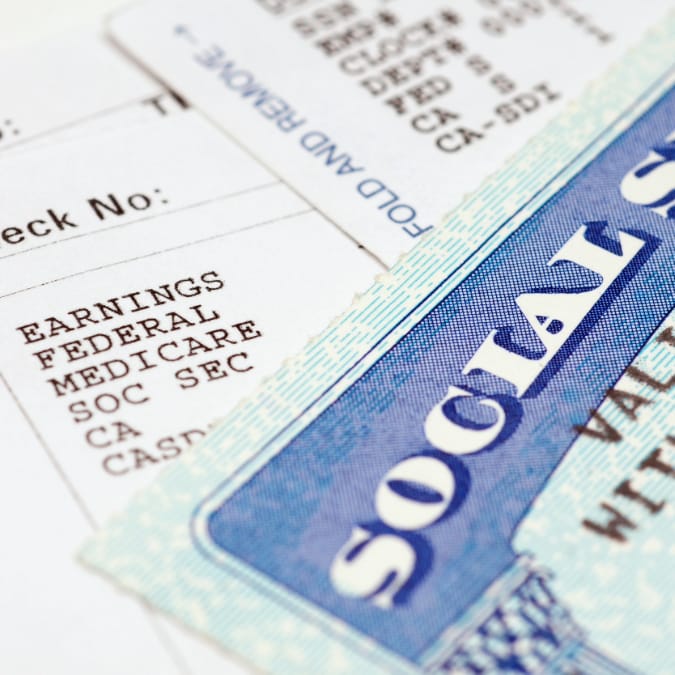
Understanding your paycheck stub is essential. Your paycheck stub is included when you get paid. Whether you do direct deposit or get paper checks, the pay stub will show important information about your pay.

There are several key pieces to the paycheck stub – gross earnings, taxes, deductions, and net earnings. There are also other, seemingly, unimportant things on your paycheck. The information included on a paycheck stub include:

  • Hours works
  • Wages earned – gross and net
  • Overtime
  • Benefits – i.e. health insurance premium payment, retirement plan contributions
  • Taxes – federal, state, fica (social security 6.2, medicare 1.45, and .9 surtax if you earn over $200,000
  • Year to date info – hours, wages, taxes, benefits, etc.\
  • Personal information – name, address, social security number
  • Date of pay period
  • Pay rate
  • PTO, sick days, vacation days

Why is understanding your paycheck sub so important?

A pay stub is a way of keeping accurate records. It shows what employees worked, what they were paid, what taxes were taken out, retirement contributions, etc.

Because it’s your responsibility to report and address discrepancies. If you think you got paid less than you were supposed to or worked more than what’s reported, you need to bring that up. If your deductions (retirement plan contributions, taxes, health insurance premiums) appear to be less or more than you assumed, you need to bring that up.

Why are those things important?

  • What you earn is what allows you to afford to live. If you worked more or worked overtime, and it wasn’t reported correctly, your paycheck can suffer.
  • Taxes are incredibly important – if you expect to get money back on your tax return, but come to find out they weren’t withholding enough, you can end up owing instead. Your withholdings are very important to understand.
  • Health insurance premiums – if you’re not paying enough, your policy can cancel due to non-payment. What happens then? You go to the doctor and pay through the nose because you don’t have coverage?
  • Retirement plan contributions – If they “contribute” too much, you will have less on your check. If they “contribute” too little, your nest egg will suffer.

Paycheck stubs are incredibly important. They help you and your employer keep track of pertinent information, like taxes, health insurance premiums, retirement plan contributions, and your salary. Make sure you understand it and make sure you address any sort of discrepancy. That’s your responsibility.

Related reading:

Paycheck Stubs

Three Accounting Tools Every Small Business Needs

Does Health Insurance Affect Your Taxes

Jacob Sensiba
Jacob Sensiba

Jacob Sensible is a financial advisor with decades of experience in the financial planning industry.  His journey into finance began out of necessity, stepping up to support his grandfather during a health crisis. This period not only grounded him in the essentials of stock analysis, investment strategies, and the critical roles of insurance and trusts in asset preservation but also instilled a comprehensive understanding of financial markets and wealth management.  Jacob can be reached at: jake.sensiba@mygfpartner.com.

mygfpartner.com/jacob-sensiba-wisconsin-financial-advisor/

Filed Under: Insurance, money management, Personal Finance, Retirement, Tax Planning Tagged With: deductions, earnings, paycheck, paycheck stub, salary, taxes

Should We Expect to See a Social Security COLA Increase in 2021?

November 2, 2020 by Tamila McDonald Leave a Comment

social security cola increase

As the year begins to come to a close, many retirees start to wonder if they will see a Social Security COLA increase. When payment amounts go up, it can be a boon for retirees on tight budgets, giving them a bit more breathing room and ensuring inflation doesn’t impact them too severely. If you are wondering if a Social Security COLA increase is coming in 2021, here’s what you need to know.

What Is a Social Security COLA Increase?

Every year, the federal government examines the Consumer Price Index (CPI-W), which is tracked by the Department of Labor, to determine if the cost of living has increased. When the CPI-W rises, it’s usually a mark of inflation, meaning that the prices of goods and services have gone up, overall.

When that occurs, Social Security recipients may receive a cost of living adjustment (COLA). Usually, this means their Social Security income payments go up by a certain percentage, reflecting the change in the CPI-W.

Should We Expect a Social Security COLA Increase in 2021?

In 2021, around 70 million Americans who are receiving Social Security will see their benefits increase. Additionally, individuals who get Supplemental Security Income (SSI) payments will also see a boost.

The increase is set at 1.3 percent. That means, if a person is receiving $1,500 a month in Social Security benefits, their payment will likely go up to $1,519.50 in the new year.

How Do You Find Out If Your Social Security Benefit Is Going Up?

When there is a Social Security COLA increase, the Social Security Administration sends out notifications in the mail to every recipient. In that letter, they share how much the person’s benefits have changed based on the COLA increase.

However, for those who want to find out faster, they can log into the mySocialSecurity portal and check their message center. There, they can see the same information that will appear in the mailed notice.

Using the portal can be an ideal option. The benefit information is available online in early December, while some may not receive their notification in the mail until later in December. Since knowing how much you’ll receive in Social Security can be critical for budgeting and planning, finding out as quickly as possible is often preferred.

As an added convenience, users can log into the portal now and sign up for text or email alerts. With those, they’ll receive a notification whenever a new document is available for viewing online. When it comes to the COLA increase, the notification will let you know as soon as the information is available for viewing, ensuring you find out at the earliest possible moment.

Is Anything Else Changing with Social Security in 2021?

Yes, there are other Social Security changes going into effect in 2021. One of the most notable changes is the increase in the maximum Social Security benefit for workers who retire at full retirement age. The maximum in 2020 was $3,011 per month. In 2021, it will go up to $3,148 per month.

Additionally, the maximum earnings amount subject to Social Security payroll taxes is rising with the new year. This will impact working individuals and raises the maximum from $137,700 to $142,800.

The retirement earnings tax exemption will also shift. It’s set at $18,240 per year ($1,520 per month) for 2020 for those under full retirement age. In 2021, that will go up to $18,960 per year ($1,580 per month).

For those who’ve reached full retirement age (which varies depending on the year you were born), the exemption in 2020 was $48,600 per year ($4,050 per month). In 2021, that goes up to $50,520 per year ($4,210 per month).

A Few Other Increases

There are also a few other increases that impact certain population segments. For example, there will be changes to the Substantial Gainful Activity (SGA) maximums in 2021. The thresholds will increase for non-blind and blind Social Security Disability recipients, as well as those in a Trial Work Period (TWP).

Other changes may also be coming in 2021. If you are a Social Security recipient of any kind, it’s wise to keep an eye on your online notifications and mail notices. That way, you can see if anything on the horizon will impact your benefits in the new year.

What do you think about the Social Security COLA increase in 2021? Do you think it’s enough, or do you think it falls short? Share your thoughts in the comments below.

Read More:

  • Will Social Security Completely Disappear Before You Retire?
  • Tips for Avoiding Social Security Disability Denial
  • New Social Security Legislation


Tamila McDonald
Tamila McDonald

Tamila McDonald is a U.S. Army veteran with 20 years of service, including five years as a military financial advisor. After retiring from the Army, she spent eight years as an AFCPE-certified personal financial advisor for wounded warriors and their families. Now she writes about personal finance and benefits programs for numerous financial websites.

Filed Under: Retirement Tagged With: retirement benefits, Social Security

How Long Will My Retirement Funds Last?

September 21, 2020 by Tamila McDonald Leave a Comment

how long will my money last

Whether you’re currently retired or simply want to be prepared for the future. Figuring out how long your retirement funds will last is critical. That way, you know when you can safely leave the workforce, or if you need to make changes to retire on your preferred date. While determining the health of your retirement account is challenging, it can be done. If you want to know how long your retirement funds will last, here’s what you need to do.


Estimate Your Needed Withdrawal

If you’re close to retirement, it’s wise to do a solid estimate of your post-retirement expenses. Ideally, you want to create a reasonably accurate budget. Along with any debts or recurring bills, factor in fluctuating costs – like groceries – as well as entertainment, travel, hobbies, or any other places you may want to spend money.

However, you don’t want to stop there. You also need to take a look at all of your sources of retirement income. For example, you may want to factor in Social Security. If you head to the mySocialSecurity portal, you can take a look at how much you’re likely to receive, allowing you to factor it into the equation.

By getting a grip on your expenses and all of your sources of income, you can determine how much you’ll need to withdrawal each month or year from your retirement account. That way, you can move onto the next step with greater ease.

Head to a Retirement Calculator

There are a number of retirement calculators that will help you determine how long your money will last. Usually, all you need to know is the average annual rate of return on your account, the balance at the time you plan on making withdrawals, and how much you want to withdrawal each month or year. It’s also helpful to know your marginal tax rate if the money you pull will be taxable.

At times, you may need to do some additional math to determine how much you’ll have saved before you retire. If so, you can try the calculator by Dave Ramsey to get an idea of the potential value of your retirement account.

Beyond that, if you’re looking for a simple place to start, the calculator by Mutual of Omaha is a solid option. It’s easy to use and produces a simple chart. The only drawback to this one is that it only goes out for 30 years. If your retirement savings will outlast that, then you may need to do a second calculation to get the exact amount of time before it’s gone.

However, if you’re savings is going to last you more than 30 years, and you’re not retiring early, you could likely assume that you’re fine. But it may also be wise to redo the calculation, adjusting certain parameters to ensure you aren’t being overly optimistic.

For example, reduce the expected Social Security growth rate and the expected return on your retirement account. That way, you can see how long it will last if things don’t go as well, giving you another perspective on the staying power of your retirement fund.

Do you have any tips that could help someone figure out how long their retirement funds will last? Share your thoughts in the comments below.

Read More:

  • Mistakes to Avoid in Retirement
  • How Much Do I Need to Save for Retirement? A Helpful Guide
  • Just Entering the Workforce? Let’s Talk About Retirement
Tamila McDonald
Tamila McDonald

Tamila McDonald is a U.S. Army veteran with 20 years of service, including five years as a military financial advisor. After retiring from the Army, she spent eight years as an AFCPE-certified personal financial advisor for wounded warriors and their families. Now she writes about personal finance and benefits programs for numerous financial websites.

Filed Under: Retirement Tagged With: retirement money

Mistakes to Avoid in Retirement

May 27, 2020 by Jacob Sensiba Leave a Comment

Mistakes to Avoid in Retirement

In many finance websites, blogs, and articles, a lot has been said about how to prepare for retirement, but I believe there hasn’t been enough written about what to do when you get there. More specifically, there’s a lack of content about mistake, or mistakes, to avoid.

In this article, we’ll explore several mistakes to avoid when you reach this milestone.


Spend beyond your means

This seems obvious, but once the psychological barrier of spending versus savings is breached, people (not everyone) develop this mentality of “I saved for 40 years for this moment, why shouldn’t I enjoy it?”

You should enjoy it. You worked your butt off for it, right? There are strategic ways to do this, however. The mistake is going gangbusters right away.

  • Create a budget/spending plan – Your budget in retirement will be different than your budget before retirement. Create line items for everything, and get real granular with your discretionary spending (i.e. sub line items to breakdown where the discretionary spending is actually going).
  • Plan for healthcare – Healthcare costs, generally speaking, will be your largest expense in retirement. Plan accordingly.
  • Income strategy – More than likely, you’ll have a few different income sources (social security, pension, retirement distributions, etc.). Create a line item for each source.
  • Senior discounts – Take advantage of every single one. There might be a psychological hesitation with this, as it forces you to come to terms with your age/where you are in life
  • Spoil grandkids – Every grandparent wants to spoil their grandkids to death, but it must be done within reason. Get creative and be strategic about when and how much.

Make Quick Decisions

Another mistake is making quick decisions. Don’t do it. Any decision you classify as BIG needs to be well thought out. This could be anything like moving, downsizing, vacations, or eliminating a vehicle.

I would argue that any decision about an expense that’s not in your budget/spending plan, should be thought about for several days. My rule of thumb is a week. By then, the euphoria of such a purchase has gone away, then you think more logically about it.

Investing Aggressively

Over the years, a big mistake clients make is the desire to invest more aggressively than they should. Oftentimes, this is to compensate for an inadequate savings rate during their working years or a significant market pullback that hurt their portfolio.

While capital appreciation is still an investment objective in retirement, it’s no longer the primary goal.

This primary goal should be capital preservation. Limiting losses on what you have. This has less to do with time and more to do with your decreasing ability to go out and make more money. Allocate your portfolios accordingly.

Ignoring Estate Planning

Estate planning is a key ingredient to your financial planning recipe. It mustn’t be ignored. Every debt and asset you have needs to be accounted for, listed, and given a task for when you pass.

Deciding to organise your estate can be a difficult mental barrier for some. However, finding a wills and estate attorney you can trust is necessary to ensure your estate is well taken care of, both for your own peace of mind but also any loved ones.

Isolating Yourself

Your social life is more important than ever. Countless studies show that people with strong relationships outlive those that don’t. So the mistake here is not making your social life a priority.

Join a community, volunteer, retain, and nourish friendships. Whatever flavor of social life sounds desirable, make it a priority.

Letting Yourself Go

Taking care of your mind and body is always important, but especially now. It will keep you healthy, therefore, lowering your healthcare expenditures, but it’s also another way for you to meet people.

Go for walks with neighbors and/or friends. Join a gym. Many of which have reduced rates for seniors. Additionally, many health insurance companies have “silver sneaker” programs that offer inexpensive services and programs for seniors.

Expecting it to be easy

This is a BIG life change and the transition will not be easy.

Not only will you shift from saving to spending, but those social connections you developed over your working years can reduce in frequency and strength.

Go easy on yourself and be patient.

Taking Social Security too early

Unfortunately, there are situations and scenarios where taking Social Security Income (SSI) distributions early is necessary. However, for those of you where this does not apply, speak with a trusted advisor about optimizing your SSI strategy.

Getting Swindled

Scammers adapted. They’re smart and they know how to target susceptible people. Unfortunately, elderly individuals are inherently more at risk than the general population.

Any email, phone call, or text that you receive (unsolicited, of course) should be greeted with a fair amount of skepticism. Don’t willingly give out any pertinent information (name, DOB, social security number, etc.).

Doing it alone

A BIG mistake people make is thinking they can plan by themselves. It would behoove you tremendously to consult with several experts. Estate attorneys and financial advisors should be at the top of this list.

Do your research, check online reviews, and get testimonials from trusted contacts. Having capable professionals in your corner could set you up for success and put your mind at ease.

Related reading:

Why Asset Allocation Matters

Your Go-To Budget Guide

Why Your Will Should Be Up To Date

Your Estate and Your Family

Moving: Another State, Another Country

Jacob Sensiba
Jacob Sensiba

Jacob Sensible is a financial advisor with decades of experience in the financial planning industry.  His journey into finance began out of necessity, stepping up to support his grandfather during a health crisis. This period not only grounded him in the essentials of stock analysis, investment strategies, and the critical roles of insurance and trusts in asset preservation but also instilled a comprehensive understanding of financial markets and wealth management.  Jacob can be reached at: jake.sensiba@mygfpartner.com.

mygfpartner.com/jacob-sensiba-wisconsin-financial-advisor/

Filed Under: conservative investments, Estate Planning, Investing, money management, Personal Finance, Planning, Retirement Tagged With: Asset Allocation, capital, Estate planning, investing, Retirement, retirement planning

How My Finances Have Changed with Covid

May 20, 2020 by Jacob Sensiba Leave a Comment

Aside from the death and illness, it has caused, Covid-19 has done a number on the financial system and the economy.

I’m writing this on May 19th, and up to this point, over 30 million people have filed for unemployment benefits.

In my previous post, which can be found here, I detailed how you can plan in the event of job loss.

Even if you haven’t lost your job, more than likely, your finances have changed. In this article, I want to pull back the curtain on how my finances have changed during this environment.

My Job

Thankfully, I’m still working. I work for my family’s business. Technically speaking, we have four family businesses and I work three out of the four in various capacities.

Two out of those three businesses are very resilient during recessions, so I’m not terribly worried about my income from those two sources.

The last, however, will be influenced by movements in the market. If I do my job well, it shouldn’t vary a ton, but if I don’t, my clients will feel the pain, as will I.

The reason being is I, typically, charge a percentage of the assets under management (AUM). If account values go down, so does the fee I receive. The two go hand in hand, as they should. If I do a poor job, I should make less. It just makes sense.

With that said, my income hasn’t moved too much from the financial advising gig. It dropped a little bit last month, but I imagine it’ll come back up by the end of May, as the market has recovered.

Opinion: The Economy

I don’t know if I’ve mentioned it yet here, but my opinion of the economy is darker than some. I think there will be a cascade of bankruptcies in the public and private sectors.

With regard to the public sector, the companies that are rated BBB are already at record highs. When revenues stop coming in or significantly reduce, it’s hard for companies to make interest payments to lenders (holders of debt).

Companies will start defaulting on their debts, and the ability to pay, as well as other factors, help determine the credit rating. This will cause a slew of BBB rated companies to get downgraded.

Funds

With regard to fixed income mutual funds and ETFs, the vast majority of them have rules they need to abide by. One of those rules could be only investing in investment-grade companies.

Investment grade is anything from AAA to BBB. My fear is that when companies get downgraded from BBB to BB, it’ll cause funds to dump those companies; exasperating the sell-off.

My Finances

With that said, here’s how I’ve adapted.

My finances really haven’t changed much. I’m spending more on groceries, especially right now as I am stocking up on certain goods. The added benefit of that is I’m spending less on food from restaurants, which saves me money and I’m eating healthier too.

So you’re spending more on groceries and less on take-out…what else? Well, given the nature of Covid and the uncertainty that surrounds it, my priorities have shifted a little.

More Cash

I’ve planned my clients’ portfolios with the above scenario in mind. The majority of clients aged 60 and up are positioned more conservatively than normal. With that in mind, all of the portfolios I manage will take a little hit, and my income will drop as a result.

I’ve suspended my retirement contributions, via payroll deduction, until I feel comfortable again. This may seem counterintuitive because of the stress I put on leaving things alone and dollar-cost-averaging as prices go lower.

Due to the fact that my income has some variability, not to mention my rental property and the uncertainty of my renters’ making rent payments (because of talks about forgiving rent payments for those affected by Covid), I have to keep more cash available than normal.

Retirement Contributions

As I mentioned, I stopped my automatic retirement contributions, but I am making voluntary contributions to my Roth IRA when I feel my cash available is adequate.

Other than that, nothing else has changed. Debt payments will continue as planned and saving for a down payment on a house will also continue.

Be advised: Any opinion expressed about the market/economy is strictly an opinion and should not be viewed as a certainty. Additionally, my preparations for said opinions are specific to me. Consult your financial professional about your particular situation.

Related Reading:

Why Asset Allocation Matters

What You Can Learn From Different Market Environments

Job Loss: What To Do

Dealing With Market Fluctuations

Jacob Sensiba
Jacob Sensiba

Jacob Sensible is a financial advisor with decades of experience in the financial planning industry.  His journey into finance began out of necessity, stepping up to support his grandfather during a health crisis. This period not only grounded him in the essentials of stock analysis, investment strategies, and the critical roles of insurance and trusts in asset preservation but also instilled a comprehensive understanding of financial markets and wealth management.  Jacob can be reached at: jake.sensiba@mygfpartner.com.

mygfpartner.com/jacob-sensiba-wisconsin-financial-advisor/

Filed Under: Debt Management, Featured, Investing, money management, Personal Finance, Retirement Tagged With: Budget, cash, coronavirus, covid-19, economy, emergency fund, fixed income, markets, Retirement

Job Loss: What to do

May 13, 2020 by Jacob Sensiba Leave a Comment

Losing your job is like a big punch to the gut. At first, it’s hard to process, but then your head starts spinning. What will I do for work? How will I pay my bills and put food on the table? What will my family do?

Taking a deep breath is a good first step. After that, it’s time to put a plan into action. Many of you could be experiencing this right now, given what the world looks like today.

In this article, I’m going to lay out how to financially prepare before and in the midst of a job loss.

First thing

As I said, this will be a big shock to absorb. Give yourself some time to realize what has happened. More than likely, you’ll go through the 5 stages of grief.

Unemployment

One of the first things you should do is apply for unemployment. There might be some hoops that you have to jump through, but one imperative item you need to confirm with your old employer is that you were let go and without cause. Resigning or being fired for cause disqualifies you from collecting unemployment.

Set money aside for taxes. Unemployment does not withhold FICA taxes or state income tax (if applicable). If you normally receive a refund, you might get a reduced refund or none at all. Plan accordingly.

Severance

The next step has to do with severance. If you were let go or fired without cause, your company will, most likely, offer it to you. It isn’t required by law, but most companies do it. Take severance home and review it closely. Don’t sign right away. Once you’ve reviewed it, take it back and negotiate.

Job Search

Starting looking for a new job right away. It does not pay to wait. All jobs are first come first served, set get searching as soon as possible.

Be picky, but pick up a job of some sort that will provide you with some cash flow.

Is now the time for a career change? Have you been dissatisfied with your industry or line of work? Do you have the skills and/or qualifications to make such a change? These could be questions to consider.

Finances

With regard to any debts that you have outstanding, call your creditors and see if they will let you defer payments, or at least make reduced payments, for a while. Also, make the minimum on your debt payments. Having cash available for other necessary items is more important.

Relentlessly cut expenses and review your budget with fine-toothed comb. Again, cash flow is your friend in your new situation so the more liquidity you have the better.

Pad your emergency fund. Obviously, this is something that needs to be done before you lose your job, so it’s imperative that you listen. Common advice is to save 3-6 months’ worth of expenses. If you’re self-employed and are responsible for payroll and other business expenses, it’s prudent to have 6-12 months worth saved.

HELOC? That stands for Home Equity Line of Credit. Is that something you are able to do? Is that something that you want to do? A HELOC turns the equity you’ve accumulated on your home into a loan.

Insurance

Life and disability insurance are very important coverages to have, but a just loss and loss of income could derail those coverages. There is a rider that can be added (waiver of premium) at the time of application so your policy stays in force while you are unable to make payments. *Be advised: this has to be done when you sign up, not after the fact.*

Healthcare is another important item to take care of. First off, if you have any appointments you were waiting to schedule, do it now before your coverage changes. The next step is to find a suitable replacement for your current coverage. This could be taking your spouse’s insurance, finding new coverage on the marketplace, or signing up for COBRA.

Retirement

Avoid dipping into retirement savings – this should be your last resort. Retirement savings accrues most effectively when you leave it alone. That’s when compounding works the best. Not only that, withdrawing funds prematurely will subject you to income taxes and an early withdrawal penalty.

Do you have 401(k) loans? If the answer is yes, you’ll be required to pay that loan back in its entirety in the next 60 days, otherwise, it’ll be considered a withdrawal. Again, taxes and a penalty.

Make a decision on what to do with the old retirement plan – Do you roll it to your new employer, roll it to an IRA, or leave it with the current institution. If you have a lower account balance, your HR department could require you to transfer it or cash out. Each company is different.


Related reading:

Employer/Employee Negotiations

Why Financial Literacy is Important

Your Go-To Budget Guide

Jacob Sensiba
Jacob Sensiba

Jacob Sensible is a financial advisor with decades of experience in the financial planning industry.  His journey into finance began out of necessity, stepping up to support his grandfather during a health crisis. This period not only grounded him in the essentials of stock analysis, investment strategies, and the critical roles of insurance and trusts in asset preservation but also instilled a comprehensive understanding of financial markets and wealth management.  Jacob can be reached at: jake.sensiba@mygfpartner.com.

mygfpartner.com/jacob-sensiba-wisconsin-financial-advisor/

Filed Under: budget tips, Cash Reserve, Debt Management, Personal Finance, Retirement, tax tips Tagged With: Debt, emergency fund, finance, job, job loss, job search, severance, unemployment

Dealing with Market Fluctuations

May 6, 2020 by Jacob Sensiba Leave a Comment

Over the past couple of months, we’ve seen increased volatility. Put simply, volatility is periodic market fluctuations.

In a month, from the end of February to the end of March, we saw the S&P 500 drop nearly 35%. Obviously, it wasn’t a straight drop. There were several up days and a few relief rallies.

Since then, we have seen the S&P come back to the tune of 22%.

In this article, I want to give a little information about how I deal with market fluctuations, where I look for opportunities, and how retirement savers navigate these difficult times.

What I Learned

At the beginning of my career, I always dreaded experiencing a bear market. What do I do? Do I sell out of everything to avoid the decline? What do I tell my clients? How will they react?

As I gained more experience and read more, I learned what to do.

Keep in mind that I started my career in 2014, still in the middle of a long bull market, and since then I’ve read everything I could get my hands on about finances, markets, and economics. I’ve listened to podcasts and watched YouTube videos.

A lot of the people that I learned from attributed their success to when they got started. Two gentlemen really stick out.

One began his career in 1987 and lost his shirt on Black Monday (20% decline in one day, October 1987). This taught him about diversification and the importance of a long-term strategy.

The other got started in the early 80s but had a much different experience. He did some research and analysis and found a lot of risk in the credit market. He stuck his neck out on this trade and what he predicted came to fruition.

However, the markets didn’t react how he thought. What he learned was that fundamentals are important, yes, but what [almost] matters more is investor behavior.

Market Fluctuations

In periods of heightened market volatility, I pretty much hold my ground. I help my clients plan accordingly and coach them about what to do when stocks fall.

We put together the parachute before we jump out of the plane, not on the way down. That’s where people get into trouble. That’s why asset allocation is so important.

When building a portfolio, it’s vital to take your age (time horizon) and risk tolerance into account.

What may even be more important is the investor’s behavior. They might have a long time horizon and be fairly tolerant of risk, but if they’re going to lose sleep over a 10% correction, you need to position their portfolio accordingly.

Because my clients and I plan ahead, generally, I don’t do anything and I advise them to sit tight. What you don’t want to do is sell out of fear. At that point, you have probably experienced enough of the decline that it doesn’t make sense.

Exceptions

That said, I did some broad selling during the month of March. There were two positions that I used specifically to serve as a shock absorber during declines, and those did not perform as I’d hoped. So I sold them.

I realized they weren’t doing what I wanted them to and I cut my losses. Good traders and investors have an incredibly short leash when it comes to limiting their losses.

Opportunities

Generally speaking, I’m not a stock picker. I’m an asset allocator. Stock picking is not an efficient use of my time. However, sometimes it’s necessary and market fluctuations often create opportunities.

There are two positions, in particular, that I’ve been buying over the last month or two. I found enough of a disconnect between the price and what I thought the value would be over the long term, that I slowly invested into these two positions.

By the way, this slow investing is called averaging in, or dollar-cost averaging. Ideally, you invest at lower and lower prices, reducing your overall cost basis. My method is to take advantage of that disconnect I mentioned, but also leave enough on the side in case it goes lower so I can buy more.

How to Plan

Planning for market fluctuations isn’t something you do when you think it’s coming, it should be part of your plan all along.

Age is a big factor when determining the time horizon. The other items to consider, as I mentioned, are goals, risk tolerance, and investor behavior.

As an advisor, you have to be acutely aware and familiar with your clients, their risk appetite, and their personality. Only then are you able to plan with them, then guide them during trying times.

That’s probably one of the biggest things I’ve taken away from these market fluctuations. I’ve received two phone calls. That tells me that I’ve trained them well. That I’ve done a good job planning with them and that they are comfortable with how their portfolios are positioned.

Related Reading:

Psychology of Money

Why Asset Allocation Matters

Client Experiences

Jacob Sensiba
Jacob Sensiba

Jacob Sensible is a financial advisor with decades of experience in the financial planning industry.  His journey into finance began out of necessity, stepping up to support his grandfather during a health crisis. This period not only grounded him in the essentials of stock analysis, investment strategies, and the critical roles of insurance and trusts in asset preservation but also instilled a comprehensive understanding of financial markets and wealth management.  Jacob can be reached at: jake.sensiba@mygfpartner.com.

mygfpartner.com/jacob-sensiba-wisconsin-financial-advisor/

Filed Under: Investing, investing news, money management, Personal Finance, Retirement, risk management Tagged With: Asset Allocation, investing, investment opportunities, investment planning, market fluctuations, portfolio, volatility

How to Succeed this Year

January 8, 2020 by Jacob Sensiba Leave a Comment

A New Year often brings lofty goals. I want to get in shape or I want to get that promotion, but how often are our yearly goals about our finances?

In this post, we’re going to talk about some of the things you can do to set yourself up for financial success this year.

Put your credit cards away

For the vast majority of people, credit cards hurt more than they help. If you’re financially responsible and pay off your balance right away, they’re an extraordinary tool. For everyone else, credit cards often come with financial pain.

Don’t close your credit card (more on that in this post, here). Take it/them out of your wallet and delete them from your “payment options” on Amazon and/or any other online retailers you frequently visit.

The easiest way to avoid temptation is to take it away. Avoid using your credit card(s) this year.

Pay yourself first

Before you spend a single dollar, set some money aside for yourself.

What you do with that savings will vary. Everyone should have an emergency fund. Ideally, 3-6 months’ worth of expenses.

At the very least, have $1,000 set aside for emergencies, and then build up from there.

Once the emergency fund is set, start building an account for short-medium term goals. A new car or a down payment, are two examples of short-medium term goals.

Last, but not least, you need to save for retirement. This should be its own line item on your budget (more on that below), but it’s something that requires intentional savings each month.

Savings

Your saving methodology, or how you save, deserves it’s own section because often times, we save after we spend.

We need to flip that around. You need to save BEFORE you spend. When you budget (make a spending plan), there are several line items.

What you pay, in order, should be necessities, savings, and then excess spending.

Additionally, your savings rate shouldn’t stay stagnant. It should constantly be adjusted. At the very least, on an annual basis.

Run the numbers. Do the math and figure out if you can spare another percentage of your salary, or another $5/month.

Invest in yourself

There’s no better way to improve your year than to improve yourself!

Put healthy habits into practice. Read, exercise, meditate, hang out with friends, go for a walk. The list is endless.

Some of those activities have compounding benefits. Walking is great exercise and is also meditative.

“An investment in knowledge pays the best interest” – Benjamin Franklin

Audit your spending

Figure out where all of your money is going. I typically look back three months, but Holiday shopping is there, so that will distort your spending a little.

If you can, audit October, November, and December, and remove any item that isn’t normal (i.e. gifts/presents).

Once you have a good grasp on how much you’re spending and where you can develop a budget.

Make a spending plan

My term for budget, as the word “budget” has negative connotations tied to it. Using your spending audit, create a spending plan.

  • List your necessary expenses – rent, utilities, groceries, travel, insurance, debt payments, savings
  • List discretionary spending – fun money. Give yourself an allowance here, but keep it reasonable.
  • Monthly income – What do you bring in each month.

Once you have these items listed (debits and credits, respectively) compare the two. The resulting number should be positive. Make adjustments accordingly.

A financial plan isn’t something that’s set in stone. It’s a living organism that’s constantly changing.

Be generous

If there’s one thing that’s been proven (time and again) it’s that helping other people makes you feel good. However, the reason for being generous shouldn’t be the dopamine rush that follows, it’s to help someone/something that needs it.

Whether that’s a stranger at the store or a cause that you strongly identify with, do what’s right. Live to serve.

Holiday Savings

Start saving now! December sneaks up quickly, and before you know it, you’re spending hundreds of dollars on things you didn’t budget for.

Save a little bit each day, week, or month. Whatever you’re comfortable. I encourage you to figure out what you think you’ll need for the Holidays and break it down.

Discern what is manageable for you and put it into practice.

Related Reading:

Holiday Spending and Saving

Your Go-To Budget Guide

How to Cut Your Spending

Jacob Sensiba
Jacob Sensiba

Jacob Sensible is a financial advisor with decades of experience in the financial planning industry.  His journey into finance began out of necessity, stepping up to support his grandfather during a health crisis. This period not only grounded him in the essentials of stock analysis, investment strategies, and the critical roles of insurance and trusts in asset preservation but also instilled a comprehensive understanding of financial markets and wealth management.  Jacob can be reached at: jake.sensiba@mygfpartner.com.

mygfpartner.com/jacob-sensiba-wisconsin-financial-advisor/

Filed Under: budget tips, credit cards, Personal Finance, Retirement

My Goals for 2020

January 1, 2020 by Jacob Sensiba Leave a Comment

Now that we’ve turned the calendar to another year, another decade, it’s time to figure out what goals we would like to set.

Specifically, in this post, I’m going to go over the goals that I’m setting for myself, why I’m setting that goal, and how I’m going to put a system in place to achieve that goal.

What are my goals for 2020?

  • Get out of debt – Bought a house in 2019 and bit off more than I could chew. Other life events have also thrown a wrench in my financial planning.
  • Save for retirement – I’ve put my savings on hold for the time being due to poor financial decisions that led to the debt, etc.
  • Incorporate a meditation practice – I’ve harped on it and studies show how much it helps. I need to do this.
  • Journal every day – When I remember to journal, those are generally good days. I need to do this consistently.
  • Read every day – Reading can only help me, so why wouldn’t I do it more? I’ll learn something new and it’s shown to provide some meditative benefits.
  • Spend more dedicated time with my son – I’ve found myself over the last month or so having my phone out more than normal. I mean, I’ve had quite a lot going on with work and mentally, but that’s no excuse. He deserves better.
  • Exercise regularly – it’s good for my body and my mind. It’s a must.

Typically, when you’re setting goals, you should be very specific. You’ll notice, that I wasn’t. I get more granular with my goals in the systems section.

My systems

Getting out of debt and saving for retirement we can lump into one system, as they both revolve around finances and me reigning in my spending.

Until April, this will be incredibly challenging, as I am currently paying my mortgage on my house and the rent for my apartment.

So until I get my house rented (I have tenants set to move in, in April), I’m kind of stuck. Once that happens, however, I’ll have the debt repayment pedal down to the floor.

Simultaneously, I’ll contribute $20 per month to my retirement account, just to get in the habit of doing it again. Start small, enforce the habit, then increase the dollar amount.

Meditation

Of my goals, incorporating meditation practice should be relatively easy. I know my preferred style – I’m not one to sit pretzel-legged on a cushion. I lay down on the floor, on my back, which some relaxing music playing.

The hard part is a) making the time for it and b) doing it consistently. To start, I’m going to set my alarm for 5 minutes earlier than normal.

5 minutes might not seem like a lot, but if I wake up 5 minutes earlier, that gives me 5 minutes to meditate. If I do that consistently for the next, say three weeks, those extra 5 minutes won’t seem that, and I can scale it to 10 minutes.

As I noted in last week’s article, when forming a habit, you have to start small and then scale up.

Reading

Reading every day. This is a must-do for me. It’s good for my mind, it’s good for my soul, it’s good for everything. I have a great many books on my list, but they will all fall into a specific genre – finance, philosophy, religion, or biographies.

The first one will help with work. The last three will help with life.

Every day, before bed, I’m going to read for 15 minutes. That’s my starting point. Once I get into the habit, the amount of time I read will increase.

Spending time with my son

Spend more dedicated time with my son. This is an easy one. Just stay off my gosh darn phone.

Keep it in my room or in the kitchen. Not in my pocket, where I can easily access it. Put the ringer on and leave it alone.

If it’s an emergency, someone will call and I will hear it.

This will also eliminate a distraction, so if he goes to bed for the night, I can immediately pick up a book without getting sucked into the social media black hole.

Exercise

Exercising every day. I read recently in a book about the Dalai Lama that exercising your mind is more important than exercising your body, so I’ve put that on the back burner.

I have a pull-up bar in the doorway to my bathroom and I do 5 pull-ups every time I go in, but that’s not enough dedicated, consistent time for exercise.

I think doing it in the morning makes the most sense. I’m too tired in the evenings to exercise. The question is, do I do this before or after meditation?

Probably after, as I need my mind at ease when I meditate.

So instead of waking up 5 minutes earlier, I’ll start by waking up 20 minutes earlier. Dedicated 15 of those minutes to exercise and the remaining 5 for meditation.

Related reading:

A Systematic Approach to Goals

Worthy Goals for You to Set and Crush

How Do You Set Financial Goals?

Jacob Sensiba
Jacob Sensiba

Jacob Sensible is a financial advisor with decades of experience in the financial planning industry.  His journey into finance began out of necessity, stepping up to support his grandfather during a health crisis. This period not only grounded him in the essentials of stock analysis, investment strategies, and the critical roles of insurance and trusts in asset preservation but also instilled a comprehensive understanding of financial markets and wealth management.  Jacob can be reached at: jake.sensiba@mygfpartner.com.

mygfpartner.com/jacob-sensiba-wisconsin-financial-advisor/

Filed Under: Debt Management, Mental Health, Personal Finance, Planning, Psychology, Retirement

  • « Previous Page
  • 1
  • …
  • 30
  • 31
  • 32
  • 33
  • 34
  • 35
  • Next Page »

Follow Us

Search this site:

Recent Posts

  • Can My Savings Account Affect My Financial Aid? by Tamila McDonald
  • 12 Ways Gen X’s Views Clash with Millennials… by Tamila McDonald
  • What Advantages and Disadvantages Are There To… by Jacob Sensiba
  • 10 Tactics for Building an Emergency Fund from Scratch by Vanessa Bermudez
  • Call 911: Go To the Emergency Room Immediately If… by Stephen Kanaval
  • 7 Weird Things You Can Sell Online by Tamila McDonald
  • 10 Scary Facts About DriveTime by Tamila McDonald

Copyright © 2026 · News Pro Theme on Genesis Framework