• Home
  • About Us
  • Toolkit
  • Getting Finances Done
    • Hiring Advisors
    • Debt Management
    • Spending Plan
  • Insurance
    • Life Insurance
    • Health Insurance
    • Disability Insurance
    • Homeowners/Renters Insurance
  • Contact Us
  • Privacy Policy
  • Risk Tolerance Quiz

The Free Financial Advisor

You are here: Home / Archives for College Planning

College Savings Simplified: The Best Places to Save Money For Education

February 14, 2012 by Joe Saul-Sehy 3 Comments

While I tend to do things the hard way, finding college savings isn’t one of the areas where I complicate a task. For some reason, my sixteen year old twins helps me focus on whether a 529 plan, Roth IRA, or savings bonds will treat me right.

So, even though I’ll generally remember to add softener to the washing machine just after it’s finished, I understand how college plans operate up and down.

If you’re saving for college, it’s important to categorically work through the details of each plan to determine which best fits your needs.

…because there IS A right way to save for college, and a wrong way to save.

The bad news? The BEST way to plan college savings differs depending on who you are and what your circumstances may be.

I know that sounds generic and evasive, but it’s true: the best way to save for college will depend on your own income, current savings and college goal, so the best course of action will be this:

Know what plans exist and how they’ll affect your ability for financial aid before investing a dime.

If you haven’t yet, you should read the pieces on:

– 5 Steps to a Successful College Plan – This will guide your plan of attack when creating a college plan.

– Narrow Your College Search – This will focus your college search to those schools which are the best fit, both financially and for your particular interests.

After reading these two thorough primers, you’ll be armed with an idea of the cost and feasibility of your favorite school.


Let’s now save for the goal: education.


Complicated Ways to Save For College


Some methods of saving for college are so fraught with risk that I’m reticent to ever recommend them to people. That doesn’t mean that these college savings plans are bad; on the contrary, they all have some huge upside potential, provided that all the right conditions exist. Here are a few:


In-State Tuition Reimbursement Plans – Many states offer plans which reimburse the cost of college credits at a later date. This can be a fantastic way to lock in the price of a college, provided that everything goes according to plan.

Upside: Paying today’s rates for in-state public institutions. Don’t have to worry about market conditions or returns on investment.

Downside: Have to worry about state plan solvency. More than one state has already notified participants that they might not be able to meet their obligation. In fact, some plans no longer guarantee that your dollars will lock in present rates. Instead, these plans invest your money with state funds. Who wants their state government as a money manager?


Life Insurance – Some life insurance plans, such as whole life and universal life are presented as attractive options for education savings vehicles.

Upside: These plans are financial-aid friendly. When completing a FAFSA application, money inside of life insurance policies doesn’t count against your savings, acting as a nice shelter. Also, if for some reason the insured passes away, money is available for education.

Downside: You may have to cancel your life insurance policy to withdraw education funds. What if you still need the policy? Also, do you really need life insurance? If the answer is yes, and you’re sure that you will no longer need coverage after this incident, then this might be a good option.

Watch out for fees, too. Not only will you pay for insurance, but often a policy which offers stocks and bonds are filled to the brim with fees to manager and (maybe more importantly) to withdraw funds.

Still want life insurance in your account? Read this good article at FinAid.org for a more in-depth argument: Variable Life Insurance Policies.


Annuities – Tax deferred savings may seem like a good option for education planning. Why save into an account that’ll be taxed every year when you can shelter your money?

Upside: These accounts are FAFSA friendly, meaning that they are not usually counted in the equation for financial aid. Many annuities offer some flexible savings options.

Downside: Too many to mention here, but mostly: fees and penalties. Make sure you’re going to be over age 59 1/2 before you remove money, because if not, there’ll be IRA penalties on top of whatever the annuity company may charge.

Taxes can be a bear. Here’s why: when you withdraw cash, dollars in the account are removed in a LIFO (last in-first out) accounting manner. This means that all interest on the account must be taken before principal is removed. Why is this a big deal? Taxes. You’ll pay taxes as if you earned the money in the year you remove the money. This income may also make your chances of receiving financial aid worse in the following year.


Less Complicated But FAFSA or Tax Return Unfriendly


Stocks or Stock Based Mutual Funds – These accounts can be used whenever you wish, assuming the dollars aren’t inside of a tax shelter. In some years there’s a chance of nice returns, too.

Upside: Returns. While there are no guarantees, over long periods of time the instability of a stock or stock-based exchange-traded fund or mutual fund can be countered with a high average annual return.

Downside: Risk. There is a chance you could lose a substantial amount of principal if you don’t monitor or manage your money. Also, this type of investing isn’t FAFSA-friendly. Dollars that aren’t sheltered count directly against your chances of financial aid.


Bonds or Bond-Based Mutual Funds – More stable than stocks, these types of funds have performed attractively over the last ten years.

Upside: Returns with generally less risk than stocks above. Because bonds throw off dividends as one of the main methods of creating returns, these investments often perform more consistently than stocks.

Downside: Taxes. Bonds often throw off an attractive dividend that savers often reinvest. This money, unless it comes from a special type of bond such as a municipal bond fund, is taxable every year, slowing down your return. While there has been tax reduction with capital gains taxes, these are taxed as income, which is a much higher tax bite. These are also FAFSA unfriendly investments, unless you use government savings bonds. These can be good to you tax-wise, as long as they’re titled correctly and cashed in the same year as you’re paying qualified education expenses.


The Easy Way To Save For College


Roth IRA Plans – A Roth IRA is generally a retirement savings vehicle. Money invested gives you no tax benefit today, but can be taken tax free during your retirement years. You’ll have to follow a few rules, but you are allowed to withdraw funds for college. You may also use nearly any time of investment you choose inside of a Roth IRA.

Upside: Tax shelter. This money can grow tax deferred for education, and if you end up not using it can be used later for retirement, tax free.

Downside: Retirement savings. The best use of a Roth IRA is clearly as a retirement savings vehicle. While money can be used for college, why miss out on the main Roth opportunities around retirement?


Coverdell Education Savings Accounts (ESAs) – These plans allow you to save not only for college, but also for earlier years of private school expenses.

Upside: Flexibility. This tax shelter allows you to use money for many types of education options, so it’s great if you’ll have elementary, high school and college savings needs.Classroom

Downside: Funding. Man, these accounts are small. Because you can only place $2,000 per year into this type of account, they often don’t make sense. I’d also meet people with very limited funds in a few different Coverdell IRAs. Who can manage all these little accounts effectively?

The IRS page on Coverdell ESAs is very helpful. Find more details here.


529 Plans – State sponsored education plans offer a good tax shelter, are somewhat FAFSA friendly, and eliminate taxation of dollars as long as funds are used for qualified education expenses.

Upside: Amounts of savings. You can pack tons of money into these plans. Most allow as much as $300,000 to be invested into a 529 account. These accounts can either be in self-directed fund options or can be in age-based options. If you don’t use the money for the primary beneficiary, funds may be used by siblings, parents, children or other close relatives. In these plans your choice of education institutions isn’t limited to a single state. You may use these dollars in any state and still receive the tax benefit.

Downside: Money earned in a 529 plan must be used for education expenses or you’re slammed with penalties. If you aren’t sure about saving for college, funding your Roth IRA first might be a better idea, because while these funds are flexible for college funds, money will be trapped here.


Of these, the savings option I like best is a 529 plan, because of its flexibility, range of schools that accept funds, and tax treatment. While it isn’t best for everyone, for the vast majority it’s where you should save for college.


Here’s How To Evaluation 529 Plans


Just like we’ve told you previously that Morningstar is the best way to evaluate mutual funds, I like savingforcollege.com to evaluate 529 plan options.

Here’s a link to savingforcollege.com. Have a look around to see how thorough this site is on investing for education.

The Good – Lots of information on FAFSA and college savings options. Great reviews on the fees associated with 529 plan savings accounts.

The Bad – While fees are certainly important, I’m about returns. Savingforcollege.com does a poor job of comparing how money managers work unless you’re willing to fork over some money for a premium membership. When compared to more robust money management sites such as Morningstar.com, there’s no reason to pay for this information.


Can I recommend a single-best 529 plan?


Absolutely not.

Check your state’s plan options at savingforcollege.com to see how they stack up. Always evaluate a few national plans to see how they compare against your own state’s options.

My favorite national plan is UPromise, though I also like the T. Rowe Price option.

Why Upromise?

I’ll attack this next week, but here’s a preview: not only is the plan managed better than most options available, but if you sign up your credit and debit cards, but using the Upromise Rewards program (which you can sign up for whether you use a Upromise 529 plan or not) you’ll receive points which can translate into extra money into the 529 plan later. Combine the benefits of low cost investing, good management and extra money, and you’ve found a plan that’s hard to beat.

If you want to compare Upromise with your state’s plans, here’s a link for more information: Upromise is the smart way to save for college!


Enhanced by Zemanta
Photo of Joe Saul-Sehy
Joe Saul-Sehy

Joe is a former financial advisor and media representative for American Express and Ameriprise. He was the “Money Man” at Detroit television WXYZ-TV, appearing twice weekly. He’s also appeared in Bride, Best Life, and Child magazines, the Los Angeles Times, Chicago Sun-Times, Detroit News and Baltimore Sun newspapers and numerous other media outlets.  Joe holds B.A Degrees from The Citadel and Michigan State University.
joesaulsehy.com/

Filed Under: College Planning, low cost investing, Planning, successful investing, Tax Planning Tagged With: FAFSA, FinAid.org, life insurance, Mutual fund, Roth IRA, Student financial aid in the United States

Find Your Perfect College

February 8, 2012 by Joe Saul-Sehy 15 Comments

There are many unsuccessful methods you could use when choosing a college. I’ve made a list of a few:

  1. Attend the school your boy/girlfriend decides on. Really, it’ll last forever. Promise.
  2. Choose among the fliers that come in the mail. Why search when they can find you?
  3. Great football/basketball/rugby/volleyball team? That must = great academics.

Choosing a college is a decision that can impact your entire life. You should use a better method to decide than those above.

My Story: I worried a ton about what college I should attend, just like you might be right now. I knew the weight of the decision: I might meet my spouse while in college. I would make friends that would last my entire life. Lots of thoughts. Most of them misguided. Hopefully, you’ll do a better job than I did.

In the end, I chose a college based on a running scholarship and the fact that it was a military school far away. It was one of the most half-baked decisions I’ve ever made, and within two years I was back at a state university closer to home. That said, I would never discourage someone from a military college education. It was difficult and enlightening–just what I needed at the time. More about that another day.

While every education decision is intensely personal, here’s what I should have done:


What Are Your Strengths?


Many people ask “what do you want to do” while you’re in high school. I don’t know about you, but I had no clue. I wanted to be an architect because I thought Frank Lloyd Wright was cool. I can’t draw stick people. Slight problem. I wanted to be a lawyer because I thought those shows on television were cool. People were well dressed. I didn’t know that you sat in a room much of the time reading law books. Boring (for me). Another problem. I might have been an engineer if I didn’t think that was just the dude who drove the train.

List your strengths. Had a been realistic, I would have known that:

– I’m creative—not in a drawing or musical way, but I can quickly come up with creative solutions to a problem

– Because I stuttered at a young age, I’d overcompensated and become a good public speaker

– I’m not great in large groups, but thrive in small discussions

– Because of my ADD, I love to dig into problems and bury myself in finding solutions

List yours. What tendencies do you see?


What Schools Match Your Strengths?


Your next task is to eliminate schools that don’t match your taste. There are few ways to figure out what is a good match than to:

  1. Make a “long list” of colleges you may wish to explore further. How do you do this? Using your strengths list above, go to the Peterson’s College Search: College Compatibility Tool. You’ll see we use Peterson’s a ton for college planning at our house (as I did when I was a practicing financial advisor). The reason for this: it’s a comprehensive, free resource that’s easy to navigate. This site saves you a mountain of time and energy looking for phone numbers, admission info, financial aid, student body facts, and more. I’m not compensated by, nor do I have any affiliation with this company or website. I’m just a huge fan and user. Some people endorse Presidential candidates. I endorse websites. Another point about this website? U.S. News and World Report has a similar program, but they charge around $30. Ouch.
  2. Visit some schools. You’ll begin to see if some scare you because they’re too big or suffocate you because they feel too small. I didn’t do this myself. What a mistake. In fact, both colleges I attended I’d never set foot on before I went there. Use Petersons to link to the Facebook page of a school, find the phone number for admissions, and schedule a tour and briefing on the college.
  3. Read. I swear my twins come from different parents. My daughter reads voraciously about colleges, while my son would rather visit the school. However, once he gets to the college, he studies the literature about the place non-stop. Some of her favorite books are:
    • Treasure Schools: America’s College Gems. We would have NEVER contemplated visiting some of the tough, beautiful little schools across the country if my daughter hadn’t read this book. It succinctly makes the case for a small school education.
    • Colleges That Change Lives: 40 Schools That Will Change the Way You Think About Colleges. This book makes the case that it doesn’t take an Ivy league school to receive an Ivy league-style education. If you match your strengths with some of the 41 schools listed, you’ll find a winner.
    • The Insider’s Guide to the Colleges, 2012: Students on Campus Tell You What You Really Want to Know. Want a simple statement about how awesome this book is? Try this: it’s in the 38th edition. What my kids fear is that there are some hidden reasons not to attend their favorite school. By giving some insight from a student’s perspective, this has worked to quell some fears.
  4. When we visited MIT this summer, they had great advice: read some of the student and faculty blogs attached to the university. You’ll get a great feel for some of the personalities and exciting events on campus. You’ll also read some of the dirt about the school as if you were already there. Don’t just stick with the school-sponsored blogs. A simple search could lead you to some eye-opening blogs from students.


How Competitive Are These Colleges and Will I Be Accepted?


If you’ve read and researched, you’ll already know how competitive these schools may be. But, there are two sources which we use to dig further:

 Will I be accepted into the school? There’s no sense pursuing a school if I can’t meet the entrance requirements. For this, we’ll use Petersons again, but this time, we’ll dig into the actual school page. We’re looking for the Admissions page, which tells us testing criteria (how many students beat common scores on the SAT, ACT and possibly others) and what will be required to apply.

You won’t want to apply to every school on your “long” list (which hopefully is shorter by now), because there’s a fee for each one. Only apply to schools you seriously hope to attend.

Is the school competitive? To find out how a school ranks in your particular area of focus, we’ll turn to U.S. News and World Report annual ranking of colleges and universities. This site duplicates some of the Peterson’s information, while also providing additional ranking details in many areas. Much has been made of the U.S. News and World Report rankings and some school’s attempts to manipulate these rankings.

Here’s the deal for us: a school’s ranking isn’t the final factor when choosing a school. However, it is another barometer for us to watch when making a choice.

An example: my son seems to be focusing on engineering programs. He also likes Catholic schools. Unfortunately, Boston College, a school he liked a ton, doesn’t have an engineering program (that’s not the end of the road for Boston College, but it’s a big red mark against it). Notre Dame does have an engineering program, but U.S. News and World Report ranks it in the mid 50’s, while the University of Texas (in—state public) and Texas A&M (in-state public), both rank in the top 10.

While he may be able to secure enough scholarships to attend Notre Dame, and while it certainly is a door-opening name in some circles, he’s more likely to focus now on the less expensive in-state options.


What Do the Schools Cost?


Attending college is a cost/benefit decision. While I’ve had friends who ran off to school without any purpose other than beer and women, or who majored in a degree without employment prospects, it’s probably a better idea to spend your money wisely and study a field that’ll end in gainful employment opportunities.

I strongly believe that you should NOT study something just for the job prospects, though. Keep your focus on your passion and the dollars will follow, as long as there are some jobs available. I’ve met many people who felt they’d wasted their life chasing a dollar instead of their dream.

Research your dream jobs to find out what the employment prospects look like. While dreams are fine, they’re better if they pay. Between two dreams, choose the one that’ll secure your income first.

As a personal example, I’m a recovering financial advisor. I also wanted to write. I spent the first years of my life earning a great living in the financial planning industry. Then, once I’d accumulated enough to support my new career, switched to writing. This way, I’ve been able to chase both dreams, where if I’d become a writer first, it would have been much more of a struggle.

Once again, head to Peterson’s College Search to find out the “retail” cost of colleges. I’ve placed retail in quotes so you don’t have a heart attack when you see the huge difference in price between many private colleges when compared to their public counterparts. While a public school may still end up being more expensive, it’s important to focus on how much you’re going to actually pay when you attend a school. You may be surprised to find that the bottom line isn’t always much different between public and private schools.

While we visited schools this summer, we found a good question to ask was what price the average person pays. You’ll be surprised to find a number far south of the huge expense you anticipated.


What If My Son/Daughter Is Too Young To Know What School To Attend?


While you won’t need to be this specific, you will want to narrow your choices of colleges to focus on the Peterson’s College Search link. By making a list of schools that you’d like to afford, it’ll be easy to begin a program to plan for the future. Make sure and inflate the cost of college. According to FinAid.org, it’s wise to project college costs growing at double the normal inflation rate. This means you should expect an 8 percent per year inflation rate in your college cost planning. This is a good place to start your plan.

For more information on this topic, see our post:

http://www.thefreefinancialadvisor.com/2012/01/5-steps-to-a-successful-college-plan/

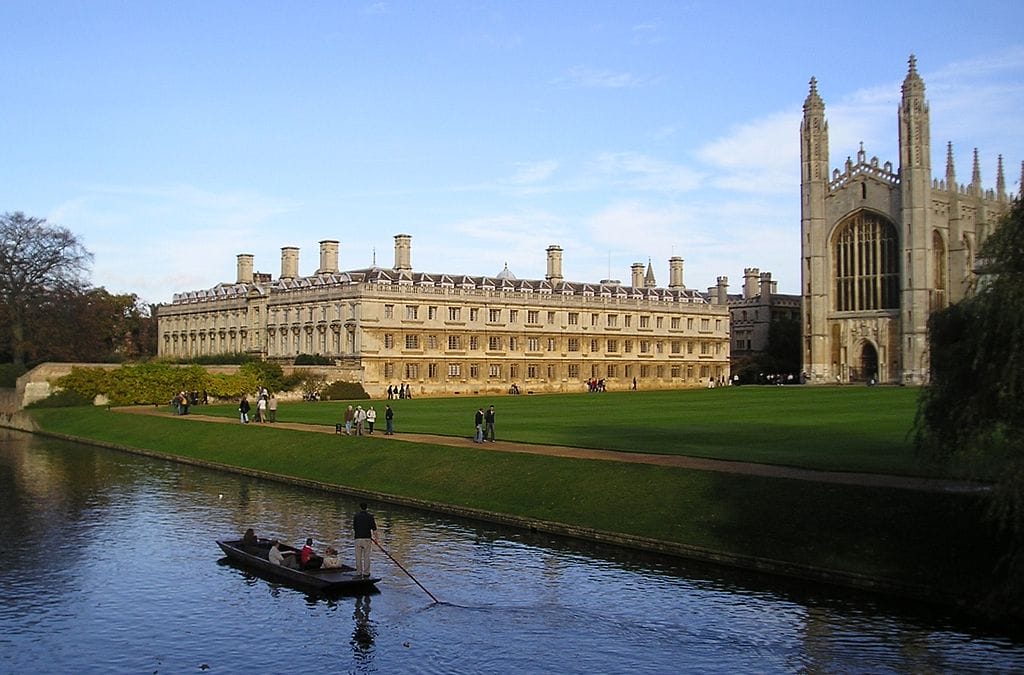
(((Two women & map photo: jazzguy Wikimedia Commons; Cambridge Photograph © Christian Richardt, 24 October, 2004)))

That’s my story. Now it’s your turn: What tools did you use to find The Perfect College for you? Dartboard? Lucky ducks?

Enhanced by Zemanta


Photo of Joe Saul-Sehy
Joe Saul-Sehy

Joe is a former financial advisor and media representative for American Express and Ameriprise. He was the “Money Man” at Detroit television WXYZ-TV, appearing twice weekly. He’s also appeared in Bride, Best Life, and Child magazines, the Los Angeles Times, Chicago Sun-Times, Detroit News and Baltimore Sun newspapers and numerous other media outlets.  Joe holds B.A Degrees from The Citadel and Michigan State University.

joesaulsehy.com/

Filed Under: College Planning, Planning Tagged With: Choosing a College, college choices, college planning, Higher education, Ivy League, U.S. News & World Report

  • « Previous Page
  • 1
  • 2
  • 3
  • 4

FOLLOW US

Search this site:

Recent Posts

  • Can My Savings Account Affect My Financial Aid? by Tamila McDonald
  • 12 Ways Gen X’s Views Clash with Millennials… by Tamila McDonald
  • What Advantages and Disadvantages Are There To… by Jacob Sensiba
  • Call 911: Go To the Emergency Room Immediately If… by Stephen Kanaval
  • 10 Tactics for Building an Emergency Fund from Scratch by Vanessa Bermudez
  • 7 Weird Things You Can Sell Online by Tamila McDonald
  • 10 Scary Facts About DriveTime by Tamila McDonald

Copyright © 2026 · News Pro Theme on Genesis Framework