• Home
  • About Us
  • Toolkit
  • Getting Finances Done
    • Hiring Advisors
    • Debt Management
    • Spending Plan
  • Insurance
    • Life Insurance
    • Health Insurance
    • Disability Insurance
    • Homeowners/Renters Insurance
  • Contact Us
  • Privacy Policy
  • Risk Tolerance Quiz

The Free Financial Advisor

You are here: Home / Archives for Joe Saul-Sehy

Joe is a former financial advisor and media representative for American Express and Ameriprise. He was the “Money Man” at Detroit television WXYZ-TV, appearing twice weekly. He’s also appeared in Bride, Best Life, and Child magazines, the Los Angeles Times, Chicago Sun-Times, Detroit News and Baltimore Sun newspapers and numerous other media outlets.  Joe holds B.A Degrees from The Citadel and Michigan State University. 

Saving Money As A Home Business

November 18, 2015 by Joe Saul-Sehy Leave a Comment

Working from home.

Just saying the words aloud is enough to fill office workers and small business owners with masses of euphoria. And in fact, just over half of small businesses in the US thought the same thing, as 52% of SMEs are actually based at home, according to an article from Forbes.

If you’re already in the planning stages of beginning your own business, there are a literal wealth of reasons as to why making it home-based could be one of the best decisions of your professional career. Even right off the bat, there are many affordable options for registering an affordable domain name, as these providers and many others allow emerging businesses to find a cheap possibility for something that’s usually seen as expensive.

Travel

Of course, lack of travelling is a huge winner here, as your bedroom will be just yards away from your home office. It remains unlikely that you’ll never have to use the car or public transportation for work related travel ever again, as picking up products or going to client meetings may still be a factor within your business. However, cutting back on gasoline costs and weekly bus or rail passes will start to add up each week.

Food and drink

If you’ve ever worked in an office, you’ll know that employees can get into a routine when it comes to buying lunch or coffee. Bringing in prepared meals is an option and many do this, yet a large selection of people can often resort to their local Chipotle or Starbucks, for example, when lunch or break times arise. As delicious and quick as these types of places are, food and coffee bills could be massively reduced in favor of good old home cooking and coffee appliances for the kitchen.

Wholesale

For online retail businesses, purchasing from warehouse directories such as this are fantastic ways to make sure you never end up paying retail price for anything. What’s more, you can start to forge trusted relationships with suppliers, as it may be possible to buy a small amount of stock over a long period of time, instead of always large quantities at once.

Taxes

It could come as a surprise to home-based businesses as to just how much could be claimed as a business owner. Portions of rent, phone bills, heating allowances, furniture, office supplies, etc. are all possible to claimed as a business expense, but just be sure to keep all receipts and consult an accountant. More info on tax laws for home businesses can be found here.

As previously discussed in a separate article, it’s good to keep in mind that knowing your credit score before beginning your small business aspirations will undoubtedly save you the headache of being denied loans because of poor credit.

Photo of Joe Saul-Sehy
Joe Saul-Sehy

Joe is a former financial advisor and media representative for American Express and Ameriprise. He was the “Money Man” at Detroit television WXYZ-TV, appearing twice weekly. He’s also appeared in Bride, Best Life, and Child magazines, the Los Angeles Times, Chicago Sun-Times, Detroit News and Baltimore Sun newspapers and numerous other media outlets.  Joe holds B.A Degrees from The Citadel and Michigan State University.

joesaulsehy.com/

Filed Under: Planning

Promoting Your Small Retail Business

November 17, 2015 by Joe Saul-Sehy Leave a Comment

The rise and fall of the retail behemoths

There was a time when small retailers seemed to be under threat from all sides. On one hand was the inexorable march of the internet, and on the other was the consumers’ seeming preference for big box, one-stop, edge-of-town hypermarkets.

But somewhere along the line, something changed. Consumer preference shifted, and people began to prefer buying groceries from multiple small shops rather than loading the car up to the gunnels with a monthly shop.

Holes in the high street

With so many people shopping at outlets instead of downtown, as well as the inescapable effects of the recession, holes in the high street started to appear. Long-standing local businesses such as video rental shops – as well as other casualties of technological progress – began to vacate the high street, and many local shopping areas were left with only a number of storefront gaps left behind.

Nature abhors a vacuum, however – and with the economic recovery a new kind of business was born to plug those gaps, as well as keep things interesting for the consumer: the pop-up shop.
The effect has been interesting. Big players now run convenience size stores in local neighbourhood shopping zone, co-existing with established local businesses and shorter term pop-up business.

All of which adds up to an interesting time for local retail. And makes now a very good time indeed to be promoting your local business.

Small business promotion websites

If you own a small specialist local business, have a look into the possibility of joining forces with other small business to promote your local retail area. One example where local retailers have done exactly that is Edinburgh, whose Love From Indie Street is described as a ‘virtual high street’ where you can browse stores, buy vouchers and generally get acquainted with the city’s impressive independent retail scene.

There’s nothing quite like a local retail scene – especially if you are looking for something a little bit different – with a little bit of quirk and character. And people value the ‘people side’ of things too. A recent survey shows that upwards of 60% of the UK’s shoppers have long-standing relationships with their local shops – with the average length of the relationship being ten years. This means that any new custom your promotion elicits could well be the start of something mutually beneficial, long-standing and good for business.

Other examples of local retail scenes getting together to promote their offer include Independent Liverpool – who have a nice looking website and also offer a membership card offering discounts at around 100 local shops. What’s not to like?

Strategies for promoting your small retail business

Strength in numbers. If you can find other small businesses in your area who would like to pool resources to produce promotional materials and events (on- or offline) this could provide you with a whole new audience.

Specialization. There are shops in all parts of the country that are famed for being the ‘go-to’ specialist. There are shops specialising in everything from local pies to artisan pasta to cinema books and antique clothes. If you’re a specialist, it’ important to make sure you shout about it.

Online promotion. Have a look at how other businesses use social media – and use the best examples to help shape your own social media presence. Another good reason to watch how other businesses use social media is that you may be able to avoid making any of their mistakes – such as having unclear graphics, not responding to customers, or leaving social media accounts to gather dust, with no postings on them.

If you’re a small retailer, it definitely pays to think big when promoting your business. So even if you’re just starting out, keep up to date with everything that’s going on in the world of specialist retail – and don’t be ashamed of having loads of ambition as well as big hopes for your business.

Photo of Joe Saul-Sehy
Joe Saul-Sehy

Joe is a former financial advisor and media representative for American Express and Ameriprise. He was the “Money Man” at Detroit television WXYZ-TV, appearing twice weekly. He’s also appeared in Bride, Best Life, and Child magazines, the Los Angeles Times, Chicago Sun-Times, Detroit News and Baltimore Sun newspapers and numerous other media outlets.  Joe holds B.A Degrees from The Citadel and Michigan State University.

joesaulsehy.com/

Filed Under: Planning

How to Attend Sporting Events on the Cheap: 5 Tips for Frugal People

October 21, 2015 by Joe Saul-Sehy Leave a Comment

96d8c86d-c241-401b-82e2-4c63e657788e

96d8c86d-c241-401b-82e2-4c63e657788e

In April, CNN reported that the Mayweather-Pacquiao boxing tickets were selling for a record $8,800 on the resale market. The cheapest floor seats were selling for $28,080. As the sports industry turns into a billion dollar industry, everyday sports fans are squeezed out of stadiums due to rising costs.

But there are ways to see just about any game at a discount. With careful research and planning, plus a little creativity and innovation, you can see a sporting event for free or at a discount.

Get creative with your accommodations

It’s entirely possible to book a room near the biggest college football game of the year for a fraction of the price. Use your frequent flyer miles and reward points to land a room. Reward credit cards like Starwood don’t have blackout dates. As long as there’s a room open, you have the option to book it with your available points.

If a hotel is out of reach, look within 30 miles of the game and Airbnb it. Accommodations range from the rental of an entire house for your family, or a comfortable bed and bathroom in a private room or basement. Look for solid reviews from people who have stayed with the host before, and book a room near public transportation if needed. Some Airbnb hosts will even pick you up at the airport or train station.

Of course, bringing the RV and tailgating is also a popular option. Camping near a stadium could save even more with a $50 campsite. In the morning, pack up the car and head to the game to grill with friends and family.

Scour for sponsored tickets

It’s not unusual for sponsored tickets to go unused because no one can go to the basketball game that night. Instead of sitting courtside or in box seats with a full bar, ticket holders are stuck at work or don’t have time to squeeze in another game. Usually given to companies from their vendors like FedEx or even a plumbing company, these tickets sweeten the business experience.

Push out a message on social media to let your network know you’re looking for tickets to a specific game. Ask if anyone has corporate sponsor tickets, or even just an extra ticket they don’t want to go to waste. If you come up empty, send out another push a few days before the game to see if anyone has a last-minute change.

Volunteer to usher

See a baseball game for free by volunteering to usher. You may even score a paid job for the season, putting money in your pocket while indulging your passion for sports. The upside is you’ll have early access to the stadium, get to meet lots of fans and mingle with the crowds. The downside is you’ll get distracted and miss big plays while answering people’s questions and directing them where they need to go.

Find free sporting events

Skip the real game and head to a qualifying tournament instead. The U.S. Open usually holds qualifying tournaments in Queens that are free to the public. Free seats are up for grabs at special practice days and a kids’ day. Check listings for games in your own area from college basketball to hockey games to find preview and practice seats.

Organize a group

Organize a group at work, a civic group or a member organization to get discounted bulk tickets. For example, PNC Arena extends discounted group tickets through their group sales department.

If you don’t have a group to organize, look to Groupon. The site runs deals for everything from jewelry to sporting tickets at a steep discount. When enough people buy the deal, you snag the discount. And if there’s not enough interest, the deal is canceled, and your card isn’t charged. Expect to see up to 50 percent savings and sometimes more.

Photo of Joe Saul-Sehy
Joe Saul-Sehy

Joe is a former financial advisor and media representative for American Express and Ameriprise. He was the “Money Man” at Detroit television WXYZ-TV, appearing twice weekly. He’s also appeared in Bride, Best Life, and Child magazines, the Los Angeles Times, Chicago Sun-Times, Detroit News and Baltimore Sun newspapers and numerous other media outlets.  Joe holds B.A Degrees from The Citadel and Michigan State University.
joesaulsehy.com/

Filed Under: Uncategorized

Medical Exam Versus No Exam Life Insurance

October 19, 2015 by Joe Saul-Sehy Leave a Comment

medical-exam

Let’s take a few minutes today to talk life insurance. When I was an advisor, many people only looked at cost. The key, though, is to compare costs with benefits. Here’s one place people get trapped because they don’t understand subtle differences: life insurance with an exam vs. those without…..don’t make the wrong decision!

Did you know that in some cases, the cost for a life insurance policy with an exam can be about equal to one without an exam? Make sure you know the pros and cons of choosing a no exam life insurance policy before you purchase. Educating yourself can help you select the right thing for you.

No Exam Life Insurance

A life insurance policy with no exam means that you do not need a urine sample or a blood draw in order to get approved. One of the biggest benefits of going this route is that you can get approval very quickly, whereas a traditional policy might take some time to review all your results and present you with your rate. This form of insurance is still underwritten by the MIB and the application procedures are similar.

Underwritten Life Insurance

A key word in life insurance is “underwriting.”

In order to get a policy that has been underwritten, you need a medical exam. This usually requires that an examiner comes to your home to check your weight, height, and to take a urine and blood sample. From there, your results are reviewed and the insurance carrier arrives at a decision to offer you coverage or not. If the carrier has questions, the time to approval might be even longer, especially if a physician’s statement is required to verify your health status.

For someone who is in relatively good health, an approval can come as quickly as within 48 hours. Usually, though, a carrier does not approve a policy until 2-4 weeks later. It might take even longer for someone who is not in good health. The advantage of going this route for someone who is healthy, though, is that the savings over the course of the term period can be significant. Someone who has health issues might prefer to go the route of no exam life insurance.

What About Income?

Another important thing to remember is that it’s going to be difficult for someone on unemployment or studying full time to get traditional exam life insurance because the company sees them as having no income. Without a medical exam, however, income is not a major factor. This makes it easier for someone outside the traditional scenario of a full time job to get life insurance coverage.

Cost

One of the biggest factors in comparing no exam life insurance to medical exam life insurance is cost. While no medical exam life insurance is more expensive, you are getting coverage without the unknown of a medical exam. Imagine that you have not been to the doctor in some time, and when the examiner shows up to do your blood test you find out that you have a blood pressure or cholesterol problem. With this, your rates on your traditional policy could skyrocket or you could even be declined, depending on the severity of the issue. In this case, it makes much more sense to go the route of getting life insurance without an exam because you’re avoiding an unknown or an even higher policy cost.

Set aside a time to talk to an insurance professional to determine whether no exam life insurance is right for you.

Photo of Joe Saul-Sehy
Joe Saul-Sehy

Joe is a former financial advisor and media representative for American Express and Ameriprise. He was the “Money Man” at Detroit television WXYZ-TV, appearing twice weekly. He’s also appeared in Bride, Best Life, and Child magazines, the Los Angeles Times, Chicago Sun-Times, Detroit News and Baltimore Sun newspapers and numerous other media outlets.  Joe holds B.A Degrees from The Citadel and Michigan State University.

joesaulsehy.com/

Filed Under: Uncategorized

5 Reasons You Should Care About Your Credit Score

October 14, 2015 by Joe Saul-Sehy 1 Comment

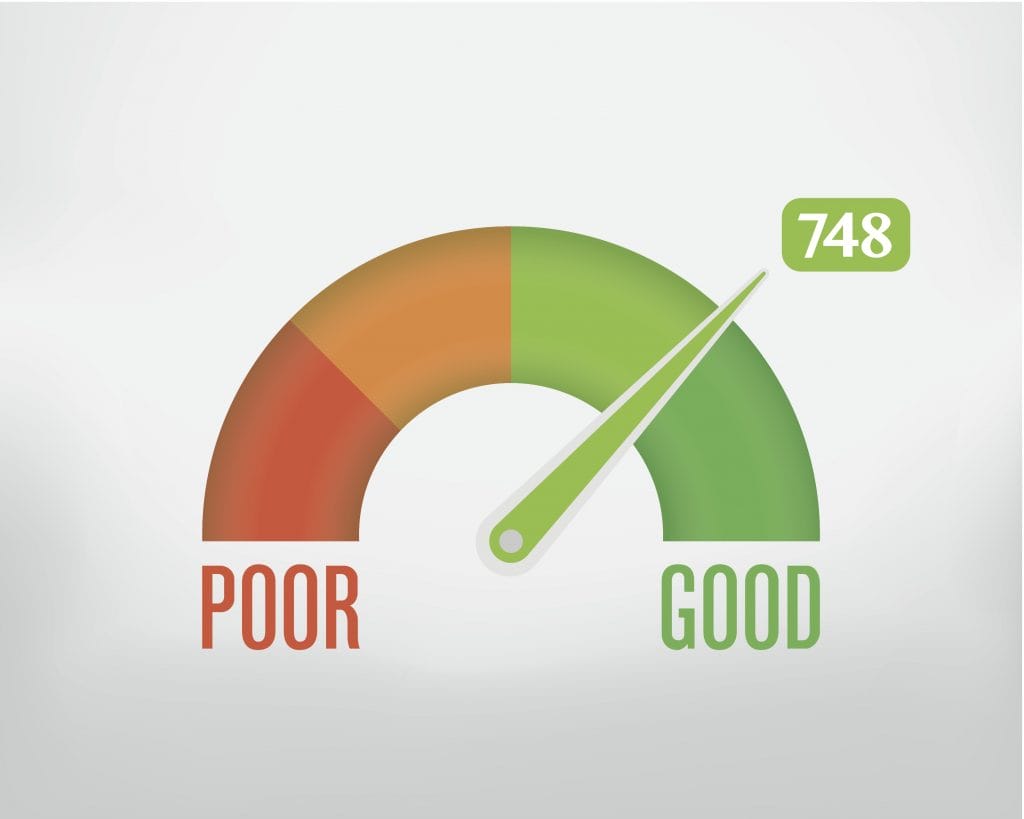
Credit ScoreDespite the recovering economy, American credit card debt levels are on track to exceed $900 billion by the end of 2015, bringing the average household debt to $7,813, the highest since the Great Recession of 2007 to 2009, according to CardHub. While FICO scores have improved to a pre-recessionary average of 695, which is partly a reflection of consumers being conscious to make fewer late payments, over half of Americans mistakenly think that maintaining a high balance improves their score as long as they pay bills on time, according to a Bankrate Money Pulse survey.

Not knowing how credit scores work can hurt you in ways you may not realize. Here are five reasons you should care about your credit score:

Getting Credit

Most fundamentally, a good credit score enables you to get credit cards and loans, while a bad score limits your ability to secure such financial resources. What constitutes a good credit score varies depending on what scoring system and lender you’re talking about. For popular scoring systems, such as FICO and VantageScore, a good score is anything above 700, a poor score is below 649 and a bad score is anything under 600. If your score falls into the poor to bad range, or even if it’s merely fair, you may have difficulty getting new credit cards or loans. This can be problematic in itself, but there can be a snowball effect with other negative consequences.

Finding Employment

A bad credit score can actually do double damage to your finances by limiting your ability to find certain jobs and obtain credit. The Fair Credit Reporting Act allows prospective employers to obtain your permission to review your credit report before hiring you. This can affect your ability to get jobs in certain industries, such as financial services, explains Vic Tanon of Emplicity, an organization that provides human resources consulting. Employers who notice you have a bad credit score may question your judgment in other areas and take a second look at your application.

Making Purchases

Your credit score can also affect your ability to purchase consumer goods and services. For instance, if you’re visiting T-Mobile’s website to purchase an iPhone 6s, you have to select from a credit range to determine how much you will pay for your up-front device cost. The site’s credit options include: excellent/good credit, building credit or some credit issues, no credit check due to serious credit issues, or a decision to pay the entire cost up-front. In other words, poor credit can result in you having to pay the entire cost at once, whereas good credit lets you spread the cost out over multiple payments. This reflects the fact that suppliers of goods and services are more likely to let you pay off a purchase over time if they know your credit is reliable. Similarly, your credit rating can affect your purchases of services, such as utilities and insurance.

Renting an Apartment or Buying a House

A poor credit score affects your ability to get a mortgage loan to buy a home. Even if you only plan to rent an apartment, a bad credit score limits your renting options. As Credit Karma writer Mike Goldstein explains, a bad score can cause a landlord to turn down your rent application or to impose additional conditions on your lease. In some cases, you may have to find a co-signer or a roommate with better credit. You may also have to put down a larger security deposit.

Starting a Business

Your credit rating also impacts your ability to start your own business. According to a Small Business Trends poll, 60 percent of small business startups say their biggest challenge is lack of funding or insufficient cash flow. To solve this problem, many business owners turn to business loans or lines of credit. Unfortunately, if you have a bad personal credit rating, it can affect your ability to secure business credit, cutting off one of the means to improve your financial situation and fix your credit. To avoid this and other negative consequences that stem from bad credit, keep your balances low and pay your bills on time.

Photo of Joe Saul-Sehy
Joe Saul-Sehy

Joe is a former financial advisor and media representative for American Express and Ameriprise. He was the “Money Man” at Detroit television WXYZ-TV, appearing twice weekly. He’s also appeared in Bride, Best Life, and Child magazines, the Los Angeles Times, Chicago Sun-Times, Detroit News and Baltimore Sun newspapers and numerous other media outlets.  Joe holds B.A Degrees from The Citadel and Michigan State University.
joesaulsehy.com/

Filed Under: Uncategorized

A Better “Rule of Thumb” For Insurance?

October 6, 2015 by Joe Saul-Sehy Leave a Comment

rule-of-thumb

Average Joe and OG hate rules of thumb. Particularly with life insurance. In fact, on a recent Stacking Benjamins podcast, Joe said that his most-hated (and OG’s second most-hated) rule of thumb was the one often spread by the life insurance industry – that you need 10x your income in life insurance.

I think the list was done partially in jest. But if I can interpret their main criticism, I would agree that blanket rules of thumb aren’t helpful for personal finance. Personal finance is – after all – personal.

So, if like Joe and OG, you find yourself looking for a little more insight into how much life insurance you need, read on. Last month was, after all, Life Insurance Awareness Month – so if you missed it (or even if you didn’t….) now is a better time than ever to look at your policies.

The 4 Percent Rule…and Insurance

You may be familiar with the 4 percent “rule” for retirement. Introduced in the mid-1990s by a financial planner, the 4 percent rule tells investors how much of their portfolio is “safe” to withdraw each year without depleting their all-important nest egg. The math behind the calculation says that if you withdrawal just 4 percent of what you have saved and adjust that mount for inflation each year, your nest egg could last more than 30 years (particularly if you leave your equity allocation higher). What we want to do is convert that same principle of the never-ending cash flow to life insurance, and we get a better “rule of thumb” for how much life insurance you need.

How do we do it? Drum roll…

Step 1: Make a hypothetical budget of what the family finances would have to look like to maintain the same standard of living. What does that added income (each month or year) convert to on a daily basis?

Step 2: Take that daily amount and add four zeros to the end. So, $50 daily becomes $500,000 in life insurance; $100 becomes $1 million; etc.

Step 3: Buy that amount.

Let’s think about the math: 4 percent of a $500,000 policy is $20,000 a year. For 365 days, that gives your family $54.79 per day.

Why is this a better “rule of thumb”?

Many times when we in the life insurance industry recommend 10x income, we add in disclaimers that families should also buy enough additional coverage to pay off debt and any major upcoming expenses. So basically, it is 10x your income plus your mortgage.

Oh, and if the kids are potentially headed to college, you should add in that amount as well. And don’t forget to account for the fact that you may have new expenses – like  childcare if a stay-at-home parent is lost. I don’t mean to call into question the intention behind this “rule.” The rule’s purpose is noble, and even $100,000 of life insurance is a million times better for your family than none. However, if we’re talking about a rule of thumb, having all these asterisks involved can often be more confusing than enlightening.

Instead, the “daily living expenses” method takes into account all those factors – the mortgage, continuing the same savings rate, etc. – to give a “clean” recommendation that is personalized to each family. If you calculate what that hypothetical budget would look like without a parent or spouse’s income, it should factor in childcare needs and continuing the same college or retirement savings path. You won’t have to add that in at the end.

Is this method perfect?

No. For instance, if one parent believes they may take an extended period off from work after losing a spouse, that amount still wouldn’t be accounted for in this method. You’d have to add that in.

But I think this “rule of thumb” is still better for one main reason: to find the perfect amount, you have to do more than just look at last year’s W-2 and multiple it by 10. It forces families to have a conversation and think about what is often unthought. And it brings back the personal to personal finance.

Jeremy Hallet is the CEO of Quotacy, an online life insurance agent. Quotacy offers free online quotes and life insurance calculators without requiring any personal contact information. Get your free quote at www.quotacy.com today.

Photo of Joe Saul-Sehy
Joe Saul-Sehy

Joe is a former financial advisor and media representative for American Express and Ameriprise. He was the “Money Man” at Detroit television WXYZ-TV, appearing twice weekly. He’s also appeared in Bride, Best Life, and Child magazines, the Los Angeles Times, Chicago Sun-Times, Detroit News and Baltimore Sun newspapers and numerous other media outlets.  Joe holds B.A Degrees from The Citadel and Michigan State University.

joesaulsehy.com/

Filed Under: Uncategorized

Debit or Credit: What Works For You?

September 13, 2015 by Joe Saul-Sehy Leave a Comment

Credit and Debit Cards

There are pros and cons of both credit and debit cards. Before you load your wallet with a series of credit cards, or request a debit card for each of your bank accounts, you should educate yourself on the pros and cons of each. Here is a list of strengths and weaknesses of debit and credit cards.

Debit Cards

Pros: Debit cards are a convenient way to carry the equivalent of cash. Debit cards link directly with your checking or savings account and each time you use it funds are deducted directly from the account that card is linked with. Whenever you make a purchase with your debit card you must enter a four-digit PIN, as a security procedure. The limit of your debit card is the same amount of money you have in the account. Debit cards are easily acquired, as banks take no risks when they provide these cards. You can only spend what you already have so there are no monthly payments.

Cons: The cons of debit cards are few, but severe. If you spend more than what is directly in the account linked with the card you’re charged an overdraft fee. These fees can be anywhere between $30 to $50 for each transaction executed while there are no funds in your account. You must repay both the amount spent plus the overage fees. It’s a pricey consequence, especially if you’re unaware you’ve overdrafted and make more transactions with your card.

Another danger of debit cards are the lack of security which surround them. Since your card is linked with your bank account, if someone steals your card they have instant access. The PIN you set up should provide some protection, though many debit cards can be run as credit, bypassing the use of a PIN altogether. Investigating this kind of fraud can take a lot of time and the longer you put off reporting it, the more liability you’ll face. Look into your bank’s fraud protection policy so you know the risks of debit card fraud.

Credit Cards

Pros: Credit cards provide you a line of credit, or loan, which you will be expected to pay in full within 30 days. You can put off pricey items until your next paycheck comes in. Build your credit score every time you make a payment on time. Your credit score directly influences the loans banks will offer you. This includes home and car loans.

Credit cards aren’t your actual funds. If anyone steals your credit card, cancel it as quickly as possible. If the person has made purchases with it, you can claim fraud and fill out a claim. While this is a hassle, it’s also much easier to prove than with a debit card. Also, you may have noticed a small microchip on your newest credit card. This is an EMV. An EMV is a payment process like the magnetic strip on the back of the card. However, an EMV communicates a series of complex transactions which include cryptographic processes. This makes credit cards more secure, in many ways, than debit cards. Credit monitoring and identity theft prevention services are still helpful in case you’re account is compromised.

Cons: While credit cards can help you build up your credit score, they can also destroy it. Some Americans are financially crippled by credit card debt. Many credit cards have variable interest rates which can be increased and make it difficult for you to make minimum payments. If your credit score is poor it’s very difficult to take out a loan for a house or car, even after you’ve paid off your debt.

Photo of Joe Saul-Sehy
Joe Saul-Sehy

Joe is a former financial advisor and media representative for American Express and Ameriprise. He was the “Money Man” at Detroit television WXYZ-TV, appearing twice weekly. He’s also appeared in Bride, Best Life, and Child magazines, the Los Angeles Times, Chicago Sun-Times, Detroit News and Baltimore Sun newspapers and numerous other media outlets.  Joe holds B.A Degrees from The Citadel and Michigan State University.

joesaulsehy.com/

Filed Under: budget tips, Debt Management, Featured, Uncategorized

Learning Key Facts About Company Leadership Before Investing

September 12, 2015 by Joe Saul-Sehy Leave a Comment

With the rollercoaster action of the stock market, you can’t be too careful when it comes to choosing the right investment opportunities. Before plopping your hard earned dollars down on an individual stock, you should (as famous investor Peter Lynch advises) dig up all the information you can about how the company runs and even more about the people who run the firm.


Research is a bear, and to amateur investors seems like a black hole waste of time. However, on our Stacking Benjamins podcast, Sharon Lechter, co-author of the classic Rich Dad, Poor Dad, said that numbers tell a story of a company. They give you the heartbeat. When you research online, it’s great to have a couple of bookmarks to sites that have all of the company leaders’ pertinent details already laid out for you. You can research people and companies ranging from General Motors to more exotic searches like Ehsan Bayat afghan wireless by using sites like Bloomberg or Yahoo Finance before you invest any of your money into the stock market.


Where To Focus Your Attention

When you use an online data site, you’re presented with a TON of data. It’s important to know where to look.


First, you’ll find out the name of the people who run a company. Each person has his or her own profile, which details key facts about their background that will either make you more confident about the company’s leadership or convince you that perhaps you should look elsewhere to invest. However, simply knowing the names of the people in charge is only your first step in learning more about the business in which you are interested.
As an example, I once was introduced to a new biotech firm that a client liked. When I researched the company officers, it turned out to be a father and his two sons. Knowing that there are plenty of people out there who aren’t related to the founder who can add value….AND knowing that family politics can wreak havoc on a company, I was inclined to say, “No thanks” to that stock.


It’s important to dig into the formal training each leader brings with them. Under the heading of Education, you can read about what colleges or universities these people attended, what kinds of degrees they hold, and when they graduated. Some profiles will go into great detail while others will contain little if any information at all about the people’s formal training. Nonetheless, this leads to questions which you’ll want to answers. Holes in resumes aren’t bad….they show you where to focus your energy searching and tell you more about what you still need to uncover.


Next, turn your attention to these individuals’ background in business. You’ll want to know what positions they’ve held, what companies they previously worked for, and what committees or programs they have served on that impact their leadership capabilities. On Bloomberg, you’ll find all of those details under the Background tab, but you can find them in similar spots no matter what site you use. When you know that a company is headed by people who have experience in this industry or one like it, you can feel more confident about leaving your money invested rather than taking it out because of poor leadership. Because companies also about about people and partnerships, you can also get an idea into alliances the company might form in the future.

&nbsp’

Next, leaf through the board of directors list. Most sites have a link available for finding out more about the board of directors for a company. You can find out the names of the individuals who are serving as the board’s leadership, how long they served, and what qualifications they bring with them. The president or CEO only partly impacts the success of a company. Its board also plays a significant role in how well the business grows.


In Conclusion

Knowing the leadership of a company is one important step in deciding whether or not to invest in a particular stock. While you can just throw money at your net “favorite” idea, you’ll find a ton more success if you actually dig into the heartbeat and then take a leap that involves a lot less faith and a ton more data.
Photo of Joe Saul-Sehy
Joe Saul-Sehy

Joe is a former financial advisor and media representative for American Express and Ameriprise. He was the “Money Man” at Detroit television WXYZ-TV, appearing twice weekly. He’s also appeared in Bride, Best Life, and Child magazines, the Los Angeles Times, Chicago Sun-Times, Detroit News and Baltimore Sun newspapers and numerous other media outlets.  Joe holds B.A Degrees from The Citadel and Michigan State University.

joesaulsehy.com/

Filed Under: successful investing

The Stock Market Plummets! What Should I Do?

August 24, 2015 by Joe Saul-Sehy Leave a Comment

The-Stock-Market-Plummets!-What-Should-I-Do-

I’ve been behind.

That’s why, this week, I found myself sorting through old papers that somehow still haven’t been looked at from late last year. I’d tucked them into a file folder called “read later” I’d apparently invented in December, popped it up on the shelf, and never looked at it again.

Until now.

So, it’s now funny to see that on December 23rd the AP headline was Investors Expect Higher Stocks in 2015. As that wordsmith Dr. Phil says,

“How’s that workin’ out for ya now?”

Stocks have bounced all over so far this year (and got CRUSHED last week), and if you were to poll investors today I bet you’d have a much different answer to the question, “Where do you think stocks are headed in 2015.”

In fact, it makes me wonder why investors expected anything in 2015. Don’t we get burned by that every year?

Investors, two years ago, expected the Federal Reserve to begin notching up short term interest rates. Bonds plummeted because of the news….and then nothing happened. Janet Yelin has insinuated that we’d have higher rates coming soon, but current events always turn “sooner” into “later.”
Investors expected emerging markets to be a horror story in 2014. However, this lagging area of the market proved resilient in 2015, as long as you stayed away from betting on specific countries like Russia.
Investors last year expected the market to begin dropping, yet we had another 11% year for stocks (a horrible year for those of us who played contrarians in investment games).

It appears that “expecting” is bad for your portfolio’s health, doesn’t it?

What’s better about this AP headline? The subheader reads, “S&P 500 has more than tripled from its March 2009 low.”

This is where I run into trouble. When I read sub headlines like that juxtaposed against the headline of Investors Expect Higher Stocks….I begin to see irony and think “There’s no way that could be right.”

In fact, plenty of people like me see those types of headlines and begin to bet against the market. I’ve been reading about bearish traders for over two years now, and I’m sure this headline will help create a brand new crop of “It Can’t Go Up Forever” investors.

The problem with thinking the market will turn

If you bet against the market, you’re playing a losing game. Why? Because you don’t have to be right once, you have to be right twice to win.

You have to call when the market will actually fall. Sure, you know the market is going to plummet….so did people two years ago? Are they still hanging on?

In 1998 I met with a guy named Dave who had a massive gold investment. In reply to my question about why, he said that in 1992 he was sure that the Iraqi war would plummet the stock market. When that didn’t happen (and gold prices didn’t rise), he always had a reason to keep it. While the stock market rose BIG TIME in the 1990’s…Dave held on tight to his gold, a contrarian position, which did zippo.

Ouch.

If you guess when it’s going to fall and buy your contrarian investments, then you have to guess AGAIN when it’ll return to it’s normal path. If you don’t, you’ll erode what are sure to be some spectacular short term gains.

Maybe I think you can be right once, but twice? I seriously doubt it.

Here’s a better strategy:

Bet that the market will go up, even if you think it’ll sink in the short run. A bet on the market is a bet that the economy, in some form, will continue to operate at least in a semi-healthy manner.
Dollar cost average into a sinking market. Sure, you could try and call the bottom of the market, but if you instead break up your funds into smaller chunks and just keep buying as it sinks, you’ll spread your risk.
If you’re going to bet at all, as the market sinks bet that it’ll return and up the risk in your portfolio. I tend to prefer NOT to bet at all, but the chance that you’ll be right some time in the future with long term money by betting that it’ll come back is much better than trying to call the bottom.

I love old newspapers. You see a view of the world from a point in time when we didn’t know any of the information we have today. While I love reading about how awesome the market will be in 2015, I think I’ll continue to bet that my ability to call ANYTHING is horrible, at best.

You?

Photo of Joe Saul-Sehy
Joe Saul-Sehy

Joe is a former financial advisor and media representative for American Express and Ameriprise. He was the “Money Man” at Detroit television WXYZ-TV, appearing twice weekly. He’s also appeared in Bride, Best Life, and Child magazines, the Los Angeles Times, Chicago Sun-Times, Detroit News and Baltimore Sun newspapers and numerous other media outlets.  Joe holds B.A Degrees from The Citadel and Michigan State University.

joesaulsehy.com/

Filed Under: Planning

Get This, Not That: A Guide to Proper Father’s Day Gifting

June 18, 2015 by Joe Saul-Sehy Leave a Comment

While your dad might be one of the most important people in your life, he is undoubtedly also one of the hardest to buy for. When it comes to Father’s Day, the challenge of gifting your dad the quintessential gift can be a struggle. How do you get your dad something that conveys your appreciation, gratitude and love? More importantly, how do you get him something he will actually appreciate and hopefully not exchange? Here are some perfect gifts to make any dad feel like #1 on Father’s Day.

Techie Dad

If your first memories with your dad involve something like disassembling a radio just to see how it was put together, then your dad is probably techie. As with most tech fanatics, buying them a gift that will impress them is tough. They already own the computer, the SLR and every edition of PhotoShop. Due to their extreme devotion, they also own the brand new iPad, the MacBook Air and all the accoutrements. But, do they own the new Apple iWatch? While yes, this may be a little spendy (prices start at $399), you might consider amending the spend considering he put up with your teenage years. Just think about how incredible it will be to give your tech dad the one gift he wants, but won’t buy for himself. Yes, you’ll win best child of the year.

father and daughter in the park

father and daughter in the park

Grill Master

If you dad is less of a tech fan and more a fan of being outdoors with his grill, impress him with the Napa Jack’s Barbeque Blast Gourmet Gift Basket from FTD. This awesome collection includes sauces, rubs and BBQ-themed snacks and is certain to dazzle anyone who enjoys spending their time perfecting their grilling technique. With its grill case and reasonable price, this is a gift that makes an impact without hurting your wallet.

Golf Dad

Golf dads might seem like they’re easy to buy for: a box of golf balls, a new polo, a round at his favorite course. But step out of the box this year and get dad something a bit more creative. Pro or not, everyone loses golf balls. And dad would probably appreciate some help finding them. These golf ball locating glasses from Hammacher Schlemmer are less than $40 and offer the tech advantage that will get your dad extra excited to hit the greens.

Beer Lover

What dad isn’t a fan of beer? While every dad has his own set of discerning tastes, it is easy to get a smile out of your beer-loving dad with a case of his favorite, or even a selection of new beers from around the world. This year, try the unexpected with a gift that keeps on giving. Gift your dad a subscription to a beer of the month club for only $40 a month, not only will dad get to try a new beer every month, he will feel the love all year long. If your dad is more the hands-on type, try a beer making kit (starting at $70) that will allow him to create his very own distinct brand of brew.

Photo of Joe Saul-Sehy
Joe Saul-Sehy

Joe is a former financial advisor and media representative for American Express and Ameriprise. He was the “Money Man” at Detroit television WXYZ-TV, appearing twice weekly. He’s also appeared in Bride, Best Life, and Child magazines, the Los Angeles Times, Chicago Sun-Times, Detroit News and Baltimore Sun newspapers and numerous other media outlets.  Joe holds B.A Degrees from The Citadel and Michigan State University.

joesaulsehy.com/

Filed Under: Featured, money management

  • « Previous Page
  • 1
  • 2
  • 3
  • 4
  • 5
  • …
  • 34
  • Next Page »

FOLLOW US

Search this site:

Recent Posts

  • Can My Savings Account Affect My Financial Aid? by Tamila McDonald
  • 12 Ways Gen X’s Views Clash with Millennials… by Tamila McDonald
  • What Advantages and Disadvantages Are There To… by Jacob Sensiba
  • 10 Tactics for Building an Emergency Fund from Scratch by Vanessa Bermudez
  • Call 911: Go To the Emergency Room Immediately If… by Stephen Kanaval
  • 7 Weird Things You Can Sell Online by Tamila McDonald
  • 10 Scary Facts About DriveTime by Tamila McDonald

Copyright © 2026 · News Pro Theme on Genesis Framework