• Home
  • About Us
  • Getting Finances Done
    • Hiring Advisors
    • Debt Management
    • Spending Plan
  • Insurance
    • Life Insurance
    • Health Insurance
    • Disability Insurance
    • Homeowners/Renters Insurance
  • Contact Us
  • Our Editorial Commitment

The Free Financial Advisor

You are here: Home / Archives for 1099 forms

How a Single Missed Form Can Freeze Your Refund for Weeks

May 17, 2026 by Brandon Marcus Leave a Comment

How a Single Missed Form Can Freeze Your Refund for Weeks
The words “tax refund” printed on a piece of paper above some cash – Shutterstock

Tax season feels simple on the surface, but one tiny paperwork slip can send everything into a slow-moving maze of IRS processing delays. A refund that should land in a bank account within weeks can suddenly stall for a month or longer, all because one required form never made it into the system. Many taxpayers assume delays come from audits or identity theft flags, yet a missing document often causes the initial freeze. The IRS relies on exact matches between reported income and employer-submitted forms, so even one missing or incorrect entry disrupts the entire verification process. That disruption forces automated systems to pause refunds until everything aligns perfectly, which can stretch timelines far beyond expectations.

The frustration grows when taxpayers realize the issue rarely involves wrongdoing, but rather a simple oversight from employers, financial institutions, or even freelance clients. A misplaced form or a delayed upload from a payroll provider can trigger a chain reaction that halts processing. Refunds do not resume until the IRS confirms every reported dollar matches official records. That means patience alone does not solve the issue, and action often becomes necessary to correct or replace missing documentation.

How a Single Missing Form Triggers a Refund Freeze

The IRS uses automated matching systems that compare tax returns against employer-submitted records, and any mismatch immediately triggers a review hold on the refund. A missing form creates the same red flag as incorrect income reporting, even when the taxpayer files everything in good faith and follows instructions carefully. The system pauses the refund to prevent overpayment while it searches for the missing documentation or requests clarification from the source. That pause can last anywhere from a few days to several weeks depending on how quickly the missing data surfaces. During this time, taxpayers often receive vague status updates that offer little clarity about what actually went wrong.

Delays usually begin when one form fails to arrive in the IRS database before processing starts, which causes a mismatch between submitted returns and verified income records. The system refuses to release funds until every reported income source has a corresponding official form attached and validated. This safeguard protects against fraud but also punishes simple administrative delays from employers or financial institutions. Taxpayers often feel stuck because refund tracking tools rarely explain which specific document triggered the freeze. The lack of detail forces many people to manually review their paperwork and contact issuers to resolve the issue.

The Most Common Forms That Cause IRS Delays

Several key documents create the majority of refund freezes when they go missing or arrive late, with W-2 forms ranking at the top of the list due to employer reporting requirements. Employers must send copies to both workers and the IRS, and any delay in that process immediately disrupts refund verification. Independent contractors face similar issues with 1099-NEC forms, especially when companies delay reporting or misclassify payments during busy payroll cycles. Health insurance reporting forms like 1095-A also trigger delays when taxpayers claim marketplace coverage credits that require exact reconciliation. Even retirement distributions reported on 1099-R forms can stall refunds if financial institutions submit incomplete or corrected versions after filing season begins.

Each missing document forces the IRS system to pause calculations until it confirms every income and deduction detail aligns across all databases. Tax credits tied to income levels, such as the Earned Income Tax Credit, often require additional verification steps that amplify delays when forms do not match perfectly. The system does not guess or estimate missing data, so it locks refunds until complete verification occurs from all reporting sources. Taxpayers often discover the issue only after checking IRS status tools, which rarely specify the exact missing form involved. That lack of transparency makes early prevention the strongest strategy for avoiding refund disruptions.

How a Single Missed Form Can Freeze Your Refund for Weeks
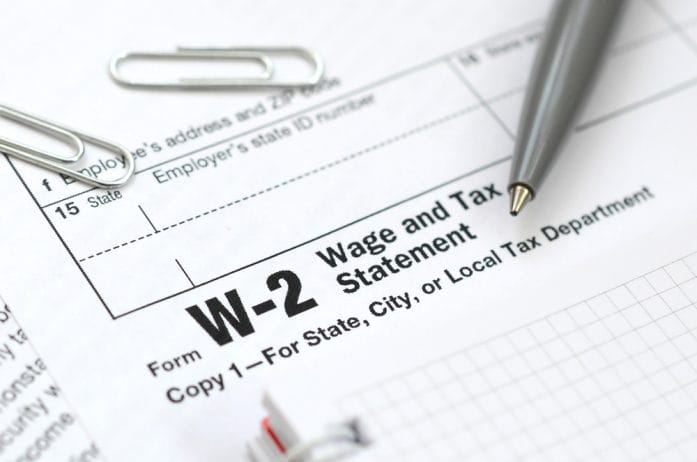
A W-2 tax form – Shutterstock

How to Avoid Refund Freezes and Speed Up Processing

Taxpayers reduce refund delays by collecting all expected forms before filing and comparing them against prior-year documents to ensure no income source goes unreported. Early filing helps, but accuracy matters more because rushing increases the chance of missing a form that later triggers a system hold. Many tax professionals recommend waiting until mid-February when most employers and institutions complete their reporting cycles to avoid incomplete submissions. Directly contacting employers or financial institutions before filing also prevents surprises when forms fail to arrive on time. Careful review of digital tax accounts and payroll portals adds another layer of protection against missing data.

When a refund freeze already occurs, proactive steps can shorten the delay significantly by contacting the issuing organization and requesting immediate re-submission of missing forms to the IRS. Taxpayers who respond quickly to IRS notices or verification requests often see faster resolution times compared to those who wait for automatic updates. Keeping copies of all submitted documents also helps resolve disputes when mismatched records create confusion during processing. The IRS system eventually releases funds once all records align, but active follow-up often accelerates that outcome. Staying organized and responsive turns a frustrating delay into a manageable correction process rather than a prolonged financial setback.

What steps help prevent tax refund delays most effectively, and have unexpected paperwork issues ever slowed down your refund?

You May Also Like…

Refunds Are Being Frozen Over Missing Bank Details—And Some Filers Won’t Get Paid for Weeks

South Carolina Newcomers Are Paying Higher Property Taxes Until Homestead Eligibility Kicks In

Selling a Long-Term Home Can Lead to Capital Gains Taxes—Even for Retirees

Texas Has No Income Tax — But Property Taxes Can Get Close To 2% in Some Areas

Retirement Accounts Are Triggering Unexpected Taxes — What Some Investors Overlook

Brandon Marcus
Brandon Marcus

Brandon Marcus is a writer who has been sharing the written word since a very young age. His interests include sports, history, pop culture, and so much more. When he isn’t writing, he spends his time jogging, drinking coffee, or attempting to read a long book he may never complete.

Filed Under: tax tips Tagged With: 1099 forms, financial planning USA, IRS notices explained, IRS processing delays, IRS refund freeze, missing tax forms, refund hold reasons, tax filing mistakes, tax refund delay, tax return errors, tax season tips, W-2 issues

The One Line on Your 1099 That Can Ruin Everything

April 30, 2025 by Travis Campbell Leave a Comment

tax forms
Image Source: pexels.com

Tax season brings a flurry of important documents, but none may be more consequential than your Form 1099. While most taxpayers focus on the headline numbers, a single overlooked line can trigger audits, penalties, and financial headaches that last for years. This seemingly innocent entry point has tripped up countless investors and freelancers, often resulting in thousands of dollars in unexpected tax liabilities. Understanding this critical information isn’t just about compliance but protecting your financial future.

1. The Box 3 Bombshell: Other Income

Box 3 on Form 1099-MISC or 1099-NEC labeled “Other Income” often becomes the source of major tax complications. This catchall category includes income that doesn’t fit neatly elsewhere, like prizes, awards, or certain business transactions. The IRS scrutinizes this box carefully because it’s frequently misreported or underreported.

When you receive unexpected income that appears in Box 3, don’t assume it’s tax-free. This income is fully taxable but doesn’t typically apply withholding, creating a perfect storm for underpayment penalties. Financial institutions and payers use this box when they’re unsure how to categorize income, essentially flagging it for the IRS’s attention.

The danger multiplies when this income pushes you into a higher tax bracket without your awareness. Many taxpayers discover this problem only after receiving a notice from the IRS demanding additional taxes, interest, and penalties.

2. Unreported Investment Income: The Silent Killer

Form 1099-DIV and 1099-INT contain critical information about investment income that can dramatically impact your tax situation. Box 1b on Form 1099-DIV, which reports qualified dividends, deserves special attention because these dividends receive preferential tax treatment.

However, the real trouble often lurks in Box 6, which reports foreign taxes paid. Failing to claim foreign tax credits for these amounts means you’re essentially paying taxes twice on the same income. Many investors overlook this credit, leaving hundreds or even thousands of dollars on the table annually.

Investment income reporting becomes particularly complex when multiple accounts are used or brokers transfer securities. Always cross-reference your 1099s with your actual investment activity to ensure nothing falls through the cracks.

3. The Cryptocurrency Trap

The virtual currency question on Form 1040 has become a minefield for taxpayers. This question relates directly to information reported on Form 1099-K or specialized cryptocurrency tax forms. Answering incorrectly—or failing to report crypto transactions shown on your 1099s—can trigger immediate audit flags.

The IRS has made cryptocurrency compliance a priority enforcement area, with penalties for non-compliance reaching up to $250,000 for willful neglect.

The complexity increases when platforms issue 1099-Ks showing gross transaction amounts rather than actual gains. This discrepancy often leads to the IRS assuming the entire amount is taxable income unless you provide detailed documentation proving otherwise.

4. The Backdoor Roth IRA Disclosure

Form 1099-R reports distributions from retirement accounts, but the code in Box 7 can make or break your tax situation. This code indicates the type of distribution and whether exceptions to early withdrawal penalties apply.

The “backdoor Roth IRA” strategy, where taxpayers make non-deductible traditional IRA contributions and then convert them to Roth IRAs, requires careful reporting on both Form 8606 and reconciliation with your 1099-R. Failure to properly document this transaction can result in double taxation.

Improper reporting of these transactions is among the most common errors made by otherwise sophisticated taxpayers, often resulting in unnecessary tax payments.

5. The Canceled Debt Surprise

Perhaps the most shocking 1099 for many taxpayers is Form 1099-C, reporting canceled debt. Box 2 shows the amount of debt forgiven, which the IRS considers taxable income in most cases.

Many taxpayers are blindsided when they receive this form after settling credit card debt, having a mortgage short sale, or even after a  car repossession. The canceled debt appears as income on your tax return, potentially creating a substantial tax bill when you’re least financially prepared to handle it.

While exclusions exist for bankruptcy, insolvency, and certain mortgage debt, failing to document these exceptions on Form 982 properly can leave you liable for taxes on phantom income you never actually received.

6. The Self-Employment Tax Blindside

For independent contractors, Box 1 on Form 1099-NEC (formerly 1099-MISC) shows non-employee compensation. What many don’t realize is that this income is subject to income tax and a 15.3% self-employment tax.

This additional tax obligation surprises many new freelancers, especially when they haven’t made quarterly estimated tax payments throughout the year. The resulting underpayment penalties and interest can compound an already difficult tax situation.

7. The Health Insurance Subsidy Clawback

Form 1095-A contains information about Marketplace health insurance and premium tax credits. The reconciliation of these credits on Form 8962 can result in unexpected tax liabilities if your actual income exceeds what you estimated when applying for coverage.

This “subsidy clawback” has affected millions of Americans who received advance premium tax credits only to discover they must repay some or all of these subsidies when filing their taxes.

The Tax Time Bomb You Can Defuse

Understanding the critical lines on your various 1099 forms isn’t just about avoiding problems—it’s about taking control of your financial future. Reviewing these documents carefully when they arrive (not on April 14th) allows you to identify potential issues early and take corrective action.

The key to managing these tax landmines is proactive planning. Work with a qualified tax professional who understands your specific situation, maintain organized records throughout the year, and never assume that a form is incorrect without a thorough investigation.

Remember that the IRS receives copies of all your 1099s and automatically matches them against your tax return. The income reported on these forms isn’t optional—it’s a matter of when, not if, discrepancies will be discovered.

Have you ever been surprised by information on a 1099 form that significantly impacted your tax situation? Share your experience in the comments below and help others avoid similar pitfalls.

Read More

7 Signs Your Financial Advisor Isn’t Worth the Fee

6 Tax Breaks People Don’t Know They Can Claim

Travis Campbell
Travis Campbell

Travis Campbell is a digital marketer/developer with over 10 years of experience and a writer for over 6 years. He holds a degree in E-commerce and likes to share life advice he’s learned over the years. Travis loves spending time on the golf course or at the gym when he’s not working.

Filed Under: Tax Planning Tagged With: 1099 forms, investment taxes, IRS audits, self-employment taxes, tax compliance, tax mistakes, tax planning

Follow Us

Search this site:

Recent Posts

  • Can My Savings Account Affect My Financial Aid? by Tamila McDonald
  • 12 Ways Gen X’s Views Clash with Millennials… by Tamila McDonald
  • What Advantages and Disadvantages Are There To… by Jacob Sensiba
  • 10 Tactics for Building an Emergency Fund from Scratch by Vanessa Bermudez
  • Call 911: Go To the Emergency Room Immediately If… by Stephen Kanaval
  • 7 Weird Things You Can Sell Online by Tamila McDonald
  • 10 Scary Facts About DriveTime by Tamila McDonald

Copyright © 2026 · News Pro Theme on Genesis Framework