• Home
  • About Us
  • Toolkit
  • Getting Finances Done
    • Hiring Advisors
    • Debt Management
    • Spending Plan
  • Insurance
    • Life Insurance
    • Health Insurance
    • Disability Insurance
    • Homeowners/Renters Insurance
  • Contact Us
  • Privacy Policy
  • Risk Tolerance Quiz

The Free Financial Advisor

You are here: Home / Archives for rich and famous

7 “Boring” Businesses That Make People Quietly Rich

December 3, 2025 by Brandon Marcus Leave a Comment

There Are Many "Boring" Businesses That Make People Quietly Rich

Image Source: Shutterstock.com

There’s something undeniably funny about the fact that many of the world’s most financially comfortable people don’t come from flashy startups, rocket-launching tech giants, or billionaire-level inventions. Instead, they build wealth from businesses so unglamorous, so hilariously mundane, that most people never think twice about them. These people aren’t chasing trends or trying to reinvent the universe—they’re fixing everyday problems so reliably that customers practically line up with open wallets.

While everyone else dreams of becoming the next big influencer or app creator, these entrepreneurs are quietly cashing six- and seven-figure checks from industries you’d barely consider. Let’s shine a spotlight on the wonderfully “boring” businesses that are secretly minting millionaires.

1. Commercial Cleaning Services

Commercial cleaning doesn’t get applause, but it absolutely gets repeat customers. Offices, schools, medical facilities, and warehouses all need regular, reliable cleaning, and companies are willing to pay premium prices for consistency. Once a cleaning business lands a few steady contracts, the income becomes surprisingly predictable and scalable. Many entrepreneurs start with just a handful of clients and eventually hire teams, turning their operation into a cash-generating machine. While everyone else is chasing trendy startups, the humble commercial cleaning service keeps growing quietly in the background.

2. Portable Restroom Rentals

Portable restrooms may not be glamorous, but events, construction sites, and festivals can’t function without them. The beauty of this business lies in its low competition and shockingly high margins, especially once you build a fleet. After the initial investment, the income becomes a cycle of delivery, pickup, and cleaning—all of which clients happily pay for because the alternative is chaos. Entrepreneurs in this industry often find themselves fully booked year-round, especially in areas with heavy development or event activity. It’s the kind of “boring” business that turns practicality into pure profit.

3. Self-Storage Facilities

Self-storage is one of the most reliable wealth builders in the business world, quietly producing passive income for owners across the country. People have more stuff than ever, and they’re always looking for somewhere to put it—especially during moves, renovations, or life changes. The amazing part? Storage facilities don’t require tons of employees or complicated operations to run smoothly. Once the property is set up and rented out, the income becomes steady, predictable, and often grows with very little marketing. What looks like a big building full of boxes is actually a beautiful, humming engine of wealth.

4. Laundromats

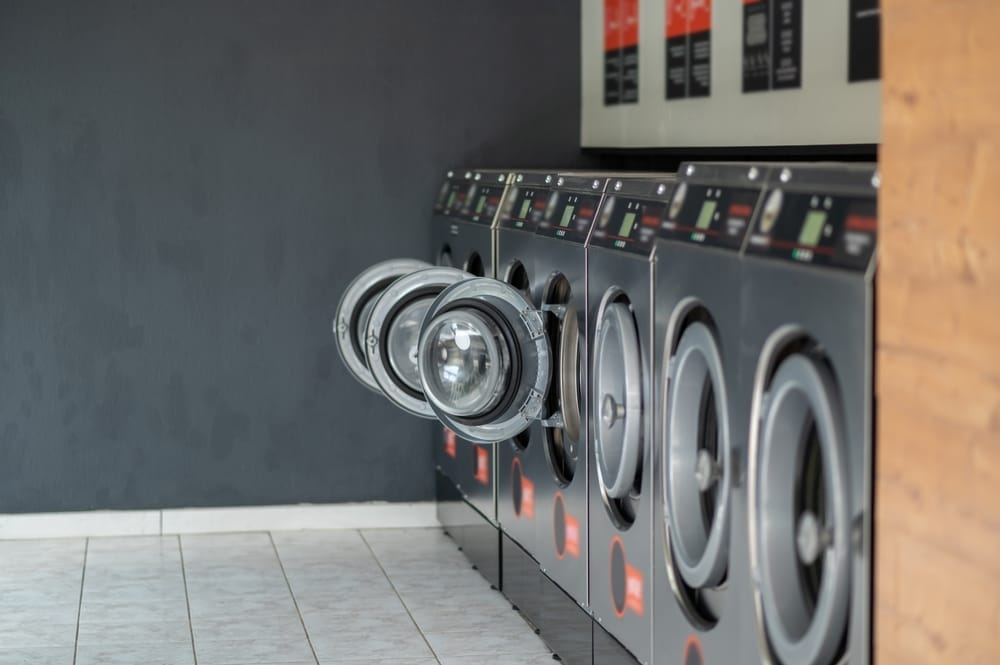
Laundromats don’t often get featured on magazine covers, but they’re one of the most dependable cash flow generators on earth. People always need clean clothes, and not everyone has reliable machines at home. A well-maintained laundromat with modern equipment can attract consistent foot traffic from nearby apartments, students, and busy families. While the business does require periodic maintenance, it also runs itself for large stretches of time, making it ideal for entrepreneurs who prefer lower-stress operations. What seems like a sleepy corner business can quietly produce life-changing income.

5. Vending Machine Routes

Vending machines are one of the most delightfully simple business models out there. Stock the machines, keep them maintained, collect the money—and repeat. Entrepreneurs who secure high-traffic locations like offices, gyms, hotels, and schools can enjoy steady, low-effort income from each unit. As routes grow, so does the earning potential, and many people scale from one machine to dozens without quitting their day job. It’s not glamorous, but vending machines have helped plenty of people quietly stack serious wealth.

There Are Many "Boring" Businesses That Make People Quietly Rich

Image Source: Shutterstock.com

6. ATM Ownership

ATM ownership is one of the sneakiest, underrated business models because it thrives on sheer convenience. Every time someone withdraws money, the owner earns a small fee, which adds up quickly in the right location. ATMs placed in bars, event centers, malls, or busy retail spots can generate steady passive income month after month. The business requires minimal upkeep beyond cash refills and occasional maintenance. What looks like a simple machine in a corner is often a silent money-maker for the person who placed it there.

7. Waste Removal And Junk Hauling

Junk hauling might not sound glamorous, but it’s one of the fastest-growing service businesses around. People are constantly moving, remodeling, or clearing out their homes—and they need someone with a truck and the muscle to take away the mess. What starts as a simple hauling service can expand into demolition jobs, commercial cleanouts, and partnerships with real estate agents and property managers. The upfront costs are low, the demand is high, and the work is straightforward enough for rapid scaling. It’s a classic example of solving an unglamorous problem and getting paid extremely well for it.

Wealth Hides In Unexpected Places

The world is full of “boring” businesses that offer stability, scalability, and serious income—often with far less risk than trendier ventures. These industries thrive because they provide essential services people rely on every single day, and that reliability translates to long-term wealth. While they may not look exciting from the outside, they’re powerful engines of financial freedom for the people who build them.

Have you ever tried one of these businesses or know someone who has? Share your thoughts, stories, or experiences in the comments below because we’d love to hear them.

You May Also Like…

10 Traits the Rich and Poor Surprisingly Share

5 Expert Warnings About “Get Rich Quick” Investment Schemes

14 Money Warnings Every Small-Business Owner Needs to Hear Right Now

9 Outrageous Lies Financial Advisors Tell To Get Your Business

7 Best Practices for Using Credit Cards Like the Rich Do

Brandon Marcus
Brandon Marcus

Brandon Marcus is a writer who has been sharing the written word since a very young age. His interests include sports, history, pop culture, and so much more. When he isn’t writing, he spends his time jogging, drinking coffee, or attempting to read a long book he may never complete.
Filed Under: Business Tagged With: ATMs, Business, business budgeting, business ideas, business lessons, business management, businesses, cleaning service, get rich, laundromats, quietly rich, restroom rentals, rich and famous, rich habits, rich people, rich people secrets, Rich people traits, storage facilities

12 Private Clubs Only the Wealthy Can Afford

June 5, 2024 by Stephen Kanaval Leave a Comment

savile

wikimedia

In an era of growing wealth disparity, the world’s elite are increasingly seeking exclusivity and privacy. This trend has led to a resurgence in ultra-exclusive private clubs, where membership is not just about financial means but also about social standing, influence, and connections.

These bastions of privilege offer unparalleled amenities, networking opportunities, and discretion, but at a price that’s out of reach for all but the wealthiest individuals. Let’s peek behind the velvet ropes and explore 12 of these ultra-exclusive enclaves.

1. Soho House, Global

unsplash

Soho House isn’t just a club; it’s a global phenomenon spanning 27 locations across Europe, North America, and Asia. Founded in London in 1995, it caters primarily to those in creative industries. Members enjoy access to chic workspaces, rooftop pools, cinemas, and even bedrooms at select houses.

The club’s ethos is “a home away from home,” but with annual fees ranging from $1,000 to $3,500, plus hefty joining fees, it’s a home few can afford. Its exclusivity stems from its selective membership process, favoring influencers, artists, and media moguls.

2. The Battery, San Francisco

Club

pixabay

In the heart of San Francisco’s tech hub, The Battery reflects the city’s digital wealth. Founded by Michael and Xochi Birch, who sold Bebo to AOL for $850 million, this club caters to tech entrepreneurs, venture capitalists, and innovators. Members have access to a world-class art collection, gourmet dining, and even a secret underground bar. The real draw, however, is the networking, deals worth billions have been struck here. With a $2,500 initiation fee and $2,400 annual dues, it’s a small price for potential unicorn connections.

3. 5 Hertford Street, London

London

unsplash

Tucked away in London’s Mayfair district, 5 Hertford Street is the epitome of old-world charm meets modern exclusivity. Owned by Robin Birley, son of famous club owner Mark Birley, it’s a favorite among royalty, politicians, and business tycoons.

The club features a Moroccan-themed nightclub, LouLou’s, where Prince Harry reportedly first met Meghan Markle. Membership is by invitation only, with fees rumored to exceed £1,800 annually. The club’s allure lies in its privacy, no cameras allowed, making it a safe haven for high-profile guests.

4. Core Club, New York City

Art

123rf

New York’s Core Club is where Wall Street meets the art world. Located in Midtown Manhattan, it was founded by 100 influential individuals across finance, fashion, and entertainment. The club boasts a contemporary art collection rivaling many museums, curated events with thought leaders, and a high-tech fitness center. However, access to this intellectual and financial powerhouse doesn’t come cheap, initiation fees are around $50,000, with yearly dues of $15,000. It’s a steep price, but for those seeking to rub shoulders with Fortune 500 CEOs, it’s an investment.

5. The Tanglin Club, Singapore

Tanglin

wikimedia

Established in 1865, The Tanglin Club in Singapore is a relic of the colonial era that has adapted to the city-state’s nouveau riche. Set in a stunning white colonial building, it offers a blend of traditional charm and modern luxury. Members, many from Asia’s burgeoning billionaire class, enjoy access to squash courts, a stunning pool, and even a cigar lounge. The club’s appeal lies in its business facilities, where major regional deals are often negotiated. Joining requires a proposer and a seconder, plus fees that can reach S$25,000.

6. Annabel’s, London

London 2

pixabay

Annabel’s in London’s Berkeley Square is not just a club; it’s a work of art. Founded in 1963 and recently redesigned for £55 million, every inch is Instagram-worthy. Each room has a different theme, from the jungle-inspired Garden of Eden to the opulent Nightclub. Members, who include fashion designers, A-list celebrities, and aristocrats, have access to a spa, cigar salon, and world-class restaurants.

But beauty comes at a price, membership costs can soar to £3,500 annually, plus a hefty joining fee. For the elite, it’s a small price for entry to London’s most photogenic playground.

7. The Carnegie Club at Skibo Castle, Scotland

Scottish

unsplash

For those seeking nobility, there’s The Carnegie Club at Skibo Castle in the Scottish Highlands. Once home to industrialist Andrew Carnegie, this 8,000-acre estate offers a taste of aristocratic life. Members can stay in luxurious rooms, play the championship golf course, go salmon fishing, or enjoy whisky tastings.

The club’s exclusivity lies in its history and limited membership, only 400 individuals worldwide. Joining requires a one-time fee of £25,000 plus annual dues of £8,000, making it a retreat only for those with both lineage and liquidity.

8. The Cosmos Club, Washington, D.C.

Dupont

123rf

In a city driven by power, The Cosmos Club in Washington, D.C., trades in intellectual capital. Founded in 1878, its membership roster reads like a who’s who of Nobel laureates, Pulitzer winners, and top-tier academics. Located in a Dupont Circle mansion, the club features a magnificent library, scholarly lectures, and refined dining.

Unlike others on this list, wealth alone doesn’t grant access, members must have “done meritorious original work in science, literature, or the arts.” Still, with initiation fees of around $5,000 and annual dues of $3,000, it’s clear that in D.C., even intellectualism has a price tag.

9. The Wing, Multiple U.S. Cities

wing

123rf

In response to male-dominated clubs, The Wing offers a progressive alternative. With locations in New York, Los Angeles, Chicago, and more, it’s a network of co-working and community spaces designed for women. Founded by Audrey Gelman and Lauren Kassan, it reflects the rising economic power of female entrepreneurs and executives.

Members enjoy beautifully designed workspaces, pump rooms for nursing mothers, and events featuring influential women. While more accessible than some, with fees around $2,350 annually, it’s still a luxury, a symbol that in today’s world, women’s success is a commodity worth investing in.

10. Club 33, Disneyland, California

33

unsplash

Behind an unmarked door in Disneyland’s New Orleans Square lies Club 33, a secret haven unknown to most park visitors. Originally conceived by Walt Disney as a place to entertain investors, it’s now the ultimate status symbol for Disney superfans.

Members enjoy priority park access, valet parking, and exquisite dining in a space filled with original Disney artifacts. The real magic? Alcohol is served as a rarity in the park. With a rumored 20-year waitlist, $25,000 initiation fee, and $15,000 annual dues, it’s proof that even in the happiest place on Earth, money talks.

11. The Augusta National Golf Club, Georgia

Augusta

pixabay

For golf aficionados, the Augusta National Golf Club in Georgia is the holy grail. Home to the prestigious Masters Tournament, its fairways have been graced by every golfing legend. Membership is by invitation only, usually extended to CEOs, politicians, and celebrities who are passionate golfers.

The club’s allure isn’t just its impeccable course but its traditions, caddies still wear white jumpsuits, and there’s a strict no-cell-phone policy. While membership costs are a closely guarded secret, estimates suggest initiation fees exceed $40,000, with substantial annual dues. In Augusta, wealth buys more than golf, it buys a piece of sporting history.

12. Yellowstone Club, Montana

WY

123rf

For those who find urban clubs too confining, there’s the Yellowstone Club in Montana, a 15,200-acre private ski and golf resort. Co-founded by Tim and Edra Blixseth, this wilderness playground caters to tech moguls, Hollywood stars, and business titans seeking privacy in nature. Members own multi-million-dollar chalets and enjoy access to world-class skiing, an 18-hole golf course designed by Tom Weiskopf, and even private fly-fishing streams.

Security is paramount, ensuring paparazzi-free vacations. But this mountain serenity comes at a summit-high price, property ownership starts at $3 million, plus a $300,000 joining fee and $37,500 in annual dues.

The High Price of Privacy and Power

Private club

unsplash

These 12 clubs represent more than just luxury; they’re symbols of the growing chasm between the ultra-wealthy and everyone else. In an age where privacy is increasingly scarce and networking is currency, these exclusive enclaves offer both, at a price that’s astronomical to most. From tech havens in San Francisco to Scottish castles, each club reflects the particular tastes and needs of the global elite.

But there’s a larger conversation to be had. As wealth concentrates at the top, so do opportunities for influence. Deals made over whisky at Skibo Castle or during a round at Augusta can shape industries and even national policies. These clubs aren’t just about luxury; they’re about access to power.

Moreover, in a world striving for inclusivity, the very existence of such exclusive spaces raises questions. Are they bastions of privacy in an oversharing age, or symbols of widening social divides? Do they foster innovation through elite networking, or do they further entrench existing power structures?

Do you think such spaces are a harmless luxury, or do they contribute to social inequality? Share your thoughts in the comments below. Your perspective could shed light on a world few ever see, a world where the price of entry isn’t just high; it’s prohibitively so for all but the wealthiest among us.

Stephen Kanaval
Stephen Kanaval

Stephen began his career as a Research Assistant at a reputable middle-market private equity firm, where he honed his skills in market research, financial analysis, and identifying investment opportunities. He then transitioned to full-time financial writing focusing on small-cap biotech innovation and digital payment solutions. Today, Stephen is a value-based retail investor and novice baseball statistician.

Filed Under: Lifestyle Tagged With: Luxury, Private clubs, rich and famous, VIP

FOLLOW US

Search this site:

Recent Posts

  • Can My Savings Account Affect My Financial Aid? by Tamila McDonald
  • 12 Ways Gen X’s Views Clash with Millennials… by Tamila McDonald
  • What Advantages and Disadvantages Are There To… by Jacob Sensiba
  • Call 911: Go To the Emergency Room Immediately If… by Stephen Kanaval
  • 10 Tactics for Building an Emergency Fund from Scratch by Vanessa Bermudez
  • 7 Weird Things You Can Sell Online by Tamila McDonald
  • 10 Scary Facts About DriveTime by Tamila McDonald

Copyright © 2026 · News Pro Theme on Genesis Framework