• Home
  • About Us
  • Getting Finances Done
    • Hiring Advisors
    • Debt Management
    • Spending Plan
  • Insurance
    • Life Insurance
    • Health Insurance
    • Disability Insurance
    • Homeowners/Renters Insurance
  • Contact Us
  • Our Editorial Commitment

The Free Financial Advisor

You are here: Home / Archives for federal taxes

You Can Pay the IRS Directly From Your Bank Account for Free—No Registration Required

September 11, 2026 by Amanda Blankenship Leave a Comment

IRS Direct Pay
IRS Direct Pay allows taxpayers to send eligible federal tax payments directly from a checking or savings account without registering for an IRS Online Account or paying a Direct Pay fee. Users can make same-day payments or schedule them up to 365 days in advance and receive a confirmation number after submitting the request. BLACKDAY/Shutterstock

Paying a federal tax bill online doesn’t necessarily require creating another account—or paying a processing fee to use a credit or debit card.

The Internal Revenue Service issued a reminder September 10 that its Direct Pay service allows taxpayers to send federal tax payments directly from a checking or savings account for free. No registration or IRS Online Account is required.

The tool can be useful for taxpayers paying a balance due, making estimated tax payments, paying after filing an amended return, requesting certain filing extensions, or handling several other federal tax obligations.

Here’s what taxpayers should know before using it.

Direct Pay Doesn’t Require an IRS Account

IRS Direct Pay works differently from the agency’s Individual Online Account.

Taxpayers using Direct Pay make a one-time payment without signing in or registering for an account. Individual taxpayers instead answer identity-verification questions using information from a prior-year tax return they select.

For businesses, the system verifies the business name and employer identification number against IRS records.

Payments are made directly from a checking or savings account at a U.S. financial institution using the bank’s routing and account numbers.

The IRS describes Direct Pay as both free and secure.

You Can Use It for More Than a Tax Bill

Direct Pay isn’t limited to paying the balance shown on an annual income tax return.

Individual taxpayers can use it for numerous payment types, including balance-due payments, estimated taxes, amended returns, installment agreements and certain extension payments.

Business taxpayers can use Direct Pay for balance-due payments, federal tax deposits and other eligible federal tax payments.

There is an important rule for married couples filing jointly: taxpayers generally need to enter information for the spouse whose name appears first on the joint tax return when making the payment.

The IRS provides a list of eligible payment types through its Direct Pay Help resources.

Payments Can Be Scheduled Up to a Year Ahead

Direct Pay also offers some flexibility for people who don’t want the money withdrawn immediately.

The IRS says taxpayers can make a same-day payment or schedule one as far as 365 days in advance. That could be particularly useful for someone planning estimated tax payments or preparing ahead for a known tax deadline.

After submitting a payment request, taxpayers receive a confirmation number and can also choose to receive confirmation by email.

Keep that number.

It is needed if you later want to look up, change, or cancel the payment. The IRS generally allows a scheduled Direct Pay payment to be changed or canceled up to two business days before its scheduled date.

One limitation is that Direct Pay handles one payment at a time rather than establishing an automatic recurring-payment schedule.

There Are Several Important Limits

Direct Pay isn’t available for every taxpayer or every situation.

People who have never filed a federal tax return—or who haven’t filed one in more than six years—may need to choose another IRS payment method because Direct Pay relies on prior return information for individual identity verification.

The service also cannot be used to have a tax refund directly deposited into your bank account. Despite the similar terminology, Direct Pay is a payment service for sending money to the IRS, not receiving a refund from it.

The IRS also limits users to five Direct Pay payments within a 24-hour period.

Individual Direct Pay payments must be less than $10 million. Taxpayers needing to make a payment of $10 million or more can use a same-day wire transfer or the Electronic Federal Tax Payment System when eligible and enrolled.

Don’t Stop at the Confirmation Screen

Receiving a Direct Pay confirmation number means the IRS received the payment request, but taxpayers should still make sure the money was successfully withdrawn.

The IRS recommends checking your bank statement or IRS account at least 48 hours after the requested payment date to confirm the transaction was completed.

That’s particularly important because a payment request could fail if, for example, the account doesn’t contain enough money to cover the withdrawal.

Saving the confirmation number and checking the corresponding bank transaction gives taxpayers documentation if they later need to investigate a payment problem.

Start at IRS.gov Instead of a Search Ad or Unfamiliar Link

Taxpayers interested in Direct Pay should access it through IRS.gov rather than relying on an unsolicited email, text message, advertisement, or unfamiliar website claiming to collect federal tax payments.

The legitimate IRS tool does not charge taxpayers a fee to send an eligible payment directly from their checking or savings account.

That’s an important distinction from some other electronic payment options. The IRS notes that taxpayers who choose to pay federal taxes using a debit card, credit card, or digital wallet generally make the transaction through an approved payment processor that charges a processing fee.

For someone who simply wants to send money directly from a bank account without registering for another online service, Direct Pay provides a relatively straightforward alternative.

Just verify the payment type, bank information, tax year, and amount carefully before submitting—and save the confirmation number until you’re certain the payment has been processed.

What to Read Next

IRS Opens 2027 Corporate Tax Compliance Program — Applications Due October 30

Tax Deadlines Extension Filers Should Put on Their Calendar Now

IRS Raises Clean Electricity Production Tax Credit to 3.1 Cents Per Kilowatt-Hour for 2026

Amanda Blankenship

Amanda Blankenship is the Chief Editor for District Media.  With a BA in journalism from Wingate University, she frequently writes for a handful of websites and loves to share her own personal finance story with others. When she isn’t typing away at her desk, she enjoys spending time with her daughter, son, husband, and dog. During her free time, you’re likely to find her with her nose in a book, hiking, or playing RPG video games.

Filed Under: news Tagged With: Estimated taxes, federal taxes, income taxes, IRS, IRS Direct Pay, IRS payments, Personal Finance, tax payments, tax tips, Taxpayers

IRS Finalizes New Car Loan Interest Deduction — Who Can Claim Up to $10,000

September 8, 2026 by Amanda Blankenship Leave a Comment

car loan interest deduction
The IRS has finalized regulations for a temporary federal deduction allowing eligible taxpayers to deduct up to $10,000 a year in interest on loans used to buy qualifying new vehicles assembled in the United States. Zamrznuti tonovi/Shutterstock

Americans financing certain new vehicles can deduct up to $10,000 a year in car loan interest under a temporary federal tax break, and the IRS has now finalized regulations explaining who qualifies. The deduction was created by the One Big Beautiful Bill Act signed into law July 4, 2025, and applies to qualifying vehicle loans incurred after December 31, 2024. It is available for tax years 2025 through 2028 under current law.

One particularly important feature is that taxpayers don’t have to itemize deductions to claim it. Someone who takes the standard deduction may still qualify for the car loan interest deduction. But the $10,000 headline comes with several significant restrictions.

The Vehicle Generally Must Be New and Assembled in the United States

The deduction doesn’t apply to every car loan. To qualify, the loan must be used to purchase an eligible passenger vehicle for personal use, and the debt must be secured by a first lien on the vehicle. The original use of the vehicle must also begin with the taxpayer, which generally means the vehicle must be treated as new when purchased.

Another major requirement is final assembly in the United States. The IRS rules allow taxpayers to determine the final assembly location using information encoded in the vehicle identification number or the final assembly point shown on the vehicle’s required label.

Eligible vehicle classifications can include cars, minivans, vans, SUVs, pickup trucks and motorcycles that satisfy the applicable requirements. Vehicles must also have a gross vehicle weight rating below 14,000 pounds. Leases don’t qualify, nor do loans financing certain fleet sales, non-personal commercial vehicles, salvage-title vehicles, or vehicles intended for scrap or parts.

The Deduction Is Worth Up to $10,000 a Year

Eligible taxpayers can deduct qualified interest paid or accrued during the year, subject to a maximum of $10,000 per tax return per year. That doesn’t mean buying a qualifying vehicle automatically produces a $10,000 deduction. A taxpayer who pays $2,800 of qualifying interest during the year, for example, generally has only $2,800 potentially available for the deduction before considering other limitations. The tax savings also aren’t the same as the deduction itself.

A $3,000 deduction doesn’t mean the IRS sends someone an extra $3,000. Instead, a deduction generally reduces the amount of income subject to federal income tax. The tax break is temporary under current law and applies to qualifying interest for tax years 2025 through 2028.

Higher-Income Taxpayers May Get a Smaller Deduction

Income can reduce or completely eliminate the tax break. The deduction begins phasing out when modified adjusted gross income exceeds $100,000 for most filers or $200,000 for married couples filing jointly.

For each $1,000—or portion of $1,000—above the applicable threshold, the otherwise allowable deduction is reduced by $200. That means shoppers shouldn’t assume they’ll receive the full tax benefit simply because the vehicle and loan meet the other requirements.

Taxpayers should also remember that eligibility for a deduction is only one factor to consider when financing a vehicle. Paying thousands of dollars of additional interest solely to receive a tax deduction generally doesn’t make that interest free.

Your VIN Will Matter at Tax Time

Taxpayers claiming qualified passenger vehicle loan interest must include the vehicle’s VIN on their federal income tax return. The VIN is important both for identifying the vehicle and for helping establish whether its final assembly occurred in the United States. The IRS regulations point taxpayers toward vehicle-manufacturing information that can be used to determine final assembly location.

Consumers shopping for a new vehicle who expect to use the deduction may therefore want to verify final assembly before completing the purchase rather than assuming that an American brand name automatically means the vehicle qualifies. Where a vehicle was assembled—not simply the automaker’s headquarters or brand identity—is what matters for this requirement.

Lenders Will Have New Reporting Requirements

The final regulations also establish reporting requirements intended to help taxpayers document the interest they paid. A lender or other qualifying business that receives $600 or more in interest during a calendar year from an individual on a specified passenger vehicle loan generally must file an information return with the IRS and furnish a statement to the borrower.

The reporting requirements are established under new Internal Revenue Code Section 6050AA. Businesses required to file at least 10 information returns of any type during a calendar year generally must file electronically under the applicable IRS rules.

These reporting requirements should eventually give qualifying borrowers documentation that can help them determine the interest associated with an eligible vehicle loan.

Don’t Buy a More Expensive Car Just for the Tax Deduction

The new deduction can reduce the after-tax cost of borrowing for someone who already needs a qualifying vehicle, but it shouldn’t make an unaffordable car loan suddenly affordable. Consider someone who pays $4,000 in qualifying car loan interest and is able to deduct the entire amount. The financial benefit is the tax savings produced by that $4,000 deduction—not reimbursement of the $4,000 of interest.

Vehicle price, interest rate, loan term, insurance, maintenance, depreciation and the monthly payment can still matter far more to a household budget than the deduction. The tax break is also scheduled to disappear after 2028 unless Congress extends it, while a five-, six- or seven-year auto loan could continue long after the deduction expires.

For shoppers comparing vehicles, the better question isn’t simply, “Does this car qualify for the deduction?” It’s whether the total cost of the vehicle and financing still makes sense without counting on a temporary tax break.

What to Read Next

Some Retirees Are Seeing Deductions on Their Checks They Can’t Explain — Here’s Why

Charitable Deductions Without Proper Documentation Are Being Denied More Than Ever

A Home Office Deduction Can Be a Red Flag — Here’s What the IRS Is Looking For

Amanda Blankenship

Amanda Blankenship is the Chief Editor for District Media.  With a BA in journalism from Wingate University, she frequently writes for a handful of websites and loves to share her own personal finance story with others. When she isn’t typing away at her desk, she enjoys spending time with her daughter, son, husband, and dog. During her free time, you’re likely to find her with her nose in a book, hiking, or playing RPG video games.

Filed Under: news Tagged With: auto loans, car buying, car loan interest deduction, federal taxes, IRS, One Big Beautiful Bill Act, Personal Finance, tax breaks, tax deduction, vehicle financing

6 Estate-Tax Headlines That Can Mislead Families With Ordinary Estates

August 5, 2026 by Brandon Marcus Leave a Comment

6 Estate-Tax Headlines That Can Mislead Families With Ordinary Estates
An elderly couples reviews estate documents while learning the difference between federal estate tax rules, state requirements, and senior tax updates. The image highlights how accurate information can prevent confusion about inheritance planning – Shutterstock

Estate-tax headlines often arrive with dramatic wording that makes families wonder whether a tax surprise waits around the corner. The reality looks much calmer for many households because federal estate tax rules affect a much smaller group than those scary headlines suggest.

The key trick involves separating federal estate tax rules from state rules and knowing which numbers actually matter. The IRS announced that estates of people who die in 2026 receive a basic exclusion amount of $15 million, a figure that changes the conversation for many families with ordinary-sized estates.

1. “The Estate Tax Could Hit Everyone” Sounds Bigger Than Reality

Estate tax headlines sometimes create the impression that every family passing down a home, savings account, or retirement money faces a federal estate tax bill. Federal estate tax rules apply only when an estate exceeds the federal exclusion amount, so many typical households never reach that level.

A family with a modest home, personal belongings, vehicles, and retirement savings usually needs to look at the total value of the estate rather than one valuable item. A house that feels expensive to the owner does not automatically create a federal estate tax issue. The phrase “estate tax” can sound like a universal family problem, but the numbers tell a different story. That does not mean estate planning becomes unnecessary, because wills, beneficiaries, and other documents still matter for many households.

2. “Federal Estate Tax and State Estate Tax Are the Same” Creates Confusion

Federal estate tax rules come from the IRS, but states can create their own estate or inheritance tax systems. A family may face different rules depending on where the person lived, where property sits, and which state laws apply. Federal rules do not erase state requirements, and state rules do not change the federal exclusion amount.

This difference creates plenty of confusion because a headline about estate taxes may not explain whether it discusses federal or state law. A person reading about a state tax threshold might mistakenly assume the federal government uses the same number. Families often benefit from checking both layers of rules before drawing conclusions. Tax rules can resemble a puzzle where every piece has its own label.

3. “A Large Estate Means an Immediate Tax Bill” Misses Important Details

The value of an estate alone does not tell the whole story because federal estate tax calculations involve specific rules and exclusions. The IRS sets the federal basic exclusion amount, and the amount applies to estates of people who die during the applicable tax year.

A headline that simply says “million-dollar estate” can make a situation sound more urgent than it actually is. Families also need to remember that estate value includes more than a bank balance, because property and other assets count toward the overall picture. A person might see a large number on paper while the actual tax question depends on federal thresholds and circumstances. Estate tax is not a simple calculator where one asset automatically triggers a bill. That small detail often gets lost when headlines chase attention.

4. “Senior Tax Headlines Automatically Mean Estate Tax Changes”

Many tax headlines aimed at older Americans actually discuss income tax changes rather than estate tax rules. The IRS highlighted a new enhanced deduction for eligible seniors for tax years 2025 through 2028, but that provision concerns income tax returns, not federal estate taxes.

This mix-up happens because retirement planning and estate planning often sit at the same kitchen table. A senior reviewing tax information may see several changes at once and assume they all connect to inheritance taxes. They involve different parts of the tax system, though. The difference matters because income tax rules affect yearly filings while estate tax rules address transfers after death. Keeping those categories separate prevents unnecessary worry.

5. “The IRS Changes One Number and Everything Changes Overnight”

Tax rules often adjust for inflation, which means certain amounts can move from year to year. The IRS announced multiple tax-year 2026 inflation adjustments, including the federal estate tax exclusion amount.

However, a change in a tax number does not mean every family needs to rebuild an entire financial plan immediately. A headline may highlight a new figure without explaining who the change affects. Numbers matter, but context matters just as much. Families should look at their own situation and the current rules rather than reacting to a dramatic headline. Tax planning rewards patience more than panic.

6. “Estate Planning Only Matters for the Wealthy”

Estate planning often gets tied to wealthy families, but the process involves much more than federal estate taxes. Documents that explain wishes, name beneficiaries, and organize financial information can help families handle practical matters. Federal estate tax rules represent only one small piece of the larger planning picture.

A family does not need a mansion full of priceless artwork to care about organization. Even ordinary estates can involve questions about property, accounts, and personal belongings. Good planning can reduce confusion during an already emotional time. The goal involves clarity, not simply avoiding a tax bill. That idea rarely fits neatly into a flashy headline.

The Big Estate-Tax Takeaway: Headlines Need a Second Look

Estate-tax headlines often grab attention because taxes feel complicated and personal. The federal rules for 2026 show why families should separate headlines from actual thresholds and requirements.

Federal estate tax rules and state rules can work differently, and senior tax updates may involve income taxes rather than estate taxes. A careful review of the details usually tells a much more useful story than a quick headline. Families should gather accurate information and consider professional guidance when their situation requires it. No article can provide individualized tax advice, but knowing the difference between federal and state rules helps people ask better questions. The smartest financial decisions often begin with replacing worry with accurate information.

What estate-tax headline or tax rule has caused the most confusion in your family’s financial planning? Share your thoughts in the comments.

You May Also Like…

A Practical Guide to IRS Notice Mistakes That Can Turn a Small Tax Issue Into a Bigger Bill

Many Social Security Recipients Pay Taxes on Their Benefits — Most Are Surprised

Millions of Americans Miss This June Tax Deadline Every Year — And Pay a Penalty for It

IRS Announces $15 Million Estate-Tax Exemption for 2026 and a $19,000 Annual Gift Exclusion—How to Plan Now

High Earners Must Make 401(k) Catch-Up Contributions as Roths in 2026 — How the New IRS Rule Changes Your Tax Breaks

Brandon Marcus
Brandon Marcus

Brandon Marcus is a writer who has been sharing the written word since a very young age. His interests include sports, history, pop culture, and so much more. When he isn’t writing, he spends his time jogging, drinking coffee, or attempting to read a long book he may never complete.

Filed Under: Personal Finance Tagged With: estate tax, family finances, federal taxes, inheritance planning, IRS, senior tax updates

IRS Announces 27 States Have Opted Into New Federal Scholarship Tax Credit Program

July 8, 2026 by Amanda Blankenship Leave a Comment

Federal Scholarship Tax Credit
IRS Commissioner Frank J. Bisignano announced that 27 states have opted into the new Federal Scholarship Tax Credit program, allowing eligible taxpayers to claim up to a $1,700 credit for qualifying scholarship donations. Mehaniq/Shutterstock

The Internal Revenue Service announced that 27 states have elected to participate in the Federal Scholarship Tax Credit (FSTC) program, a new federal initiative that allows eligible taxpayers to claim a tax credit for contributions made to qualifying scholarship organizations.

“It’s encouraging to see that 27 states have already signed up to participate in this program that promotes and supports elementary and secondary education,” said IRS Chief Executive Officer Frank J. Bisignano. “We are hopeful that additional states will decide to participate.”

According to the official IRS announcement, taxpayers may claim a federal tax credit of up to $1,700 for qualified contributions to Scholarship Granting Organizations (SGOs). These organizations provide scholarships to cover qualified elementary and secondary education expenses.

The program operates differently from a tax deduction. Instead of reducing taxable income, eligible taxpayers may receive a federal tax credit—up to the program’s annual limit—for qualified donations made to approved Scholarship Granting Organizations (SGOs). However, taxpayers must follow IRS rules, and not every state has elected to participate.

To be eligible for the credit, a taxpayer’s contribution must go to an SGO located in a state that has formally elected to participate in the program and submitted a list of qualified SGOs to the IRS.

The FSTC program was enacted under legislation referred to as the One, Big, Beautiful Bill. State participation in the program is voluntary. As of the announcement date, 27 states had signed up, including Alabama, Alaska, Arkansas, Colorado, Florida, Georgia, Idaho, Indiana, Iowa, and Louisiana, among others. The IRS announcement noted that the list of participating states was still being compiled at the time of publication.

IRS Chief Executive Officer Frank J. Bisignano said in the announcement that the agency is encouraged by the early participation and expressed hope that additional states will choose to opt in.

The program is relevant to taxpayers across the country who may wish to support private elementary and secondary education scholarships while also reducing their federal tax liability. Because participation depends entirely on a taxpayer’s state of residence and whether qualifying SGOs are available there, eligibility will vary significantly by location.

Taxpayers interested in claiming this credit should verify their state’s participation status and confirm that any organization they contribute to is on their state’s official list of qualified SGOs. Readers should consult the IRS directly at IRS.gov or speak with a qualified tax professional to determine how this program applies to their individual circumstances.

FAQs About the New Federal Scholarship Tax Credit Program

  • What is the Federal Scholarship Tax Credit? The Federal Scholarship Tax Credit allows eligible taxpayers to claim a federal tax credit of up to $1,700 for qualified contributions to approved Scholarship Granting Organizations (SGOs) that fund K-12 scholarships in participating states.
  • How much is the tax credit? Eligible taxpayers may claim a credit of up to $1,700, subject to IRS rules and program requirements.
  • Do all states participate? No. Participation is voluntary. As of the IRS announcement, 27 states had elected to participate, with additional states expected to join over time.
  • How do I know if my donation qualifies? Your contribution must be made to a qualified Scholarship Granting Organization (SGO) located in a participating state and recognized by the IRS and the state.
  • Where can I find the list of participating states and approved organizations? The IRS maintains the official list of participating states and qualifying SGOs on its website and updates it as additional states complete the required election process.

What to Read Next

7 OregonSaves Rules Every New Oregon Employer Should Know Before the July 31 Deadline

White House Orders Labor and SEC to Make Private Equity and Real Estate Available in 401(k)s—What Fiduciaries Should Watch

Your Employer May Match Student Loan Payments in 2026—But Only Up to the 401(k) Deferral Limit

Amanda Blankenship

Amanda Blankenship is the Chief Editor for District Media.  With a BA in journalism from Wingate University, she frequently writes for a handful of websites and loves to share her own personal finance story with others. When she isn’t typing away at her desk, she enjoys spending time with her daughter, son, husband, and dog. During her free time, you’re likely to find her with her nose in a book, hiking, or playing RPG video games.

Filed Under: news Tagged With: Education, Federal Scholarship Tax Credit, federal taxes, IRS, IRS news, One Big Beautiful Bill, Personal Finance, Scholarship Granting Organizations, scholarships, school choice, SGOs, tax credits, taxes

IRS Will Freeze Your Refund Without Correct Bank Info—And Won’t Send a Paper Check Until You Fix It

May 19, 2026 by Brandon Marcus Leave a Comment

IRS Will Freeze Your Refund Without Correct Bank Info—And Won’t Send a Paper Check Until You Fix It
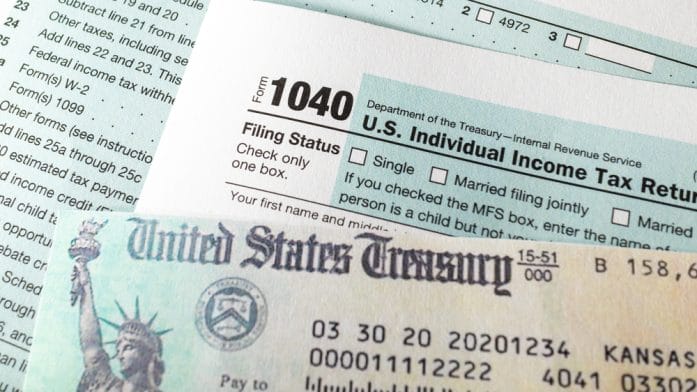
1040 tax forms can lead to heary refunds from the IRS – Shutterstock

Tax season already comes packed with enough stress to power an entire coffee chain, but one simple banking mistake can turn a smooth refund into a financial nightmare. Millions of Americans rely on direct deposit because refunds usually arrive faster than paper checks, often within 21 days when everything lines up correctly. The problem starts when taxpayers enter the wrong routing number, use a closed bank account, or accidentally swap digits while filing online late at night. The IRS does not simply shrug and mail out a backup check the moment something goes wrong with the deposit.

Instead, the agency often freezes the refund until taxpayers update or resolve the banking issue directly with the IRS or the receiving bank. That delay can stretch for weeks and sometimes much longer depending on the situation and how quickly the taxpayer notices the problem. Many filers expect the government to automatically correct the error, but the IRS generally pushes responsibility back onto the taxpayer. A simple typo can suddenly derail rent payments, vacation plans, emergency savings goals, or overdue bills that depended on that refund arriving on time.

Direct Deposit Errors Create Bigger Problems Than Most People Expect

Direct deposit sounds foolproof until someone accidentally enters account information for an old checking account from three apartments ago. Banks process millions of transactions electronically every day, and many institutions automatically reject deposits tied to closed or mismatched accounts. When that happens, the money bounces back to the IRS, but the process rarely moves quickly. Taxpayers often wait anxiously while their “Where’s My Refund?” status sits unchanged for days or even weeks.

Some situations get even messier because banks sometimes accept deposits into incorrect accounts if the routing and account numbers technically exist. That creates a nightmare scenario where the refund lands in another person’s account instead of returning to the IRS immediately. Federal law protects consumers in some banking disputes, but recovering tax refunds from incorrect accounts can take substantial time and paperwork. The IRS generally tells taxpayers to first contact the bank, which leaves many people stuck navigating customer service departments while their refund disappears into financial limbo.

The IRS Won’t Automatically Rescue the Situation

Many taxpayers assume the IRS will quickly switch gears and mail a paper check after a failed direct deposit attempt, but the agency does not move that fast. IRS procedures usually require verification and additional processing before issuing a replacement payment. During peak tax season, that delay grows even longer because the agency already struggles with massive workloads and staffing challenges. The IRS also prioritizes fraud prevention, which means suspicious banking issues often trigger extra scrutiny.

That extra scrutiny makes sense because criminals constantly target tax refunds through identity theft and fraudulent filings. The IRS flags unusual banking changes or repeated deposit failures to stop scammers from redirecting taxpayer money. Unfortunately, honest taxpayers often get tangled in the same security net. Someone who accidentally enters one wrong digit can suddenly face identity verification letters, delayed processing notices, or requests for additional documentation before the refund moves again.

Filing Software Does Not Guarantee Error-Free Refunds

Tax software companies advertise convenience, speed, and accuracy, but software cannot stop every human mistake. A filer rushing through forms on a smartphone after midnight can still enter incorrect numbers without noticing the error. Many people also copy banking information from old checks that belong to closed accounts or outdated banks after mergers. Even experienced taxpayers sometimes overlook mistakes because they focus heavily on income figures and deductions rather than payment details.

The danger increases when taxpayers split refunds between multiple accounts using IRS Form 8888. One incorrect account number among several deposit destinations can complicate the entire refund process. Some taxpayers also accidentally select savings accounts that block certain electronic deposits depending on the institution’s rules. Those small filing errors may look harmless on a tax return, but they can create weeks of frustrating delays once the IRS processes the refund payment.

IRS Will Freeze Your Refund Without Correct Bank Info—And Won’t Send a Paper Check Until You Fix It
Tax filers can get their refunds stuck in limbo if they make a single, tiny mistake – Shutterstock

Fixing the Problem Requires Fast Action and Patience

Taxpayers who realize they entered incorrect banking information should move quickly because timing matters enormously. If the IRS has not yet sent the refund, filers may still have time to update information through their tax preparer or filing software. Once the IRS sends the payment, however, options become more limited and the process slows considerably. The agency generally cannot cancel a completed direct deposit after transmission begins.

Banks sometimes reject deposits within a few business days, which sends the refund back to the IRS automatically. After that return occurs, the IRS may issue a paper check to the address listed on the tax return, but processing often takes several additional weeks. Taxpayers should monitor the IRS “Where’s My Refund?” tool regularly and respond immediately to any mailed notices requesting identity verification or corrected information. Ignoring IRS letters almost always stretches the delay longer and increases frustration.

Scammers Love Refund Confusion Season

Refund delays create perfect conditions for scammers who prey on stressed taxpayers waiting for money. Fraudsters frequently send fake texts, emails, or phone calls claiming they can “release” frozen IRS refunds after taxpayers provide personal information. The IRS generally does not initiate contact through text messages or social media direct messages about refund problems. Criminals know worried taxpayers feel vulnerable when refunds disappear, so they ramp up scams heavily during tax season.

Some scammers even impersonate banks and claim they need account verification to process rejected deposits. Others send links to fake IRS portals designed to steal Social Security numbers and banking credentials. Taxpayers should only use official IRS websites and verified banking contacts when handling refund issues. A delayed refund already creates enough stress without adding identity theft or drained bank accounts into the mix.

The Refund Clock Keeps Ticking Even After Filing Ends

Many Americans treat tax filing like a finish line, but refund processing often turns into an entirely separate marathon. Filing accurately matters just as much as filing on time, especially when direct deposit details enter the picture. One tiny banking typo can freeze thousands of dollars right when families count on that money most. The IRS eventually resolves most refund issues, but the wait can test anyone’s patience and financial stability.

Taxpayers can reduce risk dramatically by double-checking routing numbers, confirming active accounts, and reviewing every deposit detail before submitting returns electronically. That extra two-minute review may save weeks of stress, endless phone calls, and painful delays later. Tax season already delivers enough surprises without adding a missing refund into the chaos.

What’s the longest delay you’ve ever faced waiting for a tax refund, and did you ever discover what caused it?

You May Also Like…

The IRS Is Cracking Down on Side Hustle Income Again in 2026

9 Everyday Money Mistakes That Quietly Lead to IRS Penalties

Stop Celebrating Your Tax Refund: You Just Gave the Government a Interest-Free Loan

Why Do Families Rely Too Much on Tax Refunds

Tennessee Residents Still Pay Federal Taxes on Investment Income Despite State Changes

Brandon Marcus
Brandon Marcus

Brandon Marcus is a writer who has been sharing the written word since a very young age. His interests include sports, history, pop culture, and so much more. When he isn’t writing, he spends his time jogging, drinking coffee, or attempting to read a long book he may never complete.

Filed Under: tax tips Tagged With: direct deposit errors, federal taxes, IRS bank information, IRS direct deposit, IRS refund, paper check delays, Personal Finance, refund freeze, saving money, tax filing mistakes, tax refund delays, tax refund tips, tax season

Millions Of Americans Are Missing Out On The SALT Deduction

May 16, 2026 by Brandon Marcus Leave a Comment

Millions Of Americans Are Missing Out On The SALT Deduction
A piggy bank next to a SALT deduction placard – Shutterstock

The SALT deduction, which stands for state and local taxes, continues to play a significant role in how Americans calculate their federal tax bills. Many households in high-tax states rely on this deduction to soften the blow of property taxes, income taxes, and sales taxes. Federal tax law allows taxpayers to deduct certain state and local taxes from their taxable income, which can lower the amount owed to the IRS. However, not everyone realizes how this deduction works or how much money it can potentially save. That gap in awareness leads many households to leave real money on the table every single year.

High-income and middle-class families in expensive regions feel the impact most strongly when they overlook SALT deductions. States with higher living costs often come with higher property taxes and state income taxes, which makes the deduction even more relevant. Without it, taxpayers face a heavier federal tax burden that compounds already steep local costs. Many filers assume tax software automatically optimizes everything, but mistakes and limitations still happen. The result creates a quiet but widespread financial blind spot across the country.

The $40,000 Cap That Changed Everything

The federal government recently upgraded to a $40,000 cap on SALT deductions, and that single rule reshaped tax outcomes for millions of households. Before the cap, taxpayers in high-tax states often deducted far more in combined state and local taxes. Now, many filers hit that ceiling quickly, especially homeowners with significant property tax bills. This change hit married couples and families in high-cost regions particularly hard because their tax liability often exceeds the cap. The cap effectively limits how much relief taxpayers can receive, no matter how high their local taxes climb.

This restriction creates frustration because it disconnects local tax burdens from federal tax relief. A homeowner in New Jersey or California can pay far more than $40,000 in state and local taxes yet only deduct a fraction of that amount. The mismatch leads many people to feel penalized for living in areas with higher costs of public services and housing. Taxpayers often miss the full impact until they review their itemized deductions closely during tax season. Once they see the numbers, the limitation becomes impossible to ignore.

Smart Moves Taxpayers Use to Work Around SALT Limits

Taxpayers across the country look for legal ways to reduce the impact of the SALT cap by adjusting how they manage deductions and expenses. Some homeowners choose to bunch property tax payments into a single tax year when possible, which can help maximize itemized deductions in that year. Others evaluate whether itemizing still makes sense compared to taking the standard deduction, which increased significantly in recent years. Financial planners often encourage clients to compare both options carefully before filing. These small adjustments can lead to meaningful savings depending on income level and local tax rates.

Charitable giving also plays a role in overall tax strategy because it can increase total itemized deductions. Many households in high-tax states combine donation planning with tax timing strategies to improve overall efficiency. Some taxpayers also review mortgage interest deductions, which still apply under certain conditions and can push total deductions higher. Professional tax advisors often highlight the importance of year-round planning instead of last-minute filing decisions. These strategies do not eliminate the SALT cap, but they help soften its impact in practical ways.

Millions Of Americans Are Missing Out On The SALT Deduction
A notebook with “State & Local Income Tax” written in it – Shutterstock

Why the SALT Cap Still Shapes Tax Bills Across America

The SALT deduction cap continues to influence financial decisions, especially for homeowners in expensive housing markets and high-tax states. Families often discover that their expected federal tax savings shrink significantly once the cap enters the equation. This shift forces many households to rethink budgeting, housing choices, and long-term financial planning. Even with other deductions available, the SALT cap remains one of the most impactful limitations in the federal tax code. Its effects ripple through property markets, household budgets, and even relocation decisions.

Tax policy debates continue to revisit the SALT deduction because of its uneven impact across income levels and geographic regions. Some taxpayers benefit less from federal tax relief simply because their local tax structure pushes them against the cap. That reality keeps SALT at the center of ongoing discussions about fairness and tax equity. For now, millions of Americans continue to feel its effects each filing season, whether they notice it or not. Awareness remains the first step toward minimizing the financial impact and making smarter tax decisions.

What changes would make the SALT deduction feel fairer for everyday taxpayers dealing with high local taxes?

You May Also Like…

7 Little-Known Deductions That Could Vanish After the One Big Beautiful Bill

Why Large Itemized Deductions Can Trigger a 2026 Refund Review

How The SALT Deduction Caps Squeezed Many Middle-Income Taxpayers

Florida Has 0% Income Tax — But Seniors Still Spend Thousands a Year on Essentials

Unreported Income: How the IRS Finds Out (and What It Costs You)

Brandon Marcus
Brandon Marcus

Brandon Marcus is a writer who has been sharing the written word since a very young age. His interests include sports, history, pop culture, and so much more. When he isn’t writing, he spends his time jogging, drinking coffee, or attempting to read a long book he may never complete.

Filed Under: tax tips Tagged With: federal taxes, IRS, itemized deductions, middle class taxes, property tax, SALT deduction, state taxes, tax policy, tax reform, tax savings, taxes, US economy

Follow Us

Search this site:

Recent Posts

  • Can My Savings Account Affect My Financial Aid? by Tamila McDonald
  • 12 Ways Gen X’s Views Clash with Millennials… by Tamila McDonald
  • What Advantages and Disadvantages Are There To… by Jacob Sensiba
  • 10 Tactics for Building an Emergency Fund from Scratch by Vanessa Bermudez
  • Call 911: Go To the Emergency Room Immediately If… by Stephen Kanaval
  • 7 Weird Things You Can Sell Online by Tamila McDonald
  • 10 Scary Facts About DriveTime by Tamila McDonald

Copyright © 2026 · News Pro Theme on Genesis Framework